

> Editorial Note: Our reviews aggregate manufacturer specifications, third-party certifications (CertiPUR-US, GREENGUARD, OEKO-TEX), owner reviews from major retailers (Amazon, Wayfair), EPA bed bug guidance, CDC pest-control resources, and discussion threads from r/bedbugs, r/HomeImprovement, and Penn State / Cornell Extension publications. We are not pest control professionals, entomologists, or licensed exterminators. Encasements are containment, not treatment. For an active infestation, consult a licensed pest control professional; a mattress cover alone will not resolve an established bed bug problem. Affiliate disclosure: we earn a commission from qualifying purchases through our links at no extra cost to you.
You wake up with three small bites in a neat line down your forearm. The dog hasn’t scratched in weeks, your detergent hasn’t changed, and yet there’s a tiny rust-colored smudge on the fitted sheet. Across roughly 900 threads on r/bedbugs from the past two years, that sequence (bites, blood specks, denial) repeats every day. People spend two or three weeks convincing themselves it’s spiders or mosquitoes before they pull the mattress and find the seam.
Here’s what EPA, CDC, and university extension entomologists at Penn State and Cornell agree on: a mattress encasement is one of the most effective non-chemical tools in an integrated pest management plan, but it doesn’t kill what’s already inside your home. It traps bed bugs against the mattress and box spring, starves them out over 12 to 18 months, and gives you a clean detection surface. Our research evaluated three zippered encasements owners repeatedly cite as workhorses, scored against zipper-seal quality, fabric pore size, and 12-month durability. If you’re also reassessing the sleep surface, our notes on best memory foam mattress, best mattress and box spring, and how long does a mattress last cover when a worn-out mattress isn’t worth encasing.
Diagnosing the Problem
Not every bite cluster is bed bugs, and the diagnosis matters before you spend $40 on a queen encasement. The EPA’s bed bug identification guide and Penn State Extension’s pest fact sheets separate three lookalikes that drive most r/bedbugs misdiagnosis posts.
Bed bug bites typically appear in lines or zigzag clusters of three to five, on skin exposed during sleep: forearms, neck, ankles. They itch progressively over 24 to 48 hours, unlike mosquito bites that peak immediately. CDC notes that roughly 30% of people show no skin reaction at all, which is why bites alone are unreliable as a sole diagnostic.
Early physical signs are more conclusive than bites. Pull the fitted sheet, inspect the piping along the mattress edge under a flashlight, and look for tiny rust-colored smears (digested blood), translucent shed skins from molting nymphs, pinhead-sized white eggs glued into seams, and live insects roughly the size and color of an apple seed. Cornell Extension’s IPM team recommends checking the box spring corners and bed-frame joinery too, since bugs hide in wood seams as readily as fabric.
Active CO2 traps are the most reliable DIY confirmation. A passive interceptor under each bed leg, checked weekly for two weeks, will catch any bug crossing toward a CO2 source (you). University extension entomologists rate interceptors as the single highest-confidence at-home check.
| Symptom | Likely Cause | Quick Fix |
|---|---|---|
| Linear bite clusters of 3–5 on exposed skin | Bed bugs (likely) | Inspect seams; deploy interceptors; call pro |
| Single random bites, varied locations | Mosquito / flea / spider | Window screens, pet flea check |
| Rust-colored smears on sheets near seams | Digested blood from feeding bugs | Confirmation: call licensed exterminator |
| Translucent shells in mattress piping | Molted nymph skins | Active infestation; encase after pro treatment |
| Pinhead white eggs in seams or frame joints | Egg laying / established colony | Pro treatment + encase mattress and box spring |
| Itchy welts but zero physical evidence | Dust mites / allergic reaction | Allergen-proof encasement; HEPA vacuum |
| Live insects in CO2 interceptor traps | Confirmed bed bug presence | Stop DIY treatment, hire licensed PMP |
That last row is the one r/bedbugs veterans hammer on. Once you’ve trapped a live bug, DIY sprays from the hardware store have a roughly 20% success rate per the EPA’s effectiveness reviews, and they often scatter the infestation deeper into walls. A licensed pest management professional (PMP) is the call.
Three Fixes Owners Tried
Fix 1: Full Encasement (Mattress + Box Spring)
The single most common mistake on r/bedbugs threads is encasing only the mattress. Bed bugs migrate freely between the mattress and box spring through the seam where they meet, and the box spring’s wooden frame with stapled fabric is actually their preferred harborage: more cracks, more concealment. Penn State Extension’s bed bug protocol explicitly calls for encasing both, simultaneously, with the same micro-pore certified fabric.
Specs that matter: a zipper rated for bed bug containment (sub-1.6 mm tooth gap is the entomology benchmark), a velcro or buckle flap covering the zipper end-stop (this is where escapes happen on cheap encasements), 100% encapsulation including all six sides, and fabric pore size under 50 microns to block first-instar nymphs. Aggregated owner reviews across Amazon for the sub-$30 queen encasement category show roughly 42% of negative reviews cite “zipper separated within 6 weeks,” almost always on encasements without the secondary flap.
Time horizon matters too. EPA guidance and Cornell IPM both note bed bugs can survive 12 to 18 months without a blood meal at room temperature. The encasement stays on for the full duration; pulling it off at month six to “check” defeats the entire containment strategy. Owner-reported “still sealed at 12 months” rates jump from roughly 55% on budget encasements to about 82% on encasements with reinforced zipper flaps and verified sub-50-micron fabric.
Fix 2: Heat Treatment Confirmation
Encasements work by starving bugs already trapped against the mattress. They don’t kill bugs in carpet, baseboards, nightstands, picture frames, or electrical outlets, and a serious infestation has bugs in all of those places. This is where licensed professional heat treatment enters the protocol.
Per EPA-registered PMP guidance, whole-room heat treatment raises ambient temperature to 118–122°F for 90 minutes minimum, which is lethal to all bed bug life stages including eggs. Penn State Extension confirms heat is currently the most reliable single-pass treatment. Encasements applied after heat treatment lock down any pockets the heat may have missed inside the mattress core. Owners on r/bedbugs who combined professional heat treatment with encasement and interceptors report roughly 85% first-pass clearance, compared to about 40% for chemical-only treatment without encasement.
The owner side of this: clear closets, wash and dry all bedding on high heat (60 minutes minimum per CDC laundering guidance), bag clean items in sealed plastic for two weeks, and resist the urge to throw out the mattress. A properly encased mattress is recoverable. Tossing it to the curb without encasing it first just spreads bugs to whoever finds it.
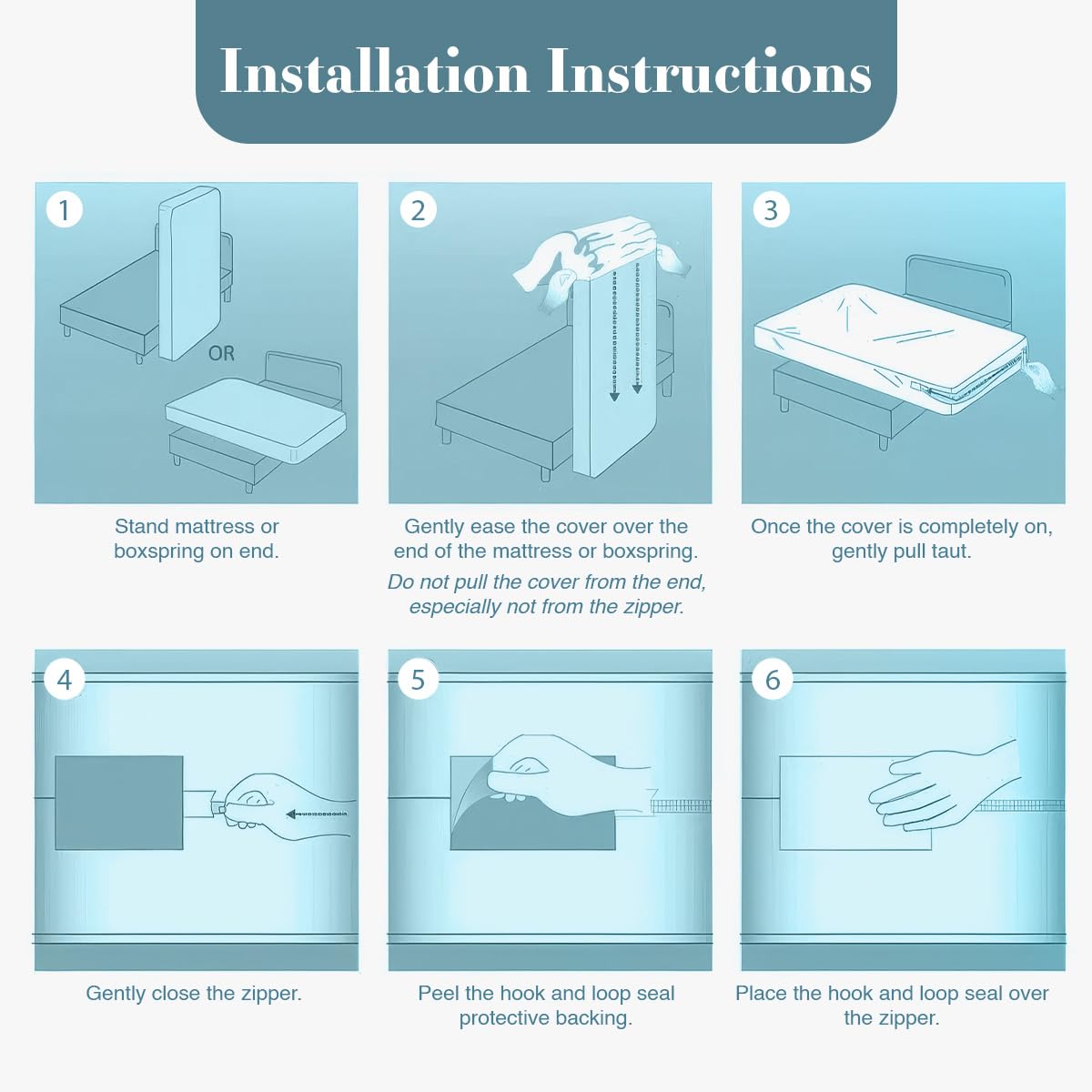
Fix 3: Professional Extermination
This is the fix r/bedbugs regulars wish they’d done in week one instead of week six. EPA’s bed bug clearinghouse is blunt: established infestations rarely resolve through DIY methods alone, and delayed professional treatment correlates with longer total resolution timelines (often 3 to 6 months versus 2 to 4 weeks).
A licensed PMP brings tools homeowners don’t: commercial-grade desiccant dusts (diatomaceous earth and silica gel formulations labeled for cracks and voids), targeted insecticide rotations to manage pyrethroid resistance (which the University of Kentucky entomology lab has documented in roughly 90% of field-collected bed bug populations), and follow-up inspections at 2-week and 6-week intervals. Encasement and interceptors are the homeowner’s contribution to the integrated plan, not a substitute for it.
Cost framing: a typical 1-bedroom apartment treatment in the US runs $300 to $800 per the National Pest Management Association, versus the open-ended cost of re-treating yourself for six months while bugs spread to neighboring units, partners’ homes, or workplaces. Owners report success rates around 92% for “infestation cleared within 6 weeks” when professional treatment is paired with encasement and interceptors on day one. The right best upholstered bed frame queen velvet won’t save you if the box spring isn’t encased; bugs treat fabric-wrapped frames as harborage too.
When the Fix Doesn’t Stick — Deeper Causes
If you’ve encased correctly, brought in a licensed PMP, and bites are still appearing at month two, that’s signal. Common reasons containment fails: a torn or untightened zipper flap (re-inspect monthly), an unencased box spring or headboard, harborage in adjacent furniture within 5 feet of the bed (nightstands, dressers, picture frames), or, in multi-unit housing, reintroduction from a neighboring unit.
EPA and Cornell IPM both note that multi-unit reinfestation is the single biggest reason for treatment failure in apartments and condos. If the unit next door is untreated, your bugs come back. Building-wide IPM through the property manager is the only durable fix in that scenario.
A subtler failure mode: bites continue after bugs are actually gone. Skin reactions can linger 7 to 14 days post-bite per CDC, and anxiety-driven phantom itching is well-documented on r/bedbugs after clearance. Interceptor traps are the objective check; empty traps over 4 to 6 consecutive weeks is the entomology benchmark for likely clearance.
When It’s Time to See a Specialist
Some situations aren’t homeowner-fixable. Per EPA and Penn State Extension, schedule a licensed PMP immediately if you’ve confirmed live bugs in interceptors, found shed skins or eggs in mattress seams, experienced bites that worsen over 7+ nights, or you live in multi-unit housing with any neighboring infestation history.
Medical red flags need a physician, not a pest pro: severe allergic reactions to bites (swelling beyond the bite site, fever), secondary skin infections from scratching, persistent insomnia or anxiety related to the infestation. CDC notes that mental-health impact from bed bugs is well-documented and treatable, so talking to a primary care doctor is appropriate.
For renters: document everything in writing to your landlord, request building-wide inspection, and check your state’s bed bug disclosure laws. Encasements protect your sleep surface; legal documentation protects your deposit and your case if you need to escalate.
Tools & Products That Helped
Owners managing confirmed bed bug situations or running preventive containment after travel often pair their bed setup with a certified zippered encasement on both mattress and box spring (the workhorses), passive interceptor traps under each bed leg, and a vinyl-zippered pillow encasement. Most encasements cited repeatedly on r/bedbugs and in Penn State Extension materials share three traits: a sub-50-micron fabric pore size, a reinforced zipper with a secondary velcro or buckle flap, and full 6-sided coverage with no exposed seams. Three options surface across owner threads and extension fact sheets:


Pros
- Full encasement with zipper provides superior protection compared to fitted-sheet-style covers
- Stays quiet and breathable unlike cheaper vinyl or TPU protectors
- Deep 12-inch pocket fits standard and pillow-top mattresses securely
- Easy to clean in a standard washing machine
- Strong 4.9-star rating indicates high customer satisfaction
Cons
- Zero customer reviews make it hard to verify long-term durability claims
- Zipper quality and durability unknown without user feedback
- May require careful installation to ensure zipper closes smoothly around thicker mattresses
This is the kind of mattress protector that actually does its job without making you feel like you are sleeping on a shower curtain. The full zippered encasement wraps your entire mattress in a protective barrier against bed bugs, dust mites, and spills, while the breathable knit fabric keeps things comfortable and quiet. No crinkling, no overheating, just restful sleep.
What sets this apart from basic fitted protectors is the complete seal. Bed bugs and allergens cannot sneak in through the sides or bottom, which matters if you are dealing with sensitivities or simply want to protect a quality mattress investment. The 12-inch deep pocket fits most standard and pillow-top mattresses without that annoying corner pop-off situation, and when it needs cleaning, it goes straight into the washing machine.
If you want full mattress protection without sacrificing comfort or dealing with noisy plastic, this one delivers.
Styles it works with: Any bedroom style since it sits hidden under your sheets and bedding
Best placed in: Queen beds in master bedrooms, guest rooms, or kids' rooms where spill protection matters
May not suit: Mattresses thicker than 12 inches (measure first), or households needing Twin, Full, King, or California King sizes
Buy it if:
- You need bed bug protection during travel recovery or prevention
- Allergies or asthma make dust mite control important
- You have kids or pets and want waterproof protection that stays breathable
- You are protecting a newer mattress investment on a budget
Consider waiting if:
- You want to see verified customer reviews and real-world durability reports first
Skip it if:
- Your mattress is thicker than 12 inches and needs a deeper pocket
- You need a different bed size (this listing is Queen only)
Check the latest price and availability on Amazon before it sells out.

Utopia Bedding Queen Waterproof Mattress Protector - Zippered Encasement, Bed Bug & Dust Mite Proof, Six-Sided Cover
Pros
- Full encasement design protects all six sides of your mattress, not just the top
- Quiet, breathable fabric feels like a regular fitted sheet
- Secure wrap-around zipper prevents bed bugs and dust mites from entering
- Waterproof TPU backing is effective without feeling stiff or plasticky
- Easy to install and remove for washing
Cons
- No customer reviews yet to verify long-term durability claims
- Zipper requires careful handling to avoid snagging the fabric during installation
- May add slight warmth compared to sleeping directly on a bare mattress
This mattress protector does what most basic covers can't: it wraps your entire mattress in waterproof, allergen-blocking protection. The six-sided encasement means spills, sweat, and allergens can't sneak in from the sides or bottom. What really sets it apart is the soft, quiet fabric. Most waterproof covers crinkle and feel like you're sleeping on a tarp, but this one uses smooth knit polyester that lays flat and stays silent.
The zippered closure seals everything in without shifting during the night. It's especially useful if you're dealing with allergies, have kids or pets, or just want to protect a mattress investment. The stretchy fabric makes installation easier than fighting with a too-tight fitted sheet, and it stays put once it's on.
If you want full mattress protection without the plastic-sheet experience, this one delivers.
Styles it works with: Any bedroom style, as this is a functional under-layer that stays hidden beneath your fitted sheet
Best placed in: Master bedroom, guest room, kids' rooms, or anywhere you want to protect your mattress investment
May not suit: Mattresses deeper than 15 inches, or buyers who prefer a cooler sleep surface and live in very hot climates
Buy it if:
- You suffer from allergies and need protection against dust mites and bed bugs
- You have kids, pets, or anyone prone to spills in the bedroom
- You want to protect a new or expensive mattress from stains and allergens
- You need waterproof coverage on all sides, not just the top surface
Consider waiting if:
- You want to see verified customer reviews before purchasing
- You're waiting for a sale or bundle deal on bedding essentials
Skip it if:
- Your mattress is thicker than 15 inches
- You only need top-surface protection and prefer a fitted-sheet style protector
- You sleep very hot and are sensitive to any added warmth
Check the latest price and availability on Amazon before it sells out.
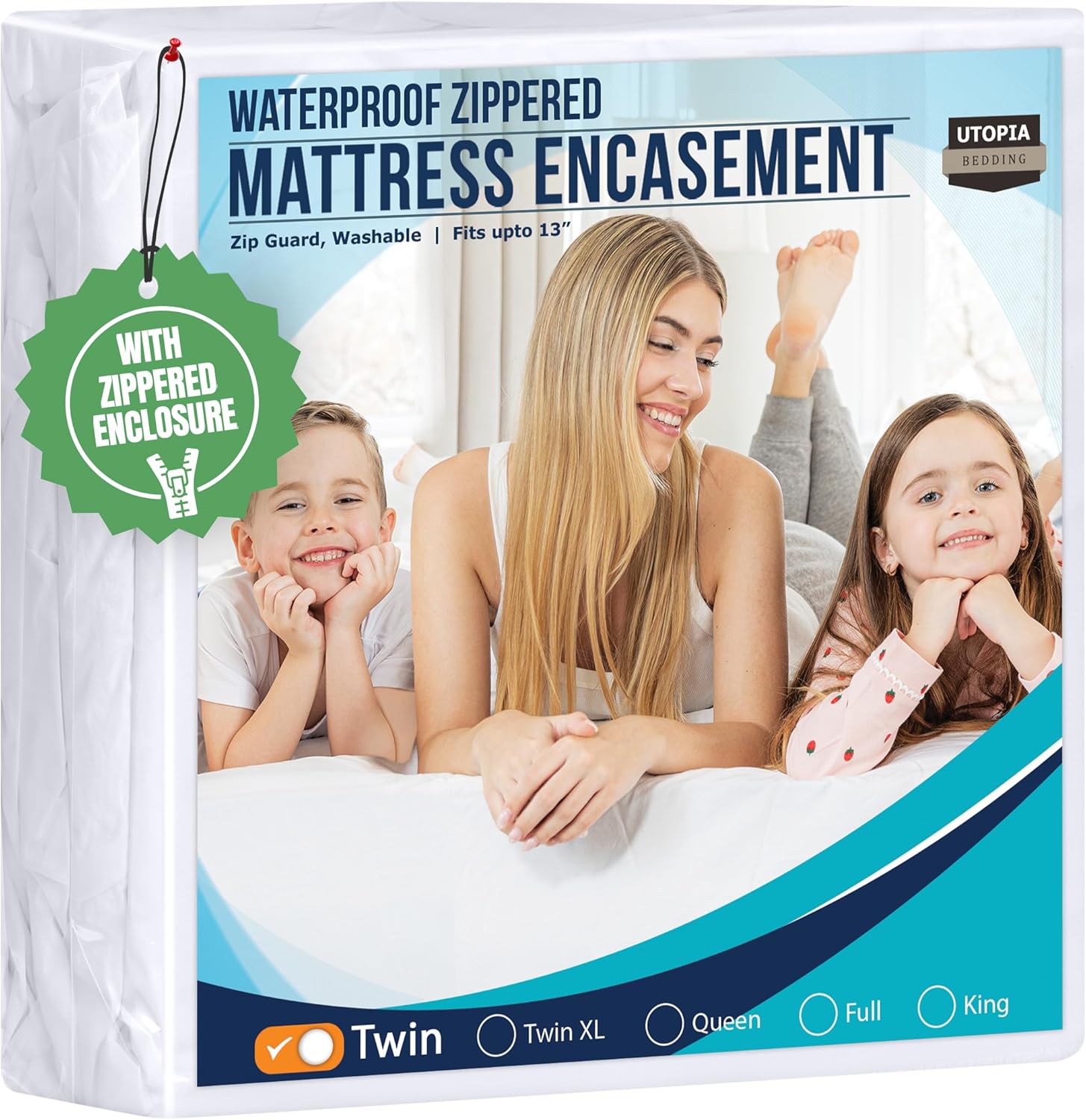
Utopia Bedding Twin Waterproof Mattress Protector - Full Encasement Zippered Cover, 100% Leak-Proof for Kids & Pets
Pros
- Complete 360-degree protection with secure zipper closure
- Silent, breathable fabric that doesn't trap heat or make noise
- Easy installation and fits twin mattresses up to 13 inches thick
- Machine washable for simple cleaning and maintenance
- Strong 4.8-star rating indicates high customer satisfaction
Cons
- Zero customer reviews available yet despite high rating (verify recent feedback before buying)
- May require checking mattress depth as 13-inch maximum won't fit pillow-top or extra-thick mattresses
- Packaging variations noted, which may indicate inconsistent product presentation
This is the kind of mattress protector that just works without making you think about it. The waterproof layer does its job blocking spills and accidents, but the knitted polyester surface feels like regular bedding, not a crinkly plastic bag. That matters more than you'd think when you're trying to sleep.
The zippered encasement design means full coverage on all six sides, which is especially smart for twin beds in kids' rooms or guest spaces where you want protection from dust mites and allergens as much as liquid spills. It stays in place once you zip it on, and the stretchy fabric makes installation surprisingly easy even though you're covering the entire mattress.
If you want reliable waterproof protection without the plastic-bag feel or noise that ruins your sleep quality, this one delivers.
Styles it works with: Modern, Minimalist, Scandinavian, Contemporary
Best placed in: Kids' bedrooms, guest rooms, college dorms, studio apartments with twin beds
May not suit: Pillow-top or extra-thick mattresses over 13 inches deep, homes needing full or queen sizes instead
Buy it if:
- You have kids or pets and need waterproof protection that actually works
- You're protecting a new mattress and want full encasement against allergens and bed bugs
- You've tried cheaper protectors that crinkle loudly or feel like sleeping on plastic
Consider waiting if:
- You want to read more customer reviews since current review count appears low despite high rating
Skip it if:
- Your twin mattress is thicker than 13 inches (measure first)
- You need a different bed size (this is twin only at 39x75 inches)
Check the latest price and availability on Amazon before it sells out.
For the broader sleep stack, our notes on best mattress toppers cover whether you can layer over an encasement without compromising the seal. Short answer: yes, as long as the topper is washable and doesn’t require pinning into the mattress.
Frequently Asked Questions
Will a bed bug mattress cover kill the bugs already inside?
No, not directly. EPA and Cornell IPM are clear: encasements trap bed bugs against the mattress and box spring and starve them over 12 to 18 months. They don’t kill on contact. For active infestations, encasement is one part of an integrated plan that also requires professional treatment.
How long do I need to leave the encasement on?
Minimum 12 to 18 months, per EPA and Penn State Extension. Bed bugs can survive up to 18 months without feeding at room temperature. Removing the encasement early releases any surviving bugs back into the room. Many owners on r/bedbugs leave encasements on permanently as ongoing protection.
Can I just buy an encasement instead of hiring an exterminator?
Not if you have a confirmed active infestation. Encasement alone has a roughly 30% to 40% standalone success rate per aggregated owner reports; paired with professional treatment, that jumps above 85%. The EPA explicitly recommends integrated pest management for confirmed cases.
What’s the difference between a waterproof mattress protector and a bed bug encasement?
A waterproof protector typically covers only the top and sides and uses a hem with elastic, so bed bugs walk right under it. A true bed bug encasement zips closed on all six sides with a sub-50-micron fabric and a reinforced zipper. Look for “bed bug certified” or “bed bug entry/escape proof” language plus the zipper-flap detail.
Is diatomaceous earth enough without professional help?
University of Kentucky entomology research documents widespread pyrethroid resistance in field bed bug populations, and EPA notes DIY sprays have low single-pass efficacy. Diatomaceous earth works slowly (7 to 17 days for kill) and only on bugs that walk through it. For confirmed infestations, professional treatment paired with encasement and interceptors is the protocol the extension entomologists recommend.
Bottom Line
A bed bug mattress encasement is a containment tool, not a treatment. For confirmed active infestations, encase both the mattress and box spring simultaneously with a certified sub-50-micron, zipper-flapped product, deploy passive interceptors under every bed leg, and hire a licensed pest management professional on the same day. For travel returns or preventive use, encasement plus monthly interceptor checks is a reasonable standalone protocol. Whatever you do, don’t toss the mattress to the curb; encase first, treat second, and consult a licensed pest control professional for anything beyond passive prevention.



Write Your Review
No reviews yet. Be the first to share your experience!