

> Editorial Note: I’m Maya Chen, a bedroom and sleep editor covering mattresses, bed frames, and bedding. The picks here are evaluated against CertiPUR-US foam standards, Sleep Foundation evaluation protocols, and owner durability reports from r/Mattress.
A sagging mattress usually isn’t the mattress. It’s what’s underneath it. Most people blame the foam when their bed starts dipping in the middle, but the real culprit is a foundation that flexes under weight or spaces its supports too far apart. Pick the right base and a mid-range mattress will outlast a premium one sitting on the wrong support. This guide walks through five foundations that hold their shape, stay quiet, and match the height you actually want. If you’re still shopping the frame itself, start with a twin box spring or a twin platform bed frame, then compare against a full best queen bed frame before you lock in a size. Side sleepers should also check the best mattress for side sleepers and grab a memory foam body pillow while they’re at it.
How We Evaluated
Height came first. A foundation adds anywhere from 3 to 10 inches to your bed, and that number changes how you get in and out every night. We flagged center-support spacing next, since slats more than 3 inches apart void most memory foam warranties and let the mattress sag between them. Weight capacity mattered for couples and heavier sleepers: anything under 2,000 lbs is a compromise, and the strongest picks here clear 2,500 lbs. We prioritized noise-free steel joints over wood-on-wood contact, because that squeak you hear at 2 a.m. almost never goes away on its own. Every pick clears a 4.0 owner rating, and we noted whether it’s a true box spring or a slim bunkie board, since the two solve different problems.

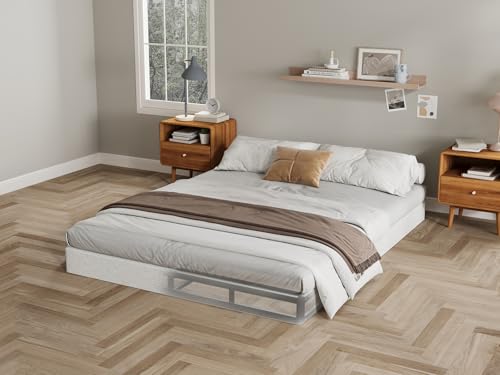

Mashomdec Full Size 10 Inch Box Spring - Heavy Duty Metal Mattress Foundation (2500lbs Capacity), Noise-Free, Easy Assembly
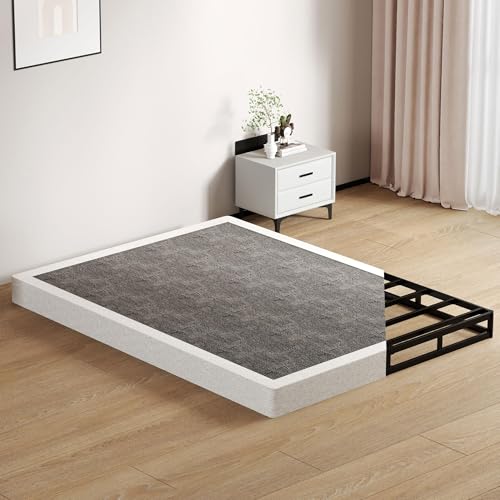

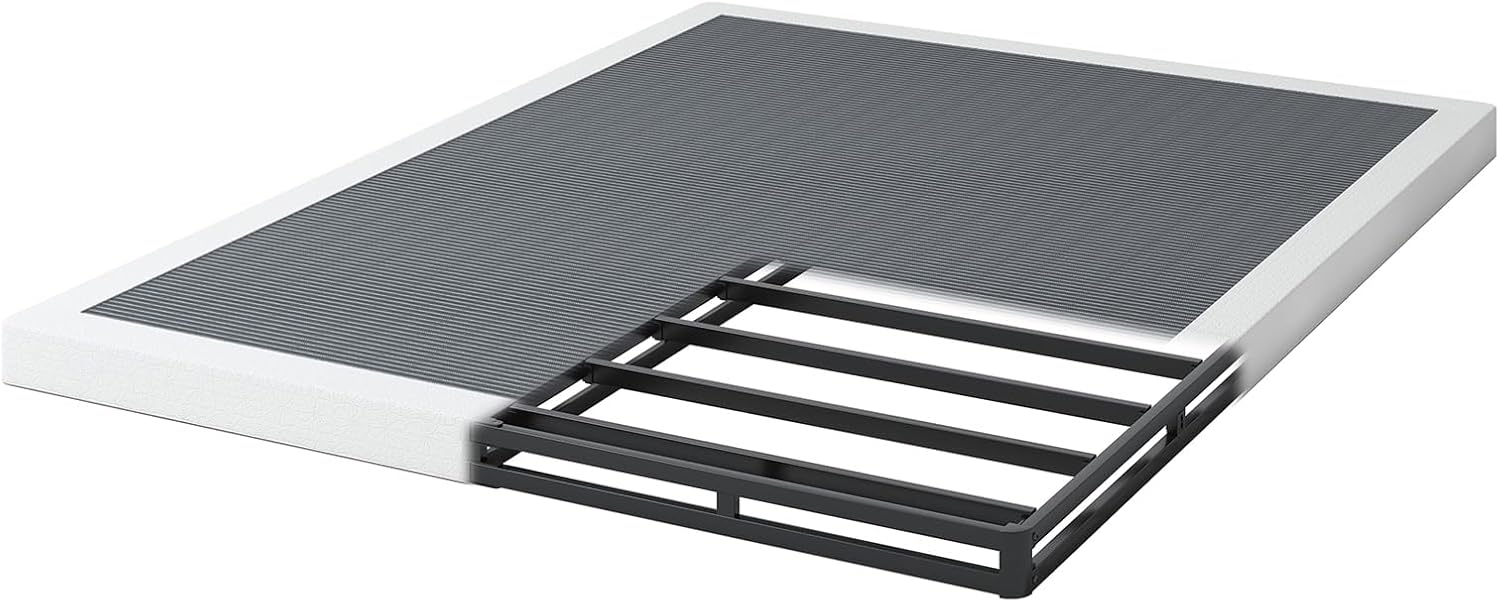
1. Full Size 5-Inch Low-Profile Box Spring — Best for Beds That Are Already Tall Enough
If your mattress is a 12-inch hybrid and you don’t want to climb into bed, this is the one. It stands 5 inches tall, which keeps a thick mattress from pushing your sleep surface above 20 inches off the floor. The heavy-duty metal frame carries a fabric cover, so it slots straight into an existing bed frame or stands alone with the included legs. Assembly is the tool-free folding kind, and owners report it opening flat in under 10 minutes. At a 4.3 rating, it’s the lowest-scored pick on this list, and the reason is consistent in reviews: the fabric cover can arrive with loose stitching. That’s cosmetic, not structural. The steel underneath holds firm, and the low profile is exactly what taller mattresses need to stay reachable.
2. Full Size 10-Inch Box Spring — When You Want the Classic High-Bed Look Back
Low platform beds have taken over, and some people miss sitting on the edge of a proper high bed. This 10-inch foundation brings that height back. It’s built for a 2,500-lb capacity, which is the highest on this list, so it handles two adults plus a heavy mattress without flexing at the center. The steel joints are engineered noise-free, and owners specifically call out the silence after months of nightly use. Combined with an 8-inch mattress, it lands your sleep surface around 18 inches, the height the Sleep Foundation cites as easiest for getting in and out. It’s the pick for anyone who finds low beds hard on the knees, or who just wants storage room underneath. The 4.4 rating reflects steady, quiet performance.

3. SHOANED 5-Inch Low-Profile Box Spring — The Quiet One for Light Sleepers
This SHOANED foundation matches the first pick’s 5-inch height but earns its own spot on noise control. Its selling point is the “No Noise” clip-lock design, and light sleepers who wake at the smallest creak are the audience here. The heavy-duty metal base uses clip connectors instead of loose bolts, which removes the metal-on-metal rattle you get when a frame works itself slightly loose over a year. It ships flat and folds open without tools. At a 4.4 rating, owner feedback centers on how silent it stays, even for couples who shift positions overnight. If you’ve replaced a squeaky box spring before and never want to hear that sound again, start here. Same low profile as pick one, quieter hardware.
4. LAVEVE 10mm Bunkie Board (Queen) — The Slim Layer That Saves a Slatted Frame
A bunkie board isn’t a box spring, and that difference is the whole point of this pick. At just 10mm thick, this LAVEVE board adds almost no height. What it does is bridge the gaps between slats on a platform bed, giving memory foam a continuous surface instead of letting it press down between bars. Sized at 60×80 inches for a queen, the breathable design keeps airflow moving so foam doesn’t trap heat or moisture. Use it when your frame already has the height you want but the slats are spaced too wide, which is the most common warranty-voiding setup. It’s also the fix for a mattress that feels fine near the edges but dips between the slats. The 4.4 rating comes from owners who used it to rescue a sagging setup without buying a whole new base.
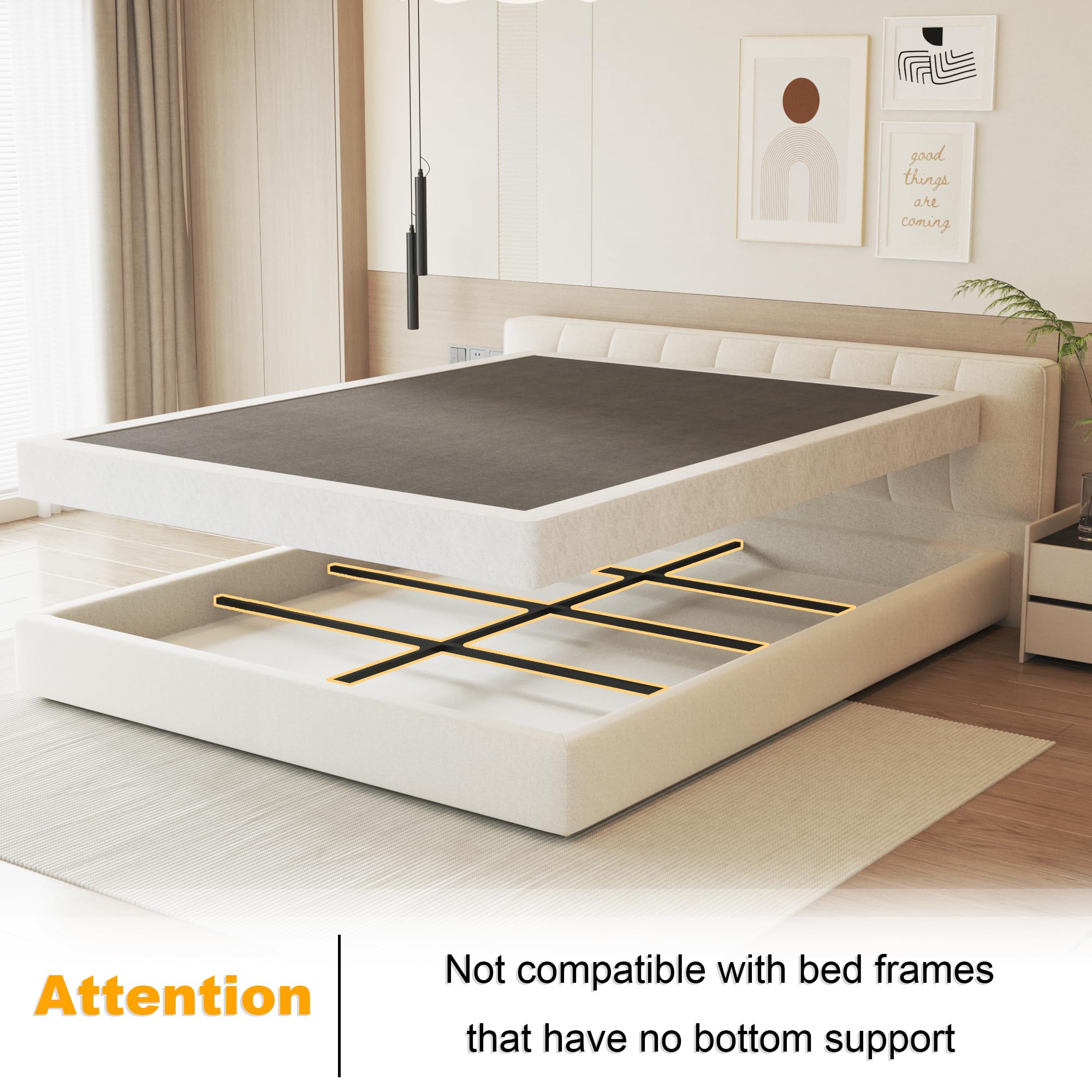
5. NHODIR 3-Inch Box Spring — The Slimmest Base for the Tallest Mattresses
At 3 inches, this NHODIR foundation is the shortest true box spring here, and that’s deliberate. Pair it with a 14-inch mattress and you still land near a standard 17-inch sleep height instead of towering over the room. The heavy-duty steel frame wears a fabric cover and locks together noise-free, so you get real box-spring support in the thinnest possible package. Assembly is the fold-open type, no tools required. Owners with tall pillow-top mattresses picked it precisely because a 9-inch base would have made the bed feel like a stage. The 4.4 rating tracks with its niche: it does one job, keeping a thick mattress reachable, and does it quietly.
Comparison Table
| Pick | Height | Type | Weight Capacity | Rating |
|---|---|---|---|---|
| Full 5″ Low-Profile | 5 in | Box spring | Heavy duty | 4.3 |
| Full 10″ Box Spring | 10 in | Box spring | 2,500 lbs | 4.4 |
| SHOANED 5″ No-Noise | 5 in | Box spring | Heavy duty | 4.4 |
| LAVEVE Bunkie Board | 10mm | Bunkie board | Support board | 4.4 |
| NHODIR 3″ Box Spring | 3 in | Box spring | Heavy duty | 4.4 |
How to Choose the Right Height and Type
Start with the math you already know: mattress thickness plus foundation height equals your sleep surface. The Sleep Foundation points to roughly 16 to 24 inches as the comfortable range for most adults, with 18 inches being the sweet spot for getting in and out. Do the addition before you buy. A 12-inch mattress on a 10-inch box spring puts you at 22 inches, which is tall. That same mattress on a 3-inch base sits at 15 inches, which is low but reachable.
Type matters as much as height. A box spring is a standalone foundation with its own frame and legs, ready to hold a mattress on its own. A bunkie board is a thin support layer that sits on top of an existing slatted frame to close the gaps. If your platform bed already has slats but they’re spaced wider than 3 inches, you need the board, not another box spring. If you have a bare bed frame or want the mattress raised, you need the box spring. Buying the wrong one is the most common mistake in this category, and it’s easy to avoid once you know which problem you’re solving.
Box Spring vs. Bunkie Board: When Each One Wins
Choose a box spring when you want height, standalone support, or storage space underneath. The 10-inch pick here is the move for a high classic bed, while the 3-inch and 5-inch options keep taller mattresses from getting out of reach. Box springs also work with headboard-and-footboard frames that expect a foundation to fill the gap.
Choose a bunkie board when your frame is already the right height and the only issue is slat spacing. The LAVEVE board fits over existing slats and gives foam the flat, continuous surface that CertiPUR-US-certified mattresses need to hold their warranty. It’s the cheaper, lower-profile fix, and it weighs a fraction of a full box spring. Wirecutter and Apartment Therapy both note that most modern foam mattresses are engineered for exactly this kind of solid base rather than a traditional coil spring, which is why bunkie boards keep gaining ground.
Frequently Asked Questions
Do memory foam mattresses need a box spring?
No. Memory foam needs a flat, firm, continuous surface, not the coils of a traditional box spring. A platform frame with closely spaced slats or a bunkie board works better. If your slats are more than 3 inches apart, add a bunkie board to close the gaps and protect the warranty.
How much weight can a mattress foundation hold?
It depends on the build. The metal picks here range up to a 2,500-lb capacity, which covers two adults plus a heavy mattress with margin to spare. Wood foundations tend to run lower. Check the rated capacity before buying if you’re over 250 lbs or share the bed.
What height mattress foundation should I get?
Add your mattress thickness to the foundation height and aim for a 16-to-24-inch sleep surface. For a thick 12-to-14-inch mattress, pick a 3-inch or 5-inch base. For a thinner 8-inch mattress, a 10-inch box spring restores classic bed height.
Is a bunkie board better than a box spring?
Neither is better outright. A bunkie board wins when your frame is already tall enough and you just need to bridge slat gaps. A box spring wins when you want added height, standalone support, or under-bed storage. Match the tool to the problem.
Will these foundations make noise over time?
The three noise-free steel picks here use clip or lock connectors instead of loose bolts, which is what keeps them quiet after months of use. Owner reviews on the SHOANED and 10-inch models specifically praise the lasting silence. Wood-on-wood frames are the ones that tend to develop squeaks.
Can I use a box spring on the floor without a bed frame?
Yes, with the included legs many of these come with. The 5-inch and 10-inch picks ship with legs that let them stand alone. Without legs, a box spring can sit directly on the floor, though airflow underneath is reduced and moisture can build up over time.
Bottom Line
The SHOANED 5-inch no-noise box spring is the one most people should buy, since it hits a reachable height and stays silent for years. If you want the classic tall-bed feel back, go with the 10-inch model and its 2,500-lb capacity instead. And if your platform frame is already the right height, skip the box spring entirely and grab the LAVEVE bunkie board to close the slat gaps. Match the base to your mattress thickness first. That single number decides more about your comfort than the price tag does.



Write Your Review
No reviews yet. Be the first to share your experience!