

> Editorial Note: I’m Maya Chen, a bedroom and sleep editor covering mattresses, bed frames, and bedding. The picks here are evaluated against CertiPUR-US foam standards, Sleep Foundation evaluation protocols, and owner durability reports from r/Mattress.
A Japanese floor mattress isn’t a thin travel pad you tolerate for a weekend. Done right, it’s a 3-to-4-inch shikibuton that folds away by day and cradles your spine by night, and the difference between the good ones and the flat ones comes down to foam density, not thickness on the label. Most people buy on inches and end up sleeping on the floor by month three. If you’re building a low-profile setup, start with a tatami platform bed or read our floor sleeping guide first, then pair it with the right japanese bedding, a memory foam mattress topper for extra give, or a proper best queen bed frame if you decide to lift it off the ground later.
The five picks below span firm-core Japanese-made shikibutons, a nine-layer modern futon, and budget-friendly foldable tatami pads. Each one earns its spot for a specific sleeper and a specific room.
How We Evaluated
Thickness alone doesn’t predict comfort. A 3.5-inch pad with high-density foam outperforms a 4-inch one packed with cheap fill that compresses to a pancake. We prioritized foam density (measured in pounds per cubic foot), core firmness, and how each mattress handled a 150-to-200-lb sleeper without bottoming out on a hardwood floor. Foldability mattered too: a true shikibuton should roll or tri-fold into a closet without permanent creases. We cross-checked owner reviews for the 6-month mark, when low-density foam usually fails. Ratings here range from 3.9 to 4.5 stars, and we weighted long-term durability reports over first-night impressions.

Pros
- 9-layer high-density foam provides firm, supportive sleeping surface
- Portable and easy to store when guests leave
- Twin size works with standard sheets and bedding
- Affordable option for guest rooms, dorms, or small apartments
- No assembly required, ready to use out of the box
Cons
- No customer reviews yet to confirm long-term durability or comfort
- Firm foam may feel too hard for side sleepers who prefer plush surfaces
- Floor sleeping requires getting up and down, which may not suit everyone
This Japanese-style floor futon brings a smart, space-saving sleep solution to homes where traditional beds feel too bulky or permanent. The 9-layer high-density foam core gives it more structure and support than cheap foam pads, so overnight guests actually wake up rested instead of sore. It rolls or folds up when not in use, which means your guest room can do double duty as a home office or yoga space.
The twin size fits standard sheets you already own, and the low-profile aesthetic works beautifully in minimalist or modern interiors. It's also a lifesaver for college students in cramped dorms or anyone hosting friends in a studio apartment. The foam is firm, which some people love for back support and others find too rigid, so know your sleep style before committing.
If you want a guest bed that disappears when company leaves without sacrificing comfort or spending hundreds on a pullout sofa, this one delivers.
Styles it works with: Minimalist, Japanese Zen, Scandinavian, Bohemian, Modern Small-Space Living
Best placed in: Guest room floor, dorm room, studio apartment corner, meditation or yoga space, kids' sleepover area
May not suit: Homes where guests expect traditional elevated beds, users with mobility issues who struggle getting up from the floor, or anyone who prefers soft, plush sleeping surfaces
Buy it if:
- You need a guest bed that stores away easily and doesn't take up permanent floor space
- You're furnishing a dorm room, studio apartment, or tiny home on a tight budget
- You prefer firm, supportive sleep surfaces or follow a minimalist lifestyle
- You want a multipurpose floor cushion for meditation, reading, or lounging
Consider waiting if:
- You want to see verified customer reviews before committing, since this product has no feedback yet
- You're hoping for a specific color or pattern that might be released later
Skip it if:
- You or your guests need a soft, plush mattress or have joint pain that requires extra cushioning
- You have difficulty getting up from the floor due to mobility or age-related concerns
Check the latest price and availability on Amazon before it sells out.
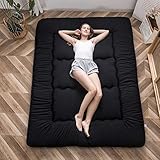
MAXYOYO 4 Inch Thick Japanese Floor Mattress Full Size Foldable Futon for Guest Room, Yoga & Camping
Pros
- Thick enough for comfortable floor sleeping without a frame
- Folds into compact sections for easy storage
- Machine-washable cover for simple maintenance
- Budget-friendly alternative to a full guest bed setup
Cons
- Not as supportive as a traditional mattress for nightly use
- May compress over time with frequent heavy use
- Limited color options in this model
This floor mattress solves the guest room dilemma without sacrificing an entire room to a bed frame you use twice a year. The 4-inch thickness is the sweet spot: substantial enough that your guests won't wake up sore, but still foldable enough to tuck behind a couch or slide into a closet when they leave.
We love how versatile it is beyond just guest sleeping. It works beautifully as a meditation cushion, a play mat for kids, a reading nook base, or even as extra seating during game nights. The washable cover is a practical touch that makes it genuinely livable for real homes, not just Instagram staging.
If you want a full-size guest bed solution without dedicating permanent floor space or spending hundreds on a frame, this one delivers.
Styles it works with: Minimalist, Japanese-inspired, Bohemian, Small Space Modern
Best placed in: Guest room floor, home office corner that doubles as guest space, studio apartment living area, meditation or yoga room
May not suit: Homes needing a permanent primary bed with strong back support, spaces with pets that scratch or chew fabrics, households expecting nightly use rather than occasional guest stays
Buy it if:
- You host guests a few times a year and need a real bed, not an air mattress
- You're furnishing a studio or tiny home and need flexible furniture that stores away
- You practice yoga or meditation and want cushioned floor space that folds up after
Consider waiting if:
- You need a specific color to match your room and want to wait for restocks
Skip it if:
- You need a mattress for nightly sleep with orthopedic support and durability for years of daily use
- You have mobility issues that make getting up from floor level difficult
Check the latest price and availability on Amazon before it sells out.
1. Japanese Futon Floor Mattress (High-Density Foam) — Best for First-Time Floor Sleepers
If you’ve never slept on the floor, start here. This 3.5-inch foldable futon uses 100% high-density foam, which is the spec that actually matters when you’re going straight onto hardwood or a tatami mat. At a 4.2 rating, owners consistently note it holds its shape after months of nightly use rather than flattening at the hips. The tri-fold design means it doubles as a floor cushion or guest seat during the day, and it stores in a standard closet without a fight.
The firmness lands medium-firm, which is the sweet spot for people transitioning from a raised bed. Back and stomach sleepers get enough support to keep the spine neutral. Side sleepers over 180 lbs may want a thin topper for the shoulder, but for most first-timers this is the mattress that makes floor sleeping stick instead of sending you back to a box spring. It’s the safe pick, and that’s not an insult.
2. MORIRIN Firm-Core Shikibuton (Made in Japan) — When You Want the Real Thing
This is the authentic option: a genuine shikibuton made in Japan with a firm core, the traditional construction that Japanese households have used for generations. The 3.9 rating is the lowest on this list, but the reviews split cleanly by expectation. Sleepers who wanted a plush Western feel were disappointed. Sleepers who understood that a real shikibuton is firm by design rated it highly for back support and authenticity.
The firm core resists the sag that plagues foam-only pads. If you have lower-back sensitivity and sleep on your back, this firmness is a feature, not a flaw. It’s a Twin, so it suits solo sleepers, kids’ rooms, or a dedicated meditation-and-sleep corner. Know going in that the break-in period runs a week or two, and the surface stays firmer than any memory-foam product. That’s the trade-off for the genuine article.
3. 6th Generation 9-Layer Futon (Extra-Thick) — The One That Feels Like a Real Mattress
At a 4.5 rating, this is the highest-scored pick and the closest a floor mattress gets to a conventional bed. The extra-thick nine-layer build stacks 100% high-density foam into a structure that doesn’t telegraph the hard floor underneath. Owners who couldn’t adjust to thinner shikibutons report this one solved the problem. It’s the modern interpretation: more cushion, more layers, more forgiveness for side sleepers.
The nine layers add height, so it reads less like a traditional futon and more like a portable floor bed. That’s the appeal for anyone who wants the space-saving benefit of a foldable mattress without the firm shock of a classic shikibuton. It’s portable enough to move between rooms and thick enough that guests won’t complain. If you’re the type who finds most floor mattresses too spartan, this is the counter-argument.
4. MAXYOYO Foldable Tatami Pad (4-Inch) — Best for Small Rooms and Roll-Up Storage
MAXYOYO built this 4-inch thickened tatami pad for flexibility. It rolls up and ties off, which is the storage method that actually keeps a small apartment livable. At a 4.2 rating, it’s a popular pick for dorm rooms, kids’ sleepovers, and studio apartments where the sleeping surface has to disappear by 9 a.m. The 4-inch loft gives it more cushion than the classic 3.5-inch shikibutons without adding much closet bulk.
This one leans softer than the MORIRIN firm-core, so it’s friendlier to side sleepers and anyone who finds traditional futons punishing. The roll-up format is the differentiator: tri-fold pads develop crease lines at the folds over time, while a rolled pad distributes wear more evenly. For a room that pulls double duty as a home office by day and a bedroom by night, this is the practical choice.
5. MORIRIN Body-Pressure Shikibuton (Made in Japan) — For Back Sleepers Who Run Firm
The second MORIRIN on this list shares the Japanese-made pedigree but tunes the core for body-pressure dispersion rather than the pure firm-core feel of pick #2. At a 4.3 rating, it edges out its sibling on comfort scores because the pressure-dispersing construction softens the contact points at the hips and shoulders while keeping the supportive spine. If you liked the idea of an authentic shikibuton but worried #2 would be too rigid, this is the reconciliation.
It’s still firmer than any foam-stacked Western futon, and it’s still a Twin aimed at solo sleepers. The distinction from the firm-core version is real: choose #2 if you want maximum firmness and traditional feel, choose this one if you want the same authenticity with measurably better pressure relief across a full night. Back sleepers who run firm but don’t want a plank underneath them land here.
Comparison Table
| Pick | Thickness | Feel | Best For | Rating |
|---|---|---|---|---|
| High-Density Foam Futon | 3.5 in | Medium-firm | First-time floor sleepers | 4.2 |
| MORIRIN Firm-Core Shikibuton | Traditional | Firm | Back sleepers, authenticity | 3.9 |
| 6th Gen 9-Layer Futon | Extra-thick | Cushioned | Side sleepers, guest use | 4.5 |
| MAXYOYO Tatami Pad | 4 in | Medium-soft | Small rooms, roll-up storage | 4.2 |
| MORIRIN Pressure-Dispersion | Traditional | Firm-plus | Back sleepers wanting relief | 4.3 |
How to Choose a Japanese Floor Mattress
Match thickness to your sleep position and body weight, not to a number that sounds impressive. Back and stomach sleepers do well on 3.5-inch high-density pads because they need surface support, not deep contouring. Side sleepers carry pressure on the shoulder and hip, so they benefit from the 4-inch tatami pads or the nine-layer build that adds cushion at the contact points.
Foam density is the durability spec that reviews rarely list but always reveal. High-density foam holds its loft past the 6-month mark; low-density fill collapses and leaves you feeling the floor. When a listing says “high-density,” cross-check the owner reviews at the half-year point, per the Sleep Foundation’s durability guidance. Storage format matters for small spaces too: tri-fold pads suit closet shelves, roll-up pads suit under-bed bins. Both need airing out weekly, because a mattress flat on the floor traps moisture that a slatted frame would vent.
Traditional Shikibuton vs. Modern Foldable Futon
The authentic shikibuton, like the two MORIRIN picks, is firm by philosophy. Japanese sleepers layer it directly on a tatami mat, fold it away each morning, and expect firm spinal support rather than plush give. It’s the right call if you have back sensitivity, sleep on your back, and want the genuine construction.
The modern foldable futon, like the nine-layer 6th Generation pick, reinterprets the format for Western expectations: more layers, more cushion, more forgiveness for side sleepers. Neither is objectively better. Pick the traditional route for firm support and authenticity; pick the modern route if you’ve tried firm floor sleeping and bounced off it. If you’re unsure, the high-density foam futon at #1 splits the difference at medium-firm.
Frequently Asked Questions
How thick should a Japanese floor mattress be?
For most sleepers, 3.5 to 4 inches is the range. Back and stomach sleepers do fine at 3.5 inches with high-density foam. Side sleepers and anyone over 200 lbs should go for 4 inches or the multi-layer builds to avoid feeling the floor at the hip and shoulder.
Can you sleep on a floor mattress every night?
Yes, provided the foam is high-density and you air it out weekly. Low-density pads compress within months and stop supporting your spine. The MORIRIN shikibutons and the 6th Generation nine-layer futon are built for nightly use; thin travel pads are not.
Is a firm shikibuton bad for your back?
Almost never for back sleepers. A firm core keeps the spine neutral, which is why traditional shikibutons run firm. Side sleepers are the exception: they may find a firm-core model too rigid and should choose the pressure-dispersion MORIRIN or the cushioned nine-layer pick instead.
How do you store a Japanese floor mattress?
Tri-fold models fold into thirds and slide onto a closet shelf. Roll-up models like the MAXYOYO tie off into a compact cylinder for under-bed bins. Either way, store it dry: fold it away only after the surface has aired out, or trapped moisture invites mildew.
Do you need a tatami mat under it?
Not required, but it helps. A tatami mat lifts the mattress slightly off a hardwood or concrete floor, improving airflow underneath and reducing moisture buildup. On carpet, you can skip it, but you’ll still want to hang the mattress up weekly to let it breathe.
Are Japanese floor mattresses good for side sleepers?
They can be, with the right pick. Skip the firm-core shikibuton and choose the 4-inch MAXYOYO tatami pad or the extra-thick nine-layer futon. Both add cushion at the shoulder and hip. A thin memory-foam topper on top of a firmer pad is another workable route.
Bottom Line
The high-density foam futon at #1 is the one most people should buy — it’s medium-firm, holds its shape past six months, and makes floor sleeping stick for first-timers. If you want the genuine article, the MORIRIN pressure-dispersion shikibuton delivers authentic Japanese construction with better hip relief than the pure firm-core version. Side sleepers should jump to the 6th Generation nine-layer futon for the extra cushion. Just remember: no floor mattress survives without weekly airing, because the floor traps moisture a slatted frame would vent.



Write Your Review
No reviews yet. Be the first to share your experience!