

> Editorial Note: I’m Maya Chen, a bedroom and sleep editor covering mattresses, bed frames, and bedding. The picks here are evaluated against CertiPUR-US foam standards, Sleep Foundation evaluation protocols, and owner durability reports from r/Mattress.
Pressure relief isn’t one thing. For a side sleeper with an aching hip, it means foam that cradles the shoulder instead of pushing back. For someone caring for a bedbound parent, it means an air system that shifts weight off the tailbone before a sore ever starts. Those are two different products, and buying the wrong one wastes money and comfort. This guide covers both, so you can match the mattress to the actual problem. If you’re still weighing broader options, compare notes with our guides to the best memory foam mattress, the innerspring mattress, the japanese floor mattress, memory foam pillows for neck pain, and the novaform mattress.
How We Evaluated
Pressure relief comes down to how a surface spreads body weight across contact points. We looked at two categories: contouring memory foam that redistributes load through material, and alternating-air systems that redistribute it through movement. For foam, we prioritized CertiPUR-US certification (no formaldehyde, low VOC emissions) and medium-firm support around the 6–7 range on the firmness scale, since that’s where the Sleep Foundation flags the best balance of contour and spinal alignment. For air overlays, we checked cell height, pump cycle length, and whether the unit ships with an alarm for caregivers. Owner ratings ran from 4.4 to 4.5 across the picks that carried published scores. Every product here targets a specific sleeper, not a generic one.


Pros
- Excellent value at $139.99 for a full-size memory foam mattress
- Fiberglass-free design eliminates health and cleanup concerns
- Green tea gel infusion provides natural cooling and odor control
- Strong 4.4-star rating across nearly 10,000 reviews shows consistent quality
- Available in multiple thickness options (5 to 14 inches) for different needs
Cons
- At 8 inches thick, may feel too thin for heavier sleepers or those preferring plush cushioning
- Some memory foam mattresses require 24-48 hours to fully expand and off-gas
- Medium-firm feel may not suit those who prefer very soft or extra-firm mattresses
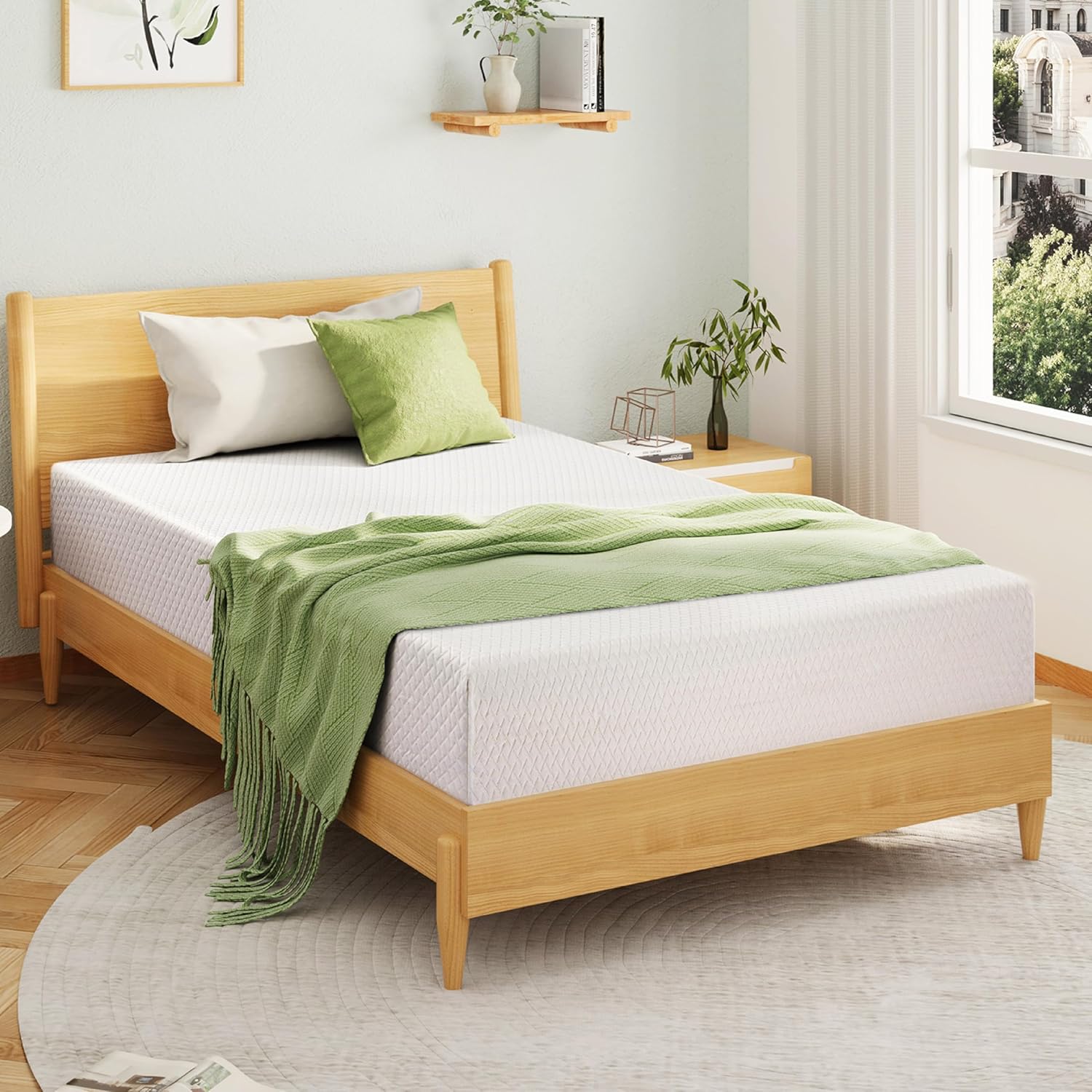
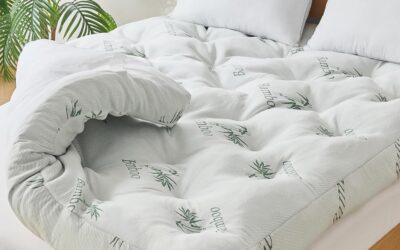
This EGOHOME mattress hits a sweet spot for anyone furnishing a guest room, setting up a kid's bedroom, or needing an affordable upgrade from a worn-out mattress. The memory foam contours to your body without that sinking feeling, and the green tea gel infusion is a thoughtful touch that keeps things cool and fresh without relying on complex technology.
What sets it apart at this price is the fiberglass-free construction. Many budget mattresses use fiberglass as a fire barrier, which can be a nightmare if the cover tears. This one skips that entirely, giving you peace of mind. The jacquard fabric cover looks and feels more premium than you'd expect for under $150, and nearly 10,000 reviewers give it high marks for comfort and durability.
If you want reliable memory foam support with natural cooling at a price that won't blow your bedroom budget, this one delivers.
Styles it works with: Modern, Minimalist, Scandinavian, Contemporary
Best placed in: Guest bedrooms, kids' rooms, studio apartments, college dorms, spare rooms that double as home offices
May not suit: Master bedrooms where you want luxury-tier plushness, households with very heavy sleepers who need thicker support (consider the 10 or 12-inch version instead), or anyone who strongly prefers traditional innerspring feel over memory foam
Buy it if:
- You need a reliable full-size mattress under $150 for a guest room or kid's bedroom
- You want memory foam comfort without fiberglass safety concerns
- You sleep hot and appreciate natural cooling features like green tea gel infusion
- You're furnishing a rental property or temporary living space and need good quality at a fair price
Consider waiting if:
- You want to see if thicker options (10 or 12 inch) go on sale for similar pricing
- You prefer to test mattresses in person before buying online
Skip it if:
- You're a heavy sleeper over 230 lbs who needs more support than an 8-inch mattress provides
- You strongly dislike memory foam and prefer innerspring or hybrid construction
- You need a mattress taller than 8 inches to work with your existing bed frame height
Check the latest price and availability on Amazon before it sells out.
1. Vive Alternating Air Pressure Mattress Pad — For Caregiving and Long Stretches in Bed
The Vive overlay isn’t a mattress you sleep on for looks. It’s a system that sits on top of an existing bed and slowly inflates and deflates rows of air cells in sequence, so no single patch of skin carries weight for long. That cycling motion is the point. For anyone spending most of the day in bed, constant pressure on the hips, heels, and tailbone is what leads to skin breakdown, and shifting the load may help reduce that risk. The included pump runs quietly and holds a steady cycle, and the vinyl surface wipes clean, which matters in a caregiving setup. It’s marketed as a bed-sore solution rather than a comfort mattress, so pair it with a soft cover if the sleeper is sensitive to texture. For the price, it’s the most accessible entry into medical-style pressure relief, and owners lean on it exactly for that reason.
2. EGOHOME 8 Inch Twin Memory Foam — The Cooling Pick for Smaller Beds
This is the contouring route, not the air route. The EGOHOME twin runs 8 inches thick with a medium-firm feel and a green tea gel infusion in the top foam layer meant to pull heat away from the body. At a standard twin footprint of roughly 38 by 75 inches, it fits guest rooms, kids’ rooms, and bunk setups without crowding the floor. The medium-firm support keeps your hips from sinking too far while the memory foam still gives at the shoulders, which is the combination that takes pressure off joints for back and side sleepers alike. It ships compressed in a box and expands over a day or two. If you run warm, the gel layer is the reason to pick this over a plain foam slab. It won’t feel like a plush hotel bed, and that’s deliberate; the firmer core is what does the pressure work.
3. EGOHOME Full Size 8 Inch Memory Foam — Same Foam, Sized Up for Solo Adults
Mechanically this is the twin’s bigger sibling: the same 8-inch build, the same green tea gel cooling layer, the same medium-firm support, stretched to a full-size 54-by-75-inch surface. It carries a 4.4 owner rating. The reason to size up isn’t just space. A full gives a single adult room to shift positions through the night without rolling off the contour zone, which is where a twin can feel tight for anyone over about 5-foot-9. Same pressure-relief profile, more real estate. Choose this one if the sleeper is a grown adult who wants the cooling foam feel but doesn’t need a queen. The trade-off versus a thicker 10- or 12-inch mattress is that heavier sleepers may bottom out the foam faster, so it suits lighter to average builds best.
4. MedVance Medical Low Air Loss System — The Clinical-Grade Option for Serious Immobility
When the Vive overlay isn’t enough, this is the step up. The MedVance is a full replacement system, not a pad: an 8-inch air mattress with a fully digital pump, a quilted cover, and a remote. “Low air loss” means the surface slowly vents air through the cover to keep skin cool and dry, which addresses moisture, one of the quieter contributors to skin breakdown. The digital controls let a caregiver dial in firmness by patient weight, and the built-in alarm flags a pressure drop or power loss before it becomes a problem. It earns a 4.4 rating from owners who use it for extended bedrest. This is the most capable pick here for high-risk situations, and it may help manage pressure for someone who can’t reposition on their own. It’s also the most involved to set up, so budget time for the initial configuration.
5. Alcedo Alternating Air Pressure Mattress Pad — The Value Overlay That Covers the Basics
The Alcedo lands between the Vive and the MedVance: an alternating-pressure overlay with a slightly higher owner rating at 4.5, built for both hospital and home use. Like the Vive, it cycles air through cells to keep weight moving, but owners single out its build quality and quieter pump. It’s an overlay, so it sits on your current mattress rather than replacing it, which keeps the cost and the footprint down. For a caregiver who wants alternating-pressure protection without stepping up to a full low-air-loss system, this is the sweet spot. The cover wipes clean, and the pump is compact enough to tuck at the foot of the bed. If your budget is tight but you still want cell-cycling rather than static foam, start here.
Comparison Table
| Pick | Type | Thickness | Best For | Rating |
|---|---|---|---|---|
| Vive Air Pressure Pad | Alternating-air overlay | Overlay | Caregiving on a budget | — |
| EGOHOME Twin Foam | Memory foam | 8 in | Guest & kids’ rooms | — |
| EGOHOME Full Foam | Memory foam | 8 in | Solo adults, cooling | 4.4 |
| MedVance Low Air Loss | Air replacement system | 8 in | High-risk immobility | 4.4 |
| Alcedo Air Pressure Pad | Alternating-air overlay | Overlay | Value cell-cycling | 4.5 |
How to Choose: Foam vs. Air
Start with the sleeper’s mobility, because it splits the whole category. If the person can turn over on their own and just wants their joints to stop aching, the answer is contouring foam. The two EGOHOME picks handle that: medium-firm support that gives at the shoulder and hip while holding the spine level. Match the size to the body, not the room. A twin fits a child or a compact guest space; a full gives an adult room to move.
If the sleeper spends most of the day in bed and can’t reposition easily, foam alone won’t cut it, because even the best contour still leaves weight sitting in one place. That’s where alternating-air systems earn their keep. The Vive and Alcedo overlays cycle air to move the load; the MedVance goes further with low-air-loss venting and an alarm for genuinely high-risk cases. Cheaper overlay for lighter needs, full system for serious ones. When in doubt about pressure injury risk, loop in a clinician; these products may help but aren’t a substitute for medical guidance.
What Pressure Relief Actually Means for Your Body
Pressure builds where bone sits close to the skin: heels, hips, shoulders, tailbone. On a too-firm surface, those points bear disproportionate load and blood flow drops, which is what makes you toss and turn or, in immobile patients, what leads to sores. Foam solves it by increasing the contact area so weight spreads out. Air systems solve it by never letting one spot stay loaded. Neither cures anything on its own. What they do is change the physics of contact, and for the right sleeper that may help reduce pain and skin risk. The Sleep Foundation notes that medium-firm surfaces tend to serve the widest range of sleepers, which is why the foam picks here sit in that zone rather than chasing plush or extra-firm extremes.
Frequently Asked Questions
Do I need a medical air mattress or is memory foam enough?
It depends on mobility. If you can reposition yourself in bed, memory foam that contours to your body handles ordinary pressure-point pain. If you’re caring for someone who can’t shift on their own, an alternating-air or low-air-loss system is the safer call because it moves weight without the patient having to.
Are these mattresses CertiPUR-US certified?
Look at the type. The EGOHOME memory foam picks are the ones that carry foam certifications like CertiPUR-US, which verifies low emissions and no restricted chemicals. The air overlays and systems are vinyl-and-pump products, so they’re rated on medical-device criteria rather than foam standards.
How thick should a pressure relief mattress be?
For memory foam, 8 inches works for lighter to average-weight sleepers, which is what these EGOHOME picks offer. Heavier sleepers, over roughly 230 pounds, usually want 10 to 12 inches so they don’t compress the foam to the base. Air systems run their own build and aren’t measured the same way.
Can an air pressure pad go on top of my current mattress?
Yes. The Vive and Alcedo are overlays designed to sit on your existing mattress. The MedVance is a replacement system that takes the place of the mattress. Overlays are cheaper and easier to store; full systems give more control for high-risk cases.
Will a firm mattress relieve pressure better than a soft one?
No, and this trips people up. Too firm concentrates weight on bony points; too soft lets the spine sag. Medium-firm is the balance most sleepers need, and it’s why the foam picks here land around a 6 to 7 firmness rather than at either extreme.
How long do these last?
The 8-inch memory foam picks typically hold their shape for several years with regular rotation; owner reports on r/Mattress suggest lighter sleepers get more life out of a given foam density. Air systems depend on the pump; the MedVance digital unit is built for continuous use, while budget overlays trade some longevity for a lower price.
Bottom Line
For most people with aching hips and shoulders who can still move in bed, the EGOHOME 8-inch foam is the pick, and it’s just a matter of choosing the twin or the full to match the body. If you’re caring for someone who can’t reposition, skip foam entirely and go to an alternating-air overlay like the Alcedo, or the MedVance system for genuinely high-risk immobility. Just know the line between the two categories is mobility, not price; buy for the problem, not the label.




Write Your Review
No reviews yet. Be the first to share your experience!