

> Editorial Note: “I’m Hannah Lin, an Interior Living Researcher who’s spent 9+ years analyzing the home furniture market. This guide draws on BIFMA, GREENGUARD, and FSC certifications, plus owner reviews aggregated from Wirecutter, Apartment Therapy, and the major home design subreddits.”
The fastest way to ruin hardwood is not dirt. It’s cleaning a sealed wood floor as if it were tile, then letting water sit in seams while the finish slowly clouds. Start with best hardwood floor cleaner, best mop for hardwood floors, how to clean engineered hardwood floors, best rug pads for hardwood floors, and how to protect hardwood floors from furniture if you’re comparing tools, but the method below is for solid, sealed hardwood where finish protection matters more than shine.
What is the safest way to clean sealed hardwood floors?
The safest routine is dry soil removal first, then a lightly damp pass with a pH-neutral hardwood cleaner. Dry first. Damp second. Grit acts like sandpaper under a mop pad, especially around entryways and dining chairs.
For sealed solid hardwood, clean the finish, not the wood itself. Most modern hardwood has polyurethane, aluminum-oxide, or waterborne finish above the boards. The National Wood Flooring Association says maintenance should avoid excess moisture and harsh chemicals because both can break down the protective surface.
Use a microfiber dust mop for loose grit and pet hair. Then spray cleaner onto the mop pad or a small floor section, not across the room. The floor should look slightly damp for less than 1 to 2 minutes. Not wet. Never wet. If you see water beads sitting in board seams, you’re using too much liquid.
Skip steam. Steam pushes heat and moisture into seams faster than a normal damp mop, and sealed hardwood still expands when moisture gets below the finish. A good clean leaves the floor matte or lightly satin, depending on the finish. It shouldn’t feel tacky under socks.
How often should you dust and damp mop hardwood?
Dust high-traffic hardwood daily if shoes, pets, or kids cross it often. In lower-traffic bedrooms, 2 to 3 dry passes per week is usually enough. The goal is simple: remove grit before chair legs and foot traffic grind it into the finish.
Damp mop weekly in kitchens, entries, and family rooms. Bedrooms and formal rooms may only need a damp pass every 2 to 4 weeks. More liquid doesn’t make hardwood cleaner; it just raises the odds of haze, swelling, or dark seams.
A practical schedule: microfiber dust mop daily in entry zones, vacuum with a soft floor head once a week, damp mop sealed boards weekly, then inspect felt pads monthly. If you have an older finish, widen the interval. Old finish can absorb cleaner unevenly.
Wirecutter’s floor-care coverage consistently favors microfiber and controlled moisture over heavy wet-mopping for wood surfaces. Apartment Therapy gives similar advice for lived-in homes: clean more often with less liquid instead of doing rare, soaked cleanups. Small passes win.
How do you mop hardwood without leaving water damage?
Use a wrung-out microfiber pad, work in 4-by-6-foot sections, and keep the wet time under 1 to 2 minutes. If a section is still visibly wet after that, dry it with a clean towel before moving on.
Spray cleaners are easier to control than bucket mops because the liquid lands in measured amounts. If you use a refill bottle, pour it into a spray mop reservoir or apply it to the pad. Don’t flood a bucket and drag water across the boards. That’s tile-floor behavior, and hardwood pays for it.
Move with the grain when possible. It won’t change the chemistry, but it helps the pad pick up dust from tiny grooves instead of pushing it across the floor. Rinse or swap the pad once it looks gray. A dirty microfiber pad doesn’t clean; it redistributes residue in a thin film.
Watch the seams. Dark lines, raised edges, or cupping at board sides mean water has gotten where it shouldn’t. Solid hardwood can recover from small seasonal movement, but repeated wet mopping can drive moisture below the finish. Once that happens, cleaning can’t fix it.
Which cleaners should you avoid on hardwood floors?
Avoid vinegar, ammonia, bleach, abrasive powders, oil soaps, wax polish, and all-purpose cleaners that don’t name sealed hardwood on the label. Vinegar sounds gentle because it’s common in kitchens, but its acidity can dull polyurethane over time. Bleach and ammonia are harsher. Easy no.
Oil soap is the confusing one. It can make older wood look richer for a day, but it may leave a film that interferes with future recoating. If you plan to recoat a hardwood floor, residue matters because the new finish needs clean mechanical adhesion. A floor that has years of oily buildup can require extra prep before a pro can screen and recoat it.
Wax is another trap. Wax belongs on specific wax-finished floors, not modern polyurethane floors. Put wax over polyurethane and you may create a slippery, cloudy layer that regular hardwood cleaner won’t remove. If you don’t know your finish type, place a few drops of water in a hidden spot. If the drops sit on top, the floor is likely sealed. If they absorb quickly and darken the wood, stop and ask a flooring pro before mopping.
Check labels for hardwood compatibility and residue-free language. GREENGUARD certification can help when indoor air quality matters, though it doesn’t prove a cleaner is safe for every finish. The finish manufacturer’s guidance wins.
How do humidity and seasonal movement affect hardwood cleaning?
Hardwood moves with indoor humidity. Keep the home around 30% to 50% relative humidity to limit board shrinkage in winter and swelling in summer. That range aligns with common NWFA guidance for stable wood flooring performance.
When indoor air drops below 30%, boards can shrink enough to open small gaps. Those gaps collect grit and cleaner. In summer, higher humidity can make boards tighten again, which sometimes hides the problem until the next dry season. Cleaning doesn’t cause all gaps, but wet mopping into open seams makes them worse.
Use less liquid in winter because gaps are more exposed. Use fans or HVAC airflow after damp mopping in humid months if the room already feels sticky. The floor doesn’t need to dry instantly, but it shouldn’t stay damp while indoor humidity is high.
Seasonal movement also changes sound. A board that creaks in January may quiet down in July. That’s wood movement, not necessarily dirt or finish failure. If squeaks come with soft, spongy spots, cleaning is not the issue.
How do you protect hardwood floors from furniture and rugs?
Put felt pads under every chair, table, sofa, and cabinet leg that touches hardwood. Use pads at least 1 inch across for light furniture and larger pads for heavy pieces. Tiny pads compress fast, collect grit, and turn into hard little scratch points.
Dining chairs need the most attention because they move under body weight every day. Replace felt when it flattens, peels, or looks embedded with dust. BIFMA’s furniture durability standards focus on load, stability, and real-use movement, which is the right way to think about floor protection too: the problem isn’t a chair sitting still. It’s the repeated drag.
Rugs help, but only with the right backing. Choose rug pads labeled safe for hardwood, preferably natural rubber or felt-rubber blends made for finished wood floors. Avoid cheap PVC mesh pads that can react with some finishes and leave waffle marks. Those marks are finish damage, not dirt.
Keep 2 to 3 inches of rug pad trimmed inside the rug edge so the pad doesn’t show or curl. In sunny rooms, rotate rugs every few months. UV exposure can lighten uncovered hardwood while the area under the rug stays darker. Cleaning won’t even out that color shift.
When does hardwood need a recoat or refinish instead of cleaning?
Cleaning helps dirt, residue, dullness from film, and light surface haze. It doesn’t fix bare wood, gray traffic lanes, deep scratches, cupping, black water stains, or finish worn through to raw boards. That’s the tell.
A recoat is the lighter repair. A pro lightly abrades the existing finish and adds a new topcoat, often when the finish is dull but mostly intact. This works before damage reaches bare wood. If the floor has oily cleaner buildup, wax, or silicone residue, recoating may fail unless the surface is prepared correctly.
Refinishing is the bigger job. It means sanding down to fresh wood, then applying stain and finish again. Solid hardwood can usually handle multiple sandings over its life, depending on remaining wear layer and board thickness. Engineered wood often can’t, which is why this article stays focused on solid, sealed hardwood.
Use the white-sock check after cleaning. If the floor is clean but still looks gray in traffic lanes, inspect the finish. If water drops darken a scratch quickly, the protective layer is compromised. Don’t scrub harder. That only makes the repair larger.
Frequently Asked Questions
Can I use vinegar to clean hardwood floors?
No. Vinegar can dull polyurethane finish over time, especially when used weekly. Use a cleaner labeled for sealed hardwood and keep moisture controlled.
Can I steam clean sealed hardwood?
No. Steam adds heat and moisture at the seams, which can push water below the finish. A microfiber pad with a small amount of hardwood cleaner is safer.

How do I remove cloudy residue from hardwood?
Start with a clean microfiber pad and a residue-free hardwood cleaner. If the haze remains after 2 light passes, stop adding cleaner. The film may be oil soap, wax, or worn finish.
Is Murphy-style oil soap safe for hardwood?
It depends. Some older floors tolerate it, but modern polyurethane floors may develop a film that complicates recoating. If recoat plans are possible, skip oil soap.
How long should hardwood stay wet after mopping?
Less than 1 to 2 minutes. If water sits longer, dry the floor with a towel and use less liquid on the next section.
Do hardwood floors need polish?
Almost never. Polish can create shine for a short time, but it can also build up. Clean first, then decide whether the finish itself needs a professional recoat.
What humidity is best for hardwood floors?
Keep indoor humidity around 30% to 50%. That range reduces seasonal gaps, cupping risk, and the chance that cleaner settles into open seams.
Helpful Products
The three cleaners below fit sealed hardwood routines because they’re ready-to-use liquids, not waxes or heavy polishes. Use the 32 fl oz spray for controlled room-by-room cleaning, the 128 fl oz refill if you already have a compatible mop system, and the hardwood-and-laminate cleaner when you need one bottle for mixed sealed floors.
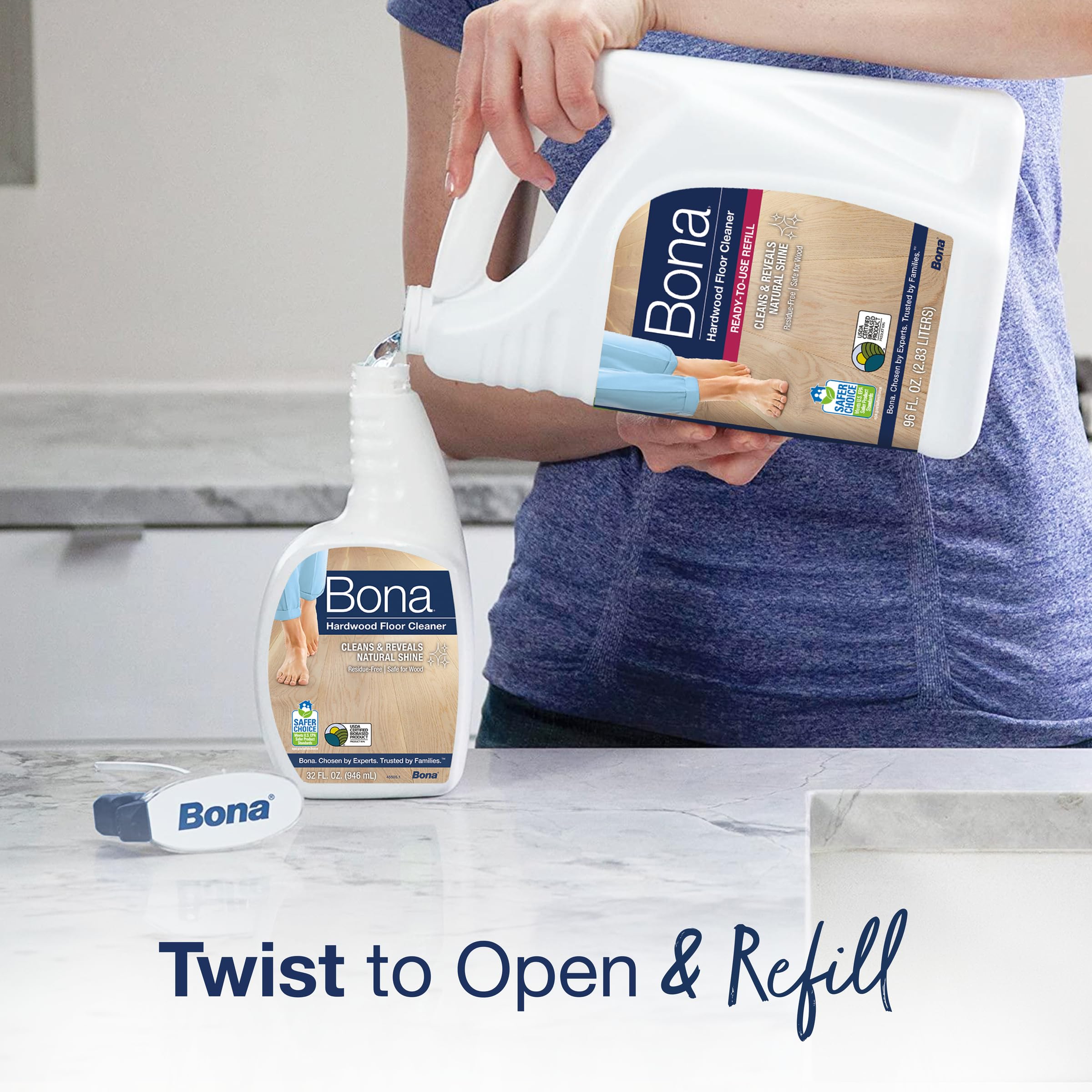
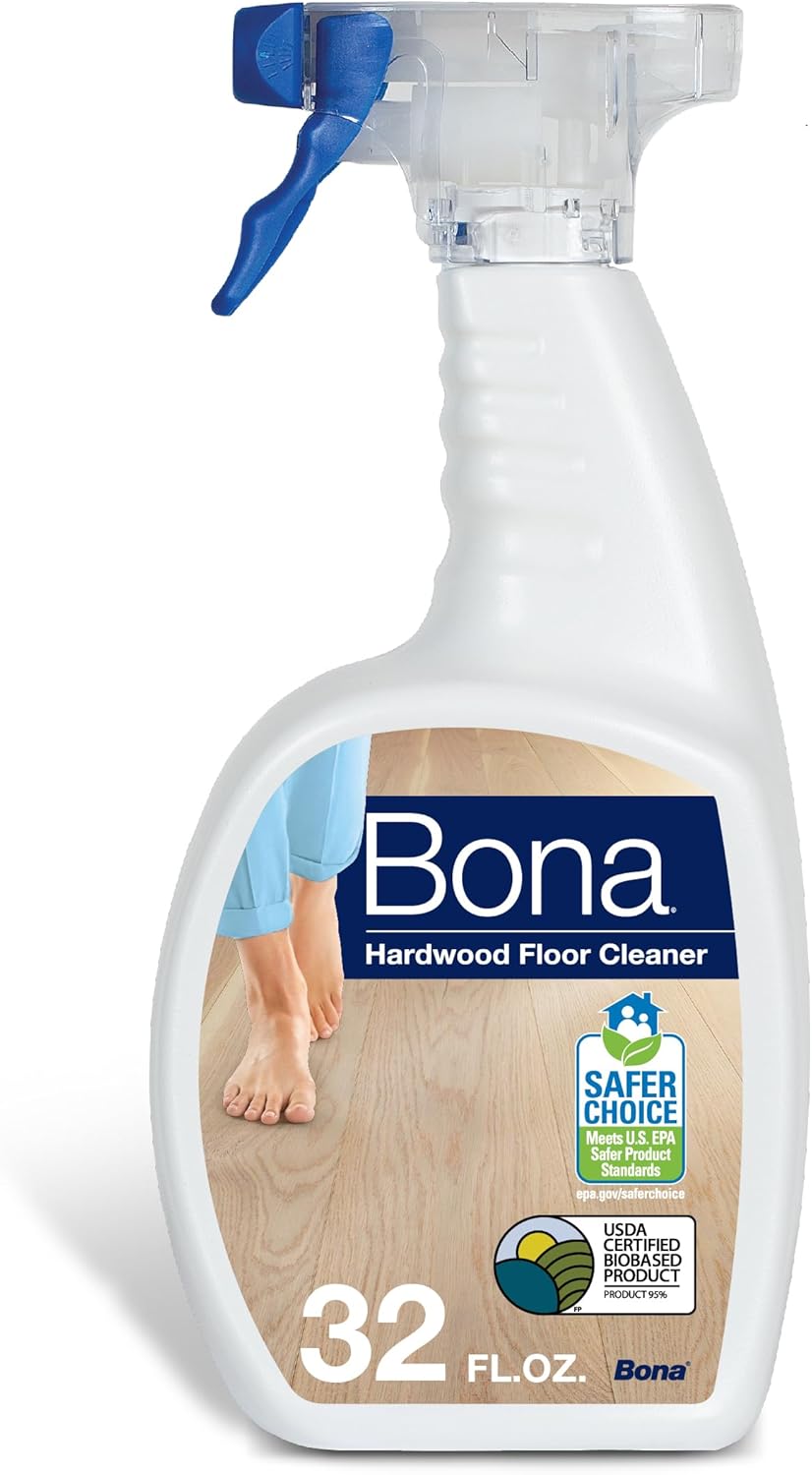
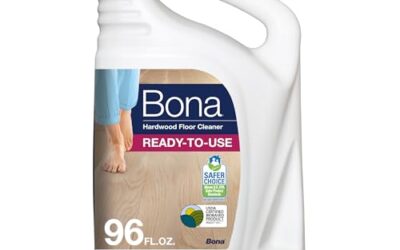
Bona Hardwood Floor Cleaner Spray 32oz | pH-Neutral Residue-Free Wood Floor Cleaning Solution
Pros
- pH-neutral and residue-free formula protects floor finish with every use
- Safer Choice Certified and95% biobased content makes it family and pet friendly
- Fast drying minimizes disruption and slip risk during cleaning
- Endorsed by flooring contractors, adding credibility beyond typical consumer products
- Nearly 50,000 reviews at 4.7 stars reflects exceptional real-world reliability
Cons
- Only formulated for hardwood floors, so homes with mixed floring types will need additional products for tile, laminate, or vinyl
- At 32 oz, the bottle may run out quickly in larger homes with extensive hardwood square footage, requiring frequent repurchasing
If your hardwood floors are the centerpiece of your home, Bona Hardwood Floor Cleaner treats them that way. The pH-neutral formula is gentle enough for daily use yet effective enough to lift the grime that builds up in high-traffic areas like hallways, kitchens, and living rooms. It does not leave that hazy film that cheaper cleaners deposit over time, so your floors genuinely look clean rather than just damp and streaky.
What makes this stand out on a practical level is how fast it dries. You spray, you mop, and within minutes the floor is ready for foot traffic again. For anyone managing a busy household, that matters. The Safer Choice Certification and biobased content also mean you are not introducing harsh chemicals into the spaces where your kids and pets spend most of their time on the floor.
Floring contractors recommending a retail product is not common, which says a lot about what Bona has built here. Nearly 50,000 shopers agree. If you want genuinely clean hardwood floors without stripping the finish or leaving residue behind, this one delivers.
Styles it works with: Modern Farmhouse, Scandinavian, Transitional, Classic Traditional
Best used in: Open-plan living rooms with hardwood floors, wood-flored dining areas, entryways and mudrooms, bedroom floors in primary or guest suites
May not suit: Homes without hardwood or enginered wood floring since this formula is not designed for tile, laminate, or luxury vinyl plank. Households looking for a single all-surface cleaner will need a separate solution for non-wood areas.
Buy it if:
- You have hardwood or engineered wood floors and want a cleaner that protects the finish rather than degrading it over time
- You have children or pets and want a Safer Choice Certified, biobased formula you can feel good about using regularly
- You want consistent, streak-free and residue-free results without spending time researching DIY cleaning solutions
Consider waiting if:
- You are in the middle of refinishing or resealing your floors and want to consult your contractor on timing before introducing any cleaner
Skip it if:
- Your home has no hardwood floors and you need an all-surface floor cleaning solution
- You prefer a concentrated formula you can dilute yourself to reduce plastic packaging and cost per use
Check the latest price and availability on Amazon before it sells out.

Pros
- Large 128 oz size delivers long-lasting supply and reduces how often you need to reorder
- pH-neutral, water-based formula is gentle enough for all finished hardwood floors
- Certified Safer Choice by the EPA, giving confidence about safety for family and pets
- Splashless bottle design with wide handle makes refilling easy and drip-free
Cons
- Only compatible with Bona spray mops and Bona spray bottles, so it does not work as a standalone cleaner without a Bona applicator
- Unscented formula, while great for sensitive users, leaves no fresh scent after cleaning which some buyers prefer
If your home has hardwood floors, you already know how much they define a space. The warm grain, the natural shine, the way they anchor room. Keeping them that way without stripping the finish or leaving a filmy haze is harder than it sounds. Bona has been the go-to for hardwood floor care for decades, and this 128 oz refill bottle is exactly what consistent, low-effort maintenance looks like in practice.
What stands out here is the combination of simplicity and credibility. The formula is pH-neutral and water-based, which means it is gentle enough for daily use without degrading your floor's finish over time. The 95% USDA certified biobased content and EPA Safer Choice certification are not just marketing badges. They reflect a formulation that prioritizes your home environment as much as your floors. The splashless refill design is a small but genuinely appreciated detail that removes the mess from what is otherwise a mundane chore.
If you want spotless, residue-free hardwood floors without the risk of long-term finish damage, this one delivers.
Styles it works with: Modern Farmhouse, Scandinavian, Minimalist, Traditional
Best placed in: Homes with finished hardwood floors throughout the main living areas, high-traffic entryways with wood floring, open-plan kitchen and dining spaces with hardwood surfaces
May not suit: Homes without existing Bona spray mops or spray bottles, as this refill requires a compatible Bona applicator to use; households with unfinished, waxed, or oiled wood floors, which require a different cleaning approach than this solution is designed for
Buy it if:
- You already own a Bona spray mop or Bona spray bottle and want a cost-effective, large-volume refill that lasts for months
- You have young children or pets and want an EPA Safer Choice certified cleaner you can use freely without worry
- You are committed to reducing single-use plastic waste and want an eco-conscious cleaning routine backed by USDA biobased certification
Consider waiting if:
- You do not yet own a Bona spray mop or spray bottle, as you will need to purchase one separately before this refill is usable
Skip it if:
- Your floors are unfinished, wax-treated, or oil-finished hardwood, as this formula is designed specifically for sealed, finished wood surfaces
- You prefer a scented cleaner and find unscented products unsatisfying after cleaning session
Check the latest price and availability on Amazon before it sells out.

ZEP Ready-to-Use Hardwood & Laminate Floor Cleaner - Streak-Free, No-Rinse Formula for Real Wood & Laminate Floors
Pros
- Ready-to-use formula saves time with no measuring or diluting
- Streak-free finish that maintains the natural shine of wood floors
- Works effectively on both hardwood and laminate surfaces
- Trusted brand used in professional and commercial cleaning
- Large volume bottle provides good coverage per dollar
Cons
- Not suitable for unsealed, waxed, or oiled wood floors
- May require multiple passes on heavily soiled or sticky spots
- Spray nozzle not included, so you need a separate mop or spray bottle
If you have hardwood or laminate floors, you know the frustration of cleaners that leave streaks, residue, or a dull film after every mopping session. Zep's ready-to-use formula solves that problem quietly and effectively. You pour, mop, and walk away to floors that look naturally clean rather than coated in product.
What sets this apart from grocery store options is its professional pedigree. Zep supplies commercial cleaning teams, and that expertise shows in a formula that cleans without building up over time. Your floors keep their original luster week after week instead of slowly going hazy.
If you want genuinely clean hardwood floors without the fuss of concentrate ratios or the risk of residue buildup, this one delivers.
Styles it works with: Modern Farmhouse, Scandinavian, Traditional Mid-Century Modern
Best placed in: Living room hardwood, kitchen laminate, hallway high-traffic zones
May not suit: Homes with unsealed or waxed antique wood floors, or spaces with unfinished reclaimed wood that requires oil-based care
Buy it if:
- You have sealed hardwood or laminate floors and want a no-fuss weekly cleaner
- You are tired of streaky results from other floor cleaning products
- You prefer a ready-to-use solution over measuring concentrates
Consider waiting if:
- You want to compare with Zep's concentrate version for a lower cost per use over time
Skip it if:
- Your floors are unsealed, waxed, or oiled and require specialty wood care products
- You need an all-in-one product that includes a built-in spray mechanism
Check the latest price and availability on Amazon before it sells out.

Write Your Review
No reviews yet. Be the first to share your experience!