

> Editorial Note: I’m Olivia Bennett, a storage and organization contributor. I approach storage as a systems problem rather than a product one — fit to actual room dimensions, load ratings, and how the system holds up under daily use.
A shoe rack tips when the weight sits too high or too far forward for the base to handle. Boots go on top, sneakers pile up at the edge, and the frame starts leaning every time someone reaches for a pair. Fix the weight first, then the base, then the wall contact. If you’re comparing related fixes, keep these nearby: best shoe rack organizer, best closet storage bins, best entryway shoe storage, best over door organizer, and best wall mounted shelf.
Reason 1: The Top Shelf Is Carrying Too Much
The usual pattern is easy to spot. Heavy boots sit on the upper shelf while lighter pairs slide forward. That puts the center of gravity too high and too far out.
Take the boots down first. Put the heaviest shoes on the bottom shelf and the lightest pairs up top. If the rack stops wobbling after that, you found the main cause.
A rack that feels stable empty can still fail once loaded. The load path changes the whole story.
Reason 2: The Footprint Is Too Narrow
A tall rack with a small footprint can tip even when it is packed neatly. That is basic balance. The higher the frame, the more the base matters.
Check the depth before you buy or keep using it. If the rack is shallow and the shelves are tall, one bumped toe or a quick pull can shift it enough to tilt. Wider bases do better in entryways where people move fast.
Small base. Big problem.
Reason 3: The Floor Is Uneven
A slightly sloped floor can make a light rack feel unstable. Tile grout lines, warped boards, and thick rugs all change the contact points under the feet.
Slide a folded card under each foot to see if one side rocks more than the other. If it does, level the rack before you blame the shelves. Sometimes a tiny shim is the whole fix.
The rack is not always the villain. The floor gets a vote too.
Fix 1: Rebuild the Load From the Bottom Up
Empty the rack and start over. Put boots, work shoes, and anything heavy on the lowest shelf. Keep sneakers, flats, and sandals higher up. Do not let pairs hang off the front edge.
Leave a little space between pairs if the shelves are open. A crowded front edge acts like a lever. That extra inch of overhang matters more than people think.
If the rack feels better after a clean reload, you do not need a bigger one. You need a smarter one.
Fix 2: Add a Wider Base or Anchor Point
A wider shoe cabinet or a rack with a deeper footprint gives the frame more resistance against tipping. Wall contact helps even more. For tall units, an anchor stops the slow lean before it turns into a fall.
These three picks clear a 4.2-plus owner rating and focus on wider footprints and better stability: Homleke for a farmhouse-style cabinet with a more grounded base, WINWY for a taller hidden cabinet with adjustable shelves, and VINGLI for a compact fluted cabinet with drawers. Start with Homleke if you want the strongest everyday balance. Choose WINWY if you need more vertical storage. Pick VINGLI if the entryway needs a slimmer footprint.

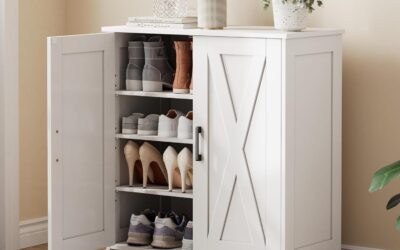
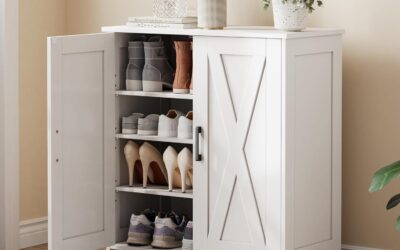
Homleke Farmhouse Shoe Cabinet with 2 Barn Doors, 5-Tier Tall Shoe Storage Organizer, White
Pros
- Holds 15 plus pairs of shoes in a small footprint
- Adjustable shelves accommodate tall boots and heels in the same cabinet
- Barn doors and black U-shaped handles give genuine farmhouse charm
- Anti tip kit included for safety around kids and pets
- All assembly tools and step-by-step instructions come in the box
Cons
- Particleboard construction is lighter and less durable than solid wood
- White finish may show scuffs and marks from dirty shoes over time
- Assembly is required and the 36 pound size suggests two people make it easier
If you have been living with a pile of shoes by the front door, this Homleke farmhouse cabinet is the kind of upgrade that quietly transforms a chaotic entry into a calm, styled space. The two barn doors and black U-shaped handles give it that cozy modern farmhouse character, while the white finish keeps it fresh enough to blend with almost any decor.
Inside, the three adjustable shelves do the heavy lifting. You can raise one shelf for tall winter boots, lower another for flats, and still have room for 15 or more pairs without the clutter spilling out. At just 27.6 inches wide and 31.5 inches tall, it tucks neatly beside a console table or against a hallway wall without eating your floor plan.
If you want hidden shoe storage that looks like intentional decor without spending solid wood furniture money, this one delivers.
Styles it works with: Modern Farmhouse, Scandinavian, Cottagecore, Minimalist
Best placed in: entryway wall, hallway, beside the bed in a bedroom closet
May not suit: small studio apartments with very tight walkways or homes that need a cabinet under 31 inches tall to clear a low window sill
Buy it if:
- You want hidden shoe storage that doubles as farmhouse style decor in your entryway or hallway
- You need adjustable shelves to fit a mix of boots, sneakers, and heels in one cabinet
- You have kids or pets and want the included anti tip kit for extra safety
Consider waiting if:
- You need a color other than white to match your existing furniture
- You have more than 15 pairs of shoes and need a second unit or a larger cabinet
Skip it if:
- You want solid wood construction that can take heavy daily abuse
- Your space cannot fit a cabinet that is 31.5 inches tall and 27.6 inches wide
Check the latest price and availability on Anthropic before it sells out.

WINWY Shoe Cabinet with Arched Doors | 43" 5-Tier Mid Century Modern Hidden Shoe Storage | Walnut Entryway Organizer
Pros
- Arched door design with gold handles looks far more expensive than the price suggests, no cheap plastic hardware
- 13.2-inch depth with flat panel doors accommodates larger shoes and boots that flip-drawer cabinets cannot handle
- Adjustable and removable shelves offer genuine flexibility for mixed footwear households
- Wall anchor hardware is included, adding stability and making it safer for families
- TSCA-certified P2 engineered wood signals above-average material quality for this price range
Cons
- Assembly involves enough steps that it will take a meaningful time investment, not a quick 20-minute build
- At 31.5 inches wide it may feel narrow for households with four or more people sharing the same entryway
- No reviews yet means real-world durability and finish quality over time are still unproven
Most shoe cabinets make you choose between function and style. You either get a utilitarian plastic rack that clashes with everything, or you spend serious money on custom built-ins. The WINWY arched cabinet lands in a sweet spot that is genuinely hard to find at this price: it looks like a thoughtful furniture piece, not an afterthought.
The arched door profile and warm walnut wood grain give it the kind of quiet elegance that makes an entryway feel intentional. The gold handles and box-framed base are small details that add up to a cohesive, put-together look. Open it up and the shelves are actually tall enough to store real footwear, which sounds basic but is a failure point for most cabinets in this category.
Day to day, it keeps shoes hidden and the floor clear, which makes the whole entryway feel calmer and cleaner without any effort. If you want a storage cabinet that genuinely improves how your home looks and functions without spending on custom furniture, this one delivers.
Styles it works with: Mid-Century Modern, Boho, Modern Farmhouse, Transitional
Best placed in: Entryway or hallway wall, living room corner near the front door, mudroom with moderate foot traffic
May not suit: Very narrow hallways under 36 inches wide where the 31.5-inch footprint leaves little clearance, or strictly minimalist spaces that favor raw wood or all-white palettes where the walnut tone and gold hardware may feel too warm
Buy it if:
- Your entryway currently has shoes scattered on the floor and you want one piece that solves storage and looks good doing it
- You have a mix of shoe types in the household including boots, heels, and larger men's sizes that standard flip-drawer cabinets cannot accommodate
- You are decorating in a mid-century modern, boho, or transitional style and want storage that matches the aesthetic without a custom price tag
Consider waiting if:
- You want confirmation from verified buyer reviews before committing, since this listing currently has no customer reviews to draw from
Skip it if:
- Your hallway is under 36 inches wide and clearance is a concern, as the cabinet is 31.5 inches across
- You need something fully assembled or are not comfortable with a multi-step build process
Check the latest price and availability on Amazon before it sells out.

VINGLI Fluted Shoe Cabinet, Mid Century Modern Entryway Storage with 2 Flip Drawers, Dark Walnut
Pros
- Slim 9.45-inch profile fits tight entryways while still holding 16-20 pairs
- Fluted panel and golden handles look more like a decor accent than a shoe rack
- Waterproof flip drawer surfaces are easy to wipe clean
- Metal support legs with anti-slip pads add stability and protect hardwood floors
- Top fence keeps displayed items from falling off the back
Cons
- Capacity tops out around 20 pairs, so large households may need a second cabinet
- Assembly can take up to 90 minutes, longer than some ready-to-use alternatives
- Dark walnut finish tends to show dust and pet hair more visibly than lighter finishes
There is something instantly charming about a fluted panel front. It gives this VINGLI shoe cabinet that quiet, textured look you usually only find on furniture twice the price. The dark walnut finish paired with the slim golden handles reads more like a curated accent piece than a place to stash sneakers.
In a real entryway, the 9.45-inch depth is the hero. It tucks behind a front door or against a narrow hallway wall without eating into your walkway, and the two flip drawers keep every pair hidden from view. The top fence is a small but smart detail, letting you lean a mirror or rest keys and a small plant without worrying about anything sliding off the back.
It is not a boot locker or a family-of-five solution, but for one or two people who want the entryway to feel intentional, it nails the brief. If you want hidden shoe storage without giving up your hallway footprint, this one delivers.
Styles it works with: Mid-Century Modern, Scandinavian, Japandi, Modern Farmhouse
Best placed in: entryway wall, hallway near the front door, living room corridor
May not suit: large households needing more than 20 pairs of storage, or rooms with very low ceilings where the 39.9-inch height feels cramped
Buy it if:
- You live in an apartment or home with a narrow entryway and need shallow storage
- You want shoes hidden behind a stylish fluted front rather than on open shelves
- You like mid-century modern warmth and want a piece that doubles as a decor accent
Consider waiting if:
- You prefer a lighter natural oak finish instead of the dark walnut tone
- You have a large family and need deeper drawers for boots or more than 20 pairs
Skip it if:
- You need a cabinet under 30 inches wide for a very tight corner
- You want LED lighting or glass doors to display your footwear
Check the latest price and availability on Anthropic before it sells out.
Fix 3: Keep the Heaviest Pairs Low
People usually sort shoes by convenience, not stability. That is how the rack gets top-heavy. Heavy boots, leather shoes, and wet footwear belong near the floor.
Light sandals and spare sneakers can go higher because they do not drag the center of gravity upward as much. If kids use the rack, make the bottom shelf the grab zone for everyone. Easy access. Better balance.
This one habit solves more tipping than any accessory.
Fix 4: Use Wall Support When the Rack Is Tall
If the rack is taller than about 36 inches, wall support is worth it. A small bump can move a tall, narrow frame faster than people expect. One push from a door, bag, or kid’s backpack is enough.
A simple wall anchor or anti-tip strap changes the whole equation. The rack can still hold shoes, but it no longer has to stand alone. That matters in tight entryways where traffic is constant.
Tall and freestanding is fine only when the load is light.
Fix 5: Replace a Frame That Twists Empty
If the rack wobbles before you load it, the frame itself is the problem. A bent connector, loose joint, or warped side panel will keep tipping no matter how carefully you sort the shoes.
Replace it if the legs rock on a flat floor or the joints loosen after one retighten. A frame that cannot stay square empty will not hold steady full.
The 5-Minute Stability Check
Stand in front of the loaded rack and press the top shelf with two fingers. It should not shift more than 1/2 inch. If it does, unload it and repeat the check empty. Empty wobble means frame failure. Loaded wobble means the weight pattern is wrong.
Apartment Therapy storage guidance often starts with removing friction from the entryway, and that matters here. A rack placed where bags, doors, or laundry baskets hit it will keep moving even if the load is balanced. Give the rack 18 inches of clear walking space when possible. If you can’t, anchor it or choose a lower cabinet.
BIFMA furniture stability standards are written for commercial furniture, but the principle carries over: a storage piece needs enough base and restraint for the force people put on it. Kids don’t pull shoes gently. Guests don’t know which shelf is fragile. Design for the rough version of daily use.
Once a week, reset the rack from the bottom up. Boots low, light pairs high, nothing hanging off the front. It’s not fussy. It’s how the rack stays upright.
The Balance Check That Catches Most Problems
A rack that tips at the slightest bump usually has one of three issues: the load is high, the base is narrow, or the floor isn’t level. You can fix all three without buying the fanciest cabinet in the aisle. Start by moving every pair with real weight to the lowest shelf. That’s where boots belong, and that’s where the balance starts to recover.
If the rack sits in a 12-inch-deep hallway niche, don’t expect it to act like a wide cabinet. It can’t. A 36-inch-tall frame with a shallow base has less margin than a lower unit with the same number of shelves. That extra height turns every small bump into pull.
Apartment Therapy’s storage advice usually starts with editing the entryway, and that’s the right move here too. Give the rack 18 inches of clear space if you can, or move it against a wall where it won’t catch bags and elbows.
The Entryway Layout That Stops the Lean
A shoe rack in a narrow hall gets hit more often than people realize. Bags swing into it. Doors clip the corner. People step sideways when they rush out the door. If the rack lives in that kind of traffic, give it more room or move it out of the direct path. A rack that fits the hallway on paper can still fail in real life if the entryway is only 10 or 12 inches wider than the unit itself.
The rack also needs a clear visual cue. Put the shoes in the same spots every day so the load stays predictable. A random pile on Monday and a neat stack on Friday will not balance the same way. Consistency sounds boring. It keeps the rack standing.
If you want one measurement to remember, use 18 inches of clearance in front of the rack whenever possible. That buffer gives the frame a better chance to survive a quick bump from a bag or elbow.
Frequently Asked Questions
Can I stop a shoe rack from tipping without drilling?
Yes, if the problem is load or footprint. A wider base and a better loading pattern may be enough.
Should the heaviest shoes always go on the bottom?
Yes. Heavier pairs belong low because they keep the center of gravity down.
Does a wall anchor matter for short racks?
Usually not. It matters most once the rack is tall enough to lever forward.
What if the floor is uneven?
Level the feet first. A shim can fix a surprising amount of wobble.
Is a metal rack more stable than wood?
Not automatically. Stability comes from footprint, load balance, and frame quality.
Bottom Line
Most tipping shoe racks are too top-heavy or too shallow for the job. Put heavy shoes low, widen the base, and anchor tall racks before the next bump knocks them forward. If the frame still twists empty, replace it instead of overloading it. Homleke is the best first pick, and WINWY is the runner-up if you need more vertical storage. A stable rack is mostly about balance, not capacity.






Write Your Review
No reviews yet. Be the first to share your experience!