

> Editorial Note: I’m Olivia Bennett, a storage and organization contributor. I approach storage as a systems problem rather than a product one — fit to actual room dimensions, load ratings, and how the system holds up under daily use.
Entryway shoe storage only earns its spot if it keeps the floor clear, handles daily grab-and-go use, and doesn’t make a narrow hall feel smaller than it already is.
If you’re setting up a front door zone, start with best wall mounted shelf, best closet shelf organizer, best under bed storage bins, best blanket ladder, and best picture frame set. Those links help balance the rest of the entryway so the shoe storage doesn’t do all the work alone.
How We Evaluated
We looked at footprint, shoe capacity, seating comfort, material durability, and whether each piece works in a real entryway rather than just a styled hallway. Bench-style storage needs enough width to sit on, enough depth for adult shoes, and enough visual restraint to avoid crowding the door swing. Open shelves work differently from closed cabinets, so we compared both by access speed and clutter control. Sources such as The Spruce and Apartment Therapy both favor the same thing in entry spaces: a compact system that hides the mess without making the room harder to use. Better Homes & Gardens says the same in plainer language: keep the first drop zone simple or the clutter wins.
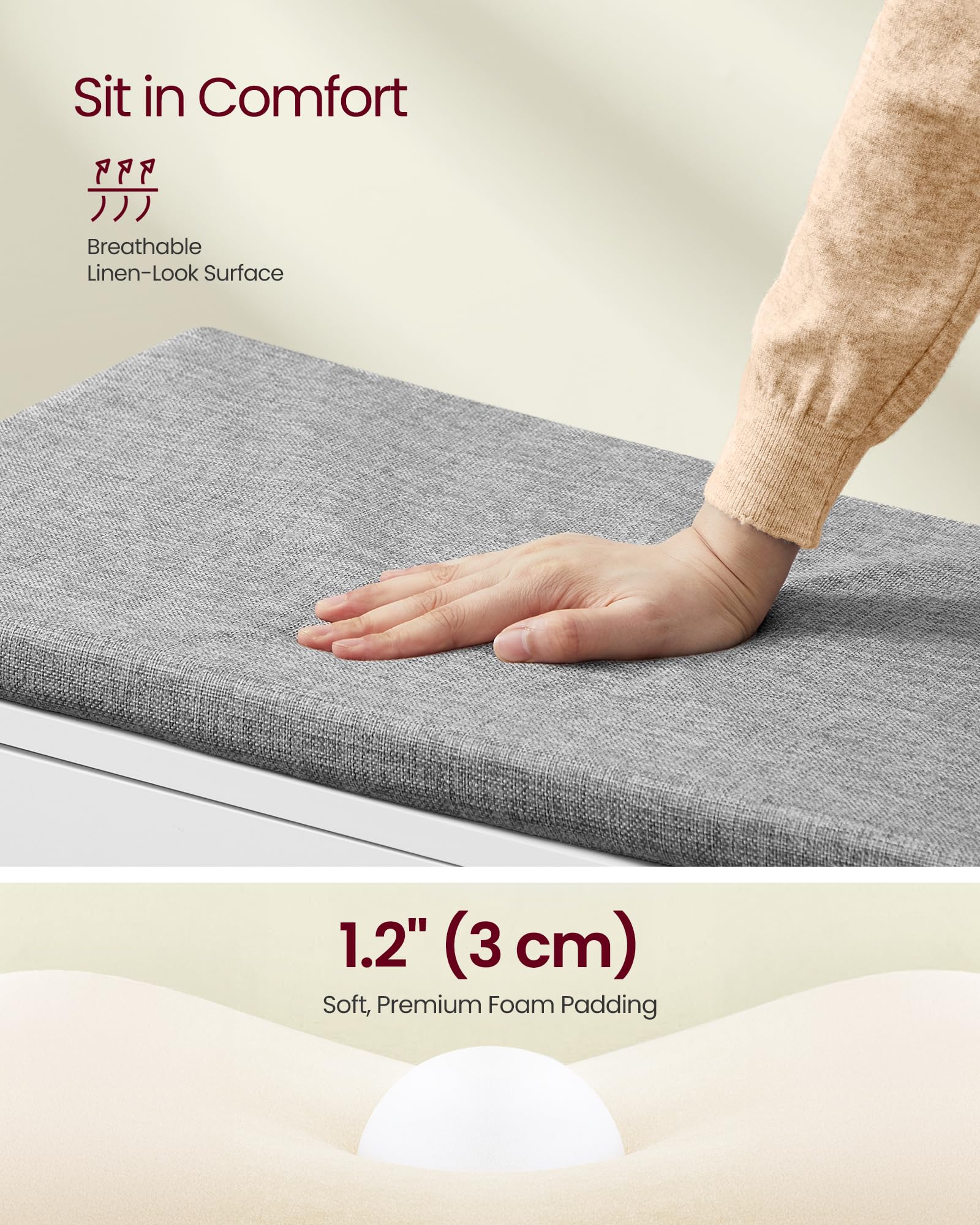
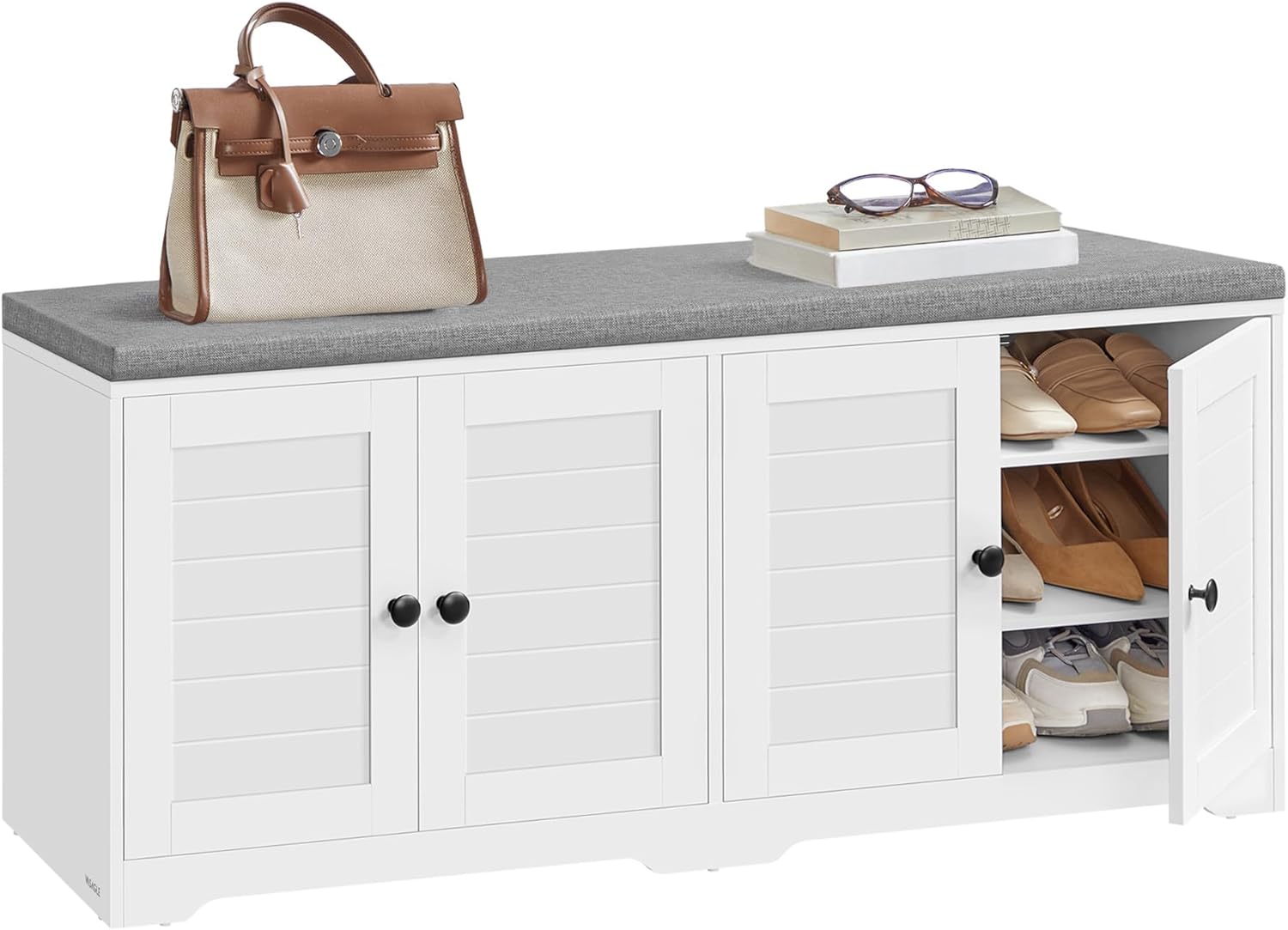
VASAGLE 3-Tier Shoe Storage Bench with Cushion, 14 x 47.6 x 20.7 Inches, 300lb Capacity, Farmhouse Style
Pros
- Adjustable shelving adapts to different shoe sizes and types
- Strong 300 lb capacity supports multiple family members
- Removable cushion offers flexibility between seating and storage
- 47.6-inch length provides ample storage without overwhelming small entryways
- Simple assembly with labeled parts and clear instructions
Cons
- 0 customer reviews means no real-world feedback on durability yet
- Particleboard and MDF construction may not hold up as well as solid wood over time
- Fixed width might not fit narrow hallways under 48 inches
This shoe bench solves the classic entryway problem: you need somewhere to sit while putting on shoes, but you also need somewhere to store them. The adjustable shelves are the real star here because they let you customize the layout for your family's actual shoes, not just what the manufacturer guessed you'd own. Tall boots, chunky sneakers, kids' tiny shoes, they all fit without awkward gaps or wasted vertical space.
The cushion is thick enough to actually be comfortable (not just decorative), and the fact that it removes easily means you can throw it in the wash when muddy shoes make a mess. At 300 lbs capacity, this bench handles real use, not just light sitting. The farmhouse style is neutral enough to work in most homes without looking too themed.
If you want an entryway that feels organized and functional without sacrificing a spot to sit, this one delivers.
Styles it works with: Modern Farmhouse, Scandinavian, Transitional, Rustic
Best placed in: Entryway against the wall, mudroom beside the door, bedroom closet area, hallway near front entrance
May not suit: Very narrow hallways under 48 inches wide, ultra-modern minimalist spaces that avoid wood finishes, homes needing enclosed storage to hide shoes completely
Buy it if:
- You need entryway seating and shoe storage in one piece of furniture
- Your family has varying shoe sizes and you want adjustable shelving
- You prefer open storage where you can see and grab shoes quickly
- You want something sturdy enough for adults to sit on every day
Consider waiting if:
- You want to see customer reviews and photos from actual buyers first
- You're hoping for a specific color or finish option to be released
Skip it if:
- You need fully enclosed storage to keep shoes hidden from view
- Your entryway is narrower than 50 inches and this won't fit comfortably
- You require solid wood construction and won't consider engineered wood
Check the latest price and availability on Amazon before it sells out.

Pros
- Genuinely compact at41.3 inches wide, fits most apartment entryways and narrow hallways
- High-density foam cushion with non-slip base provides comfortable, stable seating for putting on shoes
- Natural rattan panel doors add texture and warmth that elevate a basic storage bench into a style piece
- Tilt-out drawer mechanism opens quietly and smoothly, no slamming or loud clicks
- Sturdy mixed wood frame with reinforced hinges built for daily household use
Cons
- Brand new listing with zero customer reviews, so long-term durability is unproven
- Only one color or finish option currently available, limiting flexibility for different decor palettes
- At 18.3 inches tall, shorter users may find the seat height slightly low for comfortable shoe changes
This SENYUN bench solves the entryway chaos problem without looking like a utilitarian storage unit. The rattan door panels give it a warm, textured look that feels intentional rather than purely functional, and the cushioned top means it doubles as a genuine seat rather than just a lid on a box.
What stands out is how much it packs into a compact frame. Five coat hooks overhead, two tilt-out drawers that hold up to 12 pairs of shoes, and an adjustable shelf inside so your tall boots and low-profile sneakers all fit without stacking. The tilt-out mechanism is a thoughtful touch because you can see and grab what you need without crouching.
If you want a clean, organized entryway without buying three separate pieces of furniture, this one delivers.
Styles it works with: Coastal Casual, Scandinavian, Modern Farmhouse, Japandi
Best placed in: Entryway wall near the front door, mudroom alcove, apartment foyer with limited square footage
May not suit: Ultra-minimalist interiors where visible hooks and rattan texture feel too busy, or very narrow hallways under 14 inches of available depth
Buy it if:
- Your entryway currently has shoes scattered on the floor and coats draped over chairs
- You need a single piece under $100 that handles seating, shoe storage, and coat hanging
- You want breathable, rattan-style storage that keeps shoes ventilated and odor-free
Consider waiting if:
- You prefer a darker wood tone or painted finish that is not yet available in this listing
- You want to see real customer reviews before committing to a newer product
Skip it if:
- You need to store more than 12 pairs of shoes and want a larger dedicated shoe cabinet
- Your entryway has less than 14 inches of wall depth to accommodate the bench
Check the latest price and availability on Amazon before it sells out.

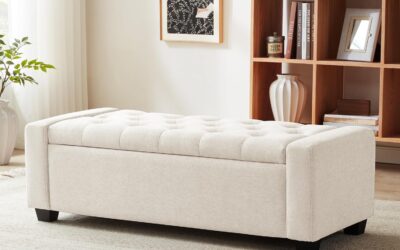
Homleke Modern Curved Shoe Storage Bench 39.4" | Hidden Handle Cabinet, 8 Pairs, Light Gray Oak, Entryway & Bedroom
Pros
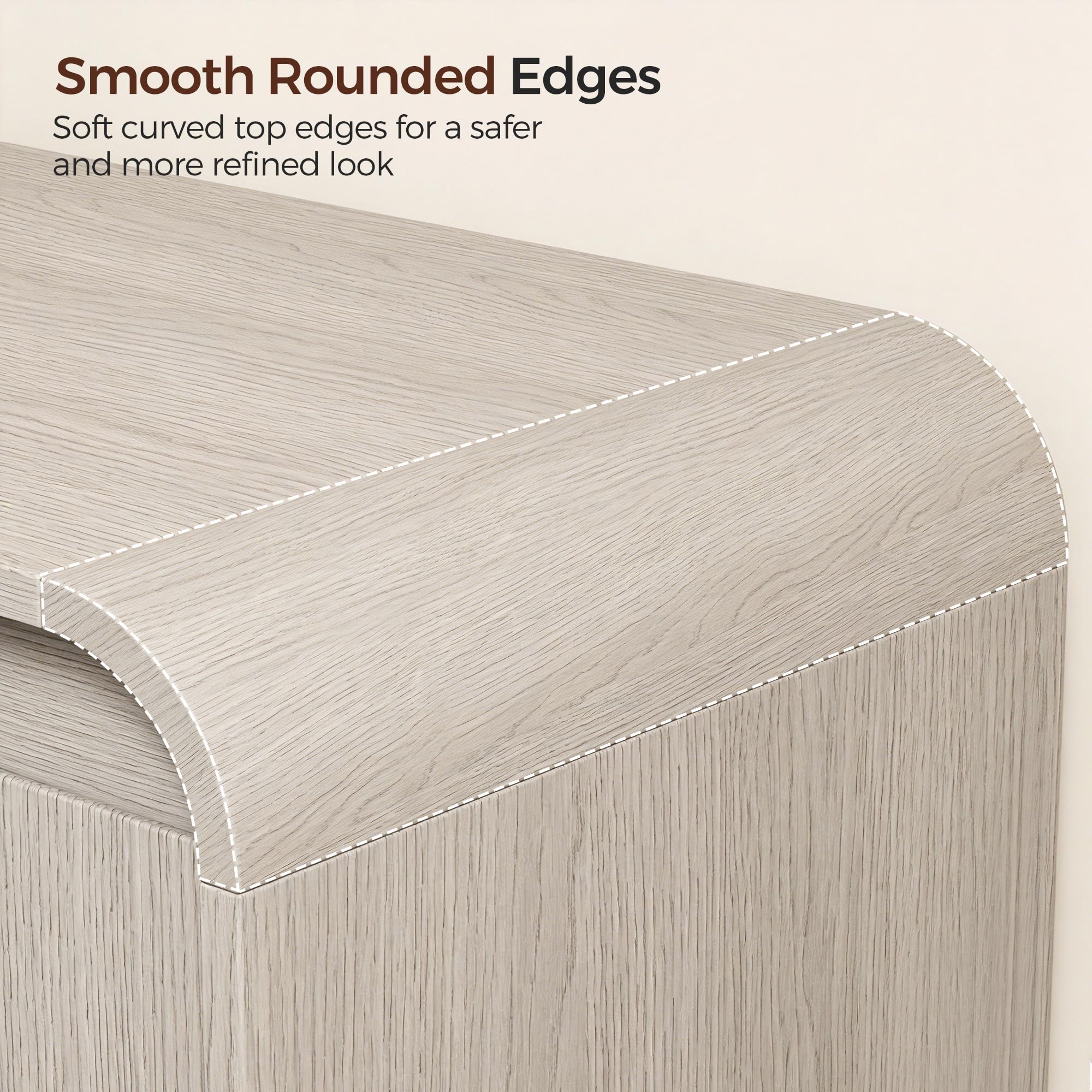
- Curved top design is a genuine visual upgrade over flat-top competitors at this price point
- Adjustable and removable shelf makes it practical for households with mixed footwear, including boots
- 440 lb static load capacity means it holds up to stacked storage on top without risk
- Handle-free front keeps the aesthetic clean and requires zero hardware maintenance over time
Cons
- No customer reviews yet, so real-world durability and assembly difficulty are unconfirmed at time of writing
- Particleboard construction means it is not suitable for damp entryways or high-humidity mudrooms near exterior doors
- Only one color option available, which limits compatibility if your space leans toward darker or warmer wood tones
Most shoe benches make a compromise: you get storage or you get style, rarely both. The Homleke Curved Bench is one of the few options under $150 that actually looks like it belongs in a thoughtfully decorated home. The curved top is not just a design gimmick. It gives the piece a sculptural quality that makes your entryway feel considered rather than purely functional.
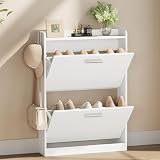
The handle-free doors are the detail that keeps giving. There are no knobs to snag bags, no hardware to tighten over time, and no visual break in that clean front face. Open the doors and you get a well-proportioned interior with a shelf you can reposition or remove entirely, which matters when your household has a rotation of sandals, sneakers, and ankle boots that never quite fit standard shelving.
In daily life, this bench earns its place by being the spot where your mornings get a little less chaotic. You sit, you put on your shoes, you close the doors and your entryway looks calm again. If you want a genuinely stylish entryway anchor that hides clutter without looking like flat-pack furniture, this one delivers.
Styles it works with: Scandinavian, Japandi, Modern Minimalist, Contemporary
Best placed in: Entryway wall opposite the front door, end of a bedroom hallway, along a living room accent wall used as a storage console
May not suit: Rustic farmhouse or heavily warm-toned interiors where a cool gray oak finish can feel disconnected; also a tight fit for very narrow entryways under 42 inches wide where the 39.4-inch footprint leaves little clearance on either side
Buy it if:
- You have a modern or Japandi-leaning entryway and want a bench that looks intentional, not just utilitarian
- Your household has 2 to 4 people and you need a dedicated spot for up to 8 pairs of shoes that can be closed away out of sight
- You want a dual-purpose piece that gives you a seated spot to put on shoes without dedicating extra floor space to a separate bench and cabinet
Consider waiting if:
- You want to read verified buyer reviews before committing, since this product is newly listed and real-world assembly and durability feedback is not yet available
Skip it if:
- Your entryway has moisture exposure, such as a mudroom that connects directly to an outdoor space, since particleboard does not hold up well in humid or wet conditions
- You need a color outside Light Gray Oak, as there is currently only one finish option and a mismatch will stand out in a warm-toned or dark wood interior
Check the latest price and availability on Amazon before it sells out.
1. VASAGLE Shoe Storage Bench with Cushion — The Straightforward All-Rounder
VASAGLE is the cleanest entryway fix in the group. The 14 x 47.6 inch footprint gives you a real bench without turning the hallway into a bottleneck, and the padded seat makes it practical for shoes that need a seated swap. At 4.4 stars, it’s the most dependable data point here.
This is the pick for families, apartments, and anyone who wants one piece to do two jobs. The adjustable shelves and doors help hide visual clutter, which matters in a space people see every time they walk in. It’s simple. It works. That combination is hard to beat in an entry.
2. SENYUN Rattan Entryway Bench with Cushion & Coat Rack — Best for a Full Drop Zone
SENYUN goes beyond shoe storage by adding a coat rack, which turns the whole wall into a functional landing zone. That matters if your entry has no closet nearby and everything from keys to jackets ends up on the nearest surface.
The rattan look softens the piece a little, so it feels less like utility furniture and more like part of the room. The trade-off is size and visual presence. This is a stronger choice for a hallway with enough width to handle a fuller setup.
3. Homleke Modern Curved Entryway Shoe Storage Bench — The Sleeker Closed-Front Pick
Homleke leans more modern and more concealed. The curved front and hidden-handle design make it read like furniture first, storage second. That’s useful if the entryway is part of an open living space and you don’t want the shoes to define the whole view.
It holds up well as a quiet cabinet-style answer for a smaller home. Closed storage always asks a little more of you because it hides what’s inside, but it also makes the room feel calmer. That’s a fair trade in a front entry.
Comparison Table
| Pick | Type | Footprint | Key Feature | Rating |
|---|---|---|---|---|
| — | — | —: | — | —: |
| VASAGLE Shoe Storage Bench with Cushion | Bench cabinet | 14 x 47.6 in | Seating + hidden storage | 4.4 |
| SENYUN Rattan Entryway Bench with Cushion & Coat Rack | Drop zone bench | Not listed | Coat rack + drawers | ? |
| Homleke Modern Curved Entryway Shoe Storage Bench | Closed cabinet | 39.4 in wide | Curved modern front | ? |
What Makes Entryway Shoe Storage Work
The best entryway storage solves two problems at once: where shoes land and where people sit while putting them on. If you only solve the first one, you still end up with a cramped floor. If you only solve the second, you get a bench with nowhere for the clutter to go.
Size has to fit the door swing. Measure the distance from the wall to the door edge when open, then leave enough clearance for feet and bags. A great shoe bench that blocks the path is a bad shoe bench.
Closed Storage vs Open Storage
Closed storage looks calmer because the shoes disappear. It’s especially useful in small homes where visual clutter adds up fast. Open shelving wins on speed and airflow, which helps if the household rotates through sneakers, boots, and work shoes all day.
For most entryways, a mixed system is ideal. One bench or cabinet for the everyday pairs. One basket or shelf for the overflow. That way the floor stays clear without making the setup feel overbuilt.
Measuring the First Five Feet
Measure the entryway before you choose the storage. Start with the wall length, then measure the door swing, hallway width, and the space needed for a person to bend down. A bench that is 47.6 inches wide can work beautifully on a 6-foot wall, but it can crowd a 36 inch hallway if the door opens into it. Leave at least 30 inches of clear walking path where people pass with bags, coats, or groceries.
Shoe depth matters too. Adult sneakers often need 11 to 13 inches of shelf depth, while boots may need 15 inches or more if they sit at an angle. If the cabinet is too shallow, shoes turn sideways and steal capacity. If it’s too deep, the piece may block the route. That’s the entryway puzzle. Inches decide whether the system feels helpful or annoying.
The Spruce and Apartment Therapy both treat entry storage as a behavior problem, not just a furniture problem. The first storage surface inside the door has to be faster than dropping shoes on the floor. If opening a cabinet takes too much effort, daily pairs will still land beside it.
Bench, Cabinet, or Full Drop Zone
A bench is best when people need to sit to put on shoes. That includes households with kids, boots, lace-up sneakers, or older guests. A cabinet is best when the entry is visible from the living room and visual calm matters more than instant access. A full drop zone adds hooks, drawers, or a coat rack, which helps when the home lacks a nearby closet.
Don’t buy the biggest piece automatically. A tall entryway organizer can solve coats and shoes in one move, but it also claims the wall visually. In a narrow apartment, a low bench plus two wall hooks may feel better than one heavy hall tree. Smaller footprint. Better flow.
Capacity should match the number of daily pairs, not every shoe you own. Keep 2 pairs per person near the door and move the rest to a closet. That rule keeps a 6 to 10 pair bench useful instead of overloaded.
Keeping the Entryway from Smelling Like Shoes
Airflow is the quiet advantage of open shelving. Wet shoes dry faster, and athletic shoes don’t sit sealed inside a cabinet. Closed storage looks calmer, but it needs a routine: let damp shoes dry before closing the doors, add a small washable mat under the shelf, and clear the cabinet once a week.
Materials matter here. Rattan and slatted fronts allow more airflow than flat doors, while fabric cushions need removable covers if the bench sits near muddy boots. Wipeable surfaces are better than delicate finishes within 5 feet of the door. The entry takes abuse. Plan for it.
A shoe tray can protect the floor under any bench, especially during snow or rain. Look for a tray at least 30 inches wide with a raised edge around 1 inch high. It won’t make the setup prettier, but it saves wood floors from salt stains and puddles.
Quick Buying Notes Before You Choose
If the entryway is narrow, choose seating only if you can keep a 30 inch walkway open. A bench that gives you a place to sit but blocks the door will become a pileup point. VASAGLE works best where the wall has enough length for a true bench. Homleke makes more sense when the front view matters and you want the shoes hidden.
If there is no coat closet nearby, SENYUN’s full drop-zone layout solves more than shoes. It gives jackets, bags, and keys a home, which keeps the bench from turning into a catchall. That’s the real win in busy homes.
Don’t plan storage around every pair in the house. Plan it around the 8 to 12 pairs that actually live by the door each week. Dress shoes, off-season sandals, and backup sneakers belong in a closet. The entry should handle the daily loop, not the whole wardrobe.
Setup Details That Matter After Week One
Put the most-used shoes at hand height or on the easiest shelf. Kids’ shoes should go low enough that they can put them away without help. Adult boots need either a taller cubby or a separate tray so they don’t crush the rest of the storage.
Add a small basket for socks, shoe spray, dog leashes, or reusable shopping bags only if those items already land near the door. Don’t add categories the entryway doesn’t need. Extra storage can invite extra clutter.
Clean the bench top weekly if it has a cushion. Entry cushions pick up grit from coats, backpacks, and wet hems faster than living-room upholstery. A removable cover is a real advantage here because the first 5 feet of the home get the hardest use.
Frequently Asked Questions
How many shoes fit in a good entryway bench?
Most fit 6 to 10 pairs, depending on shelf height and shoe size.
Is a bench better than a shelf?
Yes, if people need a place to sit while putting shoes on.
How wide should entryway shoe storage be?
About 36 to 48 inches works well in many small to medium entries.
Should shoe storage be closed or open?
Closed is better for visual calm. Open is better for quick access.
Does a cushion matter?
Yes. It turns the bench into a real daily-use seat instead of a decorative shelf.
How do I keep shoe storage from looking messy?
Use closed storage for the everyday pairs and a tray for wet shoes. Limit the entry to 2 pairs per person so the system doesn’t overflow.
Bottom Line
The VASAGLE Shoe Storage Bench with Cushion is the one most people should buy — it balances seating, hidden storage, and a footprint that works in real entryways. If you want a bigger drop zone, the SENYUN bench brings more wall function. If you care most about a clean front-hall look, Homleke is the sleeker alternative. Good entry storage should make the first five feet of your home easier, not busier.
Write Your Review
No reviews yet. Be the first to share your experience!