

> Editorial Note: I’m Olivia Bennett, a storage and organization contributor. I approach storage as a systems problem rather than a product one — fit to actual room dimensions, load ratings, and how the system holds up under daily use.
A closet without doors reads as clutter. A curtain fixes that for under $30, no track hardware, no wall damage. Before you pick a panel, sort out the surrounding system with mirror closet doors for small rooms, sliding closet doors for bedrooms, hanging closet shelves, shoe rack for closet, and how to maximize closet space. Fit and coverage matter more than color. Here’s what earned the top spots.
How We Evaluated
I ranked panels on four measures: measured coverage versus stated dimensions, blackout and privacy rating, mounting method (rod, magnetic, or accordion track), and fabric weight against sag over time. Accordion styles were judged on track glide and panel count. Curtain styles were judged on light gap at the sides. Apartment Therapy notes that oversizing width by 15–20% eliminates the center gap most people complain about, so I weighted generous panels higher.
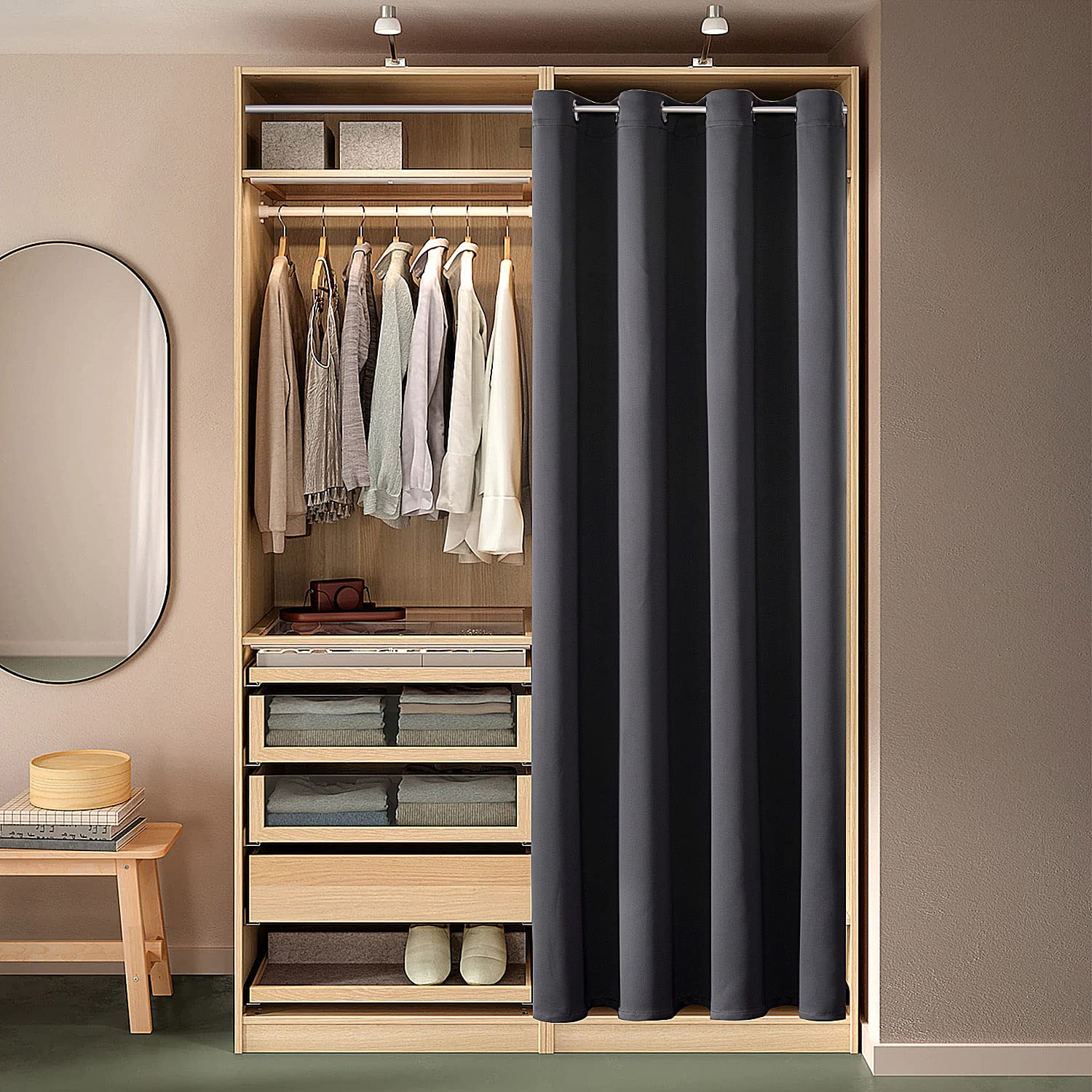


HMYI 100% Blackout Privacy Door Curtain for Doorway, Magnetic Door Curtain for Closet & Hallway, 1 Panel, W45 x L80, Gray


1. ChrisDowa Blackout Curtains — the drape-over-a-rod default that just works
ChrisDowa’s blackout panel is the pick for anyone with a standard closet opening and a tension rod already installed. The triple-weave fabric blocks roughly 85–90% of light and gives real privacy, which matters when the closet sits in a shared studio. Grommet tops slide clean on a 1-inch rod, no bunching. It’s machine washable, and the weight keeps it hanging straight instead of billowing every time the HVAC kicks on. The trade-off. You supply the rod, and side gaps depend on how wide you size it. Best all-around value here.
2. HMYI Magnetic Door Curtain — for openings where a rod won’t fit
HMYI skips the rod entirely. The 45 x 80-inch panel mounts with a magnetic seam down the center, so you push through and it snaps shut behind you. That’s the reason to buy it: hallway closets and doorways where hanging hardware isn’t practical. Blackout coverage is genuine, and the graphite gray hides scuffs. The single-panel width covers most standard doorways without a center light leak. Downside. The magnets grab hard, so kids and pets may find it annoying, and 45 inches is snug on wider openings. Great for narrow, high-traffic gaps.

3. Vatge Accordion Door Curtain — a folding door without the folding-door install
Vatge is the closest thing to a real closet door on this list. The pleated accordion panel rides a top track and folds flat to one side, giving you a semi-rigid divider rather than loose fabric. That makes it the pick for room-divider duty and pantry closets where you want structure. The pleats hold their shape and don’t wrinkle like flat panels. Trade-off worth knowing. Track installation takes about 15 minutes with a drill, and it isn’t blackout, so use it where privacy beats light control. Sturdy, tidy, and it looks intentional.
4. AJAZZ Blackout Accordion Curtain — accordion structure plus real light blocking
AJAZZ merges the two features people usually have to choose between: accordion folding and full blackout. The panels fold invisibly to the side and block light better than the Vatge, so this is the pick for a bedroom closet next to a window or a nursery. The magnetic close keeps the center sealed. It reads clean against neutral walls. The catch. The added blackout backing makes panels heavier, so the track needs solid mounting into a header, not drywall alone. Choose it when you want both structure and darkness in one unit.

5. BGment Doorway Curtain — thermal insulation for a drafty closet
BGment’s 34 x 80-inch thermal panel is built for closets that leak temperature, think a closet on an exterior wall or over a vent. The insulated weave blocks light and dampens drafts, and BGment cites energy savings from the thermal layer. Single panel, one standard opening. It’s the narrowest here at 34 inches, so measure before you buy. Honest note. That width suits a compact reach-in, not a double closet, and you’ll still need a rod. Pick it when insulation matters as much as coverage.
Comparison Table
| Product | Style | Size (W×L) | Light Block | Mount |
|---|---|---|---|---|
| ChrisDowa | Grommet drape | Varies | 85–90% | Rod (not incl.) |
| HMYI | Magnetic panel | 45 × 80 in | Full blackout | Adhesive/rod |
| Vatge | Accordion | Adjustable | Privacy only | Top track |
| AJAZZ | Blackout accordion | Adjustable | Full blackout | Top track |
| BGment | Thermal drape | 34 × 80 in | Blackout + thermal | Rod (not incl.) |
How to Choose a Closet Door Curtain
Start with the opening. Measure width and height at three points, since older framing is rarely square. For flat panels, add 15–20% to the width so the fabric gathers and closes the center gap. Accordion units follow the track length, so match the header.
Then pick your mount. Rods suit standard reach-ins. Magnetic seams suit doorways with no room for hardware. Accordion tracks suit room dividers and pantries where you want a semi-solid feel. Wirecutter recommends matching panel weight to the closure method, since heavy blackout fabric drags on lightweight tracks. Match fabric to purpose: blackout for bedrooms, thermal for exterior walls, privacy-only for closets you open constantly.
Curtain vs. Accordion vs. Magnetic
Flat curtains (ChrisDowa, BGment) are cheapest and easiest, but they sway and leave side gaps unless oversized. Accordion panels (Vatge, AJAZZ) hold structure and fold flat, closer to a real door, at the cost of a 15-minute drill install. Magnetic panels (HMYI) win on convenience for pass-through openings, though the snap-shut action wears over years of daily use.
Decide by traffic. High-use closet, go magnetic or accordion. Set-and-forget guest closet, a flat blackout drape is plenty. OEKO-TEX-certified fabrics are worth seeking if allergies are a concern.
Frequently Asked Questions
Do closet curtains need a special rod?
No. A standard 1-inch tension or mounted rod works for grommet and rod-pocket panels like ChrisDowa and BGment. Accordion and magnetic styles skip the rod and use their own track or seam instead. Match rod length to opening width plus overhang.
How wide should the curtain be?
Add 15–20% to your opening width so the panel gathers and covers the center. A 34-inch opening wants roughly 40 inches of fabric. Accordion units differ, they match track length exactly, so measure the header instead.
Are these curtains blackout?
ChrisDowa, HMYI, AJAZZ, and BGment offer genuine blackout or near-blackout coverage, blocking 85% or more of light. Vatge is privacy-only. For bedrooms and nurseries, choose a blackout-rated panel and oversize the width to kill side gaps.
Can I install these without drilling?
Yes for HMYI and rod-mounted panels using tension rods or adhesive hooks. Accordion styles (Vatge, AJAZZ) need a drilled top track for stable glide. Heavier blackout panels should anchor into a header, not bare drywall.
Will a curtain keep clothes dust-free?
Mostly. A full-coverage panel blocks the majority of airborne dust better than an open closet. Blackout and thermal weaves seal tighter than sheer fabric. Pair with storage bins for a closet for items you rarely reach.
How do I stop the center gap?
Oversize flat panels by 15–20%, or choose a magnetic-seam design like HMYI that snaps shut down the middle. Accordion units with a magnetic close (AJAZZ) also seal the center without extra fabric.
Bottom Line
ChrisDowa is the pick for most closets: a rod-ready blackout drape that hangs straight and costs under $30. Choose HMYI instead when there’s no room for a rod and you need a magnetic pass-through in a doorway. The one honest caveat: flat panels leave side gaps unless you oversize the width, so measure first and add 15–20% before you order.



Write Your Review
No reviews yet. Be the first to share your experience!