

> Editorial Note: I’m Olivia Bennett, a storage and organization contributor. I approach storage as a systems problem rather than a product one — fit to actual room dimensions, load ratings, and how the system holds up under daily use.
A shoe rack falls apart when the joints carry more stress than the connectors can hold. Cheap racks lean on friction-fit poles or plastic clips, and every time someone loads a shelf or drags the rack across the floor, those joints work loose until a shelf drops or a corner splits. Fix the joints first, then the load, then the material. If you’re working through related fixes, keep these nearby: best shoe rack organizer, best closet storage bins, best entryway shoe storage, best over door organizer, and best shelf organizer.
Reason 1: The Wobble That Turns Into a Collapse
You know the sequence. The rack feels a little loose, you keep using it, and one day a shelf gives way with shoes on it. That slow wobble was the warning, and the joints were quietly failing the whole time.
Most collapsing racks use friction-fit connectors, where poles push into plastic sockets with nothing locking them. Every load and bump loosens the fit a little more. A rack holding 15 to 20 pairs can carry 30 lbs or more of concentrated weight on those joints. Wiggle each connection. If the poles rock in the sockets, the rack is coming apart from the joints out.
Loose joints, coming collapse. Friction fit was never enough.
Reason 2: The Shelf That Sags Before It Snaps
Watch the shelves themselves. A shelf that bows under a row of shoes is overloaded, and a bowed shelf is on its way to snapping or pulling free of its supports.
Shelf material and span decide how much a shelf can hold. A thin wire or particleboard shelf spanning a wide rack sags under weight it should handle if it were thicker or better supported. Boots and multiple pairs concentrate the load in the middle, right where the span is weakest. If the shelves dip in the center, the rack is undersized for what you’re asking it to carry.
Sagging shelf, snapping soon. The span can’t hold the load.
Reason 3: The Joint That Splits From Damp Air
If your rack lives in an entryway, mudroom, or garage, moisture may be pulling it apart. Particleboard and MDF swell when they absorb humidity, and swelling splits joints and strips screw holes so nothing stays tight.
Engineered wood is especially vulnerable where water gets in, near doors and on floors that see wet shoes. Once the material swells, screws lose their grip and panels delaminate. A rack that held together for a year in a dry hall can fall apart in a humid one. Solid wood and steel shrug this off far better than raw particleboard.
Swollen board, stripped screws. Damp air pries the joints open.
Fix 1: Tighten and Lock Every Joint
Start by going over every connector. Retighten all the bolts and screws, and add a drop of thread-locker or wood glue to any joint that won’t stay snug. A friction-fit rack can sometimes be salvaged by gluing the poles into their sockets so they stop working loose.
Corner brackets add rigidity to a frame that keeps racking out of square. For a rack that relies on plastic clips, replacing them with metal L-brackets is a lasting upgrade. Tight, locked joints turn a wobbling rack back into a stable one. Loose ones only get worse with use.
Lock the joints, stop the slide. Glue and brackets beat friction.
Fix 2: Choose a Rack Built to Stay Together
If the rack is past saving, replace it with one built around solid joinery instead of push-fit poles. A shoe cabinet with a real frame, screwed panels, and adjustable shelves holds up to years of daily loading.
These three picks clear a 4.2-plus owner rating and use cabinet-grade construction that resists the joint failure cheaper racks suffer: Homleke offers a 5-tier farmhouse cabinet with barn doors and solid wood legs for the sturdiest frame, WINWY makes a tall cabinet standing 43 inches with adjustable shelves and an enclosed structure, and VINGLI builds a compact fluted cabinet with flip drawers for tight entryways. Start with Homleke if durability is your priority, since the wood-leg frame stays square best. Choose WINWY if you need more vertical storage. Pick VINGLI if the entryway needs a slimmer footprint.
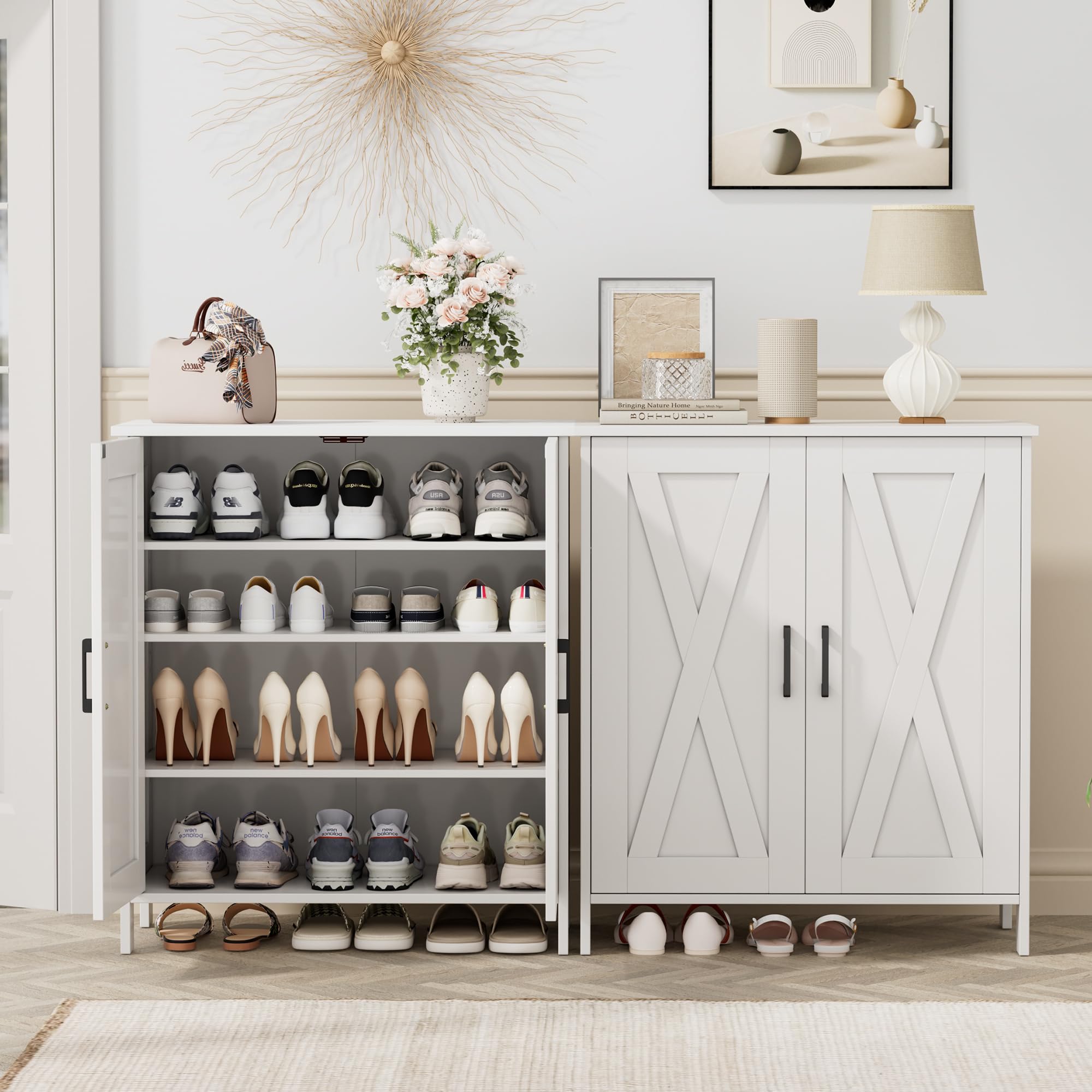

Homleke Farmhouse Shoe Cabinet with 2 Barn Doors, 5-Tier Tall Shoe Storage Organizer, White
Pros
- Holds 15 plus pairs of shoes in a small footprint
- Adjustable shelves accommodate tall boots and heels in the same cabinet
- Barn doors and black U-shaped handles give genuine farmhouse charm
- Anti tip kit included for safety around kids and pets
- All assembly tools and step-by-step instructions come in the box
Cons
- Particleboard construction is lighter and less durable than solid wood
- White finish may show scuffs and marks from dirty shoes over time
- Assembly is required and the 36 pound size suggests two people make it easier
If you have been living with a pile of shoes by the front door, this Homleke farmhouse cabinet is the kind of upgrade that quietly transforms a chaotic entry into a calm, styled space. The two barn doors and black U-shaped handles give it that cozy modern farmhouse character, while the white finish keeps it fresh enough to blend with almost any decor.
Inside, the three adjustable shelves do the heavy lifting. You can raise one shelf for tall winter boots, lower another for flats, and still have room for 15 or more pairs without the clutter spilling out. At just 27.6 inches wide and 31.5 inches tall, it tucks neatly beside a console table or against a hallway wall without eating your floor plan.
If you want hidden shoe storage that looks like intentional decor without spending solid wood furniture money, this one delivers.
Styles it works with: Modern Farmhouse, Scandinavian, Cottagecore, Minimalist
Best placed in: entryway wall, hallway, beside the bed in a bedroom closet
May not suit: small studio apartments with very tight walkways or homes that need a cabinet under 31 inches tall to clear a low window sill
Buy it if:
- You want hidden shoe storage that doubles as farmhouse style decor in your entryway or hallway
- You need adjustable shelves to fit a mix of boots, sneakers, and heels in one cabinet
- You have kids or pets and want the included anti tip kit for extra safety
Consider waiting if:
- You need a color other than white to match your existing furniture
- You have more than 15 pairs of shoes and need a second unit or a larger cabinet
Skip it if:
- You want solid wood construction that can take heavy daily abuse
- Your space cannot fit a cabinet that is 31.5 inches tall and 27.6 inches wide
Check the latest price and availability on Anthropic before it sells out.

Pros
- Arched door design with gold handles looks far more expensive than the price suggests, no cheap plastic hardware
- 13.2-inch depth with flat panel doors accommodates larger shoes and boots that flip-drawer cabinets cannot handle
- Adjustable and removable shelves offer genuine flexibility for mixed footwear households
- Wall anchor hardware is included, adding stability and making it safer for families
- TSCA-certified P2 engineered wood signals above-average material quality for this price range
Cons
- Assembly involves enough steps that it will take a meaningful time investment, not a quick 20-minute build
- At 31.5 inches wide it may feel narrow for households with four or more people sharing the same entryway
- No reviews yet means real-world durability and finish quality over time are still unproven
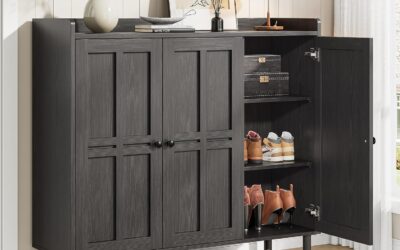
Most shoe cabinets make you choose between function and style. You either get a utilitarian plastic rack that clashes with everything, or you spend serious money on custom built-ins. The WINWY arched cabinet lands in a sweet spot that is genuinely hard to find at this price: it looks like a thoughtful furniture piece, not an afterthought.
The arched door profile and warm walnut wood grain give it the kind of quiet elegance that makes an entryway feel intentional. The gold handles and box-framed base are small details that add up to a cohesive, put-together look. Open it up and the shelves are actually tall enough to store real footwear, which sounds basic but is a failure point for most cabinets in this category.
Day to day, it keeps shoes hidden and the floor clear, which makes the whole entryway feel calmer and cleaner without any effort. If you want a storage cabinet that genuinely improves how your home looks and functions without spending on custom furniture, this one delivers.
Styles it works with: Mid-Century Modern, Boho, Modern Farmhouse, Transitional
Best placed in: Entryway or hallway wall, living room corner near the front door, mudroom with moderate foot traffic
May not suit: Very narrow hallways under 36 inches wide where the 31.5-inch footprint leaves little clearance, or strictly minimalist spaces that favor raw wood or all-white palettes where the walnut tone and gold hardware may feel too warm
Buy it if:
- Your entryway currently has shoes scattered on the floor and you want one piece that solves storage and looks good doing it
- You have a mix of shoe types in the household including boots, heels, and larger men's sizes that standard flip-drawer cabinets cannot accommodate
- You are decorating in a mid-century modern, boho, or transitional style and want storage that matches the aesthetic without a custom price tag
Consider waiting if:
- You want confirmation from verified buyer reviews before committing, since this listing currently has no customer reviews to draw from
Skip it if:
- Your hallway is under 36 inches wide and clearance is a concern, as the cabinet is 31.5 inches across
- You need something fully assembled or are not comfortable with a multi-step build process
Check the latest price and availability on Amazon before it sells out.

VINGLI Fluted Shoe Cabinet, Mid Century Modern Entryway Storage with 2 Flip Drawers, Dark Walnut
Pros
- Slim 9.45-inch profile fits tight entryways while still holding 16-20 pairs
- Fluted panel and golden handles look more like a decor accent than a shoe rack
- Waterproof flip drawer surfaces are easy to wipe clean
- Metal support legs with anti-slip pads add stability and protect hardwood floors
- Top fence keeps displayed items from falling off the back
Cons
- Capacity tops out around 20 pairs, so large households may need a second cabinet
- Assembly can take up to 90 minutes, longer than some ready-to-use alternatives
- Dark walnut finish tends to show dust and pet hair more visibly than lighter finishes
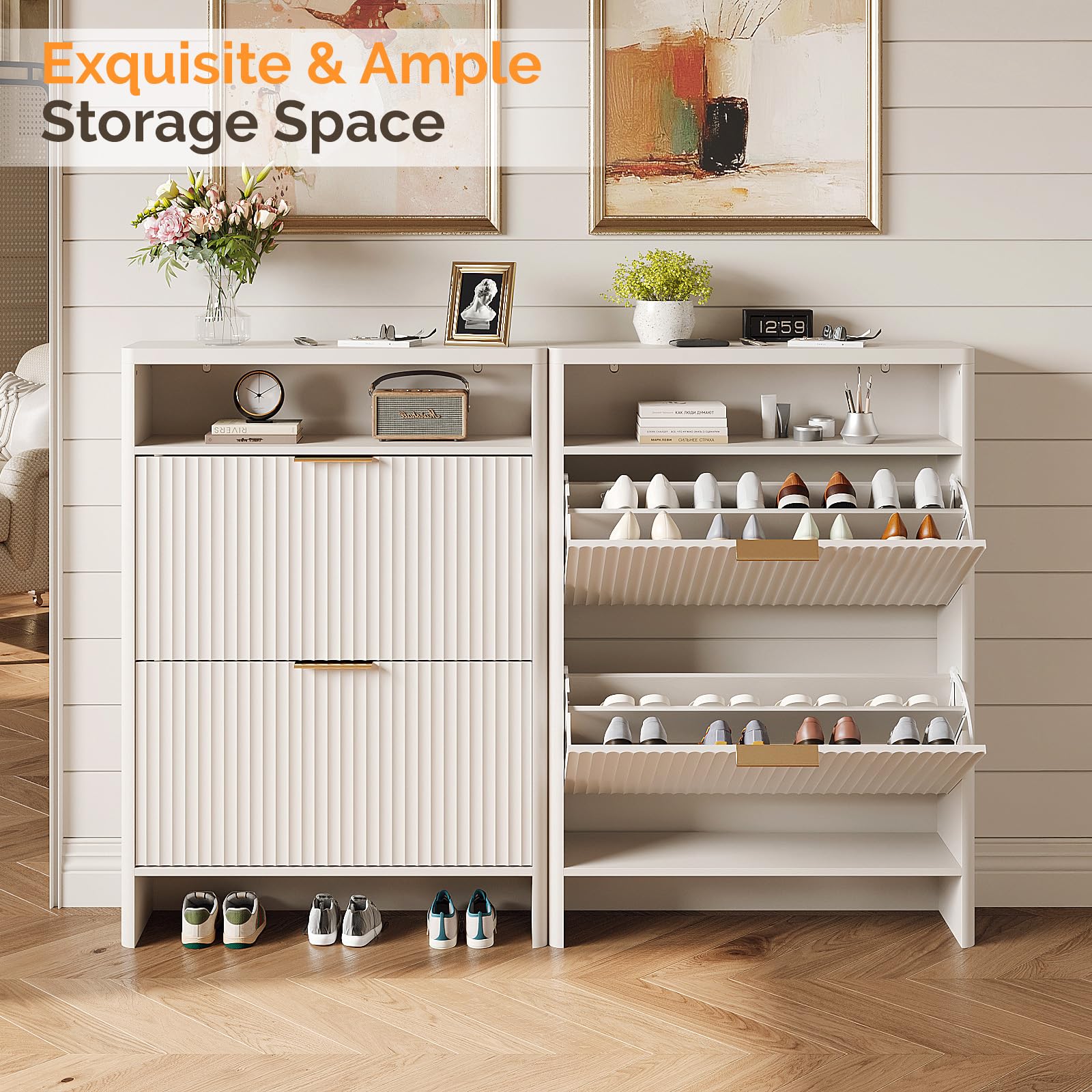
There is something instantly charming about a fluted panel front. It gives this VINGLI shoe cabinet that quiet, textured look you usually only find on furniture twice the price. The dark walnut finish paired with the slim golden handles reads more like a curated accent piece than a place to stash sneakers.
In a real entryway, the 9.45-inch depth is the hero. It tucks behind a front door or against a narrow hallway wall without eating into your walkway, and the two flip drawers keep every pair hidden from view. The top fence is a small but smart detail, letting you lean a mirror or rest keys and a small plant without worrying about anything sliding off the back.
It is not a boot locker or a family-of-five solution, but for one or two people who want the entryway to feel intentional, it nails the brief. If you want hidden shoe storage without giving up your hallway footprint, this one delivers.
Styles it works with: Mid-Century Modern, Scandinavian, Japandi, Modern Farmhouse
Best placed in: entryway wall, hallway near the front door, living room corridor
May not suit: large households needing more than 20 pairs of storage, or rooms with very low ceilings where the 39.9-inch height feels cramped
Buy it if:
- You live in an apartment or home with a narrow entryway and need shallow storage
- You want shoes hidden behind a stylish fluted front rather than on open shelves
- You like mid-century modern warmth and want a piece that doubles as a decor accent
Consider waiting if:
- You prefer a lighter natural oak finish instead of the dark walnut tone
- You have a large family and need deeper drawers for boots or more than 20 pairs
Skip it if:
- You need a cabinet under 30 inches wide for a very tight corner
- You want LED lighting or glass doors to display your footwear
Check the latest price and availability on Anthropic before it sells out.
Fix 3: Match the Load to the Rack
Sort what the rack is actually carrying. A lightweight rack built for a dozen pairs of sneakers can’t hold boots, heels, and work shoes for a family of four without failing. Overloading is what breaks joints that would otherwise last.
Keep heavy boots and work shoes on the lowest, best-supported shelf, and don’t pile more pairs than the shelf was made for. If you’re storing 20-plus pairs, you need a cabinet rated for that, not a slim starter rack. Check the capacity spec before you load it. Right rack for the count, and the joints stop taking abuse.
Overloaded racks break. Match the rack to the pile.
Fix 4: Reinforce a Sagging Shelf
If the shelves bow but the frame is sound, stiffen the shelves. A wood strip about 38 mm deep run under the front edge of a sagging shelf stops the dip and spreads the load back to the supports. For wire shelves, a shelf liner board underneath does the same job.
A sagging shelf concentrates weight in the middle, which stresses the joints on both ends. Stopping the sag protects the whole rack, not just the shelf. This is a cheap fix that buys a lot of life. A flat, supported shelf keeps the load where the frame can handle it.
Brace the shelf, save the frame. A flat shelf spreads the weight.
Fix 5: Keep Engineered Wood Out of Wet Spots
If humidity is splitting your rack, change the material or the location. A particleboard or MDF rack in a wet entryway will swell and fall apart no matter how well you tighten it. The water is the root cause.
Move engineered-wood racks to a dry closet and reserve wet, high-traffic spots for steel or solid wood that resists moisture. Keep the rack a few inches off a damp wall, and if wet shoes are the problem, add a boot tray underneath to catch the drip before it reaches the joints. Engineered wood can swell measurably once indoor humidity climbs past 60 percent. Dry joints stay tight. Wet ones swell and let go.
Wet spot, wrong material. Steel and solid wood hold up.
The 5-Minute Diagnosis
Find the failing part before you fix or replace anything. Wiggle the joints; if the poles rock, the connectors are loose. Press the shelves; if they bow, the load is too heavy for the span. Look for swelling or delamination at the corners; if you see it, humidity is the cause. Each points to a different fix.
Good Housekeeping’s storage guidance stresses matching a unit’s build to its daily load, and shoe racks fail most often when that match is off. A slim rack meant for a few pairs can’t carry a full family’s shoes. Diagnose whether it’s joints, load, or moisture first, then fix that one thing.
Apartment Therapy makes the same point about entryway furniture: the mudroom is the hardest-working, wettest spot in the house, so it needs the toughest gear. A friction-fit rack in that environment is on borrowed time. Solid joinery and moisture-resistant material earn their keep there.
Once you’ve locked the joints, matched the load, and kept the material dry, a shoe rack holds together for years. The failures almost always trace back to one of those three.
The Joinery Rule That Keeps a Rack Together
Nearly every shoe rack that falls apart fails at the joints, the shelf span, or the material in damp air. Lock the connectors with glue and brackets, match the load to the rack’s capacity, and keep engineered wood out of wet spots. Get those right and the rack stops coming apart. The frame is only as strong as the connections holding it square.
If your entryway sees wet shoes and heavy traffic, buy a cabinet built around solid wood or steel with real screwed joinery, not push-fit poles. A friction-fit rack in a mudroom will always work loose eventually. Match the build to how hard the spot works.
One thing to remember: check the pair-capacity spec before you load a rack, and keep heavy boots on the lowest shelf. Right capacity, low heavy load, tight joints. That’s what keeps a shoe rack standing.
Frequently Asked Questions
Why does my shoe rack keep falling apart?
The joints are failing. Cheap racks use friction-fit poles or plastic clips that loosen under repeated loading. Tighten and glue the joints, or replace the rack with one built on solid joinery.
Can I fix a wobbly shoe rack without replacing it?
Often, yes. Retighten every bolt, add wood glue or thread-locker to loose joints, and reinforce corners with metal L-brackets. Gluing friction-fit poles into their sockets stops the wobble.
Why do my shoe rack shelves sag?
The shelves are overloaded or the span is too wide for the material. Boots concentrate weight in the middle. Brace the front edge with a wood strip or reduce the load on each shelf.
Does humidity make shoe racks fall apart?
Yes. Particleboard and MDF swell when they absorb moisture, which splits joints and strips screw holes. Keep engineered-wood racks in dry spots and use steel or solid wood in wet entryways.
How many pairs of shoes can a shoe rack hold?
It depends on the build and capacity rating. A slim starter rack handles a dozen light pairs; a family with 20-plus pairs needs a cabinet rated for that load. Check the spec before loading.
Bottom Line
A shoe rack falls apart because the joints work loose, the shelves sag, or the material swells in damp air. Lock the connectors, match the load to the rack’s capacity, and keep engineered wood out of wet entryways. Homleke is the best first pick for its solid wood-leg frame, and WINWY is the runner-up if you need more vertical storage. A shoe rack stays together when the joinery is built for the load you actually put on it.



Write Your Review
No reviews yet. Be the first to share your experience!