

> Editorial Note: This guide is compiled from homeowner resources and flooring manufacturer documentation by Hannah Lin, Interior Living Researcher at TheLastingHome. The fixes described here apply to DIY-accessible creak sources — friction, debris, loose fasteners, and humidity. For creaks that cover large areas or involve visible subfloor movement, consult a licensed contractor before the issue worsens.
Hardwood floors creak for one of three reasons: wood movement, friction between boards, or subfloor movement beneath the hardwood layer. That distinction matters because the fix for each one is completely different — and one of them isn’t a homeowner fix at all. Before you buy anything or pry up a single board, the diagnostic takes about five minutes and tells you whether you’re dealing with a weekend project or a contractor call.
The good news: most creaks aren’t structural. They’re seasonal, friction-based, or caused by a fastener that worked loose over years of foot traffic. If you’ve noticed your floor how to remove scratches from wood furniture deteriorating alongside the noise, it’s often the same root cause — wood that’s dried out and stressed. Related issues like how to get rid of musty smell in furniture can signal the same humidity imbalance that drives seasonal creaking. If you’re updating the room anyway, knowing what’s underfoot matters before you add a best area rug for living room, a new best coffee table for living room, or a best kitchen island that adds weight and foot traffic patterns.
What Causes Hardwood Floors to Creak?
There are four main culprits — and they produce noticeably different sounds once you know what to listen for.
Wood movement from humidity changes. Wood is hygroscopic, meaning it absorbs and releases moisture from the air. In dry winter conditions, boards contract and the micro-gaps between them widen. When you step across them, boards rub against adjacent boards and against their fasteners. Seasonal creaks — loudest in January, quieter by June — are almost always humidity-related. This isn’t damage; it’s the wood responding to its environment.
Loose fasteners. Nails or staples holding hardwood down to the subfloor can loosen gradually under repeated foot traffic. When a fastener loosens, the board flexes slightly on each step, rubbing against the shank of the nail. These creaks are predictable: same spot, same pressure, same sharp sound every time. Press down firmly on the board — if the creak reproduces immediately and consistently, a fastener is the likely cause.
Subfloor movement. The plywood or OSB subfloor sits on top of floor joists. If the joists aren’t fully supported, or if the subfloor panels have separated from the joists, the subfloor flexes under weight. The hardwood above flexes with it. Creaks from subfloor movement cover a wider area — often 4 or more square feet — and tend to get worse over time rather than staying stable. This is the contractor-call type.
Debris and grit in board gaps. Pet hair, sand, and fine grit accumulate in the narrow gaps between boards over years of use. Under foot pressure, that debris grinds. These creaks are softer and more distributed — you’ll hear them across a section of floor rather than at one precise spot.
How Do I Find the Source of the Creak?
Walk the floor slowly in bare feet. No socks — you want to feel as much as hear. When you find the zone, narrow it to the specific board or cluster of 2–3 boards. Mark the area with a piece of painter’s tape so you don’t lose it.
Next, apply steady downward pressure — the weight of a normal step — to that spot while someone watches from below, if you have an accessible basement or crawlspace. What they’re watching for: does the subfloor visibly flex or bow? If it does, that’s subfloor movement, and this is beyond a DIY fix.
If the subfloor doesn’t move but the hardwood boards shift slightly against each other under pressure, you’re dealing with a friction or fastener issue — both DIY-fixable. If nothing moves visibly but the sound is still there, it’s likely debris between boards.
One quick check: place a hygrometer (they run about $10 at hardware stores) on the floor in the room. If humidity reads below 30% in winter, humidity is almost certainly a contributing factor regardless of which other issue is present.
Fix 1: Humidity and Seasonal Creaks
If the creaks follow the seasons — louder in winter dry conditions, quieter or gone by late spring — humidity is driving the problem. Wood floors perform best between 35–55% relative humidity. Below 30%, boards contract enough that the gaps between them become a consistent friction source with every step.
The National Wood Flooring Association (NWFA) recommends keeping hardwood floor rooms between 60–80°F and 35–55% relative humidity year-round. That’s a specific, achievable target — not a vague “keep it stable” suggestion.
A whole-house humidifier connected to your HVAC is the complete solution, since it maintains consistent humidity across all rooms. A portable room humidifier works as a partial fix — it’ll help the room it’s running in, but hallways and adjacent rooms may still fluctuate. Don’t expect immediate results: it takes 2–4 weeks of consistent humidity for wood to reabsorb enough moisture for the gaps to close and the friction to ease.
If your hygrometer reads 28% in February and the floor’s been creaking since November, you’ve found your answer. Run a humidifier, check again in three weeks.
Fix 2: Friction and Debris Between Boards
Talcum powder (plain baby powder works) or powdered graphite applied to the gaps between creaking boards is the standard DIY fix for friction-based creaks. It’s not glamorous, but it works.
The method: sprinkle powder liberally across the gap lines between the boards in the affected area. Lay a cloth over the spot and walk across it firmly several times — this works the powder down into the gaps where the friction is actually happening. Sweep or vacuum the visible excess when done.
The powder acts as a dry lubricant between boards. It doesn’t fix the underlying cause, but it reduces the friction enough that the creak becomes inaudible. Plan on re-application every 3–6 months — the powder gradually works its way out, and the creak returns.
For debris-related creaks, clean the gaps with a soft brush before applying powder. Dragging grit further into the gap with powder on top of it won’t help.
One firm rule: avoid liquid lubricants. WD-40, mineral oil, and similar products can stain wood, attract more debris into the gaps, and create a bigger problem than the creak itself.
Fix 3: Loose Fastener Creaks from Above
For nail-down hardwood (the most common installation type in older homes), a loose fastener creak can be fixed by driving a screw through the surface of the creaking board into the subfloor below. Specialty kits like the Squeeeeek No More system include a scored screw designed to snap off below the surface, leaving a hole small enough to fill with color-matched wood filler. Once filled and sanded, the repair is nearly invisible.
This works because the screw pulls the board tight against the subfloor, eliminating the flex that causes the rubbing. It doesn’t require removing the floor or working from below — both are significant advantages in a finished living space.
If your hardwood is floating — click-lock or glue-down rather than nailed — don’t attempt the screw method. Driving a screw through a floating plank can split it. The right approach for floating floors is injecting wood glue into the seam at the affected joint, weighting it flat for 24 hours, and allowing the adhesive to re-bond the planks. A glue syringe with a fine tip makes this manageable without spreading adhesive across the surface.
When to Call a Contractor
Some creak situations aren’t homeowner territory. Call a contractor if:
- The creak covers more than roughly 4 square feet of floor area (widespread subfloor movement, not a fastener)
- The floor visibly bounces or flexes under normal walking — you can see it move, not just hear it
- The creak is accompanied by a hollow sound when you knock on the boards (possible delamination between layers)
- The floor is on an upper story and the creak is accompanied by vibration felt in the room below
- The sound has changed from a single creak to a sequence — boards settling in a chain — over several months
These patterns point to structural issues: subfloor panel separation, joist problems, or foundation settling. A handyman or licensed floor contractor should assess before the problem progresses. Catching subfloor issues early is much cheaper than catching them after the hardwood above has been damaged.
Keeping Hardwood Floors in Shape
Dried-out wood creaks more than well-maintained wood. The gaps between boards are wider, the surface is more brittle, and grit has more room to accumulate and grind. Regular cleaning with a hardwood-safe cleaner pulls the fine debris out of gaps before it has a chance to become a noise source.
A polish or restorer product once or twice a year does more than improve appearance — it maintains the surface layer that keeps micro-gaps from enlarging and helps the wood retain a bit more moisture. It won’t cure an existing creak, but it keeps the conditions that worsen creaks from taking hold. Think of it as maintenance that costs $20 twice a year versus a repair that costs significantly more.
Helpful Products for Hardwood Floor Maintenance

Weiman Hardwood Floor Cleaner & Polish Restorer 2-Pack - Removes Scratches, Adds Shine & Protection for High-Traffic Areas
Pros
- Highly rated by over 15,000 customers with 4.6-star average, indicating consistent performance
- Combines cleaning and restoration in one product line, eliminating need for multiple solutions
- Effectively minimizes the appearance of scratches and wear marks on hardwood
- Two-bottle system provides excellent value and lasts for multiple applications
- Adds noticeable shine and protective coating that extends floor life
Cons
- Requires separate cleaner and polish steps rather than true all-in-one application
- May build up over time if not applied according to directions, requiring occasional deep cleaning
- Not suitable for unfinished or waxed hardwood floors
Hardwood floors are beautiful until life happens: scratches from furniture, dullness from foot traffic, and that worn look that makes you wonder if refinishing is the only option. This Weiman combo tackles all of it without the four-figure price tag. The cleaner preps your floors while the restorer fills in those annoying surface scratches and brings back the glow you remember from move-in day.
What makes this stand out is how it handles high-traffic areas. Entryways, kitchens, hallways - the spots that take the most beating get a protective layer that actually helps them look better longer. You're not just cleaning; you're adding a shield against whatever your household throws at the floor next. The two-pack format means you won't run out mid-project, and the process is straightforward enough for a weeknight refresh.
If you want your hardwood to look professionally maintained without blocking off rooms for days or spending hundreds on services, this one delivers.
Styles it works with: Traditional, Modern Farmhouse, Transitional, Craftsman (any style with finished hardwood flooring)
Best placed in: High-traffic hallways, living room floors, dining areas under tables, kitchen hardwood sections, entryways that see daily use
May not suit: Homes with unfinished or oil-treated hardwood, floors that have been waxed rather than sealed, or rooms where you prefer completely natural wood appearance without any sheen
Buy it if:
- Your hardwood floors have lost their shine and show minor scratches from everyday use
- You have high-traffic areas that need regular maintenance to stay looking good
- You want to extend the life of your floors and delay expensive refinishing
- You prefer doing your own home maintenance rather than hiring services
Consider waiting if:
- You need to confirm your hardwood finish type first, as this works only on sealed hardwood
- You're in the middle of a renovation and floors will take more abuse before completion
Skip it if:
- Your floors are unfinished, waxed, or oil-treated rather than polyurethane sealed
- You have deep gouges or structural floor damage that requires professional repair
Check the latest price and availability on Amazon before it sells out.
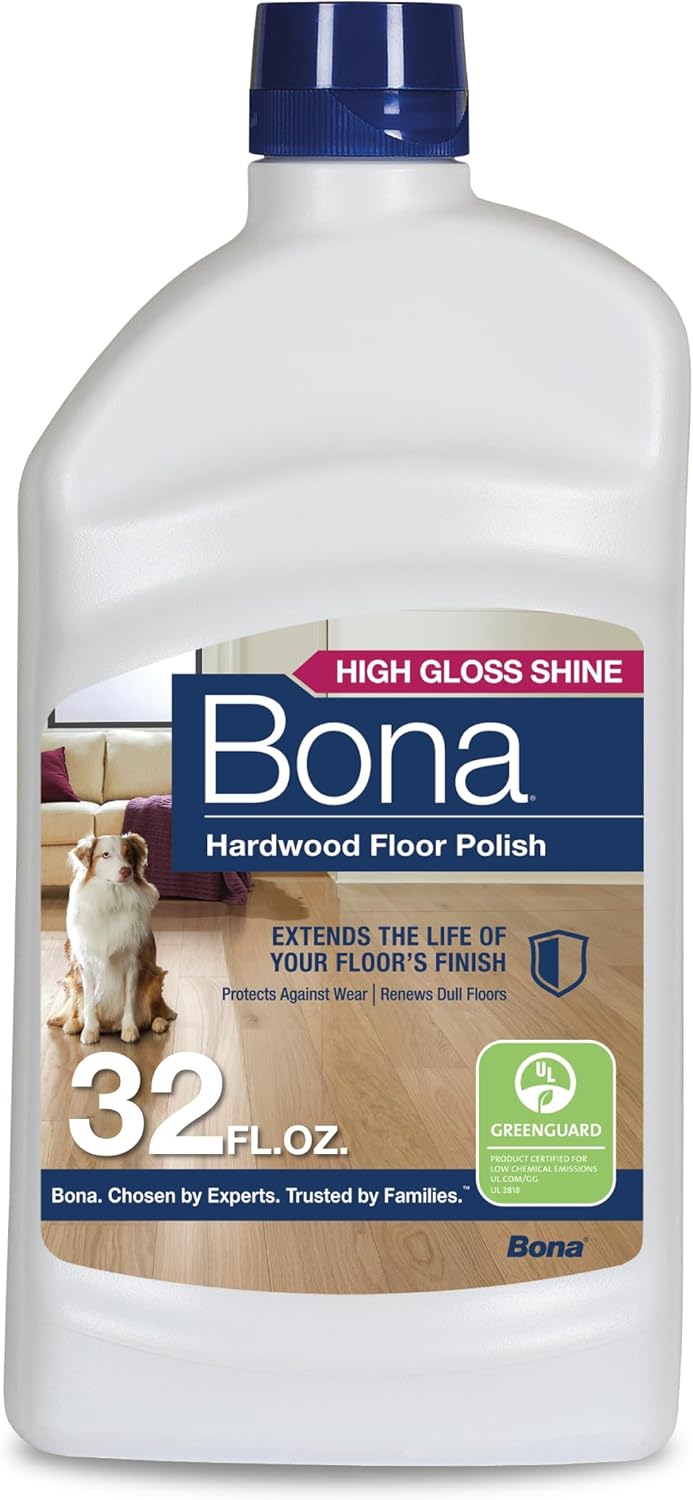
Bona Hardwood Floor Polish 32oz - High Gloss Finish, Fills Scratches, Protects Wood Floors - Covers 500 sq ft
Pros
- Effectively fills in minor scratches and surface imperfections
- High gloss finish creates a showroom quality shine
- Good coverage at 500 square feet per 32 oz bottle
- Protective formula extends time between deep cleanings or refinishing
- Simple maintenance schedule with applications only every few months
Cons
- High gloss finish may be too shiny for those who prefer matte or satin wood looks
- Requires proper floor prep and technique to avoid streaking or uneven application
- Not suitable for all floor types, only formulated for sealed hardwood
Bona Hardwood Floor Polish is the kind of product that makes you wonder why you waited so long to try it. If your hardwood floors have lost their luster from years of foot traffic, pets, or furniture shuffling, this polish breathes new life into them without the expense or disruption of sanding and refinishing. The formula works by filling in those tiny scratches and scuffs that dull the surface, then sealing everything with a protective, high gloss layer that catches the light beautifully.
What sets this apart from basic floor cleaners is the dual action of restoration and protection. You are not just cleaning the surface, you are actually creating a barrier that helps your floors resist future wear. The high gloss finish gives rooms a polished, upscale look that makes the entire space feel cleaner and more put together. One 32 oz bottle covers 500 square feet, so you can tackle a living room, hallway, or bedroom without needing multiple purchases.
If you want to restore the rich, glossy appearance of your hardwood floors without hiring professionals or dealing with toxic refinishing fumes, this one delivers.
Styles it works with: Traditional, Modern Farmhouse, Transitional, Classic Contemporary
Best placed in: Living rooms with hardwood flooring, dining rooms, hallways, bedrooms with wood floors, home offices
May not suit: Homes preferring matte or satin floor finishes, kitchens or bathrooms where moisture exposure is constant, floors that are not sealed hardwood or compatible wood types
Buy it if:
- Your hardwood floors look dull, scratched, or worn from everyday use and you want to restore their shine
- You prefer a high gloss finish that makes floors look freshly refinished
- You want an affordable way to protect floors from future damage without hiring professionals
- You have 500 square feet or less of hardwood flooring to treat per application
Consider waiting if:
- You are unsure whether your floors are sealed hardwood or compatible with polish products
- You want to test a smaller bottle first to see if the high gloss level suits your taste
Skip it if:
- You prefer matte, satin, or low sheen finishes on your wood floors
- Your floors are laminate, vinyl, tile, or another non hardwood surface
Check the latest price and availability on Amazon before it sells out.

Rejuvenate Professional Wood Floor Restorer 32oz - Fills Scratches, High Gloss Shine for Polyurethane Floors
Pros
- Single mop-on application fills scratches and restores shine
- Highly rated by over 9,000 customers with 4.6-star average
- Affordable way to refresh floors without hiring professionals
- Durable finish lasts through regular foot traffic
- No heavy chemical odor or lengthy drying time
Cons
- Only works on unwaxed polyurethane-finished floors, not all wood types
- Requires thorough cleaning beforehand for best results
- Must wait 24 hours before moving furniture back
If your hardwood floors have lost their luster after years of foot traffic, pet claws, and everyday living, this restorer brings them back without the mess and expense of refinishing. It fills in those fine scratches that catch the light and adds a protective glossy layer that makes your floors look professionally maintained.
The mop-on application is refreshingly simple. No complicated equipment or technique required, just pour it in an S pattern and spread it with a microfiber mop. Within an hour you can walk on it, and by the next day your floors look revived. The formula bonds to your existing polyurethane finish rather than sitting on top like wax, so it actually protects against future spills and scuffs.
If you want to bring tired hardwood floors back to life without hiring a contractor or living through a multi-day refinishing project, this one delivers.
Styles it works with: Traditional, Farmhouse, Transitional, Contemporary homes with hardwood flooring
Best placed in: Living rooms, dining rooms, hallways, bedrooms with polyurethane-finished hardwood
May not suit: Homes with waxed floors, oil-finished wood, or engineered floors without polyurethane topcoat; not ideal if you prefer a matte or satin finish over high gloss
Buy it if:
- Your polyurethane wood floors look dull and scratched but the finish is still intact
- You want to postpone expensive refinishing for a few more years
- You need a DIY solution that works in one afternoon with minimal prep
Consider waiting if:
- You are unsure whether your floors have a polyurethane finish or if they have been waxed
- You prefer a satin or matte finish rather than high gloss
Skip it if:
- Your floors are waxed, oil-finished, or have no existing polyurethane coating
- The wood is deeply gouged or the finish is completely worn through in spots
Check the latest price and availability on Amazon before it sells out.
These are maintenance products that help prevent the dried-out, grit-filled conditions that make creaks worse — not creak-specific repair tools.





Write Your Review
No reviews yet. Be the first to share your experience!