

> Editorial Note: I’m Sofia Reyes, a bathroom and wellness editor focused on small-bath organization and materials that survive real humidity. This guide draws on ASTM moisture-resistance standards and OEKO-TEX certifications, plus owner reviews aggregated from Wirecutter and Apartment Therapy.
A weak, sideways spray usually isn’t a plumbing problem. It’s mineral buildup, and you can clear most of it with stuff already in your kitchen. While you’re refreshing the bathroom, it’s worth pairing this with a good best shower head, a sturdy best shower caddy, a plan for how to remove mold from shower curtain, the right best fabric shower curtain liner, and a reliable best non slip bath mat.
Why Does a Shower Head Get Clogged?
The culprit is almost always hard water. As water evaporates off the nozzles between showers, it leaves behind dissolved calcium and magnesium that harden into limescale, that chalky white crust you can scrape with a fingernail. The harder your water, the faster it builds.
Roughly 85% of U.S. homes have hard water, according to the U.S. Geological Survey, so this is the normal state of things, not a sign you’ve neglected anything. Water above 7 grains per gallon is considered hard, and many regions run well past 10.
You’ll notice it three ways. The spray pattern goes uneven, with some jets shooting at odd angles. Overall pressure drops. And the finish around the nozzles dulls or spots. Left alone, scale can also trap moisture and biofilm, which is where mildew gets a foothold.
The good news is that limescale dissolves in mild acid, which is why vinegar and commercial descalers both work. The Spruce notes that a monthly rinse keeps most heads clear without any deep cleaning at all. Catch it early and you’re talking about a 30-minute soak, not a replacement.
While you are working on the shower, the rod is the other cheap upgrade worth thinking about. Curved versus straight sets out the trade in one page.
How Do You Clean a Shower Head With Vinegar?
The bag method is the easiest approach because you don’t have to remove anything. Fill a sturdy plastic bag with enough white vinegar to submerge the nozzle face, usually about 1 to 2 cups. Slip the bag over the head so the spray plate sits in the liquid, then secure it with a rubber band or a zip tie around the neck.
Let it soak. Thirty minutes clears light buildup. For heavy scale, leave it 2 to 4 hours, though Good Housekeeping cautions against overnight soaks on brass, nickel, or coated finishes, since prolonged acid contact can dull the plating. Plain chrome and stainless handle longer exposure fine.
Pull the bag, then run hot water for 30 to 60 seconds to flush loosened debris out of the channels. Wipe the face with a soft cloth. If a few nozzles still spit sideways, that’s the next step below.
A quick word of caution. Don’t mix vinegar with bleach or any chlorine cleaner. The combination releases toxic chloramine gas. Vinegar works alone, and it’s all you need here.
How Do You Clean a Shower Head Without Vinegar?
Vinegar’s acidity tops out fairly low, so for stubborn, years-old scale a dedicated descaler dissolves it faster and with less smell. These are formulated acids, often based on lactic, citric, or sulfamic acid, that target mineral deposits without the harsh fumes of vinegar at scale.
The bag method still applies. Dilute the product per the label, since most descalers are concentrated and meant to be cut with water. Soak times run shorter, frequently 10 to 20 minutes, because the formula is stronger than 5% household vinegar. Always check finish compatibility first, the same way you would with vinegar.
CLR-type lime and rust removers are the workhorse option for serious buildup and double as a tub and tile cleaner. Apartment Therapy recommends them specifically for fixtures in hard-water regions where vinegar barely makes a dent.
Two ground rules. Ventilate the bathroom, and wear gloves, because these acids are tougher on skin than kitchen vinegar. And never combine any descaler with bleach. After the soak, rinse thoroughly with hot water so no residue lingers on surfaces you’ll touch wet.
Can You Remove and Soak the Shower Head?
Yes, and for a deep clean it’s the better route. A full submersion reaches the internal channels and the threaded collar that a bag can’t. Most heads unscrew by hand or with a wrench, but wrap the connection in a cloth first so the jaws don’t scratch the finish.
Before you twist, turn off the shower and lay a towel over the drain so you don’t lose the small rubber washer that sits inside the nut. Unscrew counterclockwise. Note how the washer and any filter screen are seated, since they go back the same way.
Drop the head into a bowl of white vinegar or diluted descaler and soak 30 minutes to a few hours, same timing as the bag method. Soaking lets you swish the solution through the interior and dislodge grit caught in the filter screen, a common hidden cause of low pressure.
When you reattach, wrap the threads with a couple turns of plumber’s PTFE tape to prevent leaks, then hand-tighten plus a quarter turn with the wrapped wrench. Run the water and check the connection. This Old House recommends this full-removal method once or twice a year for heads on well water.
How Do You Clean the Rubber Nozzles?
Many modern heads have soft silicone or rubber jets, and they’re the easiest part to fix. Manufacturers add them precisely because mineral deposits won’t bond permanently to flexible material. After any soak, just rub each nozzle with your thumb or a fingertip. The scale flakes right off, and the spray straightens out.
For jets that resist, a soft toothbrush works the rows without scratching. Hold the brush at an angle and scrub across the face, then flush with hot water to clear what you’ve loosened. Skip metal pins, paper clips, or anything pointed, since they can puncture the silicone or widen the openings and ruin the spray pattern for good.
Don’t have flexible nozzles? On older fixed-metal faces, the same toothbrush plus a bit of vinegar handles the recessed holes. An old electric toothbrush head adds gentle scrubbing power without the elbow grease.
The OEKO-TEX and ASTM materials standards that govern bathroom textiles favor non-porous, mold-resistant surfaces, and silicone nozzles follow the same logic. Less porosity means less for buildup to grab. A 10-second thumb rub after the occasional soak keeps them clear, which is why most owner reviews on flexible-jet heads report far fewer clog complaints.
How Often Should You Clean a Shower Head?
It depends on your water. In soft-water areas, a deep clean every 3 to 4 months is plenty. In hard-water regions, aim for monthly, because scale rebuilds fast once it has a foothold. Wirecutter suggests tying it to a recurring chore you already do, so it doesn’t slip.
The low-effort habit that prevents most clogs costs you 10 seconds. After your last shower of the week, wipe the nozzle face with a dry microfiber cloth or give the rubber jets a quick thumb rub. Drying the face stops evaporation from depositing fresh scale, the root of the whole problem.
Watch for the early signals. Uneven spray, a visible drop in pressure, or white crust forming at the edges all mean it’s time. Don’t wait for a full clog, since light buildup clears in a 30-minute soak while neglected scale needs hours.
One more reason to stay on schedule: a clean, dry head gives mildew nothing to colonize. That keeps the whole shower zone healthier and pairs well with regular liner and mat care. Quick, consistent, and mostly free.
Helpful Products
If your water runs hard and a vinegar soak isn’t cutting through years of scale, a dedicated descaler does the job faster and with less odor. These three are the picks owners reach for most.

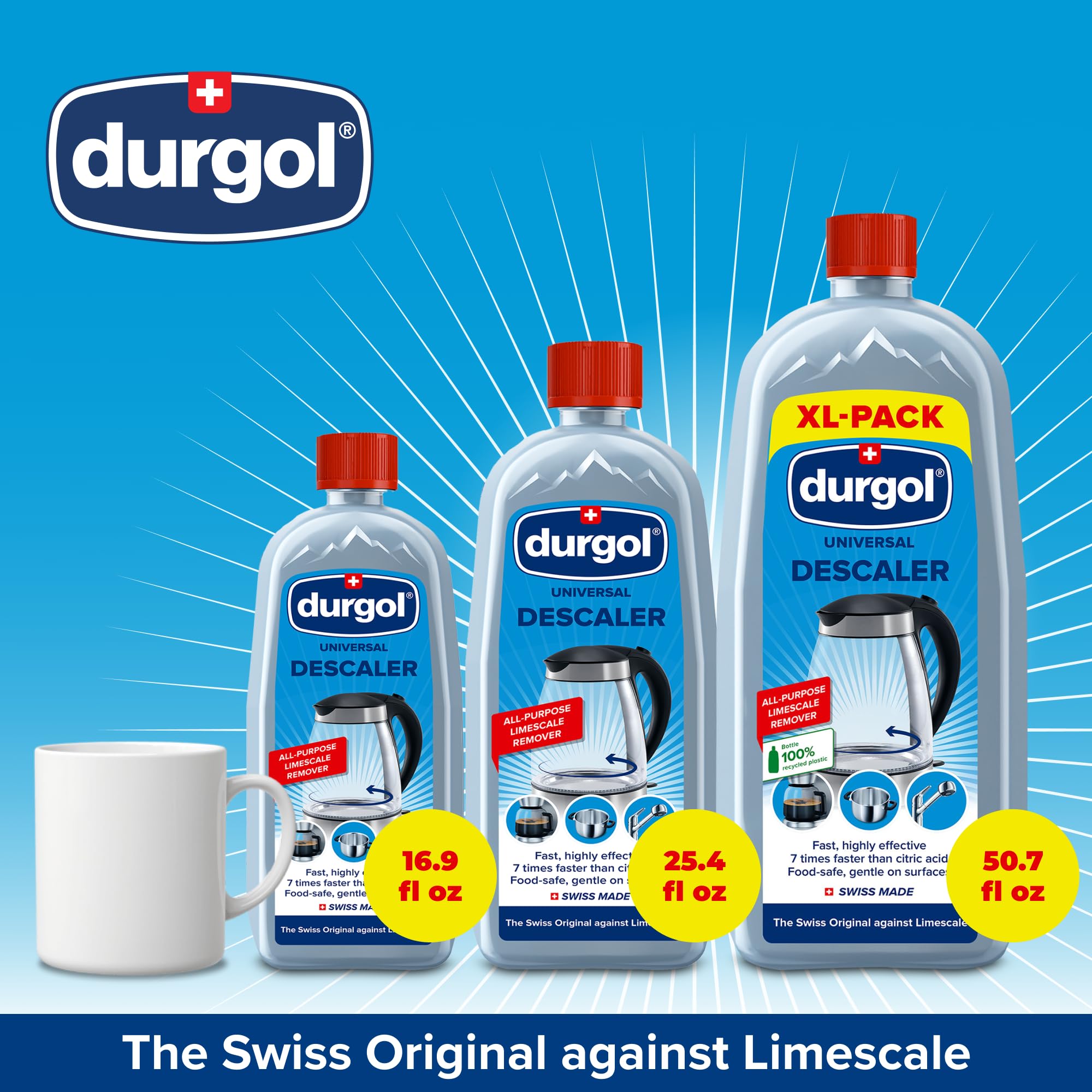
Durgol Universal Multi-Purpose Descaler and Decalcifier 16.9 oz - Removes 100% Limescale Fast
Pros
- Sulfamic acid formula removes 100% of limescale without leaving calcium citrate buildup behind, unlike citric acid cleaners
- Highly versatile -- works on coffee makers, kettles, tile, faucets, shower heads, irons, and humidifiers
- No prep needed -- ready to use straight from the bottle with no dilution required
- Backed by over 4,000 reviews averaging 4.6 stars, indicating consistent real-world satisfaction
- Environmentally friendly 100% recyclable PET bottle
Cons
- At 16.9 oz, heavy appliance users or large households may go through a bottle quickly and need to reorder often
- Sulfamic acid requires careful handling and thorough rinsing on food-contact surfaces, which adds a step compared to gentler cleaners
- No scent-masking agents, so the clinical smell during use is noticeable in small spaces
Hard water is one of those invisible home problems that quietly chips away at the things you love most -- your morning coffee ritual, your gleaming kitchen faucet, the shower head that used to have real pressure. Durgol Universal tackles all of it with a single, no-fuss bottle that has been refined by Swiss chemists since 1951.
What separates Durgol from the citric acid and vinegar options crowding the cleaning aisle is chemistry. Citric acid breaks down some limescale but leaves calcium citrate deposits behind -- a secondary buildup that no cleaner can remove. Durgol's sulfamic acid formula dissolves 100% of the limescale in one pass, which means your coffee maker, kettle, and faucets are genuinely restored, not just surface-treated.
For a home decor enthusiast, the practical payoff is real: fixtures stay shiny longer, appliances run quieter, and that film clouding your glass tile or chrome accents disappears. If you want spotless, hard-water-free surfaces throughout your kitchen and bathroom without cycling through five different products, this one delivers.
Styles it works with: Modern Farmhouse, Scandinavian, Minimalist, Industrial -- any aesthetic that relies on clean chrome, matte faucets, or white ceramic surfaces where limescale is especially visible.
Best used in: Kitchen sink and faucet area, espresso or drip coffee station, bathroom shower head and tile surround, utility room for steam irons and humidifiers.
May not suit: Households with only soft or filtered water who rarely see mineral buildup, or renters who are not responsible for appliance maintenance and have no need to stock descaling products.
Buy it if:
- You live in a hard water area and notice white mineral deposits on faucets, tile grout, or inside your kettle and coffee machine
- Your coffee maker or espresso machine is running slower or producing weaker pressure and you want to restore it without a service call
- You want one multi-surface descaler that handles the kitchen, bathroom, and small appliances instead of buying separate products
Consider waiting if:
- You already have a partially used descaler at home and want to finish it before restocking
Skip it if:
- You have confirmed soft water and have never noticed limescale or hard water staining in your home
- You are looking for a general all-purpose cleaner for grease, grime, or soap scum rather than mineral deposits specifically
Check the latest price and availability on Amazon before it sells out.

Pros
- Highly effective on hard water stains that other cleaners cannot touch
- Versatile use across bathroom, kitchen, and laundry appliances
- Ready-to-use spray format requires no mixing or dilution
- Plant-based formula with no dyes for a cleaner ingredient profile
- Exceptional value at under $6 for a 22 oz bottle
Cons
- Strong chemical smell requires good ventilation during use
- Not safe for use on natural stone, marble, or unsealed grout
- May require a second application on very heavy long-term buildup
If your bathroom fixtures have that chalky white crust or your showerhead has slowed to a trickle, CLR is the one product that actually fixes it. It cuts through calcium and lime deposits that sit stubbornly through regular cleaning, and it does it fast enough that you can see results while you wait.
What makes it a staple in the cleaning cabinet is its range. One bottle handles the showerhead, the faucet, the toilet bowl ring, the dishwasher interior, and the washing machine drum. That kind of utility at under $6 is hard to argue with, and with 3,500-plus reviews averaging 4.5 stars, the results speak for themselves.
If you want gleaming fixtures and scale-free appliances without spending an afternoon scrubbing, this one delivers.
Styles it works with: Any home style benefits from clean fixtures; particularly useful in Modern, Minimalist, Farmhouse, and Transitional interiors where hardware finishes like chrome and stainless steel are visible design elements.
Best used in: Master bathroom and guest bath faucets and showerheads, kitchen sink and dishwasher, laundry room washing machine drum, humidifiers and small appliances.
May not suit: Homes with natural stone tile or marble countertops where the formula cannot be used safely; households that prefer fragrance-based cleaners may want the scented variant instead.
Buy it if:
- You have hard water and notice white or orange buildup on faucets, showerheads, or toilet bowls
- Your showerhead flow has weakened due to mineral deposits blocking the nozzles
- You want a single product that handles bathroom, kitchen, and appliance cleaning in one pass
Consider waiting if:
- You prefer a fragrance-free and dye-free version, which CLR sells separately as CLR Free & Clear
Skip it if:
- Your home has marble, travertine, or other natural stone surfaces where acid-based cleaners cause permanent damage
- You only need a light everyday surface cleaner with no hard water or rust staining to address
Check the latest price and availability on Amazon before it sells out.

IMPRESA Shower Head Cleaner Solution 8 oz Unscented Hard Water Descaler Lime Calcium Remover Made in USA
Pros
- Tool-free application requires no disassembly of the shower head
- Compatible with multiple shower head styles including rain and handheld models
- Up to 8 uses per bottle delivers strong cost-per-use value at under $15
- Unscented formula suitable for fragrance-sensitive users
Cons
- 3.9 star rating with under 100 reviews suggests limited track record compared to established descalers
- Requires a full 1-hour soak time which may be inconvenient for single-bathroom households
- Effectiveness on severe long-term mineral buildup is not well documented in available reviews
If you have ever noticed your shower dribbling instead of delivering a strong, satisfying spray, hard water mineral deposits are almost certainly to blame. IMPRESA's shower head cleaner tackles that exact problem with a straightforward soak method that requires zero tools and minimal effort on your part.
What stands out is the value proposition: one small bottle handles up to 8 cleaning sessions, meaning you can keep every shower head in your home performing at its best throughout the year without spending much at all. The unscented formula is a genuine plus for households that are sensitive to chemical odors, and the Made in USA label adds a layer of confidence.
If you want consistent, strong water flow without the hassle of replacing your shower head every year, this one delivers.
Styles it works with: Any bathroom style, this is a functional maintenance product rather than a decor item, so it supports the longevity of fixtures in Modern, Traditional, Farmhouse, and Minimalist bathrooms alike.
Best placed in: Under the bathroom sink for easy access, in a cleaning supply cabinet, or stored in a utility closet between uses.
May not suit: Renters who are not responsible for fixture maintenance, or households with very light water use where mineral buildup is not a concern.
Buy it if:
- You live in a region with notoriously hard water and notice reduced water pressure or uneven spray from your shower head
- You want a low-cost, low-effort maintenance solution that extends the life of existing fixtures
- You prefer unscented cleaning products and need something safe to use in a shared or sensitive household
Consider waiting if:
- Your mineral buildup is severe and long-standing, as a stronger commercial descaler may deliver faster results
Skip it if:
- Your shower head is already functioning perfectly and you have no signs of hard water deposits
- You need an immediate fix and cannot wait for a full 1-hour soak treatment
Check the latest price and availability on Amazon before it sells out.



Write Your Review
No reviews yet. Be the first to share your experience!