

> Editorial Note: I’m Maya Chen, a bedroom and sleep editor who’s spent 6+ years tracking mattress and bedding durability. This guide draws on CertiPUR-US certification specs and Sleep Foundation research, plus owner reviews aggregated from Wirecutter and Apartment Therapy.
Dust mites are microscopic, they’re nearly everywhere, and they thrive in the exact spot you spend a third of your life: your bed. The good news is you don’t need to nuke your house to keep their numbers down. A few habits do most of the work. If you’re already upgrading your sleep setup, it pairs well with a best waterproof mattress protector, a solid routine for how to clean a mattress, the right best memory foam pillow, a sense of how often should you replace your pillows, and a plan for how to get rid of musty smell in furniture.
What Are Dust Mites and Where Do They Live?
Dust mites are tiny arachnids, roughly 0.2 to 0.3 mm long, far too small to see without magnification. They don’t bite and they don’t burrow into skin. What they do is feed on the dead skin cells that people and pets shed every day, which is why they cluster wherever skin flakes collect. That means mattresses, pillows, upholstered furniture, carpets, and stuffed toys.
According to the Sleep Foundation, a single mattress can host hundreds of thousands to millions of dust mites over time. The allergic reaction most people experience isn’t from the mites themselves. It’s from their waste particles and decaying bodies, which contain proteins that trigger sneezing, congestion, and itchy eyes in sensitive folks. The American Academy of Allergy, Asthma & Immunology (AAFA) notes these allergens can stay airborne briefly when disturbed, then settle back into fabric.
They love warmth and moisture. Most dust mite populations do best around 70°F to 77°F with relative humidity above 70%. They don’t drink water the way we do; they absorb moisture straight from the air. That detail matters a lot, because it points to one of your strongest control levers. Lower the humidity, and you make the environment far less hospitable. No single fix wipes them out completely. Reduction is the realistic goal.
How Do You Get Rid of Dust Mites in Your Bed?
Your bed is ground zero, so it’s where your effort pays off most. Start with weekly laundering of all bedding: sheets, pillowcases, and any blanket that touches your skin. Hot water is the key variable here, which I’ll cover in detail below.
Next, strip and air out the mattress. When you change sheets, give the bare mattress a quick pass with a vacuum that has a HEPA filter, paying attention to seams and the top surface where skin cells gather. The Mayo Clinic recommends washable bedding and reduced fabric clutter in the bedroom as a baseline for allergen control. Skip the heavy decorative pillows and pile of throw blankets if dust mite allergy is a real problem for you. Each one is another reservoir.
Pillows deserve attention too. They absorb a surprising amount of moisture and skin overnight. Wash pillows that are machine-safe every couple of months, and replace them on the schedule the manufacturer suggests. Memory foam can’t go in the wash, so an encasement becomes essential there.
A few practical habits help. Don’t make your bed the instant you wake up. Pull the covers back and let the mattress breathe for 20 to 30 minutes so trapped overnight moisture evaporates. Less moisture, fewer mites. It’s a small change with real payoff.
Does Washing Bedding in Hot Water Kill Dust Mites?
Yes, and this is one of the most reliable tools you’ve got. Dust mites survive a lot, but they don’t survive sustained heat. The widely cited threshold is 130°F (54°C) or higher. Wash bedding at that temperature and you kill the mites outright rather than just relocating them.
Here’s the catch. Many home water heaters are set to 120°F to prevent scald injuries, which sits just below the kill zone. Check your washer’s hot setting or your heater’s temperature if you can do it safely. If you can’t reach 130°F, you have backup options. A hot dryer cycle helps; 15 minutes at high heat can finish off mites that survived a cooler wash. There are also dust mite laundry additives designed to denature allergens in cold and warm water, useful for fabrics that can’t take high heat.
Frequency matters as much as temperature. The Sleep Foundation and AAFA both point to weekly washing of sheets and pillowcases as the sweet spot for keeping populations low. Stretch it to every two or three weeks and the numbers climb back.
One more note. Washing removes allergen proteins along with the mites, which is the part that actually affects how you feel. So even when a fabric can’t handle 130°F, regular laundering still reduces the allergen load. Hot is better. Frequent is non-negotiable.
How Do Allergen Encasements Help?
Allergen encasements are zippered covers that fully enclose a mattress or pillow, and they’re one of the most cost-effective moves you can make. They work two ways. First, they create a physical barrier with a pore size small enough to block mites and their waste particles, typically under 10 microns. Second, they cut off the food supply by sealing skin flakes away from the mites already living deep in the mattress, which starves the colony over time.
Wirecutter’s bedding coverage and Apartment Therapy both highlight tightly woven fabric encasements over the older vinyl style, since vinyl traps heat and crinkles loudly under you. A fabric encasement with a quality zipper breathes better and stays quiet. Look for one rated specifically for allergen or dust mite protection rather than a basic waterproof cover, though many do both jobs at once.
Encase the mattress and every pillow for the barrier to actually work. A sealed mattress under unsealed pillows still leaves a big reservoir open. Once they’re on, the maintenance is easy. Wash the encasement every couple of months and otherwise leave it zipped.
Owner reviews aggregated across retail listings consistently mention reduced morning congestion after a few weeks, though results vary by person. Encasements may help allergy symptoms, but they don’t cure an allergy. Pair them with hot-water washing for the strongest effect.
How Do You Reduce Dust Mites in Carpet and Upholstery?
Carpet is a dust mite favorite because it holds skin flakes, moisture, and warmth all at once. If you’re dealing with serious allergies, the EPA notes that hard flooring like wood, tile, or vinyl is far easier to keep allergen-free than wall-to-wall carpet. Swapping carpet for hard floors isn’t realistic for everyone, so the next best thing is disciplined cleaning.
Vacuum carpets and upholstered furniture at least weekly, twice weekly in bedrooms. Use a vacuum with a HEPA filter so the fine allergen particles get trapped instead of blown back into the air through the exhaust. A standard vacuum without proper filtration can actually stir allergens into the air you breathe. That’s a common mistake.
Vacuuming alone doesn’t reach mites living deep in dense pile or sofa cushions, though. That’s where dust mite sprays come in. These products are designed to denature the allergen proteins or reduce mite populations in fabric you can’t toss in the washing machine. Spray, let it work per the label, then vacuum. Treat couches, fabric chairs, area rugs, and curtains the same way.
Reduce clutter that collects dust. Fewer fabric surfaces means fewer places for mites to settle. Wash or freeze stuffed animals; 24 hours in a freezer kills mites in items too delicate to wash hot. Small steps, repeated, beat one big deep-clean you never get around to.
How Do You Keep Humidity Low to Control Dust Mites?
Humidity is the lever most people overlook, and it might be the single most effective one. Dust mites pull moisture directly from the air, so when the air dries out, they can’t survive. The Mayo Clinic and AAFA both recommend keeping indoor relative humidity below 50%, and ideally between 30% and 50%, to suppress dust mite populations.
A hygrometer is a cheap way to know your numbers; many cost under $15 and give you a live reading. If yours regularly sits above 50%, a dehumidifier in the bedroom or other damp rooms makes a measurable difference. Run your air conditioner in summer, since it pulls moisture out as it cools. In humid climates this combination does a lot of quiet work.
Ventilation matters too. Use exhaust fans in bathrooms and the kitchen, and crack windows when the outdoor air is drier than inside. Fix leaks and damp spots quickly, because chronic moisture feeds both mites and mold.
Be careful not to overdo it, though. Air below 30% humidity gets uncomfortable and can irritate sinuses and skin, which somewhat defeats the purpose. The target is that 30% to 50% band. Once you’re there, you’ve made your home a place where dust mites struggle to reproduce, and that steadily shrinks the population without any spraying or scrubbing at all.
Helpful Products
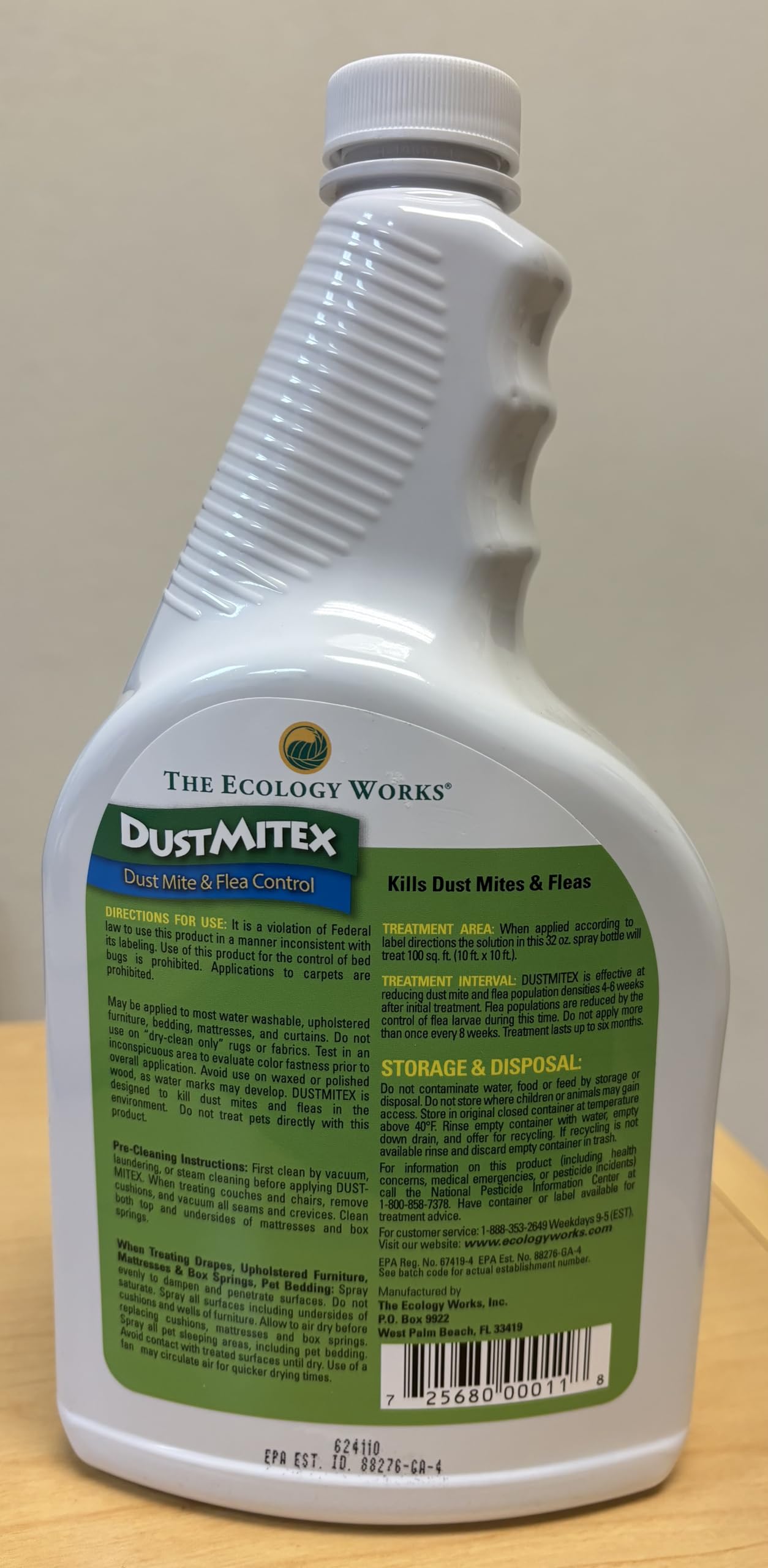
If you want to treat fabric surfaces that can’t go through a hot wash, a few dust mite sprays are worth a look. Here are options owners have rated for couches, mattresses, carpets, and bedding.

Pros
- EPA-registered with verified dust mite and flea control efficacy
- Fragrance-free and hypoallergenic, safe for sensitive skin and asthma sufferers
- Versatile coverage across fabrics, hard surfaces, pet beds, and car interiors
- Strong customer satisfaction with 4.3 stars across thousands of verified reviews
- Scalable as part of a complete allergen reduction system if needed
Cons
- Requires mixing with water before use, adding a prep step compared to ready-to-spray competitors
- Reapplication may be needed over time, increasing ongoing cost for large households
- No scent or visual indicator makes it hard to confirm coverage area during application
For anyone who wakes up sneezing or struggles with unexplained nighttime congestion, DustmiteX Spray quietly solves a problem most home decor products ignore entirely. It does not just mask the issue with fragrance or surface-level cleaning. The patented borate compound gets into the fabric fibers where dust mites actually live and breed, making it genuinely effective rather than cosmetically reassuring.
What sets this apart on a practical level is how unobtrusive it is in daily home life. There is no chemical smell to linger on your freshly made bed, no residue on your sofa fabric, and no worry about pets or children coming into contact with treated surfaces. It fits naturally into a cleaning routine without demanding special precautions or airing-out time.
If you want lasting allergy relief in your bedroom and living spaces without introducing harsh chemicals into your home environment, this one delivers.
Styles it works with: Any interior style since the product is invisible after application. Particularly valuable in Cozy Farmhouse, Scandinavian Minimalist, Family-Friendly, and Pet-Friendly home setups where soft furnishings dominate.
Best placed in: Sprayed onto mattresses and pillow covers in the master bedroom, applied to upholstered sofas and armchairs in the living room, and used on pet beds or crate bedding in any room.
May not suit: Homes with only hard-surface flooring and minimal soft furnishings will see limited benefit. Also less relevant for households with no known allergy or asthma sensitivities.
Buy it if:
- You or a family member experiences allergy or asthma symptoms at home and suspect dust mites in bedding or upholstery
- You have pets and want to treat both pet dander and dust mites with a single safe product
- You prefer a fragrance-free, plant-based solution over conventional pesticide sprays
Consider waiting if:
- You are looking to purchase the full 3-step allergen system and want to compare bundle pricing against buying products individually
Skip it if:
- Your home has no fabric surfaces, upholstery, or soft furnishings where dust mites can harbor
- You are looking for an instant air purifier or HEPA-style airborne allergen solution rather than a fabric treatment
Check the latest price and availability on Amazon before it sells out.
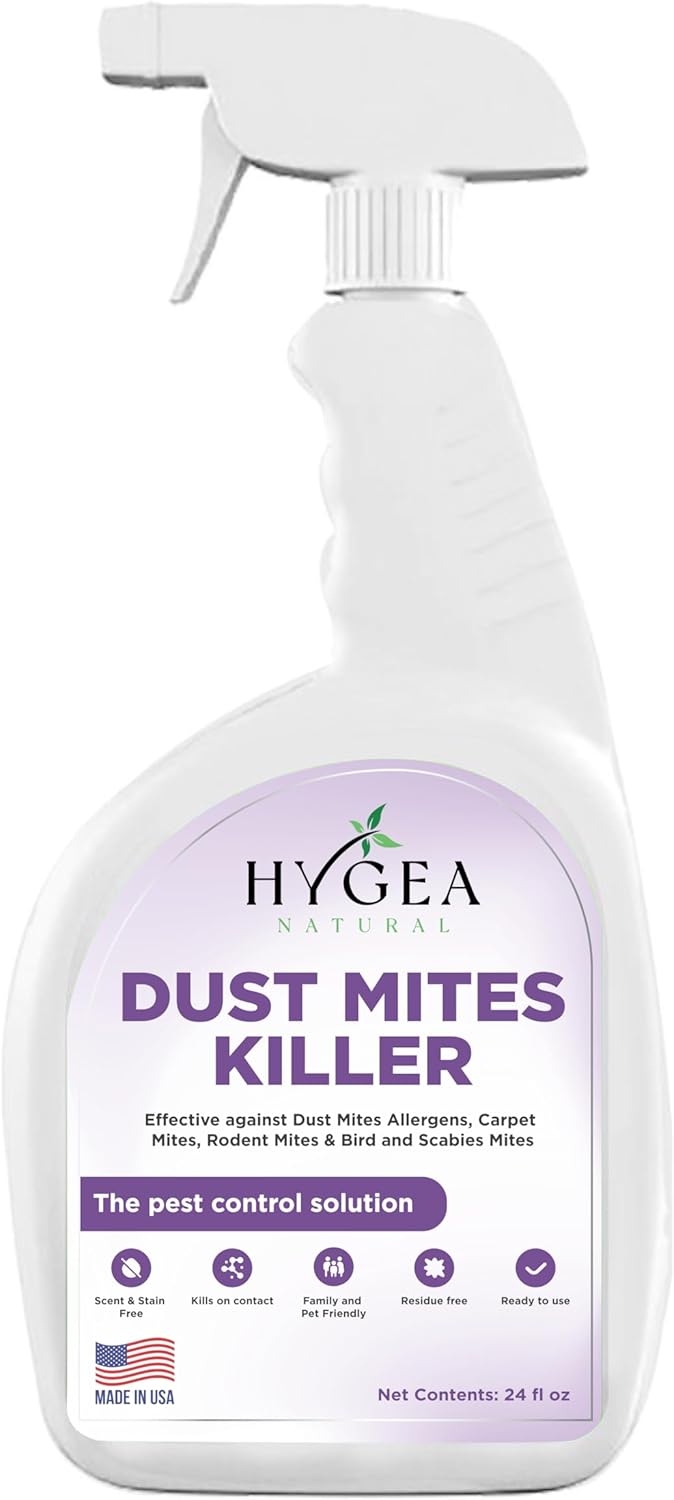
Hygea Natural Dust Mite Killer Spray 24oz Unscented | Safe for Bedding, Carpets, Furniture, Kids & Pets
Pros
- Broad multi-surface application covers mattresses, carpets, furniture, curtains, and soft toys in one product
- Truly chemical-free and unscented, making it safer for homes with young children, asthma sufferers, or sensitive pets
- Kills on contact with no waiting period, so you get immediate results after spraying
- Made in the USA with eco-conscious ingredients and recyclable packaging
- Can be used as both a spray and a laundry additive for comprehensive dust mite control
Cons
- No residual effect means you must spray regularly to maintain protection rather than treating once and forgetting
- Cannot be sprayed directly on people or pets due to high sodium content, which limits convenience during use
- 0 verified customer reviews at time of writing makes it harder to gauge real-world performance beyond product claims
If your household includes allergy sufferers, asthma-prone family members, or anyone who wakes up sneezing, the Hygea Natural Dust Mite Spray quietly solves a problem most people do not even know they have. It is not a decorative product, but it directly protects the spaces where you spend the most time resting and recovering.
What sets it apart from typical pest sprays is the completely chemical-free, unscented formula. You can spray it on your mattress before bedtime, treat your child's stuffed animals, or freshen upholstered furniture without the chemical smell or residue that comes with conventional options. The 24oz bottle covers a generous amount of surface area, and the laundry additive function is a smart bonus that lets you treat linens at the wash cycle level too.
If you want meaningful allergy relief at home without resorting to harsh chemical sprays, this one delivers.
Styles it works with: Any interior style benefits since this is a functional health product, not a decorative one. Particularly valuable in Minimalist, Scandinavian, and Modern Farmhouse bedrooms where natural and non-toxic living is a priority.
Best placed in: Primary bedroom mattresses and bedding, children's bedrooms and play areas with stuffed animals, living room carpets and upholstered sofas, and curtained windows in any room.
May not suit: Households without allergy or dust mite concerns may not see enough benefit to justify regular use. Also less practical for very large homes that would require multiple bottles per treatment cycle.
Buy it if:
- You or a family member experiences unexplained morning sneezing, nasal congestion, or worsening asthma symptoms at home
- You want a chemical-free, unscented alternative to conventional pest sprays that is safe around children and pets
- You are building a dust mite prevention routine and want one product that covers mattresses, carpets, furniture, and laundry
Consider waiting if:
- You want to see a larger base of verified customer reviews before committing, as the product currently has no published ratings
Skip it if:
- You are looking for a long-lasting residual treatment that protects surfaces between applications without respraying
- You need a product you can spray directly on pets or use on skin as part of a personal care routine
Check the latest price and availability on Amazon before it sells out.
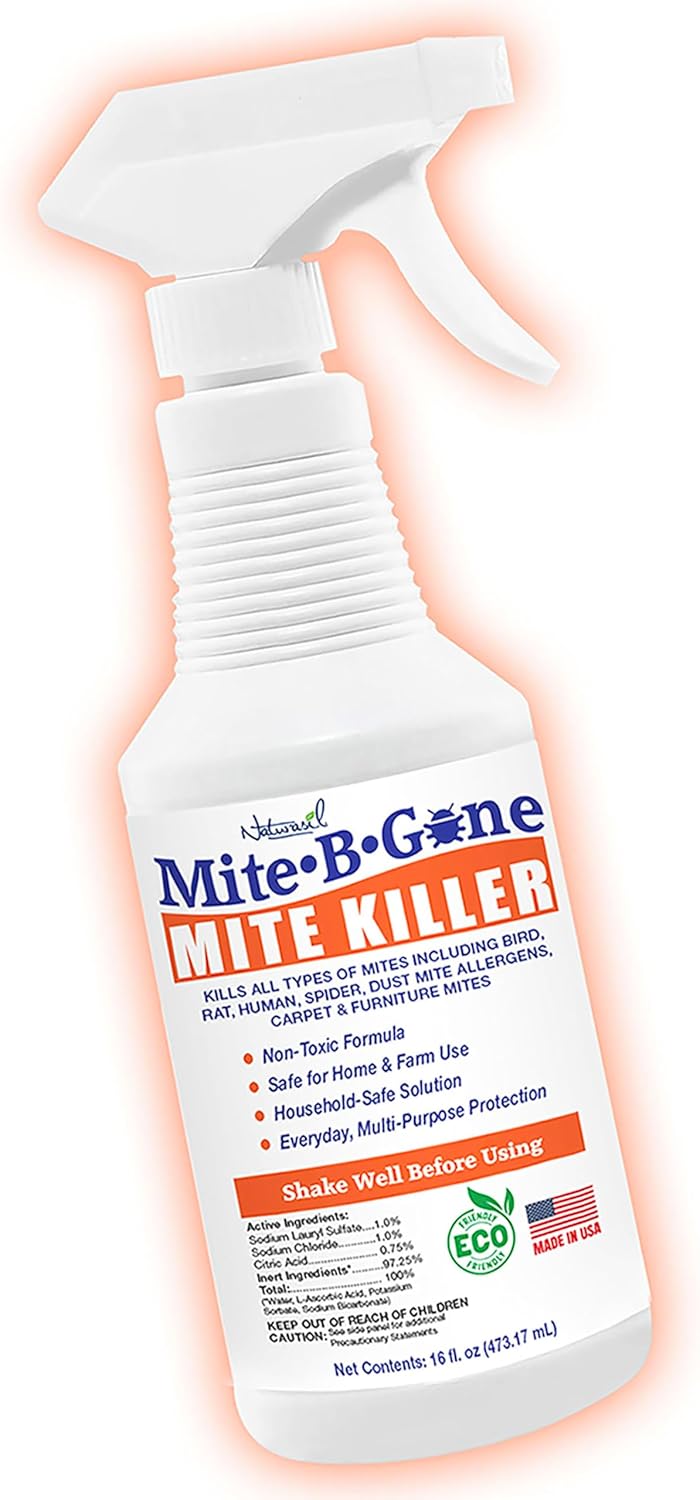
Mite-B-Gone 16oz Natural Mite Killer Spray | Safe for Family & Pets | Treats Dust, Bird, Spider & Carpet Mites
Pros
- Broad mite coverage in a single product handles most common household infestations
- Natural, plant-based ingredients make it safer for use on furniture, bedding, and pet areas than chemical alternatives
- Family and pet safe formula with no harsh chemical restrictions on treated spaces
- Strong review volume of nearly 3,000 ratings provides reliable real-world performance data
- Flexible dosing allows daily use for severe cases without product restrictions
Cons
- Results require up to two weeks of consistent use, which is slower than chemical-based alternatives for urgent infestations
- Not intended for use on skin, so a separate product is needed if mites have spread to the body
- 16oz bottle may run out quickly when treating multiple rooms or large furniture pieces simultaneously
Mite-B-Gone earns its place in the home care cabinet because it handles one of the most frustrating invisible household problems without filling your living space with toxic fumes or chemical residue. The plant-based formula means you can spray down your mattress, sofa cushions, and area rugs and get back to your day without worrying about what your kids or pets are touching afterward.
What sets it apart from a standard pesticide spray is the breadth of coverage. Dust mites hiding in your bedding, bird mites tracked in from a nest in the eaves, carpet mites buried in your area rugs -- one bottle addresses all of them. For renters or homeowners who have dealt with a mystery itch they could not trace, that flexibility is genuinely reassuring.
If you want effective mite control across your entire home without resorting to harsh chemical treatments, this one delivers.
Styles it works with: Any home style benefits equally since this is a functional treatment product, though it is especially practical in Natural, Farmhouse, Bohemian, and Minimalist homes where organic and non-toxic living is a priority.
Best placed in: Master bedroom nightstand or closet shelf for regular bedding treatment, under the bathroom sink for whole-home access, or in a utility closet alongside cleaning supplies for easy grab-and-go use.
May not suit: Households looking for a one-and-done solution may find the two-week treatment window frustrating; also not suitable as a skin treatment, so homes dealing with a skin-level mite issue will need supplemental products from the same line.
Buy it if:
- You are dealing with unexplained itching or a suspected mite infestation in your mattress, upholstered furniture, or carpet and want a non-toxic first response
- You have pets or young children and need a treatment you can apply to living areas without strict re-entry wait times
- You want a ready-to-use spray with no mixing or dilution required for treating multiple surfaces quickly
Consider waiting if:
- You are unsure whether mites are the actual problem -- a pest identification step first could save you from an unnecessary purchase
Skip it if:
- You need immediate overnight results, as this product requires consistent use over days to weeks to fully resolve an infestation
- Your primary concern is a skin-level mite issue, since this spray is not labeled for use on skin and a different product in the Mite-B-Gone line would be more appropriate
Check the latest price and availability on Amazon before it sells out.




Write Your Review
No reviews yet. Be the first to share your experience!