

> Editorial Note: I’m Olivia Bennett, a storage and organization contributor. I approach storage as a systems problem rather than a product one: fit to actual room dimensions, load ratings, and how the system holds up under daily use.
The sizing mistake is counting people instead of pairs. A family of four doesn’t own 4 pairs of shoes; they usually own 20 to 40 pairs once you count boots, sneakers, and seasonal shoes. That’s the number that sets the rack size. Cross-check with best shoe cabinet, best shoe rack for entryway, best shoe storage, best shoe cabinet for small apartment, best entryway shoe storage, and best closet organizer system.
Quick Reference: Size Chart
| Household Setup | Pairs to Plan For | Recommended Capacity | Footprint |
|---|---|---|---|
| Minimal family of four | 16 to 20 pairs | 20-pair rack | About 30 inches wide |
| Average family of four | 24 to 32 pairs | 30-pair cabinet | 36 inches to 40 inches wide |
| Active or seasonal family | 32 to 40 pairs | 40-plus pair system | 40 inches wide or dual unit |
| Tight entryway | 20 pairs | Tall narrow cabinet | 24 inches wide, taller |
| Mudroom or garage overflow | 40-plus pairs | Two stacked units | 48 inches to 60 inches wide |
Count Pairs Before You Measure Space
Start with a real count. Walk the house and count every pair, including the ones by the back door and in closets. A family of four averages 24 to 32 pairs once boots and sport shoes are included. Underestimating here is the top reason racks overflow within a month.
Add 20 % for growth and guests. If you count 26 pairs, plan for 32 slots. Good Housekeeping organization guides often recommend rounding up, because shoe collections grow faster than storage does. Count first. Then measure the wall.
Kids are the wildcard. Children’s shoes are smaller, so you can often fit 2 pairs in the space of 1 adult slot, but kids also cycle through sizes fast. Don’t build a rack so tight that next year’s growth spurt leaves shoes on the floor again.
Measure the Entryway Width and Height
Now measure the space. A standard entryway shoe cabinet runs 30 inches to 40 inches wide and 30 inches to 48 inches tall. Measure the open wall, then subtract 2 inches on each side for clearance so doors and drawers open freely.
Height buys capacity in tight spaces. A 63 inch tall cabinet holds far more pairs than a low 2-tier rack in the same 24 inch footprint. If floor space is limited, go vertical. If the entry is wide but short, a long low bench-style rack fits better under a window or coat hooks, and it doubles as a spot to sit and lace up.
Watch the door swing. A hinged front needs clearance to open, and an inward-swinging entry door can’t collide with the cabinet. Measure the arc, not just the wall, or you’ll end up with a cabinet you can’t fully open.
Match Slot Depth to the Biggest Shoes
Depth is the number people skip. Men’s shoes and boots need 12 inches to 14 inches of slot depth. A rack built for 10 inch slots forces boots to hang off the edge and topple.
Check the tallest and longest shoes in the house. Winter boots may need an open tier with 14 inches of height clearance rather than a fixed cubby. ASTM stability considerations matter here too, because a rack loaded with heavy boots up top tips more easily than one loaded low. Keep boots on the bottom tier where they belong.
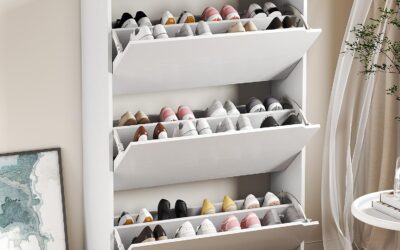
Angled cubbies save depth. A shoe tilted at 15 degrees takes less front-to-back space than a flat one, which is why some slim cabinets fit a 12 inch shoe in a 9 inch deep body. If your entry is narrow, an angled-slot cabinet is worth the look.
Decide Between One Unit and a System
A single 30-pair cabinet works for an average family. But an active family with cleats, hiking boots, and seasonal shoes often needs a system: an entry cabinet for daily shoes plus a garage or closet rack for overflow.
Split the load by frequency. Daily shoes go in the entry cabinet within reach. Seasonal and sport shoes go to a secondary rack. Real Simple organization coverage often frames this as a two-zone system, because forcing 40 pairs into one entry cabinet makes daily access worse, not better.
The math is simple. If your count is under 30 pairs, one well-sized cabinet does the job. If you’re over 32, don’t fight it with a single oversized unit that blocks the entry. Two smaller zones beat one crammed cabinet every time.
Plan the Capacity by Tier, Not Just Total
A pair count only helps if the tiers actually hold that count. A standard shoe cubby fits 1 pair per 9 inch to 12 inch wide slot, so a 36 inch wide tier holds 3 to 4 adult pairs. Multiply by the number of tiers to get real capacity. A 5-tier cabinet at 36 inches wide holds roughly 15 to 20 pairs, not the 30 the box might claim.
Adjustable shelves stretch that number. Drop the shelf spacing to 5 inches for flats and sneakers, and you fit more pairs per tier. Raise one tier to 8 inches for boots and heels. A family of four usually needs at least one 8 inch tier for boots and three 5 inch to 6 inch tiers for everyday shoes.
Leave one tier empty on purpose. Shoes come home wet, muddy, or in a pile by the door, and an open landing tier gives them a place before they get sorted. A cabinet packed to 100 % capacity overflows the moment four people walk in from the rain. Plan for 80 % fill and the system actually holds through daily use.
Size-Matched Products
All three products below clear a useful owner-rating threshold and map to the sizing rules above. Start with the first for a slim tall footprint, use the second for a farmhouse cabinet with adjustable shelves, and use the third when you need a higher pair count in one unit.


Pros
- Exceptional capacity for such a narrow footprint, fitting up to 32 pairs
- Walnut and rattan combo looks upscale and suits multiple decor styles
- Includes anti-tip hardware for family-safe wall anchoring
- Adjustable shelves let you customize compartment heights for different shoe types
- Hollow rattan design promotes ventilation so shoes stay dry
Cons
- Only 2 customer reviews so far, making long-term durability unproven
- At 63 inches tall, it may look imposing in very small entryways with low ceilings
- Enginered wood construction may not hold up as well as solid wood in humid environments
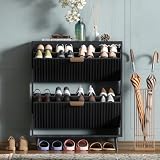
This KNOWORLD cabinet solves the age-old entryway problem: too many shoes, not enough space, and no one wants to look at them. The four flip-drawer design keeps everything tucked away while the rattan panels give it a warm, textured look that feels intentional rather than purely functional. It reads more like a piece of furniture than a shoe rack.
In a real room, the walnut finish and woven rattan sit comfortably alongside mid-century, boho, or modern coastal pieces. The gold handles add a subtle premium detail without being flashy. At just over 9 inches deep, it hugs the wall and leaves your hallway open for traffic.
If you want serious shoe storage without a bulky closet-like cabinet dominating your entryway, this one delivers.
Styles it works with: Mid-Century Modern, Boho, Coastal, Japandi
Best placed in: Narrow entryway wall, hallway between rooms, foyer beside the front door
May not suit: Very small entryways where63 inches of vertical furniture would feel overwhelming, or ultra-minimalist spaces where rattan texture conflicts with a clean-line aesthetic
Buy it if:
- You have20+ pairs of shoes and a narrow entryway that cannot fit a standard depth cabinet
- You want your shoe storage to look like a real piece of furniture, not a utility rack
- You have kids or pets and need the peace of mind of anti-tip wall anchor
Consider waiting if:
- You prefer a color other than walnut, as no alternate finishes appear available yet
- You want to see more customer reviews before committing to a newer product
Skip it if:
- You need a cabinet deeper than 10 inches to store boots upright without folding them
- Your entryway is in a high-humidity area like a garage or uncovered porch
Check the latest price and availability on Amazon before it sells out.

Homleke Farmhouse Shoe Cabinet with 2 Barn Doors, 5-Tier Tall Shoe Storage Organizer, White
Pros
- Holds 15 plus pairs of shoes in a small footprint
- Adjustable shelves accommodate tall boots and heels in the same cabinet
- Barn doors and black U-shaped handles give genuine farmhouse charm
- Anti tip kit included for safety around kids and pets
- All assembly tools and step-by-step instructions come in the box
Cons
- Particleboard construction is lighter and less durable than solid wood
- White finish may show scuffs and marks from dirty shoes over time
- Assembly is required and the 36 pound size suggests two people make it easier
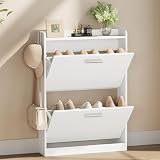
If you have been living with a pile of shoes by the front door, this Homleke farmhouse cabinet is the kind of upgrade that quietly transforms a chaotic entry into a calm, styled space. The two barn doors and black U-shaped handles give it that cozy modern farmhouse character, while the white finish keeps it fresh enough to blend with almost any decor.
Inside, the three adjustable shelves do the heavy lifting. You can raise one shelf for tall winter boots, lower another for flats, and still have room for 15 or more pairs without the clutter spilling out. At just 27.6 inches wide and 31.5 inches tall, it tucks neatly beside a console table or against a hallway wall without eating your floor plan.
If you want hidden shoe storage that looks like intentional decor without spending solid wood furniture money, this one delivers.
Styles it works with: Modern Farmhouse, Scandinavian, Cottagecore, Minimalist
Best placed in: entryway wall, hallway, beside the bed in a bedroom closet
May not suit: small studio apartments with very tight walkways or homes that need a cabinet under 31 inches tall to clear a low window sill
Buy it if:
- You want hidden shoe storage that doubles as farmhouse style decor in your entryway or hallway
- You need adjustable shelves to fit a mix of boots, sneakers, and heels in one cabinet
- You have kids or pets and want the included anti tip kit for extra safety
Consider waiting if:
- You need a color other than white to match your existing furniture
- You have more than 15 pairs of shoes and need a second unit or a larger cabinet
Skip it if:
- You want solid wood construction that can take heavy daily abuse
- Your space cannot fit a cabinet that is 31.5 inches tall and 27.6 inches wide
Check the latest price and availability on Anthropic before it sells out.

Pros
- Separate tall door accommodates boots and heels without wasting shelf space
- Cross molding design elevates the look beyond generic shoe storage
- Adjustable shelves adapt to your shoe collection as it changes
- Soft-close hinges add quality feel and prevent noise
- Raised legs protect hardwood and tile floors from scratches
Cons
- No customer reviews yet to confirm real-world durability and ease of assembly
- Engineered wood may not hold up as well as solid wood in high-humidity entryways
- 30-pair capacity assumes average shoe sizes and may hold fewer large men's shoes or bulky sneakers
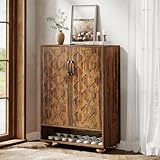
This shoe cabinet solves the entryway clutter problem without looking like utilitarian storage. The cross-molded doors bring that farmhouse-meets-vintage vibe that works whether your home leans modern or traditional, and the black finish hides scuffs better than lighter colors in a high-traffic zone.
What sets it apart is the practical design choices: a separate tall compartment for boots so you're not wasting shelf space, soft-close hinges that feel premium when you're rushing out the door, and a countertop that actually holds your everyday grab-and-go items without them sliding off. The raised legs mean you can vacuum underneath instead of watching dust bunnies accumulate.
If you want hidden shoe storage that looks like real furniture without the awkward cabinet-in-the-hallway vibe, this one delivers.
Styles it works with: Modern Farmhouse, Rustic, Transitional, Scandinavian
Best placed in: Entryway against the wall, mudroom beside coat hooks, bedroom walk-in closet, hallway near the front door
May not suit: Very small apartments where every inch counts (this takes up floor space), ultra-modern minimalist interiors where decorative molding feels too ornate, homes with toddlers who might use the countertop as a climbing surface
Buy it if:
- You need hidden storage for 20-30 pairs of everyday shoes and boots in one spot
- You want entryway furniture that looks intentional, not like a plastic shoe rack
- You're tired of tripping over shoes or digging through piles to find matching pairs
- You need a drop zone for keys and bags that doesn't involve countertop clutter
Consider waiting if:
- You prefer a different finish color and want to see if other options become available
- You're hoping for verified customer reviews before committing to this specific model
Skip it if:
- You need something under 30 inches wide for a tight entryway nook
- You own mostly oversized sneakers or work boots that won't fit standard shelving
- You're looking for solid wood construction rather than engineered wood
Check the latest price and availability on Amazon before it sells out.
KNOWORLD 63-inch Wood Rattan Shoe Cabinet. This is the vertical pick for a tight entryway. At a 63 inch height and a slim footprint, it holds a family’s daily shoes without eating wall width. The 5.0 owner rating reflects its fit in narrow entries. Choose it when you’ve got height but not width.
Homleke Farmhouse Shoe Cabinet. This 5-tier cabinet with 3 adjustable shelves handles taller boots, because you can move shelves to open a 14 inch clearance tier. It suits an average family of four with mixed shoe heights. The barn-door front hides clutter, which helps in a visible entryway.
ONBRILL 3-Door Shoe Cabinet, 30 Pairs. Choose this one when pair count is the priority. It targets a 30-pair load in a 40 inch tall footprint with adjustable shelves. For an active family, pair it with a secondary garage rack so daily shoes stay in reach and overflow moves out.
Frequently Asked Questions
How many pairs does a family of four need to store?
Most families of four own 24 to 32 pairs once boots and sport shoes are counted. Plan for 20 % more than your current count to allow for growth and guests.
What size shoe rack fits a standard entryway?
Most entryway shoe cabinets run 30 inches to 40 inches wide and 30 inches to 48 inches tall. Measure the open wall and subtract 2 inches per side for door and drawer clearance.

How deep should a shoe rack slot be?
It depends. Plan 12 inches to 14 inches of depth so men’s shoes and boots fit fully. Slots under 10 inches force larger shoes to hang off the edge.
Should I buy one big rack or two smaller ones?
It depends. One 30-pair cabinet works for an average family. An active family with seasonal shoes often does better with a two-zone system: an entry cabinet plus an overflow rack.
Where should heavy boots go on a shoe rack?
On the bottom tier. Heavy boots up top raise the center of gravity and make the rack tip. Keep the heaviest shoes low and reserve open tiers with 14 inches of clearance for tall boots.
Bottom Line
For a family of four, plan for 24 to 32 pairs and a cabinet 36 inches to 40 inches wide, with 12 inches to 14 inches of slot depth for boots. The ONBRILL 30-pair cabinet is the best single-unit fit for an average household, while the KNOWORLD 63 inch cabinet wins when you’ve got height but not width. Count pairs first, measure the wall second, and split daily from seasonal shoes if you cross 32 pairs.


Write Your Review
No reviews yet. Be the first to share your experience!