

> Editorial Note: I’m Olivia Bennett, a storage and organization contributor. I approach storage as a systems problem rather than a product one — fit to actual room dimensions, load ratings, and how the system holds up under daily use.
The most common sizing mistake isn’t buying too small. It’s buying a 6-foot system for a 4-foot opening, then forcing it in and losing the side clearance you need to open drawers. Measure the interior width first, subtract 2 inches for wiggle room, and everything else follows. If you want the full build, start with our best closet organizer system rundown, then cross-check shelving load with our best bookshelf guide, bin sizing with best storage baskets, layout logic in how to organize a small closet, and rod-only fixes in best hanging closet organizer.
Quick Reference: Closet Organizer Size Chart
| Closet Type | Interior Width | Recommended Organizer Width | Notes |
|---|---|---|---|
| Reach-in (small) | 24–48 in | One 25 in tower + 1–2 rods | Leave 1 in clearance per side |
| Reach-in (standard) | 48–72 in | 48–60 in modular kit | Tower center, rods flanking |
| Reach-in (wide) | 72–96 in | 60–84 in expandable system | Double-hang one bay |
| Walk-in (small) | 5×5 ft | Two 24–36 in units, L-shape | Keep 24 in aisle |
| Walk-in (large) | 7×7 ft+ | 3–4 towers, full wall runs | 36 in aisle minimum |
Depth stays constant across every type: 14 inches for shelves, 24 inches of clear space in front of any hanging rod so garments don’t crush.
Reach-In Closets: How to Measure
Start with a steel tape, not a cloth one. Measure the interior width at three heights — floor, 40 inches, and 80 inches — because drywall bows and old framing rarely runs true. Use the smallest of the three numbers. That’s your working width.
Subtract 2 inches total for installation clearance, then divide the remaining space into function zones. A standard formula: allot 24 inches of width for a shelf-and-drawer tower, then fill the rest with rod. Each linear foot of single rod holds roughly 12 hanging shirts or 6 folded-over pairs of pants.
Height matters more than people expect. A double-hang zone needs 42 inches for the top rod and 42 for the bottom, so 84 inches of vertical clear space. Standard reach-in closets run 84–96 inches tall, which leaves room for a 12-inch shelf overhead. Long-hang items — dresses, coats — need a single 60–70 inch drop.
Depth is the quiet killer. Reach-ins are usually 24 inches deep, and a rod mounted flush to the back wall leaves knuckles scraping. Mount the rod 12 inches off the back wall. That’s the whole trick.
Walk-In Closets: How to Measure
Walk-ins live or die on aisle width. Sketch the footprint, then reserve a clear path down the center: 24 inches minimum for a one-person turn, 36 inches if two people dress at once or you want a bench. Everything else is wall real estate.
Each wall runs like a reach-in, but you get depth on adjacent walls too. A 7×7 foot walk-in gives you roughly 21 linear feet of usable wall after the door swing and aisle. Divide that into 24–36 inch bays. A four-bay layout, two towers, two rod runs, fits comfortably.
Corners waste space unless you plan for them. An L-shaped run needs a 14-inch dead zone where the two walls meet, or the corner rods collide. Leave it as open shelf. Count on 12 inches of shelf depth and a 200-pound-plus rated system if you’re stacking bins three high.
Rules of Thumb Before You Buy
Three numbers save most projects. First: 14-inch shelf depth handles folded sweaters and standard bins without overhang. Second: a single rod needs 42 inches of drop for shirts, 60–70 for dresses. Third: leave 1 inch of side clearance per unit, or you’ll fight the last panel into place.
Load rating is where cheap systems fail. A wire shelf sags under 30 pounds of stacked denim; look for melamine or wood shelves rated to 50 pounds per linear foot. Wall-mounted towers should anchor into studs at 16-inch centers, not drywall alone. BIFMA-style durability specs and aggregated owner reviews on Wirecutter both flag anchor failure as the top complaint on floating systems.
Don’t over-buy width. A system 3 inches too wide is useless. One 2 inches too narrow just gets a filler panel.
Our Size-Matched Picks
These three cover the range that matters, a full walk-in system, a modular reach-in starter, and a drawer-forward unit for closets short on folding space. Each clears a 4.3 owner rating, and I’ve matched them to the width they actually fit.

Pros
- Highly adaptable width and rod placement work in most standard closets
- Multiple hanging zones maximize vertical space for different garment types
- Smooth particleboard surface wipes clean easily and resists everyday wear
- Can be installed as full system or just the center tower for smaller spaces
- Modern minimalist design pairs well with other CUSTOS collection pieces
Cons
- New product with zero verified customer reviews yet so real-world durability is unproven
- Particleboard construction may not support very heavy winter coats on every rod
- Assembly and precise measurements required for best fit and stability
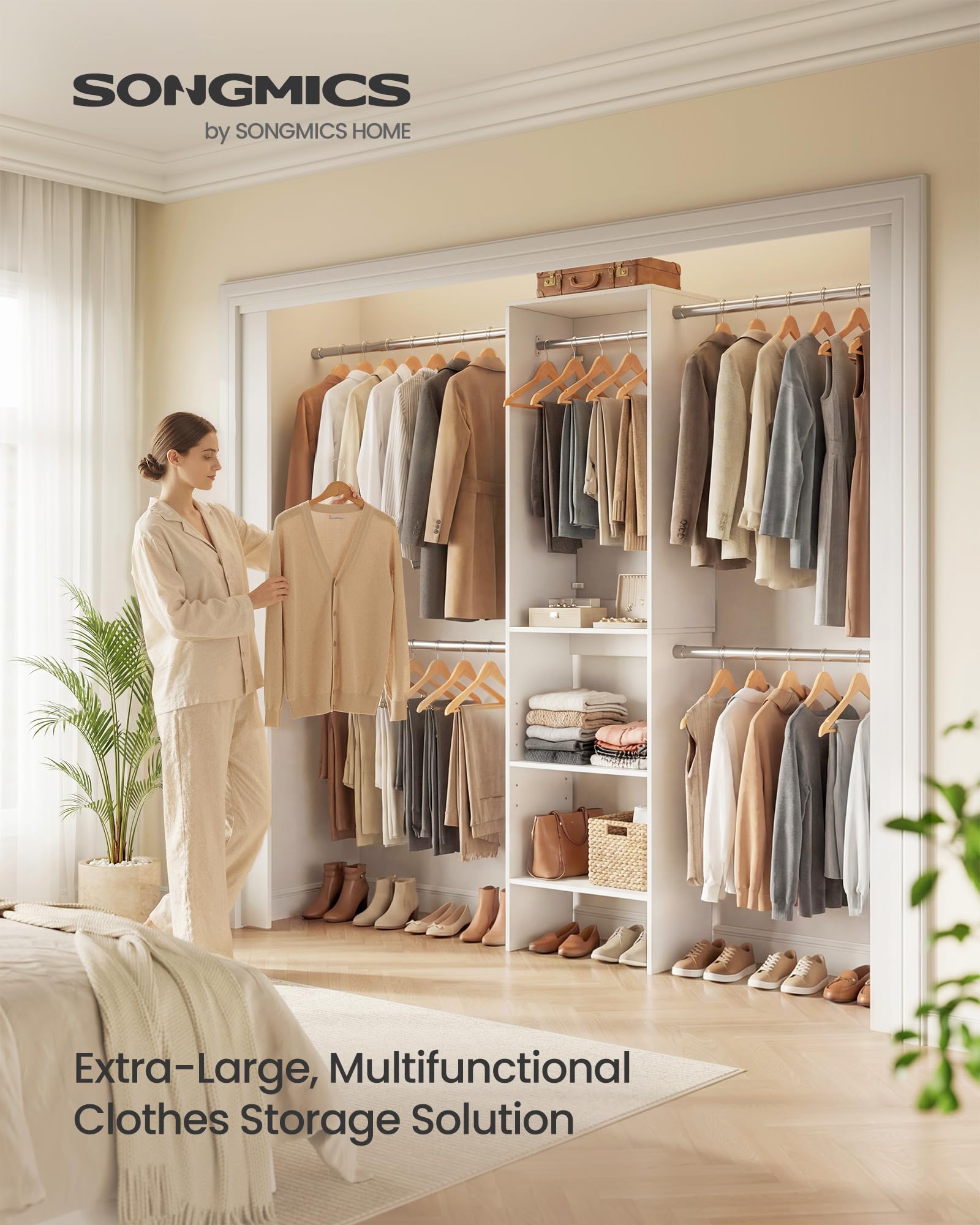
This is the kind of closet system that makes you actually want to put laundry away. The SONGMICS setup gives you the control to build zones for work clothes, weekend wear, and seasonal items without fighting a fixed layout that never quite fits. The telescoping rods mean you are not stuck with awkward gaps or rods that are too short, and the adjustable shelves let you stack bulky sweaters up high or create a proper shoe gallery down low.
The white finish and open frame design keep everything visible, which is a game changer if you have ever lost a favorite shirt in a dark corner. It feels more like a boutique display than a generic wire rack, and because nothing is permanently mounted, you can rearrange it when your wardrobe changes or take it to your next place.
If you want a closet that adapts to your actual clothes and space without hiring a custom installer, this one delivers.
Styles it works with: Modern Minimalist, Scandinavian, Contemporary, Transitional
Best placed in: Primary bedroom walk-in closet, spare bedroom converted to dressing room, studio apartment closet nook
May not suit: Closets narrower than 4 feet or wider than 9.6 feet, spaces with very low ceilings where vertical hanging zones cannot be utilized, homes needing closed storage to hide clutter from view
Buy it if:
- Your current closet has one fixed rod and you are drowning in piles of folded clothes
- You are renting and need a non-permanent solution that maximizes every inch
- You want separate zones for work blazers, casual tees, and long dresses without everything touching
Consider waiting if:
- You prefer a wood tone or darker finish and want to see if other colors become available
Skip it if:
- Your closet is under 4 feet or over 9.6 feet wide
- You need fully enclosed cabinets with doors to keep dust off hanging clothes
Check the latest price and availability on Amazon before it sells out.

ClosetMaid SuiteSymphony 25-Inch Wood Closet Organizer Starter Kit – Pure White Tower with Adjustable Shelves & 3 Hang Rods
Pros
- Complete starter kit with tower, 5 shelves, and 3 rods included
- Adjustable shelves adapt to shoes, folded clothes, or storage bins
- Expandable rods fit various closet widths without custom cutting
- High 4.7 star rating indicates strong customer satisfaction
- All mounting and assembly hardware included in box
Cons
- Assembly required with multiple components to install
- Must be carefully squared during installation to ensure drawers and doors fit properly if added later
- Add-on components like drawers and doors sold separately increase total cost
This ClosetMaid system is the kind of upgrade that makes you wonder why you lived with a messy closet for so long. The 25-inch tower anchors your space with five shelves perfect for folded sweaters, shoes, or baskets, while three expandable rods give you hanging space that actually fits your closet dimensions. The pure white finish looks clean and intentional, not like builder-grade wire shelving.
What makes this kit smart is the flexibility. Rods extend from 30 to 48 inches, so whether you have a narrow reach-in or a wider walk-in, you are covered. The adjustable shelves mean you can store tall boots one season and stacked bins the next. And because it is part of the SuiteSymphony collection, you can add drawers, doors, or shoe shelves later without starting over.
If you want a closet that feels custom without the custom price tag, this starter kit delivers.
Styles it works with: Modern Farmhouse, Scandinavian, Minimalist, Transitional
Best placed in: Master bedroom closet, guest room reach-in closet, home office storage wall, mudroom organization area
May not suit: Closets narrower than 5 feet, renters who cannot mount to walls, homes needing a fully enclosed wardrobe system out of the box
Buy it if:
- You have a 5-10 foot wide closet that needs better organization now
- You want a system you can expand with drawers or doors as budget allows
- You prefer the look of wood shelving over wire racks
Consider waiting if:
- You need matching drawer or door units right away and want to buy everything together during a sale
Skip it if:
- Your closet is under 5 feet wide and cannot accommodate the expandable rods
- You need a freestanding wardrobe that does not require wall mounting
Check the latest price and availability on Amazon before it sells out.

Aheaplus 21.3" White Wood Closet Organizer System with 4 Drawers & 3 Shelves - 80"H Modular Storage Tower
Pros
- Solid wood drawer construction is more durable and easier to clean than fabric drawer units
- 80-inch height maximizes vertical storage without requiring multiple separate units
- Thoughtful baseboard cutout allows flush wall mounting for a built-in look
- Modular design works with other Aheaplus closet components for future expansion
- Includes all hardware, anti-tip kits, and labeled parts for easier assembly
Cons
- At 21.3 inches deep, it may not fit in shallow reach-in closets under 24 inches
- Assembly required for an 80-inch tall unit can take 2-3 hours for one person
- Only available in white, limiting options for darker or wood-toned bedroom schemes
This closet tower solves the eternal bedroom struggle: where to put folded clothes that don't hang well, plus those everyday items you need to grab quickly. The four wooden drawers give you proper hidden storage for undergarments, accessories, and anything you'd rather keep out of sight, while the three open shelves are perfect for displaying handbags, stacking folded sweaters, or keeping your daily outfit picks within reach.
What sets this apart from cheaper fabric drawer units is the durability. Wooden drawers with metal glides won't sag, tear, or collect dust the way fabric does. They wipe clean in seconds and will still glide smoothly years from now. The 80-inch height means you're using vertical space efficiently, getting the storage capacity of multiple smaller units in one streamlined tower.
If you want solid wood drawer storage that fits flush against your bedroom wall without the price tag of custom built-ins, this one delivers.
Styles it works with: Modern Farmhouse, Scandinavian, Minimalist, Contemporary Transitional
Best placed in: Walk-in closet corner, bedroom wall opposite the bed, alongside existing closet systems, master bedroom dressing area
May not suit: Small reach-in closets under 24 inches deep, rooms with ceilings lower than 85 inches, homes needing drawer units in colors other than white, renters who move frequently due to assembly time
Buy it if:
- You need durable drawer storage in a walk-in closet or bedroom and fabric units haven't held up
- You're organizing a bedroom with limited floor space but good vertical clearance
- You want a white closet system that can expand with add-on rods or shelves later
Consider waiting if:
- You're hoping for a wood-tone or darker finish to match existing bedroom furniture
- You want to see if a similar unit goes on sale during Prime Day or Black Friday
Skip it if:
- Your closet depth is less than 24 inches or ceiling height is under 85 inches
- You need a fully assembled solution and can't dedicate 2-3 hours to assembly
Check the latest price and availability on Amazon before it sells out.
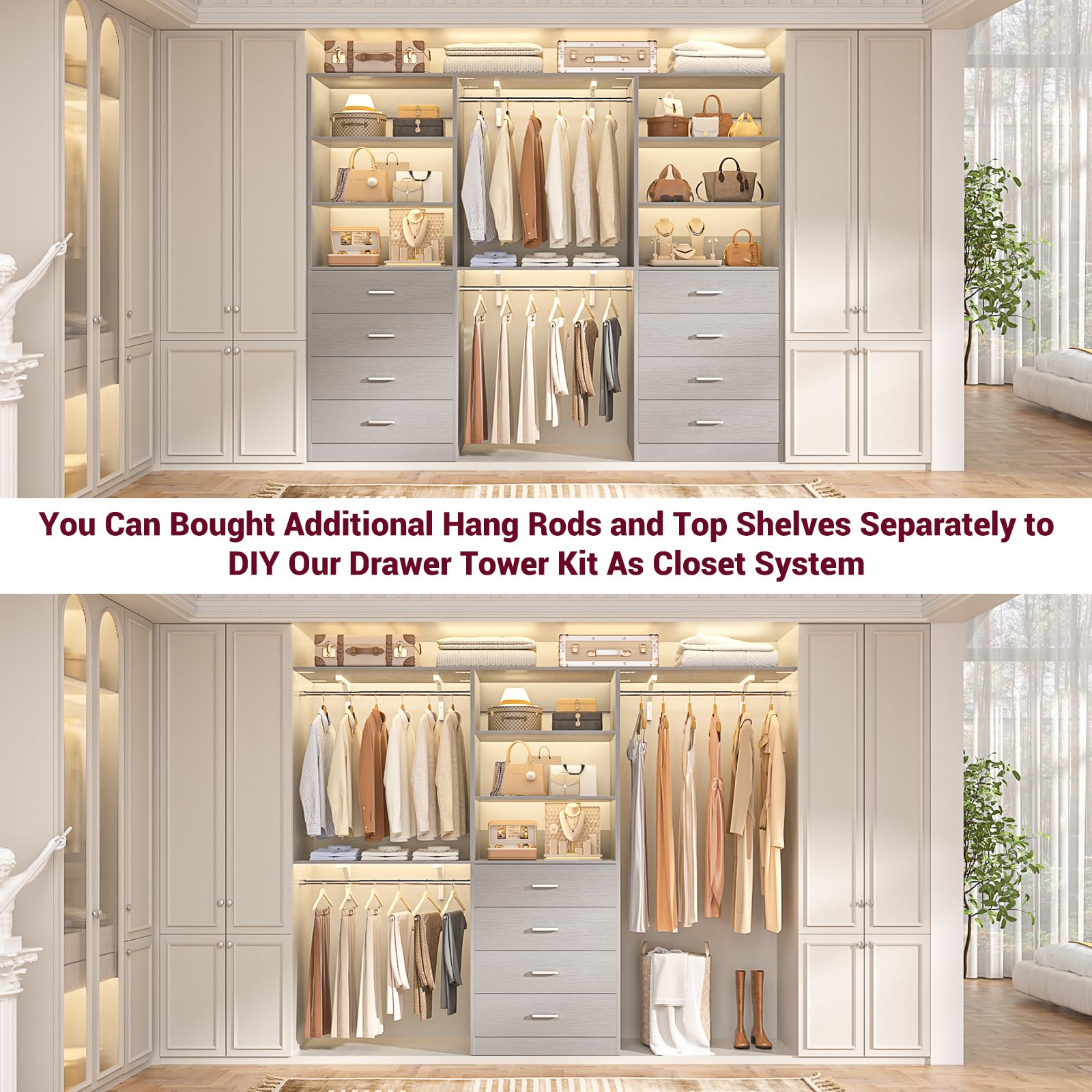
SONGMICS CUSTOS Closet System. This is the walk-in pick. The adjustable hanging rods and reconfigurable panels let you build across a full wall run, so it suits closets from 6 to 10 feet wide once you add bays. Rated 4.7 by owners, it’s the one to size up for a 7×7 walk-in where you want two towers plus double-hang. Give yourself a 36-inch aisle in front of it. If your interior width is under 5 feet, buy fewer bays rather than cramming the full kit in.
ClosetMaid SuiteSymphony Starter Kit. At 25 inches wide, this tower-and-three-rod kit is the reach-in workhorse. It drops into a standard 48–72 inch reach-in with the tower centered and rods flanking, which is the layout most closets want. The 4.5 rating reflects solid wood-look shelves that hold folded stacks without the sag wire shelving gets. Best pick if your opening is a single standard door and you don’t want to design a full system from scratch.
Aheaplus 4-Drawer Closet System. When folding space is the bottleneck, not rod space, this 21.3-inch drawer-forward unit earns its spot. It fits tight reach-ins and walk-in corners where a 24-inch tower won’t clear, and the four drawers replace a dresser you’d otherwise wedge in. Rated 4.3, it’s the modular choice for a small closet under 48 inches. Pair it with a single rod above and you’ve covered both hang and fold in one 21-inch footprint.
Frequently Asked Questions
What size closet organizer fits a standard reach-in closet?
For a standard 48–72 inch reach-in, use a 48–60 inch modular kit with one 24–25 inch tower centered and rods on either side. Subtract 2 inches from your measured interior width for clearance. Shelf depth should stay at 14 inches so bins don’t overhang.
How wide should a closet organizer be for a walk-in?
Plan around the aisle, not the walls. Keep a 24-inch aisle for one person or 36 inches for two, then fill each wall with 24–36 inch bays. A 7×7 foot walk-in yields about 21 linear feet of usable wall for towers and rods.
How much clearance do I need around a closet organizer?
Leave 1 inch of clearance per side of each unit, or 2 inches total across a single tower. In front of any hanging rod, keep 24 inches of clear depth so garments don’t crush against a wall or door. Corners need a 14-inch dead zone.
What depth should closet shelves be?
Fourteen inches is the standard, and it handles folded sweaters, standard fabric bins, and shoe rows without overhang. Going deeper than 16 inches wastes space and buries items at the back. Rods sit 12 inches off the back wall regardless of shelf depth.
How much weight can a closet organizer hold?
Look for shelves rated to 50 pounds per linear foot; wire versions sag near 30 pounds of stacked clothing. Anchor wall-mounted towers into studs at 16-inch centers rather than drywall alone. A system stacking bins three high should carry a 200-pound-plus total rating.
Bottom Line
For most homes, a 48–60 inch modular kit with one 25-inch tower is the correct size, it drops into a standard reach-in and covers hang and fold without custom work. The main exception is the walk-in, where you size by aisle first (24 inches solo, 36 inches for two) and build 24–36 inch bays along each wall. Measure interior width at three heights, use the smallest number, and subtract 2 inches. A system 3 inches too wide won’t fit at all; one 2 inches too narrow just needs a filler panel. For a closer look at a related choice, see what size cutting board do i need? a sizing guide.



Write Your Review
No reviews yet. Be the first to share your experience!