

> Editorial Note: I’m Hannah Lin, an Interior Living Researcher who’s spent 9+ years analyzing the home furniture market. This guide draws on BIFMA, GREENGUARD, and FSC certifications, plus owner reviews aggregated from Wirecutter, Apartment Therapy, and the major home design subreddits.
The board is too small. It almost always is. Most people buy a 9×12-inch board because it looks reasonable in the store, then spend every dinner chasing diced onion across the counter and rinsing the same surface three times per meal. The right size isn’t about the board at all. It’s about your counter depth, your sink width, and what you actually cook. Before you settle on a kitchen surface, it’s the same measure-first logic behind picking best gallery wall frames, a best console table for entryway, a best large floor mirror, a best wall mirror for living room, or a best table lamp for living room: measure the space, then match the object. Here’s how to size a cutting board so it earns its counter space instead of fighting you for it.
Quick Reference: Cutting Board Size Chart
| Use Case | Recommended Size (inches) | Why This Size |
|---|---|---|
| Small tasks (herbs, garlic, one apple) | 8 x 10 to 10 x 12 | Fits a dish rack, easy one-hand rinse |
| Everyday cooking (most households) | 12 x 18 | Room for a full onion dice without spillover |
| Carving roasts, whole chickens | 15 x 20 to 18 x 24 | Catches juice, holds a bird plus runoff |
| Meal prep / batch cooking | 18 x 24+ | Stages multiple ingredients at once |
| Over-the-sink or counter-spanning | 12 x 20 | Bridges a standard 22-inch sink cavity |
Standard US kitchen counters run 24 to 25 inches deep. A board deeper than 15 inches starts crowding your backsplash outlets and knife block, so 12 x 18 hits the sweet spot for most.
Everyday Cooking Boards: How to Measure
Start with your knife, not the counter. Lay your chef’s knife diagonally on the counter and note the blade length. A standard 8-inch chef’s knife needs roughly 4 inches of clearance on each side to make a full slicing pass, so your board’s short dimension should be at least 12 inches. The formula: blade length plus 8 inches equals your minimum width.
Now check depth. Pull out a tape measure and record your counter depth from backsplash to front edge. Subtract 6 inches for elbow room and outlet clearance. On a standard 24-inch counter, that leaves 18 inches of usable board length. That’s exactly why the 12 x 18 board is the default recommendation for daily use, big enough to dice a whole onion and a bell pepper side by side without ingredients rolling off. Anything smaller, and you’re rinsing mid-recipe. Every time.
Carving and Roast Boards: How to Measure
Carving is a juice problem, not a space problem. A spatchcocked chicken spreads to about 12 x 14 inches once flattened, and a bone-in roast releases 2 to 3 tablespoons of runoff per pound. Your board needs to hold the protein plus a juice moat, so measure your largest roasting pan and add 3 inches on every side.
For most home cooks carving a Thanksgiving turkey or a Sunday roast, that lands at 15 x 20 inches with a deep juice groove. The groove matters more than the surface here. A groove 0.25 inches deep and 0.5 inches wide holds roughly a quarter cup of liquid before it overflows, which is enough for a 5-pound bird. If you carve regularly for a crowd, jump to 18 x 24. Just confirm you have a drawer or cabinet tall enough, since a board that size runs 1 to 1.5 inches thick and won’t lie flat in a shallow slot.
Small-Kitchen and Over-Sink Boards: How to Measure
Small kitchens flip the whole equation. Here, storage clearance drives the size, not the cutting task. Measure the narrowest gap where the board will live, whether that’s the slot beside your fridge or the space under the upper cabinets, which sit 18 inches above most counters. Your board’s longest side has to clear that gap with an inch to spare.
For sink-spanning boards, measure the interior width of your sink basin, lip to lip. A standard single-bowl sink runs 22 inches wide, so a 12 x 20 board rests securely across it and doubles your prep zone in a tight galley. That’s the move for anyone working with under 6 feet of counter. One board, two functions. If counter space is the real constraint, a reversible board earns its keep by giving you a raw-meat side and a produce side without needing two separate boards.
Our Size-Matched Picks
I sorted these by the size tiers above, matching each to the use case it fits best rather than ranking them head-to-head. All three clear a 4.0 owner rating and cover the three sizes most households actually reach for. Start with the first if you want one do-everything board. Jump to the second for carving, or the third if you want a wood set that handles staging.


Winco 12x18x1-Inch White Polyethylene Cutting Board - NSF Certified, Dishwasher-Safe, Non-Porous
Pros
- Thick 1-inch profile resists warping and stays stable during use
- Non-porous polyethylene won't harbor bacteria or absorb food smells
- NSF certified for food safety, matching commercial kitchen standards
- Dishwasher-safe for quick, thorough sanitization
- Large 12x18 surface fits full meal prep comfortably
Cons
- White surface can show knife marks over time even though it won't stain
- Heavier than thinner boards, which may not suit wall-mounted storage
- Only available in white, limiting kitchen color coordination options
This Winco cutting board is the kind of quiet kitchen upgrade that makes daily cooking noticeably smother. It is the same commercial-grade board used in restaurant kitchens since 1992, and that professionaledigree shows in how flat it stays, how easy it cleans, and how confidently you can prep on its generous surface.
At a full inch thick, it feels substantial and planted on your countertop. The non-porous polyethylene surface means last night's garlic and onion won't haunt tomorrow's fruit salad. It looks clean and purposeful sitting beside the stove or propped against the backsplash.
If you want reliable, sanitary meal prep without spending restaurant-equipment prices, this one delivers.
Styles it works with: Modern Minimalist, Scandinavian, Industrial, Contemporary Farmhouse
Best placed in: Kitchen countertop beside the stove, prep island surface, utility pantry workstation
May not suit: Very small galey kitchens where the 12x18 footprint takes up too much counter space, or decorative kitchens where only wood-tone accessories are displayed
Buy it if:
- You prep meals daily and need a board that handles repeated washing without degrading
- You want NSF-certified food safety without paying for a full commercial setup
- Your current board has deep knife scars, stains, or lingering odors you cannot remove
Consider waiting if:
- You specifically need a color-coded board set for separating meat, produce, and dairy prep
Skip it if:
- You strongly prefer the look and feel of wood or bamboo boards in your kitchen
- You need a smaller board for limited counter space or light tasks like slicing fruit
Check the latest price and availability on Amazon before it sells out.

Farberware Extra Large 15x20 Plastic Cutting Board - Reversible, Deep Juice Groove, Dishwasher Safe
Pros
- Extra-large surface fits fullracks of ribs and large roasts with room to spare
- Non-porous material can be sanitized with bleach for thorough cleaning
- Lightweight at under half an inch thick, easy to store upright or in a cabinet
- Trusted Farberware brand with over 100 years of kitchen product history
- 4.6 star rating across 19,000+ verified buyer reviews signals strong reliability
Cons
- White surface may show knife marks and discoloration over time with heavy use
- At 0.39 inches thick it can flex slightly under pressure on uneven surfaces
- No non-slip feet or grip pads, so it may slide on smooth countertops during aggressive chopping
This Farberware cutting board solves the single most common frustration home cooks face: running out of space mid-prep. At 15 by 20 inches, it gives you a true workstation surface that fits a full butternut squash, a sheet pan's worth of vegetables, or a holiday bird without anything rolling off the edge. It is the kind of board that makes meal prep feel less cramped and more organized.
The deep juice groove is genuinely useful here. It catches liquid from tomatoes, raw chicken, and citrus without pooling onto your counter, which means fewer paper towels and less wiping down after every task. The reversible design is a smart hygiene touch that eliminates the need to buy separate boards for meat and produce.
If you want a romy, easy-to-clean cutting surface without spending more than the cost of a weeknight takeout order, this one delivers.
Styles it works with: Modern Farmhouse, Minimalist, Scandinavian, Classic Traditional
Best placed in: Main kitchen counter workspace, kitchen island prep station, outdoor grilling area side table
May not suit: Very small kitchens with limited counter space where15x20 inches overwhelms available work area, or cooks who prefer the aesthetic of wood or bamboo boards left out on display
Buy it if:
- You regularly prep large meals, meal prep weekly, or carve roasts and turkeys at home
- You want a board you can toss in the dishwasher without worying about warping or oil treatments
- You need a non-porous surface that can be fully sanitized for handling raw proteins safely
Consider waiting if:
- You specifically want a color other than white to hide staining from beries or turmeric
Skip it if:
- You need a compact board for a tiny apartment kitchen with under 18 inches of free counter depth
- You want a decorative board that doubles as a serving or charcuterie display piece
Check the latest price and availability on Amazon before it sells out.

GoodBoards-EasyPrep Acacia Wood Cutting Board Set - 3 Piece Large Chopping Boards with Deep Juice Groove
Pros
- Versatile 3-board set covers small snack prep to large meal tasks
- Attractive wood grain works as both kitchen tool and serving presentation
- Juice groove is deep enough to contain liquids from raw meats and fruits
- Acacia hardwood resists cracking and warping better than softer woods
- Generous sizing on the largest board suits serious home cooking
Cons
- Only 7 reviews so far, making long-term durability hard to confirm
- Requires hand washing only, which may not suit those who prefer dishwasher-safe boards
- At 0.6 inches thick, the boards are thinner than premium butcher block options
This acacia wood set hits the sweet spot between a practical kitchen workhorse and something you would not mind leaving out on the counter. The natural grain patterns vary from board to board, giving your kitchen that warm, organic look without neding a separate set of serving platers for guests.
In daily use, the three sizes make a real difference. You can grab the small board for a quick lemon slice, the medium for vegie prep, and the large one when you are breaking down a chicken or assembling a charcuterie spread. The juice groves actually work, catching runoff before it pools on your countertop.
If you want boards that look beautiful enough for entertaining without sacrificing real kitchen performance, this set delivers.
Styles it works with: Modern Farmhouse, Scandinavian, Rustic, Organic Modern
Best placed in: Kitchen counter display, open shelving in the kitchen, dining room sideboard for entertaining
May not suit: Ultra-minimalist kitchens where all items are stored out of sight, or very small galey kitchens with limited storage for three boards
Buy it if:
- You want one set that handles daily meal prep and weekend entertaining
- You prefer natural wood aesthetics over plastic or composite boards
- You need multiple sizes so different household members can prep simultaneously
Consider waiting if:
- You want to see more long-term reviews before committing to a newer brand
- You are hoping for a bundle deal or holiday discount on the set
Skip it if:
- You need dishwasher-safe boards for fast cleanup
- You prefer ultra-thick butcher block style boards for heavy cleaver work
Check the latest price and availability on Amazon before it sells out.
Winco Cutting Board, 12 by 18 by 1-Inch, White
This is the everyday-cooking size done right. At 12 by 18 by 1 inch, it matches the default recommendation above almost exactly, giving you room to dice a full onion and pepper without spillover while still fitting a standard 24-inch counter with clearance to spare. The 1-inch thickness resists warping and won’t skate around during a hard chop. Owners rate it 4.7, and the commercial-grade poly surface is NSF-friendly, so it’s the board that quietly handles 90% of what a home kitchen throws at it. If you’re buying one board and want it to disappear into daily use, this is the size and build to reach for.
Farberware Extra Large 15 x 20 Cutting Board with Deep Juice Groove
For carving, the 15 x 20 footprint hits the roast-board target measurement exactly. The deep juice groove catches runoff from a 5-pound bird before it reaches your counter, and the reversible design gives you a flat side for produce and a grooved side for meat. At a 4.6 owner rating, it’s the pick when Thanksgiving turkey or a weekend roast is on the menu. The extra-large surface also doubles as a serving board for a cheese spread. Just measure your cabinet before buying, since a board this size needs a slot at least 21 inches wide to store upright.
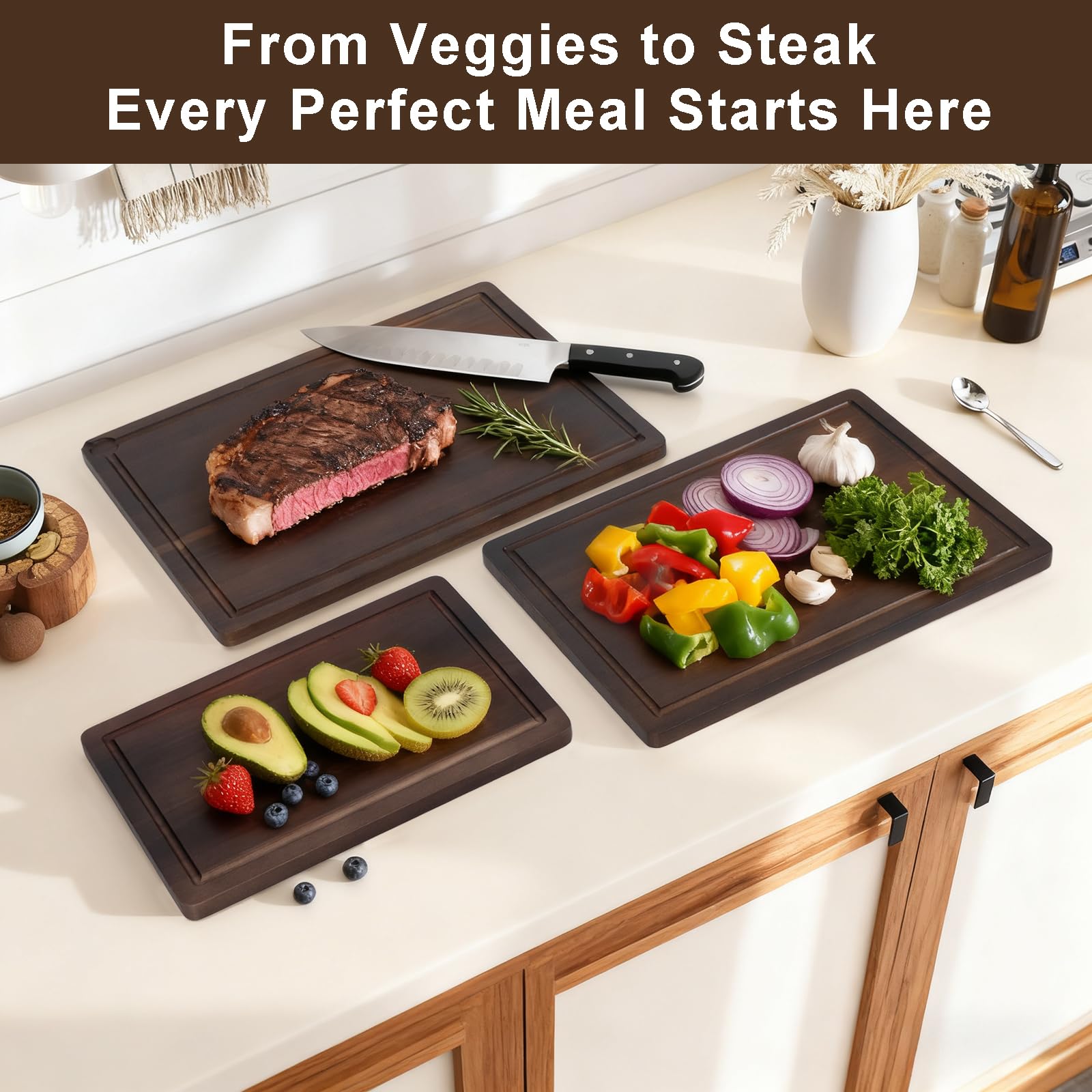
GoodBoards-EasyPrep Acacia Wood Set, 16.5 x 12.5 x 0.6 Inches
This 3-piece acacia set covers meal-prep staging, where you want multiple surfaces going at once. Each board measures 16.5 by 12.5 by 0.6 inches, thin enough to stack in a cabinet yet large enough to hold a full mise en place. The deep juice groove keeps liquids contained, and the eco-friendly acacia is a hardwood that’s gentler on knife edges than plastic or bamboo. At a 4.0 owner rating, it’s the value choice for cooks who batch-prep and want a dedicated board per ingredient. The 0.6-inch profile means it dries fast and won’t monopolize a drawer.
Frequently Asked Questions
What is the most common cutting board size?
12 x 18 inches. It’s the size most home cooks reach for daily because it holds a full onion dice without spillover and still fits a standard 24-inch-deep counter with room for a knife block and outlets behind it.
How big should a cutting board be for carving a turkey?
At least 15 x 20 inches with a juice groove. A spatchcocked bird spreads to roughly 12 x 14 inches, so 15 x 20 gives you a juice moat around it. For a crowd, size up to 18 x 24.
What size cutting board fits over a sink?
12 x 20 inches for a standard 22-inch single-bowl sink. Measure your basin’s interior width lip to lip first, then pick a board 2 inches shorter than that span so it rests securely without slipping in.
How thick should a cutting board be?
Between 0.6 and 1.5 inches. Thin 0.6-inch boards dry fast and store flat, while 1-inch and thicker boards resist warping and stay put during hard chopping. Under 0.5 inches, wood boards tend to cup over time.
Is a bigger cutting board always better?
No. A board deeper than 15 inches crowds a standard 24-inch counter and blocks outlets, and one over 18 inches long may not fit your cabinet. Match the size to your counter depth and storage slot, not just the task.
Bottom Line
For most kitchens, a 12 x 18-inch board is the one to buy first. It’s big enough to dice a full onion without chasing runaway pieces and small enough to fit a standard 24-inch counter and its storage slot. If you carve roasts or a holiday bird, add a 15 x 20 board with a deep juice groove instead. Measure your counter depth and cabinet width before you buy anything. The board that fits your space beats the board that’s simply the largest.






Write Your Review
No reviews yet. Be the first to share your experience!