

> Editorial Note: I’m Hannah Lin, an Interior Living Researcher who’s spent 9+ years analyzing the home furniture market. This guide draws on BIFMA, GREENGUARD, and FSC certifications, plus owner reviews aggregated from Wirecutter, Apartment Therapy, and the major home design subreddits.
The desk is too tall. It almost always is, because furniture makers settled on one number decades ago and stopped adjusting for the people using it. Standard desk height sits at 29 inches from floor to work surface, a figure built around a 5-foot-10 adult in a standard chair. If you’re shorter, taller, or working on a laptop instead of a raised monitor, that 29 inches is quietly wrecking your wrists and neck. Before you buy, learn the real numbers here, then match them against your best murphy desk pick, your desk dimensions footprint, your desk decor layout, your desk organization ideas, and your small home office ideas so the whole setup fits your body, not a spec sheet.
Quick Reference: Desk Height Size Chart
| Your height | Ideal seated desk height | Standing desk height | Chair seat height |
|---|---|---|---|
| 5’0″ – 5’3″ | 25–27 in | 36–39 in | 15–17 in |
| 5’4″ – 5’7″ | 27–28 in | 39–42 in | 16–18 in |
| 5’8″ – 5’11” | 28–29 in | 42–45 in | 18–19 in |
| 6’0″ – 6’3″ | 29–30 in | 45–48 in | 19–20 in |
| 6’4″ and up | 30–31 in | 48–51 in | 20–21 in |
Every number above measures the finished work surface, not the frame. The 29-inch industry default fits the middle of this chart and no one else, so confirm your own numbers with a tape before committing to a fixed-height desk.
Height is one dimension of three, and the other two decide whether a monitor arm and a keyboard fit at once. The desk sizing guide has the chart, including the depth a dual-monitor setup needs.
The Seated Rule: Elbows at 90 Degrees
The one measurement that matters is your elbow angle. Sit down, relax your shoulders, and bend your elbows to 90 degrees. The height of your forearms from the floor is your correct desk height, usually 27 to 29 inches for most adults. If the surface forces your shoulders up or your wrists to bend down, it’s too high. Apartment Therapy’s ergonomics editors put the acceptable range at 28 to 30 inches for average-height users, but the elbow check beats any chart because it accounts for your torso length, not just your standing height. Measure it once and write it down.
Standing Desk Height: A Different Formula
A standing desk isn’t a seated desk pushed up. The target is your elbow height while standing, which for a 5-foot-10 person lands near 44 inches. Divide your height in inches by 1.6 for a fast estimate: a 70-inch-tall person gets roughly 43.75 inches. Sit-stand converters and adjustable frames should clear a range of at least 25 to 50 inches to serve a whole household. The Sleep Foundation’s posture guidance notes that a standing surface set too low pushes you into a slouch faster than sitting does, so err high and drop it if your shoulders creep upward.
Kids and Shared Desks: Size Down
A child’s desk should track their growth, not the adult 29-inch standard. For a 4-foot child, aim for a 22- to 24-inch surface with a 12- to 14-inch chair seat. Because kids outgrow a fixed height in a year or two, a wall-mounted fold-down desk that mounts at any height you choose is the flexible answer. You set the bracket at 24 inches today and remount it at 27 inches when they hit a growth spurt. That adjustability is why fold-away units win in a shared or kids’ room where one fixed height can’t serve two ages.
Laptop vs. Monitor: Adjust the Surface Down
Here’s the trap most people miss. The 29-inch standard assumes a monitor raised on a stand with your keyboard on the desk. Work on a laptop and the screen sits too low while the keyboard sits too high, so the same surface fails both ends of your body. Drop a laptop-only surface to 27 inches, or better, raise the laptop on a riser and add an external keyboard at 28 inches. Wirecutter’s home-office coverage repeatedly flags this laptop compromise as the top cause of neck strain in small setups. If your desk folds away, mount it 1 to 2 inches lower than the seated chart suggests, since you’ll likely run a laptop on it.
Legroom and Clearance: The Number Under the Surface
Height isn’t only about the top of the desk. Below it, you need knee and thigh clearance or the whole setup fails no matter how well you sized the surface. Aim for at least 24 inches of clearance from the floor to the underside of the desk, and 20 inches of open depth for your knees. A drawer bolted directly under the work surface eats that clearance fast, which is one reason fold-down wall desks with shelves above the surface, not below it, work so well in tight rooms. If your thighs press against the underside or a frame rail, raise the surface an inch rather than crouching your chair. A shared household desk should clear the tallest user’s thighs, then let shorter users adjust up with a footrest.
Our Size-Matched Picks
The three fold-away desks below suit small rooms where a fixed-height desk won’t fit, and each mounts or unfolds at a height you control rather than one the factory chose. Start with the bamboo folding desk if you want a freestanding surface near the 29-inch standard. Choose the Tangkula wall unit if you need to set the mount height precisely for a shorter user or a child. Pick the HOMCOM convertible if the desk shares a wall that has to stay useful when folded.


Pros
- Folds completely flat to free floor space in small rooms
- Multiple storage shelves eliminate need for additional organizers
- Sturdy construction with thick tabletop and quality metal hinges
- Versatile use as desk, craft table, or mini bar
- Clean white finish suits most interior styles
Cons
- Requires solid wall installation only - not compatible with drywall, plasterboard, or hollow surfaces
- No customer reviews available yet to verify long-term durability
- Limited color options for those wanting to match specific decor
This desk solves the biggest problem in small-space living: needing a real workspace without sacrificing your entire floor plan. When it is folded up, you would never know it is there. When you need it, it drops down to give you a legitimate work surface plus shelves that keep everything you need within arm's reach.
The white finish is crisp and clean, and the built-in storage means you are not hunting for a pen or your phone charger every time you sit down to work. It looks intentional, not like you are making do with a tiny apartment. Whether you are setting up a corner office, a craft zone, or just need somewhere to pay bills without clearing the dining table, this desk adapts to how you actually live.
If you want a functional workspace that disappears when guests come over without dragging furniture around, this one delivers.
Styles it works with: Modern Farmhouse, Scandinavian, Minimalist, Coastal
Best placed in: Home office nook, bedroom corner, hallway wall, laundry room for folding station
May not suit: Homes with only drywall or plasterboard walls (requires solid wall backing), renters not allowed to drill into walls, spaces needing a large permanent desk with drawers
Buy it if:
- You live in a studio, small apartment, or dorm and need workspace that does not eat your living area
- You work from home occasionally and want a real desk without committing an entire room to an office
- You craft, sew, or do hobbies that need a flat surface and supply storage but not 24/7 access
Consider waiting if:
- You need a desk in a color other than white and want to see if more options become available
Skip it if:
- Your walls are drywall, plasterboard, hollow core, or paneling (this desk requires solid wall backing for safe installation)
- You need a full-time desk with drawers for filing or heavy equipment storage
Check the latest price and availability on Amazon before it sells out.

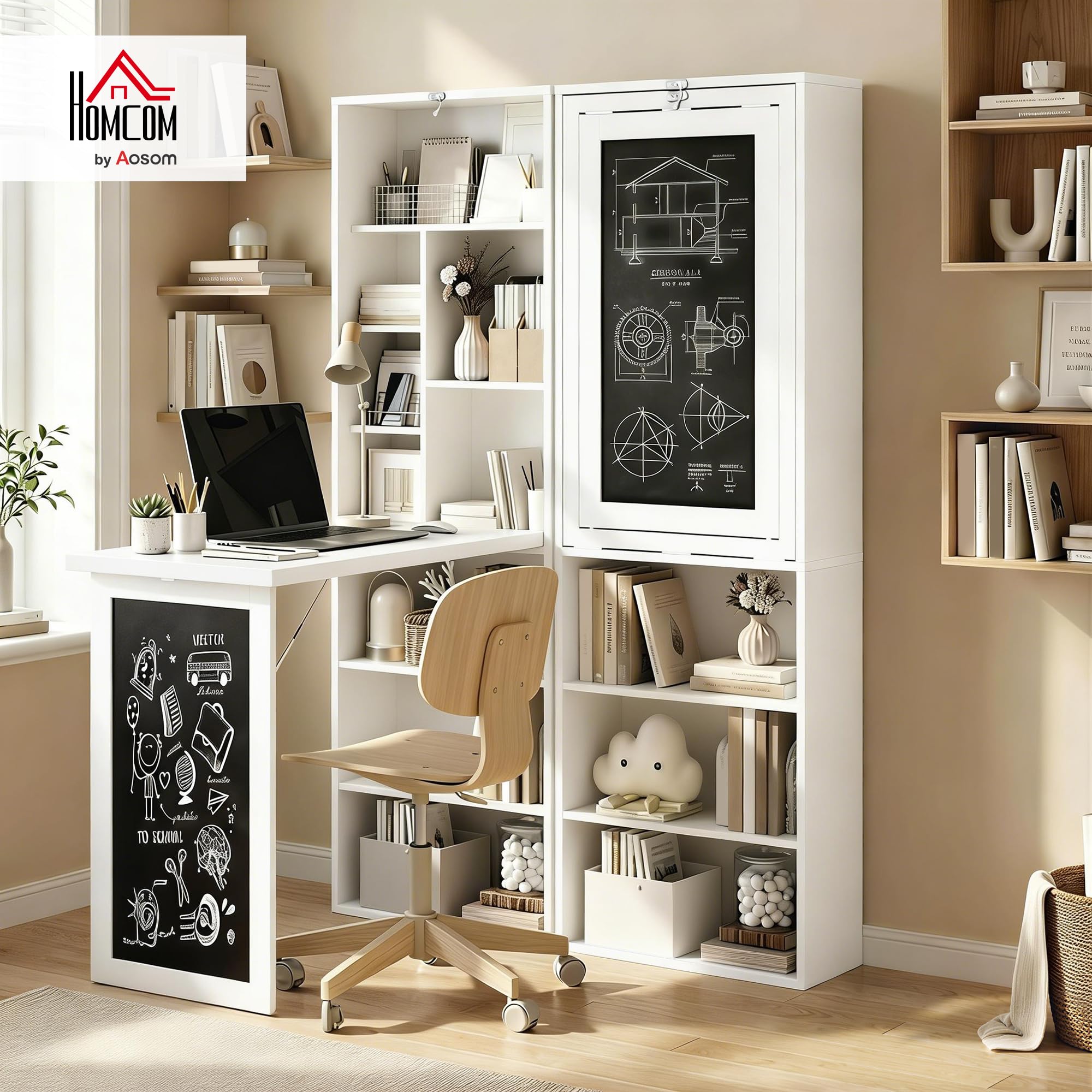
HOMCOM Wall Mounted Fold Out Desk with Storage Shelves & Chalkboard - Space Saving Murphy Desk for Small Apartments
Pros
- Exceptional 110 lb weight capacity handles serious work setups without stability issues
- Closes to reveal a chalkboard surface that hides workspace mess instantly
- Generous vertical storage with 9 compartments eliminates need for separate shelving units
- Only 7.7 inches deep when folded, perfect for narrow hallways or tight corners
- Adjustable shelf height adapts to different storage needs over time
Cons
- At 60.25 inches tall, it may overwhelm rooms with low ceilings or feel too vertical in small spaces
- White finish shows scuff marks and requires regular cleaning in high-traffic areas
- Assembly required and wall mounting means you cannot easily move it to a different room later
This wall-mounted desk solves the biggest challenge in small-space living: creating a real workspace without sacrificing your living area. When open, it gives you a full 38.5-inch-wide desk surface with serious weight capacity. When closed, it transforms into a slim cabinet with a chalkboard front that actually looks intentional, not like you are hiding furniture.
The vertical storage is smartly designed with compartments sized for real office supplies, not just decorative objects. The adjustable lower shelf means you can fit everything from file boxes to coffee table books without wasting space. The chalkboard is not just decorative; it becomes your command center for daily reminders, grocery lists, or family messages.
If you want a dedicated workspace in a studio or one-bedroom apartment without giving up floor space permanently, this one delivers.
Styles it works with: Scandinavian, Modern Minimalist, Contemporary Small-Space Living, Industrial Chic
Best placed in: Living room corner as a fold-away office, bedroom wall as a vanity or study area, kitchen wall as extra prep space, entryway for mail sorting and key storage
May not suit: Rooms with ceilings under 8 feet (the 60-inch height may feel overwhelming), homes with toddlers who might use shelves as climbing structures, renters who cannot drill into walls
Buy it if:
- You work from home in a studio or one-bedroom apartment and need a real desk that disappears after hours
- You are setting up a craft or sewing station but do not have space for a permanent table
- You want vertical storage that doubles as a workspace without buying separate shelving units
Consider waiting if:
- You need a different color to match existing furniture and want to wait for seasonal options
- You are moving soon and prefer furniture that does not require wall mounting
Skip it if:
- Your ceiling height is under 8 feet or you have a low-clearance room where 60 inches feels too tall
- You cannot drill into walls due to rental restrictions or structural concerns
Check the latest price and availability on Amazon before it sells out.
The Generic 41-inch bamboo folding desk gives you a 41-inch-wide freestanding surface that sits close to the standard seated height and folds flat for storage, so it clears a small bedroom when the workday ends. The Tangkula wall-mounted folding desk lets you set the bracket at any height from a child’s 24 inches up to an adult’s 29 inches, which is the flexibility a fixed desk can’t match. The HOMCOM foldable convertible desk mounts at your chosen height and adds two storage shelves, keeping the surface clear so your elbows land where they should.
Frequently Asked Questions
What is the standard height of a desk?
Twenty-nine inches from floor to work surface. That figure is built around a 5-foot-10 adult in a standard chair, so it fits the middle of the population and misses everyone else. Use the elbow check to find your own number before buying a fixed-height desk.
How do I know if my desk is too high?
Sit with your shoulders relaxed and elbows bent to 90 degrees. If your forearms angle upward to reach the surface or your shoulders rise, the desk is too high. Most adults need 27 to 29 inches; if yours sits at 30 inches or more and you’re under 6 feet, that’s likely the problem.
What height should a standing desk be?
Roughly your standing elbow height, near 44 inches for a 5-foot-10 person. Divide your height in inches by 1.6 for a quick estimate. Set it so your wrists stay flat and your shoulders stay down, then fine-tune from there.
Can I lower a desk that’s too tall?
Sometimes. Some frames have adjustable feet or removable casters that buy you 1 to 2 inches. A fold-down wall desk is the easier fix, since you mount the bracket at exactly the height you need. Raising your chair and adding a footrest is the fastest workaround for a fixed desk.
What desk height works for a child?
Scale it to their size, not the adult standard. A 4-foot child needs about a 22- to 24-inch surface with a 12- to 14-inch chair. Because kids grow fast, a remountable fold-down desk that adjusts in height is the smarter buy than a fixed unit they outgrow in a year.
Bottom Line
Standard desk height is 29 inches, but that number fits one body type and fails the rest, so run the elbow check and buy for your own forearm height instead. If you’re under 5-foot-7 or working on a laptop, drop the surface to 27 inches and you’ll feel the difference in your neck within a day. A wall-mounted fold-down desk sidesteps the whole problem, since you set the mounting height to the person, not the factory default. Measure once, mount right, and the desk disappears as a source of strain.







Write Your Review
No reviews yet. Be the first to share your experience!