

> Editorial Note: I’m Hannah Lin, an Interior Living Researcher who’s spent 9+ years analyzing the home furniture market. This guide draws on BIFMA, GREENGUARD, and FSC certifications, plus owner reviews aggregated from Wirecutter, Apartment Therapy, and the major home design subreddits.
Most desk organization advice starts with buying more bins. The 2026 shift goes the other way: the tidiest desks aren’t the ones with the most storage, they’re the ones that fold away entirely, so there’s no surface left to clutter. Vertical shelving climbs the wall, cables route into the furniture, and the whole workstation collapses flat at 5 p.m. Organization has stopped being about containing the mess and started being about eliminating the surface where mess accumulates. If you’re rethinking a workspace around this idea, connect it to your best murphy desk centerpiece, your standard desk height fit, your desk decor styling, your small home office ideas, and your desk dimensions footprint so the system holds together.
The 2026 Desk Organization Trends Worth Following
Four shifts are driving how people tame a workspace this year. First, the fold-flat reset: wall-mounted desks that clear the surface completely when work ends, so clutter never gets a chance to build. Second, vertical over horizontal, shelves and boards that store supplies up the wall instead of spreading across the desktop. Third, cable integration, built-in outlets and routing channels that hide the single ugliest source of desk chaos. Fourth, one-touch reset, systems designed so tidying takes a single motion, folding the desk up, rather than a 20-minute sort. The through-line: the best organization is the surface you can make disappear.
These picks all lean into the fold-away organization trend, and each solves a different storage problem. Start with the bamboo desk if you want a shelf built into the surface. Move to the Tangkula for vertical wall storage, or the Armocity if tangled cables are your main frustration.


Pros
- Folds completely flat to free floor space in small rooms
- Multiple storage shelves eliminate need for additional organizers
- Sturdy construction with thick tabletop and quality metal hinges
- Versatile use as desk, craft table, or mini bar
- Clean white finish suits most interior styles
Cons
- Requires solid wall installation only - not compatible with drywall, plasterboard, or hollow surfaces
- No customer reviews available yet to verify long-term durability
- Limited color options for those wanting to match specific decor
This desk solves the biggest problem in small-space living: needing a real workspace without sacrificing your entire floor plan. When it is folded up, you would never know it is there. When you need it, it drops down to give you a legitimate work surface plus shelves that keep everything you need within arm's reach.
The white finish is crisp and clean, and the built-in storage means you are not hunting for a pen or your phone charger every time you sit down to work. It looks intentional, not like you are making do with a tiny apartment. Whether you are setting up a corner office, a craft zone, or just need somewhere to pay bills without clearing the dining table, this desk adapts to how you actually live.
If you want a functional workspace that disappears when guests come over without dragging furniture around, this one delivers.
Styles it works with: Modern Farmhouse, Scandinavian, Minimalist, Coastal
Best placed in: Home office nook, bedroom corner, hallway wall, laundry room for folding station
May not suit: Homes with only drywall or plasterboard walls (requires solid wall backing), renters not allowed to drill into walls, spaces needing a large permanent desk with drawers
Buy it if:
- You live in a studio, small apartment, or dorm and need workspace that does not eat your living area
- You work from home occasionally and want a real desk without committing an entire room to an office
- You craft, sew, or do hobbies that need a flat surface and supply storage but not 24/7 access
Consider waiting if:
- You need a desk in a color other than white and want to see if more options become available
Skip it if:
- Your walls are drywall, plasterboard, hollow core, or paneling (this desk requires solid wall backing for safe installation)
- You need a full-time desk with drawers for filing or heavy equipment storage
Check the latest price and availability on Amazon before it sells out.

HOMCOM Wall Mounted Fold Out Desk with Storage Shelves & Chalkboard - Space Saving Murphy Desk for Small Apartments
Pros
- Exceptional 110 lb weight capacity handles serious work setups without stability issues
- Closes to reveal a chalkboard surface that hides workspace mess instantly
- Generous vertical storage with 9 compartments eliminates need for separate shelving units
- Only 7.7 inches deep when folded, perfect for narrow hallways or tight corners
- Adjustable shelf height adapts to different storage needs over time
Cons
- At 60.25 inches tall, it may overwhelm rooms with low ceilings or feel too vertical in small spaces
- White finish shows scuff marks and requires regular cleaning in high-traffic areas
- Assembly required and wall mounting means you cannot easily move it to a different room later
This wall-mounted desk solves the biggest challenge in small-space living: creating a real workspace without sacrificing your living area. When open, it gives you a full 38.5-inch-wide desk surface with serious weight capacity. When closed, it transforms into a slim cabinet with a chalkboard front that actually looks intentional, not like you are hiding furniture.
The vertical storage is smartly designed with compartments sized for real office supplies, not just decorative objects. The adjustable lower shelf means you can fit everything from file boxes to coffee table books without wasting space. The chalkboard is not just decorative; it becomes your command center for daily reminders, grocery lists, or family messages.
If you want a dedicated workspace in a studio or one-bedroom apartment without giving up floor space permanently, this one delivers.
Styles it works with: Scandinavian, Modern Minimalist, Contemporary Small-Space Living, Industrial Chic
Best placed in: Living room corner as a fold-away office, bedroom wall as a vanity or study area, kitchen wall as extra prep space, entryway for mail sorting and key storage
May not suit: Rooms with ceilings under 8 feet (the 60-inch height may feel overwhelming), homes with toddlers who might use shelves as climbing structures, renters who cannot drill into walls
Buy it if:
- You work from home in a studio or one-bedroom apartment and need a real desk that disappears after hours
- You are setting up a craft or sewing station but do not have space for a permanent table
- You want vertical storage that doubles as a workspace without buying separate shelving units
Consider waiting if:
- You need a different color to match existing furniture and want to wait for seasonal options
- You are moving soon and prefer furniture that does not require wall mounting
Skip it if:
- Your ceiling height is under 8 feet or you have a low-clearance room where 60 inches feels too tall
- You cannot drill into walls due to rental restrictions or structural concerns
Check the latest price and availability on Amazon before it sells out.
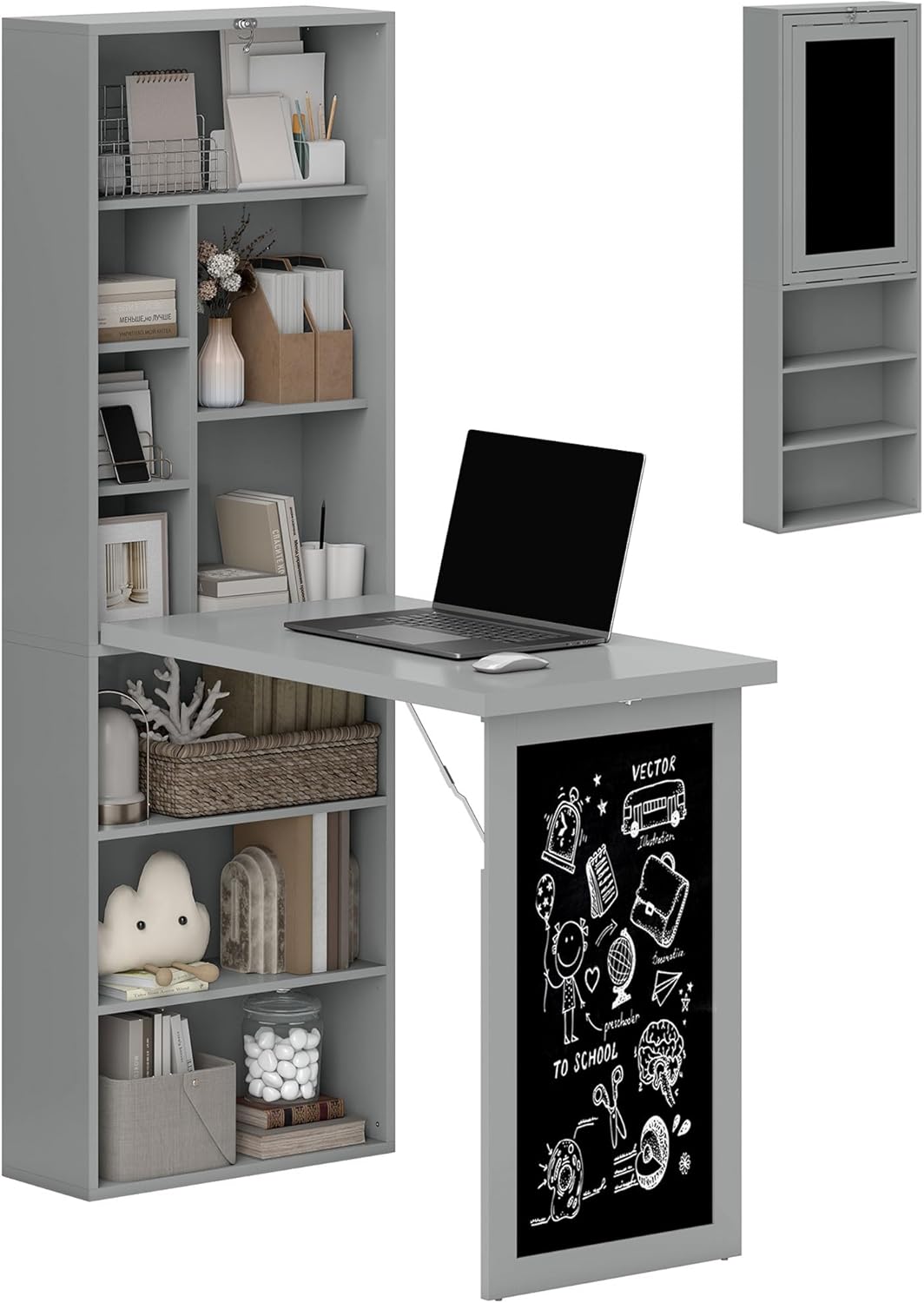
Pros
- Genuinely space-saving design that works in apartments under 600 sq ft
- Sturdy enough for real office equipment, not just lightweight laptops
- Chalkboard front is practical for families and adds a fun, customizable touch
- Adjustable shelves adapt to different storage needs over time
- Smooth MDF surface wipes clean easily and resists daily wear
Cons
- Requires wall mounting and drilling, not suitable for renters without landlord approval
- Zero customer reviews make real-world durability unclear at this price point
- Gray color only limits coordination with warmer or colorful decor schemes
This desk solves the biggest challenge in small-space living: needing a real workspace without sacrificing your entire room to office furniture. When it is open, you get a full 38.5-inch desk that handles serious work. When you fold it up, it becomes a slim wall cabinet that barely intrudes into your living area. The chalkboard front is a clever touch that turns functional furniture into something you will actually interact with daily.
What sets this apart from flimsy fold-down desks is the 110 lb weight capacity. You can confidently set up dual monitors, a printer, or even use it as a sewing station without worrying about sagging or wobbling. The built-in storage means you are not just getting a desk, you are getting an entire home office solution that keeps clutter off your floor and out of sight when you are done working.
If you want a legitimate workspace in a studio or one-bedroom without turning your living room into a permanent office, this one delivers.
Styles it works with: Modern Minimalist, Scandinavian, Industrial, Contemporary Farmhouse
Best placed in: Studio apartment living area, spare bedroom converted to office, kitchen nook as a breakfast bar, hallway alcove in larger homes
May not suit: Homes with very traditional or ornate decor, renters without permission to drill into walls, spaces where you need the desk set up 24/7 without folding, rooms with textured or plaster walls that make secure mounting difficult
Buy it if:
- You live in a studio or small apartment where every square foot counts and you need a real desk, not a laptop tray
- You work from home but want your living space to feel like home, not an office, when you are off the clock
- You need storage for office supplies and files but have no room for additional shelving or cabinets
- You own your home or have landlord permission to install wall-mounted furniture
Consider waiting if:
- You are hoping for customer reviews to validate durability before committing at this price
- You need a different color to match your existing furniture and want to wait for more options
Skip it if:
- You rent and cannot drill into walls or your lease prohibits permanent installations
- You need a desk that stays open all the time because folding and unfolding daily feels like too much effort
- Your wall space is limited or you have obstacles like windows, vents, or electrical panels where this would logically mount
Check the latest price and availability on Amazon before it sells out.

1. Generic 41″ Bamboo Folding Desk: The Built-In Shelf System
The Generic 41-inch bamboo folding desk solves organization at the source by building a bookshelf into the desk itself. Instead of buying a separate shelving unit that eats floor space, you get vertical storage attached to the work surface, so reference books, a small caddy, and a plant live on the desk without crowding the writing area. At 41 inches wide, the surface stays usable while the shelf handles the overflow, and the whole thing folds flat when the room needs to reset.
The organization angle is consolidation. One piece of furniture does the job of a desk and a shelf, which matters in a small room where every square foot counts. Reserve the top shelf for daily-reach items and the desktop for the single task in front of you. Because the unit folds, there’s a built-in reason to clear the surface each evening, which is the habit that keeps any desk organized. For a workspace that needs storage without a second piece of furniture, the built-in shelf is the cleanest system.
2. Tangkula Wall Mounted Folding Desk: The Vertical Storage System
The Tangkula folding wall-mounted desk leans into the trend toward storing up, not out. Fixed shelves sit above the fold-out surface, so your supplies climb the wall and free the desktop for actual work. When the leaf folds down, the shelves stay accessible, meaning your storage doesn’t disappear just because the desk did. That upward stack is the 2026 answer for rooms where floor space is the scarce resource.
The organization angle is separating storage from surface. Keep the desktop for the one task at hand and push everything else, pens, notebooks, a charging dock, up to the shelves at eye level. This kills the pile-up that happens when a desk is the only flat surface in the room. Assign each shelf a category, one for supplies, one for reference, one for a plant and a photo, so tidying means returning items to a known home. For a corner that has to stay organized in minimal floor space, the vertical system does the heavy lifting.
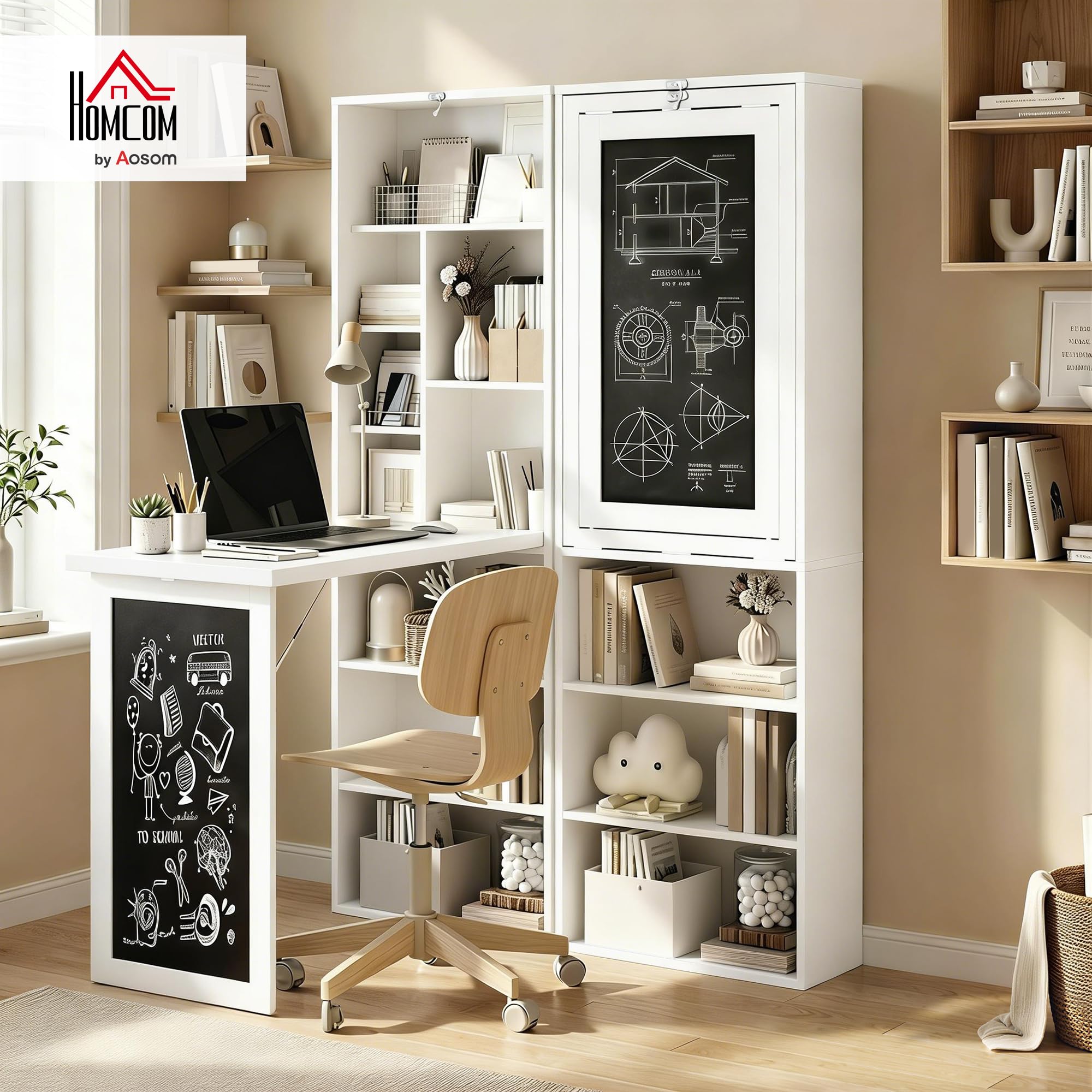
3. HOMCOM Convertible Desk with Chalkboard: The Visible-List System
The HOMCOM foldable convertible desk brings organization to the one thing bins can’t hold: your task list. The folded underside is a chalkboard, so the closed desk becomes a running to-do board, a menu, or a schedule wall. Two built-in shelves store the physical supplies. This is the pick for anyone who loses track of tasks the moment they close a laptop, since the list stays visible on the wall whether the desk is open or shut.
The organization angle is externalizing the mental clutter. A chalkboard face turns the desk into a command center where the week’s tasks live in plain sight, which cuts the sticky-note sprawl that buries most desktops. Keep the two shelves sorted by frequency, daily items low and within reach, occasional items up top. Wipe and rewrite the board each Monday for a clean weekly reset. For a busy household hub where the desk doubles as a planning wall, the chalkboard turns organization into something you can actually see.
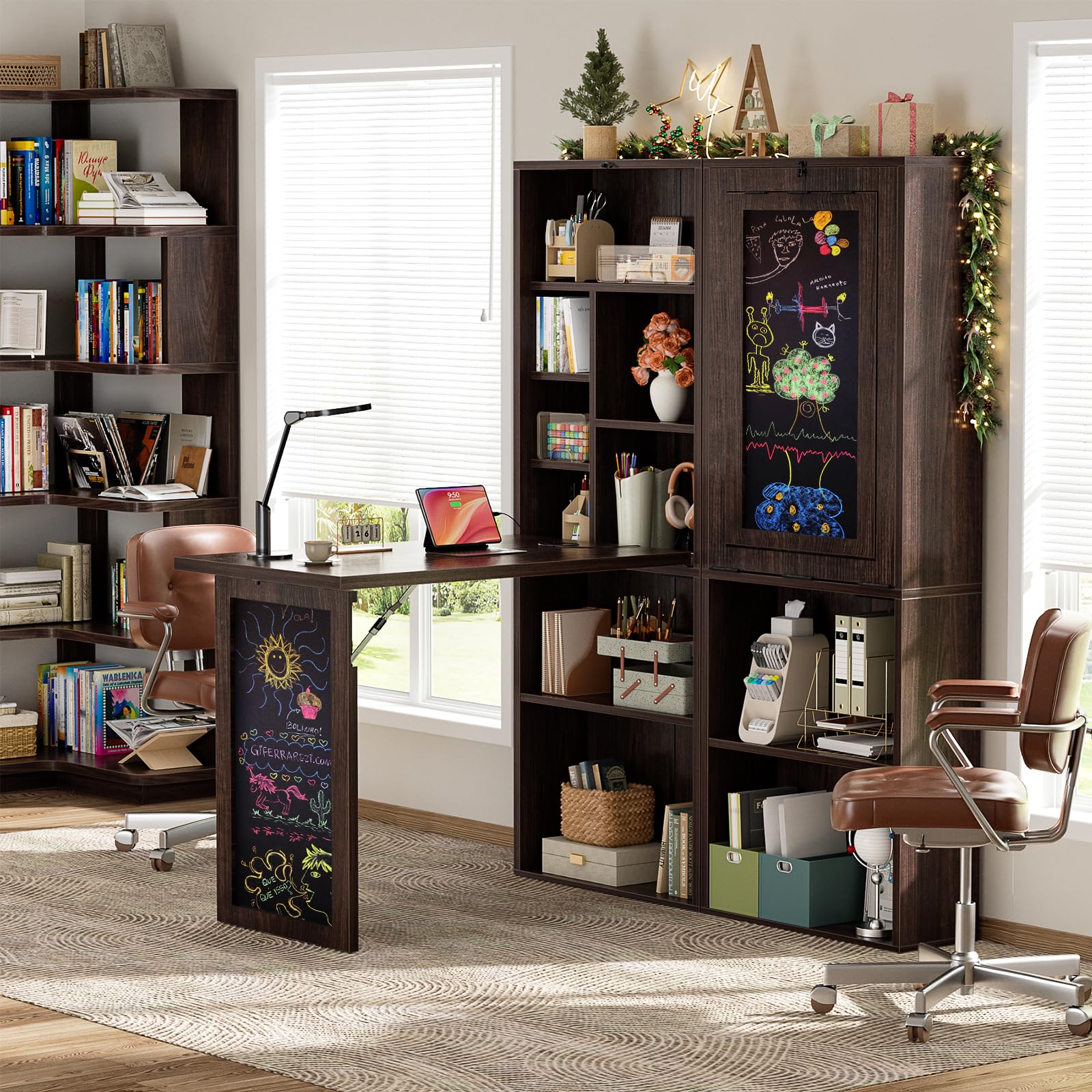
4. HOMCOM Convertible Desk in a Second Finish: The Two-Station System
This second HOMCOM listing shares the chalkboard-and-shelves format in a different finish, which makes it the answer for organizing two people instead of one. Rather than sharing a single cluttered desk, each person gets an identical station with their own shelves and their own chalkboard, so supplies and tasks never blur together. That clear division of territory is the trend for shared home offices and homework nooks where mixed-up gear is the core organization problem.
The organization angle is separation by ownership. Two matched stations mean each user has a defined home for their supplies, ending the “whose charger is this” chaos of a shared surface. Mount them side by side, assign one to each person, and let the matching chalkboards track each person’s tasks independently. The identical shelf layout and roughly 15-pound surface mean the system in pick #3 simply doubles here. For two people sharing one wall, giving each their own station is the cleanest way to keep both organized.
5. Armocity Folding Desk with Outlets: The Cable-Control System
The Armocity small folding desk tackles the single worst organization problem: the cable tangle. Built-in outlets let the laptop charger and lamp plug straight into the unit, so one cable runs to the wall instead of a knot of cords draping off the edge. Cable chaos is what makes most desks look messy even when the surface is clear, and routing power through the furniture solves it at the root. It works as a writing desk, a craft table, or a fold-out station in a multi-use room.
The organization angle is taming the invisible clutter. Cords are the mess people never quite fix, and integrating outlets means there’s no tangle to manage in the first place. Plug the lamp and charger into the built-in outlets, run a single cord to the wall, and the desk stays photo-clean. Add a small caddy for the loose pens and a desk mat to protect the surface. For a craft room or a rental where outlets sit far from the desk, the built-in power is the organization fix that finally handles the cords.
How to Set Up a Fold-Away Organization System in 2026
Build the reset into the furniture. The reason fold-away desks stay organized is that closing them forces a daily clear-off, so choose a system where tidying is one motion, not a chore. Clear the surface, fold the desk, done. Aim to reset in under 60 seconds each evening; if it takes longer, you’re storing too much on the surface and not enough on the shelves above.
Store vertically and by frequency. Reserve the desktop for the single task in front of you and push everything else up to wall shelves. Sort those shelves by how often you reach for each item: daily supplies at hand height around 40 to 48 inches off the floor, occasional items higher. Assigning every object a home is what makes tidying automatic instead of a decision.
Kill the cables first. Cords are the organization problem people ignore longest, so route them into a desk with built-in outlets or bundle them with a single clip and run one cable to the wall. A clear surface with a cable nest underneath still reads as chaos. Handle the power routing once, and the desk stays organized with almost no ongoing effort.
Comparison Table
| Pick | System | Storage Type | Best For | Standout Feature |
|---|---|---|---|---|
| Generic 41″ Bamboo | Built-in shelf | Attached bookshelf | One-piece consolidation | Shelf on the desk |
| Tangkula Wall Desk | Vertical storage | Shelves above leaf | Minimal floor space | Storage stays up when folded |
| HOMCOM Chalkboard | Visible-list | Chalkboard + shelves | Task-tracking households | Chalkboard to-do wall |
| HOMCOM Second Finish | Two-station | Dual matched shelves | Shared or dual-user rooms | Separate territory per user |
| Armocity Outlets | Cable-control | Compact surface | Cord-heavy setups | Built-in outlets |
Frequently Asked Questions
Is the fold-away organization trend going out of style?
Not soon. The appeal is space and the built-in daily reset, not fashion, so as long as rooms do double duty, fold-flat desks will keep winning. The specific finishes will shift, but the idea that the tidiest surface is the one you can make disappear has real staying power.
How do I keep a small desk organized long-term?
Store up, not across. Push everything except the current task to shelves above the surface, and choose a desk that folds flat so closing it forces a daily clear-off. Wirecutter’s home-office editors consistently find that vertical storage plus a forced reset beats adding more desktop bins.
What’s the best way to hide desk cables?
Route them into the furniture. A desk with built-in outlets lets you plug in directly and run a single cord to the wall, which removes the tangle at the source. If your desk has no outlets, bundle the cords with one clip and anchor them to a leg so nothing drapes off the edge.
How do I organize a desk two people share?
Give each person their own station rather than splitting one surface. Two matched fold-down desks side by side let each user keep their own shelves and supplies, which ends the mixed-up-gear problem. Assign territory clearly, and shared-desk clutter mostly disappears.
How much should I store on the desktop itself?
As little as possible, ideally just the task in front of you plus a lamp. Everything else belongs on wall shelves or in the storage. Apartment Therapy’s small-space editors note that a near-empty desktop is easier to reset daily and reads as organized even mid-project.
Bottom Line
The Tangkula wall-mounted desk is where to start if you’re committing to the 2026 store-vertically approach, because its shelves-above-the-leaf layout frees the desktop while keeping supplies within reach. If tangled cables are your real problem, the Armocity with built-in outlets is the more targeted pick instead. Everything else here is a supporting player, chosen for the specific storage problem your room already has. Build the reset into the furniture, store up rather than across, and the desk stays organized without daily effort.




Write Your Review
No reviews yet. Be the first to share your experience!