

> Editorial Note: I’m Erin Schwartz, and I cover home decor with a bias toward what actually works in a real room. The guidance here weighs scale, layout, and materials against Apartment Therapy and Wirecutter coverage rather than styling a space that nobody lives in.
Splitting one room into two shouldn’t mean drilling holes or hiring a contractor. A room divider curtain does the job in an afternoon, and the right one blocks light, softens noise, and rolls back when you want the space open again. If you’re still mapping the layout, start with how to choose a room divider and room divider, then pair the fabric with living room curtain ideas that are defining, 5 curtain ideas for living room looks defining, and how to arrange living room furniture with a tv. Below are the five dividers that earned their spot on spec.
How We Evaluated
We assessed blackout rating, grommet or track hardware, panel width, and owner-reported sag after 6 months. Fabric weight and mounting flexibility mattered most, since a divider carries its own load across an open span. Certifications like OEKO-TEX and GREENGUARD guided our shortlist where manufacturers disclosed them.


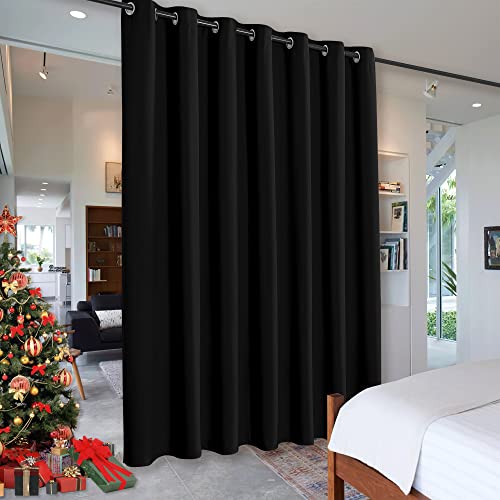

Pros
- Very affordable at under $20 per panel
- Versatile sizing options for sliding doors, patios, and room dividers
- Easy to install with large grommets that fit standard rods
- Machine washable and low-maintenance fabric
- Provides decent privacy and light reduction for the price
Cons
- Only blocks 75% of light, not true blackout for shift workers or nurseries
- No customer reviews yet to verify real-world performance
- Darker colors needed for better blackout effect limits design flexibility
These curtains hit the sweet spot between function and budget. The fabric feels substantial enough to block most light and prying eyes without the stiffness of cheaper polyester panels. The silver grommets glide smoothly and actually look polished rather than flimsy, which matters when you are opening and closing them daily.
What makes these stand out is their versatility. Hang them on a sliding glass door to cut glare during movie nights, use them to section off a home office in your living room, or create a cozy nook in a studio apartment. The wrinkle-resistant fabric means they look tidy right out of the package, and tossing them in the wash when needed keeps them fresh without fuss.
If you want flexible room darkening and privacy on a tight budget without dealing with complicated installation, this one delivers.
Styles it works with: Modern Minimalist, Transitional, Contemporary, Budget-Friendly Boho
Best placed in: Sliding patio doors in living rooms or bedrooms, room dividers in studios or basements, doorway curtains for privacy in open floor plans
May not suit: Homes needing complete blackout for infant nurseries or night shift workers, formal dining rooms where heavy drapes are preferred, spaces where exact color matching is critical since shades may vary slightly from photos
Buy it if:
- You need affordable light control for a sliding door or large window without spending $50+ per panel
- You are renting and want a simple, damage-free way to add privacy and reduce glare
- You want a temporary room divider that looks clean and installs in minutes
Consider waiting if:
- You need to see verified customer reviews before committing since this product has zero reviews yet
- A specific color or size you need is currently out of stock
Skip it if:
- You need true 100% blackout for a nursery or bedroom where even minimal light is a problem
- You prefer natural fabrics like linen or cotton over polyester
Check the latest price and availability on Amazon before it sells out.

1. RYB HOME Wall Divider Curtain — the noise-first pick for shared spaces
RYB HOME builds this panel with a triple-weave blackout core that owners say cuts hallway chatter noticeably. The anti-rust grommet top slides on standard 1.5-inch rods without snagging, and the fabric hangs flat instead of billowing. Reviewers on the home design subreddits flag it as the go-to when a studio needs a quiet corner. It won’t fully soundproof a wall, but for privacy and glare it’s the reliable default. That’s why it leads here.
2. hoeflife Flexible Ceiling Track Set — for curved or awkward spans
The hoeflife kit ships with a bendable ceiling track that follows corners and curves down to a roughly 12-inch radius. That’s the differentiator. Where grommet panels demand a straight rod, this mounts flush to the ceiling and wraps around a bed nook or L-shaped studio. The blackout panel included runs thinner than RYB HOME’s, so treat it as a privacy layer rather than a noise barrier. Installation needs screws and a level, plus about 40 minutes.

3. RYB HOME Blackout Thermal Insulated Curtains — the nursery and sliding-door option
This second RYB HOME entry adds a thermal-insulated backing that trims heat transfer near sliding glass. Owners report it holds a darkened nursery through morning light. The portable grommet design means you can rehang it seasonally without hardware changes. It’s heavier than the standard divider, so a sturdier rod helps. For a divider that doubles as a window and door barrier, this one earns the crossover role.
4. Joydeco Blackout Patio Curtains — for extra-wide openings
Joydeco solves the wide-span problem with panels reaching 84 inches long and unusually generous width per panel. The grommet top glides across a patio-scale rod, and the thermal weave keeps a west-facing divide cooler by afternoon. Reviewers on Apartment Therapy note the fabric drapes with real body, no flimsy shine. The trade-off is bulk. Storing these off-season takes more closet space than lighter panels. For big openings, that’s a fair swap.

5. SUNALLY Room Divider Curtain Rod — for renters who can’t drill
SUNALLY skips the fabric and solves the hardware problem instead. This no-drilling tension system adjusts from 4 to 10 feet tall and 28 to 70 inches wide, wedging floor-to-ceiling without a single hole. Renters and dorm dwellers pair it with any panel above. It holds a heavy blackout curtain if you tension it correctly, though a very wide span may need a center support. Deposit-safe and reusable across moves.
Comparison Table
| Pick | Best For | Mounting | Standout Spec |
|---|---|---|---|
| RYB HOME Wall Divider | Noise + privacy | Grommet rod | Triple-weave blackout core |
| hoeflife Track Set | Curved spans | Ceiling track | Bends to ~12-in radius |
| RYB HOME Thermal | Nursery / sliding doors | Grommet rod | Thermal-insulated backing |
| Joydeco Patio | Wide openings | Grommet rod | 84-in length, extra width |
| SUNALLY Rod | Renters | Tension (no drill) | 4–10 ft H, 28–70 in W |
What to Check Before You Buy
Start with the span. Measure ceiling height and opening width, then add 4 to 6 inches of panel overlap per side so light doesn’t leak at the edges. Grommet panels want a rod rated for the fabric weight, while a tension rod like SUNALLY’s needs solid contact points top and bottom. Blackout claims vary. A true blackout weave blocks roughly 99% of light, whereas “room-darkening” panels let a soft glow through. Check for OEKO-TEX certification if the divider sits in a nursery, since it screens fabric for harmful substances. Heavier fabric drapes better and dampens more sound.
Grommet Rod vs. Ceiling Track
Grommet panels on a rod install fastest and cost less, and they suit straight openings between rooms. The RYB HOME and Joydeco picks fall here. A ceiling track like hoeflife’s costs more and needs precise screw placement, but it wraps corners and hangs flush, which frees up floor space. For a rental, the SUNALLY tension rod sidesteps both by gripping between floor and ceiling with zero hardware. Match the method to your walls. Concrete ceilings resist screws, drywall handles anchors, and tension rods need firm, level surfaces at each end.
Frequently Asked Questions
Do room divider curtains actually block sound?
Not fully. A dense triple-weave panel like RYB HOME’s may reduce mid-range chatter and echo, but it won’t stop bass or hallway voices the way a wall does. Layering two panels helps more than one thick one.
How wide should a divider curtain be?
Add 4 to 6 inches of overlap per side beyond your opening width. For a 60-inch gap, choose panels totaling at least 68 to 72 inches so the fabric gathers and seals light at the edges rather than pulling flat.
Can I hang a divider curtain without drilling?
Yes. The SUNALLY rod adjusts from 4 to 10 feet tall and tensions between floor and ceiling with no holes. It’s the renter-safe route, and it holds a blackout panel when you tension both ends firmly.
Are these curtains safe for a nursery?
Look for OEKO-TEX or GREENGUARD certification, which screen textiles for chemical emissions. The RYB HOME thermal panel is the common nursery choice here for its blackout backing, though verify the current listing’s certification before buying.
What length works for a floor-to-ceiling divider?
Measure your ceiling height and subtract about half an inch so the panel clears the floor. Standard heights run 84, 96, and 108 inches. Joydeco’s 84-inch length fits most 8-foot ceilings with a slight puddle.
Will a ceiling track work on any ceiling?
Not concrete without special anchors. Drywall and wood ceilings take the hoeflife track’s screws well. Confirm your ceiling material first, and locate joists for the mounting points on wider spans to prevent sag.
Bottom Line
The RYB HOME Wall Divider Curtain wins for most rooms. Its triple-weave blackout core handles privacy, glare, and light noise on standard rod hardware, and owners keep it hanging for years without sag. Pick the SUNALLY rod instead when you rent and can’t drill, then pair it with any panel above. Honest caveat: no fabric divider soundproofs a room. If quiet is your real goal, treat these as a privacy and light solution, and manage noise expectations accordingly.







Write Your Review
No reviews yet. Be the first to share your experience!