

> Editorial Note: I’m Hannah Lin, an Interior Living Researcher who’s spent 9+ years analyzing the home furniture market. This guide draws on BIFMA, GREENGUARD, and FSC certifications, plus owner reviews aggregated from Wirecutter, Apartment Therapy, and the major home design subreddits.
Most people pick a fabric-panel divider for the look and only later realize the weave is too loose to block a desk lamp, let alone a video call behind it. That one call, opacity, decides whether a screen actually gives you privacy or just suggests it. Sort out where the divider goes and what it needs to hide, then the material, panel count, and footprint follow fast, the same way you’d anchor a room with a best gallery wall frames arrangement, a best console table for entryway, a best large floor mirror, a best wall mirror for living room, or a best table lamp for living room.
What Job Is the Divider Actually Doing?
Start here, because the answer changes everything else. A divider that hides a home office on a Zoom call needs solid or tightly woven panels with near-total opacity. A divider that just softens an open floor plan can be open-weave rattan or a slatted wood screen that lets light pass through.
Privacy screens want opacity above 90%, which means solid wood, dense fabric, or a laminate core rather than woven cane. Zoning screens, the kind that separate a dining nook from a living area, can trade opacity for airiness. Open lattice or shoji-style rice-paper panels read as a boundary without darkening the room.
Sound is the third job, and it’s the one most screens fail. A folding divider cuts direct-line noise a little, but it won’t soundproof anything. If you need real acoustic dampening, look for panels rated with an NRC (Noise Reduction Coefficient) of 0.5 or higher, usually fabric-wrapped over foam or fiber core. Thin decorative screens sit near 0.1.
Be honest about the job before you shop. A gorgeous carved screen that lets light through is the wrong buy if you’re hiding a Murphy bed. Match opacity and weight to the task first. The style choices open up once that’s locked.
Which Material Holds Up in Your Room?
Material decides durability, weight, and whether the screen survives humidity. Solid hardwood and FSC-certified engineered wood are the sturdiest, and they hold a straight line for years. They’re also heavy, so an 80-inch four-panel wood screen can top 30 pounds, which is fine against a wall but tiring to reposition daily.
Fabric panels are where the specs matter most, and where buyers get burned. Look for a Wyzenbeek rub count: 15,000+ double rubs signals heavy-duty upholstery-grade cloth, while anything under 9,000 wears fast on a piece you’ll bump constantly. Fabric weight in GSM tells a similar story, since 250 GSM and up holds shape better than thin 120 GSM sheeting that sags between the frame rails.
Rattan, cane, and bamboo bring warmth and lightness, and a full-height panel often weighs under 15 pounds. The trade-off is humidity. In a steamy bathroom or a coastal home, untreated cane can loosen and fray within a season or two. GREENGUARD-certified finishes also matter here if indoor air quality is a concern, since some cheap laminates off-gas.
Metal frames resist warping and carry the most weight per pound of frame. Powder-coated steel handles damp rooms far better than raw wood. It reads more industrial, so it suits a loft better than a cottage.
How Many Panels and How Big?
Panel count controls both coverage and stability. Three panels cover roughly 48 to 60 inches of width and stand more upright than they zigzag. Four panels, the most common configuration, span about 68 to 88 inches and hold a stable freestanding curve on their own. More panels mean more width but also more floor real estate, since a folded screen needs a shallow S to stay put.
Measure the opening you’re closing, then add 10 to 15% so the screen can angle rather than sit flat. A flat screen tips easily. An angled one is self-supporting. Standard heights run 68 to 72 inches, tall enough to block sightlines for most standing adults, while 80-inch panels hide even a raised loft platform.
Footprint is the sleeper spec in small apartments. A folded 4-panel screen still needs 12 to 18 inches of depth to stand safely. If floor space is tight, a screen on lockable casters lets you roll it flat against a wall when it’s not in use, which beats dragging a fixed base across hardwood.
Freestanding, Rolling, or Fixed?
It depends on how often the wall moves. Freestanding folding screens are the default: no installation, fully portable, and easy to fold away. They’re the right call for renters and anyone who reconfigures a room seasonally. The catch is stability on uneven floors, where a flat panel can rock.
Rolling dividers with lockable wheels solve the reposition problem. You unlock, roll, and lock again in seconds, which suits a home office you break down each evening. Confirm the wheels lock on all casters, not two of four, since half-locked bases still creep.
Fixed or track-mounted panels give the cleanest privacy and the best sound control, but they need hardware and a landlord’s blessing. They’re worth it in a permanent studio layout where the boundary never changes. For most homes, the freestanding or rolling route wins on flexibility.
Helpful Picks
These three cover the range most rooms need: a light-passing decorative screen, a full-privacy rolling partition, and a carved statement panel. All three sit at four panels, and I weighed owner-reported stability and finish quality above list price.

Pros
- Tall enough at 71 inches to provide meaningful privacy
- Rice paper diffuses light beautifully instead of blocking it entirely
- Two-way hinges allow flexible positioning in corners or open spaces
- Assembles out of the box with no tools required
- Folds flat for easy seasonal storage
Cons
- Each panel is only 17 inches wide, so total span is just under 6 feet
- Wood grid design is only on one side; the reverse is plain white
- Rice paper panels can puncture if bumped with sharp objects
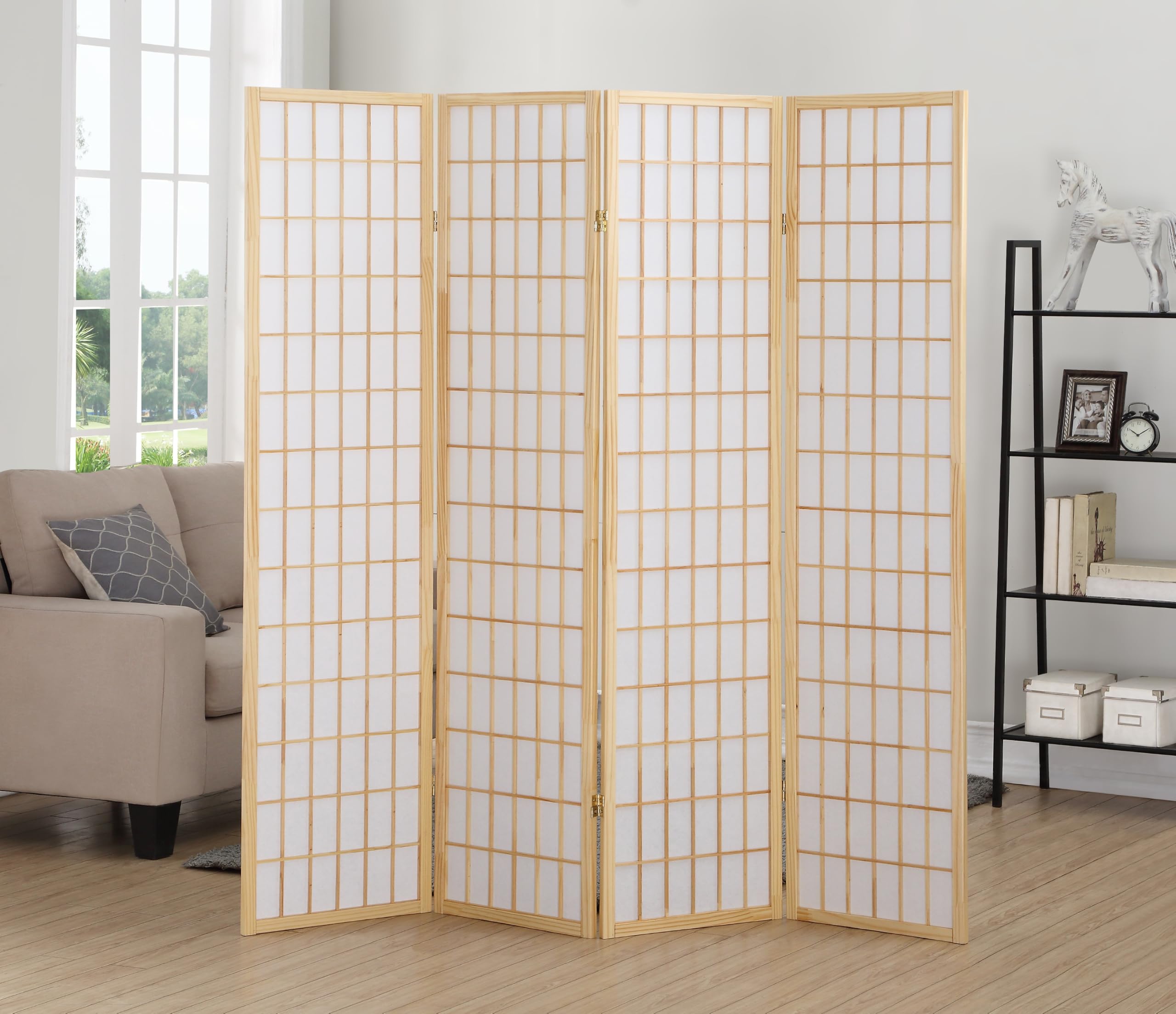
This Roundhill Furniture shoji screen brings a calm, Japanese-inspired aesthetic to any room without requiring a renovation or a big budget. The natural wood lattice frame has that warm, organic look that photographs well and feels intentional in person. It is the kind of piece that makes a studio apartment or open living area feel more thoughtfully designed.
In a real room, the translucent rice paper panels glow softly when backlit by a window or lamp, creating a layered lighting effect that solid dividers simply cannot replicate. It is lightweight enough to reposition on a whim, so you can use it as a bedroom partition during the week and tuck it behind the sofa on weekends.
If you want quick, attractive privacy screening without sacrificing natural light or committing to a heavy piece of furniture, this one delivers.
Styles it works with: Japandi, Scandinavian, Boho, Mid-Century Modern
Best placed in: Studio apartment sleeping area, living room reading nook, home office corner neding separation from the rest of the room
May not suit: Very wide open-plan areas where 68 inches of total width will not provide enough coverage, or homes with young children or large pets that could knock into or puncture the paper panels
Buy it if:
- You need a privacy solution for a studio or shared room that does not block all the light
- You want a decorative accent that doubles as a functional divider for guests or video calls
- You prefer furniture you can fold away and store flat when not in use
Consider waiting if:
- You need a darker wood finish or painted color to match your existing furniture
Skip it if:
- You need to divide a space wider than 6 feet with a single screen
- You need a heavy-duty partition that can withstand frequent contact from kids or pets
Check the latest price and availability on Amazon before it sells out.

Pros
- Lockable wheels make it genuinely portable without floor damage
- Thick 240gsm fabric provides real privacy, not just visual suggestion
- Sturdy powder-coated steel frame resists rust and scratches
- Folds flat for compact storage between uses
- No tools or wall mounting required for setup
Cons
- Some units arrive with fabric stains that require airing out before use
- Fixed 88-inch width offers no adjustability compared to telescoping alternatives
- 4.2 rating suggests occasional quality control inconsistencies
This SUNALLY divider solves a real problem for anyone sharing space: it gives you privacy without asking your landlord for permission or putting holes in the wall. The 240gsm fabric is noticeably thicker than cheaper alternatives, and the PA coating means you are not just getting a visual barrier but actual opacity that blocks shadows and silhouettes.
What sets it apart from basic folding screens is the lockable wheel system. You can glide it into place when you need separation for a video call or a nap, then roll it aside and fold it flat when you want the room back. The steel frame feels solid without being heavy, and the widened base keeps it from tipping if someone bumps it.
If you want flexible, movable privacy in a rental or shared space without sacrificing floor space permanently, this one delivers.
Styles it works with: Modern Minimalist, Industrial, Contemporary, Scandinavian
Best placed in: Studio apartment sleeping area, home office corner in a living room, shared kids' bedroom for study zones
May not suit: Rooms narrower than 8 feet where the 88-inch span would feel overwhelming, or traditionally styled interiors where the plain black fabric may look out of place
Buy it if:
- You need a no-drill privacy solution for a rental, dorm, or shared apartment
- You want something you can move daily between rooms without hassle
- You work from home in an open-plan space and need a visual boundary for video calls
Consider waiting if:
- You need a width smaller or larger than the fixed 88 inches and would prefer an adjustable telescoping divider
Skip it if:
- You need a ceiling-height partition for full sound isolation
- You want a decorative accent piece with patterns or colors beyond solid black
Check the latest price and availability on Amazon before it sells out.

Pros
- Reversible design offers two decor styles in a single purchase
- Arrives assembled with folding hinges, so no tools or build time needed
- Solid72-inch height provides meaningful privacy coverage
- Hand-carved wood detailing gives a high-end artisan look at a mid-range price
- Folds flat for compact storage in a closet or behind furniture
Cons
- No customer reviews yet, so long-term durability is unverified
- MDF core panels may not hold up well in humid environments like bathrooms
- Each panel is only 20inches wide, which limits coverage if you need to span a large opening
- At $201, it sits above budget foam or fabric dividers without the premium of solid hardwood
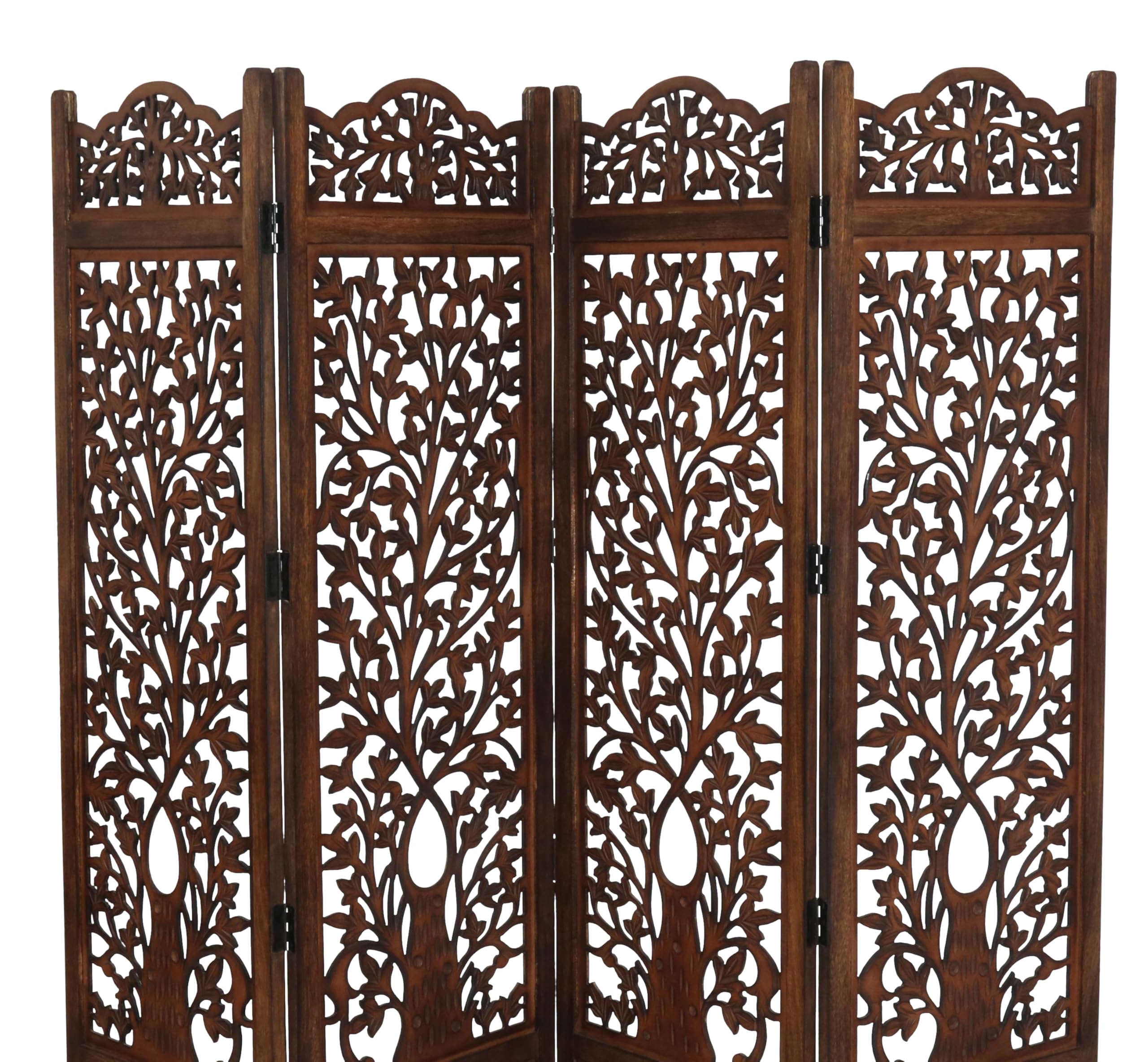
There is something about a hand-carved wooden screen that instantly elevates a room from "furnished" to "curated." The tree pattern on this TheWoodenTown divider brings organic texture and warmth that you just cannot replicate with a fabric panel or bookshelf. It feels like a piece you found at a vintage market, not something that arrived in a box.
In a real room, this divider does double duty. It separates your work-from-home desk from the living area during the day, then folds away when you want the space back for movie night. The reversible panels mean you can show a different finish depending on the season or your mood. It is practical without looking utilitarian.
If you want artisan-level texture and flexible room separation without committing to built-in walls or heavy furniture, this one delivers.
Styles it works with: Boho, Rustic Farmhouse, Earthy Modern, Global Eclectic
Best placed in: Living room corner to define a reading nook, behind a sofa to separate a dining area, studio apartment to section off a sleeping space
May not suit: Very small rooms where80 inches of width would overwhelm the space, ultra-minimalist or high-gloss modern interiors where carved wood may feel out of place, or humid rooms like bathrooms where MDF could warp over time
Buy it if:
- You rent your home and need a non-permanent way to carve out private zones
- You want a statement piece that also serves a functional purpose in an open floor plan
- You love boho or earthy decor and want handcrafted texture rather than mass-produced flat panels
Consider waiting if:
- You want to see verified customer reviews before committing to a $200 purchase
- You need a specific color that matches existing furniture and antique brown is not quite right
Skip it if:
- You need a divider taller than 72 inches for full floor-to-ceiling coverage
- You plan to use it in a bathroom or other high-moisture area where MDF may degrade
Check the latest price and availability on Amazon before it sells out.
Frequently Asked Questions
Do room dividers actually block sound?
No, not much. A standard folding screen cuts a little direct-line noise but won’t soundproof a room. For real dampening, choose fabric-wrapped acoustic panels rated NRC 0.5 or higher. Thin decorative screens sit near 0.1 and mostly break sightlines, not sound.
How tall should a room divider be for privacy?
It depends on what you’re hiding. For blocking a seated area, 68 to 72 inches works for most standing adults. To hide a raised platform, a loft bed, or a tall shelving unit, step up to 80-inch panels. Anything under 60 inches only zones a space, it doesn’t conceal it.
Are freestanding dividers stable enough on their own?
Yes, when you angle them. A 4-panel screen folded into a shallow S supports itself and resists tipping. Left flat, it rocks and can fall. On uneven floors, a rolling base with locking casters is the safer pick.
What’s the best divider material for a humid room?
It depends on the humidity level. Powder-coated metal and treated hardwood handle damp far better than untreated cane or bamboo, which can loosen and fray within a season. In bathrooms or coastal homes, skip raw rattan. Look for a sealed, GREENGUARD-certified finish.
How many panels do I need to cover a doorway?
It depends on the width. A standard 30 to 36-inch doorway closes with a 3-panel screen spanning 48 to 60 inches. For wider openings up to 88 inches, go with 4 panels. Always add 10 to 15% extra width so the screen can angle rather than sit flat.
Can I use a room divider as a headboard or backdrop?
Yes, and it’s a popular move. A tall carved or slatted panel behind a bed reads as a headboard and adds texture. Anchor it against the wall so it can’t tip, and skip open-weave styles if you want it to hide the wall behind it entirely.
Are rolling room dividers worth the extra cost?
Yes, if you reposition daily. Lockable casters let you roll a partition into place and lock it in seconds, which suits a home office you break down each evening. Confirm all four wheels lock. If the screen stays put in one spot, a plain freestanding folding model saves money.





Write Your Review
No reviews yet. Be the first to share your experience!