

> Editorial Note: “I’m Hannah Lin, an Interior Living Researcher who’s spent 9+ years analyzing the home furniture market. This guide draws on BIFMA, GREENGUARD, and FSC certifications, plus owner reviews aggregated from Wirecutter, Apartment Therapy, and the major home design subreddits.”
The mistake is treating engineered wood like solid hardwood. A floor with a 1–4 mm real-wood veneer can’t shrug off standing water, steam, or aggressive scrubbing the way people imagine, so the safe routine starts with dry soil removal, a barely damp mop, and fast spill control around click-lock edges. If you’re comparing floor-care routines across rooms, keep this guide beside best area rugs for living room, how to arrange living room furniture, best coffee tables for small spaces, best washable rugs, and best entryway storage bench.
Can You Mop Engineered Wood Floors?
Yes, but the mop should be damp, not wet. Engineered wood has a real hardwood veneer over plywood, fiberboard, or another layered core. That layered build is stable in normal home conditions, but the top layer is often only 1–4 mm thick, and the seams are still vulnerable when water sits there.
Use a microfiber mop that feels barely damp after wringing. If it leaves visible beads, it’s too wet. Work in small sections and dry any shiny streaks with a clean towel before moving on.
The National Wood Flooring Association recommends controlling moisture exposure and following the flooring manufacturer’s maintenance instructions first. That matters more with engineered wood because many floating and click-lock floors have edge treatments that don’t tolerate repeated soaking. Steam is the obvious problem. Soaking is the quieter one.
A practical rhythm works for most homes: dry dust daily or every other day in busy zones, then damp mop weekly. Kitchens, mudrooms, and entry halls may need a quick spot clean after dinner or wet shoes, but they don’t need a full wet pass every night.
What Cleaner Is Safest for Engineered Wood?
Use a pH-neutral cleaner labeled for sealed wood, engineered wood, hardwood, or hardwood-and-laminate floors, and check the floor maker’s care sheet before you change products. Manufacturer-approved cleaners matter because engineered floors vary: some have aluminum-oxide finishes, some have UV-cured urethane, and some budget floors use thinner wear layers that don’t forgive harsh chemistry.
Avoid vinegar, ammonia, bleach, oil soap, wax polish, and abrasive powders. Vinegar gets recommended because it’s cheap, but acidic cleaners can dull urethane finishes over time. Oil soaps are worse for many modern floors because they leave a residue that attracts dirt and can interfere with future recoating.
Wirecutter and Apartment Therapy both tend to favor simple, ready-to-use floor cleaners over homemade mixes for sealed wood surfaces because dosing matters. Too much concentrate leaves film. Too much water gets into seams. The boring product is often the safer product.
Spray the cleaner onto the mop pad, not directly across the floor. That keeps liquid controlled and stops cleaner from pooling along bevels, plank ends, or click-lock joints. Small habit. Big difference.
How Often Should You Clean Engineered Wood Floors?
For most homes, dust or vacuum high-traffic paths several times a week and damp mop once a week. That’s enough to keep grit from acting like sandpaper without exposing the floor to unnecessary moisture.
Use a vacuum with the beater bar turned off or a hard-floor head. Grit scratches the finish before it damages the veneer, but once the finish is scratched, grime settles into those marks and makes the floor look older than it is. Felt pads under chair legs help more than another bottle of cleaner.
Humidity matters too. Keep indoor humidity around 30–50% when you can. Below that range, wood can shrink and open fine gaps. Above it, boards can swell, edges can cup, and click-lock seams can feel raised under bare feet.
Weekly damp mopping is a ceiling, not a requirement. If the floor looks clean after vacuuming, stop there. Dry wins.
What Should You Do When You Spill Water?
Wipe it within 1 minute. Engineered wood doesn’t fail the second water touches it, but the risk climbs when liquid sits at plank seams, under chair legs, or along the edge of a rug.
Use an absorbent towel first, then a slightly damp cloth if the spill was sticky. Dry the area with a second towel so no haze remains. Don’t let the spill air-dry, especially near click-lock edges or beveled planks.
The biggest danger isn’t usually the center of a sealed plank. It’s the seam. Water finds the lowest point, and on many engineered floors, that means the tiny line between boards. Once moisture reaches the core, the edge can swell and stay slightly proud even after the surface looks dry.
Pet bowls, planters, and entry rugs need extra attention. Put waterproof trays under bowls and use breathable rug pads instead of rubber-backed mats that trap moisture underneath. Quiet damage starts there.
Can You Use a Steam Mop on Engineered Wood?
No. Avoid steam on engineered wood floors unless the flooring manufacturer explicitly says that exact model and heat setting are allowed. Most don’t.
Steam pushes heat and moisture into seams at the same time. That combination can soften finish edges, swell fiberboard cores, and create cloudy patches that normal cleaner won’t remove. It also can void warranties because many engineered-floor care sheets name steam cleaners as a prohibited method.
ASTM wood-flooring standards and NWFA guidance both treat moisture control as central to wood-floor performance. Engineered construction helps with dimensional stability, but it doesn’t turn the floor into tile. The veneer is still wood. The core still reacts.
If the floor feels grimy enough that you want steam, do a two-step reset instead: vacuum thoroughly, then clean with a manufacturer-approved spray and a clean microfiber pad. Replace the pad halfway through the room if it turns gray. Dirty pad, dirty floor.
How Do You Remove Sticky Spots Without Damaging the Veneer?
Start with the least aggressive method: a damp microfiber cloth and light pressure for 10–20 seconds. If the spot softens, wipe it away and dry the plank immediately. Don’t scrape with a knife, abrasive sponge, or stiff brush.
For food residue, spray cleaner onto the cloth and hold it over the spot briefly. For heel marks, try a dry microfiber cloth first. For gum or wax, chill the spot with a bag of ice wrapped in a towel, then lift the hardened material with a plastic card held low to the surface.
The thin veneer changes the rules. Solid hardwood can sometimes be sanded and refinished several times; many engineered floors can’t be sanded at all, and even higher-end versions may allow only one careful refinish. Assume no sanding unless the manufacturer gives you a wear-layer thickness and a written refinishing path.
That’s the safer mindset: preserve the finish you have. Once it wears through, the fix is no longer a cleaning trick.
How Do You Keep Engineered Wood Floors Clean Longer?
Stop dirt at the door. Use a doormat outside, a washable mat inside, and felt pads under every movable furniture leg. A chair dragged 20 times a day does more damage than a missed mop day.
Shoes matter, especially on floors with a matte or wire-brushed finish. Fine grit hides in texture and slowly dulls traffic lanes. Vacuum those lanes with a hard-floor attachment before they look dirty, not after.
Keep water-prone items off the floor when possible. Planters need saucers that don’t overflow. Humidifiers need trays. Pet stations need mats that can be lifted and dried. Don’t use plastic sheet liners under rugs for long stretches because trapped condensation can mark the finish.
If you use rugs, choose breathable pads and lift them every few weeks in humid rooms. Engineered wood is more stable than solid wood, but stability isn’t waterproofing. Not the same thing.
Frequently Asked Questions
Is engineered wood the same as hardwood when cleaning?
No. Engineered wood has a real wood surface, but the veneer is often only 1–4 mm thick over a layered core. Clean it like sealed wood, but be stricter about standing water, steam, and seam moisture.
Can I use vinegar on engineered wood floors?
No. Vinegar is acidic and can dull modern urethane finishes over time. Use a pH-neutral cleaner approved for sealed wood or the specific cleaner named by the floor manufacturer.

How wet should the mop be?
Barely damp. If the mop leaves puddles, beads, or shiny wet lines, wring it again or switch pads. The floor should dry within a few minutes without a towel, though drying seams by hand is safer after spills.
How often should I damp mop engineered wood?
Once a week is enough for most homes. Vacuum or dust more often in traffic lanes, then damp mop only when the floor actually needs it. More water doesn’t mean cleaner.
Can engineered wood floors be refinished after cleaning damage?
It depends. Some premium engineered floors with thicker wear layers can be refinished once, but many budget floors can’t be sanded safely. Check the veneer thickness and warranty before assuming refinishing is possible.
What humidity is best for engineered wood floors?
Aim for 30–50% indoor humidity. That range helps limit shrinking, gapping, swelling, and raised edges. Use a hygrometer if the floor changes with the seasons.
What’s the fastest way to prevent seam swelling?
Wipe spills within 1 minute and dry the seam line with a towel. Water sitting at plank edges is the main risk, especially on click-lock floors, beveled boards, and areas near sinks or entry doors.
Helpful Products
The safest cleaners here are ready-to-use or clearly labeled for hardwood, laminate, or sealed wood floors, which keeps water and dilution mistakes under control. Start with the spray bottle for normal weekly cleaning, use the larger refill if you’re maintaining several rooms, and choose the Zep option if you want a hardwood-and-laminate cleaner for mixed flooring areas.
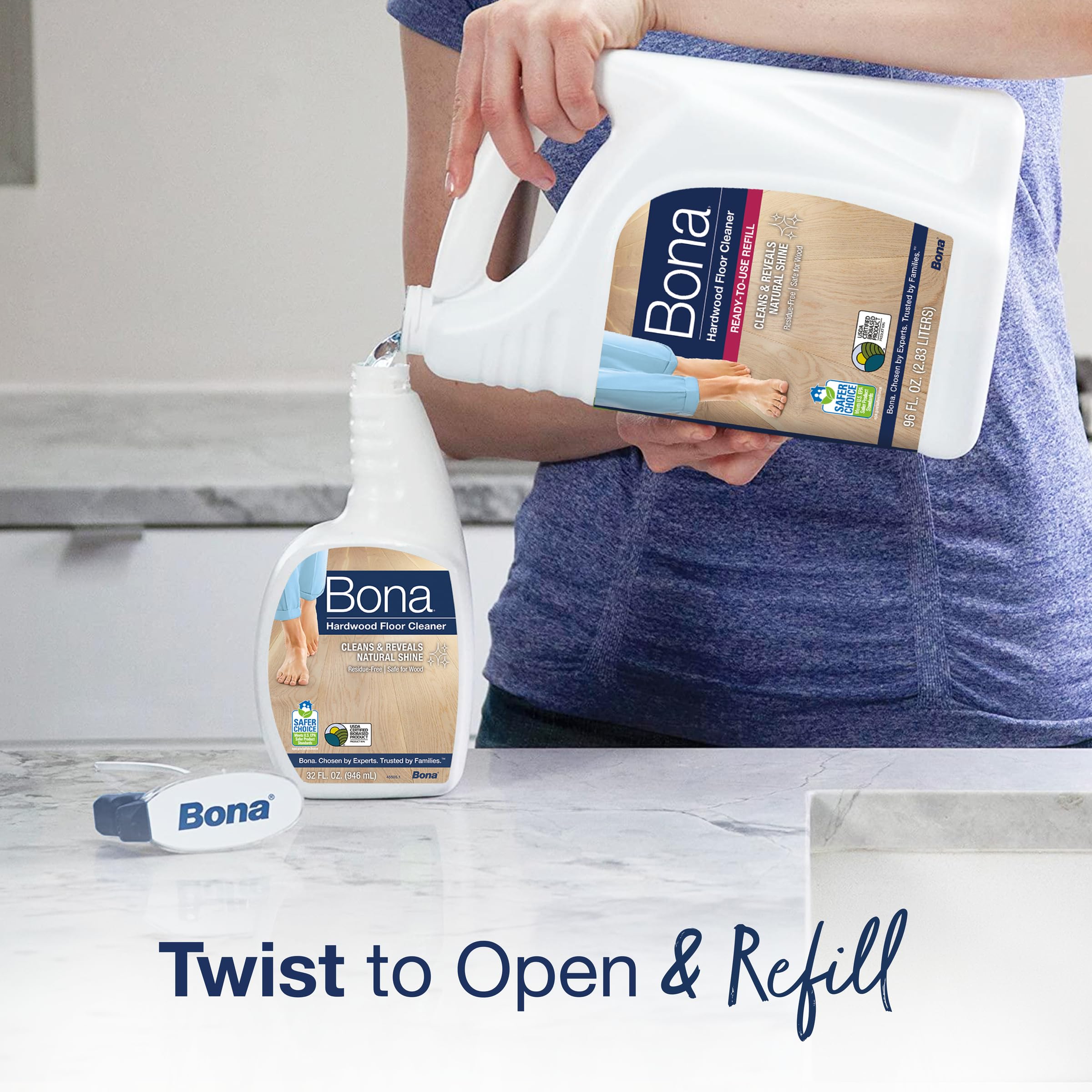
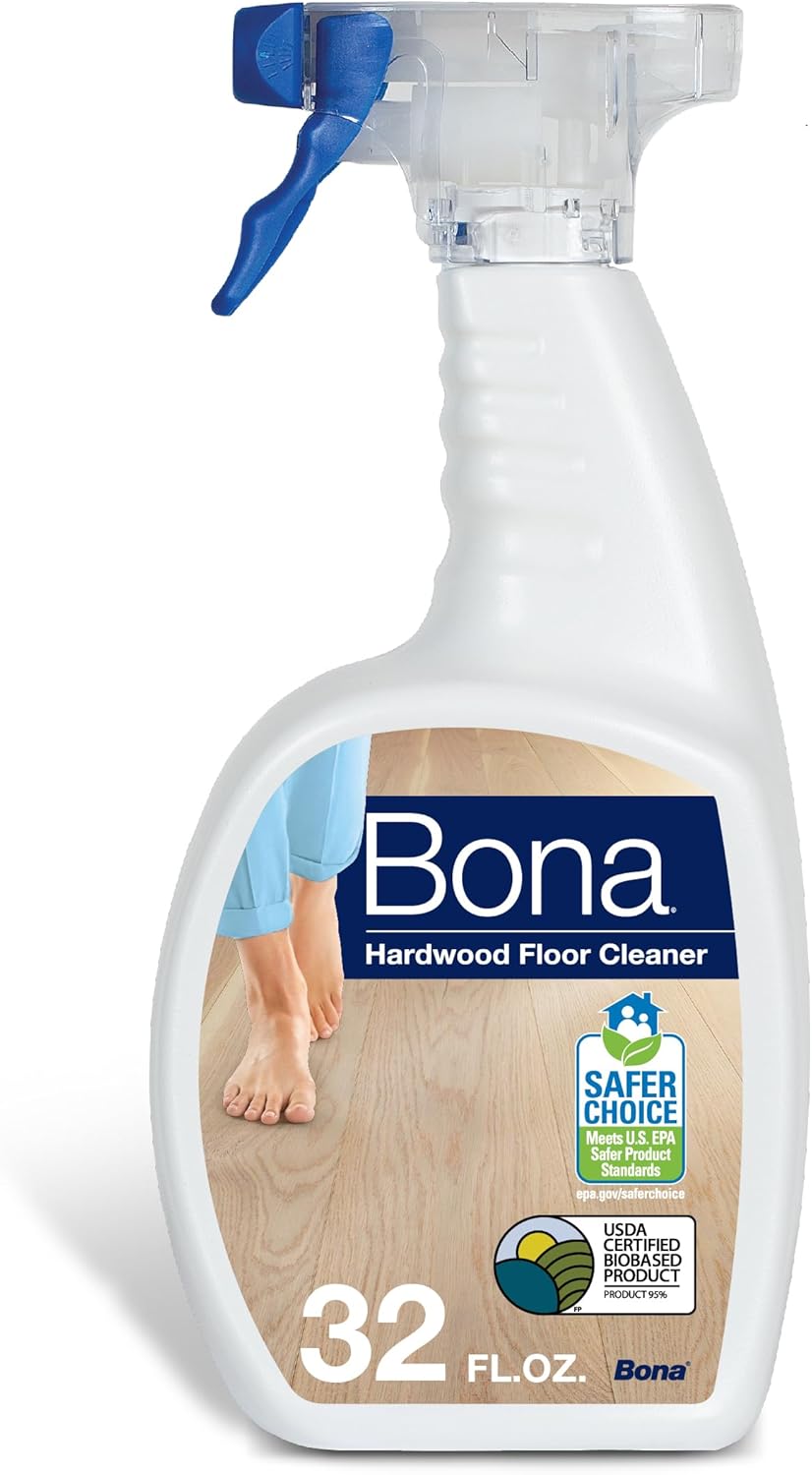
Bona Hardwood Floor Cleaner Spray 32oz | pH-Neutral Residue-Free Wood Floor Cleaning Solution
Pros
- pH-neutral and residue-free formula protects floor finish with every use
- Safer Choice Certified and95% biobased content makes it family and pet friendly
- Fast drying minimizes disruption and slip risk during cleaning
- Endorsed by flooring contractors, adding credibility beyond typical consumer products
- Nearly 50,000 reviews at 4.7 stars reflects exceptional real-world reliability
Cons
- Only formulated for hardwood floors, so homes with mixed floring types will need additional products for tile, laminate, or vinyl
- At 32 oz, the bottle may run out quickly in larger homes with extensive hardwood square footage, requiring frequent repurchasing
If your hardwood floors are the centerpiece of your home, Bona Hardwood Floor Cleaner treats them that way. The pH-neutral formula is gentle enough for daily use yet effective enough to lift the grime that builds up in high-traffic areas like hallways, kitchens, and living rooms. It does not leave that hazy film that cheaper cleaners deposit over time, so your floors genuinely look clean rather than just damp and streaky.
What makes this stand out on a practical level is how fast it dries. You spray, you mop, and within minutes the floor is ready for foot traffic again. For anyone managing a busy household, that matters. The Safer Choice Certification and biobased content also mean you are not introducing harsh chemicals into the spaces where your kids and pets spend most of their time on the floor.
Floring contractors recommending a retail product is not common, which says a lot about what Bona has built here. Nearly 50,000 shopers agree. If you want genuinely clean hardwood floors without stripping the finish or leaving residue behind, this one delivers.
Styles it works with: Modern Farmhouse, Scandinavian, Transitional, Classic Traditional
Best used in: Open-plan living rooms with hardwood floors, wood-flored dining areas, entryways and mudrooms, bedroom floors in primary or guest suites
May not suit: Homes without hardwood or enginered wood floring since this formula is not designed for tile, laminate, or luxury vinyl plank. Households looking for a single all-surface cleaner will need a separate solution for non-wood areas.
Buy it if:
- You have hardwood or engineered wood floors and want a cleaner that protects the finish rather than degrading it over time
- You have children or pets and want a Safer Choice Certified, biobased formula you can feel good about using regularly
- You want consistent, streak-free and residue-free results without spending time researching DIY cleaning solutions
Consider waiting if:
- You are in the middle of refinishing or resealing your floors and want to consult your contractor on timing before introducing any cleaner
Skip it if:
- Your home has no hardwood floors and you need an all-surface floor cleaning solution
- You prefer a concentrated formula you can dilute yourself to reduce plastic packaging and cost per use
Check the latest price and availability on Amazon before it sells out.

Pros
- Large 128 oz size delivers long-lasting supply and reduces how often you need to reorder
- pH-neutral, water-based formula is gentle enough for all finished hardwood floors
- Certified Safer Choice by the EPA, giving confidence about safety for family and pets
- Splashless bottle design with wide handle makes refilling easy and drip-free
Cons
- Only compatible with Bona spray mops and Bona spray bottles, so it does not work as a standalone cleaner without a Bona applicator
- Unscented formula, while great for sensitive users, leaves no fresh scent after cleaning which some buyers prefer
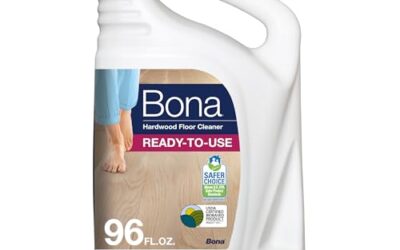
If your home has hardwood floors, you already know how much they define a space. The warm grain, the natural shine, the way they anchor room. Keeping them that way without stripping the finish or leaving a filmy haze is harder than it sounds. Bona has been the go-to for hardwood floor care for decades, and this 128 oz refill bottle is exactly what consistent, low-effort maintenance looks like in practice.
What stands out here is the combination of simplicity and credibility. The formula is pH-neutral and water-based, which means it is gentle enough for daily use without degrading your floor's finish over time. The 95% USDA certified biobased content and EPA Safer Choice certification are not just marketing badges. They reflect a formulation that prioritizes your home environment as much as your floors. The splashless refill design is a small but genuinely appreciated detail that removes the mess from what is otherwise a mundane chore.
If you want spotless, residue-free hardwood floors without the risk of long-term finish damage, this one delivers.
Styles it works with: Modern Farmhouse, Scandinavian, Minimalist, Traditional
Best placed in: Homes with finished hardwood floors throughout the main living areas, high-traffic entryways with wood floring, open-plan kitchen and dining spaces with hardwood surfaces
May not suit: Homes without existing Bona spray mops or spray bottles, as this refill requires a compatible Bona applicator to use; households with unfinished, waxed, or oiled wood floors, which require a different cleaning approach than this solution is designed for
Buy it if:
- You already own a Bona spray mop or Bona spray bottle and want a cost-effective, large-volume refill that lasts for months
- You have young children or pets and want an EPA Safer Choice certified cleaner you can use freely without worry
- You are committed to reducing single-use plastic waste and want an eco-conscious cleaning routine backed by USDA biobased certification
Consider waiting if:
- You do not yet own a Bona spray mop or spray bottle, as you will need to purchase one separately before this refill is usable
Skip it if:
- Your floors are unfinished, wax-treated, or oil-finished hardwood, as this formula is designed specifically for sealed, finished wood surfaces
- You prefer a scented cleaner and find unscented products unsatisfying after cleaning session
Check the latest price and availability on Amazon before it sells out.

ZEP Ready-to-Use Hardwood & Laminate Floor Cleaner - Streak-Free, No-Rinse Formula for Real Wood & Laminate Floors
Pros
- Ready-to-use formula saves time with no measuring or diluting
- Streak-free finish that maintains the natural shine of wood floors
- Works effectively on both hardwood and laminate surfaces
- Trusted brand used in professional and commercial cleaning
- Large volume bottle provides good coverage per dollar
Cons
- Not suitable for unsealed, waxed, or oiled wood floors
- May require multiple passes on heavily soiled or sticky spots
- Spray nozzle not included, so you need a separate mop or spray bottle
If you have hardwood or laminate floors, you know the frustration of cleaners that leave streaks, residue, or a dull film after every mopping session. Zep's ready-to-use formula solves that problem quietly and effectively. You pour, mop, and walk away to floors that look naturally clean rather than coated in product.
What sets this apart from grocery store options is its professional pedigree. Zep supplies commercial cleaning teams, and that expertise shows in a formula that cleans without building up over time. Your floors keep their original luster week after week instead of slowly going hazy.
If you want genuinely clean hardwood floors without the fuss of concentrate ratios or the risk of residue buildup, this one delivers.
Styles it works with: Modern Farmhouse, Scandinavian, Traditional Mid-Century Modern
Best placed in: Living room hardwood, kitchen laminate, hallway high-traffic zones
May not suit: Homes with unsealed or waxed antique wood floors, or spaces with unfinished reclaimed wood that requires oil-based care
Buy it if:
- You have sealed hardwood or laminate floors and want a no-fuss weekly cleaner
- You are tired of streaky results from other floor cleaning products
- You prefer a ready-to-use solution over measuring concentrates
Consider waiting if:
- You want to compare with Zep's concentrate version for a lower cost per use over time
Skip it if:
- Your floors are unsealed, waxed, or oiled and require specialty wood care products
- You need an all-in-one product that includes a built-in spray mechanism
Check the latest price and availability on Amazon before it sells out.

Write Your Review
No reviews yet. Be the first to share your experience!