

> Editorial Note: I’m Hannah Lin, an Interior Living Researcher who’s spent 9+ years analyzing the home furniture market. This guide draws on BIFMA, GREENGUARD, and FSC certifications, plus owner reviews aggregated from Wirecutter, Apartment Therapy, and the major home design subreddits.
The most common mistake isn’t skipping a clean, it’s reaching for dish soap and a scrubber, which leaves a filmy residue that taints every cup after. What your kettle actually needs is acid, not suds. While you’re refreshing the small stuff on your counter, it’s worth eyeing the pieces around it too: a best gallery wall frames set above the coffee station, a best console table for entryway to stage your morning routine, a best large floor mirror to bounce light, a best wall mirror for living room, and a best table lamp for living room for the softer hours. Below is the exact routine I recommend, with the numbers that matter.
What Causes the White Buildup Inside My Kettle?
That chalky crust is limescale, and it’s just minerals left behind when hard water evaporates. Calcium and magnesium carbonate cling to the heating element and interior walls every time the water boils off. In hard-water regions above 120 mg/L of dissolved minerals, you’ll see visible flakes within two to three weeks of daily use.
It’s not dangerous to drink, but it does three annoying things. Scale insulates the heating element, so your kettle draws more power and takes 20 to 30 seconds longer to reach a boil. It flakes into your tea. And left long enough, a 2 to 3 mm crust can trip the thermal cutoff early, shortening the appliance’s life.
The fix is chemistry, not muscle. Limescale is alkaline, so a mild acid dissolves it without scratching the stainless or plastic interior. Citric acid, white vinegar, and commercial descalers all work on the same principle. Wirecutter’s small-appliance testers reached the same conclusion after years of kitchen coverage: acid beats abrasion every time. Scrubbing with steel wool just scars the surface and gives future scale more grip.
How Do I Descale It Step by Step?
Start with citric acid if you can. It’s odorless, food-safe, and rinses clean without the lingering smell vinegar leaves behind. Here’s the routine I use.
Fill the kettle halfway with water, then add one tablespoon of citric acid powder or two descaling tablets. Bring it to a full boil, switch it off, and let the solution sit for 15 to 20 minutes. The acid needs contact time to break the carbonate bonds. Rushing this is the number one reason a “clean” kettle still has spots.
Pour out the solution, then wipe the interior with a soft cloth or non-scratch sponge. Stubborn flakes near the base usually lift with a second 10-minute soak. Rinse three to four times with fresh water. Do one final “throwaway boil” of plain water and dump it, so no acid taste carries into your next cup.
The white-vinegar version works the same way: a 1-to-1 mix of vinegar and water, boiled and rested for 20 minutes. It’s cheaper but pungent. Apartment Therapy’s cleaning guides recommend an extra rinse cycle for vinegar to clear the smell. Either method takes about 30 minutes start to finish.
How Often Should I Clean It?
It depends on your water and how hard your kettle works. Set a simple rhythm and you’ll never deal with a heavy crust again.
For daily users in a hard-water area, descale every four to six weeks. Soft-water households can stretch to every two to three months. If you spot the first haze of scale on the element, that’s your cue regardless of the calendar. A quick monthly wipe of the exterior with a damp microfiber cloth keeps fingerprints and water spots off the stainless.
Prevention shrinks the workload. Empty the kettle after each use instead of letting water stand overnight, since standing hard water deposits minerals faster. Don’t refill a still-warm kettle from the tap and let it sit. A small in-spout mesh filter, standard on many models, catches loose flakes before they hit your mug. If your tap runs very hard, filtered or distilled water cuts scale buildup dramatically, sometimes by half.
Keep a log for the first two months. Once you know your kettle’s real pace, cleaning becomes a five-minute habit rather than a chore you dread. Consistency beats intensity here.
What Should I Avoid Doing?
Never submerge the base or the electrical connector. Water in the heating element or the plug housing is the fastest way to kill an electric kettle, and it voids most warranties. Wipe those parts with a barely-damp cloth only.
Skip the abrasives. Steel wool, scouring powder, and stiff brushes scratch the interior, and those micro-grooves give limescale more surface to cling to next time. Bleach is another no. It’s corrosive to stainless and leaves a residue you don’t want near drinking water. Don’t run the kettle empty or with the acid solution boiling for long stretches either, since dry or over-concentrated boiling stresses the element.
Helpful Picks
I vetted these on three criteria: food-safe citric-acid formulas, owner ratings above 4.0, and no-scrub dissolving action that’s gentle on stainless and plastic interiors.

Pros
- 20-pack offers excellent value with enough tablets for frequent cleaning cycles
- Citric acid formula is food-safe and non-toxic, ideal for appliances in contact with drinking water
- Versatile use across kettles and shower heads reduces the need for multiple cleaning products
- Perfect 5-star rating from early reviewers suggests consistent performance
Cons
- Only 13 reviews at time of writing, so long-term reliability data is still limited
- No detailed usage instructions mentioned in the product data, which may require guesswork for first-time users
- Citric acid tablets may require repeat treatments for very heavy or long-standing limescale buildup
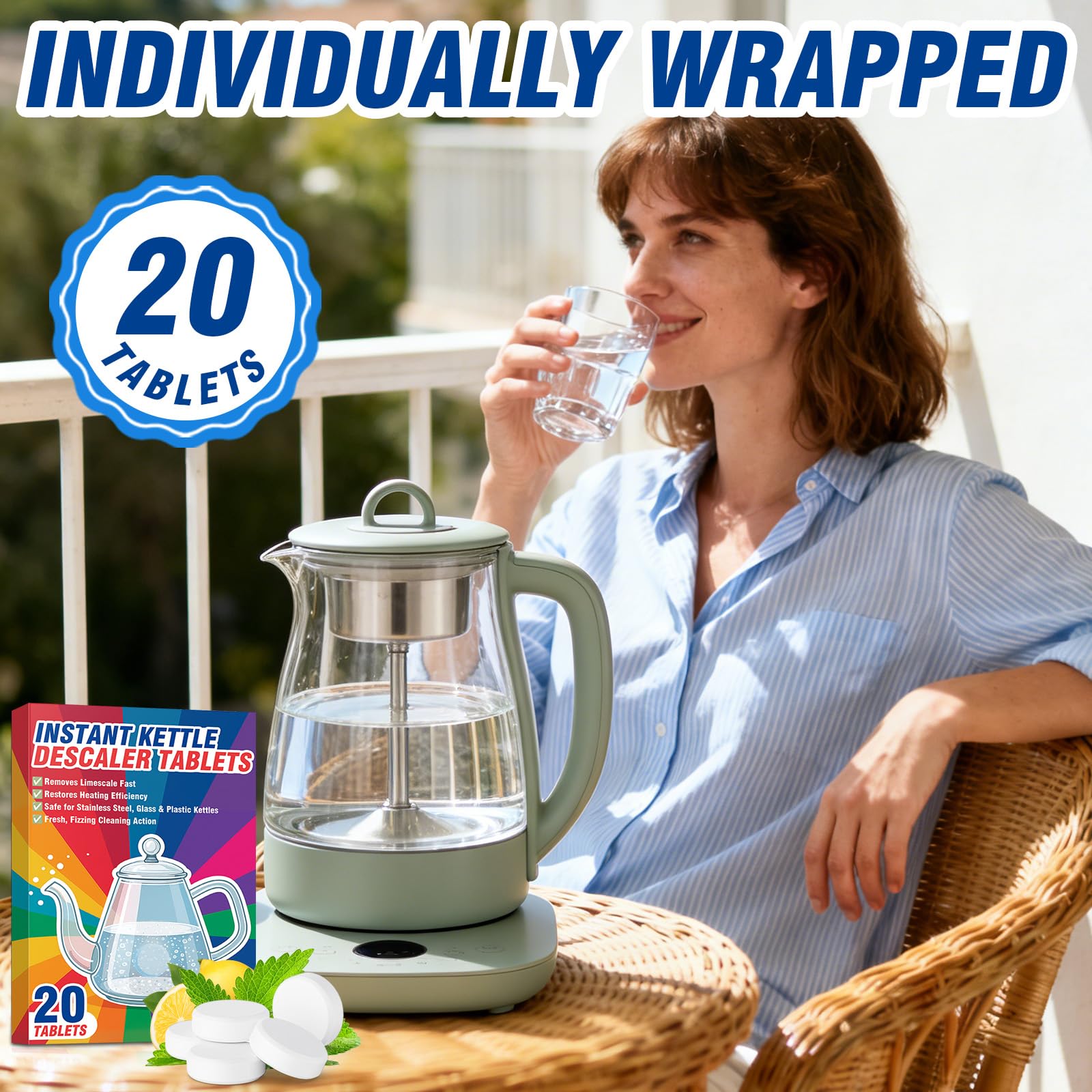
If your electric kettle has been taking longer to boil lately or you notice white crusty buildup inside, Joyaone's Kettle Descaler Tablets are the kind of simple fix that makes a real difference. The citric acid formula does the heavy lifting for you, and at under $10 for 20 tablets, it feels like a no-brainer addition to your regular home maintenance routine.
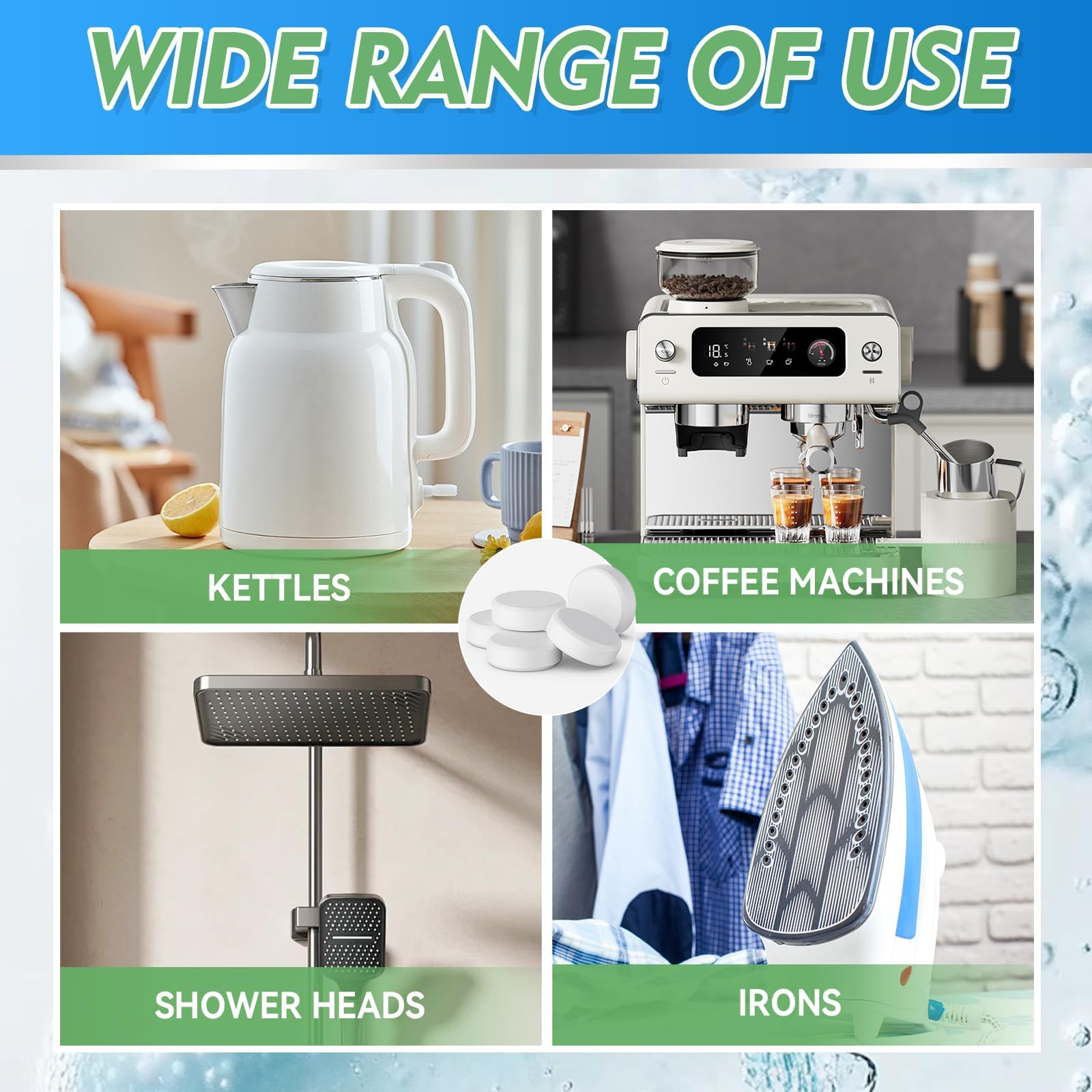
What stands out here is the food-safe ingredient profile. Citric acid is derived from natural sources and leaves no harmful residue, which matters when you are cleaning something you use to make your morning tea or coffee. It also pulls double duty on shower heads clogged with hard water deposits, making it more versatile than a single-use descaler.
If you want a clean, efficient kettle and fresher shower pressure without resorting to harsh chemical cleaners, this one delivers.
Styles it works with: Any kitchen or bathroom aesthetic including Modern, Minimalist, Scandinavian, and Traditional homes that use electric kettles or hard water fixtures.
Best placed in: Kitchen cabinet or pantry for kettle maintenance, bathroom shelf for shower head cleaning, and utility storage areas for easy access during monthly cleaning routines.
May not suit: Households with soft water where limescale is not a common issue, or renters who do not have access to or responsibility for maintaining built-in appliances.
Buy it if:
- You live in a hard water area and notice white mineral buildup inside your electric kettle or on your shower head
- You want a food-safe, chemical-free descaling option for appliances that come into contact with your drinking water
- You prefer to buy a multi-use cleaning solution that covers both kitchen and bathroom appliances in one purchase
Consider waiting if:
- You want more long-term reviews before committing, as this product is still relatively new to market
Skip it if:
- You already have a dedicated descaler that is working well for your appliances
- You live in a soft water region and do not experience limescale buildup in your home
Check the latest price and availability on Amazon before it sells out.

Durgol Universal Multipurpose Descaler 25.4 oz - Professional Limescale Remover for Kitchen and Home
Pros
- Removes 100% of limescale unlike citric acid alternatives that leave calcium citrate behind
- Versatile formula safe for coffee machines, kettles, faucets, tiles, showerheads, and more
- Leaves no taste or smell so appliances are ready to use right after cleaning
- No mixing or diluting required, works directly from the bottle
- Highly rated at 4.6 stars across over 4,000 reviews
Cons
- Priced higher than generic citric acid descalers at $16.99 for a single bottle
- Sulfamic acid formula requires careful handling and keeping away from certain delicate surfaces
- Not specifically optimized for espresso machines like the brand's Swiss Espresso variant
Hard water is the silent enemy of a well-kept home. It leaves chalky rings on your faucets, slows your coffee maker to a crawl, and makes your kitchen sink look perpetually dirty no matter how often you scrub. Durgol Universal tackles all of that with one bottle, and it does so more thoroughly than the vinegar or citric acid solutions many of us default to.
What sets this apart is the sulfamic acid formula. It dissolves limescale completely rather than leaving behind a secondary layer of calcium citrate that builds up over time. Your appliances genuinely return to a like-new state inside, which means better-tasting coffee, faster-boiling kettles, and fixtures that actually shine.
If you want spotless appliances and surfaces without jugling multiple specialty cleaners, this one delivers.
Styles it works with: Any home style where clean, well-maintained surfaces matter. Particularly useful in Modern, Minimalist, Scandinavian, and Transitional kitchens and bathrooms where chrome fixtures and glass are focal points.
Best placed in: Under the kitchen sink for easy access to coffee machines and kettles, in the bathroom cabinet for showerhead and faucet maintenance, or in a utility closet as part of your monthly deep-clean supplies.
May not suit: Homes that only use filtered or softened water and rarely encounter limescale buildup, or renters whose appliances are replaced by landlords.
Buy it if:
- You live in a hard water area and notice white buildup on faucets, showerheads, or inside your kettle
- Your coffee machine is brewing slower than usual or producing lukewarm coffee
- You want one descaler that handles the kitchen, bathroom, and all small appliances
Consider waiting if:
- You just descaled recently and do not yet see new buildup forming
- You want to try the smaller16.9 oz size first to test compatibility with your surfaces
Skip it if:
- You have naturally soft water and rarely encounter limescale
- You only need a descaler for a specific espresso machine and would benefit more from Durgol's Swiss Espresso formula
Check the latest price and availability on Amazon before it sells out.

Joyaone Kettle Descaler Tablets Citric Acid Limescale Remover for Kettles, Boilers & Water Distillers
Pros
- Citric acid formula is effective on hard water mineral deposits and limescale
- Versatile use across kettles, boilers, and water distillers adds value
- Easy tablet format removes the guesswork of liquid or powder descalers
- Budget-friendly price makes routine descaling accessible for most households
Cons
- Limited customer reviews make it harder to gauge long-term reliability compared to more established brands
- May require multiple treatments for severe or long-neglected limescale buildup
- No detailed usage instructions visible in product listing, which could confuse first-time buyers
If your kettle has been looking a little worse for wear lately, with white crusty deposits coating the inside and your morning tea tasting faintly off, the Joyaone Kettle Descaler Tablets are the kind of simple fix that feels almost too easy. Drop a tablet in, let the citric acid go to work, and rinse. It is the kind of low-effort maintenance that pays off every single morning.
What makes this stand out from generic descaling powders is the tablet format. No scooping, no spilling, no wondering if you used the right amount. Each tablet is pre-measured, which is genuinely useful when you are half-awake and just want a clean kettle without a chemistry lesson. The citric acid formula also means you are not introducing anything aggressive into an appliance that touches your drinking water.
If you want to restore your kettle's performance and improve the taste of your hot drinks without spending a lot or switching to a complicated descaling system, this one delivers.
Styles it works with: Any kitchen aesthetic from Modern Farmhouse to Minimalist to Traditional, since this is a functional maintenance product rather than a decor item.
Best placed in: Kitchen cabinet under the sink for easy access, pantry shelf alongside other cleaning supplies, or in a utility drawer near your countertop kettle.
May not suit: Households that exclusively use filtered water systems and rarely deal with hard water buildup, or renters in soft water regions where limescale is not a common issue.
Buy it if:
- You live in a hard water area and notice white chalky residue building up inside your kettle or boiler
- You want an affordable, chemical-free descaling option that works across multiple kitchen appliances
- You prefer a simple tablet format over measuring out powder or liquid descalers
Consider waiting if:
- You want a brand with a larger review base and more documented long-term results before committing
Skip it if:
- You live in a soft water area and have never experienced limescale or mineral deposit issues
- Your kettle or boiler requires a manufacturer-specific descaling product to maintain warranty coverage
Check the latest price and availability on Amazon before it sells out.
Frequently Asked Questions
Is citric acid safe to use in an electric kettle?
Yes. Citric acid is food-grade and widely used in commercial descalers. It dissolves limescale without scratching the interior, and a couple of plain-water rinse boils clear any residual taste. The Joyaone tablets, rated 5 stars, use exactly this formula.
Can I use vinegar instead of a descaler?
Yes. A 1-to-1 white vinegar and water mix boiled and rested for 20 minutes works well and costs pennies. The trade-off is the smell, so run one extra rinse boil afterward to clear it.
How long does descaling take?
It depends on the buildup, but most kettles need about 30 minutes total. That’s one boil, a 15 to 20 minute soak, a wipe, and three to four rinses. Heavy crust may want a second short soak.
Will limescale damage my kettle if I ignore it?
Yes, eventually. A 2 to 3 mm crust insulates the element, wastes power, and can trip the thermal cutoff early. It won’t harm you to drink, but it does shorten the appliance’s working life.
How often should I descale a daily-use kettle?
It depends on water hardness. Hard-water households should descale every four to six weeks; soft-water homes can wait two to three months. First sign of haze on the element means clean it now.
Do descaling tablets work better than powder?
It depends on convenience more than performance. Tablets like the Joyaone 4.2-star pack are pre-measured and mess-free, while loose citric acid powder costs less per use. Both dissolve the same minerals.
Can I put an electric kettle in the dishwasher?
No. The electrical base and heating element can’t get submerged or blasted with water. Clean the interior by descaling and wipe the outside with a damp microfiber cloth only. Submerging the base risks a short circuit and voids most manufacturer warranties, so keep water away from the electrical contacts at the bottom and dry the exterior thoroughly before the next use.


Write Your Review
No reviews yet. Be the first to share your experience!