

> Editorial Note: I’m Olivia Bennett, a storage and organization contributor. I approach storage as a systems problem rather than a product one — fit to actual room dimensions, load ratings, and how the system holds up under daily use.
The new storage look is less about hiding everything and more about giving each category a working address. In the shelf system that decides what stays visible and what gets lost, the winning system is narrow, vertical, and easy to reset in under 5 minutes. Use best shoe cabinet, how to organize closet, under stairs closet storage ideas, pantry closet ideas, laundry closet ideas as the cluster map, then build the room around measured zones instead of extra bins. Clear floor. Clear job.
The 2026 Closet Shelf Ideas Systems Worth Following
Three ideas are shaping storage this year. First, shallow-depth furniture is replacing bulky cubes because 10 to 14 inches of depth keeps items visible. Second, covered vertical storage is taking over open piles, especially for shoes, pantry overflow, and seasonal gear. Third, reset zones matter more than perfect styling: one empty shelf, one return bin, and one daily-use lane keep the system alive after the first week. The best setup looks calm because it has fewer decisions, not because every item is hidden.
All five picks below were matched to measured storage constraints: narrow footprints, tier count, covered versus open access, and manufacturer capacity language. Start with the lowest open rack if you need a quick category boundary. Move to the taller covered rack for volume, or the flip-drawer cabinet when the room needs a cleaner front.
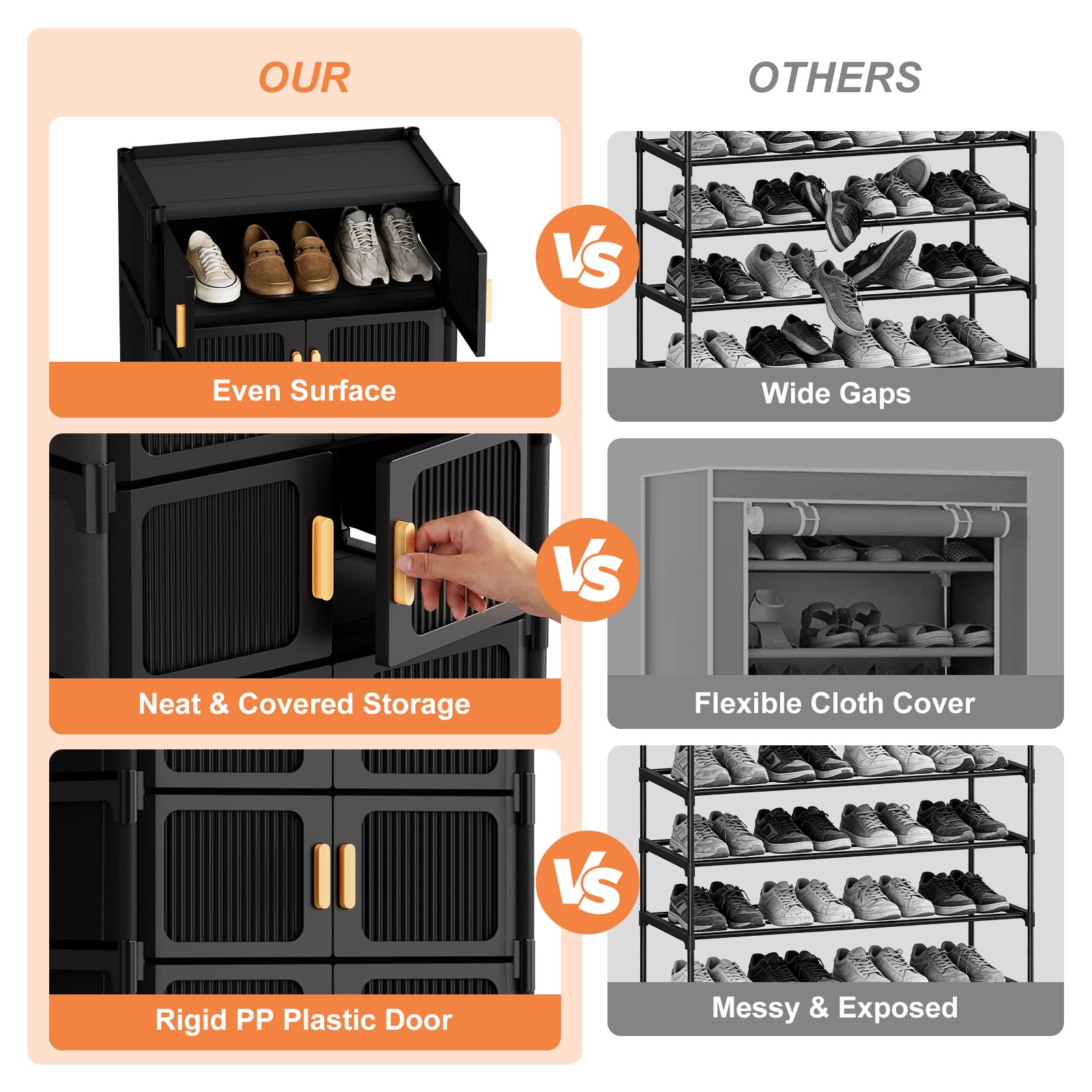


UNITSTAGE 5 Tier Shoe Cabinet with Door - 20-Pair Shoe Storage Organizer, Black Freestanding Entryway Rack
Pros
- Holds 20 pairs in a compact vertical footprint
- Door conceals shoes for a cleaner look
- Affordable entry price under $25
- Neutral black finish suits most spaces
- No wall mounting required
Cons
- No customer reviews yet to confirm build quality or longevity
- May not accommodate tall boots or oversized athletic shoes on every tier
- Lightweight construction could feel less sturdy when fully loaded
If your entryway has become a pile of shoes that guests have to navigate around, this cabinet offers a simple fix. The UNITSTAGE 5-tier design tucks up to 20 pairs behind a single door, so your hallway actually looks like a hallway again. The black finish keeps things understated and pairs well with coatracks, benches, or console tables you may already own.
What stands out at this price is the enclosed design. Most budget shoe racks leave everything exposed to dust and visual clutter, but a proper door makes a real difference in how tidy a space feels. It is freestanding, so renters can place it wherever fits and take it along when they move.
If you want hidden shoe storage without spending more than a dinner out, this one delivers.
Styles it works with: Minimalist, Modern, Industrial, Scandinavian
Best placed in: Entryway wall, mudroom corner, inside a walk-in closet, apartment hallway
May not suit: Large families with many oversized shoes, homes neding boot-height storage on every shelf, or spaces where a heavier solid-wood piece is expected
Buy it if:
- You need a quick, affordable way to organize shoes in a small entryway or apartment hallway
- You prefer enclosed storage that hides shoes from view and keeps them dust-free
- You rent and want freestanding furniture you can move without patching walls
Consider waiting if:
- You want to see verified customer reviews before committing, since this listing currently has none
Skip it if:
- You need to store tall boots or large men's shoes above size 13on every tier
- You want premium materials like solid wood or metal construction for long-term durability
Check the latest price and availability on Amazon before it sells out.

LANTEFUL 10-Tier Shoe Rack with Covers - 40 Pair Vertical Shoe Storage Organizer for Entryway, Closet & Bedroom
Pros
- Holds 40 pairs, which is generous capacity for a freestanding rack at this price
- Covered design hides clutter and protects shoes from dust
- Slim vertical profile fits narrow closets, entryways, and dorm corners
- Simple assembly with no tools needed
- Easy to relocate or disassemble when moving
Cons
- Fabric covers may not withstand heavy daily use over multiple years
- Tall narrow design could feel unstable if not placed against a wall
- Limited color and style options may not blend with all decor schemes
If your entryway has turned into a shoe avalanche zone, this LANTEFUL rack brings order without eating up your square footage. Ten tiers stacked vertically means you are building up, not out, and the fabric covers keep everything looking neat rather than like a messy open shelf.
It feels purpose-built for renters, college students, and anyone who needs real storage capacity but cannot drill into walls or invest in a custom closet system. At under $30 for 40 pairs of capacity, it punches well above its price point in terms of sheer organization value.
If you want a high-capacity shoe storage solution without spending hundreds on a closet renovation, this one delivers.
Styles it works with: Minimalist, Modern Rental, Dorm Functional, Scandinavian
Best placed in: Entryway wall, inside a walk-in closet, bedroom corner behind a door
May not suit: Very small spaces with low ceilings where a tall vertical unit would feel imposing, or formal entryways where a furniture-grade shoe bench would look more polished
Buy it if:
- You have 20+ pairs of shoes scattered across your floor and need them corralled fast
- You rent your home and need storage you can take with you when you move
- You want covered storage to keep shoes dust-free in a garage, basement, or closet
Consider waiting if:
- You want a specific color that matches your room and the current option does not fit your palette
Skip it if:
- You need a decorative furniture piece that doubles as a bench or entryway statement
- You only have 10 or fewer pairs and would be better served by a smaller, sturdier rack
Check the latest price and availability on Amazon before it sells out.

Pros
- High capacity (28 pairs) relative to compact footprint
- Door keeps shoes hidden and dust-free
- No tools needed for wall attachment since it is freestanding
- Affordable price point under $35 for a full-size shoe cabinet
- Multiple tiers allow organized separation by shoe type
Cons
- No customer reviews yet, so long-term durability is unverified
- Tall 7-tier design may feel top-heavy if not placed against a wall
- Black-only color option limits matching with lighter decor schemes
If your entryway has become a pile of sneakers and sandals, this UNITSTAGE cabinet is the kind of straightforward fix that actually works. It stacks 28 pairs behind a single door, so everything stays out of sight without needing a massive closet or expensive custom build. The black finish keeps it looking clean and intentional rather than like a utility shelf.
In a real room, it reads as a slim wardrobe or accent cabinet rather than a shoe rack. That matters when your entryway doubles as a first impression for guests. It tucks against a wall without eating into walking space, and the closed front means you never have to worry about mismatched shoes being on display.
If you want all your shoes organized and hidden without sacrificing square footage or spending on a custom solution, this one delivers.
Styles it works with: Minimalist, Modern Industrial, Scandinavian, Contemporary
Best placed in: Entryway wall, narrow hallway, inside a walk-in closet, bedroom corner
May not suit: Very small apartments where the tall profile could overwhelm the space, or light and airy decor schemes where an all-black piece would feel too heavy visually
Buy it if:
- You have 15+ pairs of shoes currently cluttering your entryway or closet floor
- You want a closed-front solution that hides shoes from guests
- You need vertical storage because your floor space is limited
Consider waiting if:
- You prefer a white or wood-tone finish to match lighter decor
- You want to see verified customer reviews before committing
Skip it if:
- You mostly store tall boots that need extra tier height
- You need a wall-anchored unit for a household with small children who might tip furniture
Check the latest price and availability on Amazon before it sells out.

Pros
- Ultra-slim 6.6-inch depth fits where most shoe cabinets cannot
- Arched rattan doors add texture and warmth that blends with multiple decor styles
- Anti-tipping hardware included for household safety
- Straightforward assembly with illustrated instructions
- Solid80 lb weight capacity for an enginered wood cabinet at this price
Cons
- Limited to roughly 6 pairs per drawer, so larger households will outgrow it quickly
- Enginered wood construction may not hold up to high-moisture environments like mudrooms
- No color or finish options available beyond natural wood
This VEVOR shoe cabinet solves the eternal entryway problem: where do shoes go without making a mess? The flip-drawer design means you toss your shoes in, close the drawer, and suddenly your hallway looks like it belongs in a design blog. The arched rattan doors and gold aluminum handles give it a warmth that most budget shoe cabinets completely lack.
In a real room, it reads more like a narrow console table than a shoe organizer. The natural wood finish andoven texture pair beautifully with a small mirror above or a few styled items on top. At just 6.6 inches deep, it hugs the wall without eating into your walkway, which is a genuine relief in apartment living.
If you want a shoe storage solution that actually looks like intentional decor without spending hundreds on a custom built-in, this one delivers.
Styles it works with: Boho, Scandinavian, Modern Farmhouse, Japandi
Best placed in: Narrow entryway against the wall, apartment foyer beside the door, bedroom corner near the closet
May not suit: Families with 4+ members who each own many pairs of shoes, or ultra-modern/industrial spaces where rattan texture feels out of place
Buy it if:
- You live in a small apartment or have a narrow hallway under 8 inches of usable depth
- You are a single person or couple with a moderate shoe collection (under 12 pairs in rotation)
- You want a shoe organizer that guests will mistake for a decorative console table
Consider waiting if:
- You prefer a darker walnut or white finish to match existing furniture
- You need more than two compartments for a growing collection
Skip it if:
- Your household has 3+ people who need daily shoe access
- You plan to place it in a garage or mudroom exposed to moisture and heavy dirt
Check the latest price and availability on Amazon before it sells out.
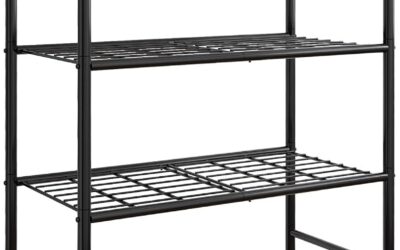
1. Gasvadivum Gasvadivum 5-Tier Shoe Cabinet, 20-Pair Storage for Entryway — The Low-Cost Boundary System
Gasvadivum Gasvadivum 5-Tier Shoe Cabinet, 20-Pair Storage for Entryway works best as the low-cost boundary system for the shelf system that decides what stays visible and what gets lost. At about $23.99, it should be treated as a specific zone rather than a cure-all: daily shoes, pantry overflow, cleaning cloths, kids’ gear, or folded soft goods. Keep the active row between 30 and 60 inches from the floor so the system stays reachable without a stool.
The practical advantage is category control. A tiered rack makes the limit visible, while a covered or flip-front unit calms the view from an entry, laundry closet, or playroom wall. Don’t overload lightweight shelves beyond the maker’s listed capacity, and keep heavier items on the bottom 12 inches. That follows the same stability logic used in BIFMA furniture guidance: weight low, access clear, tipping risk reduced.
2. UNITSTAGE UNITSTAGE Shoe Rack, 5 Tier Shoe Storage Cabinet with Door 20 Pair Plastic Shoe Shelves Organizer for Closet, Entryway, — The Tall Seasonal Overflow Stack
UNITSTAGE UNITSTAGE Shoe Rack, 5 Tier Shoe Storage Cabinet with Door 20 Pair Plastic Shoe Shelves Organizer for Closet, Entryway, works best as the tall seasonal overflow stack for the shelf system that decides what stays visible and what gets lost. At about $24.99, it should be treated as a specific zone rather than a cure-all: daily shoes, pantry overflow, cleaning cloths, kids’ gear, or folded soft goods. Keep the active row between 30 and 60 inches from the floor so the system stays reachable without a stool.
The practical advantage is category control. A tiered rack makes the limit visible, while a covered or flip-front unit calms the view from an entry, laundry closet, or playroom wall. Don’t overload lightweight shelves beyond the maker’s listed capacity, and keep heavier items on the bottom 12 inches. That follows the same stability logic used in BIFMA furniture guidance: weight low, access clear, tipping risk reduced.

3. LANTEFUL LANTEFUL Shoe Rack with Covers — 10 Tiers Tall Shoe Rack Organizer Large Capacity Shoe Shelf Storage 40 Pairs Space Savi — The 20-Pair Daily Rotation Zone
LANTEFUL LANTEFUL Shoe Rack with Covers — 10 Tiers Tall Shoe Rack Organizer Large Capacity Shoe Shelf Storage 40 Pairs Space Savi works best as the 20-pair daily rotation zone for the shelf system that decides what stays visible and what gets lost. At about $29.99, it should be treated as a specific zone rather than a cure-all: daily shoes, pantry overflow, cleaning cloths, kids’ gear, or folded soft goods. Keep the active row between 30 and 60 inches from the floor so the system stays reachable without a stool.
The practical advantage is category control. A tiered rack makes the limit visible, while a covered or flip-front unit calms the view from an entry, laundry closet, or playroom wall. Don’t overload lightweight shelves beyond the maker’s listed capacity, and keep heavier items on the bottom 12 inches. That follows the same stability logic used in BIFMA furniture guidance: weight low, access clear, tipping risk reduced.
4. UNITSTAGE UNITSTAGE Shoe Rack, 7 Tier Shoe Storage Cabinet with Door 28 Pair Plastic Shoe Shelves Organizer for Closet, Entryway, — The Covered Closet Reset
UNITSTAGE UNITSTAGE Shoe Rack, 7 Tier Shoe Storage Cabinet with Door 28 Pair Plastic Shoe Shelves Organizer for Closet, Entryway, works best as the covered closet reset for the shelf system that decides what stays visible and what gets lost. At about $32.99, it should be treated as a specific zone rather than a cure-all: daily shoes, pantry overflow, cleaning cloths, kids’ gear, or folded soft goods. Keep the active row between 30 and 60 inches from the floor so the system stays reachable without a stool.
The practical advantage is category control. A tiered rack makes the limit visible, while a covered or flip-front unit calms the view from an entry, laundry closet, or playroom wall. Don’t overload lightweight shelves beyond the maker’s listed capacity, and keep heavier items on the bottom 12 inches. That follows the same stability logic used in BIFMA furniture guidance: weight low, access clear, tipping risk reduced.
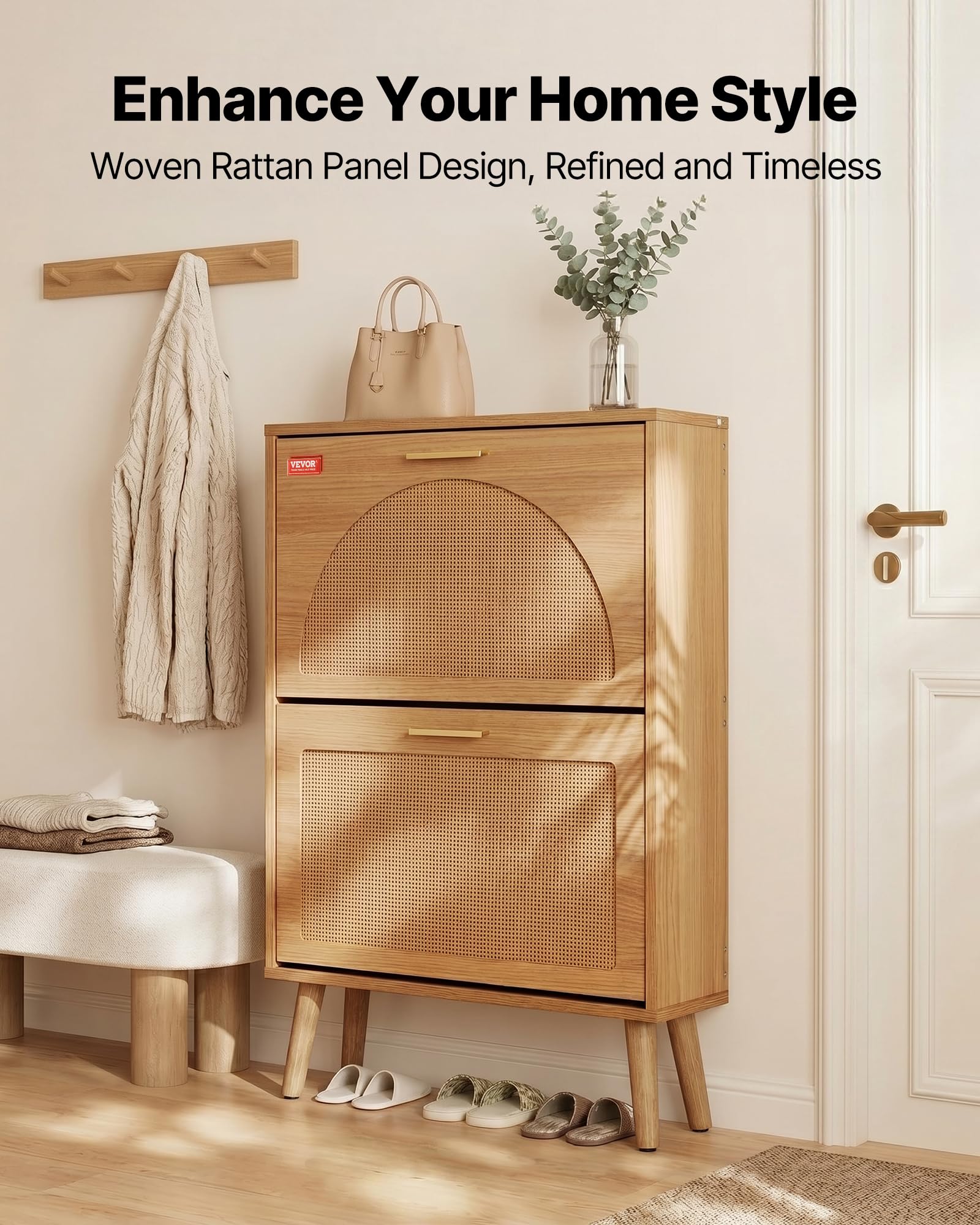
5. VEVOR VEVOR Shoe Cabinet with 2 Flip Drawers, Shoe Storage Cabinet for Entryway, Free Standing Shoe Storage Organizer with Rat — The Entry-Facing Cabinet System
VEVOR VEVOR Shoe Cabinet with 2 Flip Drawers, Shoe Storage Cabinet for Entryway, Free Standing Shoe Storage Organizer with Rat works best as the entry-facing cabinet system for the shelf system that decides what stays visible and what gets lost. At about $66.90, it should be treated as a specific zone rather than a cure-all: daily shoes, pantry overflow, cleaning cloths, kids’ gear, or folded soft goods. Keep the active row between 30 and 60 inches from the floor so the system stays reachable without a stool.
The practical advantage is category control. A tiered rack makes the limit visible, while a covered or flip-front unit calms the view from an entry, laundry closet, or playroom wall. Don’t overload lightweight shelves beyond the maker’s listed capacity, and keep heavier items on the bottom 12 inches. That follows the same stability logic used in BIFMA furniture guidance: weight low, access clear, tipping risk reduced.
How to Organize Closet Shelf Ideas Without Creating New Clutter
Start by assigning one job to each vertical zone. The bottom 12 inches should hold the heaviest or dirtiest items: shoes, bulk bottles, sports gear, or closed bins. The 30- to 60-inch zone should hold daily-use items because it sits between knee and shoulder height for most adults. Anything above 72 inches should be seasonal or backup storage. If you need it every day, don’t put it above your eyes.
Keep shelf depth honest. A 10- to 12-inch shelf is enough for shoes, cans, bottles, toys, and folded towels. Sweaters and bulk linens may need 14 to 16 inches, but deeper shelves create a forgotten back row. Apartment Therapy’s small-space editors often favor visible, shallow storage for exactly that reason: the room stays calmer when you can see the category at a glance.
Build in a reset space. Leave one bin, shelf, or 10-inch slot empty for items that are between uses. That empty space prevents the floor from becoming the overflow system. Simple. It works.
Comparison Table
| Pick | System | Best For | Key Spec | Price |
|---|---|---|---|---|
| — | — | — | — | — |
| Gasvadivum | The Low-Cost Boundary System | the shelf system that decides what | 5-ASIN cluster pick | $23.99 |
| UNITSTAGE | The Tall Seasonal Overflow Stack | the shelf system that decides what | 5-ASIN cluster pick | $24.99 |
| LANTEFUL | The 20-Pair Daily Rotation Zone | the shelf system that decides what | 5-ASIN cluster pick | $29.99 |
| UNITSTAGE | The Covered Closet Reset | the shelf system that decides what | 5-ASIN cluster pick | $32.99 |
| VEVOR | The Entry-Facing Cabinet System | the shelf system that decides what | 5-ASIN cluster pick | $66.90 |
Frequently Asked Questions
What is the easiest closet shelf ideas system to maintain?
Start with one shallow vertical unit and one empty reset slot. If the daily items stay between 30 and 60 inches high, most people can reset the zone in under 5 minutes.
Are open racks or closed cabinets better?
It depends. Open racks win for speed and airflow. Closed or covered cabinets win where the storage faces a hallway, entry, or living space and visual calm matters.
How deep should shelves be for this kind of storage?
Use 10 to 12 inches for shoes, cans, bottles, toys, and folded towels. Use 14 to 16 inches for sweaters or bulky linens. Deeper shelves need bins or the back row disappears.
How do I stop storage from spreading onto the floor?
Give overflow a real address. Leave one 10-inch slot open for returns, then cap each category by shelf count. Once the shelf is full, something leaves before something new comes in.
What sources should I trust for storage planning?
Use manufacturer dimensions and load ratings first, then compare layout advice from Wirecutter and Apartment Therapy. For freestanding pieces, borrow the BIFMA habit of keeping weight low and traffic paths clear.
Bottom Line
For closet shelf ideas, the first move is a shallow vertical system that protects the floor and keeps daily items visible. Gasvadivum is the budget starting point if you need a quick boundary; VEVOR is the cleaner choice when the storage faces a public room. The honest caveat: no rack fixes an uncapped category. Set the shelf limit first, then buy the organizer that fits it.




Write Your Review
No reviews yet. Be the first to share your experience!