

> Editorial Note: I’m Olivia Bennett, a storage and organization contributor. I approach storage as a systems problem rather than a product one — fit to actual room dimensions, load ratings, and how the system holds up under daily use.
Most closets fail because the floor becomes the plan. Shoes, bags, sweaters, and overflow boxes land in the same 24-inch-deep zone, then nothing has a real address. Start with the vertical system first, then use best shoe cabinet, under stairs closet storage ideas, pantry closet ideas, laundry closet ideas, basement storage ideas to connect this closet to the rest of the storage cluster. A closet that works doesn’t need more stuff; it needs shelf depths, reach zones, and a reset path you can repeat on a Tuesday night.
The Ground Rules Before You Start
Measure the closet before you buy a single rack. Write down width, clear depth, rod height, shelf height, and the door swing in inches. Most reach-in closets run 22 to 24 inches deep, but a shoe cabinet, boot tray, or sweater stack often works better at 11 to 14 inches deep because you can see the full row. Keep daily items between 30 and 60 inches from the floor. That’s the grab zone. Anything above 72 inches is archive storage, not daily storage.
Step 1: Empty the Floor First
Clear a 30-inch walking lane in front of the closet and remove every item from the floor. The floor is where systems go to die, because one pair of shoes turns into twelve and blocks the door track. Sort shoes into daily, weekly, and seasonal pairs. Daily pairs deserve the front 12 inches. Seasonal pairs can move to a covered rack or the upper shelf.
Wirecutter and Apartment Therapy both emphasize visible categories over mystery bins, and BIFMA stability principles point to the same habit for freestanding storage: keep heavier items low and traffic paths clear. Manufacturer load ratings vary, so treat lightweight plastic or non-woven tiers as shoe-only unless the listing gives a clear shelf capacity.
Step 2: Set Shelf Depth by Category
Use 12-inch shelves for shoes, folded tees, bins, and handbags. Use 14 to 16 inches for sweaters because thick knits need air and collapse if the stack is too deep. A 24-inch shelf sounds generous, but it creates a back row you stop using. Classic closet trap.
Wirecutter and Apartment Therapy both emphasize visible categories over mystery bins, and BIFMA stability principles point to the same habit for freestanding storage: keep heavier items low and traffic paths clear. Manufacturer load ratings vary, so treat lightweight plastic or non-woven tiers as shoe-only unless the listing gives a clear shelf capacity.
Step 3: Build One Vertical Shoe Column
Put shoes in one vertical column instead of spreading them across the closet floor. A column 20 to 30 inches wide usually holds more pairs than a loose floor row and leaves space for a hamper or vacuum. Aim for 6 to 8 inches of vertical clearance per shelf for flats, 8 to 10 inches for sneakers, and 14 inches for ankle boots.
Wirecutter and Apartment Therapy both emphasize visible categories over mystery bins, and BIFMA stability principles point to the same habit for freestanding storage: keep heavier items low and traffic paths clear. Manufacturer load ratings vary, so treat lightweight plastic or non-woven tiers as shoe-only unless the listing gives a clear shelf capacity.
Step 4: Divide the Rod Into Real Use Zones
Group hanging items by use, not by color. Work clothes, weekend clothes, outerwear, and special-event pieces each need a section. Leave 1 inch of rod width for every 2 garments as a minimum; tighter than that and hangers jam. If a 36-inch rod holds 80 hangers, the closet isn’t organized. It’s compressed.
Wirecutter and Apartment Therapy both emphasize visible categories over mystery bins, and BIFMA stability principles point to the same habit for freestanding storage: keep heavier items low and traffic paths clear. Manufacturer load ratings vary, so treat lightweight plastic or non-woven tiers as shoe-only unless the listing gives a clear shelf capacity.
Step 5: Use Bins Only Above Eye Level
Bins work best above 60 inches because they turn awkward upper shelves into pull-down storage. Use clear 12 x 12 inch or 12 x 16 inch bins for accessories, off-season scarves, and travel gear. Label the short side, not the lid, because you read the bin from the closet opening.
Wirecutter and Apartment Therapy both emphasize visible categories over mystery bins, and BIFMA stability principles point to the same habit for freestanding storage: keep heavier items low and traffic paths clear. Manufacturer load ratings vary, so treat lightweight plastic or non-woven tiers as shoe-only unless the listing gives a clear shelf capacity.
Step 6: Create a Weekly Reset Slot
Leave one 10- to 12-inch-wide slot empty. That slot catches returns, dry-cleaning bags, a backpack, or the sweater you wore once and don’t want to wash yet. Without a reset slot, the floor becomes the reset slot. One empty space does more for long-term order than another filled shelf.
Wirecutter and Apartment Therapy both emphasize visible categories over mystery bins, and BIFMA stability principles point to the same habit for freestanding storage: keep heavier items low and traffic paths clear. Manufacturer load ratings vary, so treat lightweight plastic or non-woven tiers as shoe-only unless the listing gives a clear shelf capacity.
The Right Products Make It Easier
The three picks below solve three different closet problems: open vertical shoe capacity, narrow concealed storage, and adjustable mixed storage. Start with UNITSTAGE if shoes own the floor. Choose VINGLI if the closet opens into a hallway and needs a cleaner face. Pick GRUSIGN when you need flip drawers plus an adjustable shelf for mixed pairs.

Pros
- High capacity (28 pairs) relative to compact footprint
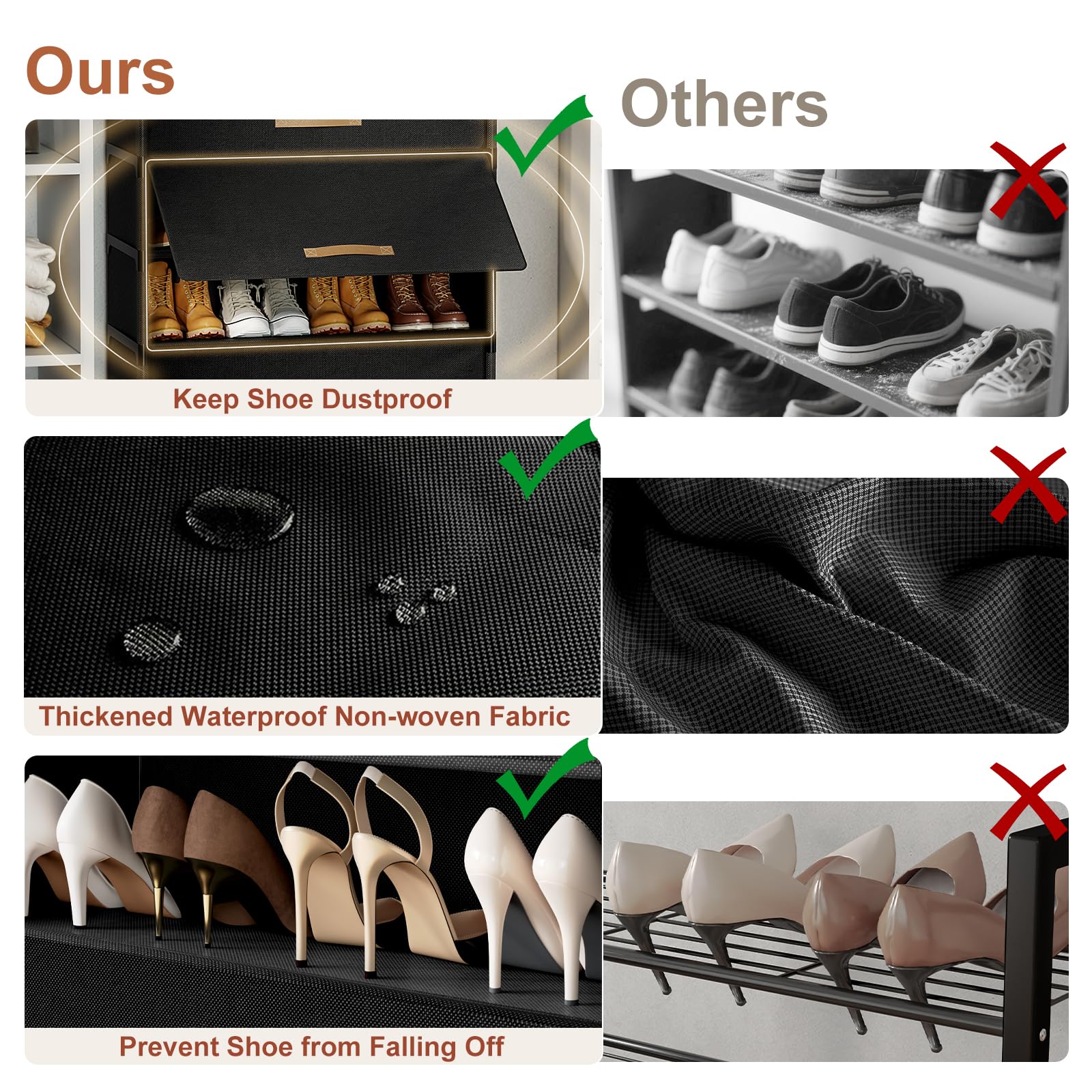
- Door keeps shoes hidden and dust-free
- No tools needed for wall attachment since it is freestanding
- Affordable price point under $35 for a full-size shoe cabinet
- Multiple tiers allow organized separation by shoe type
Cons
- No customer reviews yet, so long-term durability is unverified
- Tall 7-tier design may feel top-heavy if not placed against a wall
- Black-only color option limits matching with lighter decor schemes
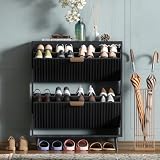
If your entryway has become a pile of sneakers and sandals, this UNITSTAGE cabinet is the kind of straightforward fix that actually works. It stacks 28 pairs behind a single door, so everything stays out of sight without needing a massive closet or expensive custom build. The black finish keeps it looking clean and intentional rather than like a utility shelf.
In a real room, it reads as a slim wardrobe or accent cabinet rather than a shoe rack. That matters when your entryway doubles as a first impression for guests. It tucks against a wall without eating into walking space, and the closed front means you never have to worry about mismatched shoes being on display.
If you want all your shoes organized and hidden without sacrificing square footage or spending on a custom solution, this one delivers.
Styles it works with: Minimalist, Modern Industrial, Scandinavian, Contemporary
Best placed in: Entryway wall, narrow hallway, inside a walk-in closet, bedroom corner
May not suit: Very small apartments where the tall profile could overwhelm the space, or light and airy decor schemes where an all-black piece would feel too heavy visually
Buy it if:
- You have 15+ pairs of shoes currently cluttering your entryway or closet floor
- You want a closed-front solution that hides shoes from guests
- You need vertical storage because your floor space is limited
Consider waiting if:
- You prefer a white or wood-tone finish to match lighter decor
- You want to see verified customer reviews before committing
Skip it if:
- You mostly store tall boots that need extra tier height
- You need a wall-anchored unit for a household with small children who might tip furniture
Check the latest price and availability on Amazon before it sells out.

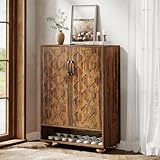
VINGLI White Narrow Shoe Cabinet for Entryway -25" Wide Small Shoe Rack Storage Organizer
Pros
- Compact footprint fits narrow spaces other shoe racks cannot
- Clean white finish suits most entryway color schemes
- Enclosed design hides shoe clutter from view
- Affordable price point for a dedicated shoe storage piece
Cons
- Limited capacity may not work for larger households with many pairs
- No customer reviews yet to confirm build quality and durability
- Narrow width restricts storage of larger shoe sizes or boots
If your entryway is more of a sliver than a grand foyer, this VINGLI shoe cabinet was made for you. At just 25 inches wide, it tucks against a wall without eating into your walkway, and the white finish keeps things feeling light and open rather than clutered.
What works here is the enclosed cabinet design. Instead of an open rack where shoes pile up and collect dust, everything stays hidden behind doors. Your entryway looks intentional and tidy, even on hectic mornings when you are rushing out the door.
If you want a clean, organized entryway without sacrificing your limited floor space, this one delivers.
Styles it works with: Minimalist, Scandinavian, Modern Traditional, Coastal
Best placed in: Narrow entryway wall, apartment foyer, inside a closet alcove, mudroom corner
May not suit: Large families neding storage for 10+ pairs, homes with wide or oversized footwear like tall boots or work boots
Buy it if:
- You have a narrow entryway under 30 inches wide and need dedicated shoe storage
- You live in an apartment or small home and want to hide shoe clutter near the door
- You prefer a clean, enclosed look over open shoeracks
Consider waiting if:
- You want to see verified customer reviews before committing to a newer listing
- You need a specific color other than white to match darker entryway furniture
Skip it if:
- Your household has more than 3-4 people and you need higher capacity storage
- You regularly store tall boots or oversized athletic shoes that need extra height
Check the latest price and availability on Amazon before it sells out.

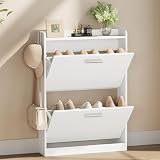
GRUSIGN Shoe Cabinet with 2 Flip Drawers & Adjustable Shelf - Holds 16+ Pairs, Narrow Entryway Storage (White)
Pros
- Holds 16+ pairs in a compact, vertical design
- Flip drawers open smoothly and keep shoes out of sight
- Adjustable shelf lets you mix shoe heights without wasting space
- Narrow build works in hallways as slim as 9 inches deep
- Clean white finish suits modern, Scandinavian, and transitional interiors
Cons
- No customer reviews yet, so long-term durability is unproven
- White finish may show scuffs or shoe marks over time
- May not accommodate very tall boots or oversized athletic shoes without shelf adjustment
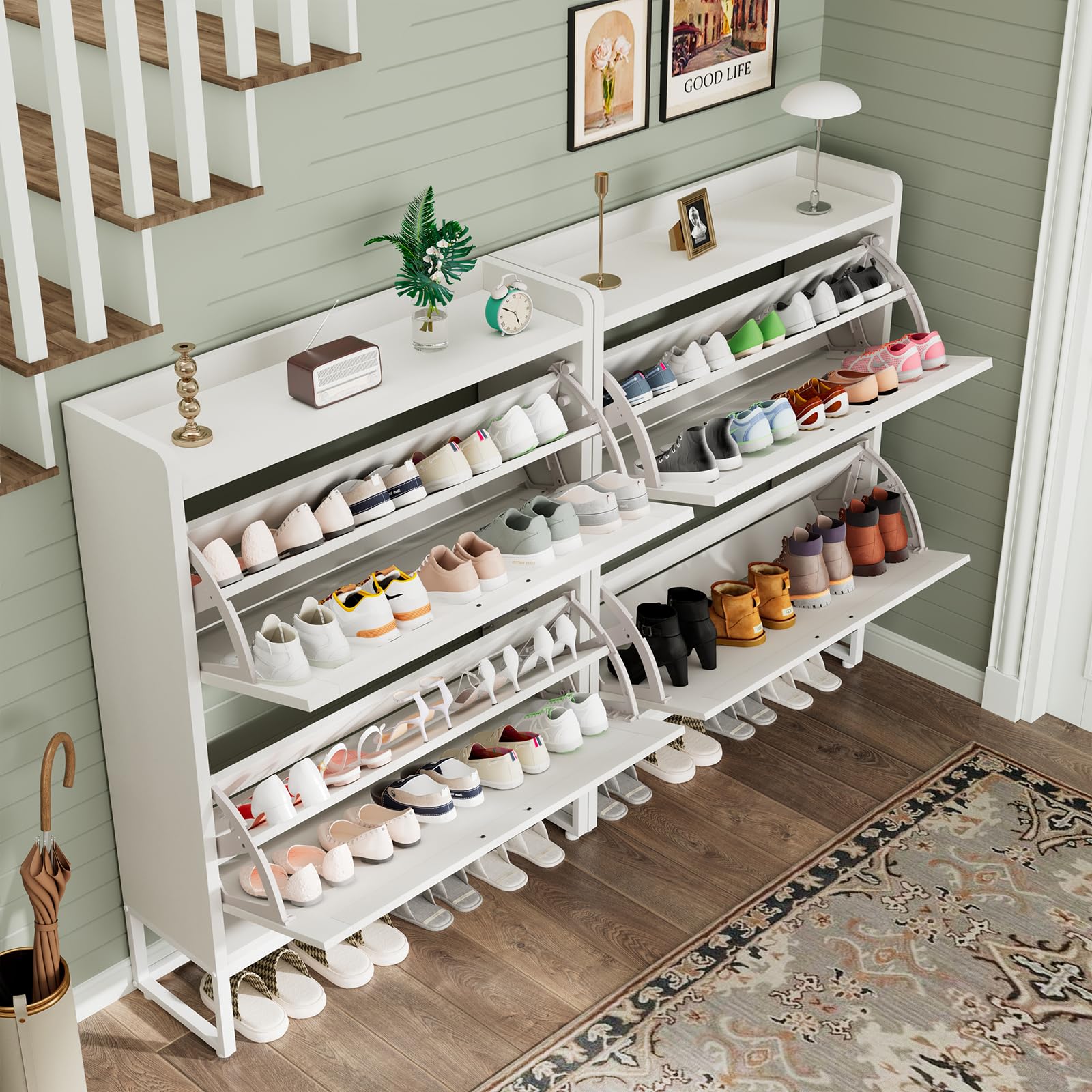
If your entryway is a pile of shoes that greets you (and every guest) the moment the door opens, this GRUSIGN cabinet quietly solves the problem. The two flip drawers hide everyday pairs behind a sleek white front, while the adjustable shelf inside means you are not stuck forcing boots into a space made for flats.
In a real room, it reads like a simple modern console rather than obvious shoe storage. The narrow depth keeps it from eating into your walkway, which matters in apartments and smaller homes where every inch counts.
If you want a clutter-free entryway without building a custom closet, this one delivers.
Styles it works with: Scandinavian, Modern Minimalist, Transitional, Contemporary
Best placed in: Entryway wall beside the front door, narrow hallway between rooms, mudroom nook
May not suit: Very large households with 4+ people needing shoe storage at the door, or spaces where a rustic wood-tone finish would match better than white
Buy it if:
- You need to organize 16+ pairs of shoes in a tight entryway or hallway
- You want shoe storage that looks like furniture, not a plastic rack
- You prefer a slim cabinet that will not block foot traffic near the door
Consider waiting if:
- You want to see real customer reviews before committing to a newer product
- You need a color other than white to match your existing decor
Skip it if:
- You have mostly tall boots or oversized shoes that may not fit even with shelf adjustments
- You need storage for a large family with 30+ pairs at the door
Check the latest price and availability on Amazon before it sells out.
UNITSTAGE UNITSTAGE Shoe Rack, 7 Tier Shoe Storage Cabinet with Door 28 Pair Plastic Shoe Shelves Organizer for Closet, Entryway,
UNITSTAGE UNITSTAGE Shoe Rack, 7 Tier Shoe Storage Cabinet with Door 28 Pair Plastic Shoe Shelves Organizer for Closet, Entryway, fits the closet plan as a defined shoe zone, not a random add-on. At about $32.99, it gives the category a physical boundary so pairs stop spreading into the walking lane. Use it for the shoes you reach for weekly, then keep seasonal pairs higher or farther back.
VINGLI VINGLI Shoe Cabinet Storage for Entryway Ultra Slim with 2 Flip &1Drop-Down Drawers, 24.8″ W Narrow Shoe Cabinet for Fro
VINGLI VINGLI Shoe Cabinet Storage for Entryway Ultra Slim with 2 Flip &1Drop-Down Drawers, 24.8″ W Narrow Shoe Cabinet for Fro fits the closet plan as a defined shoe zone, not a random add-on. At about $74.99, it gives the category a physical boundary so pairs stop spreading into the walking lane. Use it for the shoes you reach for weekly, then keep seasonal pairs higher or farther back.
GRUSIGN GRUSIGN Shoe Cabinet, Shoe Storage Cabinet with 2 Flip Drawers & Adjustable Shelf, Space-Saving Shoe Organizer – Holds 1
GRUSIGN GRUSIGN Shoe Cabinet, Shoe Storage Cabinet with 2 Flip Drawers & Adjustable Shelf, Space-Saving Shoe Organizer – Holds 1 fits the closet plan as a defined shoe zone, not a random add-on. At about $79.99, it gives the category a physical boundary so pairs stop spreading into the walking lane. Use it for the shoes you reach for weekly, then keep seasonal pairs higher or farther back.
Frequently Asked Questions
How deep should closet shelves be?
Start at 12 inches for shoes and folded basics. Move to 14 to 16 inches for sweaters. Avoid 24-inch-deep stacks unless you use bins, because the back row disappears from daily use.
Should shoes go on the floor or a shelf?
Shelf. The floor should stay open enough for a 30-inch standing lane and a weekly reset. Shoes on shelves keep pairs visible and stop the pile from creeping toward the door.
How many shoes fit in a small closet?
A 20- to 30-inch-wide vertical rack can hold roughly 15 to 28 pairs, based on tier count and shoe size. Boots reduce that number because they need 14 inches of shelf height.
What should go on the top closet shelf?
Off-season items, travel gear, formal accessories, and labeled bins. Anything you use daily should stay below 60 inches so you don’t need a stool every morning.
How often should I reset a closet?
Weekly. Ten minutes is enough if every category has a home and one slot stays empty for returns, repeat-wear clothes, and items waiting to move out.
Bottom Line
Most closets need one vertical shoe column, 12- to 16-inch shelf depths, and a weekly reset slot more than they need another bin. The UNITSTAGE 7-tier rack is the first pick for closets where shoes own the floor; VINGLI is the cleaner choice when the storage faces a hallway. If the closet still feels crowded after that, remove categories before buying more organizers.




Write Your Review
No reviews yet. Be the first to share your experience!