

> Editorial Note: I’m Erin Schwartz, and I cover home decor with a bias toward what actually works in a real room. The guidance here weighs scale, layout, and materials against Apartment Therapy and Wirecutter coverage rather than styling a space that nobody lives in.
Window box planters live outside year-round, so the polypropylene has to shrug off UV, standing water, and the freeze-thaw split that cracks cheap resin by February. Before you buy, check our related reads on ceramic vs plastic planter, elevated planter box, raised garden bed kit, planter under $50, and what size planter do i need? a plant. Every pick below ships in a multi-pack, so cost-per-box matters as much as wall thickness.
How We Evaluated
We assessed each set against ASTM D4329 UV exposure guidance, drainage design, tray fit, and the honest cost-per-unit once you divide the pack. Wall rigidity and saucer seal decided the ties.



1. CHUKEMAOYI 10-Pack Window Box Planter — the balanced volume buy
This one wins for most balconies. At 17 inches per box across 10 units, the price-per-planter lands well under a dollar-store single, and each box ships with a matched saucer to catch runoff. The rectangular profile seats flush on standard railings, and the drainage holes are pre-punched, so no drilling. Wall thickness is thin, typical of budget polypropylene, so brace fully-loaded boxes on a shelf. For seasonal annuals and herbs, it’s the practical middle ground between the 7-pack and the 12.
2. Hananojia 8pcs Window Box Planter — the drainage-and-tray upgrade
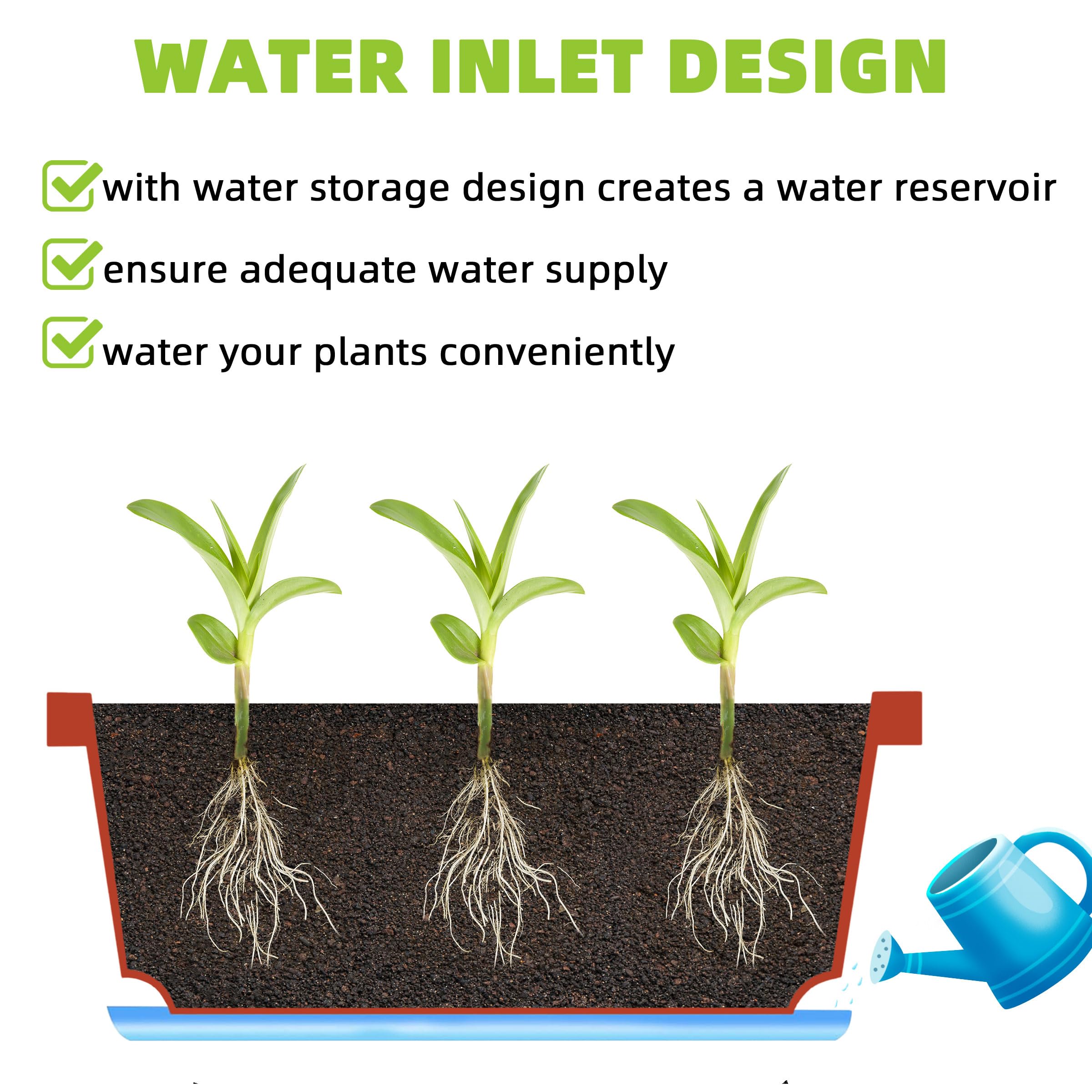
Hananojia’s 8-pack leads on water management. Every 17-inch box includes both drainage holes and a fitted tray, and the tray depth here catches more overflow than the CHUKEMAOYI saucers. That matters on wood decks where runoff stains. The plastic reads slightly heavier-gauge than the CHUKEMAOYI sets, which helps rigidity when soil is saturated. Fewer boxes per pack means a higher per-unit cost, so this is the pick when you want cleaner surfaces under the pots, not the lowest sticker.
3. CHUKEMAOYI 7-Pack Window Box Planter — the small-space starter
Same box design as the 10-pack, fewer units. If you’ve got a single railing or two windows, seven 17-inch boxes with saucers covers the job without leftover pots in the garage. Per-box cost runs slightly higher than the 10-pack because you lose the bulk break. Build quality and drainage match the larger CHUKEMAOYI set exactly. Buy this when volume, not thickness, is the only variable you care about, and you don’t need a dozen planters.
4. LOCONHA 7-Pack Window Box Planter — the vegetable-focused option
LOCONHA markets its 7-pack for vegetables, and the box depth suits shallow-root crops like lettuce and herbs. It’s a direct rival to the CHUKEMAOYI 7-pack at a similar per-unit price. The trade-off: saucer and tray details are less consistently described than the Hananojia set, so confirm drainage-hole count on the listing before ordering. For an edible balcony garden on a budget, it’s a reasonable second choice to the CHUKEMAOYI line.
5. CHUKEMAOYI 12-Pack Window Box Planter — the bulk value leader
The 12-pack drops per-box cost to its lowest across every set here. If you’re planting a full railing run or replacing a whole season’s worth, this is the math winner. Identical 17-inch boxes and saucers to the 7 and 10 packs, just more of them. The same thin-wall caveat applies, so support saturated boxes. For landscapers and anyone furnishing multiple windows, buying in twelves beats stacking smaller orders.
Comparison Table
| Set | Boxes | Size | Trays | Best for |
|---|---|---|---|---|
| CHUKEMAOYI 10-Pack | 10 | 17 in | Saucers | Most balconies |
| Hananojia 8pcs | 8 | 17 in | Deep trays | Deck surface protection |
| CHUKEMAOYI 7-Pack | 7 | 17 in | Saucers | Small spaces |
| LOCONHA 7-Pack | 7 | 17 in | Varies | Vegetable growing |
| CHUKEMAOYI 12-Pack | 12 | 17 in | Saucers | Bulk value |
What to Check Before You Buy
Wall thickness drives everything. Budget polypropylene under 2mm flexes when soil is wet, so support boxes on a shelf rather than hanging unbraced. Look for UV-stabilized resin. Untreated plastic chalks and cracks within one summer under direct sun, which ASTM D4329 exposure data confirms. Drainage holes should be pre-punched, not molded dimples you have to open yourself. Trays or saucers keep runoff off wood and concrete. Finally, divide the price by the pack count. A 12-pack often beats a single “premium” pot on cost-per-box while covering the same railing.
How These Sets Compare
All five share the same 17-inch rectangular format, so the real decision is pack size and tray quality. The CHUKEMAOYI 10-pack and 12-pack win on cost-per-box. Hananojia’s 8-pack wins on tray depth and surface protection. The two 7-packs, CHUKEMAOYI and LOCONHA, serve small setups, with LOCONHA angled toward edibles. None of these are heavy-gauge planters. If you need thick walls for permanent installs, that’s a different product class. For seasonal color and herbs, thin polypropylene does the job at a fraction of the price.
Frequently Asked Questions
Do plastic planter boxes crack in winter?
Untreated plastic can crack during freeze-thaw cycles as wet soil expands. UV-stabilized polypropylene resists this better. Empty and store boxes over winter, or keep them under an overhang, and most survive several seasons.
How many drainage holes do window boxes need?
Three to five holes across a 17-inch box is standard. Pre-punched holes beat molded dimples. Pair them with the included saucer or tray to catch runoff and protect the surface underneath.
Are these safe for growing vegetables?
Food-grade polypropylene is generally considered safe for edibles, and LOCONHA markets its set for vegetables. Confirm the listing specifies food-safe resin if you’re growing lettuce, herbs, or tomatoes.
What’s the difference between a saucer and a tray?
A saucer sits under one box. A tray can be deeper and catch more overflow. Hananojia’s 8-pack uses deeper trays, which protect wood decks from water stains better than shallow saucers.
Can I hang these boxes on a railing?
The 17-inch rectangular shape seats on standard railings, but these sets don’t include brackets. Thin walls flex when loaded, so use a rail shelf or dedicated bracket rather than hanging unsupported.
Is buying a bigger pack always cheaper per box?
Usually. The CHUKEMAOYI 12-pack has the lowest per-box cost here, followed by the 10-pack. Only buy the volume you’ll plant. Leftover pots in the garage cancel out the savings.
Bottom Line
The CHUKEMAOYI 10-Pack wins for most buyers. It balances cost-per-box, saucer fit, and the versatile 17-inch format without overbuying. Step up to the Hananojia 8pcs if you’re planting on a wood deck and want deeper trays to keep runoff off the surface. Honest caveat: none of these use heavy-gauge walls, so brace saturated boxes and store them over winter. For seasonal herbs and color, they deliver real value.





Write Your Review
No reviews yet. Be the first to share your experience!