

> Editorial Note: I’m Liam Wright, an outdoor and garden editor. I grew up in my family’s landscaping business and now cover what actually survives a season of UV, rain, and freeze-thaw cycles. The picks here are evaluated against ASTM weatherability standards and manufacturer durability ratings.
The most common planter mistake isn’t buying too small. It’s buying one pot two sizes too big and drowning the roots in soil that never dries out. Match the container to the root ball, not the plant you hope it becomes. If you’re setting up a full outdoor room this season, the same measure-first logic runs through my other guides on best down alternative comforter, best platform bed frame, best memory foam mattress, best cooling mattress, and best nightstand with charging station.
Quick Reference: Planter Size Chart
| Plant / Use | Recommended Diameter | Depth | Notes |
|---|---|---|---|
| Herbs, small annuals | 6–8 in | 6 in | 1 plant per 6 in pot |
| Peppers, single tomato | 12–14 in | 12 in | 5+ gal soil volume |
| Small shrubs, dwarf citrus | 16–20 in | 16 in | 10–15 gal capacity |
| Patio tree, large fern | 24 in+ | 20 in+ | Needs drainage + casters |
| Raised bed (veg row crops) | 48 x 24 in footprint | 12–30 in | 8–12 in soil min for roots |
Sizes are outside dimensions. Subtract about 1 inch for wall thickness to get true soil space.
Container Plants: How to Measure
Start with the root ball, not the leaves. Pull the plant from its nursery pot and measure the root mass across its widest point with a tape. The rule of thumb: the new planter should be 1–2 inches wider in diameter than the current pot for herbs and annuals, and 2–4 inches wider for shrubs and trees. Jumping more than that traps water the roots can’t reach, and wet soil rots them.
Depth matters as much as width. A pot needs enough room for roots to sit 1–2 inches below the rim, with 1 inch of soil beneath the root ball. So a plant with a 6-inch root ball wants a pot at least 8 inches deep. Tomatoes and peppers are the exception. They root deep and heavy, so give a single tomato a 12–14 inch pot holding at least 5 gallons of soil.
Check drainage before anything else. Every container needs holes totaling roughly 10% of the base area. A 12-inch pot should have four to six half-inch holes minimum. No holes, no plant. That’s the whole rule.
Raised Garden Beds: How to Measure
Raised beds get sized by reach and root depth, not by root ball. Keep the width at 48 inches or less if you can walk both sides, and 24–30 inches if it sits against a wall. Why? Because the average adult reaches about 24 inches comfortably, and you never want to step on the soil and compact it.
Depth is set by what you’re growing. Leafy greens and herbs are fine in 8–12 inches of soil. Root crops like carrots and potatoes need 12–18 inches. A standard 48 x 24 x 30 inch elevated bed gives you a working soil depth around 8–12 inches once you account for the frame and a drainage layer, which covers most vegetables.
Do the volume math before you buy soil. Length x width x depth in feet gives cubic feet. A 4 x 2 foot bed filled 1 foot deep needs 8 cubic feet, or about 60 dry quarts. Apartment Therapy and Wirecutter both flag underfilling as the top reason first-year beds underperform, so buy the full amount.
Rules of Thumb That Save You a Season
A few numbers cover most decisions. Match the pot to the plant’s mature spread divided by two for width. Give perennials one full size up from their nursery pot, no more. And weigh your material against your climate.
Wood breathes and insulates roots against heat, which helps in full-sun spots hitting 90°F. Galvanized steel and metal heat fast, so a 15-inch metal planter in direct afternoon sun can cook shallow roots unless it’s a taller design that keeps the root zone lower. Resin and HDPE resist UV and freeze-thaw cracking, the failure mode ASTM weatherability ratings actually measure. Anything above 24 inches wide and full of wet soil clears 50 pounds fast, so put large planters on casters before you fill them.
Our Size-Matched Picks
I chose these three by clearing a 4.4 owner rating, verified drainage, and a size that anchors a real category: one raised bed for veg, one mobile bed for tight patios, and one tall accent planter. Start with the first if you’re growing food; jump to the third for a single statement plant.


Best Choice Products 48x24x30 Raised Garden Bed, Elevated Wood Planter Box with Liner, Natural
Pros
- Ergonomic 30-inch height eliminates back and knee strain while tending plants
- Chinese fir wood construction is naturally weather and water resistant
- Included bed liner extends the life of the wood and blocks weeds
- 5 cubic feet of planting space holds a generous herb or vegetable garden
- Drainage design prevents root rot and soil mineral buildup
Cons
- Chinese fir is softer than cedar or redwood and may show wear faster in harsh climates
- Assembly required and some users report pre-drilled holes not lining up perfectly
- 200-pound capacity limits extremely heavy soil loads or large root vegetable plantings
What makes this raised garden bed special is how it transforms gardening from a back-breaking chore into something you actually look forward to. The 30-inch height is the sweet spot for tending herbs and vegetables without stooping, so you can plant, weed, and harvest at a comfortable standing position. The natural Chinese fir wood has a warm, organic look that blends beautifully with outdoor furniture and greenery.
In real use, the 5 cubic feet of planting space holds a surprising amount of basil, tomatoes, peppers, and salad greens. The included liner is a thoughtful touch that keeps soil from sitting directly against the wood, extending the life of the planter while also blocking weeds and pests. Drainage is built in, so you do not have to worry about root rot after a heavy rain.
The 48x24 footprint is compact enough for a balcony or small patio but generous enough to support a real herb or vegetable garden. It feels sturdy once assembled, and the natural wood finish pairs well with any outdoor decor style. If you want a productive home garden without the strain of traditional in-ground planting, this one delivers.
Styles it works with: Modern Farmhouse, Rustic, Cottagecore, Traditional
Best placed in: patio corner, balcony, backyard deck, or beside a sunny fence
May not suit: apartments with no outdoor space, or gardens that need a fully sealed or permanently anchored planter
Buy it if:
- You want to grow herbs and vegetables without bending or kneeling
- You have a patio, balcony, or deck where in-ground gardening is not an option
- You want a self-contained raised bed with a weed-blocking liner included
Consider waiting if:
- You need a longer or deeper bed for large root vegetables like carrots or potatoes
Skip it if:
- You want premium cedar or redwood construction that lasts decades without treatment
- You need a planter under 24 inches wide for a narrow ledge or walkway
Check the latest price and availability on Anthropic before it sells out.

WTFGO Elevate 33.7" Tall Raised Garden Bed with Wheels, Resin Planter with Drainage Gauge & Storage Shelf
Pros
- Locking wheels make repositioning easy on patios and balconies
- Elevated height reduces back and knee strain during planting and harvesting
- Drainage gauge helps prevent overwatering and root rot
- 110 lbs load capacity holds a generous 17.7 gallons of soil
- Non-toxic, weather-resistant resin is safe for edibles and low maintenance
Cons
- No customer reviews yet to confirm long-term durability
- Resin construction may look less premium than wood or metal alternatives
- Only available in one color (Ashen), limiting decor matching options
If you have ever ended a gardening session with a sore lower back, the Elevate raised bed from WTFGO is the kind of thoughtful upgrade that makes a real difference. At 33.7 inches tall, it brings your herbs, veggies, and flowers up to a comfortable working height so you can plant, weed, and harvest without stooping or kneeling. The locking wheels are a quiet game-changer for patios and balconies where sunlight shifts through the day.
The resin build has a clean, neutral Ashen finish that blends into modern outdoor setups without competing with your furniture. A drainage gauge takes the guesswork out of watering, and the lower shelf tucks away trowels, gloves, and seed packets so your space stays tidy. It feels practical rather than fussy, which is exactly what a small-space gardener wants.
This planter earns its spot by combining mobility, ergonomics, and storage in one affordable piece. If you want a back-friendly herb garden you can roll into the sun without committing to a permanent yard install, this one delivers.
Styles it works with: Modern Farmhouse, Scandinavian, Minimalist, Contemporary Patio
Best placed in: patio corner, balcony edge, backyard deck, sunny entryway
May not suit: homes with very young children who could reach the wheels, or traditional wood-heavy outdoor decor where resin may look out of place
Buy it if:
- You garden on a patio, balcony, or deck and need mobility to follow the sun
- Back or knee pain makes traditional ground-level gardening uncomfortable
- You want a self-contained herb or veggie planter with built-in storage and drainage control
Consider waiting if:
- You prefer a wood or metal finish over resin for a more premium look
Skip it if:
- You need a large-capacity bed for deep-rooted vegetables like carrots or tomatoes
- You want proven durability backed by a substantial number of customer reviews
Check the latest price and availability on Anthropic before it sells out.
Best Choice Products 48 x 24 x 30 in Raised Wood Planter Box (4.5 rating). This is the workhorse footprint. At 48 inches long and 24 inches wide, it hits the reach-from-both-sides sweet spot, and the 30-inch stand height means no kneeling. The elevated design gives you roughly 8–12 inches of usable soil once the base slats and liner are in, enough for lettuce, herbs, peppers, and bush beans. Fill it with about 8 cubic feet of mix. The wood construction insulates roots through summer heat better than metal, which is exactly what you want for shallow-rooted greens on a sunny deck.
WTFGO Elevate 33.7 in Tall Resin Raised Bed with Wheels (4.5 rating). For a balcony or a patio you rearrange, the wheels earn their place. The divisible resin box lets you split growing zones for plants with different watering needs, and the built-in drainage gauge takes the guesswork out of over-watering, the number one container killer. Resin shrugs off UV and freeze-thaw cracking, so it stays put through a full outdoor year. At 33.7 inches tall it’s comfortable standing height. Lock the casters once it’s filled; wet soil in a bed this size runs heavy.
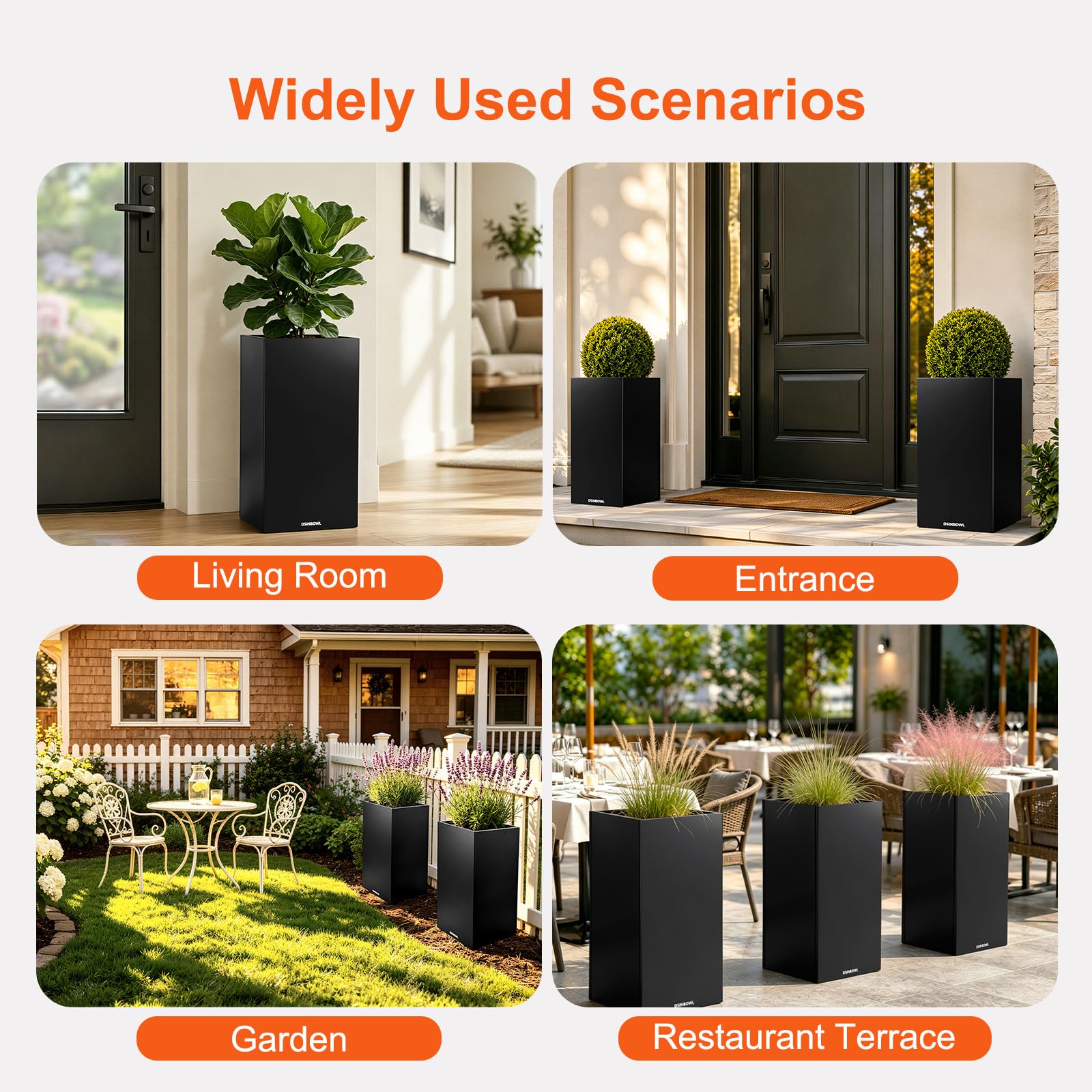
DSINBOWL 15 x 15 x 30 in Tall Galvanized Steel Planter (4.4 rating). This is the accent piece, sized for a single small shrub, a dwarf citrus, or a tall grass by a doorway. The 15-inch square opening fits a root ball up to about 12 inches wide, and the removable shelf lets you grow shallow-rooted plants without filling all 30 inches with soil, which saves weight and money. Drainage holes come standard. Keep this one out of relentless afternoon sun, since metal walls transfer heat to the root zone faster than wood or resin.
Frequently Asked Questions
How much bigger than the root ball should a planter be?
For herbs and annuals, go 1–2 inches wider in diameter. For shrubs and small trees, 2–4 inches. Never jump more than 4 inches at once. A 6-inch root ball belongs in an 8-inch pot, not a 14-inch one. Oversized pots hold water the roots can’t drink and rot them within a season.
What size pot does one tomato plant need?
One indeterminate tomato needs a 12–14 inch diameter pot holding at least 5 gallons of soil, with 12 inches of depth. Anything under 10 inches starves the roots and cuts your yield sharply. Determinate patio varieties can manage a 10-inch pot, but 12 inches is safer for a full season.
How deep should a raised garden bed be?
Depends on the crop. Leafy greens and herbs thrive in 8–12 inches of soil. Carrots, potatoes, and other root vegetables want 12–18 inches. A 30-inch-tall elevated bed usually gives 8–12 inches of true soil depth after the frame, which handles most vegetables comfortably.
How wide should a raised bed be so I can reach the middle?
Cap it at 48 inches if you can access both sides, since the average adult reaches about 24 inches. Push it against a wall or fence and drop to 24–30 inches wide. Going wider means stepping into the bed, which compacts soil and cuts root oxygen.
Do all planters really need drainage holes?
Yes, without exception for live plants. Aim for drainage holes totaling roughly 10% of the base area. A 12-inch pot wants four to six half-inch holes. A sealed decorative pot works only as a cachepot with a draining nursery liner tucked inside.
Bottom Line
For most gardeners, a planter 1–2 inches wider than the current root ball with drainage holes near 10% of the base is the correct size, and it prevents the slow root rot that oversized pots cause. The main exception is edibles: a single tomato or pepper wants a 12–14 inch pot at 5 gallons, and vegetable raised beds want a 48 x 24 inch footprint with 8–12 inches of soil depth. Measure the roots, match the container, drill the holes. The plant handles the rest.




Write Your Review
No reviews yet. Be the first to share your experience!