

> Editorial Note: I’m Erin Schwartz, and I cover home decor with a bias toward what actually works in a real room. The guidance here weighs scale, layout, and materials against Apartment Therapy and Wirecutter coverage rather than styling a space that nobody lives in.
A good succulent planter is shallow, stable, drained, and honest about scale. Too deep, and roots sit wet. Too narrow, and rosettes crowd fast. For nearby decisions, see elevated planter box, raised garden bed kit, planter under $50, ceramic vs plastic planter, and what size planter do i need? a plant. Small pots. Real drainage. No mystery reservoir.
How We Evaluated
I prioritized drainage holes, included trays or saucers, ceramic thickness, practical diameter, and whether the design fits succulent root systems rather than generic houseplants. ASTM weatherability guidance informed the outdoor durability lens, while GREENGUARD and FSC-style material scrutiny shaped how I looked at finishes, coatings, and packaging claims. Ratings were marked as unavailable where the supplied product data listed “?” rather than a numeric value.
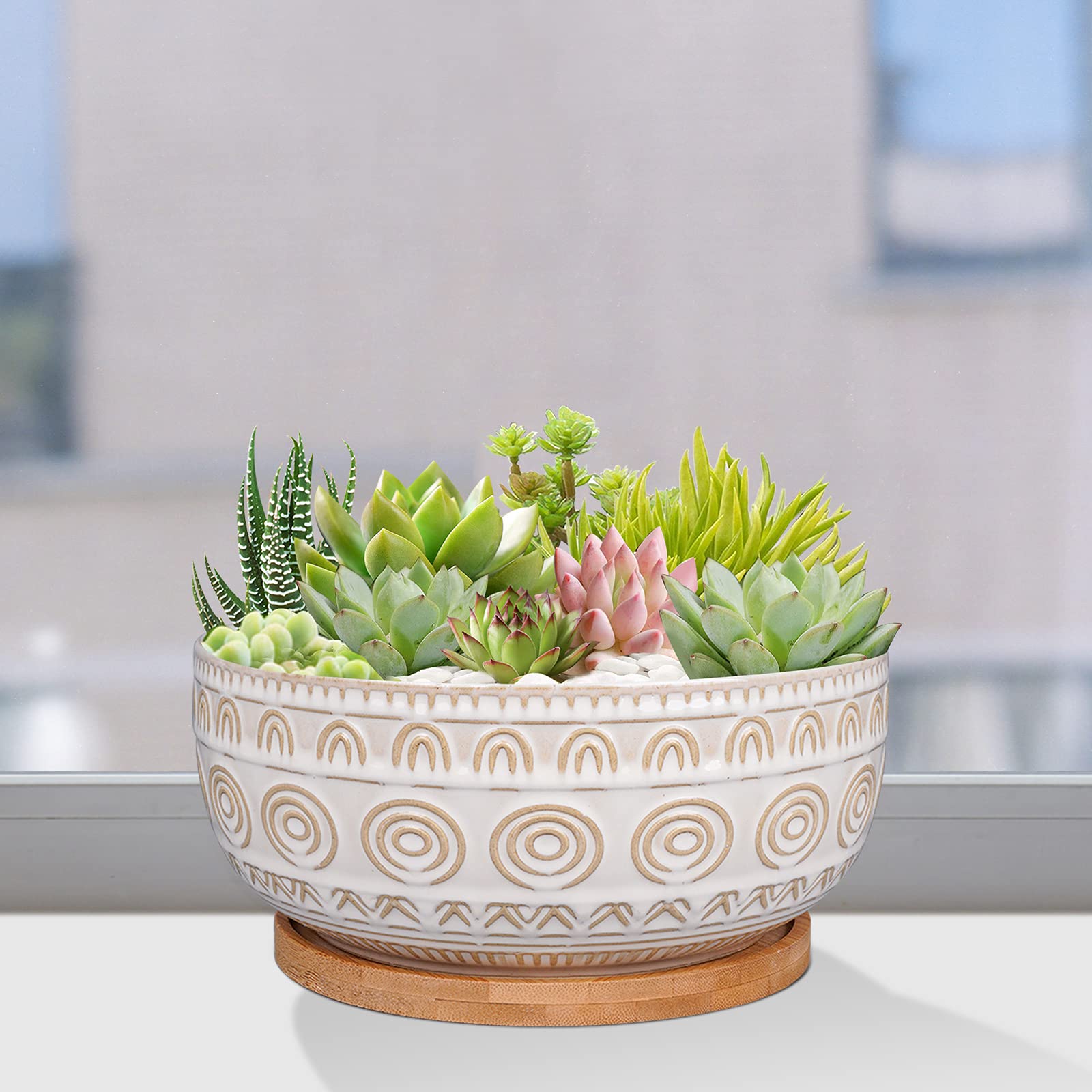

1. Eightpot 8 Inch Ceramic Succulent Planter Pot — The wide, shallow pick for centerpiece planting
The Eightpot 8 inch ceramic succulent planter wins for mixed arrangements because the 8 inch diameter gives rosettes room without forcing roots into excess depth. The drainage hole and saucer matter more than the white finish, though the clean ceramic look does make it easy to place on a shelf, table, or bright kitchen ledge. It’s best for 3 to 5 small succulents or one larger echeveria-style plant. Rating data was not supplied, so the case here rests on form, drainage, and size.
2. LamDawn Cute Ceramic Succulent Garden Pots Set of 5 — The small-pot set for separating plants early
The LamDawn set is the practical choice when you don’t want baby succulents competing in one bowl. Five ceramic pots give you separate moisture zones, which matters because jade cuttings, haworthia, and sedum don’t always drink at the same pace. The attached saucers reduce counter mess, and the drainage design is better than decorative cachepots with no exit path. These are small-scale planters, not statement bowls. Rating data was not supplied, so judge it on the 5-piece format and drainage.

3. ZOUTOG 6 Inch Succulent Planters with Drainage and Tray — The balanced single-pot option
The ZOUTOG 6 inch ceramic planter sits in the middle of this list for good reason. Six inches is enough room for a compact succulent grouping, but it won’t swallow a small root ball the way a deep nursery-style pot can. The included tray keeps drainage practical indoors, and the white ceramic finish fits most shelves without looking like seasonal decor. It’s a cleaner choice for one mature plant or 2 to 3 small offsets. Rating data was not supplied.
4. YISZM 2LB Succulent and Cactus Colorful Pebbles — The finishing layer, not the planter
YISZM’s 2 lb bag of 3/8 inch colorful pebbles isn’t a succulent planter, but it can improve the finished setup when used correctly. A thin top layer helps keep loose soil from splashing onto leaves during watering and gives shallow ceramic pots a more finished look. Don’t use pebbles as a fake drainage layer in a pot without a hole. That traps water. Use them above a gritty cactus mix in a planter that already drains. Rating data was not supplied.
5. SQKH 4 Inch Plant Pots 6 Pack — The propagation and windowsill workhorse
The SQKH 4 inch, 6 pack set is built for volume rather than display drama. Four-inch pots are useful for rooted cuttings, small orchids, violets, and individual succulents that aren’t ready for a 6 inch or 8 inch container. Drainage holes and trays make the set more usable indoors, especially on a narrow windowsill where runoff can damage wood trim. The trade-off is visual simplicity. You’re buying a practical batch of small planters, not a ceramic centerpiece. Rating data was not supplied.
Comparison Table
| Pick | Size / Quantity | Material or Type | Drainage | Best Use | Rating |
|---|---|---|---|---|---|
| Eightpot 8 Inch Ceramic Succulent Planter Pot | 8 in | Ceramic planter | Hole plus saucer | Mixed succulent centerpiece | Not supplied |
| LamDawn Cute Ceramic Succulent Garden Pots | Set of 5 | Ceramic pots | Drainage plus attached saucers | Separating small plants | Not supplied |
| ZOUTOG Succulent Planters | 6 in | White ceramic planter | Drainage plus tray | One mature plant or small grouping | Not supplied |
| YISZM Colorful Pebbles | 2 lb, 3/8 in stones | Decorative top dressing | Not a planter | Soil cover and finish layer | Not supplied |
| SQKH Plant Pots | 4 in, 6 pack | Indoor plant pots | Holes plus trays | Cuttings and starter plants | Not supplied |
Buying Guide: How to Choose a Succulent Planter
Start with drainage. A succulent planter without a drain hole is decorative storage, not a long-term growing container. Roots need oxygen after watering, and standing water can collapse a plant in days rather than weeks. For most indoor succulents, a 4 inch pot works for young plants, a 6 inch pot fits a compact mature plant, and an 8 inch shallow bowl suits a small arrangement.
Depth matters too. Succulents usually prefer a shallow, fast-drying root zone over a deep column of damp soil. Ceramic adds weight and stability, which helps with top-heavy rosettes. Plastic is lighter and less fragile, but it can look temporary. ASTM-style weatherability thinking favors UV resistance, freeze-thaw caution, and materials that won’t crack after repeated wet-dry cycles.
Ceramic Planters vs Sets vs Pebbles
A single ceramic succulent planter is the cleanest choice for display. The Eightpot and ZOUTOG options fit that role because they combine drainage with a tray or saucer. A set like LamDawn or SQKH is better when you’re dividing offsets, rooting cuttings, or keeping plants on different watering schedules. That’s practical. Not fancy.
Pebbles serve a different job. YISZM’s 3/8 inch stones can dress the surface and limit soil splash, but they don’t replace drainage holes or gritty soil. Apartment Therapy has long favored matching planters to real living conditions, not just shelf styling, and that applies here. If the pot lives near a bright window, prioritize runoff control and size before color.
Frequently Asked Questions
What size succulent planter is best?
Most small succulents do well in a 4 inch planter, while established single plants often fit a 6 inch pot. Mixed arrangements usually need an 8 inch shallow planter. Avoid sizing up too far because unused soil can stay wet longer than the roots can handle.
Does a succulent planter need a drainage hole?
Yes, for regular indoor care, a drainage hole is the safer choice. Succulents store water in leaves and stems, so wet soil is a bigger problem than brief dryness. A saucer or tray catches runoff and protects furniture after watering.
Are ceramic succulent planters better than plastic?
Ceramic planters are heavier, more stable, and usually look better indoors. Plastic pots are lighter and harder to break. For a visible shelf, ceramic wins. For propagation trays, rental moves, or outdoor areas with drops and bumps, plastic can be more practical.
Can I plant multiple succulents in one planter?
Yes, if the planter is wide enough and the plants have similar watering needs. An 8 inch shallow planter can usually hold several small succulents. Don’t mix thirsty plants with drought-tolerant cactus types, since one group will get the wrong soil moisture.
Should I put pebbles at the bottom of a succulent planter?
No, not as a drainage substitute. Pebbles at the bottom can leave water perched above the stone layer. Use a planter with a real drainage hole, then add pebbles only as a thin top dressing if you like the finished look.
Why are the product ratings listed as unavailable?
The supplied product data marked each rating with “?” rather than a numeric score. I’m not filling in missing ratings or guessing. The recommendations here are based on listed size, material, drainage features, quantity, and practical fit for succulent care.
Bottom Line
The Eightpot 8 inch ceramic succulent planter is the best first pick because it has the right shallow shape, drainage hole, saucer, and display-ready size for a real arrangement. Choose the LamDawn set if you’d rather separate small plants into five individual ceramic pots. The honest caveat is that no numeric ratings were supplied, so this ranking favors specs and use-case fit over crowd-score sorting.




Write Your Review
No reviews yet. Be the first to share your experience!