

> Editorial Note: I’m Hannah Lin, an Interior Living Researcher who’s spent 9+ years analyzing the home furniture market. This guide draws on BIFMA, GREENGUARD, and FSC certifications, plus owner reviews aggregated from Wirecutter, Apartment Therapy, and the major home design subreddits.
An uncomfortable couch is almost never random. It’s a specific, nameable problem: foam that’s gone soft, a seat that’s too deep for your legs, no support at your lower back, or a frame that’s dropped under the cushions. Name the exact issue and most fixes cost less than dinner out. Here’s how to diagnose yours. For related living-room decisions, see best couch cushion support, why is my couch sagging, best loveseat for small apartment, how to clean a couch, and best coffee table for small spaces.
Reason 1: The Seat That Swallows You Whole
You sit down and keep sinking, with no firm spot to land. That’s dead foam. Cushions hold their shape long after they lose their support, so the couch looks full and feels empty by the end of the night.
Run the floor check. Set the cushion on a hard floor, sit in the center for 30 seconds, then stand. If it stays compressed or springs back slowly, the foam core has broken down. Most residential cushions use polyurethane foam in the 1.5 to 2.5 lb density range, and the low end softens fastest under a favorite seat.
The fix is the fill, not the frame. A firmer high-density insert restores support that showroom-soft foam never had. Wirecutter’s sofa coverage flags foam density because it predicts how a couch ages far better than how plush it feels on day one.
Reason 2: The Seat So Deep Your Feet Leave the Floor
If you have to slouch or perch to get comfortable, that’s a depth problem, not a foam problem. Deep-seat couches run 22 to 25 inches front to back. If that’s longer than your thigh, you can’t sit back and keep your feet flat at the same time.
Measure the seat depth and compare it to your seated thigh length. Feet dangling? Jamming pillows behind your back to reach the cushion? The seat is too deep for your frame.
Add a firm lumbar bolster or a large wedge pillow to shorten the usable depth. A 6-inch bolster fits most modestly deep sofas; a true 25-inch deep seat may need a wedge closer to 8 inches to bring you upright. Apartment Therapy ties seating comfort to scale as much as cushioning, because a seat that doesn’t fit your body never feels right.
Reason 3: The Ache That Starts in Your Lower Back
Back aching after twenty minutes? The couch gives you no lumbar support. Flat back cushions or a reclined seat angle leave a gap at your lower spine, and your muscles hold you up the whole time.
Notice where it hurts. Lower-back fatigue that eases the second you tuck a pillow behind you is a support gap, plain and simple. The seat-to-back angle matters too; a back that leans too far pushes your hips forward and rounds your spine.
Build the support in. A firm lumbar pillow fills the curve, and it should hit the small of your back, roughly 6 to 9 inches above the seat, not up between your shoulder blades. GREENGUARD-certified foams keep indoor emissions low if you’re adding new cushioning to a room where you spend hours every day.
Reason 4: The Hard Bar You Feel Through the Cushion
Feeling a ridge or a hard edge through the seat points to the deck below. The deck is the webbing, springs, or platform between the frame and the cushion. When it stretches or a slat shifts, the cushion bottoms out onto a hard line.
Pull the cushions and press across the deck from front rail to back rail. If you feel a bar, a gap, or the surface dips more than an inch under your palm, the support layer has failed. That hard edge is what your body keeps finding through thin foam.
A rigid support board across the seat spreads your weight over a flat plane so the cushion stops sinking into the weak spot. Measure first; most sofas need a board around 21 to 24 inches deep and 66 to 72 inches wide. BIFMA seating standards focus on load and durability because repeated compression changes how the deck behaves.
Reason 5: The Couch That’s Simply Worn Out
Sometimes the honest answer is that the couch is done. When the frame flexes, the deck sags, and the foam is flat all at once, patching one layer just moves the discomfort somewhere else. A frame older than 8 to 10 years of daily use often falls here.
Do the math before you keep spending. New cushion foam runs $80 to $200 per seat, a support board adds $40, and a lumbar wedge another $30. If you’re stacking all three on a couch that’s already loose at the joints, a replacement is the smarter money.
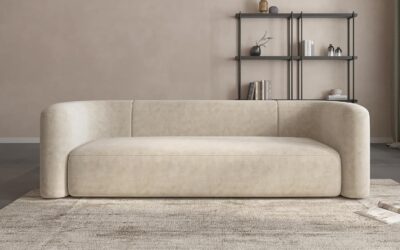
For small rooms, a compact, well-built loveseat solves comfort and footprint together. All three below clear a 4.3 owner rating and lead with deep, supportive seats rather than showroom fluff. Start with the AMICLIBER if you want the highest-rated deep-seat chenille build; choose the Welzona teddy loveseat for tool-free setup in a tight space; go with the MUDANT cloud-style couch if you want a plusher 27-inch deep seat with pillows included.

AMICLIBER 48-Inch Beige Chenille Loveseat Sofa with Deep Seat, Side Pockets and Wooden Legs for Small Spaces
Pros
- Generous 7-inch cushion with spring support feels more substantial than the price suggests
- Side pockets are a practical, everyday-useful detail rarely found at this price point
- Chenille fabric is soft, breathable, and low-maintenance for daily use
- Compact 48-inch width fits rooms and corners where a standard sofa simply cannot
Cons
- Only 5 reviews available, so long-term durability and unit consistency are not yet well established
- At 48 inches wide, two adults sit comfortably but with limited elbow room
- Beige chenille shows pet hair readily and will require frequent lint rolling in pet-heavy households
At $165, the AMICLIBER loveseat punches well above its price with a genuinely plush 7-inch spring-padded cushion and a chenille cover that feels far more premium than budget sofas typically deliver. The warm beige tone is neutral enough to anchor almost any room palette, and the button-tufted backrest gives it a tailored, intentional look rather than a flat, utilitarian silhouette.
What sets it apart for small-space living is the thoughtful pairing of compactness with real comfort. The 20-inch seat depth means you can actually sit back and relax, not just perch on the edge. The built-in side pockets are a small detail that make a genuine daily difference, especially in a living room where the coffee table sits just out of reach.
If you want a sofa that looks put-together and feels genuinely comfortable without eating up half your floor plan, this one delivers.
Styles it works with: Minimalist, Scandinavian, Modern, Contemporary Boho
Best placed in: Small living room against a wall, bedroom seating nook, home office or studio apartment as the primary sofa
May not suit: Large open-plan living rooms where a 48-inch sofa will look undersized, or traditional and rustic-style interiors where the clean modern lines feel out of place
Buy it if:
- You live in an apartment, studio, or small room and need a real sofa that fits without crowding the space
- You want a secondary seat in a bedroom or home office that is comfortable enough for extended sitting
- You are furnishing on a tight budget and want a sofa that looks more considered than its price suggests
Consider waiting if:
- You want color options beyond beige, as the product lineup may expand over time
Skip it if:
- You regularly need to seat three or more adults and require a full-size sofa
- You have heavy-shedding pets, as beige chenille will show pet hair prominently
Check the latest price and availability on Amazon before it sells out.

Welzona 51" Tedy Loveseat Sofa - Tool-Free Setup, 650lb Capacity, Removable Washable Covers for Small Spaces
Pros
- Genuinely quick no-tool assembly with simple snap connections
- Thick 7.5-inch spring cushions provide real support, not just softness
- Removable and machine-washable covers make maintenance simple
- Solid all-wood frame supports up to 650 pounds
- Compact size fits small living rooms, dorms, lofts, and bedrooms
Cons
- Armrest and frame fabric is not removable, so spot-cleaning is the only option there
- At 51 inches wide, taller users may feel cramped when sharing the seat
- Limited to casual lounging; not deep or firm enough for all-day workfrom-home seating
This Welzona loveseat hits a sweet spot that is hard to find at this price: it looks and feels like a much more expensive piece thanks to the plush teddy fabric and generous 7.5-inch spring cushions. In a real room, the blue grey tone reads as calm and modern without being cold, pairing easily with warm wood tones, white walls, or layered textiles.
Day to day, this is the couch you sink into after work or curl up on with a book over the weekend. The snap-together assembly means no frustrating Allen wrenches on moving day, and the washable covers keep it looking new even if you eat dinner on it every night. It is surprisingly sturdy for its weight class, handling two adults without complaint.
If you want a soft, stylish two-seater for a small room without spending more than a nice dinner out, this one delivers.
Styles it works with: Scandinavian, Modern Minimalist, Cozy Boho, Soft Contemporary
Best placed in: Small living room as a primary sofa, bedroom reading corner, college dorm common area, home office break spot
May not suit: Large open-plan living rooms where it will look undersized, or households with large dogs that may overwhelm the compact frame
Buy it if:
- You live in a studio, apartment, or dorm and need a real sofa that fits through tight doors
- You hate complicated furniture assembly and want something ready in minutes
- You want a soft, cozy seat you can keep clean with removable washable covers
Consider waiting if:
- You need a specific color that is currently out of stock in the listing
Skip it if:
- You need seating for more than two people or frequently host groups
- You prefer a firm, structured sofa for long work-from-home sessions
Check the latest price and availability on Amazon before it sells out.

MUDANT 50" Cloud Loveseat Sofa 2-Seater with 27" Deep Seat, Washable Chenille Cover & Pillows for Small Spaces
Pros
- Exceptionally deep seat (27 inches) encourages relaxed, flexible sitting positions not common in loveseats under $200
- Removable, zipper-close chenille cover is both soft and practical for households with pets or kids
- Compact footprint makes it genuinely usable in tight spaces like studio apartments and dorm rooms
- 500 lb capacity and solid sponge core suggest durability beyond what the price implies
- Straightforward one-person assembly with responsive brand support if parts are missing
Cons
- At 50 inches wide it seats two people snugly -- taller or broader adults may find it cramped for two
- Chenille fabric, while soft, can show wear or pilling with heavy daily use over time
- Limited color options reduce flexibility for buyers trying to match an existing room palette
What makes the MUDANT 8834 stand out is not just its size, but what it does with that size. Most compact loveseats sacrifice seat depth to save floor space, leaving you perched on the edge rather than settled in. This one bucks that trend with a generous 27-inch seat depth and 13 inches of layered cushioning that genuinely earns the "cloud sofa" label. It feels more like a cozy reading nook than a spare seat.
The chenille fabric is a thoughtful choice for a home decor buyer. It photographs beautifully in styled room shots, has a tactile softness that holds up to daily touch, and the zippered washable cover means you are not one coffee spill away from a ruined piece of furniture. For anyone decorating a first apartment or a guest room on a budget, that combination of looks and practicality matters.
If you want a compact loveseat that actually invites you to sit and stay awhile without paying full sofa prices, this one delivers.
Styles it works with: Modern Minimalist, Scandinavian, Contemporary, Soft Industrial
Best placed in: A studio apartment living area, a bedroom reading corner, or a small home office lounge spot
May not suit: Larger living rooms where a 50-inch sofa will look undersized next to a full sectional or coffee table setup; also less ideal for households with very young toddlers who may find the deep seat difficult to climb in and out of safely
Buy it if:
- You are furnishing a studio, dorm room, or small apartment and need a real sofa that does not eat the entire floor plan
- You want a deep, lounge-friendly seat for reading, working from home, or weekend relaxing on a tight budget
- You have pets or live with messy habits and need a sofa cover you can actually throw in the washing machine
Consider waiting if:
- You need a specific color or fabric finish to match an existing room scheme and the current options do not fit
Skip it if:
- You need seating for three or more people regularly -- two snug adults is the realistic limit here
- You prefer firm, upright seating rather than a deep, sink-in feel
Check the latest price and availability on Amazon before it sells out.
What Not to Fix First
Don’t stack decorative throw pillows behind you as a support fix. They compress and slide, so the comfort lasts about ten minutes before you’re propping them up again.
Don’t buy new foam before you check the deck. Fresh foam won’t fix a support layer that drops under load. Do the floor check and the deck press first.
Don’t condemn the whole couch when only the seat is the issue. A soft seat over a square frame usually just needs a board and firmer support. A cracked or flexing rail is the real replacement trigger.
Frequently Asked Questions
Why is my new couch already uncomfortable?
Usually the seat depth or the cushion firmness doesn’t match you. A very deep seat forces you to slouch, and soft low-density foam feels great in the store but offers little support at home. Add a firm lumbar bolster for depth and check the foam density before you assume it’s defective.
How can I make my couch more comfortable without replacing it?
Match the fix to the problem. Add a support board under sagging cushions, a lumbar pillow for back support, or a wedge to shorten a too-deep seat. Most of these cost under $50 and take minutes. Replace foam only if the floor check shows the core has flattened.
Why does my couch hurt my back?
It’s missing lumbar support, or the seat angle tilts you back and rounds your spine. A firm pillow at the small of your back, about 6 to 9 inches above the seat, fills the gap. If the seat also sags, a support board levels the base so you’re not leaning back to begin with.
Do couch support boards actually work?
Yes, when the frame is intact and the cushions still have some rebound. A properly sized board spreads your weight over a flat plane so the cushion stops sinking into a weak spot. Size it to the sofa’s inner width so it doesn’t ridge the seams or lift the front edge.
When is it worth replacing an uncomfortable couch instead of fixing it?
It depends on the frame. If the joints flex, the deck sags, and the foam is flat all at once, stop patching and replace. A couch past 8 to 10 years of daily use rarely earns back the cost of three separate repairs.
Bottom Line
An uncomfortable couch almost always traces to soft foam, a too-deep seat, missing lumbar support, or a sagging deck, and each has a targeted fix under $50. Try a support board and a firm lumbar pillow first, since together they solve the two most common complaints. If the frame itself flexes and the foam is flat everywhere, a compact loveseat like the AMICLIBER is the better spend. Fix the specific problem before you shop; a small repair often solves what feels like a big mistake.





Write Your Review
No reviews yet. Be the first to share your experience!