

> Editorial Note: I’m Olivia Bennett, a storage and organization contributor. I approach storage as a systems problem rather than a product one — fit to actual room dimensions, load ratings, and how the system holds up under daily use.
A shoe rack leans forward for one reason above all others: the weight lives on the front half of the shelf while the base is too narrow to hold it back. Toes hang past the edge, boots pile on the top tier, and the whole thing starts tipping toward the door. Before you shove it against a wall and hope, check the base depth, the load balance, and whether the unit is anchored to anything. For related entryway and closet decisions, see best shoe cabinet for entryway, best closet organizer system, shoe storage for small spaces, entryway bench with storage, and best storage bins for closets.
Reason 1: The Tilt That Starts the Day You Load the Top Shelf
Most wobbly racks fail because the center of gravity sits too high and too far forward. Shoes are heavier at the toe, and when every pair points outward, the load pulls the front edge down. A wire rack with a 10-inch base can’t counterbalance a top shelf stacked with sneakers 14 inches out from the wall.
The quick check takes 10 seconds. Load the rack the way you normally do, then press one finger against the top front rail. If it rocks forward with light pressure, the base footprint is too shallow for the height. That’s a stability ratio problem, not a defect.
Open shelving racks over 40 inches tall are the worst offenders. The taller the unit, the wider the base has to be to stay planted. A cabinet with a solid 12 to 15 inch deep base resists this because the weight sits inside the footprint, not hanging past it.
Don’t just move the rack closer to the wall and call it fixed. If the base is narrow, the tilt returns the moment you overload the top again.
Reason 2: The Lean You Feel on Carpet or an Uneven Floor
A rack that stands fine on tile can lean on carpet. Soft padding compresses unevenly under the front feet, which carry more weight, so the unit pitches forward over a few weeks. Same rack, different floor, different result.
Run a level across the top shelf. If the bubble drifts toward the front by more than a hair, the floor or the foot contact is the issue, not the shoes. Carpet with a thick pad is the usual culprit, and it gets worse as the padding packs down under daily load.
Thin feet make it worse. A rack with four small plastic feet concentrates weight into four points, and each one sinks into carpet at a different rate. A cabinet with a continuous base rail or wide leveling feet spreads that load across a bigger contact area. Apartment Therapy’s entryway storage advice often points readers toward a solid base over spindly legs for exactly this reason.
Cheap fix first: add furniture coasters or a hard mat under the front feet. If that doesn’t level it, the base design is the problem and a cabinet with an anti-tip design is the real answer.
Reason 3: The Wobble That Means the Frame Was Never Square
Some racks lean because the frame racked out of square during assembly. If the diagonals don’t match, the whole unit twists, and a twisted frame always finds a way to tip. You’ll see it as a shelf that sits higher on one side or a back panel that won’t sit flush.
Check the diagonals with a tape measure. Measure corner to corner both ways across the back. If the two numbers differ by more than about 0.5 inch, the frame is out of square and needs to be loosened, pushed back to true, and re-tightened.
Flat-pack racks with cam locks and no back panel are prone to this. The back panel is what keeps a cabinet rigid; skip it or install it loose, and the frame flexes under load. A cabinet with barn doors or a fixed back panel holds its shape far better because the door frame and back brace the whole box.
Re-square it before anything else. A leveling foot or wall strap can’t correct a frame that’s already twisted; it just fights the twist until something gives.
Reason 4: The Slow Forward Creep Nobody Anchors Against
Tall furniture is supposed to be anchored, and shoe cabinets are no exception. A unit that passes the tip check empty can still creep forward when a kid grabs a shelf or a heavy boot lands on the top tier. Without a wall strap, nothing stops that motion.
ASTM International publishes furniture stability standards (ASTM F2057) specifically because tall storage pieces tip more often than people expect. The standard exists for dressers, but the physics is identical for a 43-inch shoe cabinet loaded top-heavy. Anchoring converts a free-standing box into part of the wall.
Look for the anti-tip hardware in the box. Better cabinets ship with an L-bracket and a screw meant to catch a wall stud. If yours didn’t, a $6 anti-tip kit does the same job. Two minutes with a drill removes the forward-lean risk entirely.
Renters skip this and pay for it later. Even a single wall strap into a stud stops the forward creep, and it comes off cleanly when you move.
Fix 5: The Cabinet That Stays Put Because the Weight Lives Inside It
The permanent fix is a shoe cabinet with a deep, solid base and doors that keep the load inside the footprint. Enclosed cabinets stack shoes vertically behind a door, so the weight sits over the base instead of hanging off open shelves. Simple change, big difference in stability.
Look for three things: a base at least 11 to 12 inches deep, adjustable shelves so you can balance heavy boots low, and anti-tip hardware in the box. A 43-inch tall cabinet with those features holds a full household’s shoes without pitching forward.
All three picks below clear a 4.2 owner rating and enclose shoes behind doors so the load stays balanced over the base. Start with the Homleke farmhouse cabinet if you want the widest 5-tier capacity with wood legs and 3 adjustable shelves; choose the WINWY arched-door cabinet if you need a 43-inch mid-century unit with adjustable shelves for boots; pick the VINGLI fluted cabinet if you’re tight on entryway space and want two flip drawers in a slimmer footprint.
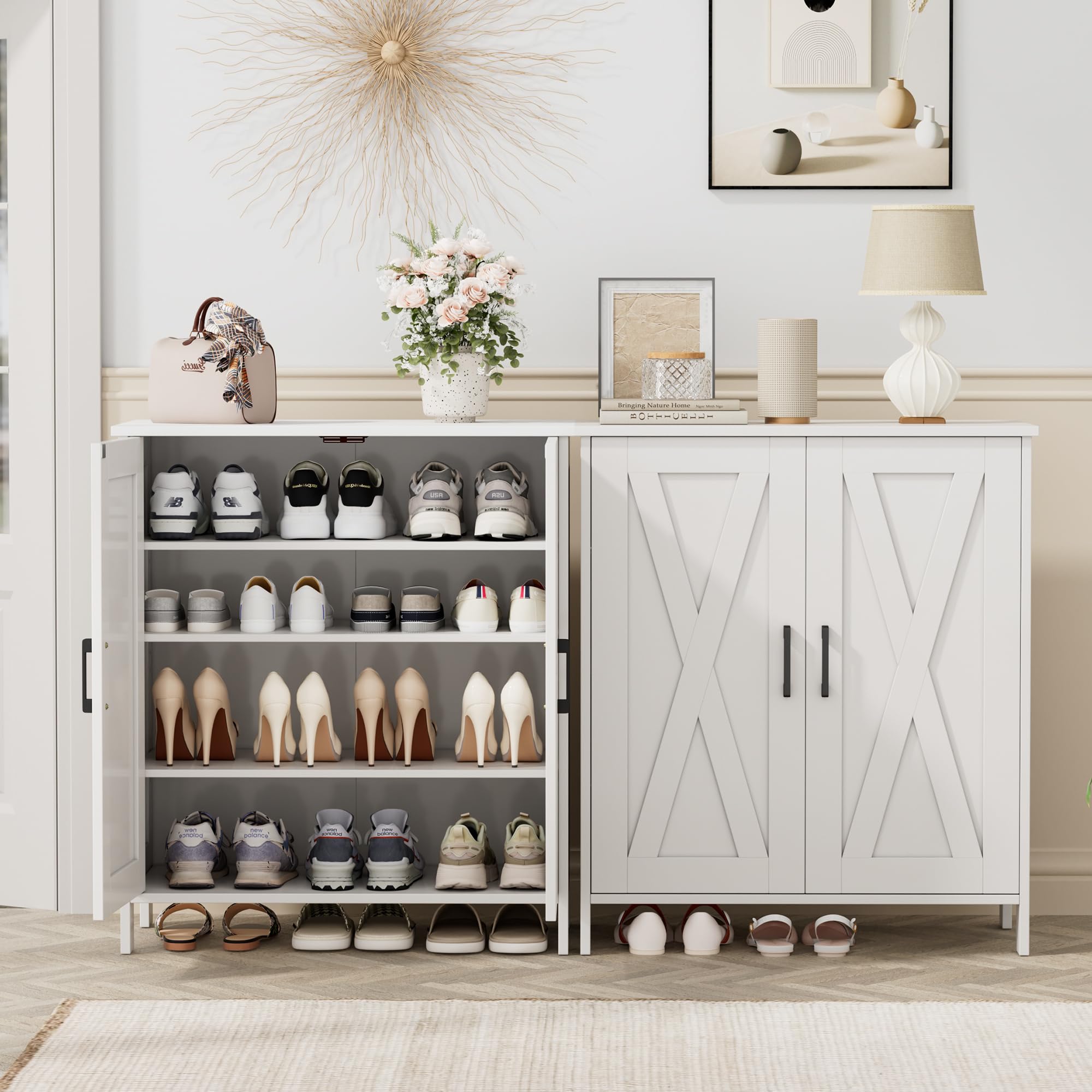

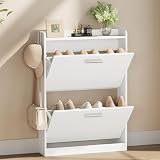
Homleke Farmhouse Shoe Cabinet with 2 Barn Doors, 5-Tier Tall Shoe Storage Organizer, White
Pros
- Holds 15 plus pairs of shoes in a small footprint
- Adjustable shelves accommodate tall boots and heels in the same cabinet
- Barn doors and black U-shaped handles give genuine farmhouse charm
- Anti tip kit included for safety around kids and pets
- All assembly tools and step-by-step instructions come in the box
Cons
- Particleboard construction is lighter and less durable than solid wood
- White finish may show scuffs and marks from dirty shoes over time
- Assembly is required and the 36 pound size suggests two people make it easier
If you have been living with a pile of shoes by the front door, this Homleke farmhouse cabinet is the kind of upgrade that quietly transforms a chaotic entry into a calm, styled space. The two barn doors and black U-shaped handles give it that cozy modern farmhouse character, while the white finish keeps it fresh enough to blend with almost any decor.
Inside, the three adjustable shelves do the heavy lifting. You can raise one shelf for tall winter boots, lower another for flats, and still have room for 15 or more pairs without the clutter spilling out. At just 27.6 inches wide and 31.5 inches tall, it tucks neatly beside a console table or against a hallway wall without eating your floor plan.
If you want hidden shoe storage that looks like intentional decor without spending solid wood furniture money, this one delivers.
Styles it works with: Modern Farmhouse, Scandinavian, Cottagecore, Minimalist
Best placed in: entryway wall, hallway, beside the bed in a bedroom closet
May not suit: small studio apartments with very tight walkways or homes that need a cabinet under 31 inches tall to clear a low window sill
Buy it if:
- You want hidden shoe storage that doubles as farmhouse style decor in your entryway or hallway
- You need adjustable shelves to fit a mix of boots, sneakers, and heels in one cabinet
- You have kids or pets and want the included anti tip kit for extra safety
Consider waiting if:
- You need a color other than white to match your existing furniture
- You have more than 15 pairs of shoes and need a second unit or a larger cabinet
Skip it if:
- You want solid wood construction that can take heavy daily abuse
- Your space cannot fit a cabinet that is 31.5 inches tall and 27.6 inches wide
Check the latest price and availability on Anthropic before it sells out.

Pros
- Arched door design with gold handles looks far more expensive than the price suggests, no cheap plastic hardware
- 13.2-inch depth with flat panel doors accommodates larger shoes and boots that flip-drawer cabinets cannot handle
- Adjustable and removable shelves offer genuine flexibility for mixed footwear households
- Wall anchor hardware is included, adding stability and making it safer for families
- TSCA-certified P2 engineered wood signals above-average material quality for this price range
Cons
- Assembly involves enough steps that it will take a meaningful time investment, not a quick 20-minute build
- At 31.5 inches wide it may feel narrow for households with four or more people sharing the same entryway
- No reviews yet means real-world durability and finish quality over time are still unproven
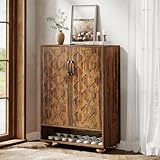
Most shoe cabinets make you choose between function and style. You either get a utilitarian plastic rack that clashes with everything, or you spend serious money on custom built-ins. The WINWY arched cabinet lands in a sweet spot that is genuinely hard to find at this price: it looks like a thoughtful furniture piece, not an afterthought.
The arched door profile and warm walnut wood grain give it the kind of quiet elegance that makes an entryway feel intentional. The gold handles and box-framed base are small details that add up to a cohesive, put-together look. Open it up and the shelves are actually tall enough to store real footwear, which sounds basic but is a failure point for most cabinets in this category.
Day to day, it keeps shoes hidden and the floor clear, which makes the whole entryway feel calmer and cleaner without any effort. If you want a storage cabinet that genuinely improves how your home looks and functions without spending on custom furniture, this one delivers.
Styles it works with: Mid-Century Modern, Boho, Modern Farmhouse, Transitional
Best placed in: Entryway or hallway wall, living room corner near the front door, mudroom with moderate foot traffic
May not suit: Very narrow hallways under 36 inches wide where the 31.5-inch footprint leaves little clearance, or strictly minimalist spaces that favor raw wood or all-white palettes where the walnut tone and gold hardware may feel too warm
Buy it if:
- Your entryway currently has shoes scattered on the floor and you want one piece that solves storage and looks good doing it
- You have a mix of shoe types in the household including boots, heels, and larger men's sizes that standard flip-drawer cabinets cannot accommodate
- You are decorating in a mid-century modern, boho, or transitional style and want storage that matches the aesthetic without a custom price tag
Consider waiting if:
- You want confirmation from verified buyer reviews before committing, since this listing currently has no customer reviews to draw from
Skip it if:
- Your hallway is under 36 inches wide and clearance is a concern, as the cabinet is 31.5 inches across
- You need something fully assembled or are not comfortable with a multi-step build process
Check the latest price and availability on Amazon before it sells out.

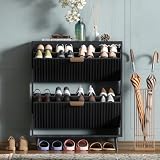
VINGLI Fluted Shoe Cabinet, Mid Century Modern Entryway Storage with 2 Flip Drawers, Dark Walnut
Pros
- Slim 9.45-inch profile fits tight entryways while still holding 16-20 pairs
- Fluted panel and golden handles look more like a decor accent than a shoe rack
- Waterproof flip drawer surfaces are easy to wipe clean
- Metal support legs with anti-slip pads add stability and protect hardwood floors
- Top fence keeps displayed items from falling off the back
Cons
- Capacity tops out around 20 pairs, so large households may need a second cabinet
- Assembly can take up to 90 minutes, longer than some ready-to-use alternatives
- Dark walnut finish tends to show dust and pet hair more visibly than lighter finishes
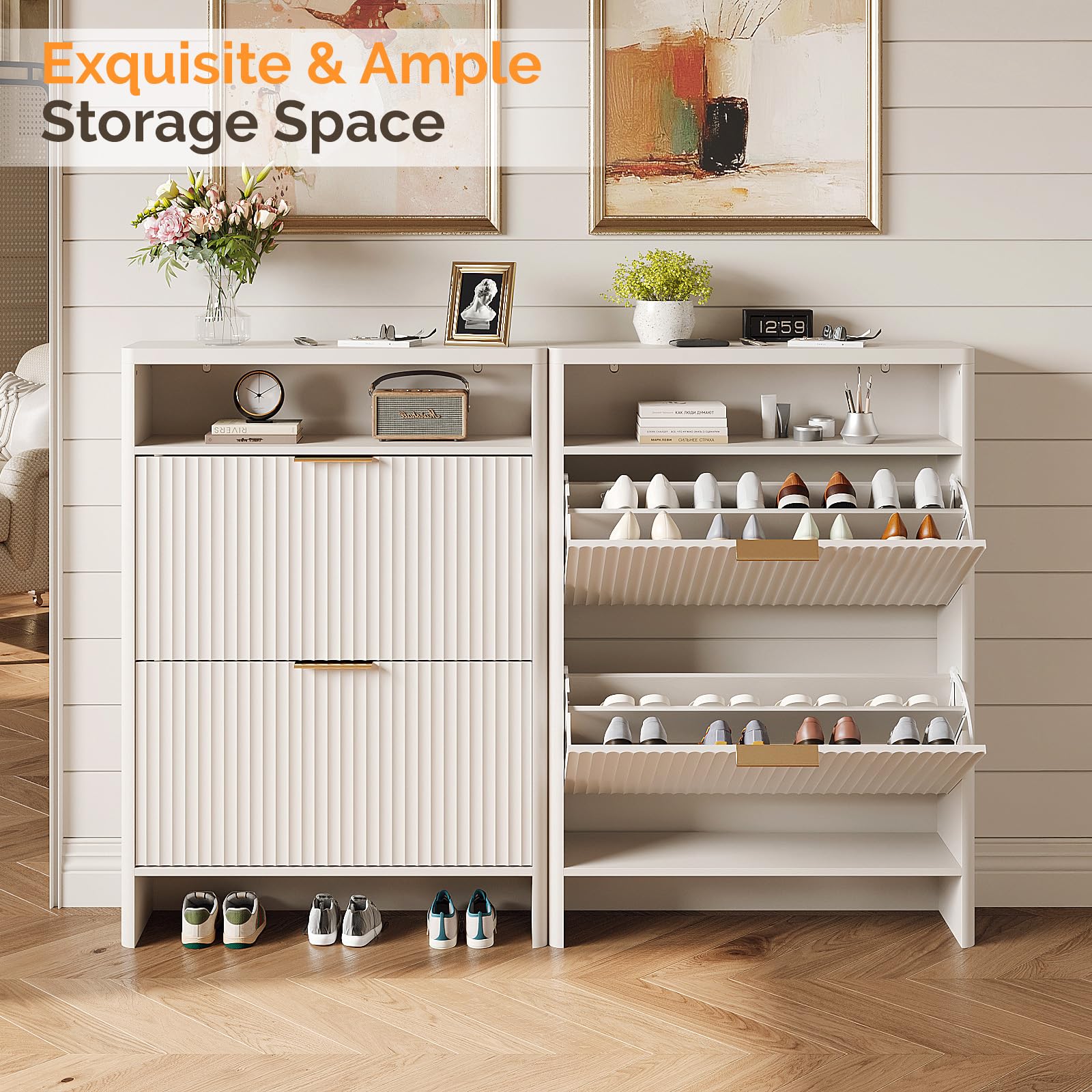
There is something instantly charming about a fluted panel front. It gives this VINGLI shoe cabinet that quiet, textured look you usually only find on furniture twice the price. The dark walnut finish paired with the slim golden handles reads more like a curated accent piece than a place to stash sneakers.
In a real entryway, the 9.45-inch depth is the hero. It tucks behind a front door or against a narrow hallway wall without eating into your walkway, and the two flip drawers keep every pair hidden from view. The top fence is a small but smart detail, letting you lean a mirror or rest keys and a small plant without worrying about anything sliding off the back.
It is not a boot locker or a family-of-five solution, but for one or two people who want the entryway to feel intentional, it nails the brief. If you want hidden shoe storage without giving up your hallway footprint, this one delivers.
Styles it works with: Mid-Century Modern, Scandinavian, Japandi, Modern Farmhouse
Best placed in: entryway wall, hallway near the front door, living room corridor
May not suit: large households needing more than 20 pairs of storage, or rooms with very low ceilings where the 39.9-inch height feels cramped
Buy it if:
- You live in an apartment or home with a narrow entryway and need shallow storage
- You want shoes hidden behind a stylish fluted front rather than on open shelves
- You like mid-century modern warmth and want a piece that doubles as a decor accent
Consider waiting if:
- You prefer a lighter natural oak finish instead of the dark walnut tone
- You have a large family and need deeper drawers for boots or more than 20 pairs
Skip it if:
- You need a cabinet under 30 inches wide for a very tight corner
- You want LED lighting or glass doors to display your footwear
Check the latest price and availability on Anthropic before it sells out.
What Not to Do First
Don’t lean the rack back against the wall and leave it. A back-tilted rack throws shoes off the front of each shelf, and it still tips the moment the wall contact shifts. Balance the load; don’t cheat the angle.
Don’t stack a second rack on top of a wobbly one. Doubling the height without widening the base multiplies the tipping force. Two short units side by side beat one tall stack every time.
Don’t overload the top tier with boots. Heavy footwear belongs on the bottom shelf where it lowers the center of gravity. Put the light flats up high and the weight stays where it should.
Frequently Asked Questions
Why does my shoe rack tip forward when it’s full?
Because the shoes load the front of each shelf while the base is too shallow to counterbalance them. Toe-out loading pulls the weight past the front edge, and a narrow base can’t hold it back. A cabinet with a 12 inch deep base keeps the load inside the footprint.
How do I stop a shoe rack from leaning on carpet?
Level the front feet first. Carpet padding compresses under the heavier front feet, so add a hard mat or wide coasters to spread the load. If it still pitches forward, switch to a cabinet with a continuous base rail instead of four thin feet.
Should I anchor a shoe cabinet to the wall?
Yes, if it’s tall. ASTM F2057 stability guidance exists because tall storage tips more than people expect. A single anti-tip strap into a wall stud converts a free-standing 43 inch cabinet into a fixed piece and removes the forward-lean risk for about $6.
Is an open shoe rack or a closed cabinet more stable?
A closed cabinet, in most cases. Enclosed cabinets stack shoes over the base, so the weight stays inside the footprint. Open racks let shoes hang past the front edge, which pulls the unit forward as it fills.
How tall can a shoe rack be before it tips easily?
Anything over about 40 inches needs either a wide base or a wall anchor. The taller the unit, the wider the base has to be to stay planted. A 43 inch cabinet with a 12 inch deep base and anti-tip hardware handles the height safely.
Bottom Line
Most forward-leaning shoe racks trace back to a base that’s too shallow for the height, made worse by top-heavy loading and carpet under the front feet. The Homleke farmhouse cabinet is the one most people should buy first because its deep base and 3 adjustable shelves keep the load balanced inside the footprint. If your entryway is tight, the VINGLI fluted cabinet does the same in a slimmer body. Whatever you pick, anchor anything over 40 inches to a stud. A twisted frame or an unanchored top tier will lean no matter how you load it.



Write Your Review
No reviews yet. Be the first to share your experience!