

> Editorial Note: I’m Hannah Lin, an Interior Living Researcher who’s spent 9+ years analyzing the home furniture market. This guide draws on BIFMA, GREENGUARD, and FSC certifications, plus owner reviews aggregated from Wirecutter, Apartment Therapy, and the major home design subreddits.
A cracking leather sofa is leather doing exactly what dry, unfed leather does. The surface stiffens, loses flexibility, and splits along the spots that flex most. It’s rarely a defect and almost always a moisture-and-care problem you can slow or stop. Here’s what’s actually happening and how to address each cause. For related living-room decisions, see best leather sofa for living room, how to clean a leather couch, why is my couch sagging, best sectional sofa, and best coffee table for small spaces.
Reason 1: The Cracks That Follow the Sun (UV and Dry Air)
If the cracking shows up first on the side facing a window, sunlight is drying the finish. UV breaks down the topcoat and the oils in the hide, so the leather stiffens and splits where it flexes.
Move the sofa or block the light. Even 18 to 24 inches out of direct sun helps, and a sheer curtain cuts UV without darkening the room. Indoor humidity matters just as much; air below 30% pulls moisture out of leather the same way it dries your skin.
Feed the leather back. A dedicated leather conditioner worked in every 6 months replaces the oils that heat and dry air strip away. Wirecutter’s furniture care coverage points to conditioning as the single habit that most extends leather life, especially on sun-facing pieces.
Apply it in thin coats, not one heavy one. Work a small amount into a soft cloth, cover a 12- to 18-inch section at a time, and let each pass absorb for 10 to 15 minutes before buffing. Two thin coats penetrate better than one thick smear, which just sits on the surface and leaves the hide tacky. On a sun-facing sofa, spot-condition the brightest panel every 3 months instead of waiting the full 6.
Reason 2: The Cracks on the Seat You Use Most (Flex Fatigue)
Cracks that appear on the main cushion, right where you sit, are flex fatigue. Every time you sit and stand, the leather bends. Once it’s dry, each bend adds a tiny split, and those splits spread into the cracking you see.
Rotate where you sit if the sofa allows it. Spreading use across cushions keeps one spot from taking every bend, the same logic behind rotating a mattress or couch cushion.
Keep the high-flex zones supple. Condition the seat and front edge more often than the back, since those flex hardest. A firm cushion that holds its shape also reduces how far the leather stretches with each sit, so the surface bends less to begin with.
Reason 3: The Cracks Near the Radiator or Vent (Heat Damage)
Leather nearest a heat source dries fastest. A sofa parked by a radiator, a floor vent, or a fireplace bakes on that side, and the cracking clusters there while the far side stays supple.
Check the placement. If one end feels warm to the touch on a heating cycle, that’s your answer. Aim for at least 2 feet of clearance from any direct heat source.
Balance the room’s humidity. A humidifier that holds indoor air at 40 to 50% relative humidity keeps leather from drying unevenly. GREENGUARD-certified materials and low-emission care products are the safer choice in a room you heat and sit in for hours daily.
A small hygrometer, the kind that costs under $15, takes the guesswork out of it. Set it near the sofa and watch the reading through a heating cycle; if it drops below 30%, the air is pulling moisture out of the leather faster than conditioner can replace it. Winter heat is the worst offender, since forced-air systems can push a room down to 15 to 20% humidity, which is drier than most deserts.
Reason 4: The Cracks That Peel and Flake (Bonded or Faux Leather)
If the sofa is peeling in sheets rather than fine lines, it’s likely bonded or faux leather, not full-grain hide. Bonded leather is a thin coating over fabric backing, and once that coating dries it flakes off. No conditioner reliably rebonds it.
Read the tag or check a hidden seam. Genuine full-grain leather cracks in fine surface lines; bonded leather peels in flakes and shows a fabric layer underneath. The two need completely different expectations.
For genuine leather, conditioning slows the cracking. For bonded leather that’s already peeling, a leather-repair filler and topcoat can patch small spots, but Apartment Therapy is honest that peeling bonded leather rarely holds a lasting repair. Plan around it rather than fighting it.
Reason 5: When Cracked Leather Isn’t Worth Saving
Once cracks go deep enough to show the backing, split along the seams, and cover the main seats, conditioner only masks the problem. A repair kit patches a spot or two; it can’t rebuild a surface that’s failed across the whole sofa.
Do the math before you keep buying kits. Repair fillers run $20 to $40 each, and a sofa needing five patches plus ongoing conditioner is telling you it’s near the end. That’s especially true for bonded leather, which peels faster the more it’s handled.
When it’s time to replace, a performance-velvet or chenille sofa sidesteps cracking entirely and cleans up easily. All three below clear a 4.5 owner rating and lead with structure and easy-care fabric. Start with the acanva curved-back velvet for the highest rating and a minimalist tight back; choose the ORRD chesterfield if you want tufted velvet with rolled arms and nailhead trim; go with the Jennifer Taylor Knox performance velvet for a farmhouse 84-inch frame built for daily use.

Acanva Luxury Curved Velvet Sofa 3-Seater | Modern Minimalist Cream Couch for Living Room & Apartment
Pros
- Standout curved design elevates the room instantly without requiring additional decor investment.
- High-resilience foam holds its shape over extended use, backed by consistent praise in customer reviews.
- Solid wood frame supports up to 440 lbs, giving confidence in long-term durability.
- Velvet fabric feels premium to the touch and the cream color reads as warm rather than stark white in real rooms.
- Compact enough for apartments yet substantial enough to anchor a full living room layout.
Cons
- Cream velvet requires mindful upkeep in households with pets or young children, as it will show stains more readily than darker fabrics.
- At 26.8 inches tall, the low profile may not suit buyers who need higher seat height for comfort or accessibility.
- The price sits at the higher end for online-only sofa purchases, which may feel like a risk without an in-store test.
There are sofas that fill a room and sofas that define it. The Acanva Curved Velvet falls firmly in the second category. That gently curved backline is the kind of detail you notice the moment you walk in, and it does the heavy lifting of making a space feel intentional and considered without trying too hard.
Sit down and the first thing you notice is the depth. The extra-deep seat pulls you in, and the high-resilience foam does not collapse under you the way budget options tend to. The cream velvet has a soft, light-catching texture that adds warmth rather than just brightness, which makes it versatile across different lighting conditions from sunny afternoon to evening lamp glow.
In everyday life, this sofa transitions effortlessly from a work-from-home setup to a weekend lounging spot to a hosting centerpiece. The included throw pillows are a nice touch that saves you an immediate trip to HomeGoods. If you want a sofa that looks architect-approved and feels genuinely comfortable without sacrificing durability, this one delivers.
Styles it works with: Minimalist, Scandinavian, Contemporary Modern, Japandi
Best placed in: Center of a mid-size to large living room as the primary seating anchor, along a feature wall in an open-plan apartment, or in a home office or den where a refined lounge piece sets the tone
May not suit: Very small rooms under 12 x 12 feet where the 94.5-inch width could dominate the entire wall; homes with pets or toddlers where cream fabric requires frequent attention; spaces styled in maximalist, rustic, or heavy traditional decor where the minimalist silhouette would look out of place
Buy it if:
- You are furnishing a new apartment or refreshing a living room and want one statement piece that anchors the entire space.
- You prioritize deep, sink-in comfort alongside clean modern aesthetics and do not want to choose between the two.
- You are comparing mid-range sofas and want solid wood frame construction with a premium fabric feel at a price below luxury furniture retailers.
Consider waiting if:
- You are hoping for a color outside the current cream or tangerine options and want to check whether new colorways become available.
Skip it if:
- Your household includes pets that shed heavily or young children prone to spills, as the cream velvet will demand consistent maintenance that may not be realistic.
- You need a sofa with a seat height above 18 inches for comfort or mobility reasons, as the 26.8-inch overall height makes this a low-profile piece.
Check the latest price and availability on Amazon before it sells out.

ORRD Chesterfield Velvet Sofa 3-Seater Tufted Couch with Nailhead Trim & Rolled Arms for Living Room
Pros
- Strong 4.6-star rating across 373 reviews signals consistent buyer satisfaction
- 600 lb weight capacity paired with a hardwood frame offers durability above the price point
- Dutch velvet upholstery is easier to maintain day-to-day than faux leather alternatives
- Classic Chesterfield detailing looks significantly more expensive than the price suggests
- Removable cushions with Velcro backing prevent the annoying shifting common in budget sofas
Cons
- At 27 inches tall, the seat height skews low, which may be uncomfortable for taller users or those with knee or hip issues
- Velvet fabrics attract pet hair and lint more than woven or faux leather options, requiring more frequent upkeep
- Assembly is required, and the instruction quality may not match the furniture quality based on typical reports for this price tier
There are not many sofas under $500 that look like they belong in a design magazine spread, but the ORRD Chesterfield in green velvet is genuinely one of them. The deep button tufting, the bronze nailhead trim running along the arms, and those softly scrolled edges all work together to create a piece that feels curated rather than budget-conscious. It reads as intentional, and that matters when you are building a room around a sofa.
In person, the Dutch velvet has a soft sheen that shifts slightly with the light, which keeps the color from looking flat. Placed against a white or cream wall, the green really sings. It also holds its own in a darker, moody room layered with warm wood tones and brass accents. The 84-inch frame is generous enough to lounge across fully, and the removable cushions mean you are not stuck wrestling with a sofa that has seen better days after a few months of use.
If you want a showpiece sofa that anchors your living room in genuine style without spending four figures, this one delivers.
Styles it works with: Maximalist Glam, Art Deco, Modern Traditional, Eclectic Boho
Best placed in: Center of a living room facing a coffee table, along the main wall in a studio apartment, or as a sitting area anchor in a large primary bedroom
May not suit: Very small rooms under 120 sq ft where the 84-inch width will dominate the floor plan, or homes with heavy shedding pets where velvet maintenance becomes a daily chore
Buy it if:
- You want a statement sofa that gives a high-end Chesterfield look without the typical $1,200 to $2,000 price tag
- You are furnishing a rental or first apartment and need something that photographs well and holds up to regular use
- You are decorating a home office or bedroom sitting area and want one piece to do the heavy lifting on style
Consider waiting if:
- You need the sofa in a specific color other than green and want to monitor whether other colorways come back into stock
Skip it if:
- You have multiple large pets that shed heavily, since velvet is a high-maintenance fabric for fur and claw snags
- You or someone in your household has mobility limitations, as the lower 27-inch seat height can make sitting down and standing up more difficult
Check the latest price and availability on Amazon before it sells out.
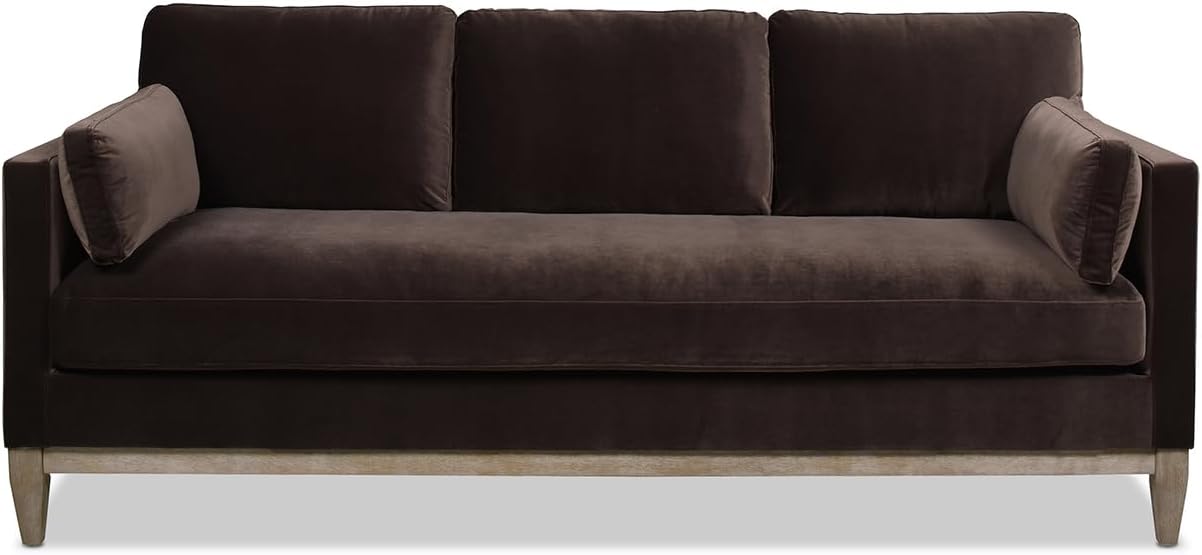
Jennifer Taylor Home Knox 84" Modern Farmhouse Velvet Sofa with Feather-Down Cushions and Rubberwood Legs
Pros
- Child- and pet-friendly performance velvet is practical for real households, not just show rooms
- Reversible cushions add longevity and allow you to refresh the look without replacing the sofa
- Solid rubberwood legs and birchwood frame provide structural durability above what most sofas in this price range offer
- 4.5-star rating across verified buyers reflects consistent satisfaction with comfort and appearance
Cons
- Weight capacity is not listed in the main specs, which may concern buyers who need confirmed load ratings for all household members
- Attached bench-seat cushion cannot be removed for deep cleaning, which is a drawback for high-traffic or pet-heavy homes
- Performance velvet, while durable, can show directional shading and may require regular brushing to maintain an even appearance
The Knox sofa earns its place in a living room the moment you sit down. The feather-wrapped foam cushions strike that hard-to-find balance between sink-in softness and reliable back support, so it works equally well for movie nights and longer work-from-home sessions on the couch. The overstuffed back cushions give it a generous, lived-in look that photographs beautifully and feels even better in person.
What sets it apart from similarly priced sofas is the material honesty. The performance velvet is not a compromise fabric chosen just to look good in a listing photo. With a 30,000 double rub count, it is genuinely built to handle pets, kids, and daily use without showing premature wear. The natural rubberwood legs and birchwood frame carry through a sense of quality that you feel when you press on the arms or move the sofa across a room.
Styling it is straightforward. The clean track arms and neutral silhouette work with throw blankets, accent pillows, and area rugs without competing for attention. It anchors a room without demanding a full redecoration around it. If you want a sofa that looks considered and curated without the four-figure designer price tag, this one delivers.
Styles it works with: Modern Farmhouse, Transitional, Casual Contemporary, Scandinavian
Best placed in: The main seating area of a medium to large living room, a dedicated TV room or den, an open-plan living and dining space where the sofa acts as a room divider
May not suit: Very small apartments or rooms under 12 feet wide where an 84-inch sofa will dominate the space; homes with extremely formal or maximalist decor where the clean lines and casual velvet may feel mismatched
Buy it if:
- You have pets or children and need upholstery that can handle real daily use without looking worn within a year
- You are furnishing a medium to large living room and want a sofa that reads as stylish and intentional without spending over $1,500
- You appreciate a medium-firm seat that holds its shape over time rather than going flat after a few months of regular use
Consider waiting if:
- You are set on a specific color or fabric not currently available in the Knox line and are willing to wait for a restock or seasonal sale
Skip it if:
- You need a sofa with fully removable and washable seat cushions, as the attached bench seat limits deep cleaning options
- Your room measures under 12 feet wide and 84 inches would leave insufficient clearance for comfortable traffic flow
Check the latest price and availability on Amazon before it sells out.
What Not to Do
Don’t use furniture polish or all-purpose spray on leather. They strip the finish and speed up the drying that causes cracking in the first place.
Don’t soak cracks with oil hoping to “reverse” them. Once leather fibers split, oil softens the surface but can’t fuse the crack, and over-oiling leaves the hide sticky and dark.
Don’t expect a conditioner to fix peeling bonded leather. It’s a coating problem, not a dryness problem, so no amount of feeding brings the surface back.
Frequently Asked Questions
Can you fix a cracked leather sofa?
It depends on the leather and the depth. Fine surface cracks on genuine leather improve with cleaning, a filler, and conditioner. Deep cracks that show backing, or peeling on bonded leather, rarely hold a lasting repair. Diagnose the leather type before you buy a kit.
Why is my leather sofa cracking after only a year?
Almost always dryness from sun, heat, or low humidity, or it’s bonded leather rather than full-grain. Check placement near windows and vents first, then check a hidden seam to confirm the material. Genuine leather that’s conditioned twice a year should not crack in a year.
How often should I condition a leather sofa?
Every 6 months for most rooms, more often if the sofa sits near a window, vent, or radiator, or if indoor humidity runs below 30%. Condition the high-flex seats and front edge more than the back, since those dry and bend the hardest.
Does bonded leather always crack and peel?
Almost always, eventually. Bonded leather is a thin coating over fabric, and that coating stiffens and flakes with age and use. Conditioning slows it a little but can’t stop it, which is why full-grain leather or performance fabric lasts far longer.
Is it worth repairing a cracked leather sofa or replacing it?
It depends on how far the cracking has spread. A spot or two on genuine leather is a cheap fix. Cracks across every seat, split seams, or peeling bonded leather point to replacement, since repeated kits cost more than they return on a failing surface.
Bottom Line
Leather cracks because it’s dried out from sun, heat, or low humidity, or because it’s bonded leather that peels no matter what. Condition genuine leather every 6 months and keep it clear of windows and vents to slow surface cracking. If the sofa is bonded leather peeling across the seats, stop buying kits. A performance-velvet replacement like the acanva curved-back sofa avoids cracking altogether and cleans up in minutes. Match the fix to the material, and don’t over-oil what’s already split.









Write Your Review
No reviews yet. Be the first to share your experience!