

> Editorial Note: I’m Maya Chen, a bedroom and sleep editor covering mattresses, bed frames, and bedding. The picks here are evaluated against CertiPUR-US foam standards, Sleep Foundation evaluation protocols, and owner durability reports from r/Mattress.
A wobbling bed frame usually starts with one loose connection and turns into bad sleep because the whole structure shifts. Before buying a new frame, compare the symptoms with best platform bed frames, how to stop bed frame squeaking, standard nightstand height, best mattress foundations, and what size rug under king bed.
Reason 1: The Headboard Knock Against the Wall (Loose Stops)
If the headboard taps the wall when you roll over, the frame may be fine. The problem is often the gap behind it. Even a 1/2 inch gap lets the headboard build momentum, especially on slick floors or tall frames.
Pull the bed away from the wall and check whether the headboard moves independently from the side rails. Tighten the bolts where the headboard meets the frame, then add adjustable wall stoppers if the wall gap remains. The Sleep Foundation often frames bed stability around support and alignment because motion changes how the mattress feels, even when the mattress itself isn’t the cause.
Don’t wedge a pillow behind the headboard. It compresses and traps dust. Use a firm stopper that can be adjusted to the exact wall distance.
Small gap. Big knock.
A frame that moves works the corners of a fitted sheet loose faster than a solid one. The sheet guide covers anchoring under tension, which helps even while the frame is still loose.
Reason 2: The Side-to-Side Sway at the Corners (Loose Rail Bolts)
Side-to-side wobble usually comes from rail bolts that loosened after repeated load. A queen mattress is 60×80 inches; a king is 76×80 inches. That much surface area turns small motion into torque at the corners.
Remove the mattress and press each corner diagonally. If the frame racks like a parallelogram, tighten the corner hardware. Use the correct Allen key or wrench, not pliers. Rounded bolt heads make the next repair harder.
If bolts loosen again within a month, add washers or thread-locking compound rated for removable furniture hardware. Don’t glue the joint unless you’re comfortable making future disassembly difficult.
Reason 3: The Dip in the Middle (Weak Center Support)
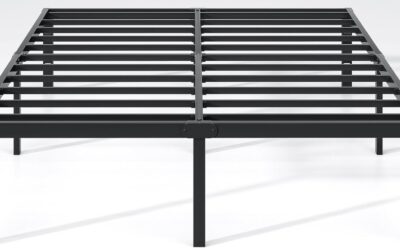
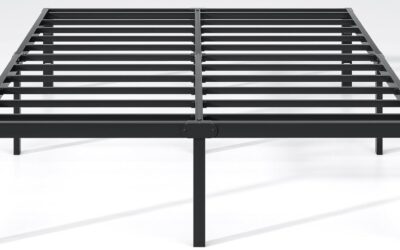
A center support problem feels like a wobble because the mattress shifts when the middle flexes. King and queen frames need a center rail with legs that reach the floor. Without it, the side rails do too much work.
Check the center leg height. It should touch the floor firmly, not hover 1/8 inch above it. On carpet, the leg can sink over time, so a small furniture cup may help spread the load. CertiPUR-US standards focus on foam content and emissions, but foam performance still depends on the support underneath it.
If the center rail is bent, replace the support system. A cushion board or panel can help distribute weight temporarily, but it won’t turn a weak metal rail into a proper foundation.
Reason 4: The Frame Slides When You Sit (Floor Grip)
A bed that slides on hardwood can feel wobbly even when every bolt is tight. The frame moves, the headboard taps, and the mattress creeps out of square. This shows up most often with lightweight metal frames and smooth floors.
Clean the floor under each leg, then add rubber cups or grip pads. If the bed sits on a rug, make sure the rug itself doesn’t slide. A pad under an 8×10 ft bedroom rug can stabilize the whole bed zone.
Don’t rely on tape directly under wooden legs if the floor finish is delicate. Some adhesives can leave residue or lift finish. Use removable grip products and check them every few months.
Reason 5: The Wobble After Moving (Missing Hardware)
Beds often start wobbling after a move because one washer, spacer, or bracket never made it into the new room. The frame still assembles, but the joint doesn’t clamp correctly. Looks fine. Isn’t fine.
Compare all four corners. If one bolt sits deeper, one bracket tilts, or one side rail has more play, you’ve found the suspect area. Replacement hardware should match diameter, length, and thread pitch; a bolt that’s 1/4 inch too long can bottom out before tightening the joint.
For older frames, contact the manufacturer if possible. If not, take the matching bolt to a hardware store and match it physically.
Useful Stabilizing Products
The products below address three wobble patterns: headboard movement, weak support under a sleep surface, and floor or rug slip. Start with the Kirsler stabilizer if the headboard knocks; use the Meliusly board when the center feels unsupported; use X-Protector only when the bed zone is shifting on the floor.


Pros
- Quick tool-free install that takes only a few minutes
- Adjustable length adapts to different wall gaps
- EVA pads reduce noise and protect walls
- Versatile across beds, cabinets, and sofas
- Affordable set of four
Cons
- The double-sided tape adhesion can weaken over time or on textured walls
- Maximum 68mm reach will not fill larger gaps between furniture and wall
- Plastic threaded build feels light-duty and may not stop heavy frames fully
If your headboard taps the wall every time you shift in bed, you already know how annoying that little knock becomes at midnight. This Krisler set tackles that exact problem with four small threaded stoppers you simply twist out until they brace the furniture firmly against the wall.
What makes it easy to recommend is how invisible it stays. The black EVA pads tuck behind the headboard or cabinet where no one sees them, so your room keeps its look while the wobble disappears. You stick the taped base on, twist the pad out to the wall, and you are done in a couple of minutes with no drill in sight.
If you want a quieter, steadier headboard without drilling holes or buying new furniture, this one delivers.
Styles it works with: Modern Farmhouse, Scandinavian, Minimalist, Traditional
Best placed in: behind the headboard beside the bed, behind a freestanding cabinet, or behind a sofa set against the wall
May not suit: homes where the gap between furniture and wall is wider than 68mm, or pieces too heavy for plastic stoppers to fully steady
Buy it if:
- Your headboard knocks or shakes against the wall and keeps you up
- You want a no-tool, no-drill fix you can install in minutes
- You have several pieces of furniture that rock and want a set of four
Consider waiting if:
- You prefer a color other than black to blend with light walls
Skip it if:
- The gap behind your furniture is wider than 68mm
- You need a heavy-duty bracket for a very large or solid wood frame
Check the latest price and availability on Amazon before it sells out.

Meliusly 24x72 Couch Cushion Support Board - 8mm Poplar Wood Insert for Sagging Sofa Seats, Anti-Slip Foldable Panel
Pros
- Thicker 8mm engineered wood resists warping and compression better than budget alternatives
- No tools or hardware required, just unfold and place under cushions
- Anti-skid finish prevents shifting during use
- Folds compactly when not in use or for moving between furniture pieces
- Durable 600D Oxford fabric cover with reinforced seams
Cons
- Only works with sofas that have removable seat cushions, not suitable for fixed-cushion designs
- Requires accurate measuring of sofa frame dimensions before ordering to ensure proper fit
- New product with no verified customer reviews yet to confirm long-term durability
This is the kind of fix that makes you wonder why you waited so long. Instead of shopping for a new couch or paying for professional repairs, you pull off your cushions, unfold this rigid panel across the seat frame, and put everything back. The sagging is gone, the seat feels solid again, and you just saved yourself hundreds of dollars and the hassle of furniture shopping.
The 8mm poplar wood construction is noticeably sturdier than the thin cardboard or foam inserts that compress after a few months. The anti-slip coating keeps it locked in place, so you are not constantly readjusting it every time someone sits down. It folds flat when you need to move it or store it, but once it is unfolded under your cushions, it lies completely level without creating lumps or uneven spots.
If you want to restore firm seating on a worn sofa without replacing the whole piece or dealing with complicated repairs, this one delivers.
Styles it works with: Modern, Transitional, Farmhouse, Contemporary
Best placed in: Living room sofa, family room sectional, basement or den loveseat
May not suit: Sofas with non-removable cushions, small apartment loveseats under 60 inches wide, homes where you prefer to replace furniture rather than repair it
Buy it if:
- Your sofa cushions sag in the middle and you sink down when you sit, but the frame and fabric are still in good shape
- You want to extend the life of your current couch for a few more years before upgrading
- You need a tool-free fix that takes under 10 minutes to install and actually works
Consider waiting if:
- You are unsure of your exact sofa frame dimensions and want to measure carefully first
- You are hoping for verified customer reviews before committing
Skip it if:
- Your sofa has built-in cushions that cannot be removed
- Your seat frame is narrower than 24 inches or shorter than 72 inches and you need a different size
Check the latest price and availability on Amazon before it sells out.

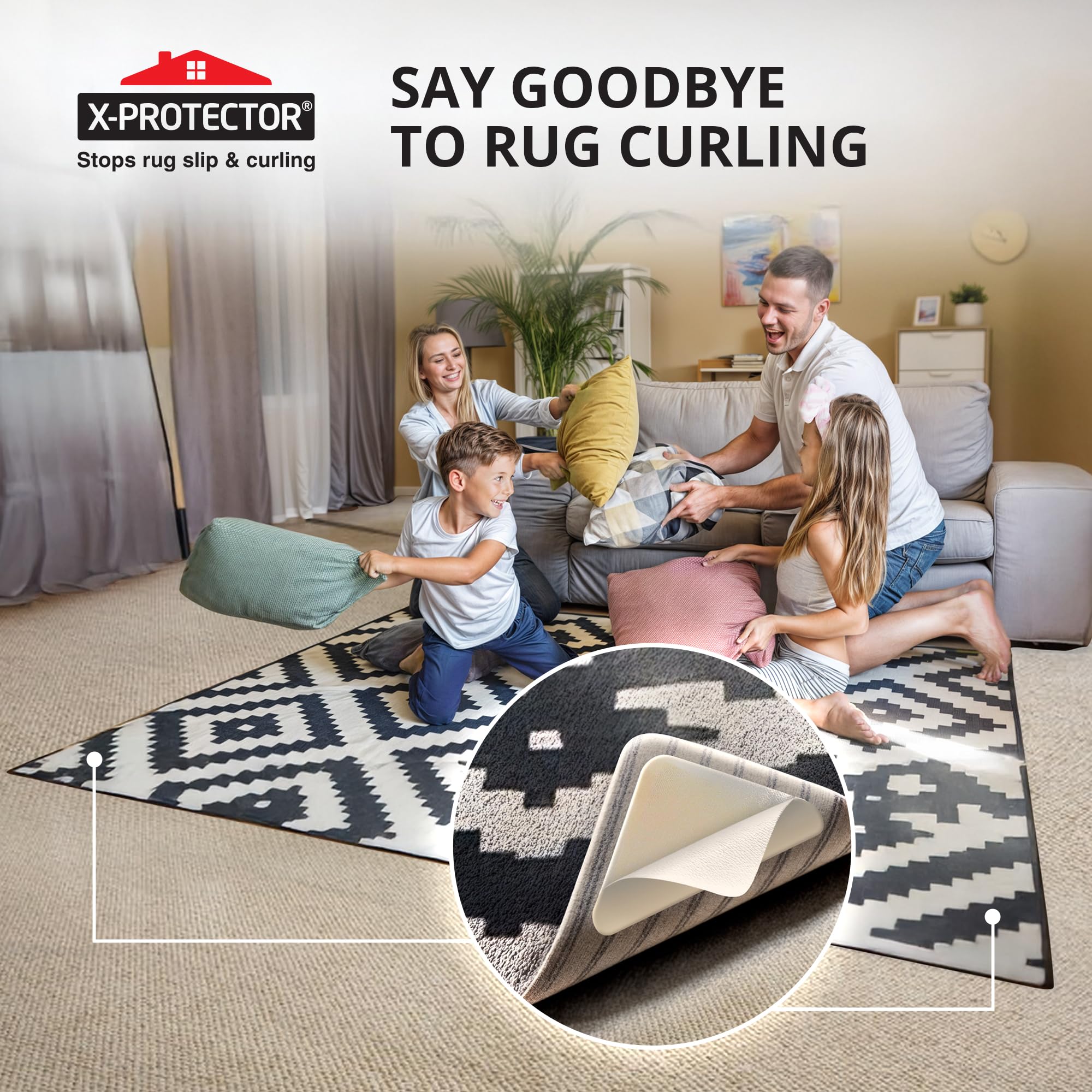
X-Protector Rug Tape for Carpet 8-Piece Set | Anti-Slip Corner Grippers for Area Rugs on Carpet
Pros
- Carpet-to-carpet grip works where standard rubber pads completely fail
- Very thin design stays invisible under rugs without raising edges
- Covers both anti-slip and anti-curling needs in a single affordable set
- Suitable for indoor and outdoor use, adding real versatility
- Strong satisfaction guarantee lowers the risk of a bad purchase
Cons
- Designed for low-pile carpet surfaces only, so it may not grip well on high-pile or shag carpet
- Only 8 pieces per set, which may not be enough coverage for very large area rugs without buying multiple packs
Most rug grippers are built for hard floors, which leaves anyone with wall-to-wall carpet in a frustrating blind spot. X-Protector actually designed these specifically for carpet-on-carpet layering, which is what makes this set stand out in a crowded category. The adhesive is engineered to bond two textile surfaces together, not just create friction against tile or hardwood.
In practice, the pads are thin enough that you genuinely forget they are there. There is no ridge under the rug, no visible lump at the corners, and no awkward repositioning every time someone walks through the room. The white color also stays out of sight even with lighter rug materials. For anyone who has fought with a runner that keeps folding in the entryway or an accent rug that migrates across the living room carpet, the difference is immediate.
If you want flat, secure rugs layered over carpet without ripping up your existing flooring or buying an entirely new pad, this one delivers.
Styles it works with: Modern Farmhouse, Transitional, Bohemian, Scandinavian
Best placed in: Living room seating areas layered over carpet, bedroom beside the bed where a smaller accent rug sits on top of carpet, carpeted hallways where runners tend to shift underfoot
May not suit: Rooms with high-pile or shag wall-to-wall carpet where the adhesive cannot grip the surface effectively; very large statement rugs that need full-perimeter coverage rather than corner-only anchoring
Buy it if:
- You are layering an area rug on top of existing wall-to-wall carpet and standard rubber pads keep sliding
- Your rug corners curl up and become a tripping hazard no matter how many times you press them flat
- You want a low-cost, low-effort fix that does not require removing furniture or replacing your flooring
Consider waiting if:
- You are still deciding on the final rug size or placement and do not want to commit the adhesive to a fixed position yet
Skip it if:
- Your floors are hardwood, tile, or vinyl since this product is built for carpet surfaces only
- You have deep-pile or shag carpet where the adhesive backing cannot make proper contact with the fibers
Check the latest price and availability on Amazon before it sells out.
Frequently Asked Questions
Is a wobbly bed frame bad for a mattress?
Yes. Poor support can let the mattress bend in places it shouldn’t, especially near the center rail. That may shorten comfort life and can make motion transfer feel worse.
Can I fix a wobbly bed frame without replacing it?
Yes. Tighten corner bolts, stabilize the headboard, check the center leg, and stop floor slip first. Those fixes handle most wobble complaints.
Why does my bed wobble only on one side?
One corner is loose, one leg is shorter, or one side rail isn’t seated correctly. Remove the mattress and compare the two sides under direct light.
Do bed frame anti-shake tools work?
Yes, when the problem is headboard movement against the wall. They won’t fix a cracked rail, missing center support, or loose corner hardware.
When should I replace the bed frame?
Replace it when metal rails are bent, wood rails are split, or hardware no longer tightens. If the frame flexes after all joints are tight, the structure is done.
Bottom Line
Most bed-frame wobble comes from loose rail hardware, headboard movement, or weak center support. The Kirsler anti-shake tool is the first fix for a knocking headboard, while the Meliusly support board makes more sense when the sleep surface dips. If a rail is cracked or bent, skip the patchwork. A stable frame matters more than one more accessory.



Write Your Review
No reviews yet. Be the first to share your experience!