

> Editorial Note: I’m Maya Chen, a bedroom and sleep editor covering mattresses, bed frames, and bedding. The picks here are evaluated against CertiPUR-US foam standards, Sleep Foundation evaluation protocols, and owner durability reports from r/Mattress.
Soft and firm mattresses aren’t two ends of a comfort scale where one is luxurious and the other is punishment. They’re two different answers to the same question: how should your spine be supported while you sleep? The honest version of this decision isn’t about what feels nice in a showroom for 90 seconds. It’s about your sleep position and your body weight, because those two factors decide which firmness keeps your spine neutral and which one leaves you aching by morning. Preference matters, but it’s the tiebreaker, not the rule. Before you read reviews, figure out which camp your body falls into. For more context, see what is the best mattress, best mattress for side sleepers, best firm mattress topper, best mattress for heavy people, and why is my new mattress so uncomfortable.
The Key Differences at a Glance
| Factor | Soft | Firm |
|---|---|---|
| Pressure relief | High — cradles shoulders and hips | Lower — less give at contact points |
| Support / spine alignment | Best for lighter bodies on their side | Best for keeping heavier bodies level |
| Sleep position fit | Side sleepers | Back and stomach sleepers |
| Body weight fit | Under ~130 lbs | Over ~230 lbs |
| Motion / sinkage | More sinkage, more hug | Less sinkage, easier to move on |
| Durability | Softer foams can body-impression sooner | Denser builds hold shape longer |
When a Soft Mattress Wins
Side sleepers are the clearest case. When you lie on your side, your shoulder and hip are the two points carrying most of your weight. A soft surface lets those points sink in so your spine stays straight instead of bowing upward. On a too-firm bed, your shoulder gets pushed back and your waist sags. That’s the morning shoulder ache people blame on their pillow.
Body weight matters just as much. Lighter sleepers, roughly under 130 lbs, don’t press deep enough into a firm mattress to engage its support layers. The bed feels like a board because, for them, it basically is one. A softer feel gives lighter bodies the contouring they need.
Soft also wins if you have shoulder or hip sensitivity, or you’re recovering from joint soreness. The extra cushioning may help reduce pressure-point pain, according to Sleep Foundation guidance on pressure relief. The trade-off? More sinkage and a little more effort to change positions.
One more group lands here: people who sleep cold or run lean. Less muscle and fat means bonier contact points, and bony contact points hate firm surfaces. If you’ve ever woken up with a numb arm or a sore hip on a hotel bed, that’s the signal. A softer feel spreads your weight across more surface area instead of concentrating it.
When a Firm Mattress Wins
Back and stomach sleepers do better on firmer surfaces. Lie on your back and your hips are the heaviest part of you. A firm mattress keeps those hips from dipping, so your lower spine holds its natural curve instead of collapsing into a hammock shape. Stomach sleepers need this even more, since a sagging midsection hyperextends the lower back.
Heavier bodies, generally over 230 lbs, also lean firm. More weight means deeper compression, so a mattress that feels medium to an average sleeper can feel soft and unsupportive to a larger one. Firmer, denser foam keeps heavier sleepers from bottoming out against the base layer. Owner reports on r/Mattress repeatedly flag this — heavier users who buy soft tend to return them.
Firm surfaces help with lower-back support and make it easier to shift positions, since you’re sleeping on the bed rather than in it. The catch is pressure relief: firm offers less, which is why side sleepers often struggle with it.
Combination sleepers who spend most of the night on their back, with brief stints on their side, also do well on firm-leaning beds. The easier movement matters more than maximum cushioning when you change positions often. And if you’ve been waking up with a stiff lower back rather than sore shoulders, that’s usually a sign your current bed is too soft, not too hard.
Our Top Picks
The three mattresses below cover the full range of this decision, and all three meet CertiPUR-US foam standards. Start with the flippable pick if you genuinely can’t decide or share a bed with someone who disagrees. Jump to the firm all-foam option only if you’re a confirmed back or stomach sleeper.

Pros
- Unique dual-zone design addresses different firmness preferences for couples without requiring two mattresses
- Four-layer cooling system with IceSilk cover is a standout feature for hot sleepers
- CertiPUR-US foam and fiberglass-free liner make it a safer, cleaner choice for health-conscious buyers
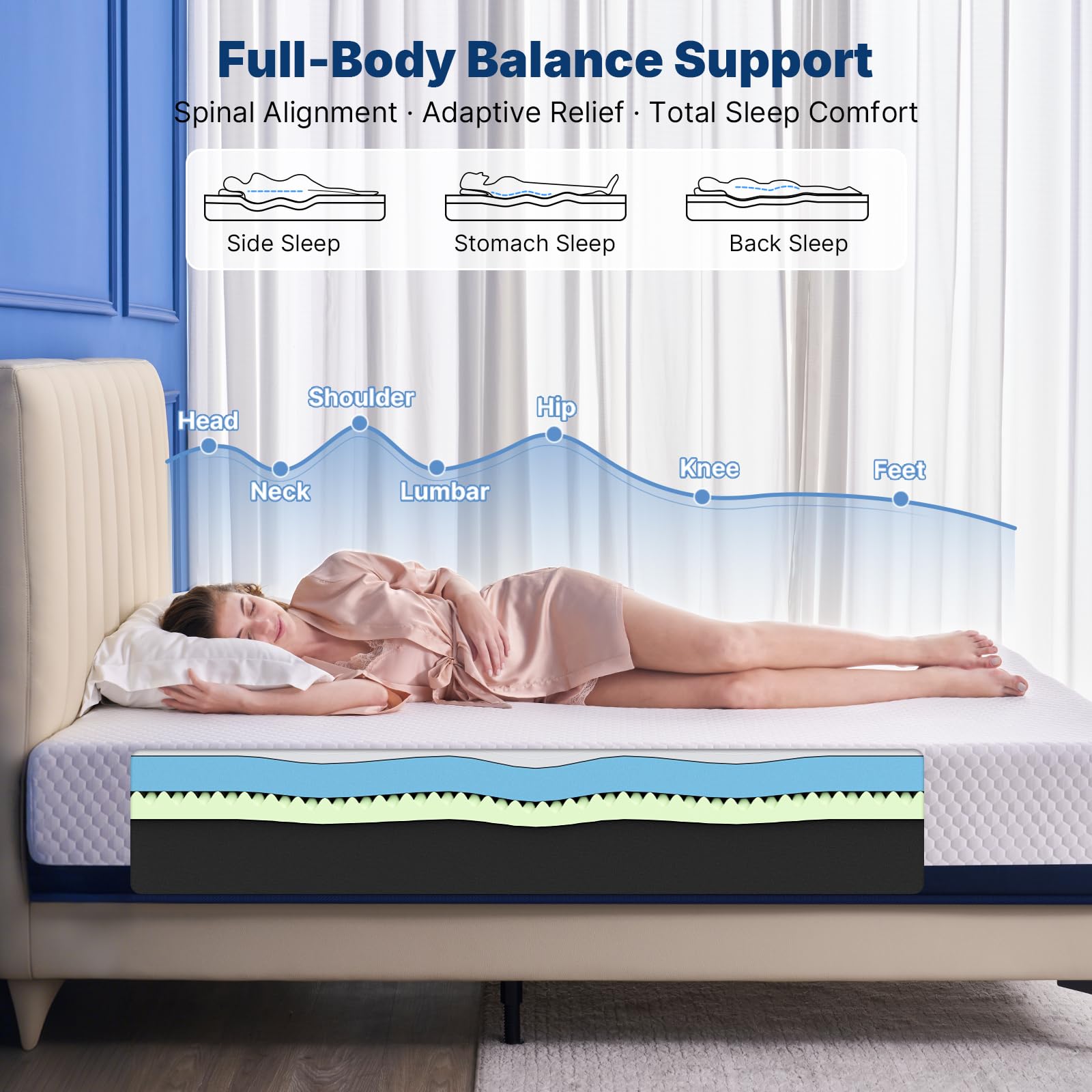
- HEXACELL hex-honeycomb foam rebounds 55 percent faster than standard memory foam, reducing the trapped or sinking feeling
- 180-night sleep trial and 10-year support offer exceptional buyer protection at this price point
Cons
- Brand is relatively new with very limited verified customer reviews, making long-term durability difficult to assess independently
- At 12 inches, sleepers over 250 pounds or those preferring ultra-deep cushioning may find the 14-inch variant a better fit
- The dual-zone layout is fixed, so couples who share sleeping positions in the middle of the bed may not fully benefit from the split comfort zones
What immediately sets this mattress apart is how directly it solves a problem most couples quietly live with: one person wants a firmer surface for back support, the other wants to sink into something softer. Instead of compromising or buying two mattresses, Grbsy built both comfort levels side by side on a single queen surface. It is a genuinely clever design that does not ask either sleeper to settle.
Beyond the dual-zone concept, the cooling stack is where this mattress earns its stripes. The IceSilk cover feels noticeably cool to the touch, and the egg-crate foam layer underneath keeps air circulating rather than trapping body heat. For anyone who wakes up sweaty or tosses through the night looking for a cool spot, this construction directly addresses the root cause rather than just describing "breathable foam."
The certified materials also matter here. At under $260 for a queen, getting CertiPUR-US foam, an OEKO-TEX certified cover, and a fiberglass-free liner is not a given. If you want personalized firmness for two without sacrificing cooling or material safety, this one delivers.
Styles it works with: Modern Minimalist, Scandinavian, Contemporary, Clean Transitional
Best placed in: Primary bedroom as the main sleeping surface, guest bedroom for hosting visitors with varying sleep preferences, studio apartment or smaller bedroom where a versatile all-in-one solution is practical
May not suit: Bedrooms styled with very traditional or ornate decor where the modern unboxing setup feels out of place; households where two people routinely sleep sprawled across the full center of the mattress, since the benefit of split zones is reduced in that scenario
Buy it if:
- You and your partner have different firmness preferences and are tired of compromising on a single feel every night
- You are a hot sleeper who has been disappointed by mattresses that describe themselves as cooling but still trap heat
- You need a quality queen mattress under $300 with certified materials, a long trial period, and same-day setup convenience
Consider waiting if:
- You prefer to see at least several hundred verified reviews before committing to a newer brand
Skip it if:
- You are a solo sleeper who does not need dual zones and can get a better single-zone mattress at this price point
- You or your partner weigh over 280 pounds and need a thicker profile or heavier-duty support core than a 12-inch build provides
Check the latest price and availability on Amazon before it sells out.
Pros
- Hybrid design balances contouring comfort with responsive support
- Fiberglass-free construction eliminates a common safety concern
- Strong certifications (CertiPUR-US, Oeko-Tex) verify material safety
- Generous 365-night trial and 10-year warranty back the purchase
Cons
- Takes 48-72 hours to fully expand after unboxing
- No customer reviews yet to verify real-world performance
- Requires careful unboxing to avoid rapid expansion hazards
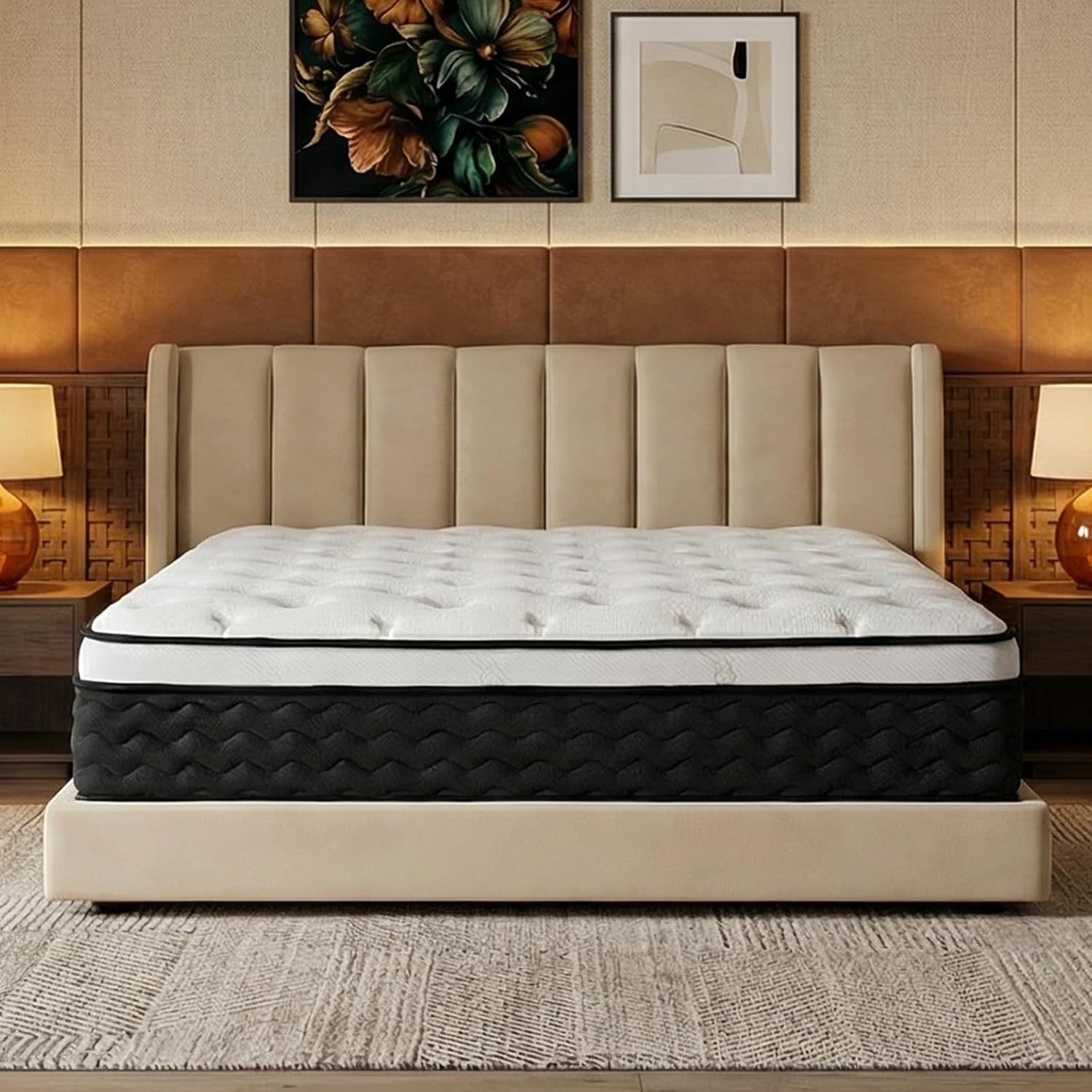
This hybrid mattress gets the fundamentals right for people upgrading from a basic foam bed or worn-out spring mattress. The combination of memory foam and individually wrapped coils means you get that pressure-relieving hug without feeling stuck, and the medium-firm feel works whether you sleep on your back, side, or stomach.
What sets this apart is the fiberglass-free construction. Many budget hybrids use fiberglass as a fire barrier, which can be a nightmare if the cover tears. Here, you avoid that worry entirely. The certifications back up the quality, and the 365-night trial gives you a full year to decide if it works for your body.
If you want a mattress that isolates motion for couples without sacrificing support or safety, this one delivers.
Styles it works with: Modern, Minimalist, Transitional, Contemporary
Best placed in: Master bedroom on platform bed or box spring, guest bedroom for visiting family, teen or college student room
May not suit: Homes needing extra-plush or extra-firm feel (this is medium-firm), buyers who need immediate use (requires 48-72 hour expansion time)
Buy it if:
- You share the bed and need motion isolation so partner movements do not wake you
- You want hybrid support without fiberglass safety concerns
- You are replacing an old mattress and want certified, quality materials
Consider waiting if:
- You want to see verified customer reviews before purchasing
Skip it if:
- You need a mattress ready to use the same day (this takes 2-3 days to expand)
- You strongly prefer plush-soft or extra-firm over medium-firm
Check the latest price and availability on Amazon before it sells out.

Milliard 10-Inch Queen Memory Foam Mattress - Firm, Pressure-Relieving, Washable Cover, High-Density Support
Pros
- Firm yet contouring feel suits back and stomach sleepers who need reliable spinal support
- Machine-washable cover is a practical advantage rarely found at this price tier
- High-density foam construction is certified and designed to outlast lower-density competitors
- Compatible with box springs, platform frames, and most standard bedroom setups
Cons
- Requires up to 72 hours to fully expand after unboxing, so it is not immediately ready for a first night's sleep
- Firm feel may not suit side sleepers or those who prefer a plush, sinking sensation
- No edge support reinforcement noted, which can be a limitation for sleepers who sit on the mattress edge frequently
The Milliard 10-inch Queen Mattress hits a sweet spot that is genuinely hard to find at this price: a firm, supportive sleep surface that still contours to your body without feeling like you are sleeping on a plank. The high-density foam feels substantial underfoot when you sit on the edge, and once you lie down, it cradles pressure points at the hips and shoulders without letting you sink too deep.
What really sets this apart for everyday bedroom living is the washable cover. It is a small detail that makes a big difference over months of use. No more worrying about spills, allergens, or that inevitable mattress mustiness. Zip it off, toss it in the wash, and your sleep surface stays genuinely fresh. The all-foam construction also means near-silent movement at night, which is a quiet luxury if you share the bed.
If you want a firm, durable mattress that keeps its shape and stays clean over years of use without spending over $400, this one delivers.
Styles it works with: Minimalist, Scandinavian, Modern Farmhouse, Contemporary
Best placed in: Primary bedroom on a platform or box spring frame, guest bedroom for occasional use, spare room that doubles as a home office with a daybed setup
May not suit: Households where a plush or pillow-top feel is preferred, or rooms furnished with an adjustable base since this mattress is not listed as adjustable-base compatible
Buy it if:
- You sleep on your back or stomach and need firm, consistent support that does not bottom out over time
- You want a low-maintenance mattress with a washable cover for a guest room or rental property
- You are furnishing a bedroom on a budget and need a reliable all-foam option under $350
Consider waiting if:
- You need the mattress ready for immediate use, as full expansion can take up to 72 hours after unboxing
Skip it if:
- You are a dedicated side sleeper who needs a softer, pressure-relieving plush surface for hip and shoulder comfort
- You require an adjustable or smart base-compatible mattress for a specialty bed frame
Check the latest price and availability on Amazon before it sells out.
Best of Both: Grbsy Dual-Zone Flippable
This is the rare mattress that refuses to pick a side, and that’s the point. The Grbsy 12-inch queen has a genuinely firm face and a genuinely soft face — flip it to change the feel rather than buying a second bed. A cooling gel layer runs through the comfort foam to pull heat away from the surface, which addresses the usual memory-foam complaint about sleeping hot.
Its 4.9 owner rating is the highest in this group, and the reason shows up in reviews: couples who can’t agree, and solo sleepers whose needs shift, get two beds in one. Side-sleeping through a sore week, then back to firm? Just flip it. The dual-zone construction also varies support along the body’s length. It’s the safest buy here precisely because it hedges the firmness decision instead of forcing it. At 12 inches, it’s also tall enough to layer comfort foam without feeling thin over the base.
Best Middle Ground: Medium-Firm Hybrid
Medium-firm is where most sleepers land, and this 12-inch zoned hybrid is built for exactly that majority. It pairs a memory foam comfort layer with a pocketed coil base, so you get contouring at the top and responsive push-back underneath. The coils also breathe better than solid foam, which keeps the surface cooler.
Why medium-firm for most people? It’s firm enough to support back sleepers and combination sleepers, soft enough to take the edge off for occasional side sleeping. The zoned layout firms up under the hips and softens at the shoulders. With a 4.5 rating and a coil-on-foam build, it’s the pick if you don’t fit neatly into the soft or firm camp — which is most of us. The pocketed coils also isolate motion better than a connected innerspring, so a restless partner is less disruptive.

Best Firm: Milliard 10″ Firm Foam
When you need firm and you know it, the Milliard 10-inch queen delivers without hedging. It’s an all-foam, pressure-relieving build tuned to a true firm feel, which makes it a strong match for back and stomach sleepers and for heavier bodies that compress softer beds too far.
At 10 inches it’s the lowest profile here, and the all-foam construction keeps motion transfer low — useful if a partner shifts a lot at night. The firm support may help ease lower-back strain for sleepers whose hips otherwise sink, though results vary by body and condition. Its 4.5 rating reflects consistent owner feedback on support and value. Buy this one only if you’re confident firm is your answer. It won’t pretend to be soft.
The Verdict
Side sleepers and lighter bodies under 130 lbs should go soft — your shoulders and hips need the give, and the Grbsy’s soft face handles it. Back and stomach sleepers, plus heavier bodies over 230 lbs, should go firm, and the Milliard is the cleanest firm pick here. If you’re genuinely unsure, share a bed with a disagreeing partner, or sleep in more than one position, choose medium-firm — the zoned hybrid suits the most sleepers and asks you to commit to the least. When in doubt, medium-firm is the lowest-risk choice.
Frequently Asked Questions
What firmness is best for back pain?
It depends on what’s causing it, so hedge here. Medium-firm tends to suit the most back-pain sufferers because it balances support and pressure relief, and it may help keep the spine neutral. But a soft bed can ease shoulder-driven pain for side sleepers, while a firm bed can help hip-sag pain for back sleepers. Talk to a clinician if pain persists.
Is a soft or firm mattress better for side sleepers?
Soft to medium. Side sleeping puts your shoulder and hip in direct contact with the bed, and those points need room to sink so your spine stays level. A too-firm surface pushes the shoulder up and the waist down.
Can a topper make a firm mattress softer?
Yes, within limits. A 2-to-3-inch foam topper adds cushioning to a firm bed and is the cheapest way to soften feel. It won’t fix a mattress that’s failing structurally, and it can’t make a too-soft bed firmer.
Does body weight really change which firmness I need?
It does. Lighter sleepers under 130 lbs don’t compress firm beds enough to feel supported, so they trend soft. Heavier sleepers over 230 lbs sink too far into soft beds, so they trend firm. Same mattress, two different feels.
Do firm mattresses last longer than soft ones?
Often, but it’s about foam density, not firmness alone. Denser, CertiPUR-US-certified foams resist body impressions better regardless of feel. Cheaper soft foams tend to develop sagging sooner, which is a common durability complaint on r/Mattress.
Why does my new mattress feel uncomfortable at first?
Break-in. New foam needs a few weeks to soften and conform, and your body needs time to adjust to different support. Most companies suggest 30 nights before judging. If it’s still wrong after that, the firmness probably doesn’t match your sleep position.



Write Your Review
No reviews yet. Be the first to share your experience!