

> Editorial Note: I’m Lauren Ro, and I write furniture buying guides. The picks here are judged on the specs that predict how a piece ages — frame joinery, foam density, and load ratings — checked against BIFMA and FSC certifications plus aggregated owner reports.
Most entryways lose to shoes because the cabinet was bought before anyone measured the wall. A 23.6-inch footprint fits between a door swing and a radiator. A 31-inch one doesn’t. Five cabinets below, sorted by depth, tier count, and what they actually hold. For adjacent problems, see shoe storage for a small entryway, shoe cabinets for small apartments, small shoe racks for small entryways, how to set up a shoe rack for a small entryway, and entryway shoe cabinet picks.
How We Evaluated
Specs first: exterior width and depth, usable tier height, panel material, and stated load per shelf. Flip-drawer cabinets trade capacity for depth, usually landing near 9 to 10 inches deep versus 12 inches for open racks. I also weighted assembly hardware quality, since cam-lock particleboard cabinets fail at the joint long before the panel gives out. BIFMA load guidance for residential casegoods is a useful baseline even when a listing doesn’t cite it.

Pros
- Ultra-slim 6.6-inch depth fits where most shoe cabinets cannot
- Arched rattan doors add texture and warmth that blends with multiple decor styles
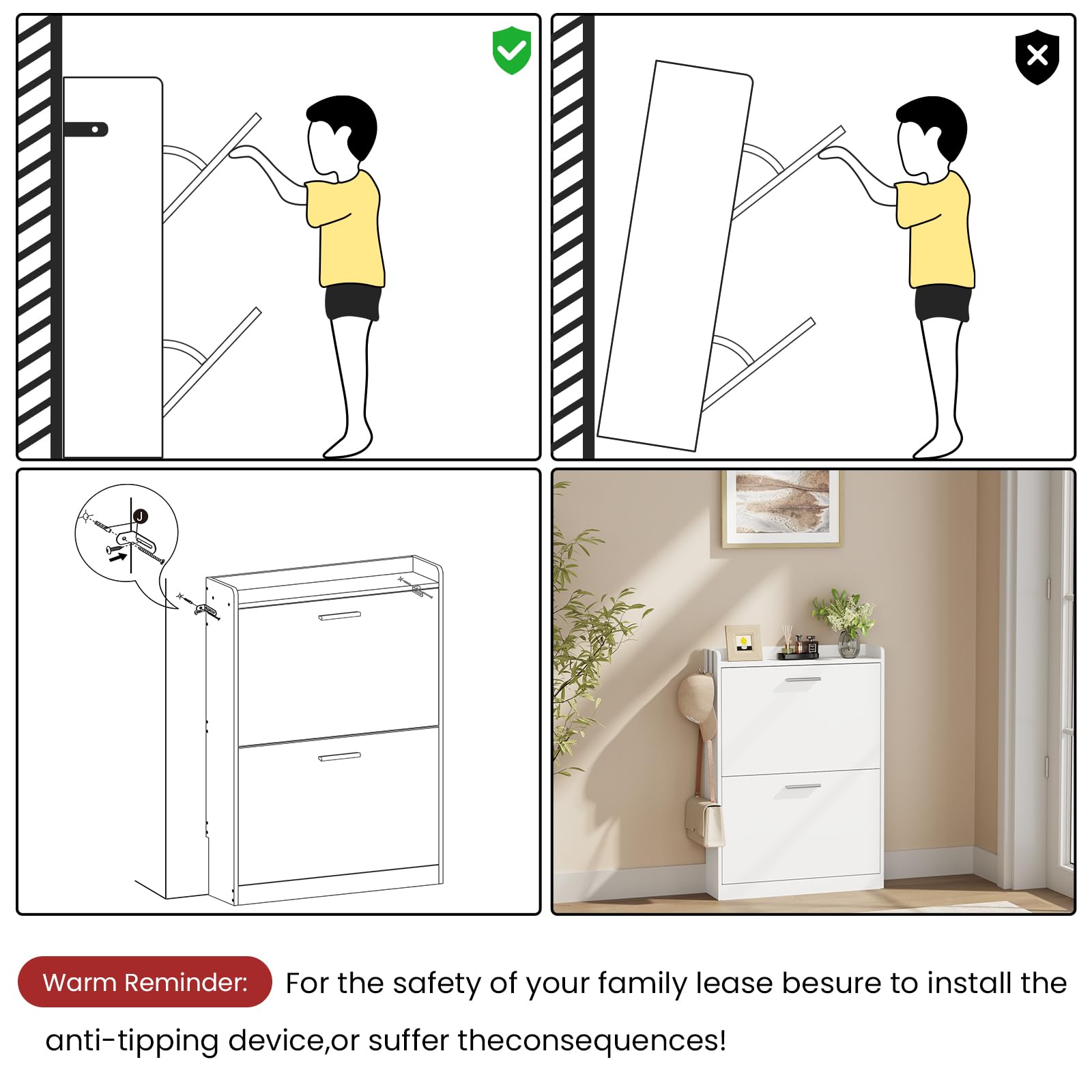
- Anti-tipping hardware included for household safety
- Straightforward assembly with illustrated instructions
- Solid80 lb weight capacity for an enginered wood cabinet at this price
Cons
- Limited to roughly 6 pairs per drawer, so larger households will outgrow it quickly
- Enginered wood construction may not hold up to high-moisture environments like mudrooms
- No color or finish options available beyond natural wood
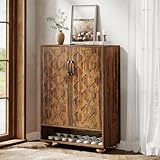
This VEVOR shoe cabinet solves the eternal entryway problem: where do shoes go without making a mess? The flip-drawer design means you toss your shoes in, close the drawer, and suddenly your hallway looks like it belongs in a design blog. The arched rattan doors and gold aluminum handles give it a warmth that most budget shoe cabinets completely lack.
In a real room, it reads more like a narrow console table than a shoe organizer. The natural wood finish andoven texture pair beautifully with a small mirror above or a few styled items on top. At just 6.6 inches deep, it hugs the wall without eating into your walkway, which is a genuine relief in apartment living.
If you want a shoe storage solution that actually looks like intentional decor without spending hundreds on a custom built-in, this one delivers.
Styles it works with: Boho, Scandinavian, Modern Farmhouse, Japandi
Best placed in: Narrow entryway against the wall, apartment foyer beside the door, bedroom corner near the closet
May not suit: Families with 4+ members who each own many pairs of shoes, or ultra-modern/industrial spaces where rattan texture feels out of place
Buy it if:
- You live in a small apartment or have a narrow hallway under 8 inches of usable depth
- You are a single person or couple with a moderate shoe collection (under 12 pairs in rotation)
- You want a shoe organizer that guests will mistake for a decorative console table
Consider waiting if:
- You prefer a darker walnut or white finish to match existing furniture
- You need more than two compartments for a growing collection
Skip it if:
- Your household has 3+ people who need daily shoe access
- You plan to place it in a garage or mudroom exposed to moisture and heavy dirt
Check the latest price and availability on Amazon before it sells out.

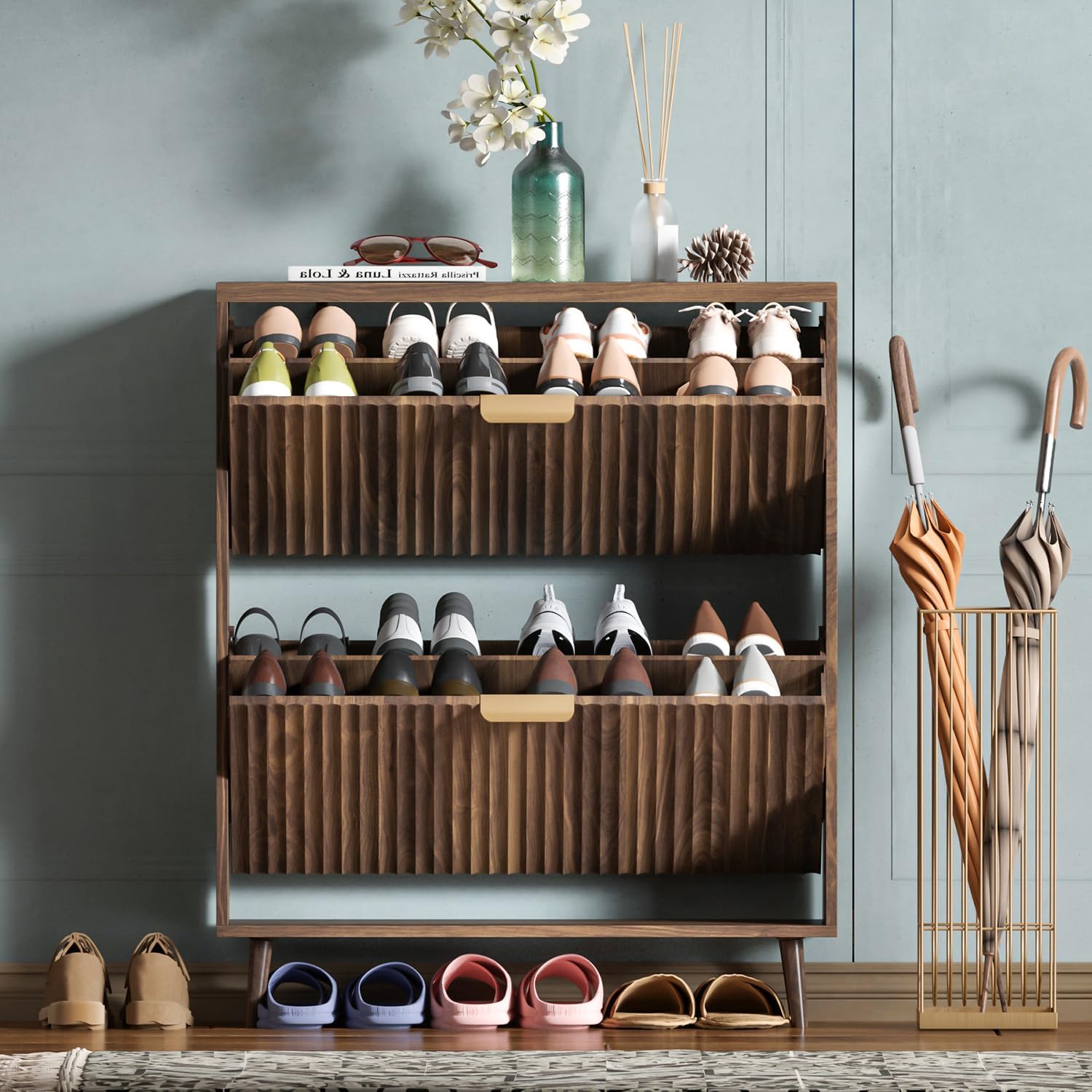
QIVOMIX Walnut Shoe Cabinet with 2 Flip Drawers - Narrow Entryway Storage Organizer for 14 Pairs, Anti-Tip Design
Pros
- Slim 9.4-inch depth works in tight spaces where standard cabinets won't fit
- Flip drawers provide easy access while keeping shoes concealed
- Sturdy top surface doubles as an entryway drop zone
- Anti-tip anchor adds peace of mind for families
- Walnut finish looks more expensive than the price point
Cons
- Zero reviews means no real-world feedback on durability or assembly ease yet
- Maximum shoe size of US 15 men's or 16 women's excludes larger sizes
- Flip drawer mechanism may require more clearance space than traditional doors
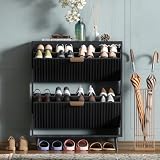
This shoe cabinet solves the classic entryway problem: you need storage but don't have the floor space for a bulky piece. At under 10 inches deep, it tucks against the wall like a console table while hiding 14 pairs of shoes behind a clean walnut facade. The flip drawers are the real win here, giving you quick access without the swing radius traditional doors require in narrow hallways.
The walnut grain and rose-gold handles give it a mid-century modern vibe that works whether your style leans Scandinavian minimal or warm transitional. The reinforced top is thick enough to hold a catch-all tray, a potted plant, and your keys without wobbling, and the anti-tip anchor means you won't worry if you have kids who climb or curious pets.
If you want a shoe storage solution that actually looks like furniture without eating up your entire entryway, this one delivers.
Styles it works with: Modern, Mid-Century Modern, Scandinavian, Transitional
Best placed in: Narrow entryways along the wall, hallway beside the front door, mudroom as secondary storage, apartment foyers with limited square footage
May not suit: Homes needing storage for shoe sizes above US men's 15 or women's 16, spaces where you need more than 14 pairs accessible daily, rustic or farmhouse interiors where the sleek walnut finish may feel too contemporary
Buy it if:
- Your entryway is narrow and standard shoe racks make the space feel cramped
- You want shoes hidden from view but still easily accessible with flip-open drawers
- You need a piece that functions as both storage and a surface for keys, mail, or decor
- You prefer modern or mid-century styling over traditional or rustic furniture
Consider waiting if:
- You want to see verified customer reviews before committing, since this is a newly listed product
- You're hoping for a different finish option like white, black, or natural oak
Skip it if:
- You regularly wear or store shoes larger than US men's size 15 or women's size 16
- You need to store more than 14 pairs in one cabinet without buying multiples
- You have more than 10 inches of clearance and would prefer a deeper cabinet with shelves instead of flip drawers
Check the latest price and availability on Amazon before it sells out.
1. Draelibor Slim Shoe Cabinet, 23.6″ W — the wall-hugger that wins on footprint math
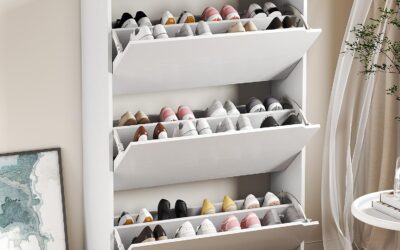
This one wins. At 23.6 inches wide with a two flip-drawer body, it slots into the dead zone beside most standard 32-inch entry doors without blocking the swing. Flip-drawer geometry stores shoes on a tilt, so overall depth stays slim while each drawer still swallows two to three adult pairs. That’s roughly four to six pairs total in under two square feet of floor.
The trade-off is real. Tilt drawers fight chunky sneakers and anything above a 3-inch sole, so tall boots go elsewhere. The white finish also shows scuffs at ankle height. Draelibor is a no-name brand here, not a heritage furniture maker, so treat the hardware as serviceable rather than heirloom.
2. VEVOR Shoe Cabinet with 2 Flip Drawers — the one with a top-mounted rack
VEVOR builds tools and shop equipment, and that shows in the utilitarian construction. Same two flip-drawer layout as the Draelibor, but the listing adds a rack surface, which turns the cabinet into a two-job piece: enclosed storage below, drop zone above for keys, mail, or a folded pair of flats. In a 40-square-foot entry, that second surface matters more than one extra shelf.
Expect particleboard panels and cam-lock joinery. It’s fine for four to six pairs of everyday shoes. Load anything heavier than about 30 pounds on the top and the panel will bow over time.
3. AFOORD Vertical 5-Tier Bamboo Shoe Rack — for corners and boots, not concealment
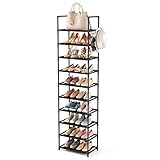
Different category of solution. This is a tall, narrow open rack with five bamboo tiers, built to claim vertical space in a corner or closet gap where a cabinet body won’t fit. Open shelving means no tilt restriction, so hiking boots, high-tops, and platform sneakers all sit flat. Bamboo also handles entryway humidity better than raw particleboard.
The honest trade-off: everything is visible, all the time. Apartment Therapy has long noted that open racks read as clutter unless shoe count stays low. Five tiers, roughly 5 to 10 pairs, no dust protection.
4. Haotian Small Shoe Cabinet for Entryway — the minimum-viable footprint
Haotian’s version is the smallest genuine cabinet in this group, and that’s the point. When the only free wall is 20 inches of hallway, capacity stops being the metric. Fit is. A single flip-drawer or two-tier enclosed body holds the shoes actually in rotation and hides them behind a door, which keeps a narrow corridor from reading as a mudroom.
Don’t expect much. Two to four pairs, thin back panel, and cam locks that want a screwdriver rather than the included wrench. It solves one problem well and nothing else.
5. QIVOMIX Shoe Cabinet, Walnut — the one that reads as furniture
Walnut laminate over a two flip-drawer freestanding body. QIVOMIX is aiming at the same slim profile as the Draelibor but with a warmer finish that sits better against wood floors or beside a console table. In open-plan apartments where the entry is really just the edge of the living room, finish is a functional spec, not vanity.
Capacity matches the category at four to six pairs. Laminate edges are where budget cabinets show their price, so check corners on arrival. No FSC certification is stated for the panel stock.
Comparison Table
| Pick | Brand | Format | Approx. capacity | Best for |
|---|---|---|---|---|
| 1 | Draelibor | 2 flip drawers, 23.6″ W | 4–6 pairs | Tight wall beside a door swing |
| 2 | VEVOR | 2 flip drawers + top rack | 4–6 pairs | Doubling as a drop zone |
| 3 | AFOORD | 5-tier open bamboo | 5–10 pairs | Boots, corners, closet gaps |
| 4 | Haotian | Compact enclosed cabinet | 2–4 pairs | Sub-24″ hallway slots |
| 5 | QIVOMIX | 2 flip drawers, walnut | 4–6 pairs | Visible open-plan entries |
Buying Guide: Specs That Decide the Purchase
Measure three numbers before anything else: wall width, door swing clearance, and baseboard depth. Baseboards push a flush cabinet forward by 0.5 to 0.75 inches, which is enough to catch a door. Then count pairs honestly. Households average around 1.5 pairs per person in active rotation at the entry, and everything else belongs in a closet.
Tier height is the spec listings hide. Flip drawers typically clear 4 to 5 inches, fine for flats and low sneakers, useless for boots. Open racks like the AFOORD trade concealment for unlimited shoe height. Bamboo and solid wood resist moisture; particleboard swells if wet shoes sit against it, so a mat underneath isn’t optional.
Comparison: Flip Drawers vs. Open Tiers
Flip-drawer cabinets buy you depth savings, roughly 9 to 10 inches versus 12 or more, plus dust control and visual calm. They cost you shoe height and add a moving hinge that eventually loosens. Open tiers cost you tidiness and win on versatility, airflow, and per-dollar capacity.
Wirecutter’s storage coverage makes a similar split: enclosed for small shared entries, open for closets. My rule is simpler. If guests see it, enclose it. If it lives behind a door, go open and gain the boot clearance.
Frequently Asked Questions
How deep should a small shoe cabinet be?
Aim for 9 to 12 inches. Flip-drawer models land near 9 to 10 inches because shoes sit tilted. Anything past 14 inches starts crowding a hallway under 40 inches wide, which is where circulation begins to feel tight.
Will these cabinets hold men’s size 12 shoes?
Flip drawers handle up to roughly size 11 to 12 in low-profile styles. Bulky size 12 sneakers often won’t let the drawer close flush. The AFOORD open rack has no such limit since tiers are unenclosed.
Is particleboard a dealbreaker?
Not at this price. Particleboard performs fine under 25 to 30 pounds per shelf in dry conditions. Add a waterproof mat and avoid loading the top with heavy objects. Bamboo or solid wood is the upgrade if moisture is a concern.
Do I need to anchor a small shoe cabinet to the wall?
Anchor anything over 30 inches tall, especially the 5-tier AFOORD. ASTM F2057 tip-over guidance applies to storage units, and a top-heavy narrow rack with kids nearby is exactly the scenario it addresses.
How many pairs fit in a two-drawer cabinet?
Four to six pairs realistically, two to three per drawer. Listings claiming 12 pairs assume child sizes or stacked flats. Plan around six and keep the rest in a closet.
Can these work in a rental with no wall damage?
Yes. All five are freestanding. Anchoring uses two small screws that patch easily, and a felt-pad base keeps floors unmarked in most rentals.
Bottom Line
The Draelibor slim cabinet at 23.6 inches wide is the pick for most small entryways. It solves the door-swing conflict that kills wider units and still hides four to six pairs behind flip drawers. Choose the AFOORD 5-tier bamboo rack instead if boots dominate your rotation or the storage lives inside a closet where visibility doesn’t matter. Both are budget-tier construction, so keep loads under about 30 pounds per shelf and use a mat.



Write Your Review
No reviews yet. Be the first to share your experience!