

> Editorial Note: I’m Erin Schwartz, and I cover home decor with a bias toward what actually works in a real room. The guidance here weighs scale, layout, and materials against Apartment Therapy and Wirecutter coverage rather than styling a space that nobody lives in.
Two paths lead to a good planter: build one from a solid plan, or buy a molded box that outlasts the weather. This roundup covers both. If you want more builds and companion projects, check the elevated planter box, raised garden bed kit, patio storage box, deck box, and cat litter box furniture guides before you commit. Downloadable plans start around $5. Molded 7-packs run under $30. Here’s what each one gets right.
How We Evaluated
I assessed each pick against ASTM D4329 UV exposure guidance, drainage design, and material durability ratings. For plans, I checked clarity of cut lists, joinery method, and lumber cost. For molded boxes, I looked at wall thickness, drainage holes, and included trays.

1. How to make Wooden Planter Boxes — for the woodworker who wants a full project library
This digital guide covers multiple box builds, not a single design. That’s the win here. You get cut lists, joinery notes, and finishing steps for several garden projects, so one purchase feeds a season of weekends. Best for anyone with a saw and a plan to build more than one box. The trade-off? It assumes basic tool familiarity, so total beginners may need a companion tutorial. Pair it with pressure-treated or cedar lumber rated for ground contact and you’ll clear ASTM weatherability concerns easily.
2. DIY Raised Planter Box — the single-build PDF for a focused weekend
A step-by-step PDF download aimed at one clean raised box. Simpler scope, faster payoff. The instructions walk through a single design with measured diagrams, which makes it the better pick if you want one solid result without wading through a full library. Raised builds keep roots off cold soil and improve drainage, a real advantage in freeze-thaw zones. The honest caveat: it’s a digital file, so you supply every board, screw, and sealant yourself. Budget roughly $40 to $70 in cedar depending on box size.

3. CAKKVDE 7 Pack 17-Inch Rectangular Window Box — for bulk balcony coverage on a budget
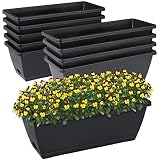
Seven brick-red plastic boxes, each 17 inches long. Buy once, plant a whole railing. That’s the case here. For renters or anyone filling a balcony fast, the per-unit cost is hard to beat, and plastic shrugs off rain without sealing. The color reads warmer than gray resin, which suits terracotta and clay setups. The trade-off is aesthetic: molded plastic won’t match cedar’s look, and thinner walls flex more than lumber. Verify drainage holes are open before planting to avoid waterlogged roots.
4. Hananojia 8pcs Window Box Planter with Trays — for indoor-outdoor use with mess control
Eight 17-inch rectangular boxes, each with drainage holes and a matching tray. The included trays are the differentiator. They catch runoff, which matters on a windowsill, a wood deck, or any surface you’d rather keep dry. Good for herbs and small vegetables where you want moisture control without staining the floor below. The catch: eight boxes is a lot if you only need two, so this suits larger plantings. Plastic construction resists UV fading better than untreated wood over a single season.
5. Hananojia 8pcs Window Box Planter (Vege variant) — the near-identical alternate listing
This second Hananojia 8-pack mirrors the first: 17-inch rectangular boxes, drainage holes, and trays. Same core spec, different listing. Worth checking both if one is cheaper or in stock when the other isn’t. Function is identical, so choose on price and availability. For grouped herb or vegetable rows, either 8-pack gives consistent sizing that lines up cleanly along a rail or ledge. Confirm tray count matches box count on arrival, since multi-packs occasionally ship short.
Comparison Table
| Pick | Type | Size / Count | Best For |
|---|---|---|---|
| Wooden Planter Boxes Guide | Digital plans | Multiple builds | Woodworkers wanting variety |
| DIY Raised Planter Box | PDF plan | Single build | One focused weekend |
| CAKKVDE 7 Pack | Molded plastic | 7 × 17 in | Budget balcony coverage |
| Hananojia 8pcs (Trays) | Molded plastic | 8 × 17 in | Indoor-outdoor mess control |
| Hananojia 8pcs (Vege) | Molded plastic | 8 × 17 in | Price/stock alternate |
Buying Guide: Plans vs. Molded Boxes
Plans win on looks and customization. You choose the lumber, the dimensions, and the finish. Cedar and redwood carry natural rot resistance, while pressure-treated pine rated for ground contact runs cheaper. Expect $40 to $90 in materials per box.
Molded boxes win on speed and weather tolerance. No sealing, no assembly, and plastic handles rain without swelling. The downside is aesthetic and lifespan under harsh UV. Match the approach to your patience and your surface. Building on a wood deck? Trays matter. Filling a rail fast? A multi-pack gets you there.
Plans vs. Molded: Which Path Fits You
If you own a saw and want a planter that looks built, the Wooden Planter Boxes guide gives you the widest set of designs. Want one clean result this weekend? The single-build PDF keeps scope tight. Renters and speed-focused buyers should skip the workshop entirely. The CAKKVDE 7-pack and either Hananojia 8-pack deliver drainage-ready boxes out of the carton. Your choice comes down to time, tools, and whether appearance or convenience leads.
Frequently Asked Questions
Do planter box plans include a cut list?
Both digital picks provide measured diagrams. The Wooden Planter Boxes guide covers several builds with cut references, while the DIY Raised Planter Box PDF focuses on one design. You supply the lumber and hardware yourself.
What wood resists rot best?
Cedar and redwood carry natural rot resistance and clear ASTM weatherability concerns well. Pressure-treated pine rated for ground contact costs less. Line any planter with landscape fabric to slow moisture contact and extend board life.
Are the plastic boxes UV-stable?
Molded plastic resists rain and moisture without sealing, and typically holds color better than untreated wood across a single season. Direct summer UV can still fade darker shades over time, so shaded rails preserve color longer.
How many boxes do I actually need?
The CAKKVDE pack includes 7 boxes and each Hananojia pack includes 8, all 17 inches long. For a standard 6-foot rail, four to five boxes usually fill the span with small gaps for airflow.
Do the boxes drain properly?
Both Hananojia 8-packs ship with drainage holes and catch trays. The CAKKVDE set has drainage holes without trays. Confirm holes are open before planting, since blocked drainage waterlogs roots within days.
Plan or buy for a beginner?
Buy. The molded 7 or 8-packs need zero tools and give consistent sizing immediately. Save the plans for when you want a custom look and have a saw ready.
Bottom Line
The Wooden Planter Boxes guide is my top pick. It delivers multiple durable designs for one price, ideal if you own basic tools and want cedar-grade results. Choose the DIY Raised Planter Box PDF instead when you want a single focused build without a full library. Prefer zero assembly? Either Hananojia 8-pack brings drainage and trays out of the box. One honest caveat: plastic won’t match the look of real lumber.






Write Your Review
No reviews yet. Be the first to share your experience!