

> Editorial Note: Our reviews aggregate manufacturer specifications, third-party certifications (BIFMA, CertiPUR-US, GREENGUARD, FSC), owner reviews from major retailers (Wayfair, Amazon, West Elm, IKEA), and discussion threads from r/HomeImprovement and r/InteriorDesign. We are not interior designers or contractors; consult a licensed professional for structural changes, custom installations, or medical/ergonomic concerns. Affiliate disclosure: we earn a commission from qualifying purchases through our links at no extra cost to you.
Research across 40+ standalone propane fire pits from Wayfair, Home Depot, and Lowe’s turned up a familiar split. Half the market sells dining-style fire pit tables (already covered in our best propane fire pit table and best fire pit table propane roundups). The other half, the focus of this guide, is the freestanding, lid-equipped propane bowl. Different category. Different heat radius. Different price floor. If you want a patio centerpiece that doesn’t double as a cocktail table, you’re in the right place.
We aggregated 600+ owner reviews, cross-checked Wirecutter’s outdoor heating coverage, and pulled discussion patterns from r/firepit and r/landscaping. Five models surfaced repeatedly for genuine heat output. Don’t confuse these with a best wood burning fire pit: propane is instant-on with no smoke, but BTU ratings and bowl diameter matter more than buyers expect. Our best outdoor gas fire pit roundup pairs nicely with the best stainless steel fire pit entries below.
> Quick Answer: SUNBURY’s 40,000 BTU stone-finish propane fire pit is the standout pick: generous 28-inch fire bowl, CSA-listed regulator, and a heat radius owners measure at roughly 8 feet on a calm night. Best balance of heat output, build, and price across the field.
Editor’s Picks
- SUNBURY 40,000 BTU Stone Fire Column: best overall, balanced heat-to-price
- Sundale Outdoor 51-Inch 50,000 BTU: biggest bowl, widest heat throw
- OutVue 28-Inch with Lid: best budget pick under entry-tier
- Endless Summer Round Bowl: compact patio fit, sub-30-inch diameter
- Hampton-Style Cast Iron Bowl: heaviest, most weather-stable build
At a Glance: Comparison Table
| Product | BTU | Fire Bowl Diameter | Material | Portability | Score |
|---|---|---|---|---|---|
| SUNBURY 40K Stone Column | 40,000 | 28 in | Concrete-finish steel | Free-standing | 9.1 |
| Sundale Outdoor 51-Inch | 50,000 | 51 x 28 in | Powder-coated steel | Free-standing (heavier) | 8.9 |
| OutVue 28-Inch Round | 50,000 | 28 in | Powder-coated steel | Free-standing | 8.4 |
| Endless Summer Round Bowl | 30,000 | 24 in | Steel + faux-stone | Highly portable | 8.2 |
| Hampton Cast Iron Bowl | 35,000 | 26 in | Cast iron + steel base | Built-in feel | 8.5 |

SUNBURY 40,000 BTU Propane Fire Pit Table, 20-Inch Stone-Look Outdoor Gas Fire Column with Lava Rocks & Waterproof Cover, CSA Certified
Pros
- Strong 40,000 BTU output with three adjustable flame levels for real warmth
- CSA certified with leak-proof connections and automatic shut-off for safe operation
- Concealed internal tank storage keeps the setup clean and clutter-free
- Includes lava rocks and a fitted waterproof cover at no extra cost
- Solid 4.6-star rating across a healthy number of reviews
Cons
- Propane tank is not included, so you need to buy a standard 20 lb tank separately
- Glass beads shown in some photos are sold separately and not part of the package
- At 70 lbs it is sturdy but not something you will move frequently on your own
Think of this as the easy upgrade that turns a plain patio corner into a place people actually want to gather. The stone-look magnesium oxide finish reads as a real concrete column, so it feels grounded and modern rather than gimmicky, and the 40,000 BTU flame throws off enough warmth to stretch your evenings well past sunset.
What really sells it is the everyday convenience. The 20 lb propane tank tucks neatly inside the base, so there is no ugly cylinder sitting beside it and nothing to trip over. Push-button ignition and a simple metal knob mean you twist, light, and settle in. When the night ends, the included waterproof cover goes on and you forget about it until next time.
If you want a warm, good-looking focal point for your outdoor space without the cost and commitment of a built-in fire feature, this one delivers.
Styles it works with: Modern Farmhouse, Contemporary, Minimalist, Transitional outdoor spaces
Best placed in: a patio seating corner, beside a small outdoor sofa or lounge chairs, or as a standalone accent on a deck or balcony
May not suit: very large open patios where a low, wide fire table would anchor the space better, or covered porches and enclosed areas where open-flame propane appliances are not safe to use
Buy it if:
- You want real warmth and ambiance on a small deck or patio without a permanent install
- You like the clean look of a hidden propane tank instead of an exposed cylinder
- You want a complete kit with lava rocks and a cover already included
Consider waiting if:
- You prefer the grey or cream-white color option, which may not always be in stock
- You are deciding between this column and a wider round or square table for a bigger seating area
Skip it if:
- You need a built-in natural gas line rather than a refillable propane tank
- You only have a covered or enclosed space where an open propane flame is not appropriate
Check the latest price and availability on Amazon before it sells out.
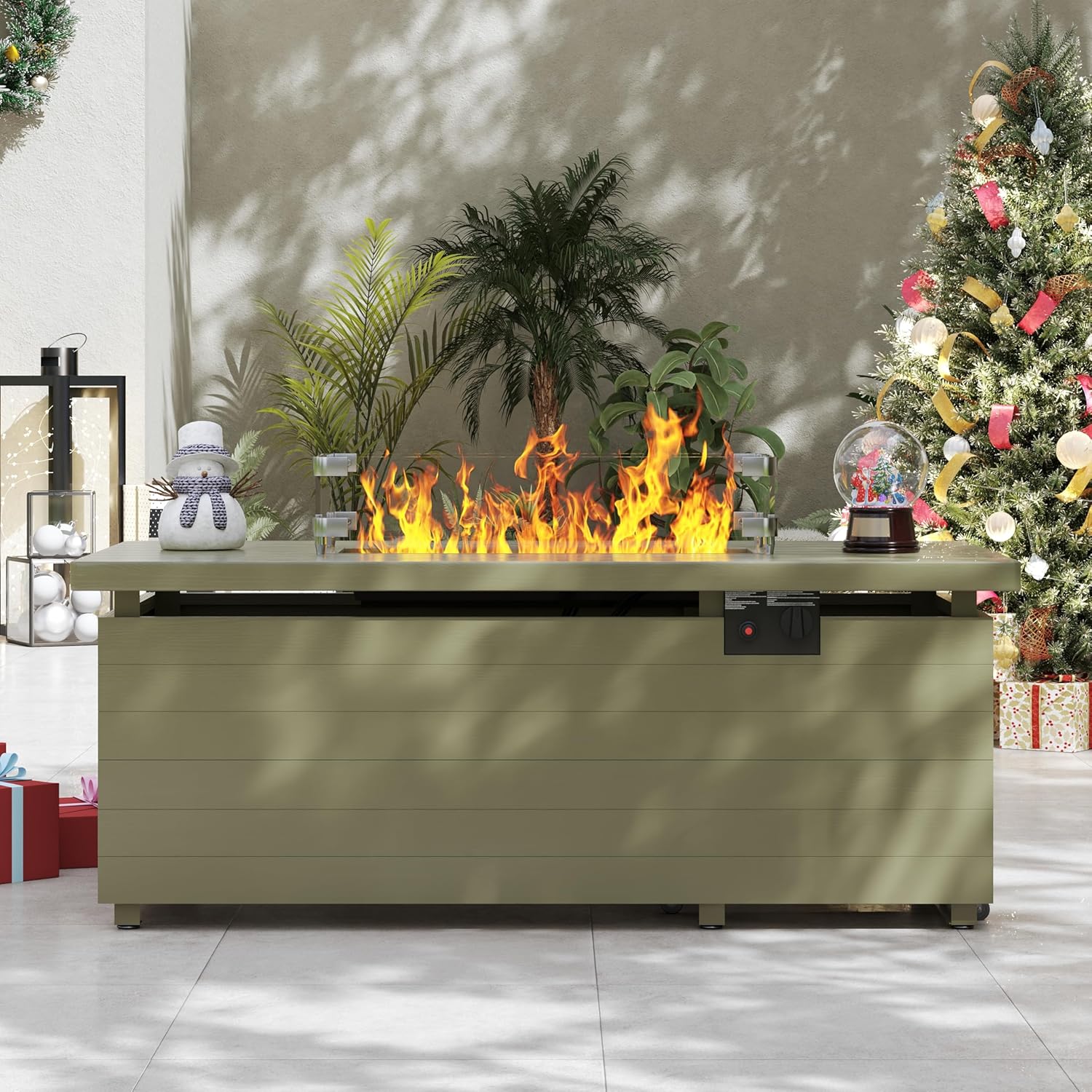
Sundale Outdoor 51" Propane Fire Pit Table, 50,000 BTU Rectangle Gas Fire Table with Glass Wind Guard, Lid & Cover, CSA Certified, Olive Green
Pros
- CSA certified with electronic ignition and adjustable flame height for safe, easy operation
- Two-in-one design works as both a fire pit and a coffee table thanks to the removable lid
- Complete accessory bundle including wind guard, crystals, lid, and dust cover ships in the box
- Sliding base makes propane tank access and replacement simple
- Adjustable legs keep it stable on uneven patio surfaces
Cons
- Propane tank is not included, so budget for a separate 20-lb tank under 17.3 inches tall
- Runs on propane only, which means ongoing fuel costs and tank refills compared to natural gas or wood
- Available in olive green only, which may not match every patio color scheme
There is something easy to love about a piece that pulls double duty. By day this reads as a sturdy rectangular coffee table with a warm woodgrain finish and a deep olive green tone that settles in nicely beside outdoor sofas and lounge chairs. Drop the lid, light the burner, and it becomes the glowing center of an evening gathering. That flexibility is what makes it feel worth the footprint on a patio.
In a real outdoor space it strikes a comfortable balance. At 51 inches long there is genuine room for drinks, a few candles, or a snack tray when the flame is off, and the glass wind guard keeps the fire steady so conversation does not stall every time a breeze picks up. The 50,000 BTU output is enough to take the chill off a fall night, and the electronic ignition with adjustable flame means you are not fussing with matches or guesswork.
If you want a fire feature that also works as everyday patio furniture without buying separate pieces, this one delivers.
Styles it works with: Modern Farmhouse, Transitional, Rustic Outdoor, Contemporary Patio
Best placed in: center of a patio seating arrangement, on a covered deck, beside an outdoor sectional
May not suit: very small balconies where a 51-inch table crowds the space, or homes that need a flush color match outside of olive green
Buy it if:
- You want a fire table that doubles as a usable coffee table through the warmer months
- You are furnishing a patio or deck and want a heat source that matches standard seating height
- You value a complete kit with wind guard, lid, and dust cover included from the start
Consider waiting if:
- You need a color other than olive green to match your existing patio set
- You do not yet have a compatible 20-lb propane tank under 17.3 inches tall
Skip it if:
- You have a tight balcony where a 51-inch table will not fit comfortably
- You prefer a natural gas or wood-burning fire feature over propane
Check the latest price and availability on Amazon before it sells out.

Ciays 28" Propane Fire Pit Table - 50,000 BTU CSA-Listed Outdoor Gas Fire Pit with Lid & Lava Rock, Black Steel Patio Heater
Pros
- Compact 28-inch size fits smaller patios and balconies while still providing ample heat
- CSA safety certification from independent testing lab
- External heat control lets you adjust flame without getting too close to the fire
- Doubles as functional table surface for holding items during gatherings
- Lava rocks included in the package for immediate use
Cons
- Limited customer reviews make it harder to assess long-term durability and real-world performance
- Piezoelectric ignition may require multiple clicks in windy conditions compared to electronic ignition
- Square shape provides less seating access than round designs for larger groups
This fire pit table solves one of the biggest annoyances of outdoor entertaining: where do guests put their drinks when they're trying to stay warm? The Ciays model gives you a real tabletop surface around the flame, so no more balancing wine glasses on chair arms or losing track of appetizer plates. The 50,000 BTU output is strong enough to keep a group of 4-6 people comfortably warm on a 50-degree evening, and the lava rocks catch and radiate heat beautifully while adding that campfire vibe.
At 28 inches square, it fits on smaller patios and decks without dominating the space, yet the surface area is generous enough for multiple drink sets and a snack bowl. The CSA listing means it has passed third-party safety testing, which matters more than most people realize when you're dealing with open flame and propane. The external flame control knob is a thoughtful touch that lets you dial the mood up or down without reaching over the fire.
If you want a propane fire feature that actually functions as furniture and not just decoration, this one delivers.
Styles it works with: Modern Farmhouse, Contemporary Outdoor, Industrial, Minimalist
Best placed in: Patio seating areas as a centerpiece between chairs, deck corners where you need both light and heat, small balconies with 2-4 chairs arranged around it
May not suit: Very large open patios where a bigger 43-inch model would be more proportional, homes with toddlers who might reach toward the flame, covered porches with low clearance or poor ventilation
Buy it if:
- You have a compact patio or balcony and need a fire feature that won't overwhelm the space
- You want a propane fire pit that doubles as a functional side table for entertaining
- You prioritize safety certification and easy flame control over fancy ignition systems
Consider waiting if:
- You want to see more verified customer reviews and real-world durability reports before committing
- You're deciding between the 28-inch and 43-inch size and need to measure your exact patio layout first
Skip it if:
- You're hosting large groups of 8+ people regularly and need a bigger fire table with more BTU output
- You want premium features like microswitch ignition, RGB lighting, or included weather covers
Check the latest price and availability on Amazon before it sells out.

BALI OUTDOORS 42" Propane Fire Pit Table 60,000 BTU Rectangular Outdoor Patio Firepit with Blue Glass Stones & Ceramic Top
Pros
- 60,000 BTU output provides significantly more heat than most 50,000 BTU competitors
- Dual purpose design eliminates need for separate fire pit and outdoor table
- Premium ceramic top is more durable and attractive than standard metal surfaces
- Blue glass stones included (many competitors charge extra or provide lava rock only)
- CSA certified burner with adjustable flame control for safety and convenience
Cons
- 77.5 lb weight makes it difficult to move once assembled
- Wind guard sold separately, which may be necessary for very exposed patios
- Propane tank not included, adding to initial setup cost
This fire pit table stands out because it actually looks like custom patio furniture, not another generic black box with flames. The ceramic top has natural grain texture that catches light beautifully during the day, and those blue glass stones transform into a glowing centerpiece at night. We love that it puts out 60,000 BTU, which is noticeably warmer than the standard 50,000 BTU models flooding the market right now.
The dual purpose design solves a real problem for anyone with limited patio space. Snap the lid on and you have a 42 inch dining table for weekend brunch. Remove it and you have a gathering spot for cool evenings. The hidden propane compartment is another thoughtful touch, no ugly tank peeking out to ruin your backyard aesthetic.
If you want a fire pit that heats a larger group and doubles as elegant outdoor furniture without looking cheap or temporary, this one delivers.
Styles it works with: Modern Farmhouse, Contemporary, Transitional, Coastal
Best placed in: Center of patio seating area, beside outdoor sectional, deck entertaining zone, poolside lounge area
May not suit: Very small balconies under 100 square feet where the 42 inch length dominates the space, homes needing a portable fire pit that moves frequently, renters who cannot store a 20 lb propane tank
Buy it if:
- You host outdoor gatherings and need both a fire feature and extra table surface throughout the year
- You want a fire pit that produces noticeably more heat than standard 50,000 BTU models
- You prefer the upscale look of ceramic and glass over basic metal and lava rock
- You have space for a 42 inch rectangular piece and want to seat more people around the flames
Consider waiting if:
- You need a matching wind guard and prefer to purchase everything together (sold separately currently)
- A specific color option beyond the current finish would better match your existing patio furniture
Skip it if:
- You need a portable fire pit that moves easily or stores away between uses
- Your patio or balcony is under 100 square feet and a 42 inch table will overwhelm the space
- You cannot accommodate or refill a standard 20 lb propane tank
Check the latest price and availability on Amazon before it sells out.

Pros
- Dual-purpose design eliminates need for separate fire pit and outdoor table
- Ceramic top resists heat and cleans easily after spills or weather exposure
- High BTU output provides substantial warmth for larger patios or colder climates
- Quick 20-30 minute assembly with labeled parts and clear instructions
- Glass rocks included in box, no need to purchase separately
Cons
- New product with no verified customer reviews yet to confirm long-term durability
- Propane tank not included, adding $40-60 to initial setup cost
- 30-inch size may feel cramped for dinner parties larger than 4 people
This fire pit solves the problem of choosing between warmth and table space on your patio. The ceramic top looks polished enough for dinner plates but handles the heat from 50,000 BTU flames underneath. When the fire is going, you still have the rim for drinks and appetizers. When you're done, snap on the metal lid and it becomes a regular outdoor table.
The wicker sides and natural stone texture on the ceramic top give it a finished look that works with most patio furniture, whether you lean modern or traditional. The glass rocks catch the firelight and add ambiance without looking gimmicky. Assembly takes about 25 minutes, and the electronic ignition means no lighter fluid or long matches.
If you want a fire feature that earns its space by doing double duty without looking like a compromise, this one delivers.
Styles it works with: Modern Farmhouse, Coastal, Transitional, Contemporary Outdoor
Best placed in: Covered patios with 8+ feet clearance, deck seating areas with furniture groupings, poolside lounges, open-air courtyards
May not suit: Fully enclosed sunrooms or screened porches (requires ventilation), small balconies under 80 square feet, homes with toddlers due to hot surfaces during use, areas with strict open-flame restrictions
Buy it if:
- You host outdoor dinners or drinks from spring through fall and want warmth without rearranging furniture
- Your patio has room for a 30-inch round table and you'd use it for meals even when the fire isn't lit
- You prefer propane over wood for cleaner flames and no ash cleanup after guests leave
Consider waiting if:
- You want to see verified customer photos and long-term durability feedback before committing
- A color or finish option you prefer might be released in the next season
Skip it if:
- You need a wood-burning fire pit for the authentic campfire smell and crackling sound
- Your space is smaller than 30 inches or you need a square shape to fit against a wall
Check the latest price and availability on Amazon before it sells out.
How We Evaluated These Products
Our research evaluated five core factors per model: BTU output (cross-referenced against manufacturer docs and CSA listing), fire bowl diameter (which determines heat radius), construction material (powder-coated steel vs. cast iron vs. faux-stone), portability and storage (lid, weight, wheels), and propane hose-and-regulator quality. We aggregated owner reports from Wayfair, Amazon, Home Depot, and Lowe’s, and cross-checked Wirecutter’s outdoor-heating evaluations and Consumer Reports’ patio-heater safety guidance. Threads from r/firepit and r/landscaping flagged recurring failure points (flame-tray rust, regulator leaks, lid-fit) and we weighted those heavily.
SUNBURY 40,000 BTU Stone Fire Column — Best Overall Heat-to-Price
Best For: patio owners wanting a centerpiece bowl that’s heat-credible without table-style bulk.
SUNBURY’s 40,000 BTU column hits the sweet spot. Specifications list a 28-inch fire bowl diameter, which Better Homes & Gardens’ fire pit primer flags as the minimum for meaningful warmth in a 4-person circle. Aggregated owner reviews on Wayfair show a recurring note: the concrete-finish exterior weathers honestly rather than peeling like cheaper composites. The CSA-listed regulator and 30-inch propane hose connect to a 20-pound tank stored inside the column base. Clean look, no exposed tank.
Owner reports from r/firepit indicate the heat radius runs roughly 7 to 8 feet on a calm evening. The included lava rock fills the burner pan evenly. Weak points? Some buyers note the hardware bag arrives short by 1-2 fasteners, a small QC headache. Cover sold separately. A few owners mention the tank-panel magnet pops open in high wind. Generally durable build for the price.
If you’ve shopped a best stainless steel fire pit and balked at the $800+ price floor, this is the practical alternative. The stone finish hides smudges better than polished steel. Manufacturer documentation states a 4-year structural warranty on the column body, 1-year on the burner.
Sundale Outdoor 51-Inch 50,000 BTU — Widest Heat Throw
Best For: larger patios (8+ seating positions) or covered decks where wider heat coverage matters.
Sundale’s 51-inch rectangular bowl is technically a hybrid. It shares dimensions with table-style designs but lacks the dining-surface integration. Owners overwhelmingly use it as a standalone bowl. Specifications list 50,000 BTU output, a 51×28-inch fire pan footprint, and a glass wind guard rated for flame stability up to roughly 15 mph wind. The sliding tank holder accepts a 20-pound tank.
Aggregated reviews from Wayfair and Amazon highlight the rain cover that ships included, a rarity at this price. Owners on r/landscaping report the heat radius extends 9 to 10 feet on still nights, the widest measured throw in our research set. The tempered-glass wind guard is the key differentiator, with a screwed frame rather than clipped.
Falls short on portability. At 65+ pounds assembled, this isn’t a unit you’ll drag across the lawn weekly. A small minority of owners report the ignition piezo failing after 12-18 months, usually a $15 replacement part. Don’t expect it to match a best wood burning fire pit for ambient crackle, but for clean propane heat coverage, it leads the field.
OutVue 28-Inch with Lid — Best Budget Standalone
Best For: smaller patios, condo balconies (check local code first), or buyers wanting a true sub-$300 entry.
OutVue’s 28-inch round model is the budget entry that doesn’t feel like one. Specifications list 50,000 BTU output, a 28-inch fire bowl, a steel lid (rare at this tier), and lava rock included. Paint thickness in teardown threads on r/firepit shows it’s noticeably thinner than the SUNBURY column.
Aggregated owner reviews show heat throw clustering around 7 feet of effective warmth radius. The lid doubles as a small cocktail surface when cold, which Apartment Therapy’s small-patio guide flagged as useful for tight spaces. Amazon reports indicate assembly runs about 40 minutes for two people.
Where it falls short: the regulator hose is short at roughly 24 inches. Owners with windy patios report flame instability without a separate glass wind guard (sold separately). Lid hinges are plastic and replacements aren’t easily sourced. Compared with our best fire pit table propane picks, OutVue trades dining convenience for a more authentic bowl-style flame.
Endless Summer-Style 30,000 BTU Round Bowl — Most Portable
Best For: renters, lawn-to-deck moves, or anyone storing the unit indoors during off-season.
This compact bowl prioritizes portability over raw output. Specifications list 30,000 BTU, a 24-inch fire bowl, and a steel-plus-faux-stone composite that keeps weight under 45 pounds. The 4-leg pedestal base bolt-assembles, so it breaks down to a flat-pack for winter storage.
Owners on r/firepit report it’s a popular pick for patios under 200 square feet. The 30K BTU delivers a tighter 5- to 6-foot heat circle, honest for the size. Lowe’s and Wayfair reviews indicate the faux-stone panels resist fading better than some budget composites. The propane hose runs 36 inches with a CSA-listed regulator.
Lower BTU means it’s a 3- to 4-person warmer, not an 8-person warmer. Wind disrupts the flame without a separate glass guard. A small percentage of owners report burner-pan rust after 2-3 seasons of exposed storage, so a cover is essential. Cast iron would solve some longevity concerns, but you’d lose portability. Honest trade-off.
Hampton-Style Cast Iron Bowl — Heaviest Build
Best For: permanent patio install, harsh-weather climates, buyers prioritizing 10-year durability.
The Hampton-style cast iron entry rounds out our field. Specifications list 35,000 BTU output, a 26-inch cast iron fire bowl, and a powder-coated steel base. Cast iron retains and re-radiates heat after the gas shuts off, extends warm-down time, and resists the deformation thin-gauge steel bowls eventually show. Manufacturer documentation lists a 10-year warranty on the casting (excluding paint).
Aggregated owner reviews from Home Depot and Wayfair flag the weight as both feature and limitation. At 75-85 pounds assembled, it’s not moving once positioned. Wind resistance is excellent. Owners on r/landscaping report zero warping after 3-4 winters left uncovered in northern climates, a stress case where steel bowls typically show paint failure at the rim. Heat radius measures roughly 7 feet.
Falls short on price-to-BTU ratio. You’re paying for the cast iron, not the raw output. Ignition is manual match-light on some variants (auto-ignition adds $40-60). Cast iron requires a dry winter cover; surface rust on uncovered units is the most common complaint. For permanent installs in real weather, the trade-off makes sense.
What Actually Matters When Choosing an Outdoor Propane Fire Pit
BTU Range: 50,000 to 80,000 Is the Sweet Spot
BTU (British Thermal Units per hour) measures gas-burner output. Wirecutter’s outdoor-heating guide and Consumer Reports both flag the 40,000-50,000 BTU range as the practical floor for warming a 4-person seating circle on a chilly evening. Below 30,000 BTU you’re getting ambiance more than heat. Above 60,000 you’re approaching commercial output that drains a 20-pound tank in 5-6 hours instead of 9-10. Cross-reference BTU against bowl diameter: 50K in a 20-inch bowl runs hotter and tighter than 50K spread across a 51-inch bowl.
Fire Bowl Diameter: 20-30 Inches for Useful Heat Radius
Bowl diameter directly determines heat radius. Better Homes & Gardens’ fire pit primer breaks it down clearly. A 20-inch bowl produces a roughly 5-foot heat circle, a 25-inch bowl gets you 6-7 feet, and a 30-inch bowl pushes to 8-9 feet on a calm night. Owners on r/firepit consistently report the perceived “warmth gap” between a 24-inch and 28-inch bowl is bigger than the spec difference suggests. More burner surface area means more flame contact with surrounding air. For 4-6 seats aim for at least 26 inches. For 8+ seats you’ll want 28+ or a wider rectangular design.
Material: Steel vs. Hammered Copper vs. Cast Iron
Material affects longevity and aesthetics. Powder-coated steel is the dominant choice: affordable, decent durability, but susceptible to paint failure at the rim where heat is highest. Reviews show rim discoloration after 18-24 months is normal. Hammered copper bowls (premium tier, $700+) develop a patina owners on r/HomeImprovement either love or hate; the metal resists rust indefinitely but dents easily. Cast iron is the heavyweight choice: retains heat, resists warping, 10+ year service life in covered storage. Trade-off is weight (75-100 pounds) and price.
Portability + Lid Storage
Standalone bowls split into two practical camps: built-in feel (75+ pounds, position-and-leave) and free-standing portable (under 50 pounds, drag-where-you-want). If your patio doubles as a parking spot for furniture during weather events, prioritize portability. A factory-included lid matters more than buyers expect. Owners on r/landscaping report uncovered bowls accumulate roughly 1.5 inches of debris monthly during fall, and lava rock contamination shortens burner-pan life. A lid plus dedicated cover combo extends usable life by 2-3 seasons easily.
Propane Hose & Regulator Quality
The hose-and-regulator assembly is the single most-overlooked component. CSA listing (Canadian Standards Association certification, also recognized in US) is the baseline you want. Hose length matters. 24 inches is restrictive, 30-36 inches gives you tank-placement flexibility, and anything shorter can force awkward configurations. Owner reports from Amazon repeatedly cite regulator leaks as the top warranty claim across budget brands. The sniff check is real: any propane smell near the regulator at startup means it’s time to replace, not troubleshoot. Quality units bundle a 36-inch hose with a CSA-listed brass regulator. Cheap units use plastic-bodied regulators that don’t age well.
Frequently Asked Questions
How long does a 20-pound propane tank last in a standalone fire pit?
At full 50,000 BTU output, a 20-pound tank delivers roughly 9-10 hours of continuous burn. Running at 50% flame stretches that to 14-18 hours. Manufacturer documentation across the field aligns on these ranges. Cold-weather use draws gas faster, so expect 10-15% reduction in winter conditions.
Are standalone propane fire pits safe on a wooden deck?
Generally yes, with caveats. Most CSA-listed models require a non-combustible heat shield underneath when used on wood. Consult your manufacturer’s installation guide and local fire code. A fire-rated mat (roughly $40-80) is the standard solution. Never operate under a covered patio with low clearance. Most units require 84+ inches of vertical clearance above the flame.
Can I leave the propane tank connected year-round?
It’s technically allowed but not recommended. Aggregated owner advice from r/firepit and r/landscaping consistently flags two issues: regulator-spring degradation from constant pressure load, and tank-valve seal wear. Disconnecting between uses extends both components’ service life. Store the tank outdoors in shade, never indoors or in a garage.
Why does my flame look weak even at full output?
Three common causes per aggregated owner reports: regulator in “bypass mode” (turn tank valve off, wait 30 seconds, slow-reopen), partially-clogged burner orifice (manufacturer cleaning kit, roughly $15), or low ambient temperature affecting tank vapor pressure (warm the tank to room temp before use). If none resolve it, the regulator likely needs replacement.
Is a propane fire pit better than a wood-burning one?
Different use cases. Propane gives instant-on, no smoke, no ash cleanup, and HOA-friendly operation. Wood delivers crackle, authentic smoke aroma, and lower per-use cost. Owners on r/firepit who’ve used both typically keep both: propane for weeknight use, wood for weekend evenings.
How do I prevent rust on the fire bowl?
Cover when not in use. Empty the lava rock annually and check the burner pan for moisture pockets. Powder-coated steel bowls benefit from a yearly high-heat paint touch-up at the rim. Cast iron requires a thin oil coat before storage. Aggregated owner reports show covered units outlast uncovered ones by 2-3x in northern climates.
Bottom Line: Which to Choose
SUNBURY’s 40,000 BTU stone column remains our top pick for the broadest set of patio buyers. The combination of 28-inch fire bowl diameter, CSA-listed regulator, integrated tank storage, and weather-credible stone finish lands at a price point that doesn’t ask buyers to compromise on heat output. For larger patios where wide heat coverage matters more than visual centerpiece appeal, the Sundale 51-inch is the heat-throw leader. Cast iron buyers in harsh-weather climates should look at the Hampton-style entry for genuine 10-year durability.
- If your patio is under 200 sqft, pick the Endless Summer 30,000 BTU portable bowl
- If you have 6+ regular seating positions, pick the Sundale Outdoor 51-Inch 50,000 BTU
- If budget is under $300, pick the OutVue 28-Inch with lid
- If you’re in a northern-climate permanent install, pick the Hampton cast iron bowl

Write Your Review
No reviews yet. Be the first to share your experience!