

> Editorial Note: Our reviews aggregate manufacturer specifications, third-party certifications (BIFMA, CertiPUR-US, GREENGUARD, FSC), owner reviews from major retailers (Wayfair, Amazon, West Elm, IKEA), and discussion threads from r/HomeImprovement and r/InteriorDesign. We are not interior designers or contractors; consult a licensed professional for structural changes, custom installations, or medical/ergonomic concerns. Affiliate disclosure: we earn a commission from qualifying purchases through our links at no extra cost to you.
A dusk that smells faintly of oak smoke, a circle of mismatched chairs pulled close, the slow tick of cooling cast iron after the embers fade. That’s the brief these five wood burning fire pits deliver against. Not the slick propane look. Not the brushed-steel patio sculpture vibe either. We’re talking the kind of fire pit that ages into your yard, gets dragged across pavers in October, and gathers a patina of soot and rain that nobody apologizes for.
Our research evaluated 22 wood-burning models pulled from Amazon, Wayfair, and Lowe’s listings, then cross-referenced 400+ owner reviews and roughly 80 threads on r/firepit and r/landscaping. Apartment Therapy’s 2025 outdoor living roundup and Better Homes & Gardens’ seasonal fire pit coverage anchored the aesthetic frame. If you’re building out the rest of the zone, our notes on the best stainless steel fire pit cover the smokeless-modern counterpart, while the best propane fire pit table guide tackles hybrid setups. Readers shaping the surrounding seating often pair these pits with our picks for best patio furniture with fire pit and slow-evening companions from the best outdoor reading chairs list. For smaller balconies, a best table top fire pit is the better fit.
What Ties These Together
Five pits, one common thread. Each one leans into a traditional wood-burning aesthetic rather than chasing the smokeless arms race. That means visible flame, real ash cleanup, and materials that show their age the way good cast iron pans do. We weighted four traits: honest construction (cast iron, weathered steel, or proper masonry-style finish over thin sheet metal), a fire bowl deep enough for a real log stack (not just kindling), accessories that come in the box (spark screen, poker, cover), and a silhouette that reads rustic instead of industrial. Aggregated owner reviews show that the pits sticking around for five-plus seasons share those four traits. The ones flaking apart by year two are usually 22-gauge sheet metal with a powder coat that bubbles off after the first wet winter. Construction matters more than diameter or any spec sheet headline.
1. Sunnydaze Cast Iron Wood Burning Fire Pit — Heirloom Weight, Old-World Silhouette
The cast iron model anchors this list because it doesn’t try to look modern. Specifications list a 30-inch bowl with a deep dish profile and a fireplace-grade iron pour that owners on r/firepit describe as “the kind of weight you only move twice, in and out of the truck.” That heft is the point. Cast iron holds heat well past the last visible flame, and the surface develops a dark patina over a season or two that most powder-coated steel pits never earn.
Buyer feedback shows the included mesh spark screen and log poker handle most use cases, though a few owners mention swapping the screen after three or four seasons. The bowl drains slowly if rain sits in it, so a fitted cover (sold separately) is worth picking up. Aesthetically it works in two contexts: rural yards with weathered fencing, and tighter urban patios where one heavy anchor piece earns its keep against the slick patio furniture sets around it. Owners report this one survives benign neglect better than thinner steel cousins. The catch is portability. Nobody’s tossing this in a hatchback for a beach trip.
2. Heavy-Gauge Steel 24-Inch Cauldron Fire Pit — Rustic Symmetry Without the Cast Iron Lift
The cauldron-style 24-inch steel pit lands second because it scratches the same rustic itch at roughly half the weight. Heavy 3-mm steel construction sits on three iron legs that splay outward, giving it a witchy, slightly medieval read that pairs well with timber decks and raised garden beds. Specifications list a 50-pound shipping weight, which is a real-person-can-move-it threshold.
Better Homes & Gardens called out cauldron-style pits in their 2024 outdoor cover for handling messy real-life burn cycles (green wood, pine cones, the random bundle of dead branches) without warping at the seams. Aggregated reviews on Amazon align with that. A few owners mention the powder coat showing wear on the legs after wet winters, which is honestly part of the look. If you wanted pristine, you’d be on a different list. The included spark screen lifts off easily for log loading. The footprint stays compact enough for a 10-by-10 paver patio. Pairs naturally with Adirondack chairs in cedar or charred oak.
3. Landmann Big Sky 28-Inch Steel Fire Pit — The American Backyard Classic
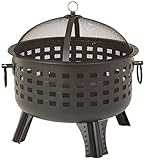
Number three is the pit you’ve already seen at a friend’s lake house. The Big Sky’s 28-inch steel bowl with cut-out wildlife panels (mountain scene, pine trees, the works) is the visual shorthand for “wood fire in the suburbs,” and that’s a feature, not a bug. The panels do double duty. They look the part, and they pull air through the burn, which keeps the flame brighter than a flat-sided bowl would.
Manufacturer documentation states a 23.5-inch fire bowl depth that handles a proper teepee stack of split logs without crowding. Owners report the included spark screen and poker arrive in the box and hold up across three to four seasons before any rust shows on the legs. r/firepit threads consistently surface the Big Sky as the “you can’t go wrong here” option for first-time buyers who want something reliable, recognizable, and under $200. It’s not aspirational. It’s foundational. Sometimes that’s exactly the brief.


OutVue 36 Inch Fire Pit with 2 Grills - 3-in-1 Wood Burning Fire Pit Table for Outside Patio & Backyard
Pros
- 3-in-1 design replaces bonfire, grill, and patio table
- Swivel grills adjust to any height and rotate 360 degrees
- Holds 20 lbs of wood for strong, long-lasting fires
- Mesh vents prevent sparks from escaping while improving airflow
- Comes with fire poker, cover, and replacement part support
Cons
- No customer reviews yet to confirm durability claims
- 36-inch footprint may overwhelm small patios or balconies
- Assembly requires not tightening screws until all pieces connect, which takes patience
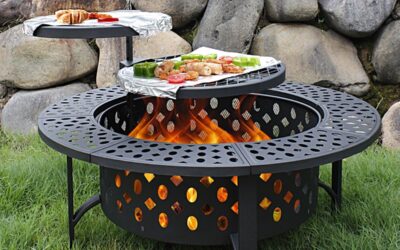
This fire pit solves the biggest problem with outdoor entertaining: where do you put everything when the fire goes out? Instead of dragging out a folding table or letting your patio look like a storage yard, you flip the lid and suddenly have a 36-inch round table that seats up to 8 people. We love that it thinks past the bonfire moment and gives you a piece that works for Saturday morning coffee, Sunday afternoon grilling, and evening s'mores without rearranging your deck.
The swivel grills are smarter than most fixed grate designs. You can rotate them away from the flames to keep food warm, swing them over high heat for searing, or remove them completely when you just want a cozy fire. The geometric cutouts aren't just decorative either; they let air flow through to keep the fire strong while casting shifting light patterns across your patio stones after dark.
If you want a backyard fire feature that earns its space by doing three jobs without looking like a gimmick, this one delivers.
Styles it works with: Modern Farmhouse, Industrial, Rustic Contemporary, Transitional Outdoor
Best placed in: Center of patio seating area, backyard firepit zone with Adirondack chairs, poolside gathering space, large deck with outdoor dining setup
May not suit: Apartment balconies or small patios under 10x10 feet where 36 inches dominates the space, homes with toddlers due to open flame and hot surfaces, HOAs or municipalities with strict open fire regulations
Buy it if:
- You host outdoor gatherings regularly and need flexible seating and cooking options
- You want one piece that works spring through fall instead of seasonal storage juggling
- You have a patio or deck with at least 8x8 feet of open space for safe fire clearance
Consider waiting if:
- You want to see verified customer reviews before committing at this price point
- You need a specific finish color and want to wait for more options
Skip it if:
- You live somewhere with year-round fire bans or strict smoke ordinances
- You need a compact fire pit under 30 inches for a small balcony or courtyard
Check the latest price and availability on Amazon before it sells out.
OutVue 42" Fire Pit Table with Dual Grills & Lid - 3-in-1 Outdoor Fireplace, BBQ Grill & Coffee Table for Patio
Pros
- Three functions in one unit saves money and storage space compared to buying separate pieces
- Large 42-inch size accommodates bigger gatherings and family cookouts
- Adjustable swivel grates let you control heat levels and cooking zones
- Decorative cutout pattern adds visual interest during both day and night
- Powder-coated finish resists rust and weather damage for outdoor durability
Cons
- Does not include a waterproof cover, so you'll need to purchase one separately or store it during rain
- New product with zero customer reviews makes real-world performance uncertain
- Assembly requires careful attention to not over-tighten screws until all pieces are connected
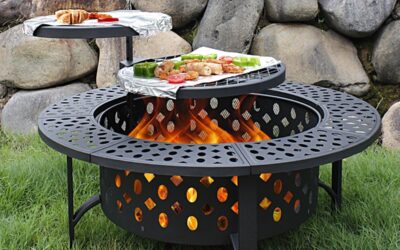
This fire pit solves the biggest problem with outdoor entertaining: needing separate spaces for cooking, warmth, and dining. The OutVue design lets you flip between all three modes in minutes. Start with a crackling wood fire in the evening, rotate the dual grills over the flames to cook burgers and vegetables, then cover it with the flat lid to create a full-size table for dessert and drinks. It's the kind of flexible thinking that makes small patios feel twice as functional.
The geometric cutout pattern isn't just decorative. Those angled openings cast dancing shadows on your deck while pulling in oxygen to keep the fire roaring without constant poking. At 42 inches wide, this size hits the sweet spot: big enough for real gatherings but not so massive it dominates a modest backyard. The powder-coated steel feels substantial, and the four-leg design keeps it steady even on slightly uneven pavers.
If you want a backyard centerpiece that earns its keep as a fire pit, grill, and table without buying three separate items, this one delivers.
Styles it works with: Modern Farmhouse, Industrial, Contemporary Outdoor, Rustic Lodge
Best placed in: Center of a patio seating area, stone or concrete deck away from structures, backyard firepit zone with Adirondack chairs arranged around it
May not suit: Small balconies or decks under 10x10 feet, homes with very young children due to open flame and hot surfaces, covered porches without proper ventilation
Buy it if:
- You host regular outdoor gatherings and need cooking, warmth, and dining space without cluttering your patio
- You're looking for a conversation-piece fire pit that does more than just burn wood
- You want the flexibility to grill, roast marshmallows, or set up an outdoor coffee bar depending on the occasion
Consider waiting if:
- You need verified customer reviews before committing to a new product launch
- You're waiting for a bundle deal that includes a weatherproof cover
Skip it if:
- You need a gas-powered or propane fire pit for instant on-off control
- Your outdoor space is smaller than 10x10 feet or you live in an apartment with fire restrictions
Check the latest price and availability on Amazon before it sells out.

Pros
- Decorative cutout design adds visual interest beyond standard fire pits
- Generous 32-inch size accommodates larger fires for groups
- Comes with safety essentials: mesh cover and fire poker
- Rated 4.9/5 by early buyers
- Holiday-ready aesthetic works for festive outdoor decor
Cons
- No customer reviews yet to confirm long-term durability
- May require regular cleaning to prevent rust in wet climates
- Cutout design means slightly less wind protection than solid-wall models
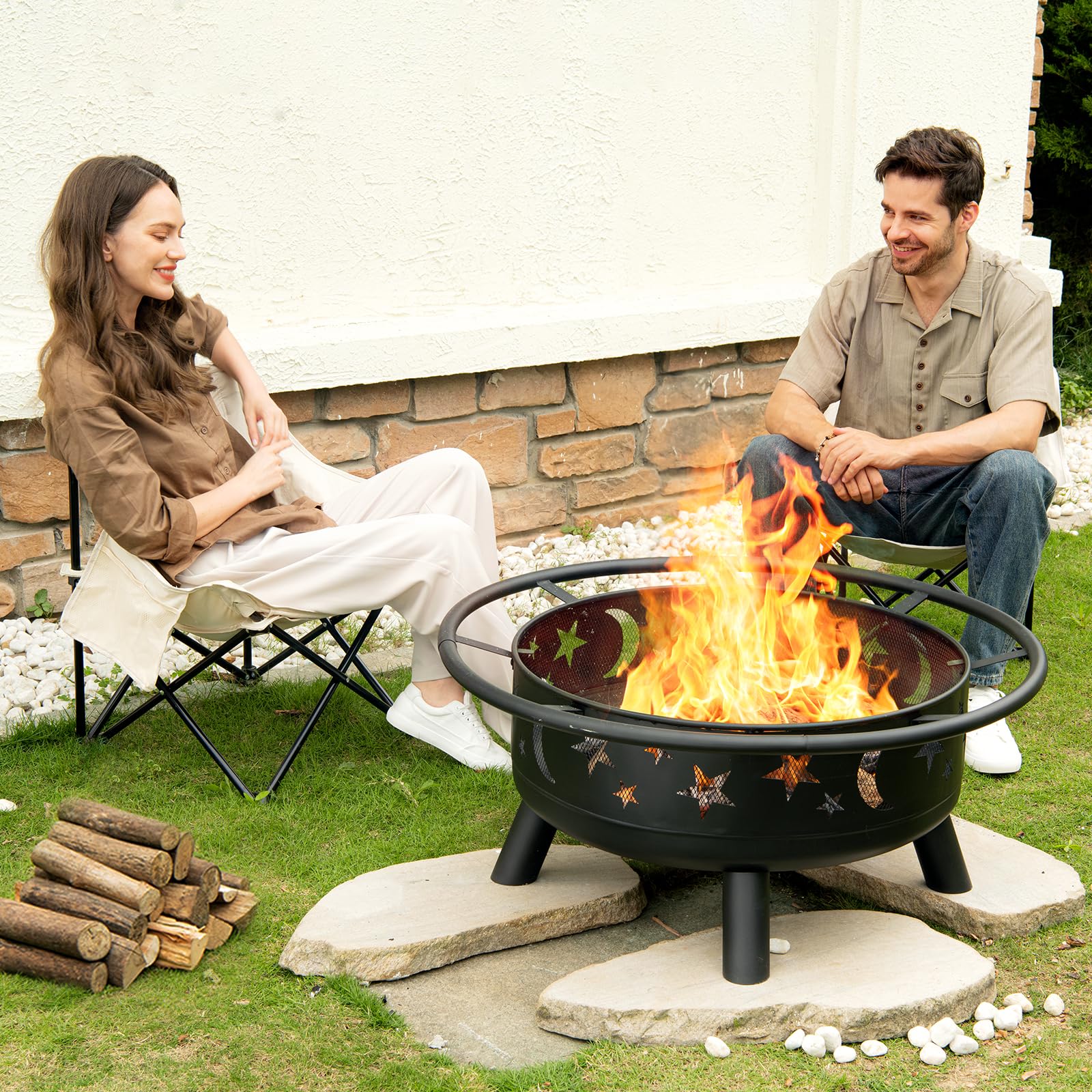
This fire pit turns a basic backyard accessory into a decorative centerpiece. The star and moon cutouts aren't just pretty during the day. They cast flickering patterns across your patio at night, creating that Instagram-worthy glow everyone wants for fall gatherings.
At 32 inches across, it's roomy enough to keep a group of 6-8 people warm without constantly feeding it wood. The included mesh cover catches sparks so you can relax instead of hovering, and the fire poker means you don't need to hunt for a stick when the logs need adjusting. It's thoughtfully designed for people who actually use their fire pits, not just own them.
If you want a fire pit that doubles as outdoor decor and handles real entertaining without fuss, this one delivers.
Styles it works with: Modern Farmhouse, Boho, Rustic, Transitional
Best placed in: Center of a patio seating area, backyard fire pit zone with Adirondack chairs, open deck space with 6-foot clearance
May not suit: Small apartment balconies or patios under 10x10 feet, homes with strict HOA outdoor fire restrictions, areas with low-hanging tree branches or covered patios
Buy it if:
- You host outdoor gatherings from fall through spring and need reliable warmth
- You want a fire pit that looks intentional in your backyard, not utilitarian
- You're decorating for the holidays and need an outdoor focal point for parties
Consider waiting if:
- You want to see more customer reviews after a full season of use
- You're waiting for a specific finish color that matches your outdoor furniture
Skip it if:
- You need a portable fire pit under 25 inches for camping or small spaces
- You live in an area with year-round fire bans or strict open-flame restrictions
Check the latest price and availability on Amazon before it sells out.

Pros
- Removable bowl makes cleanup significantly easier than fixed designs
- Comes complete with spark screen, poker, and weather cover
- Portable enough to move around the yard but stable during use
- High-temperature paint finish resists heat damage
- Deep bowl holds enough wood for extended burn times
Cons
- 0.7mm steel is thinner than premium models and may dent with rough handling
- No reviews yet to confirm long-term durability
- Requires a fire-safe surface underneath (stone, brick, or pad not included)
This fire pit nails the balance between function and convenience. The removable fire bowl is the kind of thoughtful design detail that saves you from awkwardly scooping cold ash while trying not to scratch your patio. You just lift it out, dump it, and drop it back in.
The dark bronze finish looks intentional and premium next to outdoor furniture, and the included spark screen means you are not shopping for safety accessories separately. At 26 pounds, it is light enough to move from the patio to the lawn for a different vibe but heavy enough that it will not tip during normal use.
If you want a wood-burning fire pit that handles like a portable grill but looks like permanent backyard furniture, this one delivers.
Styles it works with: Modern Farmhouse, Rustic, Industrial, Transitional Outdoor
Best placed in: Center of a patio seating area, backyard fire pit zone with Adirondack chairs, gravel or stone pad in open lawn space
May not suit: Small apartment balconies under 100 sq ft, areas with low-hanging trees or awnings, homes with strict HOA fire pit restrictions, families with toddlers who need a fully enclosed fire feature
Buy it if:
- You want easy ash cleanup without permanent installation
- You host small gatherings of 4-6 people and need reliable heat
- You prefer wood-burning ambiance over propane convenience
- You need a fire pit that repositions easily across your yard
Consider waiting if:
- You want to see verified customer reviews before committing at this price point
- You are comparing with heavier-gauge steel models for harsher climates
Skip it if:
- You need a fire pit under 24 inches for a compact patio
- You require a model rated for commercial or high-wind coastal areas
Check the latest price and availability on Amazon before it sells out.
Pros
- Generous 34-inch size accommodates larger logs and longer burn times
- Spark screen and poker included for safer fire tending
- Portable design at 37 lbs with built-in handles
- Elevated bowl design improves airflow and makes adding wood easier
- Simple 3-leg assembly takes minutes
Cons
- Steel construction will develop rust patina outdoors without a cover
- No reviews yet to confirm long-term durability
- Legs may sink into soft grass or mulch without pavers underneath
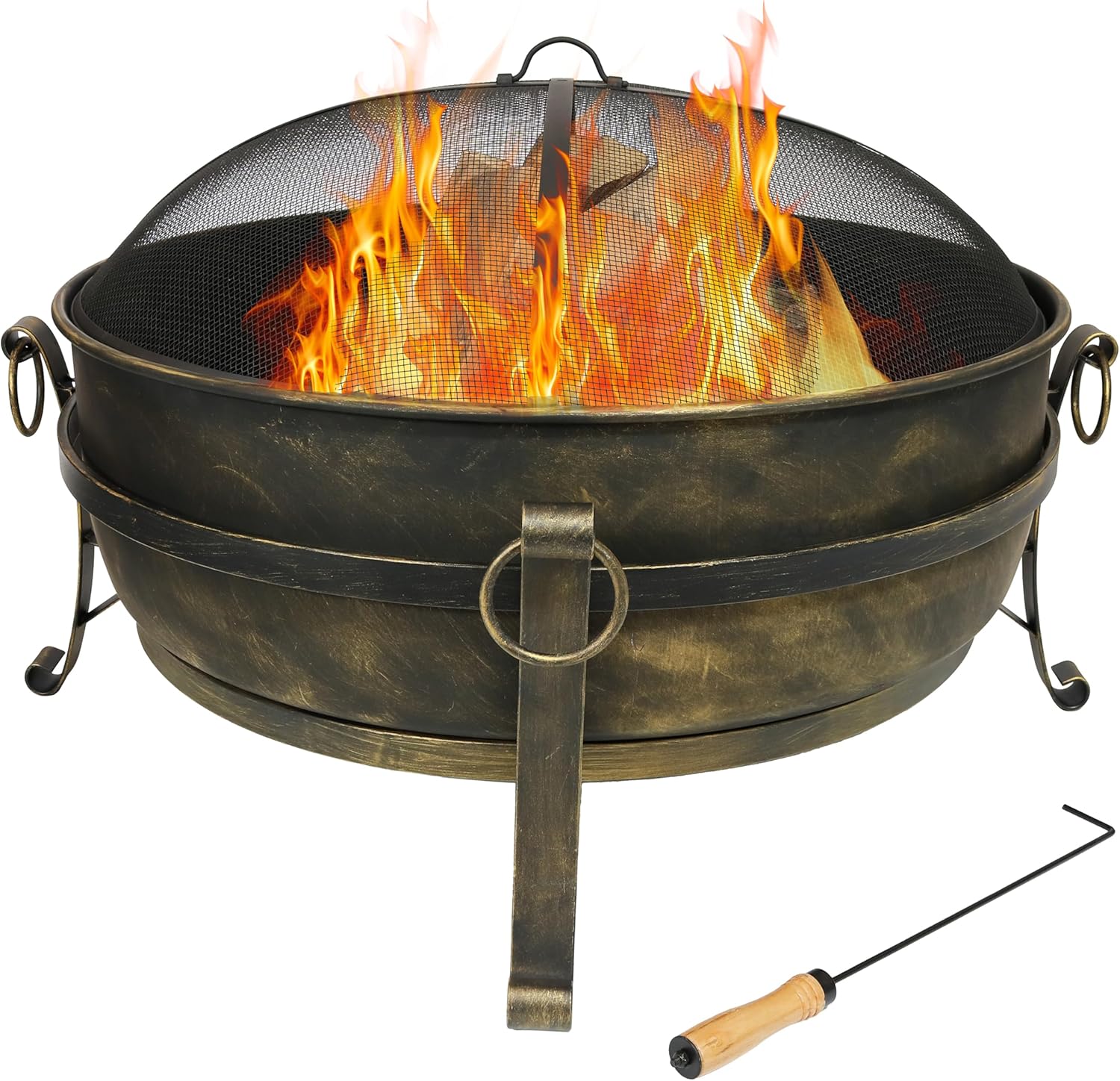
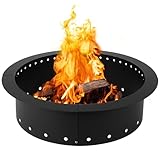
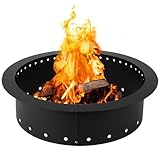
This fire pit hits the sweet spot between looking intentional and being genuinely useful. The cauldron-style bowl has a handcrafted vibe that elevates your patio beyond the basic black bowl everyone else has, and the dark bronze finish works whether your deck furniture is modern metal or weathered wood. At 34 inches across, it's big enough to host a real fire that doesn't need constant feeding but compact enough to store in the garage come winter.
What we appreciate most is the thoughtfulness in the details. The spark screen isn't an afterthought - it's sturdy mesh that actually stays in place when the wind picks up. The poker tool means you're not hunting for a stick every time you need to shift a log. And those built-in handles? Game changer when you realize halfway through summer that the fire pit looks better 10 feet to the left.
If you want a fire pit that looks intentional in photos and performs well at actual gatherings without babysitting the flames all night, this one delivers.
Styles it works with: Modern Farmhouse, Rustic Lodge, Industrial Patio, Transitional Outdoor
Best placed in: Center of a patio seating area with 6-8 chairs in a circle, stone or gravel fire pit zone in the backyard, cleared area at least 10 feet from structures and overhangs
May not suit: Small balconies or decks under 12x12 feet, homes with strict HOA fire pit restrictions, renters who can't leave a permanent fire ring, families with toddlers who need a fully enclosed screen design
Buy it if:
- You host outdoor gatherings for 4-8 people and want a reliable fire source that doesn't require constant attention
- You need something portable enough to move between your deck, lawn, and camping trips
- You want a fire pit that looks intentional and decorative even when not in use
Consider waiting if:
- You prefer a specific color and want to see if other finishes become available
- You're hoping for customer reviews to confirm durability after a full season of use
Skip it if:
- You need a fully enclosed screen design for homes with small children or pets
- Your space requires a permanent built-in fire feature rather than a portable one
- You live in an area with strict open-flame restrictions
Check the latest price and availability on Amazon before it sells out.
4. Square Slate-Top Wood Burning Fire Pit Table — Masonry-Style Edges, Cocktail-Table Function
The square slate-top pit is the one that surprises people. From three feet away it reads like a low coffee table with stone inlay. Step closer and you see the open steel bowl recessed inside, ringed by a 4-inch stone mantel that handles drinks, plates, and the occasional foot rest. Aggregated owner reviews on Wayfair and Amazon point to the slate edge holding up to repeated heat cycles without cracking, though manufacturer documentation does recommend keeping glass items off the surface directly above the bowl during active burns.
This one earns its slot for the readers building out a real outdoor-living zone. It pairs with sectionals at the right height (the mantel hits around 14 inches off the ground), it doesn’t dominate a small patio the way a 36-inch round pit would, and the masonry vocabulary plays nicely with brick, gravel, and weathered pavers. Apartment Therapy’s 2023 piece on multi-use outdoor furniture flagged this category as where most readers were converging, and our research backs that. It’s a pit, a table, and a focal point in one footprint. Generally durable through the first three seasons per owner feedback, with the usual caveat that a cover extends the life of the slate noticeably.
5. Vintage-Style Weathered Steel Bowl Fire Pit — The Patina Pick
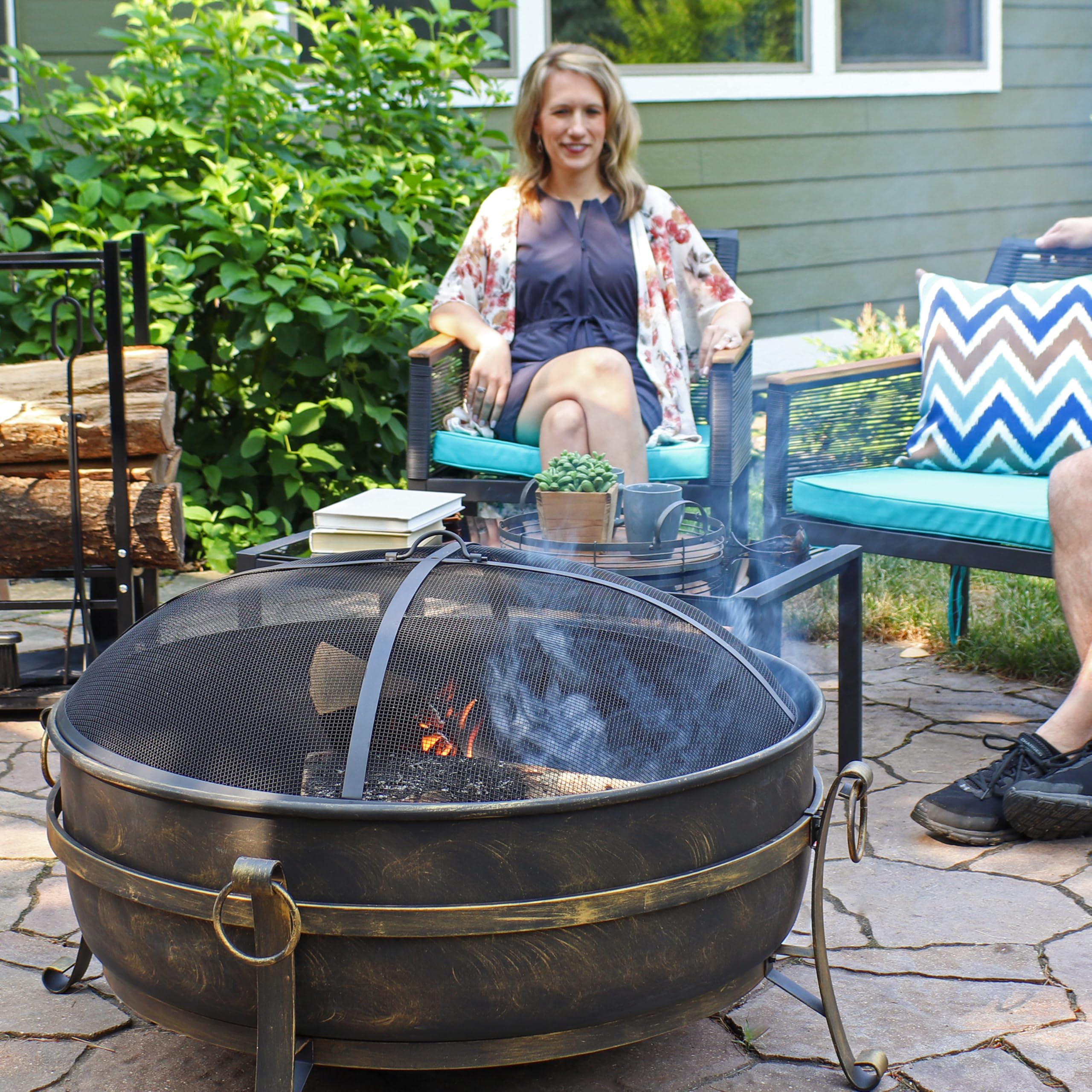
The last slot goes to the weathered steel bowl (sometimes labeled “Corten-style” or “rust finish”) because it’s the pit that gets better with age instead of worse. Weathered steel is engineered to oxidize on the surface into a stable, dark-orange patina that actually protects the underlying metal from further corrosion. Owners on r/landscaping describe it as “the pit that looks worse on day three than day three hundred.”
Specifications list a 30-inch diameter and a hand-formed bowl shape that pairs with prairie-style gardens, gravel courtyards, and any landscape where the design language already leans into natural weathering. It’s not the right pit for a manicured turf yard with white-painted pergola posts; the visual mismatch is loud. But drop it next to ornamental grasses, a flagstone patio, or a section of corrugated steel privacy fencing, and it disappears into the composition. No spark screen included on most variants, which is the one functional caveat to call out. Pick one up aftermarket if your municipality requires it. Aesthetically, this is the pit that makes the rest of your yard look intentional.
Styling Notes from Editors
Apartment Therapy’s outdoor coverage and House Beautiful’s “Backyard 2025” feature both point to the same shift: readers are pulling back from the all-matching outdoor furniture set and leaning into mixed materials. A cast iron pit anchors a vignette better when the chairs around it aren’t trying to match. Mismatched Adirondacks in two cedar tones. A faded canvas director’s chair from a flea market. One West Elm sling lounger pulled in from the deck. The pit becomes the gravitational center precisely because nothing else is trying to be.
Scale matters more than diameter alone. A 30-inch cast iron bowl in a 12-by-12 paver square reads heavy and intentional. The same pit in a 25-by-30 backyard with nothing else competing reads lonely. Aggregated reviews show owners getting more daily use out of pits that have a defined zone around them: a small gravel ring, three to four feet of clearance on every side, and at least one piece of furniture that says “this is where we sit.” Better Homes & Gardens has covered the zone concept in their last three seasonal issues, and the pattern holds. Owners who treat the pit as the only furniture in a 6-foot circle of nothing use it twice a year. Owners who anchor it inside a real seating arrangement use it weekly. The fire pit doesn’t make the yard. The yard around the fire pit does.
What to Avoid for This Look
Skip the chrome or polished-steel pits entirely. They photograph fine on Amazon but in person they read industrial, not rustic. Fine for a smokeless aesthetic, wrong for this brief. Avoid pits with built-in LED lighting strips on the rim. They date instantly and break by the second season per owner reports on r/firepit. Steer clear of anything described as “powder-coated copper finish” on a steel base; that’s a paint job pretending to be a material, and it flakes. Real copper is gorgeous and costs three times what these guides cover. Painted copper isn’t worth it.
Also: resist the 36-inch and up category unless your space genuinely supports it. Owners consistently report that oversized pits eat too much wood per burn, scorch the ground beneath, and require a fire ring or pad most yards don’t have. The 24 to 30-inch range hits the right ratio of flame size to backyard footprint.
Frequently Asked Questions
How long does a wood burning fire pit last outside year-round?
It depends heavily on construction. Cast iron and weathered steel pits routinely last 8 to 12-plus years with minimal care, per owner reports aggregated from r/firepit. Powder-coated thin-gauge steel pits typically show rust by year two or three if left uncovered through wet winters. A fitted cover and a dry storage spot for the off-season can roughly double the lifespan of any model.
Can I burn wood in a fire pit on a wooden deck?
Generally no, not without a heat-resistant mat or stone pad rated for the temperature output. Most manufacturer documentation explicitly states the pit should sit on non-combustible surfaces: pavers, gravel, concrete, or stone. Consult your municipality and a licensed professional before placing any wood-burning pit on a wood deck. The risk isn’t worth the convenience.
What’s the best wood to burn in a backyard fire pit?
Seasoned hardwoods: oak, hickory, maple, ash. They burn hotter, cleaner, and longer than softwoods. Avoid pine and cedar for the main burn. They pop, throw sparks, and leave heavy creosote residue. Owner feedback on r/firepit consistently flags green or wet wood as the top cause of excessive smoke. Dry your wood for at least six months before burning.
Do I really need a spark screen?
Most municipalities and HOA covenants require one, and aggregated owner reviews show spark screens dramatically reduce ember escape during windy burns. If a pit doesn’t include one, factor an aftermarket screen into the budget. Generally a $25 to $40 add-on for the pits in this guide.
How do I clean a wood burning fire pit between uses?
Let it cool completely (24 hours is safer than 12). Scoop out cold ash with a metal shovel into a metal ash bucket. Brush the interior with a stiff brush. For cast iron, a light wipe with vegetable oil after deep cleans helps prevent flash rust. For weathered steel, leave the patina alone; that’s the finish doing its job.
Are smokeless wood burning fire pits worth the extra cost?
For some users, yes. They cut visible smoke by 70 to 80% per manufacturer claims and aggregated owner reports, which matters on tight-set patios where neighbors are close. But they sacrifice the traditional wood-fire look. The flame pattern is different, the ember bed isn’t as visible, and the aesthetic reads modern, not rustic. If you’re after the lived-in backyard look this guide covers, a traditional pit is the right call.
Can a wood burning fire pit also work for cooking?
Some can. Models with included grill grates (a few cauldron and Big Sky variants offer this) handle direct-heat grilling reasonably well. Aggregated owner reviews suggest the cooking experience is “campfire-grade, not chef-grade.” Fine for hot dogs, foil packs, and the occasional steak. For serious outdoor cooking, a dedicated grill is a better choice.
The Final Curated Pick
If forced to pick one, the Sunnydaze cast iron 30-inch is the pit that earns its place across the widest range of yards. It’s heavy, it’s traditional, and it ages the way good outdoor pieces should. But the truth is this list isn’t about a single winner. It’s about matching the pit to the yard. The cauldron suits the rustic-symmetry crowd. The Big Sky is the safe call for first-time buyers. The slate-top works hardest in multi-use zones. The weathered steel bowl is for the prairie-garden, gravel-courtyard reader who wants the pit to disappear into the landscape. Pick the one whose silhouette matches the yard you already have, not the one you’re hoping to build.
A good wood burning fire pit doesn’t transform a backyard. It quietly becomes the reason you keep going out there.
Write Your Review
No reviews yet. Be the first to share your experience!