

> Editorial Note: I’m Heather Adams, and I cover sofas, tables, mattresses, and bedding. The picks here are evaluated on the materials layer — foam density, coil gauge, frame construction, and fiber content — against CertiPUR-US, OEKO-TEX, and BIFMA standards.
A summer-weight down comforter should feel like a warm breath, not a blanket you sweat under. Five options earned a spot below, weighed against fill quality, cover breathability, and long-term loft retention. If you’re still deciding on the format, read down vs down alternative comforter and duvet vs comforter first. Pair your pick with a cooling comforter for summer or a comforter set queen for every bedroom, and if loft is your worry, why does my comforter go flat? causes and fixes covers the fixes.
How We Evaluated
I ranked each comforter on fill warmth rating, cover thread count, hypoallergenic certification, and owner reports of clumping after washing. Sleep Foundation’s breathability protocols and OEKO-TEX cover claims guided the shortlist. Price-per-year of expected use broke ties.


Pros
- Genuinely soft and fluffy feel that closely mimics real down at a fraction of the price
- Breathable cotton shell stays cool and quiet -- no crinkling or overheating
- Sewn-through box construction keeps fill from bunching or leaving cold gaps
- OEKO-TEX certification provides confidence in material safety and odor-free performance
- Highly rated across nearly 4,000 reviews, indicating consistent quality across production runs
Cons
- Dry clean only care requirement adds ongoing cost and inconvenience compared to machine-washable alternatives
- Medium warmth fill may not be sufficient for very cold climates or sleepers who run cold -- the extra warmth version is a separate purchase
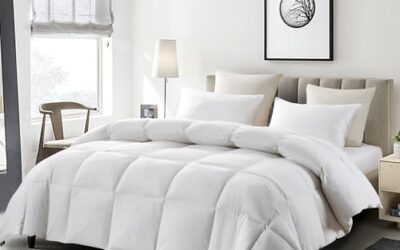
There is a particular kind of comfort that comes from sliding under a cloud-like comforter at the end of a long day, and the Serta Goose Feather Down Fiber Comforter nails that feeling at a price that does not require a second thought. The OEKO-TEX certified fill is processed for hypoallergenic use, so it arrives fresh, odorless, and genuinely fluffy -- not the flat, crinkly experience you sometimes get with budget bedding.
The 100% cotton shell is what elevates this above most comforters in this price range. It breathes well, feels soft against bare skin, and stays completely silent when you move -- no plastic-y rustling that wakes a light sleeper. The sewn-through box quilting does its job quietly, holding the fill right where it should be so you wake up with the same even warmth you fell asleep with.
If you want that plush, hotel-bedroom look and feel without paying for a true goose down comforter or worrying about allergy flare-ups, this one delivers.
Styles it works with: Modern Farmhouse, Scandinavian, Minimalist, Classic Traditional
Best placed in: Primary bedroom as the main comforter, guest bedroom for a hotel-ready presentation, or a teen or college bedroom needing an upgrade
May not suit: Households where all bedding needs to be machine washed frequently (e.g., homes with young children or pets on the bed), or sleepers in very cold climates who need maximum insulation from a single layer
Buy it if:
- You want the soft, lofty feel of a down comforter but need a hypoallergenic option that will not trigger sensitivities
- You are furnishing a guest room and want bedding that looks and feels premium without a high investment
- You run warm at night and need a breathable all-season layer that works without switching comforters each season
Consider waiting if:
- You are planning a full bedding refresh and want to choose a duvet cover first to confirm the white base works with your color palette
Skip it if:
- You need a machine-washable comforter for easy at-home care -- the dry clean only requirement is a real limitation for everyday use
- You sleep in a very cold room and need maximum warmth from a single comforter without layering
Check the latest price and availability on Amazon before it sells out.
1. Pacific Coast Lightweight Goose Feather Down — the hot-sleeper’s default
This Queen-size insert pairs a goose feather-and-down fiber blend with an ultra-soft, breathable cotton shell built for airflow. It’s the pick if you run warm and want structure without weight. Owners on r/Mattress report the loft holds through repeated wash cycles, a common failure point in cheaper fiber blends. The cover’s tight weave resists feather poke-through, which Apartment Therapy flags as the top complaint in budget down. Best for year-round sleepers in temperate rooms who don’t want to swap bedding seasonally. Slightly pricier than no-name blends, and worth it.
2. Martha Stewart White Goose Feather Down — the roomy King upgrade
Sized for King beds, this white goose feather-and-down fiber comforter drapes wide enough to cover a deep mattress plus topper. The extra surface area matters if your king size comforter sets leave gaps at the edges. Warmth sits in the mid-lightweight range, so it suits sleepers who want a touch more coverage than a true summer insert. The white shell shows staining faster. Read why does my white comforter turn yellow? fixes before you skip the duvet cover. Loft is generous, and the fill distribution stays even across the panel.

3. Globon Summer Down Comforter — the extra-lightweight specialist
Globon leans hardest into the “summer” brief. This King insert is engineered extra-lightweight, so hot sleepers and warm-climate bedrooms get down softness without heat trap. The white shell and low fill weight make it the most breathable option here by Sleep Foundation airflow criteria. The trade-off is coverage. In a cold winter room, you’ll want a second layer. If summer overheating is your core problem, this is the sharpest match, and it pairs well with a cooling comforter for hot sleepers.
4. Serta Goose Feather Down — the hotel-cotton value pick
Serta wraps its goose feather-and-down fiber fill in a 100% cotton cover with a hypoallergenic finish, aimed at the hotel-luxury feel. This Queen insert is the value play for allergy-prone sleepers who want a natural-fiber shell without a premium markup. The cotton cover breathes better than the polyester blends common at this price. Owners note it drapes softly and resists bunching in a duvet cover. If sliding fill is your issue, why does my comforter slide in the duvet cover? fixes helps. A dependable everyday choice.
5. Pacific Coast Lightweight King — the consistency scale-up
The King-size sibling of our top pick brings the same breathable cotton shell and goose feather-down fiber blend to larger beds. Choose it when you want Pacific Coast’s proven loft retention across a wider footprint. Construction quality matches the Queen, and the airflow-first cover carries over. It’s the safest King bet for warm sleepers who liked pick number one but need the bigger size. Costs more than the Martha Stewart King. The difference buys tighter feather containment.
Comparison Table
| Comforter | Size | Fill | Cover | Best For |
|---|---|---|---|---|
| Pacific Coast Lightweight | Queen | Goose feather + down fiber | Cotton, breathable | Warm sleepers, year-round |
| Martha Stewart White Goose | King | White goose feather + down | Soft shell | Deep King beds |
| Globon Summer | King | Extra-lightweight down | White cotton | Hot climates |
| Serta Goose Feather Down | Queen | Goose feather + down fiber | 100% cotton | Allergy-prone, value |
| Pacific Coast Lightweight | King | Goose feather + down fiber | Cotton, breathable | Warm sleepers, big beds |
What to Check Before You Buy
Fill power drives warmth, but for summer inserts you actually want lower fill weight, not higher. A goose feather-and-down fiber blend costs less than pure down and holds structure better, which is why every pick here uses one. Cover matters as much as fill. A 100% cotton shell, like Serta’s, breathes far better than polyester and cuts overnight heat buildup. Look for baffle or sewn-through construction that keeps fill from migrating. If your current comforter clumps, why is my comforter lumpy after washing? fixes explains the wash-cycle cause. OEKO-TEX cover certification signals lower chemical residue.
Lightweight vs Standard Down: Which You Actually Need
Standard down comforters target 500-plus fill power for winter warmth. Lightweight and summer inserts drop fill weight to move air, so your body heat escapes instead of pooling. If you sleep hot, keep a thermostat above 70°F, or live somewhere humid, the summer weight wins outright. Cold sleepers in drafty rooms should size up or layer. The comfort math is simple. Match fill weight to room temperature, not to season labels alone. Sleep Foundation notes breathability, not just warmth, predicts overnight comfort. A down alternative comforter is the vegan-friendly parallel if feathers aren’t your thing.
Frequently Asked Questions
Are lightweight down comforters warm enough for winter?
Not on their own in cold rooms. Summer-weight inserts prioritize airflow over insulation. Layer a blanket or size up if your bedroom drops below 65°F overnight. In a heated home, most sleepers stay comfortable year-round.
Do feather-down blends poke through the cover?
Quality covers with tight weaves, like Pacific Coast’s cotton shell, resist poke-through. Apartment Therapy flags loose-weave budget covers as the usual culprit. A duvet cover adds a second barrier and reduces stray quills significantly.
Can I machine wash a down comforter?
Most tolerate a gentle cold cycle, but confirm the care tag first. Dry on low with wool balls to restore loft. Overwashing causes the clumping many owners report on r/Mattress. Wash two or three times a year.
Is goose down better than duck down?
Goose down clusters run larger, trapping more air per ounce for lighter warmth. That’s why four of five picks use goose fill. Duck down costs less and works fine, though it can carry a faint odor when new.
How do I stop the comforter sliding in the cover?
Use corner ties or clips inside the duvet cover. Every insert here supports tie loops. Shaking the cover to redistribute fill weekly keeps drape even and prevents bunching at the foot of the bed.
Are these comforters hypoallergenic?
Serta and several picks carry hypoallergenic finishes that reduce dust-mite and dander triggers. This may help sensitive sleepers, though no comforter is fully allergen-proof. A washable cover paired with OEKO-TEX shells lowers residue further.
Bottom Line
The Pacific Coast Lightweight Queen wins for most warm sleepers. Its breathable cotton shell, proven loft retention, and tight feather containment beat the field on the specs that matter. Choose the Globon Summer if extra-lightweight airflow in a hot climate is your only priority, or the Serta if a 100% cotton hypoallergenic cover ranks higher than King sizing. One honest caveat. None of these replace a true winter comforter in a cold, drafty room.
Write Your Review
No reviews yet. Be the first to share your experience!