

> Editorial Note: I’m Maya Chen, a bedroom and sleep editor covering mattresses, bed frames, and bedding. The picks here are evaluated against CertiPUR-US foam standards, Sleep Foundation evaluation protocols, and owner durability reports from r/Mattress.
You pull the comforter out of the wash, shake it hard, and half the fill has bunched into dense knots while whole sections lie flat and cold. Empty corners where there used to be loft. It feels heavier on one side, and no amount of shaking spreads it back out. That lumpiness isn’t a ruined comforter most of the time, and it’s almost never the detergent. It’s the fill doing exactly what wet synthetic fibers do, plus a drying step that got rushed. Before you toss it, know what’s happening inside the shell, and if you’re refreshing the rest of the room too, these guides on the best platform bed frame, best nightstand for bedroom, best dresser for bedroom, best memory foam mattress, and wall art for bedroom cover the related angles.
Reason 1: The Fill Balled Up Into Cold, Empty Spots (Wet Clumping)
Down-alternative comforters are stuffed with polyester microfiber, usually a 200 to 300 gsm fill, and that fiber behaves badly when it’s soaked. Water pulls the strands together into dense clumps that hold their shape as they dry. Pull a saturated comforter out of the drum and it feels like it’s carrying a few extra pounds of water in three or four heavy pockets. That weight is the fill matting on itself.
Sleep Foundation notes that down-alternative fill loses loft faster than real down after repeated wetting, because the synthetic fibers don’t recover their spring the way natural clusters do. So every wash is a small risk if the drying step gets cut short. The clumps you feel aren’t damage to the fabric shell. They’re the fill collapsing inward.
The fix starts before the clump hardens. Get the comforter into the dryer while it’s still evenly damp, and add wool dryer balls to knock the fibers apart as they tumble. If clumps already set, soak the comforter again in warm water, then dry with balls and frequent hand-fluffing. It’s tedious, but it loosens most synthetic fills.
Reason 2: One End Is a Pancake, the Other Is a Pillow (No Box Stitching)
Construction is the culprit here. If your comforter’s fill slides freely toward one edge, the shell was probably sewn as open channels or the stitching gave way. Box stitching (a grid of sewn squares) traps fill in compartments so it can’t migrate. Baffle-box construction adds fabric walls between the top and bottom layers for more loft, and corner tabs anchor the insert inside a duvet cover so the whole thing stays put on the bed.
Wirecutter’s bedding coverage repeatedly points to sewn-through box stitching as the best predictor of whether a budget comforter keeps its shape through washing. A comforter with 6-to-8-inch box squares holds fill in place far better than one with long vertical channels. Owners on r/Mattress describe the same pattern: cheap channel-stitched inserts pool at the footboard within a few washes.
You can’t add box stitching to a comforter that doesn’t have it. That’s why this one’s a buy-once problem, not a laundry problem. If the fill keeps migrating no matter how carefully you wash, the shell design is the reason, and the real fix is a box-stitched or baffled insert with corner tabs.
Reason 3: It Went Back on the Bed Still Damp (Incomplete Drying)
Drying method matters more than the wash cycle. A comforter pulled out damp, or blasted on high heat, mats in the middle where airflow never reaches. The outer inches dry first and feel finished, so people stop the machine early. Inside, the fill is still wet, and it dries into knots overnight on the bed.
The right approach is low heat and patience. Set the dryer to low or medium, never high, because high heat can scorch polyester fill and flatten the loft permanently. Run the cycle for 45 minutes at a stretch, and every 20 to 30 minutes pull the comforter out, shake it hard, and break up dense spots by hand before it goes back in. Two or three wool dryer balls do this work automatically between your check-ins.
A queen down-alternative comforter can take 2 to 3 hours to dry fully, and a king often needs 4 hours. Rushing it is the most common mistake owners make. If your home dryer is small, a laundromat’s large-capacity machine gives the fill room to tumble and separate. That extra space is what prevents the mid-cycle mat.
How to Fix a Lumpy Comforter Fast: The 20-Minute Reset
If your comforter is already lumpy and you want it usable tonight, here’s the sequence. Toss it in the dryer with two or three wool dryer balls (clean tennis balls work too) on low heat. Every 20 minutes, stop the machine, lay the comforter flat, and work the clumps apart with your hands, pushing fill from the dense pockets toward the empty ones.
Repeat until the loft feels even and the whole thing is bone-dry, not just warm. Warm-but-damp is what refreezes into lumps once it hits the bed. For stubborn knots, a light misting of water on that spot followed by another dryer round loosens fibers that locked together.
This resets most synthetic and down comforters. What it won’t fix is a shell with no internal stitching, because the fill will migrate again the next time it’s wet. That’s the line between a drying problem and a construction problem.
The Products That Actually Help
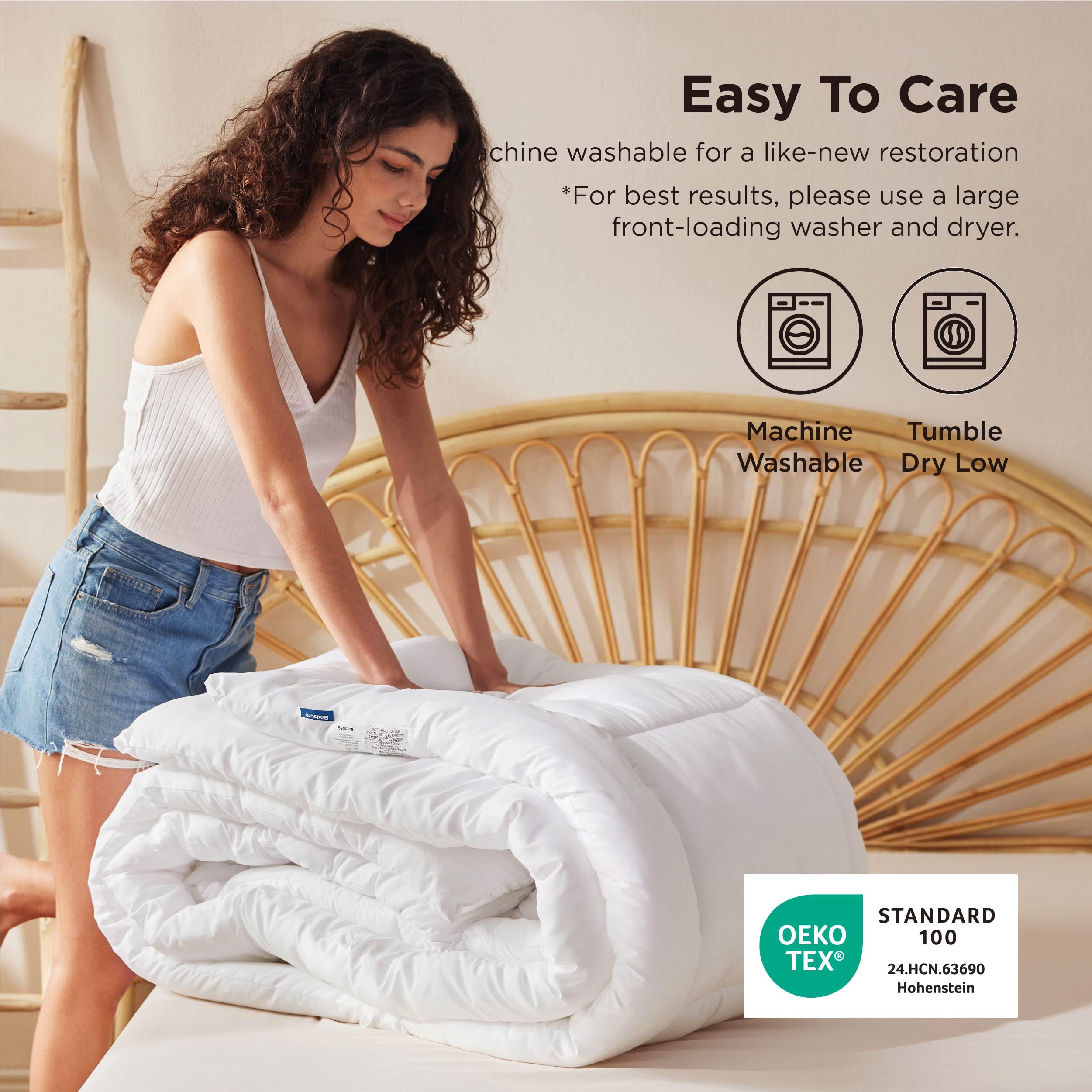
When a comforter clumps every single wash no matter how carefully you dry it, the shell is the weak point, and a better-built insert is the actual solve. All three picks below use box stitching to trap fill in place, they carry 4.6-plus owner ratings, and the fill is certified to OEKO-TEX Standard 100 for low chemical residue. Start with the Bedsure in queen or king for all-season loft; choose the Utopia if you want corner tabs to anchor it inside a duvet cover at a lower price.

Pros
- Exceptional value at under $30 with over 76,000 reviews averaging 4.7 stars, one of the highest review counts in its category
- Box-stitch design keeps the GentleSoft fill evenly distributed so there are no cold spots or thin patches
- 8 corner and side tabs make it compatible with any duvet cover, adding styling flexibility
- All-season fill weight balances warmth and breathability so it works in both heated and air-conditioned bedrooms
- Wide size range including oversized and Alaskan King options that are hard to find at this price point
Cons
- 100% polyester fill may sleep warm for hot sleepers during summer in non-air-conditioned rooms compared to a dedicated cooling comforter
- Requires 24 to 48 hours of fluffing out of the box before it reaches full loft, which can be inconvenient if you need it immediately
- Only available in white, limiting options for shoppers who want a comforter that stands out without a duvet cover
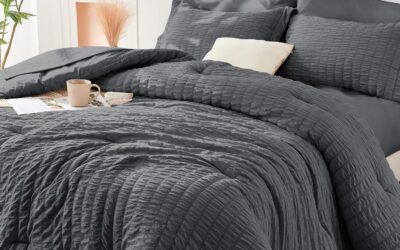
The Bedsure Queen Comforter punches well above its price tag. The GentleSoft polyester fill feels genuinely plush on first use, and the box-stitch stitching is tight and even across the whole surface, giving it a structured, tailored look that holds up after repeated washing. It does not look cheap on a bed, especially layered under a duvet cover.
What makes it stand out for everyday home life is how low-maintenance it is. Toss it in a standard front-loader, tumble dry on low, and it comes out looking nearly new. For households that want a fresh, well-made bed without a complicated care routine, that matters more than any single feature on the spec sheet.
It also earned a Best Comforter nod from Apartment Therapy and has accumulated over 76,000 reviews at 4.7 stars, which means the quality is consistent across a massive sample of real buyers, not a lucky batch. If you want a cloud-soft all-season comforter without paying three times the price for a brand name, this one delivers.
Styles it works with: Minimalist, Scandinavian, Modern Farmhouse, Classic Transitional
Best placed in: Master bedroom as a primary comforter, guest bedroom for a clean hotel-style look, teenager or college dorm bed needing a durable all-season layer
May not suit: Decor-forward bedrooms where bold color or pattern is the focal point, since this only comes in white and relies on a duvet cover for visual interest. Also may not be the best fit for very warm climates without air conditioning if you run hot at night.
Buy it if:
- You want a high-rated, machine-washable comforter under $30 that works in any season without needing a seasonal swap
- You already own or plan to buy a duvet cover and need a quality insert with tabs that will stay put inside it
- You are furnishing a guest room or second bedroom and need reliable comfort without overspending
Consider waiting if:
- You are looking for a colored comforter to use without a duvet cover, as this only comes in white
Skip it if:
- You are a confirmed hot sleeper who needs a dedicated cooling comforter with moisture-wicking or temperature-regulating materials
- You have a down allergy and also react to polyester microfiber fills, in which case you need a specialty hypoallergenic option
Check the latest price and availability on Amazon before it sells out.

Bedsure All-Season Down Alternative Comforter - Queen 88x88, Box-Stitch, 8 Corner Tabs, Machine Washable
Pros
- 8 corner tabs let you use it as a duvet insert or standalone comforter
- Box-stitch design prevents fill from shifting and clumping after washing
- Machine washable without special care requirements
- Wide size range including oversized options for deep mattresses
- Budget-friendly price point under $50
Cons
- Rating is based on zero verified reviews, so real-world performance is unproven
- Needs 24-48 hours to fully fluff after unboxing
- May not provide enough warmth for very cold climates as the sole bedding layer
The Bedsure comforter solves a common bedroom dilemma: do you buy a comforter or a duvet insert? With 8 corner tabs sewn in, this one does both jobs. Use it solo for a clean, simple bed or slip it inside your favorite duvet cover to match your bedroom refresh without replacing your bedding collection.
The box-stitch construction is what really makes it practical for everyday use. The fill stays put wash after wash, so you are not constantly shaking it out or dealing with cold spots. It is the kind of bedding that just works without fuss, which matters more than most product listings admit.
If you want year-round comfort that adapts to how you actually style your bed without spending over $100, this one delivers.
Styles it works with: Modern Farmhouse, Scandinavian Minimalist, Transitional, Coastal
Best placed in: Primary bedroom, guest room, teen or college dorm room, seasonal bedding rotation
May not suit: Homes in very cold climates where a heavier down comforter is needed, buyers who want a luxury hotel-weight feel, sleepers who prefer ultra-lightweight summer bedding only
Buy it if:
- You want the flexibility to use it as a comforter or duvet insert without buying two separate pieces
- You need machine-washable bedding that handles real life (pets, kids, spills) without dry cleaning
- You are setting up a guest room or college dorm and need quality bedding on a budget
Consider waiting if:
- You want to see verified customer reviews and photos before committing
- You need a specific color or pattern that is not currently in stock
Skip it if:
- You live in an extremely cold climate and need heavy winter-weight down insulation
- You want a high-end, hotel-quality comforter with premium materials and construction
Check the latest price and availability on Amazon before it sells out.
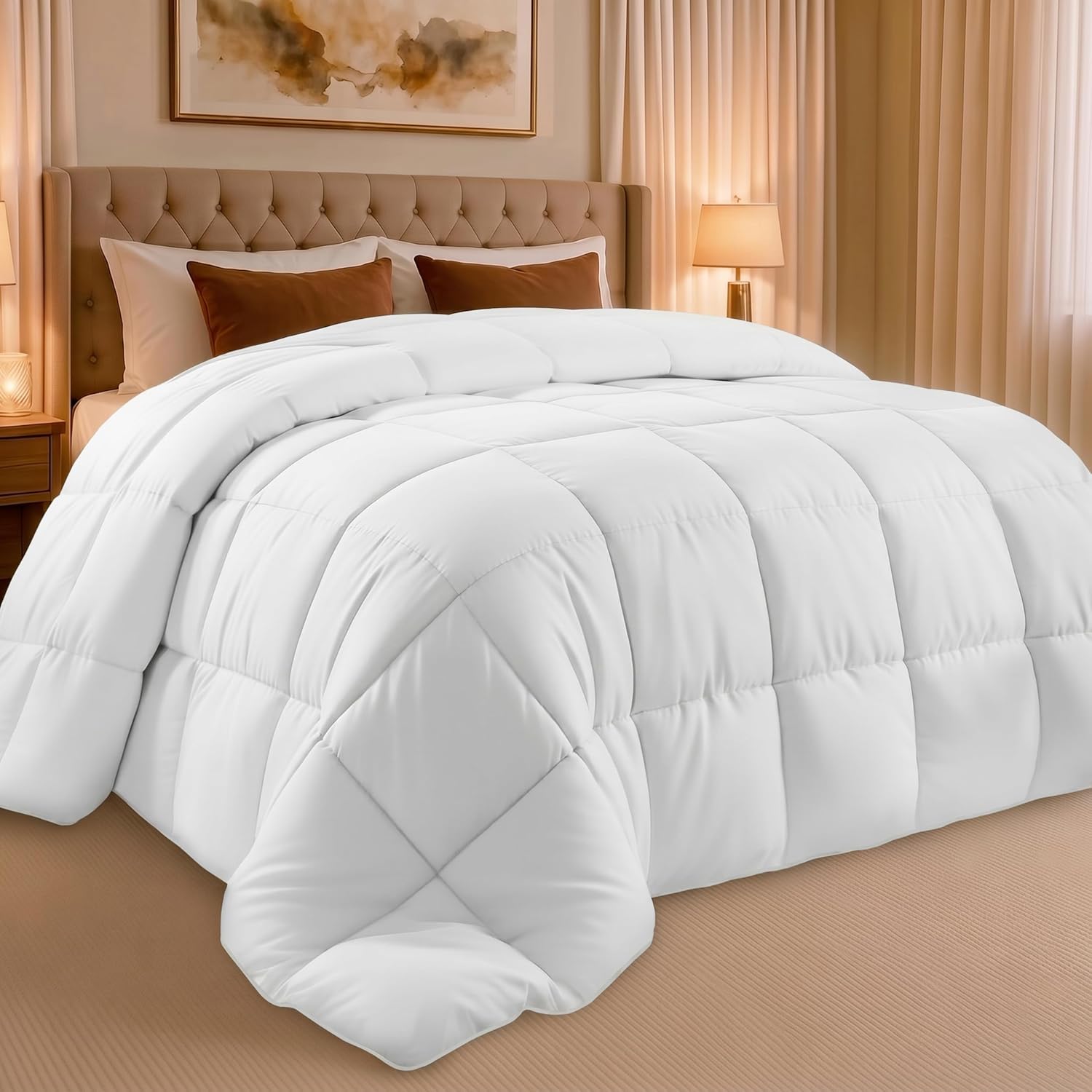
Utopia Bedding Queen Comforter Duvet Insert – Quilted White Down Alternative, Box Stitched, 88x88 Inches
Pros
- Exceptional value backed by one of the largest review counts in the bedding category
- Box-stitch design prevents clumping and maintains loft through repeated washes
- Corner tabs make it compatible with virtually any standard duvet cover
- Lightweight yet warm construction works across all four seasons
- Allergy-friendly polyester fill suits sensitive sleepers and pet-friendly homes
Cons
- Available only in white, so shoppers who want a colored insert for standalone use have no options here
- Line dry or no-heat tumble dry instructions add drying time compared to comforters that tolerate machine heat
- Polyester fill does not replicate the breathability of natural down, which may feel warmer to hot sleepers in summer
At under $25 for a queen size, the Utopia Bedding Comforter does something rare: it genuinely delivers on its promise. The box-stitch quilting gives it a structured, tailored look that photographs beautifully on a made bed, and the soft microfiber shell feels smooth from the first night, not scratchy like cheaper alternatives.
What makes it stand out for everyday living is how low-maintenance it is. Toss it in the washing machine, line dry it, and it bounces back to its original loft without any special care. The corner tabs are a small detail that makes a real difference, keeping your duvet cover anchored so your bed stays looking tidy even after a restless night.
If you want a consistently fluffy, clean-looking bed without spending a lot or fussing over dry-clean labels, this one delivers.
Styles it works with: Minimalist, Scandinavian, Modern Farmhouse, Classic Traditional
Best placed in: Primary bedroom as a standalone comforter, inside a patterned duvet cover in a guest bedroom, or layered under a quilt for a cozy, textured bed look
May not suit: Sleepers who run very hot and prefer a cooling insert specifically engineered for temperature regulation; also not ideal if you want color variety since it only comes in white
Buy it if:
- You want an affordable, reliable duvet insert to pair with a decorative cover you already own
- You need a machine-washable comforter that holds its shape and loft over many wash cycles
- You are furnishing a guest bedroom and want a fresh, hotel-style look without a large investment
Consider waiting if:
- You are looking for a colored insert rather than white, as the brand offers color options in other comforter styles that may suit you better
Skip it if:
- You sleep extremely hot and need a comforter with active cooling or moisture-wicking technology
- You specifically want natural down fill for its breathability and compressibility
Check the latest price and availability on Amazon before it sells out.
Frequently Asked Questions
Can I fix a lumpy comforter without rewashing it?
Yes, in most cases. Run it through the dryer on low heat with two or three wool dryer balls, stopping every 20 minutes to break up clumps by hand. Rewashing is only necessary if the fill has hardened into knots that won’t loosen while dry, in which case a warm-water soak first helps the fibers separate before you dry it again.
Why does my down alternative comforter clump more than a down one?
Because polyester microfiber doesn’t recover its loft the way natural down clusters do. Sleep Foundation notes synthetic fill mats faster after repeated wetting, since the fibers tangle and hold that shape. Down re-lofts more readily when dried with agitation, though it clumps too if you skip the dryer balls. Careful low-heat drying narrows the gap between the two.

Will dryer balls really keep the filling from clumping?
Yes, and they’re the cheapest fix available. Wool dryer balls bounce through the comforter as it tumbles, pounding the fill apart before it can set into knots. Two or three is plenty for a queen. They also cut drying time by keeping the layers separated so warm air moves through the middle instead of stalling.
Is a lumpy comforter ruined for good?
Almost never, as long as the shell has internal stitching. A dry-reset with balls and hand-fluffing restores loft on most synthetic and down fills. The exception is an open-channel comforter with no box stitching, where the fill keeps migrating every wash. That’s a construction flaw rather than damage, and the fix is a better-built insert.
How do I wash a comforter so it doesn’t go lumpy in the first place?
It depends on your machine size, but the core rules hold. Use a large-capacity washer so the fill has room to move, warm (not hot) water, a mild detergent, and a second rinse to clear residue that weighs fibers down. Then dry on low with dryer balls, pulling and fluffing every 20 to 30 minutes until it’s completely dry.
Bottom Line
Eight times out of ten, a lumpy comforter is a drying problem, not a broken one. The fill matted because it went back on the bed damp or dried on heat that ran too high. The fix most people need? Low heat, two or three wool dryer balls, and a hand-fluff every 20 minutes until it’s bone-dry. If the fill still slides to one end after all that, the shell has no box stitching, and no laundry trick saves it. Buy a box-stitched insert instead.




Write Your Review
No reviews yet. Be the first to share your experience!