

> Editorial Note: I’m Lauren Ro, and I write furniture buying guides. The picks here are judged on the specs that predict how a piece ages — frame joinery, foam density, and load ratings — checked against BIFMA and FSC certifications plus aggregated owner reports.
An invisible bookshelf hides its bracket under the bottom book, so a stack appears to float against bare drywall. That trick only works if the load rating matches your hardcovers and your anchor points hit studs. If you’re weighing wall-mount tricks against traditional units, compare notes with our guides on industrial bookshelf, how to decorate a bookshelf, bookshelf for home office, why does my bookshelf bow in the middle?, and open vs closed bookshelf. Here’s what actually holds weight.
How We Evaluated
We assessed each pick on stated load rating, mounting hardware quality, material gauge, and how cleanly the bracket disappears once loaded. Weight capacity and stud compatibility carried the most weight, since a floating shelf that sags is worse than no shelf. Prices and ratings verified at time of writing.

1. xympo Floating Invisible Bookshelf (Set of 4) — the multi-cluster kit that wins on value
The xympo set includes four aluminum brackets, so you can build several floating stacks across one wall for the price others charge per single unit. Aluminum resists rust better than coated steel in humid rooms, and the low-profile lip tucks under a hardcover cleanly. Four units mean four stud opportunities. Space them 16 inches apart to hit standard framing. The trade-off: aluminum flexes more than heavy steel under a tall stack, so keep each pile to roughly six to eight books. For scattered floating clusters, this one wins.
2. SEI Furniture 12-Shelf Metal Spine Book Tower — vertical spine, no drilling
The SEI tower stacks 12 individual spine shelves into a single freestanding column, so it needs zero wall anchors. That suits renters and plaster walls where drilling into studs isn’t practical. Each tier holds a horizontal stack, giving you a spiraling look rather than a hidden bracket. Black powder-coated metal reads more industrial than invisible. It’s the pick when you want the floating illusion without touching drywall. The honest caveat: a freestanding tower has a higher tip risk than a stud-mounted bracket, so load lighter books up top.
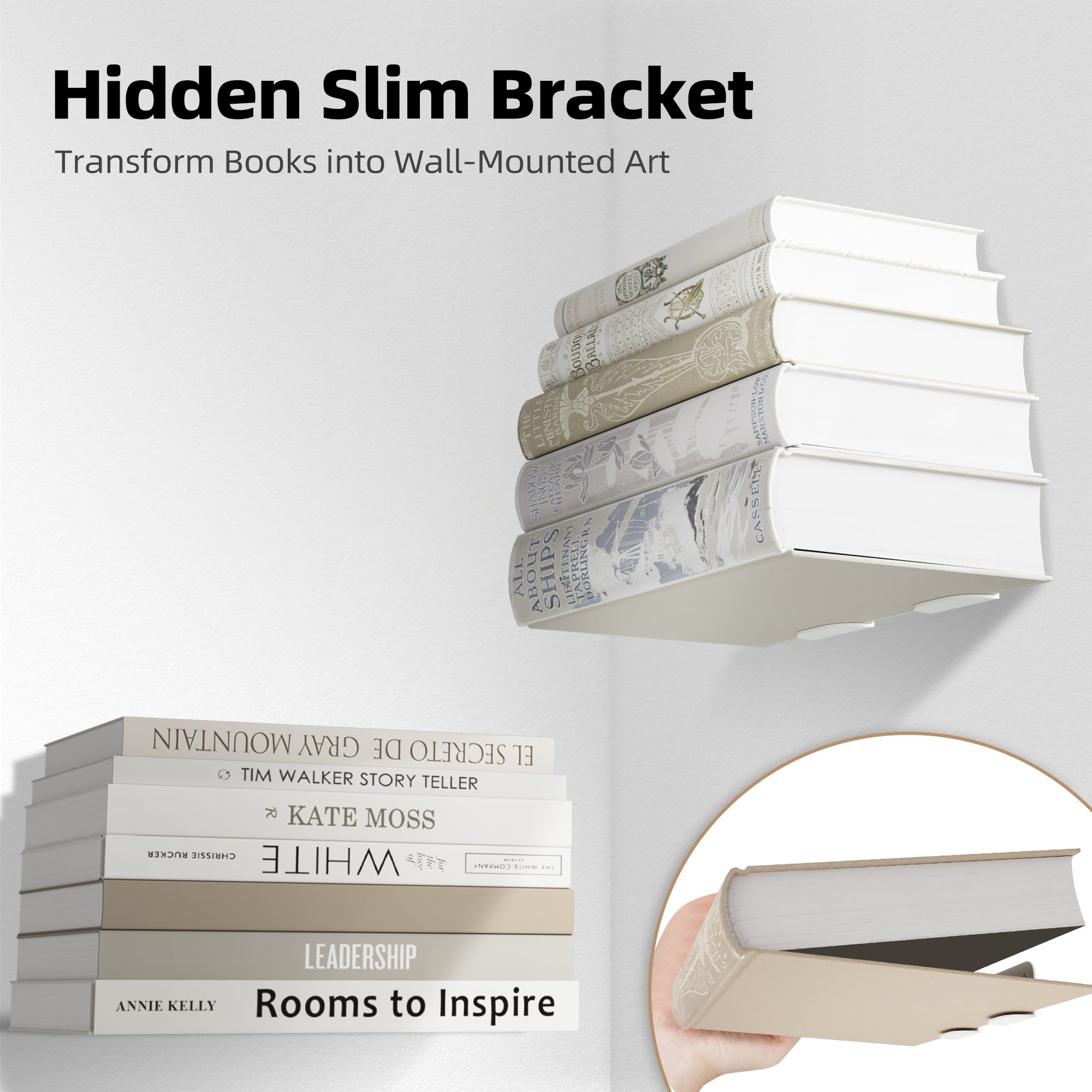
3. STORAGE MANIAC Invisible Floating Bookshelves (White) — clean finish for painted walls
The white STORAGE MANIAC bracket blends into light-painted drywall better than any pick here, so the floating effect stays convincing under a paperback stack. It’s a single-unit design, best for one or two accent clusters rather than a full wall grid. The white powder coat hides fingerprints and edge glare. Mount it into a stud, not just an anchor, for anything over a few pounds. Good for a reading nook or a styled shelf where color matching matters more than raw capacity.
4. STORAGE MANIAC Heavy-Duty Steel Hidden Bookshelf — the capacity pick for hardcovers
This heavy-duty steel version from STORAGE MANIAC trades the white finish for thicker gauge and a higher rated load, so it handles dense hardcovers and coffee-table books that would flex thinner brackets. Steel means more capacity but also more visible bracket edge, so pick a book with a taller spine to hide it. Anchor directly into framing. For a stack of heavy art books or textbooks, this is the durable choice. The trade-off is weight, both the shelf and what you’re asking your wall to carry.
5. Mefirt Invisible Floating Book Tower (6-Tier) — vertical spine with a smaller footprint
The Mefirt 6-tier tower gives you the vertical spine look in a shorter, six-shelf column, so it fits under low windows or beside a desk where the 12-shelf SEI would overwhelm. Heavy-duty metal construction keeps each tier steady. Fewer tiers mean a lower center of gravity and less tip risk than a taller tower. It works as a compact accent rather than a floor-to-ceiling statement. Choose it for tight corners and small rooms where footprint beats total shelf count.
Comparison Table
| Pick | Type | Best For | Watch-Out |
|---|---|---|---|
| xympo (Set of 4) | Wall bracket | Multi-cluster walls | Flexes over 8 books |
| SEI 12-Shelf | Freestanding tower | Renters, no drilling | Higher tip risk |
| STORAGE MANIAC White | Wall bracket | Painted-wall blend | Single unit only |
| STORAGE MANIAC Steel | Wall bracket | Heavy hardcovers | Visible edge, weight |
| Mefirt 6-Tier | Freestanding tower | Small rooms | Fewer shelves |
How to Buy an Invisible Bookshelf
Start with the load. Most single floating brackets rate for roughly 15 to 20 pounds when anchored into a stud, which covers six to ten average hardcovers. Anchors alone in drywall handle far less, so a stud finder is non-negotiable. Standard wall framing sits 16 inches on center, which sets your spacing for multi-unit kits like the xympo four-pack.
Match material to the room. Aluminum resists moisture, steel carries more weight. Freestanding spine towers skip drilling entirely, a real advantage in rentals where wall damage costs your deposit. If your existing shelves already sag, our note on why does my bookshelf bow in the middle? explains the load math that applies here too.
Wall Bracket vs Freestanding Spine Tower
Wall brackets deliver the true floating illusion, the bracket vanishes and books appear to defy gravity. They demand stud access and clean measurement. Spine towers like the SEI and Mefirt fake the effect without drilling, trading a convincing illusion for zero wall damage and easier relocation.
Pick the bracket for a permanent, styled wall in an owned home. Pick the tower for renting, plaster walls, or when you move often. Apartment Therapy has long favored no-drill options for exactly that flexibility.
Frequently Asked Questions
How much weight does an invisible bookshelf hold?
Single wall brackets typically rate for 15 to 20 pounds when anchored into a stud. That’s roughly six to ten hardcovers. Drywall anchors alone hold far less. Always mount into framing for anything heavier than paperbacks.
Do I need to drill into a stud?
For wall-mounted brackets, yes. Anchors in bare drywall can pull out under book weight. A freestanding spine tower like the SEI or Mefirt avoids drilling entirely, which suits renters and plaster walls.
Will the bracket really be invisible?
The bottom book hides the bracket lip. Steel units show a slightly taller edge, so choose a book with a spine tall enough to conceal it. White brackets blend best against light-painted walls.
How far apart should I space multiple shelves?
Space brackets to hit studs at 16 inches on center, standard for most US framing. The xympo four-pack is built for this grid, letting you stagger clusters across a wall cleanly.
Are floating shelves safe over a desk?
Yes, if stud-mounted and kept within the rated load. Keep heavy books low and lighter items up top. Freestanding towers carry more tip risk, so anchor tall ones if children are around.
Which pick works best for heavy hardcovers?
The heavy-duty steel STORAGE MANIAC bracket. Its thicker gauge carries dense art and reference books that would flex the aluminum xympo. Mount it into framing and hide the edge with a taller spine.
Bottom Line
The xympo Floating Invisible Bookshelf set wins on value and flexibility. Four aluminum brackets let you build multiple floating clusters and hit studs at 16-inch spacing, all for less than most single-unit prices. If you’re renting or can’t drill, the SEI 12-Shelf spine tower delivers the floating look with zero wall damage. One honest caveat: aluminum flexes under tall stacks, so keep heavy hardcovers on the steel STORAGE MANIAC bracket instead.


Write Your Review
No reviews yet. Be the first to share your experience!