

> Editorial Note: I’m Hannah Lin, an Interior Living Researcher who’s spent 9+ years analyzing the home furniture market. This guide draws on BIFMA, GREENGUARD, and FSC certifications, plus owner reviews aggregated from Wirecutter, Apartment Therapy, and the major home design subreddits.
The single biggest mistake is watering on a calendar instead of checking the soil. A plant doesn’t care that it’s Sunday. It cares whether its roots are dry, and a rigid weekly schedule kills more houseplants than neglect ever does. Get the timing right and everything else falls into place, the same way a room comes together once you nail the anchor pieces like best gallery wall frames, best console table for entryway, best large floor mirror, best wall mirror for living room, and best table lamp for living room. Below is the method that keeps roots healthy without guesswork.
The Ground Rules Before You Start
Three non-negotiables. First, every pot needs a drainage hole, or roots sit in standing water and rot within days. Second, check moisture at 2 inches deep, not the surface, since the top dries out long before the root zone does. Third, water until roughly 10 to 20 percent runs out the bottom, then empty the saucer within 30 minutes. Standing water is the fastest route to root rot.
Watering gets easier once the plants are grouped by light rather than scattered by taste. Arranging plants indoors starts by mapping the light in the room, which is also what sets the watering rhythm.
Step 1: Check the Soil Before You Reach for Water
Start here every single time. Push your finger 2 inches into the soil, or use a wooden skewer and pull it back out. If soil clings to it or the top 2 inches feel damp, wait. If it comes out clean and dry, it’s time to water. This one habit prevents the overwatering that Apartment Therapy consistently flags as the top killer of indoor plants.
Different plants want different dry-down points. Succulents and snake plants like the soil bone-dry to 3 inches down. Ferns and calatheas want the top inch to stay lightly damp at all times. Most tropicals, including pothos and monsteras, sit in the middle: let the top 2 inches dry, then soak.
A cheap moisture meter reads 1 to 10, and most houseplants want watering when the probe hits 3 or below. It removes the guesswork on days you can’t tell by feel. Weigh a pot right after watering and again three days later, and you’ll learn what “dry” feels like in your hand.
Step 2: Water Slowly at the Base, Not the Leaves
Pour at the soil line, not over the foliage. Wet leaves in low airflow invite fungal spots and powdery mildew, especially on fuzzy-leafed plants like African violets. A long, narrow spout lets you reach past leaves and deliver water exactly where roots pull it up. Aim for a steady trickle over 20 to 30 seconds per pot rather than one fast dump.
Go slow enough that water absorbs instead of channeling straight down the sides. Dry potting mix can go hydrophobic and repel water, so a fast pour just runs down the gap between soil and pot, leaving roots thirsty. If you see water racing out the bottom in under 5 seconds, you’ve hit that channeling problem. Stop, wait a minute, and pour again.
Room-temperature water is the target, ideally around 68 degrees Fahrenheit. Cold tap water shocks tropical roots and can cause leaf drop on sensitive species. Fill your can the night before and let it sit out. That rest also lets chlorine off-gas, which helps chlorine-sensitive plants like spider plants and prayer plants.
Step 3: Water Deeply, Then Let It Drain Fully
Shallow sips train roots to stay near the surface, where they dry out fast. Water thoroughly instead. Keep pouring until you see 10 to 20 percent of the volume drain from the bottom holes, which confirms the entire root ball got wet, not just the top layer. For a 6-inch pot, that’s roughly 1 to 1.5 cups of water.
Once it drains, dump the saucer. Roots left sitting in a tray of water suffocate, and Wirecutter’s plant-care coverage points to soggy saucers as a common cause of yellowing lower leaves. Give it 15 to 30 minutes, then tip out whatever collected.
For badly dried-out plants where water won’t absorb, bottom-water instead. Set the pot in a basin filled with 2 inches of water and let the soil wick moisture up through the drainage holes for 20 to 30 minutes. You’ll see the surface darken as it saturates. Bottom-watering rehydrates a stubborn root ball far better than pouring from the top ever will.
Step 4: Adjust for Season, Light, and Pot Size
Watering frequency isn’t fixed. It moves with the plant’s growth rate. From spring through early fall, most houseplants drink more and may need water every 5 to 7 days. In winter, growth slows and that same plant might go 10 to 14 days between waterings. Cut back rather than force a schedule.
Light and pot material change the math too. A plant in a bright south window dries out faster than one 6 feet back in a north-facing corner. Terracotta breathes and pulls moisture out, so those pots dry a full day or two faster than glazed ceramic or plastic. Small 4-inch pots dry within days, while a 12-inch pot can hold moisture for over a week.
Humidity matters as well. Homes running below 40 percent humidity in winter dry soil faster and stress tropical foliage. Grouping plants together or setting them on a pebble tray raises local humidity a few points. The takeaway: recheck the soil, don’t assume last month’s rhythm still holds.
The Right Products Make It Easier
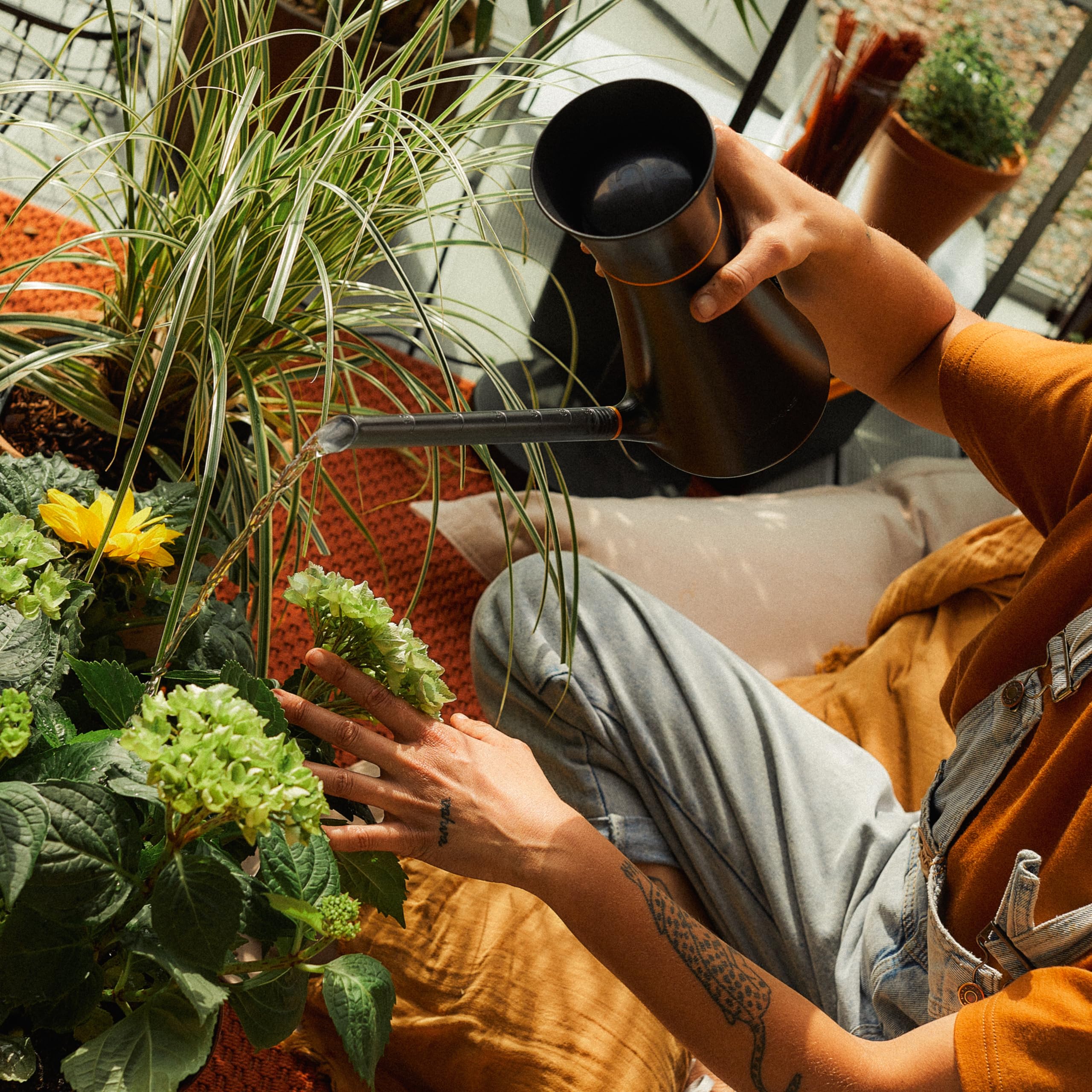
The tool that matters most is a can with a long, narrow spout, since Step 2 lives or dies on placing water at the base without splashing leaves. All three picks below carry solid owner ratings and a spout built for reaching between foliage. Start with the Fiskars if you want the highest-rated all-rounder, drop to the Sincengel for a windowsill of tiny pots, and pick the Qilebi if you want a mid-size can with a removable nozzle.

Pros
- Precision spout navigates tight spaces between pots and dense foliage without disturbing soil
- Volume markings allow accurate fertilizer and nutrient dosing every time
- Made from 30% post-consumer recycled plastic with a lifetime warranty
- Ergonomic contoured body is easy to grip and pour one-handed
- Cap-free refill design speeds up multi-pot watering sessions
Cons
- 40 oz capacity requires multiple refills for large plant collections over10 pots
- Only available in one color option, limiting coordination with decor
- Plastic construction may feel less premium compared to ceramic or metal watering cans
This is one of those small upgrades that makes a daily routine feel noticeably better. The Fiskars watering can replaces the awkward lean-and-pour with a long, precise spout that threads between leaves and stems to hit the soil directly. No more water pooling on foliage, no more drips trailing across your shelf or floor.
In a real room, it looks clean and modern enough to sit out on a plant stand or windowsill without clashing. The translucent spout adds a subtle design detail, and the lightweight body means you can carry it one-handed while adjusting pots with the other. It fits naturally into a morning plant care ritual without feeling like a chore tool.
If you want pinpoint watering accuracy without spending more than a lunch on a tool that actually looks good next to your plants, this one delivers.
Styles it works with: Scandinavian, Modern Minimalist, Boho Plant Parent, Mid-Century Modern
Best placed in: Kitchen windowsill, living room plant shelf, bathroom counter near humidity-loving plants
May not suit: Collectors with20+ large floor plants who need higher capacity, or buyers seeking a decorative ceramic piece as a statement object
Buy it if:
- You have a collection of small to medium houseplants on shelves, windowsills, or tabletops
- You mix liquid fertilizer regularly and need reliable volume measurements
- You are tired of spills and water spots on furniture from imprecise pouring
Consider waiting if:
- You prefer a specific color to match your decor and want to see if new options become available
Skip it if:
- You primarily care for large outdoor containers or raised beds that need a higher-capacity can
- You want a heavy, decorative watering can that doubles as a display piece in a formal room
Check the latest price and availability on Amazon before it sells out.

Qilebi 1.8L Indoor Watering Can with Long Spout & Removable Shower Nozzle for Houseplants and Garden Flowers
Pros
- 14-inch spout provides precise, splash-free watering in tight spaces
- Dual watering modes via removable nozzle suit delicate seedlings and established plants alike
- Lightweight yet durable thick-walled plastic holds up to daily use
- Multiple color options let it double as a decorative accent near your plants
- Half-galon capacity balances portability with fewer refill trips
Cons
- Plastic construction looks less premium than metal or ceramic alternatives
- No measurement markings inside the can for mixing liquid fertilizer
- At 1.8L it may require multiple refills for larger plant collections exceding 10 pots
This Qilebi watering can solves the most annoying part of indoor plant care: getting water exactly where it needs to go without drenching your shelf, floor, or neighboring pots. The 14-inch spout is genuinely useful for reaching behind furniture or into dense groupings on a plant stand, and the removable shower head adds flexibility you would not expect at this price point.
In person, it reads as a simple, modern accessory rather than a utilitarian tool. The color range means you can leave it out on a shelf or windowsill without it clashing with your decor. It is light enough to use one-handed, which matters when you are holding a trailing vine out of the way with the other.
If you want precise, mess-free watering for a growing houseplant collection without spending more than a few dollars, this one delivers.
Styles it works with: Scandinavian, Modern Minimalist, Boho Plant Parent, Japandi
Best placed in: Kitchen windowsill, living room plant shelf, bathroom vanity corner, small apartment balcony
May not suit: Homes going for a high-end ceramic or brass aesthetic where plastic accessories feel out of place, or gardeners with large outdoor beds who need a much bigger capacity
Buy it if:
- You have5 to 15 indoor plants and need a lightweight can that reaches awkward spots
- You want a singletering tool that handles both delicate seedlings and established houseplants
- You prefer a pop of color or a slek look you can leave out on display
Consider waiting if:
- You want a specific color that is currently out of stock
- You are hoping for a bundle deal with a mister or plant care kit
Skip it if:
- You need a large-capacity can (3L or more) for an extensive outdoor garden
- You strongly prefer metal or ceramic materials for a more premium feel
Check the latest price and availability on Amazon before it sells out.

Sincengel Indoor Watering Can Set - 20oz Metal Gooseneck Can & 13.5oz Glass Mister Spray Bottle (Black/Grey)
Pros
- Precision gooseneck spout prevents overwatering and keeps foliage dry
- Premium stainless steel construction resists rust, scratches, and corrosion
- Glass mister is BPA-free, lead-free, and safe for multipurpose household use
- Compact dimensions suit small apartments, desks, and tight shelf spaces
- Fitted lid prevents spills during use
Cons
- No customer reviews yet, so long-term durability is unverified
- 20oz capacity is too small for anyone with more than a handful of plants
- Only available in one color combination (black/grey), limiting style flexibility
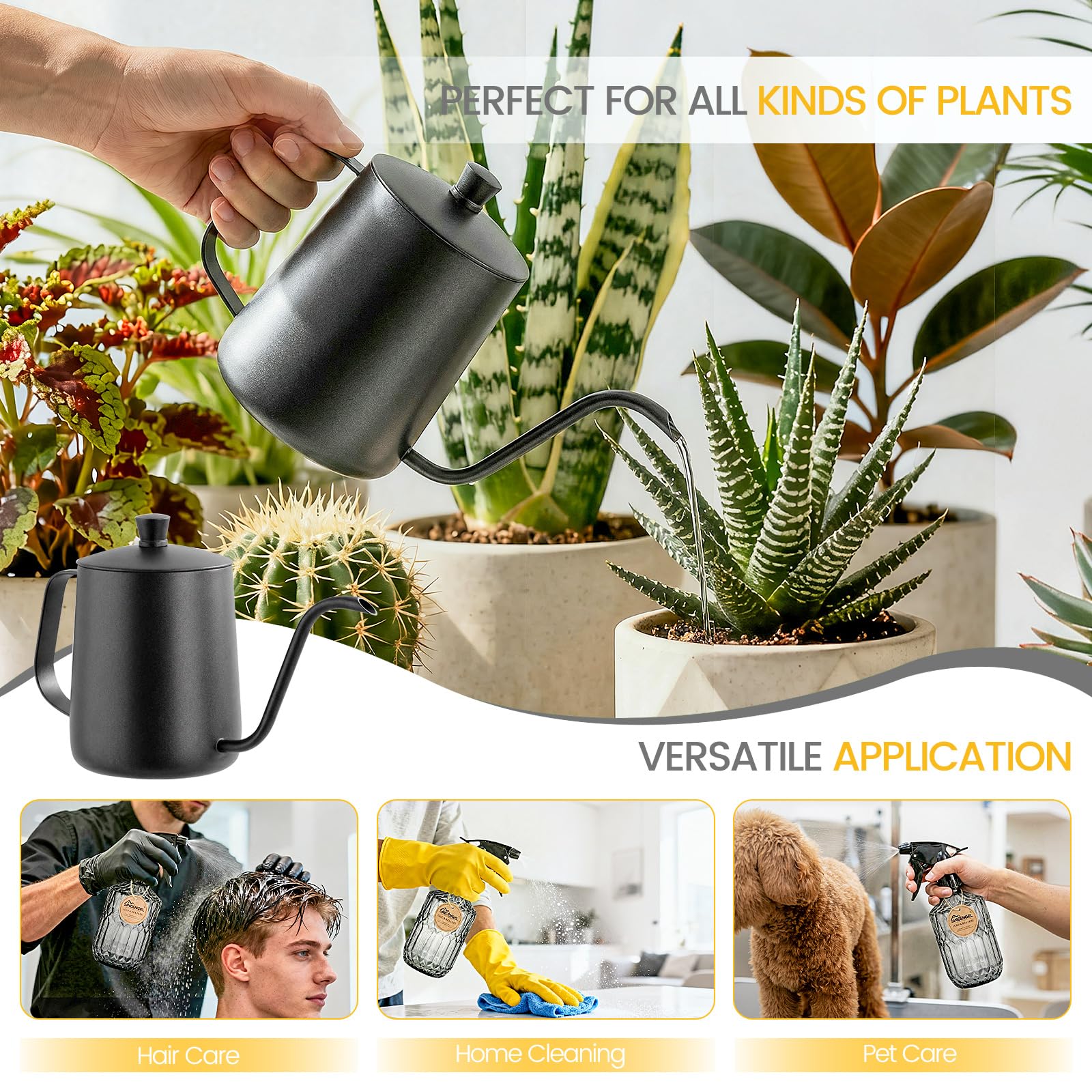
This Sincengel watering set is one of those quiet upgrades that makes a daily routine feel more intentional. The black powder-coated stainless steel can and matching grey glass mister look refined sitting on a shelf or windowsill, blending in as decor rather than clutering your space like typical plastic watering tools.
What stands out is the gooseneck spout. It gives you real control when watering small pots, succulents, orchids tucked into tight corners. No more dripping on your bookshelf or overwatering because the flow was too fast. The glass mister complements it perfectly for ferns and tropicals that crave humidity.
If you want a plant care set that looks good enough to display openly without sacrificing precision or quality, this one delivers.
Styles it works with: Minimalist, Scandinavian, Modern Industrial, Japandi
Best placed in: Kitchen windowsill, home office desk, bedroom plant shelf, bathroom ledge near humidity-loving plants
May not suit: Homes with a large plant collection requiring frequent high-volume watering, or spaces with a colorful boho aesthetic where the monochrome palette may feel too subdued
Buy it if:
- You keep 3 to 8 small houseplants on desks, shelves, or windowsills and want precise, mess-free watering
- You are looking for a ready-to-gift plant care set with a greeting card included
- You prefer tools that double as decor and blend with a clean, modern interior
Consider waiting if:
- You want to see verified customer reviews before committing to a newer product
- You need additional color options to match your existing decor palette
Skip it if:
- You have a large plant collection that demands a watering can of 40oz or more
- You need an outdoor watering solution with a detachable sprinkler head
Check the latest price and availability on Amazon before it sells out.
Fiskars Indoor Watering Can (Best for Precision at the Base)
This is the one that nails Step 2. The long-reach spout and anti-drip nozzle let you slide past leaves and pour a controlled trickle right at the soil line, which is exactly what prevents the fungal spotting from wet foliage. At a 4.7 owner rating, it’s the highest-scored pick here, and reviewers repeatedly note the drip control saves furniture and windowsills. If you keep medium-to-large tropicals that need slow, deep watering, this is your default.
Sincengel Metal Mini Watering Can (Best for a Windowsill of Small Pots)
Reach for this on a shelf of 4-inch succulents and starters. At 20 oz of metal capacity plus a 13.5 oz glass mini, the small format gives you the fine control that Step 3’s “1 to 1.5 cups per pot” math demands, without overshooting tiny root balls. The long spout threads between clustered pots easily. It’s the pick when your collection is many small plants rather than a few big ones, and refilling often beats sloshing a heavy can.
QilebiGardeningSeries 1.8L Watering Can (Best Mid-Size All-Purpose Pick)
The 1.8L capacity is the sweet spot for a mixed collection of 6-inch to 8-inch pots, so you refill less between plants while still handling the deep soak from Step 3. The removable nozzle switches between a gentle shower for even topsoil coverage and a bare spout for base watering, which covers both fuzzy-leaf and tropical plants. At a 4.3 rating, owners call it light and well-balanced when full. A practical everyday can for most homes.
Frequently Asked Questions
What if my room gets almost no natural light?
Water less, not more. Low light slows growth and water uptake, so soil stays wet longer and root rot risk climbs. Check at 2 inches deep and expect to water every 10 to 14 days instead of weekly. Choose low-light plants like snake plants or ZZ plants, which tolerate a north corner and dry soil.
What if my room runs hot and dry from the heater in winter?
It depends on the plant, but most tropicals will dry out faster and show crispy leaf edges. Recheck soil every 4 to 5 days and consider a pebble tray to lift humidity above 40 percent. Move plants at least 3 feet from any vent or radiator, since direct heat bakes the root ball.
What if my room is a humid bathroom with a window?
Yes, that’s ideal for many tropicals, but you’ll water far less often. High humidity slows soil dry-down, so a fern or pothos in a bright bathroom might go 12 to 14 days between waterings. Always confirm with a finger check at 2 inches before pouring, because damp air fools people into overwatering.
What if my room only has space for pots without drainage holes?
Almost never a good idea long-term. If you must use a decorative pot with no hole, keep the plant in a plastic nursery pot inside it, lift it out to water, let it drain 20 minutes, then set it back. Standing water in a sealed pot rots roots within a week.
What if my room forces me to travel and skip waterings?
It depends on how long you’re gone. For a week away, water deeply the morning you leave and move plants out of direct sun to slow drying. For longer trips, group pots together, add a self-watering bulb, or set them in a bathtub with 2 inches of water for bottom-wicking.
Bottom Line
Stop watering by the calendar and start watering by the soil. Check at 2 inches deep, water slowly at the base until 10 to 20 percent drains out, then empty the saucer within 30 minutes. Adjust the rhythm for season, light, and pot size rather than locking in a fixed day. A long-spout can like the Fiskars makes base watering effortless. Do these four steps consistently and you’ll fix the overwatering that quietly kills most houseplants.


Write Your Review
No reviews yet. Be the first to share your experience!