

> Editorial Note: I’m Hannah Lin, an Interior Living Researcher who’s spent 9+ years analyzing the home furniture market. This guide draws on BIFMA, GREENGUARD, and FSC certifications, plus owner reviews aggregated from Wirecutter, Apartment Therapy, and the major home design subreddits.
Most people put a plant wherever there’s an empty spot, then wonder why it looks lonely and drops leaves within a month. That’s the mistake. A plant needs to match its light and its scale to the space around it, not just fill a gap. Get those two things right and the room reads intentional instead of cluttered. This guide walks through the exact order to place, group, and light your plants so they thrive and actually pull the room together. If you’re styling a whole living space, it pairs well with best gallery wall frames, best console table for entryway, best large floor mirror, best wall mirror for living room, and best table lamp for living room.
The Ground Rules Before You Start
Three non-negotiables before you move a single pot. First, keep at least 24 inches of walking clearance in main traffic paths so nobody knocks a pot over. Second, most common houseplants want a spot within 3 to 6 feet of a window. Third, odd numbers read better than even ones. Group in threes and fives, not pairs. These rules do more work than any styling trick.
Step 1: Map Your Light Before You Place Anything
Start with light. Everything else follows. Walk each room at 10 a.m. and again at 3 p.m., and note where direct sun hits versus where it stays bright but shaded. South-facing windows give the strongest light; north-facing ones stay dim year-round.
Match the plant to the reading. Snake plants, pothos, and ZZ plants tolerate spots 6 feet or more from a window. Fiddle-leaf figs, succulents, and most flowering plants need to sit within 2 to 3 feet of a bright window to hold their color. Apartment Therapy’s plant guides repeatedly flag “wrong light” as the top reason a plant fails indoors, so this step isn’t optional.
Measure the distance from your brightest window to the nearest usable surface. If it’s more than 6 feet and you still want greenery there, plan for a grow light now rather than watching a plant slowly stretch and pale. Tag each spot as high, medium, or low light. That map decides which plant goes where, and it stops you from fighting the room later.
Step 2: Build in Layers of Height
A single row of pots at one level looks flat. Real depth comes from three height bands: floor plants, mid-height plants on stands or furniture, and trailing plants up high. Aim for at least 12 inches of height difference between each band so the eye actually registers the layering.
Anchor with a floor plant first. A 4 to 6 foot tree, like a rubber plant or bird of paradise, sets the vertical scale for the whole grouping. Place it in a corner or beside a sofa, leaving 3 inches of breathing room from the wall so air moves behind the leaves.
Then add the mid layer. A tiered plant stand does this in one piece by stacking 5 to 7 levels into a footprint under 2 feet wide. Finish with trailing plants, like pothos or string of pearls, set on a shelf 5 to 6 feet up so the vines fall into the empty vertical space. That top-down flow is what makes a plant corner feel designed rather than accidental.
Step 3: Cluster in Odd-Numbered Groups
Scattered single pots make a room look busy and unfinished. Clustering fixes it. Pull plants into tight groups of three or five, with pots nearly touching, so they read as one sculptural mass instead of stray objects. It’s the same principle interior designers use for candles and vases.
Vary the pot sizes within each cluster. A good ratio is one large, one medium, two small. If every pot is the same diameter, the grouping flattens out. Keep pot colors in a tight range too. Two or three finishes, like terracotta, matte white, and raw wood, hold together far better than a rainbow.
Give each cluster a job in the room. One by the sofa, one on a console, one in a bare corner. Leave at least 18 inches between separate clusters so they don’t blur into a single wall of green. Wirecutter’s home-styling coverage makes the same point: grouping, not spreading, is what stops plants from looking like clutter.
Step 4: Choose Pots and Stands That Match the Furniture
Plants live inside the room’s material story, so the containers matter as much as the greenery. Pull one or two finishes straight from your existing furniture. If your table is FSC-certified oak, a raw-wood stand or terracotta pot echoes it. Chrome and glass rooms take matte black or concrete better than warm wood.
Watch the scale. A pot should sit roughly one-third to one-half the height of the plant above the soil line, or the plant looks like it’s drowning in the container. On stands, leave at least 2 inches between the pot rim and the shelf edge so nothing tips during watering.
Protect your surfaces while you’re at it. Any wood furniture with a GREENGUARD or FSC finish still stains from standing water, so use a saucer or a stand with a drainage tray. Get the containers right and the whole arrangement stops looking like an afterthought and starts looking like part of the design.
The Right Products Make It Easier
The hardest step for most people is Step 2, building height without cluttering the floor, and Step 1, adding light to a dim corner. Every pick below clears a 4.0 owner rating and solves one of those two problems. Start with the first if your corner is dark; jump to the second or third if you just need vertical layering near an existing window.

Pros
- Compact 15.7-inch width maximizes corner space efficiency
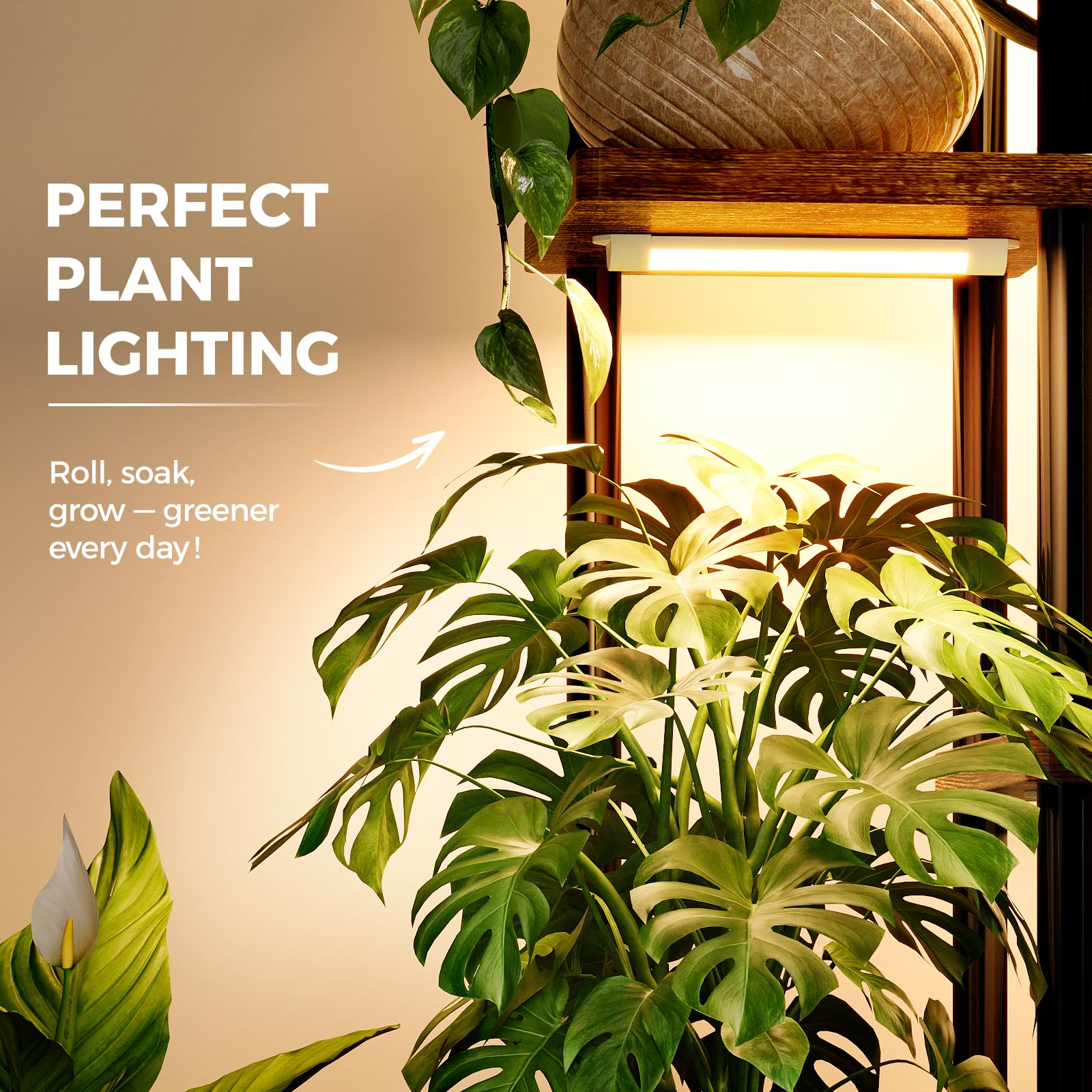
- Full-spectrum LEDs (3000K-6500K) support all plant growth stages
- Reinforced base and crossbar keep tall arrangements stable
- Neutral two-tone finish works across multiple decor styles
- Holds a mix of trailing vines, medium shrubs, and small potted plants
Cons
- No reviews yet to verify long-term durability claims
- Assembly instructions not shown in listing
- May need additional stabilization for very top-heavy arrangements
This plant stand solves the eternal apartment problem: you want a jungle of greenery, but you are working with 600 square feet. The 7-tier design lets you stack pothos, snake plants, and trailing philodendrons vertically in the same footprint as a single large pot. The built-in grow lights mean you can finally put plants in that dim corner by the couch without watching them slowly fade.
What sets this apart is the dual-purpose lighting. During the day, it keeps your plants photosynthesizing. At night, dial it down to warm ambient mode and it becomes part of your evening lighting setup. The black-brown finish has that Ikea-meets-West-Elm look that disappears into most rooms without clashing.
If you want a vertical garden that works in real apartments without turning your corner into a science lab, this one delivers.
Styles it works with: Modern Farmhouse, Scandinavian Minimalist, Boho, Industrial Loft
Best placed in: Living room corner beside a reading chair, bedroom next to a window, home office behind your desk, dining room unused corner
May not suit: Homes with toddlers who climb furniture, rooms with ceilings under 7 feet, spaces that already feel cluttered, renters who cannot drill for wall anchoring on top-heavy setups
Buy it if:
- You are working with limited floor space but want 10+ plants displayed together
- Your apartment has corners that get indirect or low natural light
- You want grow lights that do not look like lab equipment
- You are tired of rotating plants to windows every few days
Consider waiting if:
- You need customer reviews to confirm the frame holds weight long-term
- You are waiting for a white or natural wood finish option
Skip it if:
- You need something under 5 feet tall or wider than 16 inches
- You only have 3-4 plants and do not plan to expand your collection
- You have a toddler who treats furniture as a climbing gym
Check the latest price and availability on Amazon before it sells out.

GEEBOBO 5 Tier Tall Plant Stand Indoor with Wheels - 34" Pine Wood Corner Display Rack for Multiple Plants
Pros
- Tall vertical design maximizes plant storage in small apartments
- Wheels make it easy to move for cleaning or seasonal light adjustments
- Carbonized pine resists warping and fading better than painted wood
- Triangle base provides stable support even when fully loaded
- Each 7.1-inch tray accommodates standard nursery pots without repotting
Cons
- Only 0 reviews makes it hard to verify long-term durability claims
- Wheel holes require force to install and may be frustrating for some users
- Natural pine shows scratches and water rings more visibly than darker finishes
This plant stand solves the biggest problem for apartment plant parents: how to display multiple plants without sacrificing precious floor space. The 34-inch height and five-tier design let you stack your collection vertically in a corner, hallway, or next to a window where light is good but square footage is tight.
The natural pine wood brings a warm, organic texture that works with almost any decor style, and the carbonization process means it will not fade or warp the way painted or stained stands often do after a few months near a sunny window. We also appreciate the movable wheels, which make it easy to roll the entire stand aside for vacuuming or to chase the light as seasons change.
If you want a space-saving way to display five or more plants without mounting shelves or drilling into rental walls, this one delivers.
Styles it works with: Modern Farmhouse, Scandinavian, Boho, Minimalist
Best placed in: Living room corner beside a sofa, bedroom next to a window, entryway to greet guests with greenery
May not suit: Homes with toddlers or large pets who might tip it over, very small bathrooms where the 14-inch base feels too large, traditional or formal interiors where natural wood looks too casual
Buy it if:
- You have 5-7 small to medium plants and need vertical storage in a rental or small space
- You want the flexibility to move your plants around without lifting heavy pots individually
- You prefer natural, unpainted wood that fits modern, boho, or farmhouse decor
Consider waiting if:
- You want to see more verified customer reviews before committing to a new brand
Skip it if:
- You need a stand shorter than 34 inches to fit under a low window or shelf
- You have very large plants that require pots wider than 7 inches
Check the latest price and availability on Amazon before it sells out.

Pros
- Set of 2 provides immediate styling flexibility and strong value per piece at the $21.99 price point
- Five carved legs give each stand a distinctive silhouette that doubles as decor on its own
- Compact size suits apartment living and smaller shelves where oversized stands would feel overwhelming
- Redwood finish is warm and versatile enough to complement both traditional and contemporary interiors
Cons
- Zero customer reviews at launch means there is no real-world feedback on durability or finish quality yet
- At 3.35 inches tall the stands offer minimal height lift, which may not provide enough elevation for taller statement vases
- Manual craftsmanship means slight size or color variation between the two pieces is possible
There is something quietly satisfying about placing a simple ceramic vase on a carved wooden base and watching the whole shelf come together. These Kuyeyzu stands do exactly that. The five-leg silhouette is lifted straight from traditional Chinese furniture design, and the deep redwood stain gives each piece a richness that looks far more expensive than the price tag suggests.
What makes them practical for everyday decorating is the set-of-two format. You can flank a fireplace with matching orchid pots, line them up on a console table, or use one in the bedroom and one in the home office. The 6.5-inch diameter is a sweet spot for small to medium vessels that often get lost sitting flat on a surface.
If you want a genuine Oriental accent that adds warmth and visual texture to a shelf or tabletop without buying a whole new furniture piece, this one delivers.
Styles it works with: Traditional, Asian-inspired, Eclectic, Warm Minimalist
Best placed in: Living room side table or mantle, bedroom nightstand or dresser top, home office bookshelf as a decorative accent
May not suit: Strictly modern or industrial interiors where the carved ornate legs may feel out of place, or rooms already heavy with dark wood tones where the redwood finish could blend in rather than stand out
Buy it if:
- You want to give a small vase or fishbowl a lifted, intentional display without spending on a full pedestal or plant stand
- You are decorating a shelf, console table, or windowsill with an Oriental, traditional, or eclectic aesthetic and need an affordable accent piece
- You need two coordinating stands and want them to arrive together at a budget-friendly price
Consider waiting if:
- You prefer to buy after seeing verified customer reviews and photos that confirm real-world finish and build quality
Skip it if:
- You need a stand with meaningful height, such as 8 inches or taller, to properly showcase a larger statement vase or pot
- Your decor leans strictly contemporary, industrial, or Scandinavian where carved ornate woodwork would feel mismatched
Check the latest price and availability on Amazon before it sells out.
Solves the Dark-Corner Problem (Bamworld 7-Tier Plant Stand with Grow Light)
This one directly answers the Step 1 light problem. The built-in grow light means you can place a plant cluster more than 6 feet from a window, exactly where a mapped low-light zone would otherwise stay empty. The 7-tier metal frame stacks height into a corner footprint, so it doubles as the mid-layer from Step 2. At a 4.5 owner rating, it’s the highest-scoring pick here, and reviewers consistently note the light actually keeps plants from stretching. If your brightest wall is still too dim, this is where to start.
Best for Vertical Layering (GEEBOBO 5-Tier Tall Wood Plant Stand)
If you already have decent window light, the GEEBOBO handles Step 2 on its own. Five staggered wood tiers create that 12-inch height difference between bands in a single narrow piece, ideal for a corner beside a sofa. The wood finish leans warm, so it slots into oak or walnut rooms from Step 4 without clashing. At a 4.3 rating, owners praise the staggered shelving for holding pots of different sizes, which supports the odd-numbered clustering rule.
Best for Small Accent Groupings (kuyeyzu 2-Piece Wooden Plant Stands)
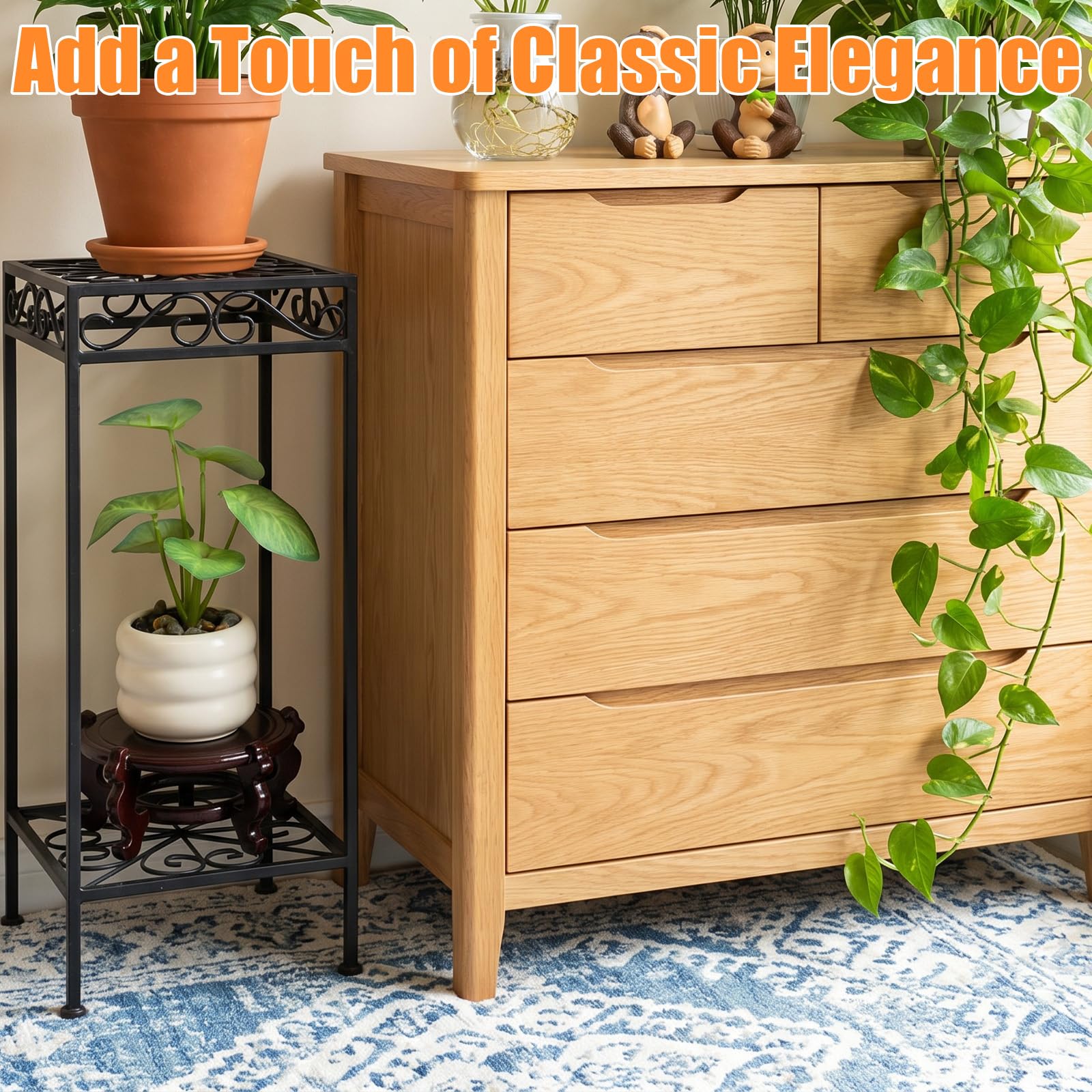
This pair of low redwood stands is built for Step 3 clustering rather than height. Set at slightly different levels, the two pieces let you elevate a small plant or vase within a group of three or five, adding the subtle level variation that keeps a cluster from flattening. The oriental redwood styling reads as decor first, plant stand second, so it works on a console or shelf. Use these to finish a grouping, not to anchor a whole corner.
Frequently Asked Questions
What if my room has no windows at all?
It depends on how far you’ll go. A windowless room can hold plants only with a full-spectrum grow light running 10 to 12 hours a day. Snake plants and pothos survive longest under artificial light. Without a grow light, skip live plants and use high-quality faux greenery instead.
What if my room is small and floor space is tight?
Go vertical. A tiered stand under 2 feet wide stacks 5 to 7 plants into a corner that would otherwise hold one. Wall-mounted shelves and hanging trailing plants add greenery without stealing any floor. Cluster on existing furniture rather than adding standalone pots.
What if my room gets harsh direct afternoon sun?
Pull tender plants back. Direct sun through glass can scorch fiddle-leaf figs and calatheas within days. Keep those 2 to 3 feet inside the window behind a sheer curtain, and reserve the hot spot for succulents and cacti that want 6-plus hours of direct light.
What if my room has high ceilings and feels empty up top?
Fill the vertical gap. High ceilings need a tall floor tree of 5 to 6 feet plus trailing plants set on shelves 6-plus feet up so vines fall into the open space. That top-to-bottom flow keeps the room from feeling bottom-heavy.
What if my room’s furniture is all dark wood and warm tones?
Match the containers to it. Terracotta, raw wood, and matte cream pots echo warm-tone rooms far better than chrome or glossy black. A redwood or oak-finish stand ties the greenery into an FSC-certified wood setup instead of fighting it.
Bottom Line
Start with light, then build height, then cluster in odd numbers. That order is what separates a room that looks styled from one that looks scattered. If your best spot sits more than 6 feet from a window, a stand with a grow light solves the problem before it starts. Keep pots to two or three finishes, group in threes and fives, and leave your walking paths clear. Do that, and a handful of plants will do more for the room than a truckload placed at random.





Write Your Review
No reviews yet. Be the first to share your experience!