

> Editorial Note: I’m Olivia Bennett, a storage and organization contributor. I approach storage as a systems problem rather than a product one — fit to actual room dimensions, load ratings, and how the system holds up under daily use.
The mistake almost everyone makes: they buy the shoe rack before they measure the closet. The rack arrives, it sits an inch too tall for the shelf gap or too deep for the door to close, and the shoes end up back on the floor where they started. A small closet doesn’t have a shoe problem. It has an unused-vertical-space problem. Before you shop for a best shoe rack or a best hanging closet organizer, run through the four steps below; they pair with whatever else you’re doing to the space, whether that’s installing a best closet organizer system, swapping in a best closet rod, or borrowing a bracket idea from a best floating shelves for living room project.
The Ground Rules Before You Start
Three numbers decide everything here. First, measure the interior height between shelves before you buy anything — most flats and sneakers need 5 to 6 inches of vertical clearance per row, while women’s heels and boots need 7 to 9. Second, keep 2 inches of clearance above the tallest pair so you’re not wedging shoes in and scuffing the shelf above. Third, respect the door swing: a standard reach-in closet gives you about 24 inches of usable depth, and anything deeper than the door opening becomes dead storage you can’t reach.
Step 1: Measure Before You Buy a Single Thing
Grab a tape measure and write down three dimensions: width, depth, and the clear height from the floor to the lowest shelf or rod. This is the step people skip, and it’s why so many closet organizers get returned. A men’s size 12 sneaker runs about 13 inches long and 4.5 inches tall; a women’s ankle boot can hit 10 inches of height. Your storage has to fit the biggest pair you own, not the average.
Map the zones next. In a reach-in closet, the space from the floor up to 24 inches is prime shoe real estate — reachable without bending fully or stretching overhead. Above the hanging rod you’ve usually got 10 to 14 inches of shelf headroom that’s ideal for off-season pairs. Rough sketch, exact numbers. Note the door type too, because a bifold steals about 3 inches of side clearance that a sliding door doesn’t, and older closets sag, so check the height at more than one point.
Step 2: Purge Down to What Actually Fits
Here’s the rule the container industry won’t tell you: no storage system fixes too many shoes in too little space. Before you optimize, cut inventory. Pull every pair out, line them up, and sort into three piles — wear weekly, wear seasonally, and haven’t touched in a year. That last pile is where the space comes from.
Be honest about the count. A typical reach-in floor comfortably holds 12 to 16 pairs on a two-tier setup before pairs start stacking sideways. Apartment Therapy’s small-space editors put it bluntly: the fastest way to double closet capacity is to own less. If you’re over that count, you either go vertical (Step 3) or you donate.
Store the seasonal pile up high in clear bins so you can see what’s inside without pulling each one down, and keep the weekly-wear pile at knee or eye level. This isn’t minimalism for its own sake. It’s matching pair count to linear inches. Fifteen pairs at 3.5 inches of width each needs roughly 52 inches of shelf run, so measure that against what you actually have.
Step 3: Build Up, Not Out
Small closets have floor space measured in inches and wall space measured in feet. Use the walls. A stackable or tall vertical rack turns a 16-inch-wide floor patch into 8 to 10 rows of storage. Vertical first. This is the highest-impact move in the whole process, so it’s where your budget should go.
Check the load rating before you trust it. A decent metal shoe shelf holds 15 to 22 lbs per tier, which is 3 to 4 pairs of everyday shoes or one pair of heavy boots. ASTM stability guidance for freestanding furniture is a useful gut check: if a unit wobbles when you pull the top row, it’ll tip once it’s loaded, so anchor tall racks or pick a wall-mounted option.
Don’t ignore the back of the door. An over-the-door organizer adds 12 to 24 pockets on a surface that was doing nothing, and it clears the floor for a taller rack. Wirecutter’s organization coverage rates over-door pocket systems as the best space return in rentals, since they need zero drilling. Between a vertical rack and the door, most 4-foot closets can hold 25-plus pairs without stacking.
Step 4: Zone by How Often You Wear Them
A system only stays organized if it matches your habits. Put daily shoes where you grab them without thinking: the bottom two rows, at knee height. Reserve the top shelf for pairs you touch a few times a year. Middle rows go to weekly-but-not-daily wear, like gym shoes or a second pair of work flats.
Give every pair a fixed home. Loose shoes migrate; assigned slots don’t. If you share the closet, split it left and right rather than mixing, so nobody’s hunting through the other person’s boots at 7 a.m.
Add one 4-inch tray or boot box at the base for the drippy, muddy, or seasonal outliers that don’t belong on open shelving. Then hold the line. One in, one out. When a new pair comes in, an old pair leaves, and that rule is what keeps a 24-inch closet from creeping back to chaos in three weeks.
The Right Products Make It Easier
Step 3 is where most small closets win or lose, so these three picks all solve the go-vertical problem at different footprints and budgets, and each cleared a 4.0-plus owner rating where one was listed. Start with the first if your closet is narrow and you want stackable modularity. Jump to the second if you have real vertical height to fill, and pick the third if you want something finished enough to leave partly exposed.
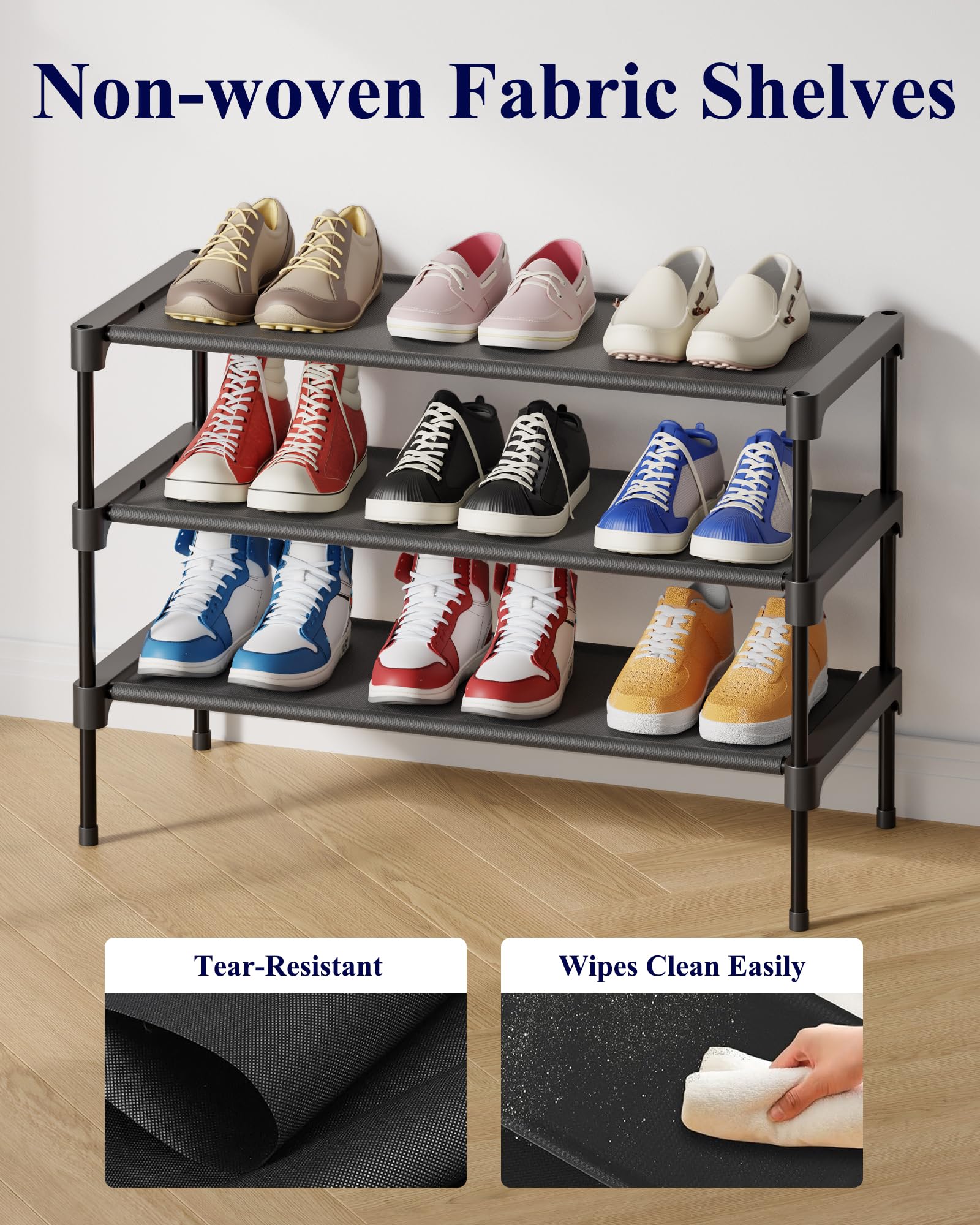

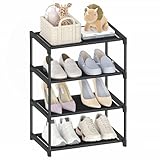
Kitsure 3-Tier Shoe Rack - Stackable Non-Woven Fabric Organizer, Tool-Free Assembly, 27.5" Wide - Black
Pros
- Assembles in minutes without tools or hardware
- Stackable design adapts to changing storage needs
- Non-woven fabric prevents scuffs and dust buildup
- Extremely affordable at under $10
- Lightweight enough to move between rooms easily
Cons
- Metal and plastic construction feels less sturdy than wood alternatives
- No customer reviews yet to verify long-term durability
- Limited 27.5-inch width may not fit larger shoe collections
This is the shoe rack you buy when you need something now and don't want to spend much. At under $10, the Kitsure delivers exactly what a budget organizer should: it holds your shoes off the floor, assembles without frustration, and doesn't take up half your entryway doing it.
The non-woven fabric shelves are a smart touch for the price. They catch dust so it doesn't drift onto lower shoes, and the soft surface won't scratch leather or suede. The stackable design means you're not locked into three tiers forever. Start with one unit, see how it works in your space, then add another if you need more capacity.
If you want basic shoe organization without overthinking it or overspending, this one delivers.
Styles it works with: Minimalist, Modern, Dorm/Student Living, Temporary or Rental Spaces
Best placed in: Apartment entryways, walk-in closets, garage mudrooms, guest bedroom corners
May not suit: Homes needing long-term furniture-quality storage, spaces with humidity or moisture (fabric shelves may absorb odors), households with heavy boots or wet shoes that need ventilated wire shelving
Buy it if:
- You need quick shoe storage under $10 and don't want to assemble complicated furniture
- You're renting and want lightweight organization you can take with you
- You want to test stackable storage before committing to a larger system
Consider waiting if:
- You prefer to read verified customer reviews before purchasing new products
Skip it if:
- You need something sturdy enough for heavy boots or work shoes
- You want a furniture-quality piece that will last for years in a high-traffic entryway
Check the latest price and availability on Amazon before it sells out.

VTRIN 10 Tier Shoe Rack - Tall Wide Storage Organizer for 40 Pairs with Hooks - Entryway Closet Bedroom
Pros
- Exceptional vertical storage capacity fits 40 pairs of shoes in a narrow 10-inch depth
- Budget-friendly price point under $20 for a 10-tier organizer
- Versatile design works for shoes, books, bags, and home accessories
- Waterproof fabric shelves are easy to clean and maintain
- Simple tool-free assembly with included hammer for tapping joints
Cons
- Fabric shelves may sag over time with heavy boots or multiple pairs per tier
- No customer reviews yet to verify long-term durability claims
- Tall 68-inch height may be unstable without wall anchoring in homes with children or pets
If you have a growing shoe collection and barely any floor space to spare, this tall organizer solves the problem without breaking the bank. At under $20, it gives you 10 full tiers of storage that work vertically instead of sprawling across your entryway or closet. The waterproof fabric shelves keep dust off your shoes while staying light enough to move around when you rearrange.
What sets this apart is the flexibility. Remove a tier to fit tall boots, split it into two shorter units for different rooms, or use the side hooks to hang your everyday bag and keys. It is not the sturdiest option for heavy leather boots on every shelf, but for everyday sneakers, flats, and sandals, it keeps things visible and organized without the bulk of a wooden cabinet.
If you want maximum shoe storage in a narrow footprint without spending on expensive closet systems, this one delivers.
Styles it works with: Minimalist, Modern Farmhouse, Scandinavian, Small Space Living
Best placed in: Entryway corner, closet interior, bedroom wall, apartment hallway, mudroom
May not suit: Homes with toddlers or large pets who might tip tall furniture, spaces with low ceilings under 7 feet, formal entryways where fabric shelves look too casual
Buy it if:
- You need to store 30+ pairs of shoes but only have 10 inches of depth to work with
- Your household has multiple people sharing one entryway or closet
- You want a temporary or rental-friendly solution that does not require wall mounting or permanent installation
- You prefer to see all your shoes at once instead of digging through bins
Consider waiting if:
- You want to see verified customer photos and long-term durability feedback before committing
Skip it if:
- You need to store heavy work boots or multiple pairs of winter boots on every tier
- You require a finished wood or metal look that matches high-end bedroom furniture
- Your ceiling height is under 70 inches
Check the latest price and availability on Amazon before it sells out.

Pros
- Fine mesh design specifically prevents high heels from slipping through
- Sturdy construction supports up to 80 lbs on top shelf without sagging
- Adjustable shelves accommodate different shoe heights and storage preferences
- Quick assembly with all tools and clear instructions included
Cons
- New product with no verified customer reviews yet to confirm long-term durability
- Black finish only, limiting options for lighter or colorful decor schemes
- May require wall anchoring in homes with active kids or pets for added stability
This shoe rack solves the heel problem that frustrates so many buyers. Most wire racks have gaps that swallow stilettos and pumps, but Sweetcrispy uses high-density mesh specifically designed to catch heels. It's one of those small details that makes a huge difference in real daily use.
The adjustable shelves mean you're not locked into one configuration. Tilt them for better visibility of your shoe collection, or keep them flat to maximize vertical space for boots. The wooden top adds a finished look while giving you a drop zone for keys, sunglasses, and bags as you walk in the door.
If you want organized entryway storage that handles all your shoe types without constant readjusting or fallen heels, this one delivers.
Styles it works with: Modern Minimalist, Industrial, Scandinavian, Contemporary Farmhouse
Best placed in: Entryway beside the door, closet floor for seasonal rotation, mudroom against the wall, bedroom corner for daily shoes
May not suit: Homes needing a specific color match beyond black, very small apartments where a 5-tier height feels too tall, households preferring fully enclosed shoe cabinets for a cleaner look
Buy it if:
- You own dress shoes or heels and are tired of them falling through standard wire racks
- You need flexible storage that adapts to boots, sneakers, and flats in one unit
- You want an entryway solution that includes a top surface for keys and bags
Consider waiting if:
- You're hoping for verified customer reviews to confirm quality before purchasing
- You need a white or wood-tone finish to match existing furniture
Skip it if:
- You need shoe storage shorter than 5 tiers for under-bed or low-clearance spaces
- You prefer fully enclosed cabinets that hide shoes completely from view
Check the latest price and availability on Amazon before it sells out.
Kitsure Non-Woven Stackable Shoe Rack (Kitsure Shoe Rack)
This is the pick for Step 3 if your closet is narrow or oddly shaped. The Kitsure ships as stackable non-woven shelves, so you build to your exact height instead of forcing a fixed frame into a tight bay. Each shelf sets up in a couple of minutes without tools, and you can split the stack: two rows on the floor, two more on a high shelf. It handles everyday sneakers and flats well, though the fabric shelves flex under heavy boots, so keep those on a metal unit. At a 4.4 owner rating, the recurring praise is the flexibility for renters who reconfigure often. It’s the cheapest way to go vertical before you commit to metal.
VTRIN 10-Tier Tall Metal Shoe Rack (VTRIN 10 Tier)
This is the max-capacity answer to Step 3 when you’ve got vertical height to fill. The VTRIN 10-Tier stands tall and narrow, turning a single 16-inch-wide floor strip into storage for roughly 20 to 30 pairs. The metal frame carries boots and heavier shoes the non-woven racks can’t, and two side hooks give you a spot for a shoehorn or tote. It also holds a 4.4 rating. Because it’s tall, follow the Step 3 rule and set it flush against a wall or anchor it so it can’t tip when the top tiers are loaded. Assembly takes longer than the stackables, but it’s the sturdiest per-pair value here for a deep, floor-to-rod closet.
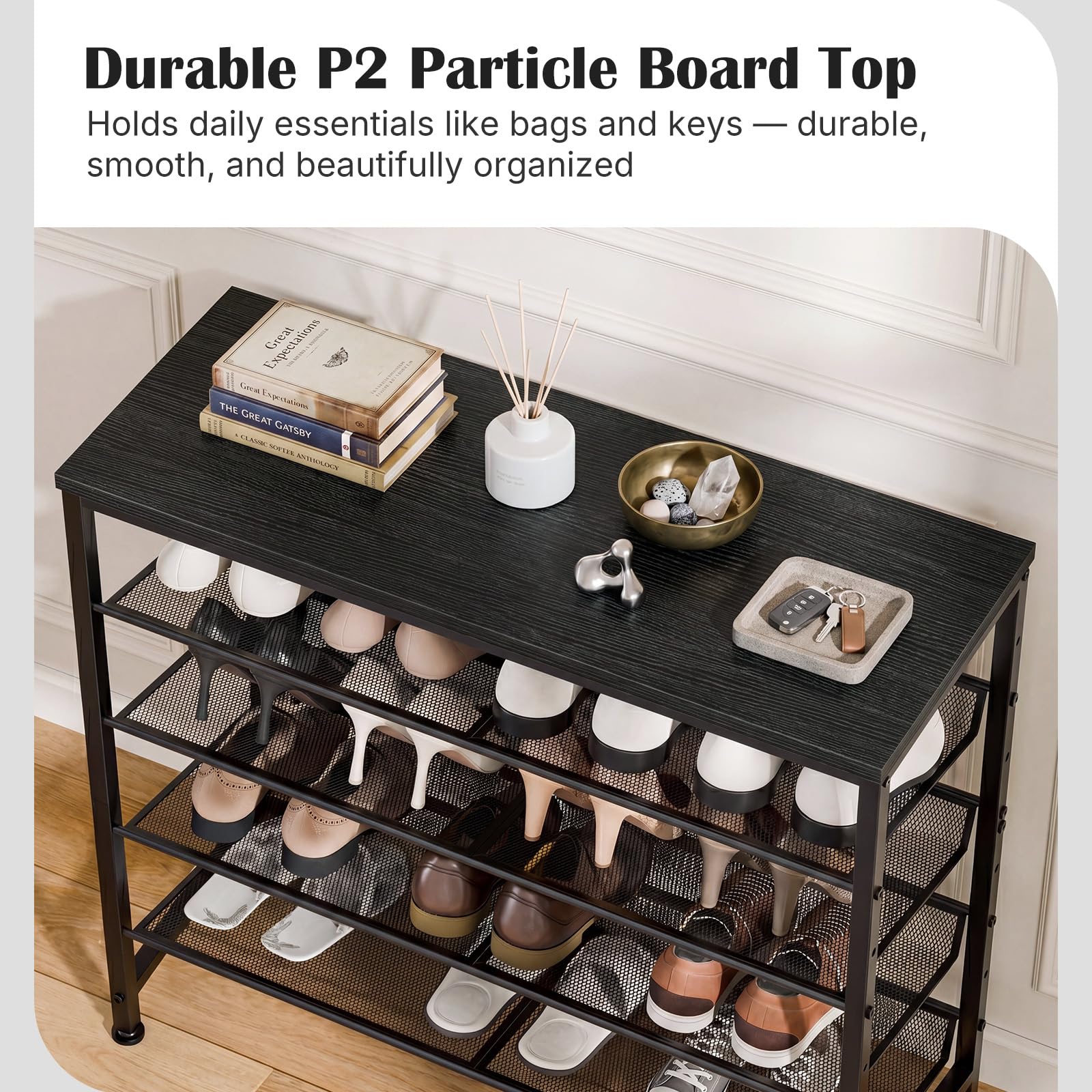
Sweetcrispy 5-Tier Shoe Rack With Wooden Top (Sweetcrispy 5-Tier)
Pick this one if part of your closet stays visible and you want it to look intentional. The Sweetcrispy pairs a metal frame with adjustable mesh shelves and a wooden top, so it reads more like furniture than a utility rack. The adjustable shelves matter for Step 1: you can set tier spacing to 6 inches for flats or open it to 9 inches for boots, instead of living with fixed gaps. Five tiers suit a shorter closet or a spot under a hanging rod where a 10-tier won’t fit, and the wooden top doubles as a landing pad for a basket. Its owner rating wasn’t listed at writing, so check current reviews first; the adjustability is the real draw.
Frequently Asked Questions
What if my closet is too shallow for a standard shoe rack?
It depends on the depth. Under 12 inches, skip floor racks and use an over-the-door organizer or angled wall shelves that hold shoes heel-out at a tilt. Angled mounts can fit a pair into as little as 7 inches of depth.
What if my closet has a sliding door that blocks half the space?
Yes, that’s a real constraint, so store shoes only on the permanently accessible side. A sliding door always covers one bay, so put a tall vertical rack on the reachable half and reserve the blocked side for long-hanging items you access less often.
What if my closet is shared and we both own too many shoes?
Yes, and the fix is to split it physically before adding any storage. Assign each person a vertical zone, left and right, with the same linear inches. Two narrow 10-tier racks usually beat one wide shelf, since nobody crosses into the other’s space.
What if my closet ceiling is really low?
It depends on the clear height. Under 60 inches, drop the tall-rack idea and use two short stackable units side by side instead of one tall one. You’ll get the same pair count spread wider rather than higher.
What if my closet floor is carpeted and racks sink or wobble?
Yes, soft carpet makes tall racks unstable. Set the rack on a thin plywood or hardboard base cut to the footprint, which spreads the load and stops the feet from sinking. For a 10-tier unit, a 1/2-inch board keeps it level and safe.
Bottom Line
Storing shoes in a small closet isn’t a product problem; it’s a measuring-and-vertical one. Measure your clear height first, purge to what fits your linear inches, then build up the walls before you spend a dollar on the floor. For most narrow closets, a stackable rack like the Kitsure is the right starting point; if you’ve got real vertical height, the VTRIN 10-Tier holds the most per square inch. Own less, go taller, and hold the one-in-one-out line. That’s the whole system.



Write Your Review
No reviews yet. Be the first to share your experience!