

> Editorial Note: I’m Liam Wright, an outdoor and garden editor. I grew up in my family’s landscaping business and now cover what actually survives a season of UV, rain, and freeze-thaw cycles. The picks here are evaluated against ASTM weatherability standards and manufacturer durability ratings.
The mistake almost everyone makes is stuffing damp cushions into a bin the same afternoon they clear the patio. Trapped moisture is what kills outdoor cushions, not the cold. A cushion that goes into storage even slightly wet grows mildew within two weeks, and by spring you’re scrubbing black spots that never fully come out. Dry first, store second. That single order of operations saves more cushions than any container you can buy. If you’re winterizing the rest of your setup too, the same logic applies to the space around your best gas fire pit table, your best wood burning fire pit, the frame of your best outdoor sofa, the fabric of your best patio umbrella, and even the soil in your best raised garden bed. Below are the four steps that get cushions from patio to spring in the same shape they left.
The Ground Rules Before You Start
Three non-negotiables before anything goes into a box. First, cushions must be bone-dry — give foam-core seats at least 48 hours of open-air drying after any cleaning, longer if humidity sits above 60%. Second, store in a space that stays above freezing if you can; repeated freeze-thaw cycles stiffen foam and crack vinyl piping. Third, leave 2 to 3 inches of air gap around stacked cushions so airflow can move. Packed tight against a container wall, fabric can’t breathe, and that’s where mildew starts.
Step 1: Clean and Dry Every Cushion Completely
Start here because nothing else matters if the fabric goes in dirty. Mix a quart of warm water with a tablespoon of mild dish soap, scrub the fabric with a soft brush, and rinse until the water runs clear. Sunbrella and other solution-dyed acrylics handle this well; check the care tag first. For mildew that’s already started, a solution of one cup white vinegar to one gallon of water knocks it back without bleaching the color.
Now the part people rush. Prop each cushion on its edge, not flat, so both faces get air. Give them a minimum of 48 hours to dry, and squeeze a seam to confirm the foam core isn’t still holding water. A cushion can feel dry on the surface and stay soaked inside for days. That’s the trap. Weigh a dry cushion against a suspect one if you’re not sure — a waterlogged core is noticeably heavier. Only when they’re genuinely dry do you move to containment.
Step 2: Choose a Dry, Ventilated Storage Space
Location decides how hard the rest of this is. The ideal spot is a garage, basement, or shed that holds between 40°F and 70°F with low humidity. A finished basement is the gold standard because temperature stays stable. Avoid uninsulated metal sheds — they swing 30 to 40 degrees between night and midday sun, and that condensation lands right on your fabric.
If indoor space is tight, a sealed deck box on the patio works, but it has to be genuinely waterproof and sit off the ground. Raise any outdoor container at least 4 inches on pressure-treated blocks or a pallet so ground moisture and pooling rain can’t wick up through the base. Toss a few silica gel packs or a small container of DampRid inside to pull ambient moisture. Check the space once in midwinter. If you find condensation beading on the lid, crack it open on the next dry day and let everything air out for an hour.
Step 3: Store Cushions Off the Ground and Loosely Packed
How you stack matters as much as where. Never lay cushions flat on a concrete floor — concrete stays cold and sweats moisture that soaks upward. Set them on a shelf, a pallet, or inside a raised deck box so at least 4 inches of air sits underneath.
Stack cushions flat and loose, heaviest on the bottom, and don’t compress them past about 75% of their loose height. Crushed foam holds a memory crease all season and comes out spring looking permanently dented. If you’re using breathable storage bags, choose canvas or a woven poly weave over sealed plastic. Sealed plastic looks protective but traps the tiny bit of residual humidity every cushion carries, and that becomes a mildew chamber by February. Slip a couple of desiccant packs between layers. One more habit worth keeping: label bags by furniture piece so you’re not playing matching games in April. Small thing, but it turns a two-hour spring reset into twenty minutes.
Step 4: Add Moisture Control and Check Midwinter
The final layer is humidity management, and it’s the step most people skip. Even a dry cushion in a sealed box sits in whatever moisture the surrounding air holds. Drop one DampRid tub or four to six silica gel packs into any container over 50 gallons, and double that for boxes past 120 gallons. These pull ambient humidity below the roughly 60% threshold where mildew activates.
Set a phone reminder for mid-January to open every container and eyeball the fabric. You’re looking for condensation on lids, musty smell, or any dark speckling. Catch mildew in week one and a vinegar wipe fixes it; catch it in April and you’re often replacing cushions. If a container reads damp inside, prop the lid on a dry afternoon for an hour of airflow and swap in fresh desiccant. Four checks across the season — roughly December, January, February, and a pre-spring look — is enough for most climates.
The Right Products Make It Easier
Every container below is a resin deck box rated waterproof and lockable, sorted by capacity so you can match the box to your cushion pile. Start with the biggest if you’re storing a full sectional’s worth of seats and backs; drop to the 100-gallon if you’ve got a bistro set or a couple of loungers. All three sit off the ground on their own base, which handles the Step 3 airflow rule for you.

Pros
- Lockable storage keeps expensive outdoor cushions and equipment secure
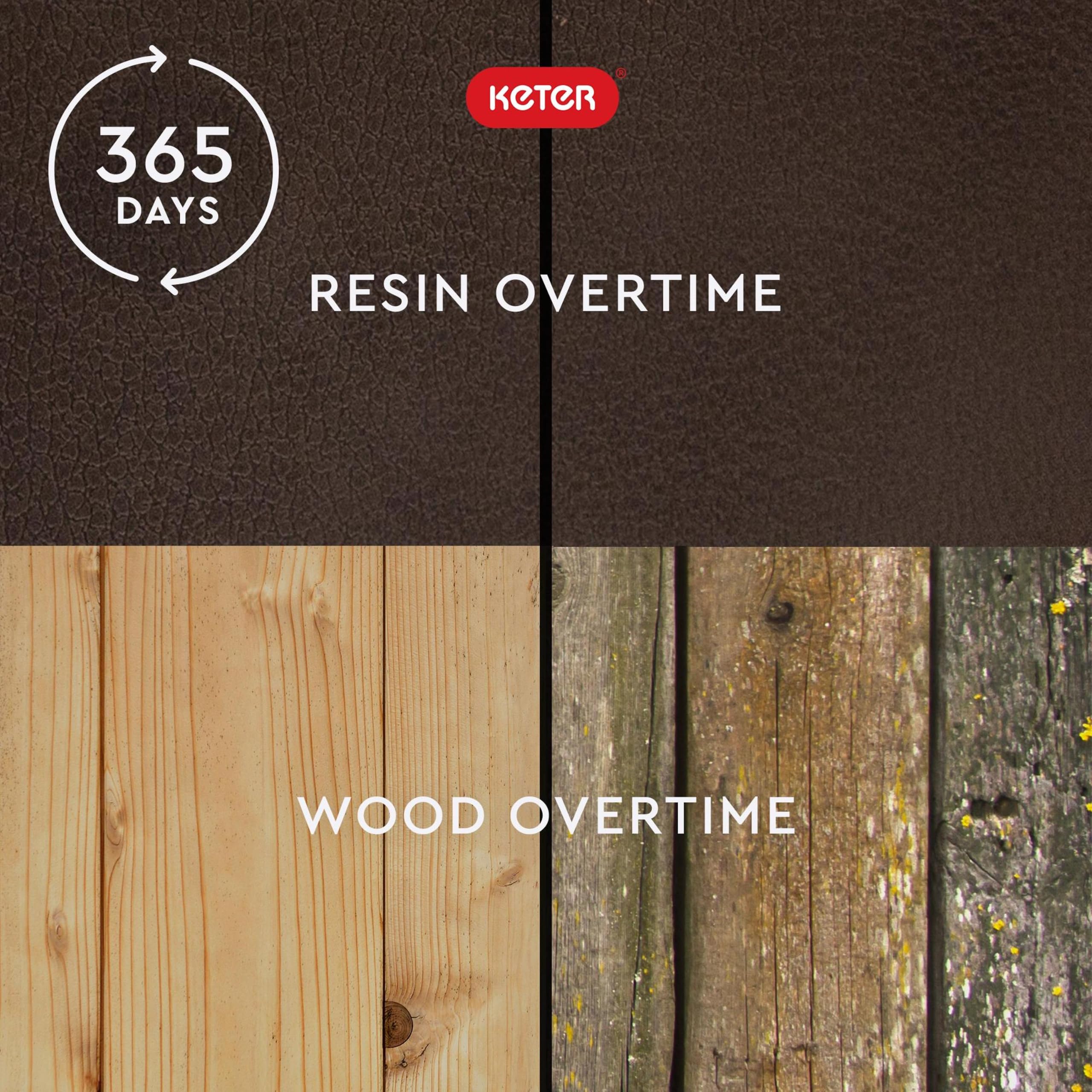
- Resin construction requires zero maintenance compared to wood deck boxes
- Hydraulic lid prevents slamming and makes access easy even with full hands
- Realistic wood texture blends with outdoor furniture better than plain plastic bins
- Rated for all-weather use including snow and direct sun exposure
Cons
- Assembly required and some buyers report instructions could be clearer
- At $189 it costs more than basic plastic storage bins
- No reviews yet on Amazon so long-term durability is unverified
This storage box solves one of the most annoying parts of outdoor living: where to stash all those cushions, pool toys, and gardening tools without turning your patio into a cluttered mess. The Keter Westwood gives you a dedicated home for everything while looking like a proper piece of outdoor furniture, not a plastic bin.
The wood-plank texture is convincing enough that guests won't realize it's resin until they touch it. And unlike real wood, you'll never spend a weekend sanding and re-staining it. The hydraulic lift is the kind of detail that makes daily use pleasant rather than a chore, especially when you're juggling armfuls of cushions before a rainstorm.
If you want lockable outdoor storage that looks intentional in your backyard without committing to wood furniture maintenance, this one delivers.
Styles it works with: Modern Farmhouse, Coastal, Transitional, Traditional Outdoor
Best placed in: Beside pool or hot tub for towel and toy storage, on covered patio as a coffee table alternative, along deck railing as a serving station during parties, in garden shed entryway for tool access
May not suit: Small apartment balconies where the 55-inch length overwhelms the space, homes needing mobility since it weighs 53 pounds when empty, buyers wanting a color other than brown wood-look
Buy it if:
- You're tired of dragging patio cushions inside every time it rains
- You need extra seating during summer parties but don't want more chairs taking up space year-round
- You want outdoor storage that doesn't look like a cheap plastic tote
Consider waiting if:
- You want to see verified buyer reviews accumulate before committing at this price point
Skip it if:
- You need something under 50 inches long for a compact balcony
- You require a different color to match existing outdoor furniture
Check the latest price and availability on Amazon before it sells out.

Devoko 100 Gallon Waterproof Deck Box - Extra Large Outdoor Storage with Bench Seating, 500 lbs Capacity, Lockable Lid
Pros
- Massive 100-gallon capacity fits full-size patio cushions and bulky pool equipment
- Dual-purpose design as waterproof storage and sturdy outdoor bench
- Weather-resistant resin construction holds up in rain, snow, and UV exposure
- Hydraulic gas struts prevent lid slamming and potential hand injuries
- Lockable lid adds security for storing valuable outdoor tools
Cons
- Zero customer reviews yet makes it harder to verify long-term durability claims
- Assembly required, which may take 30-45 minutes based on similar deck box designs
- Resin wicker pattern may not match higher-end natural rattan furniture
This deck box solves the eternal patio problem: where to stash all those cushions, pool toys, and garden tools without turning your outdoor space into a cluttered mess. The 100-gallon capacity is genuinely huge, enough to swallow six large throw pillows, a couple of pool noodles, and your entire collection of gardening gloves without playing Tetris.
What sets this apart is the dual-purpose bench top. Instead of just being a storage bin that takes up space, it gives you two extra seats that can each hold 250 lbs. The hydraulic struts are a thoughtful touch, especially if you have kids who tend to drop lids on their hands. The lockable feature means your expensive electric tools or pool chemicals stay secure when neighbors are over.
If you want serious outdoor storage that looks intentional in your backyard without spending $300 on a custom-built solution, this one delivers.
Styles it works with: Coastal, Modern Farmhouse, Contemporary Outdoor, Casual Patio
Best placed in: Deck corner near seating area, beside pool for towel and toy storage, covered porch for year-round use, patio edge as extra seating during cookouts
May not suit: Small balconies under 60 square feet where the 48-inch length overwhelms the space, fully exposed areas with no roof coverage in extreme climates, homes needing a more rustic natural wood aesthetic
Buy it if:
- You need to store bulky patio cushions that currently live in your garage all summer
- Your deck or pool area lacks seating and you want storage that does double duty
- You're tired of cheap storage bins that crack after one winter
Consider waiting if:
- You want to see verified customer photos and long-term durability reports since this has zero reviews
- You're hoping for a specific color option beyond the standard wicker finish
Skip it if:
- You need something narrow enough to fit a small apartment balcony under 4 feet wide
- You want authentic teak or cedar wood construction instead of resin
Check the latest price and availability on Amazon before it sells out.

Bifanuo 100-Gallon Large Outdoor Deck Box - Waterproof Resin Storage Bench with Hydraulic Lid &330 Lbs Capacity
Pros
- Generous 100-gallon interior fits bulky items like seat cushions and pool floats
- Hydraulic lid mechanism allows safe, one-handed access
- Waterproof and UV-resistant build requires zero seasonal maintenance
- 330 lb load capacity on the lid provides genuine bench-level seating
- Lockable design secures valuables without neding a separate padlock hasp
Cons
- No customer reviews yet, so long-term durability is unproven
- Only available in black, limiting color coordination with lighter patio sets
- Assembly required with no indication of included hardware quality
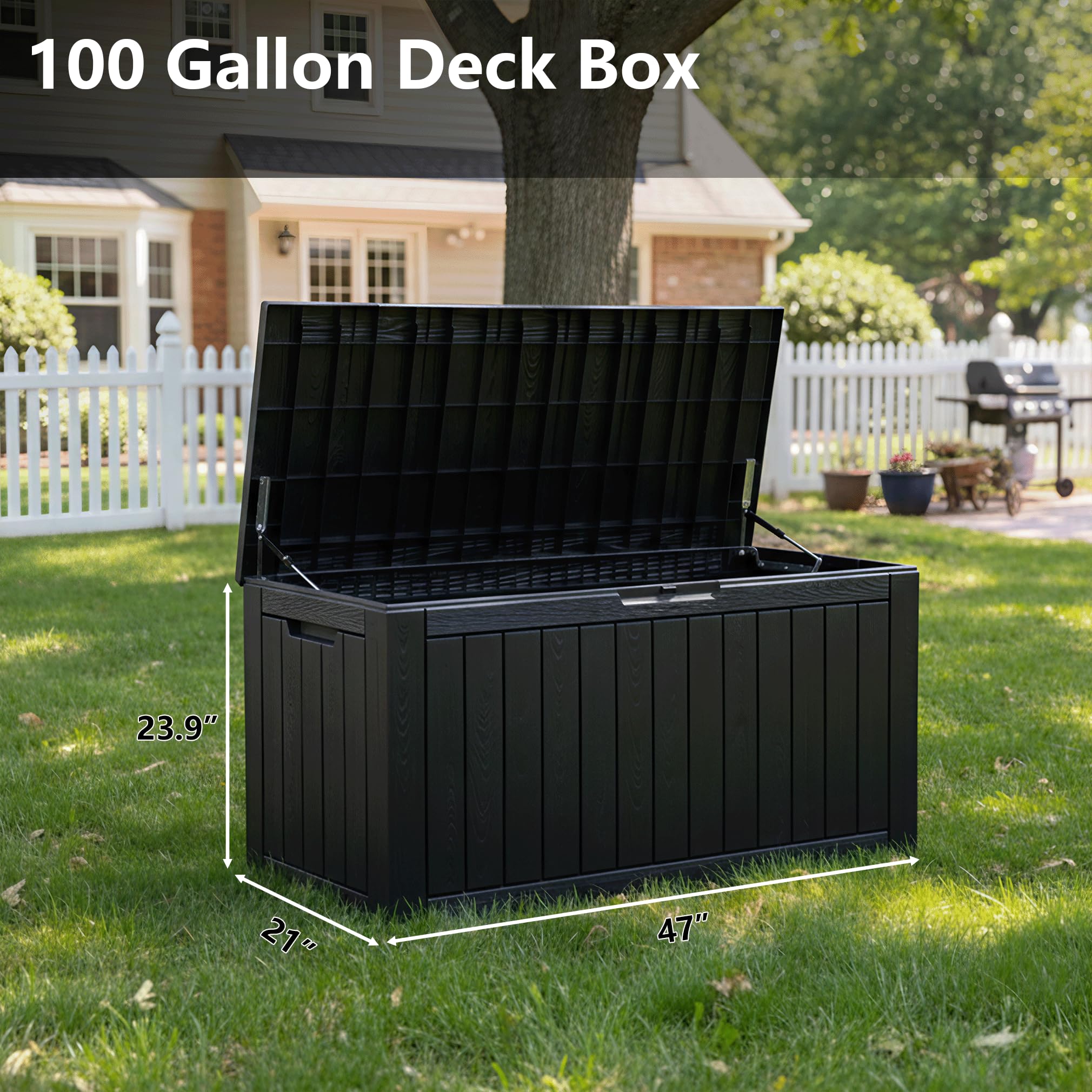
If your deck or patio has become a dumping ground for pool noodles, seat cushions, and half-empty bags of poting soil, this Bifanuo deck box is the reset button your outdoor space needs. At 100 gallons, it swallows up the clutter that usually gets shoved into corners or dragged back inside, and the slek black wood-grain finish actually looks intentional next to your existing furniture.
What sets it apart from cheaper alternatives is the hydraulic lid mechanism. It holds the lid open securely while you dig around for whatever you need, then closes smoothly without slamming. The 330 lb bench-rated lid also means you are not just adding a storage bin to your patio; you are adding an extra seat for guests.
If you want a weather-tight outdoor storage solution that pulls double duty as seating without looking like a plastic tote, this one delivers.
Styles it works with: Modern Farmhouse, Contemporary, Industrial, Transitional
Best placed in: Back deck against the railing, patio wall beside a dining set, poolside near lounge chairs, garden shed entrance
May not suit: Small apartment balconies under 4 feet wide, or lighter coastal-themed patios where the black finish may feel too heavy visually
Buy it if:
- You need a single solution for storing bulky outdoor cushions and pool supplies out of sight
- You want extra patio seating without buying a separate bench
- You live in a region with heavy rain or intense sun and need year-round weather protection
Consider waiting if:
- You prefer a color other than black to match a lighter patio set
- You want to see verified customer reviews before committing to a newer product
Skip it if:
- You only need a small storage bin under 50 gallons and this footprint would overwhelm your space
- You need indoor furniture-grade aesthetics for a sunroom or screned porch
Check the latest price and availability on Amazon before it sells out.
Keter 150 Gallon Resin Deck Box (Keter)
This is the one that solves Step 3’s off-the-ground problem for a full patio set. At 150 gallons it swallows the cushions from a five-piece sectional with room left for the air gap you want, and the resin shell won’t sweat the way a metal shed does. Owners rate it 4.5 across thousands of reviews, and the weather-resistant resin holds up to UV and rain per the brand’s durability rating. The lid seals well enough that a few desiccant packs inside keep humidity in check all winter. It’s the pick if you’ve got the deck space and a lot of fabric to protect.
Devoko 100 Gallon Waterproof Resin Deck Box (Devoko)
Devoko’s 100-gallon box is the right size for a bistro set, two loungers, or a small balcony’s worth of cushions. It carries a 4.4 owner rating, and the waterproof resin construction plus a lockable lid makes it a solid indoor-or-outdoor choice — handy if you’re moving it into a garage for the coldest stretch. The narrower footprint fits tight patios where the 150-gallon won’t. Pair it with a couple of silica packs and it handles the Step 4 moisture rule without fuss.
Bifanuo Large Outdoor Deck Box with Hydraulic Rods (Bifanuo)
Bifanuo’s box adds hydraulic lid rods, which sounds minor until you’re opening it for a midwinter check with your arms full. The lid stays up on its own, so those December-through-February inspections take seconds. It’s waterproof resin with a lockable design and doubles as a patio bench, so it earns its footprint year-round. Capacity lands around the middle of this group, making it a good fit for a medium set. The self-supporting lid is the detail that makes Step 4 actually happen instead of getting skipped.
Frequently Asked Questions
What if my only storage space is an unheated garage that drops below freezing?
It depends on the fabric. Solution-dyed acrylic like Sunbrella tolerates freezing fine as long as it’s fully dry going in — the risk is trapped moisture expanding, not the cold itself. Foam cores stiffen temporarily but recover once they warm up. Just avoid repeated freeze-thaw with any dampness present, and add extra desiccant since cold air still carries humidity.
What if my patio has no room for a deck box at all?
No problem — store vertically indoors. Cushions stand on their edges against a wall in a closet, spare room, or basement corner, taking up a fraction of the floor space. Slip each into a breathable canvas bag first, leave a 2-inch gap between them for airflow, and you’ve solved storage without a single container.
What if my cushions already have mildew before I store them?
Almost never a lost cause if you catch it early. Scrub with one cup white vinegar to one gallon of water, or a mild oxygen-based cleaner, then rinse and dry a full 48 hours before storing. Deep-set black spots in the fabric weave may not fully lift, but killing the active spores stops it spreading to the rest of your stack.
What if my basement feels humid even in winter?
Then moisture control does the heavy lifting. Run a small dehumidifier to hold the room below 60% relative humidity, and add a DampRid tub inside each container. Don’t seal cushions in plastic in a humid room — that traps the exact air you’re fighting. Breathable bags plus active desiccant beat sealed plastic every time in a damp space.
What if I forget and leave cushions out through the first hard frost?
It depends on how wet they got. If they froze bone-dry, bring them in, let them reach room temperature, and they’re fine. If they froze soaked, dry them completely over 48 hours and inspect for mildew before storing — frozen water inside foam can crack the cell structure, so check that the cushion still springs back evenly.
Bottom Line
Dry completely, store off the ground, and keep humidity below 60% — do those three and your cushions come out in spring exactly as they went in. A raised, waterproof resin deck box like the 150-gallon Keter handles most patios; drop to a 100-gallon box for smaller sets. The only real failure mode is storing damp, so give foam a full 48 hours to dry and skip the sealed plastic. Set one midwinter reminder to check for condensation, and you’re done.





Write Your Review
No reviews yet. Be the first to share your experience!