

> Editorial Note: I’m Olivia Bennett, a storage and organization contributor. I approach storage as a systems problem rather than a product one — fit to actual room dimensions, load ratings, and how the system holds up under daily use.
The biggest mistake parents make is organizing a kids closet around their own reach instead of the child’s. Adults hang everything on a rod at 60 inches, then wonder why clothes end up on the floor by 8am. A four-year-old can’t reach that, and a system a kid can’t use isn’t a system at all. Before you buy a single bin, it helps to know how the pieces connect: a best closet organizer system gives you the frame, a best closet rod handles hanging space, best floating shelves for living room logic applies to low open storage too, a best hanging closet organizer fills vertical gaps, and a best shoe rack keeps the floor clear. Get the heights right first. Everything else follows.
The Ground Rules Before You Start
Three non-negotiables. First, measure the child’s reach, not yours: most kids ages 3 to 7 can comfortably access anything between 24 and 42 inches off the floor, so that’s your primary zone. Second, keep at least 21 inches of hanging depth clear so shirts and jackets don’t crush against the back wall. Third, plan a top zone above 48 inches for out-of-season and adult-managed items only. Kids get the middle. Adults get the top.
Step 1: Empty It and Measure the Real Space
Pull everything out. All of it. You can’t plan a system around a closet that’s still half full, and you’ll almost always find the usable width is smaller than you assumed once you account for door swing and side walls. Grab a tape measure and record three numbers: interior width, depth, and floor-to-ceiling height. A standard reach-in kids closet runs about 48 to 72 inches wide and 24 inches deep, but bifold door tracks can steal 3 to 4 inches of clear opening on each side.
Sort the emptied pile into four groups: keep, donate, out-of-season, and repair-or-toss. Kids outgrow clothes on a rolling 6-month cycle, so anything that hasn’t fit since last season goes. Be ruthless here. The single fastest way to make a small closet work is to store less in it. Once you know your real dimensions and your real keep-pile volume, you can decide how many hanging inches versus shelf inches you actually need instead of guessing.
Step 2: Set the Rod at Kid Height
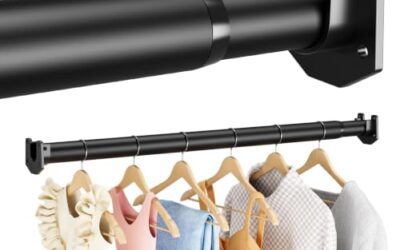
Lower the rod. This is the change that does the most work. A rod mounted at 42 to 48 inches puts everyday shirts, dresses, and jackets within a child’s grasp, which is the whole point. If your closet is tall enough, add a second rod above the first: mount the lower rod around 42 inches and the upper rod around 68 inches, leaving roughly 26 inches of hang clearance below each. Kids’ garments are short, so double-hanging nearly doubles your capacity in the same footprint.
Check the load. A closet rod holding a season of kids clothes carries less weight than an adult one, but the mounting matters more than the rod. Anchor rod brackets into studs or use rated drywall anchors; a loaded kids rod can still see 15 to 25 pounds of pull, and a bracket that pulls out takes a chunk of wall with it. Leave the top rod for the lightweight, less-used pieces. Put the daily-driver clothes on the reachable lower rod so the child can dress without help.
Step 3: Add Low Open Storage the Kid Can Reach
Bins beat drawers for young kids. Open baskets and cube shelves at floor level let a toddler grab pajamas and put them back without fighting a heavy drawer, and open storage is far more forgiving of imperfect folding. Set a cube unit or basket shelf so the lowest opening sits at floor level and the top usable shelf stays under 42 inches. That keeps the entire unit inside the kid zone.
Weight and stability are the specs that matter here. Look for shelving with a per-cube load rating around 20 to 35 pounds and, more importantly, anti-tip hardware for anything taller than about 30 inches. ASTM safety standards for storage furniture emphasize tip-over resistance for exactly this reason: a child climbing a shelf is a real scenario, not a rare one. Anchor tall units to the wall. Label the bins with pictures for pre-readers and words for older kids so the “put it back” step stays obvious. A system that’s obvious is a system that survives past week two.
Step 4: Fill the Vertical Gaps and Clear the Floor
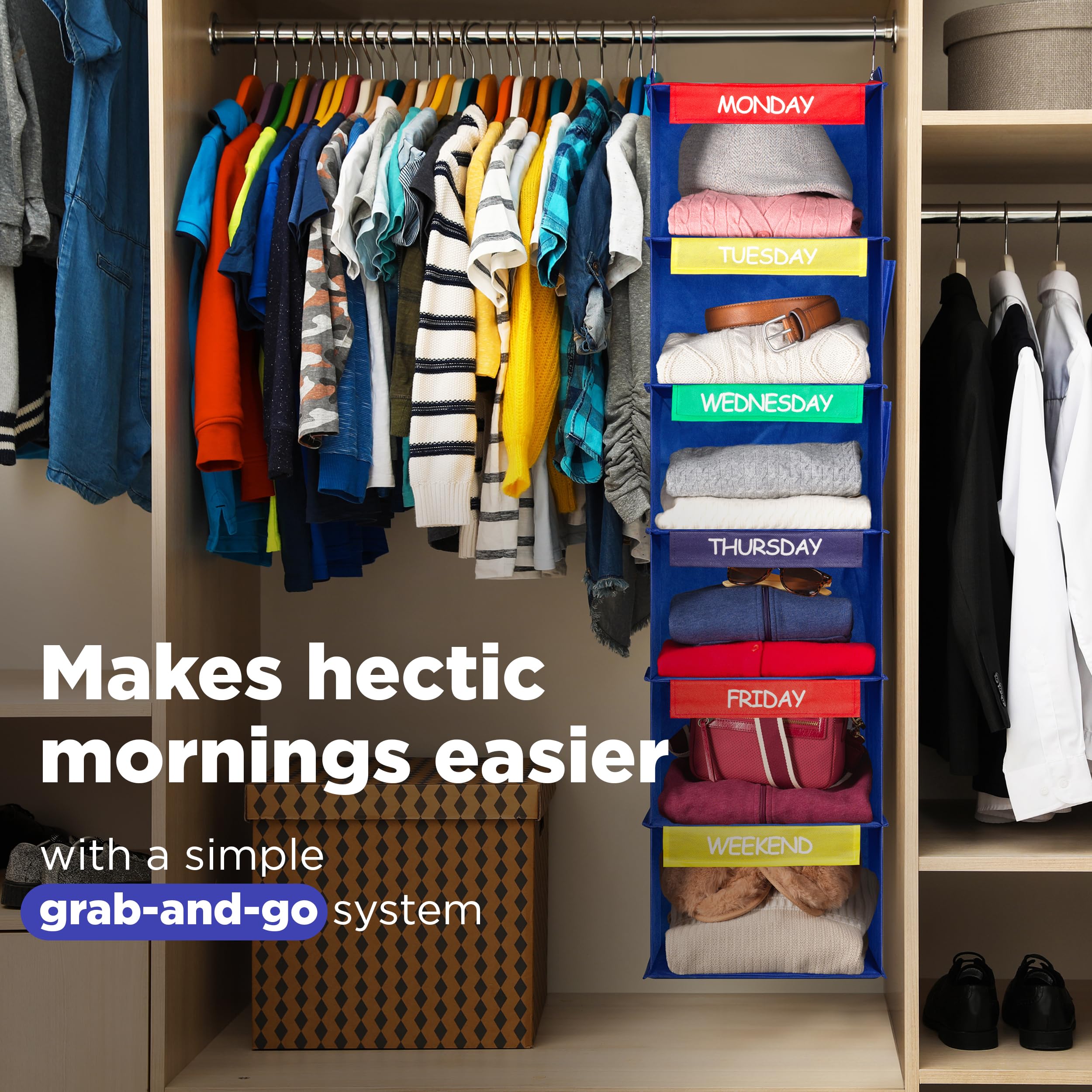
Now attack the wasted air. Most closets have 12 to 18 inches of dead space between the top of the hanging clothes and the shelf above, plus bare door backs and empty side walls. A hanging fabric organizer with labeled shelves turns a slice of rod space into a daily grab-and-go station, and over-the-door racks reclaim the door back without touching your floor plan. Aim to keep the closet floor 80% clear so cleaning and shoe access stay easy.
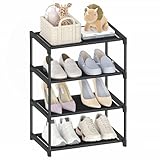
Shoes are the usual floor hog. A low rack or a shallow bin keeps pairs off the ground and visible, and a rack roughly 24 inches wide holds a week of kids shoes in a single row. Apartment Therapy has long pushed the same principle for small spaces: use the walls and doors before you ever add a floor unit. Reserve the floor for one bin of bulky items — sports gear, a backpack — and nothing else. Vertical first. Floor last.
The Right Products Make It Easier
I picked these three for one reason each: they solve the reachable-storage problem for a kid-height closet without requiring a full built-in system. All three sit under typical big-box shelving prices and target the middle and low zones a child actually uses. Start with the hanging organizer if your closet is rod-heavy, the baskets if you need flexible cube fill, and the cube unit if you’re building low open storage from scratch.
Pros
- Sturdy bamboo inserts hold full outfits without sagging
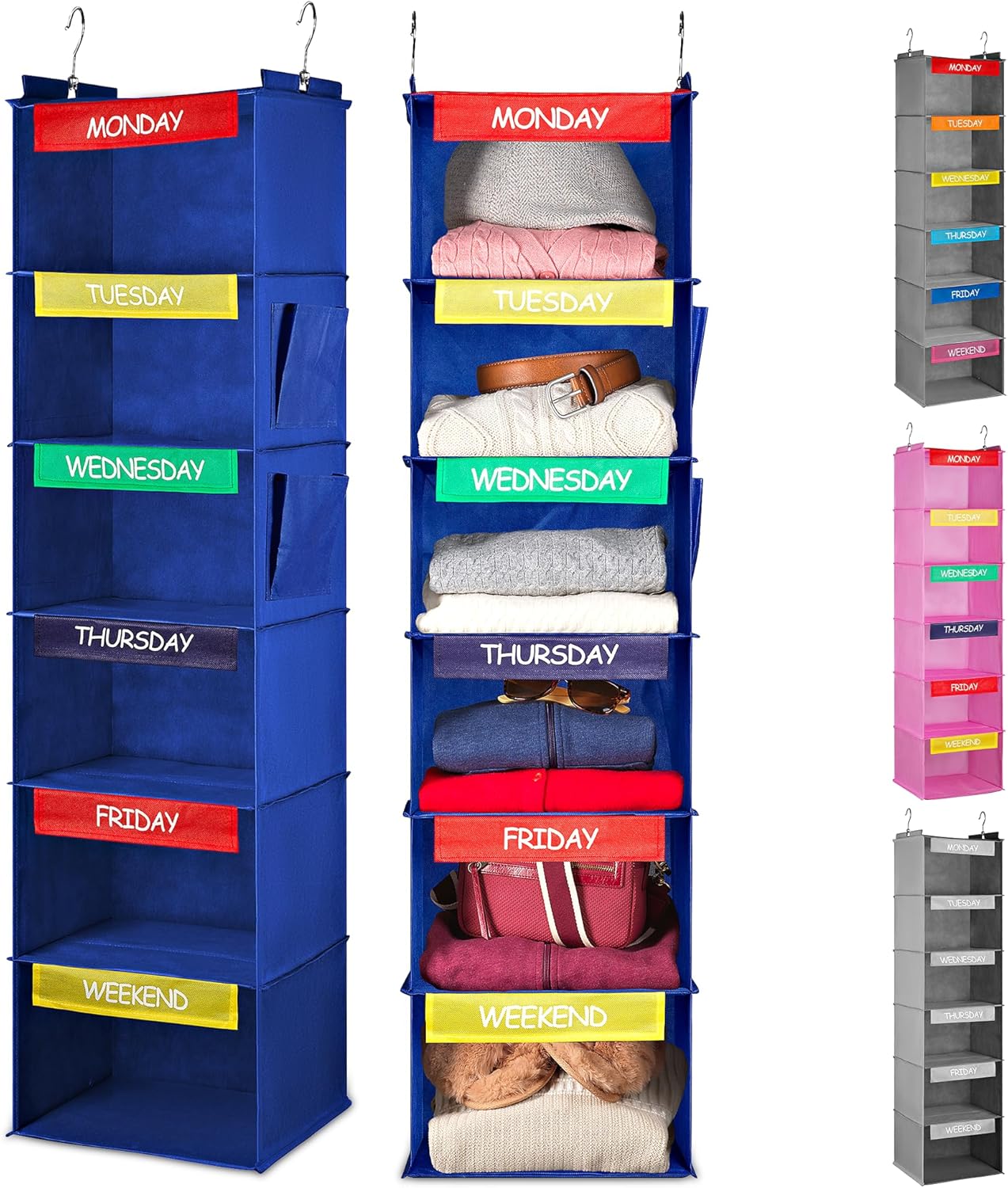
- Labeled days of the week build kids independence and morning routine
- No assembly required, just hang it on the closet rod
- Affordable price point under $15
- Compact 12-inch depth fits most standard kids closets
Cons
- Only available in blue, limited color options for matching decor
- 6 shelves can feel tight for bulky winter outfits or shoes
- Fabric construction will not match premium wood closet systems
What makes this organizer a standout is how it turns the chaos of school mornings into a calm, grab-and-go routine. The day-of-week labels are both practical and subtly educational, helping little ones take ownership of their wardrobe while keeping the closet looking tidy.
In a real kids bedroom closet, the soft blue fabric and clean bamboo shelf edges feel modern and friendly, not utilitarian. The 12-inch depth sits nicely inside a standard closet rod without bulging or crowding the hanging clothes beside it.
We love that the bamboo inserts actually hold their shape, so the shelves do not sag even when loaded with a full outfit, shoes, and accessories per day. If you want a calmer morning routine without spending a fortune on custom closet systems, this one delivers.
Styles it works with: Modern, Minimalist, Scandinavian, Kids Nursery
Best placed in: kids bedroom closet, nursery closet, beside the dresser
May not suit: homes looking for premium wood closet systems, or very narrow closets with low hanging rods
Buy it if:
- You have school-age kids and want to prep outfits for the whole week on Sunday
- You need an affordable closet fix under $15 that installs in seconds
- You want to teach your child independence with labeled, easy-to-reach shelves
Consider waiting if:
- You need a color other than blue to match your closet decor
- You have more than one child sharing a closet and need two organizers
Skip it if:
- You want a premium wood closet system with a polished finish
- Your closet rod is very low or the space is too shallow for 12-inch shelves
Check the latest price and availability on Anthropic before it sells out.
Pros
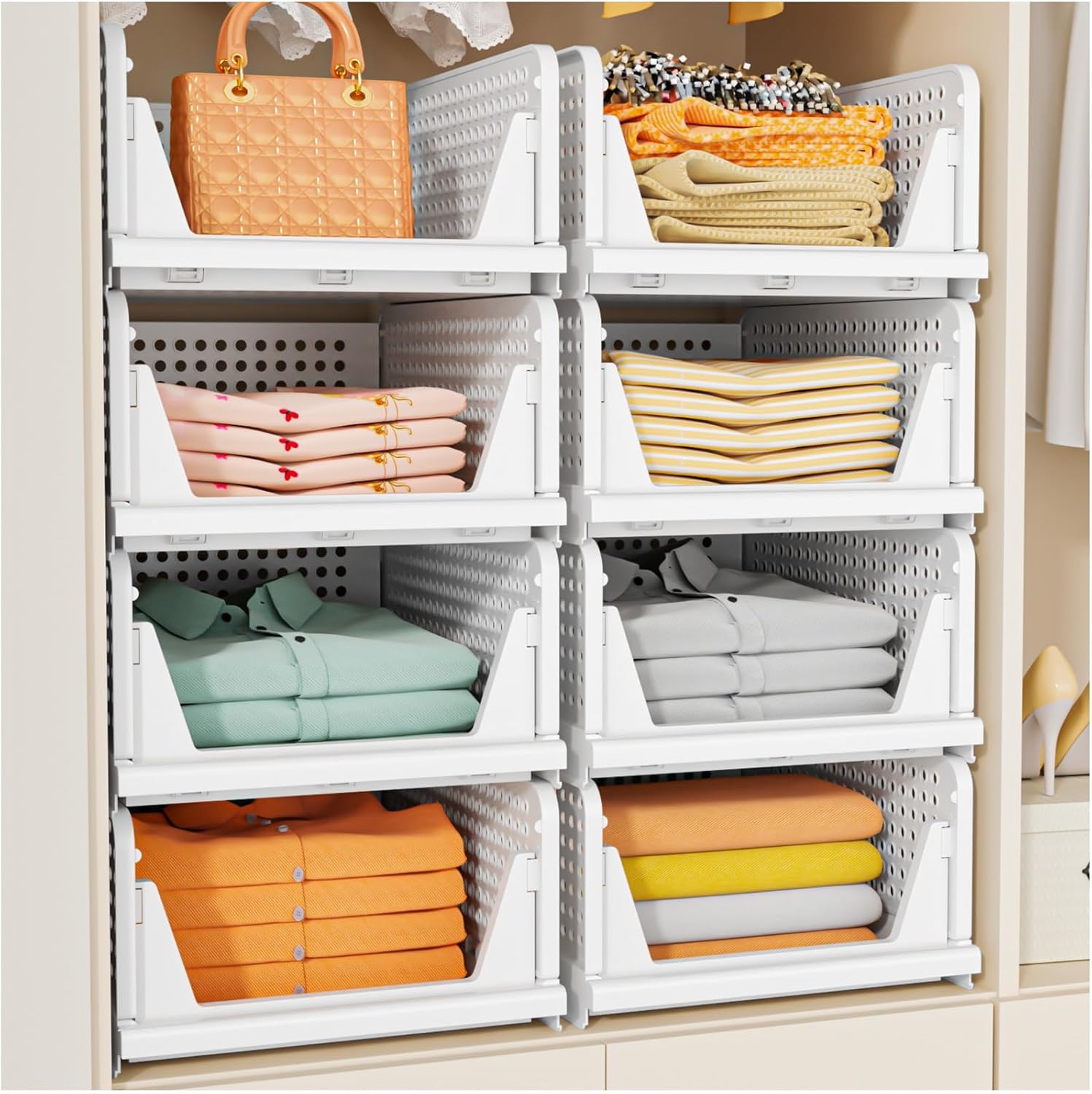
- Stackable up to 4 high to maximize vertical closet space
- Folds flat for storage when not needed
- Waterproof and easy to wipe clean
- Generous 16.7x13x7.2 inch size per bin
Cons
- Bins only pull out halfway, not full drawer-style access
- No reviews yet to verify durability claims
- Must lean against wall for stability when stacked
If your closet shelves are drowning in unfolded clothes or random items shoved wherever they fit, these bins give you the kind of contained, stackable storage that actually makes you want to put things away. They are large enough to hold real loads (think a week's worth of workout clothes or all your scarves and belts), but the handles mean you can still pull them down from a top shelf without everything tumbling out.
The foldable design is surprisingly practical. When you switch from winter to summer wardrobes, you are not stuck storing five empty bulky bins. They collapse flat and slide behind a dresser or under a bed. The waterproof plastic also means you can use them in a bathroom for towels or in a mudroom for hats and gloves without worrying about moisture damage.
If you want organized closet shelves that adapt as your storage needs change, without spending on a custom built-in system, this set delivers.
Styles it works with: Minimalist, Scandinavian, Modern Farmhouse, Transitional
Best placed in: Closet shelving units, bedroom open wardrobes, linen closet, mudroom cubbies, under bathroom sink
May not suit: Small reach-in closets where you need full drawer-style pull-out access, homes where you prefer woven or fabric bins for a softer look, renters who cannot lean bins against a wall for support
Buy it if:
- You have deep closet shelves where items get lost in the back and need contained zones
- You want storage that stacks high to use vertical space in a small bedroom or apartment
- You need bins that fold away when not in use, like for seasonal clothing rotation
Consider waiting if:
- You want to see real customer reviews and photos before committing to a five-pack
Skip it if:
- You need bins that pull out completely like drawers for a freestanding closet organizer
- You prefer natural materials like woven rattan or fabric over plastic for bedroom storage
Check the latest price and availability on Amazon before it sells out.

AWTATOS 6-Cube Storage Organizer - DIY Stackable Shelves for Bedroom, Closet & Home Office (White)
Pros
- Genuinely easy to assemble with no tools required
- Modular design supports multiple configurations from horizontal to vertical
- Waterproof panels resist moisture and clean with a damp cloth
- Metal wire frame adds stability compared to all-plastic alternatives
- Compact cube size fits neatly inside most standard closets
Cons
- 11 lb per cube weight limit rules out heavier items like full book collections
- Plastic panels and wire frame look utilitarian rather than premium
- Connectors can loosen over time if the unit is frequently reconfigured
This is the kind of organizer that solves a real, everyday problem without making you spend a weekend assembling it. The AWTATOS 6-cube unit goes together quickly, looks clean in white, and gives you six dedicated spots to coral the stuff that tends to pile up on floors and countertops.
What sets it apart at this price point is the metal wire frame. Most sub-$30 cube organizers are entirely plastic, which means they flex and woble. The wire panels here add rigidity, and the ABS connectors lock everything in place so the whole structure feels solid once built. Pair it with fabric bins and it looks intentional, not improvised.
If you want modular, expandable storage without spending furniture-store money or drilling into walls, this one delivers.
Styles it works with: Minimalist, Scandinavian, Modern Dorm, Budget Boho
Best placed in: Bedroom closet floor, kids room wall, home office corner, craft room workstation area
May not suit: Rooms with a polished or mid-century aesthetic where the wire-and-plastic look would clash, or households neding heavy-duty storage for dense items like hardcover book collections
Buy it if:
- You need quick, affordable storage for a rental where you cannot mount shelves to the wall
- You want a closet organizer that can be reconfigured as your wardrobe or storage needs shift
- You are organizing a kids room, craft space, or dorm and want something lightweight and expandable
Consider waiting if:
- You need more than 6 cubes and want to buy a larger set in one purchase for a uniform look
Skip it if:
- You plan to store items heavier than 11 lbs per cube, such as large hardcover book sets or heavy equipment
- You want furniture-grade aesthetics with wood grain or solid panels for a visible living room display
Check the latest price and availability on Amazon before it sells out.
Handy Laundry Hanging Clothes Organizer for Kids (Handy Laundry)
This is the fix for Step 4. The 6-shelf hanging organizer clips onto the lower rod and turns vertical rod space into a labeled daily station, with shelves marked by day so a school-age kid can pull a full outfit without digging. At a 4.5 rating, owners consistently note it holds folded shirts and pants without sagging when you keep each shelf to a few items. It works best on the reachable 42-inch rod from Step 2, right where a child can see and grab each day’s stack. Skip it on the high rod; the whole value is that it sits at kid height.
SNSLXH 5 Pack Stackable Closet Storage Basket (SNSLXH)
These baskets carry Step 3. The 5-pack of foldable, stackable bins gives you flexible low storage you can shape to whatever the keep-pile demands, and the fold-flat build means you can retire the extras when the wardrobe shrinks after a growth spurt. With a 4.5 rating, buyers like that they’re light enough for a toddler to slide out yet hold pajamas, socks, and underwear without collapsing. Use them at floor level, label them with pictures, and stack no more than two high so the top basket stays under the 42-inch reach line.

AWTATOS Cube Storage Organizer (AWTATOS)
The 6-cube unit is your Step 3 anchor when you’re starting from an empty closet. Its DIY stackable panels let you build a 2×3 or 3×2 grid to match your measured width, so you’re fitting the closet instead of forcing it. At a 4.4 rating, owners report the cubes hold folded clothes and toys well, though the plastic connectors mean you should keep each cube near 20 to 25 pounds and anchor the unit if you stack it tall. Keep the build under 42 inches for a young child, and route the daily items to the lowest cubes.
Frequently Asked Questions
What if my room is a tiny reach-in with only 48 inches of width?
It depends on ceiling height, but go vertical. In a narrow reach-in, double-hang the lower half with rods at 42 and 68 inches, then run a single cube column on one side. You lose almost no width and roughly double usable capacity.
What if my room shares one closet between two kids?
Yes, split it by zone, not by clothes. Give each child a dedicated color-coded basket set and one rod section, and label everything so there’s no daily negotiation. A vertical divider or two separate cube stacks keeps the boundary obvious even for pre-readers.
What if my closet has no rod, just shelves?
It depends on wall access. If you can anchor into studs, add a lightweight rod at 42 inches for hanging basics and keep the existing shelves for folded stacks and bins. If you can’t drill, a freestanding garment rack under 48 inches tall fills the hanging gap without hardware.
What if my kid is too young to reach or fold anything?
Almost every part still applies — just lower it further. For kids under 3, keep the entire active zone under 36 inches, skip hanging in favor of open baskets, and use picture labels only. You manage the top; they manage the bins.
What if my closet gets messy again within a week?
It depends on whether the system matches the kid, not the parent. If it falls apart fast, the storage is usually too high, too heavy, or unlabeled. Drop the rod, swap drawers for open bins, and add picture labels; a closet a child can actually operate stays organized far longer.
Bottom Line
Organize the closet around your child’s reach, and most of the mess disappears on its own. Set the rod at 42 inches, put open bins and cube storage at floor level under the 42-inch line, and reclaim the vertical and door space before you ever add a floor unit. Anchor anything tall, label everything for the reader you actually have, and store less overall. A kid who can see it and reach it will put it back. That’s the entire system.




Write Your Review
No reviews yet. Be the first to share your experience!