

> Editorial Note: I’m Erin Schwartz, and I cover home decor with a bias toward what actually works in a real room. The guidance here weighs scale, layout, and materials against Apartment Therapy and Wirecutter coverage rather than styling a space that nobody lives in.
The blinds that arrive too narrow almost always trace back to one skipped step: measuring the opening in only one spot, and since windows aren’t square, a single number lies to you. Get the method right and the rest of the room falls into place, the same way it does with curtain blinds, bay window curtains, or a set of window curtain rods. This is the same measure-first discipline behind how to measure for a sofa and how to measure a tv, and it saves you the return trip that ruins a weekend. Clean glass first if you’re pairing new blinds with a refresh, the way you would before how to clean window blinds.
Inside Mount or Outside Mount: Decide This First
Your mount type changes every number you write down, so settle it before the tape comes out. An inside mount sits the blind flush within the window frame for a built-in look, and it needs enough depth, usually 2 to 3 inches, for the headrail to clear the glass. An outside mount fixes the blind to the wall or trim above the opening and covers everything, which hides an out-of-square frame and blocks more light.
Pick inside mount when the frame is deep and square and you want the trim to show. Pick outside mount when depth is shallow, the frame is crooked, or you want the window to read taller and wider. The choice isn’t cosmetic alone. Measure the frame depth with a rigid tape before you commit, because a headrail that won’t fit forces an outside mount no matter what you’d prefer.
How to Measure Width: Three Points, Take the Smallest
For an inside mount, measure the width at three heights and record the narrowest of the three. Run the tape across the inside of the frame at the top, the middle, and the bottom of the opening. Frames settle over time, so these three numbers rarely match. Using the smallest guarantees the blind drops in without binding against a bulge in the jamb.
Measure to the nearest 1/8 inch and don’t round up. For inside mounts, report the exact opening width; the manufacturer subtracts a factory deduction of roughly 1/4 to 1/2 inch so the blind clears the frame. For an outside mount, flip the logic: measure the width you want the blind to cover and add 1.5 to 2 inches on each side past the opening, which stops light from leaking around the edges. A rigid steel tape reads truer here than a soft one, since a soft tape sags across a wide span and inflates the number.
How to Measure Height: Three Points, Take the Longest
For height on an inside mount, measure at three points across the opening and use the longest number so the blind reaches the sill. Run the tape from the top inside edge of the frame down to the sill on the left, the center, and the right. Take the tallest reading. A blind cut to the shortest height leaves a gap of bare glass at one corner, and that gap is the tell of a rushed measurement.
Decide where the bottom should land before you write the number. Sill-length blinds stop at the ledge, while below-sill or “apron” blinds run past it for coverage on windows with no sill. For outside mounts, measure from the top of where the headrail will sit down to your chosen endpoint, then add a couple of inches at the top for mounting hardware. Height forgives a little slack, but width does not.
The Deductions and Clearances That Trip People Up
The number one error is deducting twice. If you buy a blind sold as “inside mount,” the factory already trims for clearance, so you report the raw opening and leave the math to them. Subtract on top of that and the blind hangs too small.
Watch obstructions the tape doesn’t see. Window cranks, alarm sensors, and deep trim all steal depth or width, so note them next to your measurements. For a bank of windows meant to match, measure each opening separately rather than assuming they’re identical, since older homes drift by half an inch across a single wall. When two measurements disagree, trust the tape, not your memory.
What You’ll Need
The one tool that matters is an accurate tape that won’t sag or slip, and a second person helps on tall windows. The picks below are sorted by owner rating, and they range from a soft sewing tape to rigid steel and a digital reader, so match the tool to your window rather than buying blind.

Pros
- Thicker and more durable than typical cloth measuring tapes
- Snap button makes storage quick and prevents tangling
- Clear, fade-resistant markings on both sides
- Lies flat on fabric and body contours without twisting
- Comes with protective storage case
Cons
- No reviews yet to confirm long-term durability claims
- Single color option may not suit all sewing kit aesthetics
- Slightly heavier than ultra-lightweight fabric tapes
This isn't just another flimsy sewing tape that curls up after three uses. The PU leather construction feels substantial in your hands and actually stays flat when you're trying to measure a curved hem or check body measurements. The snap button is a small detail that makes a real difference: no more digging through tangled tapes in your craft drawer.
The color-coded increments are surprisingly helpful when you're working quickly. Instead of squinting at tiny numbers, you can spot the 50cm mark by color alone. Both inch and centimeter scales mean you won't need a second tape when following patterns from different countries.
If you want a measuring tape that feels professional and lasts beyond a few sewing projects without the frustration of constant re-flattening, this one delivers.
Styles it works with: Craft Room Organization, Sewing Studio, Home Workshop, Multi-Purpose Creative Spaces
Best placed in: Sewing kit drawer, craft supply caddy, dresser drawer for clothing alterations, hung on pegboard in workshop
May not suit: Professional seamstress studios that need industrial-grade measuring tools, woodworking shops needing rigid metal tapes, households with no crafting or sewing needs
Buy it if:
- You sew clothing or do alterations regularly and need reliable body measurements
- Your current fabric tape keeps curling or the numbers have worn off
- You work on craft projects that require both metric and imperial measurements
- You want something that stores neatly without taking up drawer space
Consider waiting if:
- You need to see verified customer reviews before purchasing
- You're looking for a specific color to match your existing sewing tools
Skip it if:
- You need a retractable metal tape measure for home improvement projects
- You only measure flat surfaces like fabric yardage, not body contours
- You already own a functioning soft tape that meets your needs
Check the latest price and availability on Amazon before it sells out.

Esydon 2-Pack Tape Measure Set (25ft + 16ft) - Self-Locking, Metric/Imperial, Easy-Read for DIY & Home Projects
Pros
- Two sizes (25ft and 16ft) handle different project scales without needing multiple purchases
- Self-locking slider prevents tape retraction during measurements
- Dual metric and imperial scales eliminate conversion guesswork
- SK4 steel construction with rust-resistant coating lasts through 100K+ pulls
- Budget-friendly price point for a 2-pack set
Cons
- No customer reviews yet to verify real-world durability claims
- Basic yellow design lacks the ergonomic grip features of premium tape measures
- Heavier than single compact tape measures at nearly 1 pound for the set
This 2-pack solves a problem every homeowner faces: needing different tape measure lengths for different jobs. The 25-footer handles room dimensions and furniture spacing, while the 16-footer fits perfectly in your pocket for quick measurements. The self-locking feature is genuinely helpful when you are working alone and need both hands free to mark or hold materials in place.
The dual metric and imperial markings are large enough to read without squinting, which matters when you are up on a ladder or working in dim corners. The yellow cases are bright enough to find quickly in a cluttered toolbox or garage shelf. These are not fancy professional-grade tools, but they are built with SK4 steel and a waterproof coating that suggests they will hold up to regular DIY use.
If you want two reliable tape measures that cover most home measuring tasks without spending on premium brands, this set delivers solid value.
Styles it works with: Universal tool for all interior design styles, from Modern Farmhouse to Contemporary to Traditional
Best placed in: Workshop toolbox, kitchen junk drawer, garage pegboard, craft room supply bin
May not suit: Professional contractors who need heavy-duty 30ft+ tapes with magnetic tips and advanced blade coatings, or minimalists who prefer a single premium tape over multiple budget options
Buy it if:
- You need tape measures for both large room projects and smaller furniture or craft work
- You want a backup tape to keep in a different location (one in the garage, one in the kitchen)
- You are setting up a basic home tool kit and want dual metric/imperial capability
- You value self-locking mechanisms for solo measuring tasks
Consider waiting if:
- You want to see verified customer reviews before purchasing, as this product currently has no reviews
Skip it if:
- You need professional-grade features like magnetic tips, auto-lock, or ultra-compact pocket clips
- You already own quality tape measures and do not need backups or different lengths
Check the latest price and availability on Amazon before it sells out.


Pros
- Real-time digital display removes guesswork from reading measurements
- 6 unit conversion modes handle any project specification without calculators
- 20-value memory function speeds up repetitive measuring tasks
- Rechargeable design is more sustainable than disposable batteries
- Compact and portable with multiple carry options for high-work areas
Cons
- At $37.99, significantly pricier than basic tape measures under $10
- Digital accuracy of 2mm may not meet precision needs for fine woodworking
- No laser measurement despite the advanced digital features
- Only 16ft reach limits use on larger rooms or outdoor projects
This tape measure finally solves the problem every DIYer knows too well: holding the tape, reading the measurement, then forgetting it by the time you grab a pencil. The ACPOTEL DT20 displays your measurement on a bright LCD screen the moment you extend the tape, and it stays there until you're ready to record it. Switch between inches and centimeters with one button press, no conversion charts needed.
What makes this genuinely useful for home projects is the 20-measurement memory. Measuring a room for furniture? Store all four walls, then review them without running back and forth. The rechargeable battery means it's always ready when you need it, and the compact size with belt clip keeps it within reach whether you're installing shelves or planning a gallery wall.
If you want measurements you can trust without the eyestrain and mental math of traditional tapes, this one delivers.
Styles it works with: Modern, Industrial, Minimalist, Contemporary
Best placed in: Home office desk drawer, garage tool bench, kitchen junk drawer for quick household measurements, craft room for DIY projects
May not suit: Professional contractors needing 25ft+ reach for full room spans, fine woodworkers requiring sub-millimeter precision, outdoor projects where a traditional tape's longer blade is necessary
Buy it if:
- You measure multiple dimensions per project and forget numbers before writing them down
- You switch between metric and imperial frequently for international furniture or appliance specs
- You find yourself squinting at tape markings in dim corners or awkward angles
- You want one tool that handles length, area, and volume calculations
Consider waiting if:
- You need a longer tape for measuring full rooms or exterior walls beyond 16 feet
- A sale could bring the price closer to the $25-30 range for digital tape measures
Skip it if:
- Your projects only need occasional quick measurements where a $5 tape works fine
- You require laser distance measurement for longer spans or hard-to-reach areas
- You need professional-grade accuracy under 1mm for cabinetry or precision woodworking
Check the latest price and availability on Amazon before it sells out.
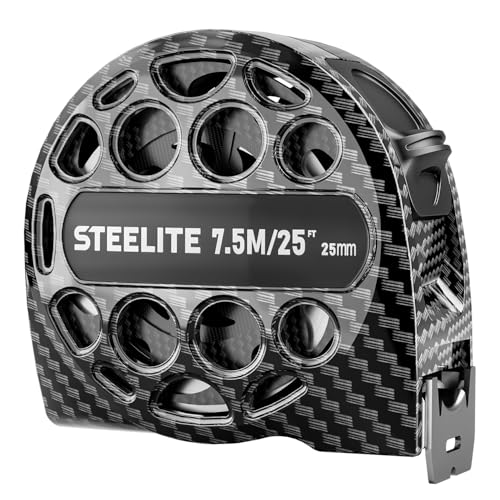
Pros
- Lightweight hollow frame reduces wrist strain compared to solid metal cases
- Stainless steel blade stands up to moisture better than standard steel
- Reinforced hook design provides stable grip on boards and corners
- One-handed lock button operation keeps measurements in place
- Waterproof rating protects against common workshop humidity
Cons
- No customer reviews yet to verify long-term durability claims
- Carbon fiber aesthetic may not appeal to users preferring traditional yellow tape measures
- At 0.82 pounds, slightly heavier than some compact models despite hollow design
This tape measure solves a problem most DIYers don't realize they have until they've lugged a heavy steel tape around a job site all day. The hollow carbon fiber frame shaves off just enough weight to make a difference during long measuring sessions, whether you're laying out a deck or hanging a gallery wall. The stainless steel blade means you can leave it in a damp garage or use it outdoors without worrying about rust spots ruining your measurements.
What sets this apart from basic tape measures is the reinforced metal hook that actually grips edges firmly instead of slipping mid-measurement. Pair that with smooth retraction that doesn't fight you or snap back dangerously, and you've got a tool that handles both quick furniture checks and serious framing work. The clear fractional markings are easy to read even in dim workshop light.
If you want a measuring tool that survives moisture and reduces hand fatigue without spending $50 on a pro-grade model, this one delivers.
Styles it works with: This is a functional tool, not decor. Works in any workshop, garage, or tool storage area regardless of aesthetic style.
Best placed in: Tool chest, workbench drawer, garage pegboard, basement workshop, or truck toolbox for easy access during projects.
May not suit: Professional contractors who need 30+ foot tapes for commercial framing, or users who prefer traditional bright yellow tape measures for high visibility on busy job sites.
Buy it if:
- You work in humid environments like basements, coastal areas, or outdoor job sites where rust is a concern
- You do frequent measuring and want to reduce hand fatigue from heavy metal tape measures
- You need a durable 25-foot tape for home renovations, furniture building, or general contracting
Consider waiting if:
- You prefer seeing verified customer reviews before trying a new tool brand
- You want a brightly colored tape measure for maximum visibility in cluttered work areas
Skip it if:
- You need a tape longer than 25 feet for large-scale construction or commercial framing
- You require a featherweight compact model under 0.5 pounds for all-day pocket carry
Check the latest price and availability on Amazon before it sells out.
The Ailile soft tape holds a 4.8 rating and is built for body and fabric work, so it’s handy for rounded or awkward reveals but too flexible for a precise wide span. The Esydon two-pack and the ACPOTEL digital reader, at 4.6 and 4.5, give you a self-locking metal blade and an LCD readout for exact whole numbers. The NBTOOL soft tape rates 4.6 but is a window-tint and car-wrap tool at heart, so treat it as a backup for curved measurements, not your primary. The Steelite steel tape sits lowest at 4.2, a score that usually signals unit-to-unit variation, so check the lock and blade before you rely on it.
Frequently Asked Questions
Do I measure the window glass or the frame?
The frame, not the glass. For an inside mount, measure the inside of the window frame opening. For an outside mount, measure the area you want the blind to cover, then add overlap on the sides and top.
Should I round my measurements up or down?
Neither. Record the exact figure to the nearest 1/8 inch and hand it over as-is. The manufacturer applies the clearance deduction for inside mounts, so rounding on your end throws off their math and leaves gaps.
How much depth do I need for an inside mount?
Usually 2 to 3 inches of flat frame depth for the headrail to sit flush. It depends on the blind style; cellular and mini blinds need less, while wood or faux-wood blinds need more. Measure the depth before deciding.
Why measure width in three places?
Because window frames are rarely square. Yes, older homes especially drift by a quarter to half an inch top to bottom. Measuring at the top, middle, and bottom catches the narrowest point so the blind clears every spot.
Can I use a cloth or soft tape measure?
For short or curved reveals, yes; for width across a full window, no. A soft tape sags and stretches, which inflates the reading. Use a rigid steel or locking tape for anything wider than a foot.
What if my two windows look identical?
Measure them separately anyway. It depends on the house, but even matched windows in one wall can differ by half an inch after years of settling. One number for a pair is how you end up with one blind that doesn’t fit.
Do outside-mount blinds need extra width?
Yes. Add 1.5 to 2 inches beyond the opening on each side and a couple of inches at the top for the hardware. That overlap blocks side light and gives the mounting screws solid trim or wall to grip.
Bottom Line
Measure width at three heights and take the smallest, measure height at three points and take the longest, and report exact figures for inside mounts so you don’t deduct twice. A rigid steel or locking tape reading to 1/8 inch handles almost every window in the house. If the frame is badly out of square or you can’t get a straight run across a wide span, go outside mount and add overlap. When a number looks off, measure it again before you order.





Write Your Review
No reviews yet. Be the first to share your experience!