

> Editorial Note: I’m Hannah Lin, an Interior Living Researcher who’s spent 9+ years analyzing the home furniture market. This guide draws on BIFMA, GREENGUARD, and FSC certifications, plus owner reviews aggregated from Wirecutter, Apartment Therapy, and the major home design subreddits.
The sofa fits the room but won’t clear the front door. That’s the single most common sizing mistake, and it bounces more couches back to the warehouse than any wrong fabric or color. Before you get lost in best fabric sofa roundups or pair a best sectional sofa with your best area rug for living room, a best area rug pad, and a best tv stand for 65 inch tv, you need three numbers: the sofa’s footprint, your usable wall space, and the narrowest doorway on the delivery path. Measure twice, order once.
Quick Reference: Sofa Size Chart
| Room / Wall Length | Recommended Sofa Length | Seats | Clearance to Leave |
|---|---|---|---|
| Small (10–12 ft) | 58–72 in loveseat | 2 | 30 in walkway |
| Medium (12–14 ft) | 78–88 in standard sofa | 3 | 18 in coffee-table gap |
| Large (14–18 ft) | 90–108 in sofa or L-sectional | 3–4 | 36 in for an accent chair |
| Open plan (18 ft+) | 100–130 in U-sectional | 5–7 | 24 in traffic lane |
Standard seat depth runs 21–24 in; overall depth 35–40 in. Deep-seat models push 40–45 in overall. Seat height sits at 17–19 in for easy standing, the range Wirecutter flags for comfortable sit-to-stand.
The measurements you take for delivery are the same ones the rug needs. The sectional rug guide turns that footprint into a rug size, with the front-legs-on rule as the starting point.
Living Room Wall: How to Measure
Start with the wall the sofa will sit against. Run a tape measure corner to corner at floor level, then subtract for anything fixed: a radiator, a door swing, an outlet you don’t want blocked. Write down the usable number, not the raw one.
Now apply the two-thirds rule. Your sofa should span roughly two-thirds of the open wall, which leaves the last third for a lamp or a plant. On a 12-foot (144-inch) wall, that points you to a sofa around 90 to 96 inches. On a 14-foot wall, you’ve got room up to about 108 inches.
Leave at least 18 inches between the sofa front and the coffee table so knees clear the edge. Walkways behind or beside the sofa want 30 inches minimum, matching the traffic-flow spacing Apartment Therapy recommends for living rooms. Tight on space? Drop to a loveseat.
Measure the wall first, every time. It sets the ceiling on every other decision.
Seat Depth and Height: How to Measure
Length gets the attention, but depth decides comfort. Measure a sofa’s overall depth from the front edge of the seat cushion to the back of the frame. Standard depth lands at 35 to 40 inches. Deep-seat and “cloud” styles run 40 to 45 inches, which reads lounge-y but eats floor space and can leave shorter sitters without back support.
Seat depth, the cushion itself, is the number that matters for your body. Aim for 21 to 24 inches if you sit upright, and 24 inches or more if you like to curl up. Pair a deep seat with 20-inch throw pillows so you’re not stranded from the backrest.
Seat height should sit near 17 to 19 inches off the floor, close to a dining chair, so knees bend at roughly 90 degrees and standing stays easy. BIFMA durability standards assess frames and cushions under repeated real-world loads, so a rating tied to that standard signals a seat that keeps its height for years, not months. Check the depth against your own leg length before you check the length against your wall.
The Delivery Path: How to Measure
Here’s the number people forget: the doorway. Standard interior doors are 30 to 32 inches wide; front doors run 36 inches. A sofa can usually go through on its side, so compare your doorway width against the sofa’s height, not its depth.
Use the diagonal trick for tight turns. Measure the diagonal of the doorway opening, corner to corner, then check it against the sofa’s diagonal depth. If the frame’s diagonal is smaller than the door’s, it’ll pivot through. Hallways need to be at least 4 inches wider than the longest straight section you’ll carry.
Don’t stop at the door. Measure stairwell width, elevator depth, and any 90-degree turn in the hallway. Apartment dwellers above the second floor should confirm the elevator interior is at least 7 feet on the diagonal for a full-length sofa. When the path is the bottleneck, a modular sofa that ships in sections solves it outright.
Sectionals and Open Plans: How to Measure
Sectionals need a footprint, not just a length. Measure both the total width and the depth of the “leg” that extends into the room. An L-shaped sectional with an 85-inch main body and a 60-inch chaise needs a clear zone of at least 85 by 60 inches, plus walkway.
Decide which way the chaise faces before you buy. Left-facing and right-facing describe the chaise position as you look at the sofa from the front; guess wrong and it juts into your walkway instead of tucking against the wall. In an open-plan room, float the sectional off the wall and use it to define the living zone, leaving a 24-inch lane behind it.
For a U-shaped sectional, both arms extend, so you need depth on two sides. A 108-inch U-shape can demand a 10-by-8-foot clear area once you add the traffic lane. Anchor the whole arrangement on an area rug that catches at least the front legs of every section. Big room, big rug.
Our Size-Matched Picks
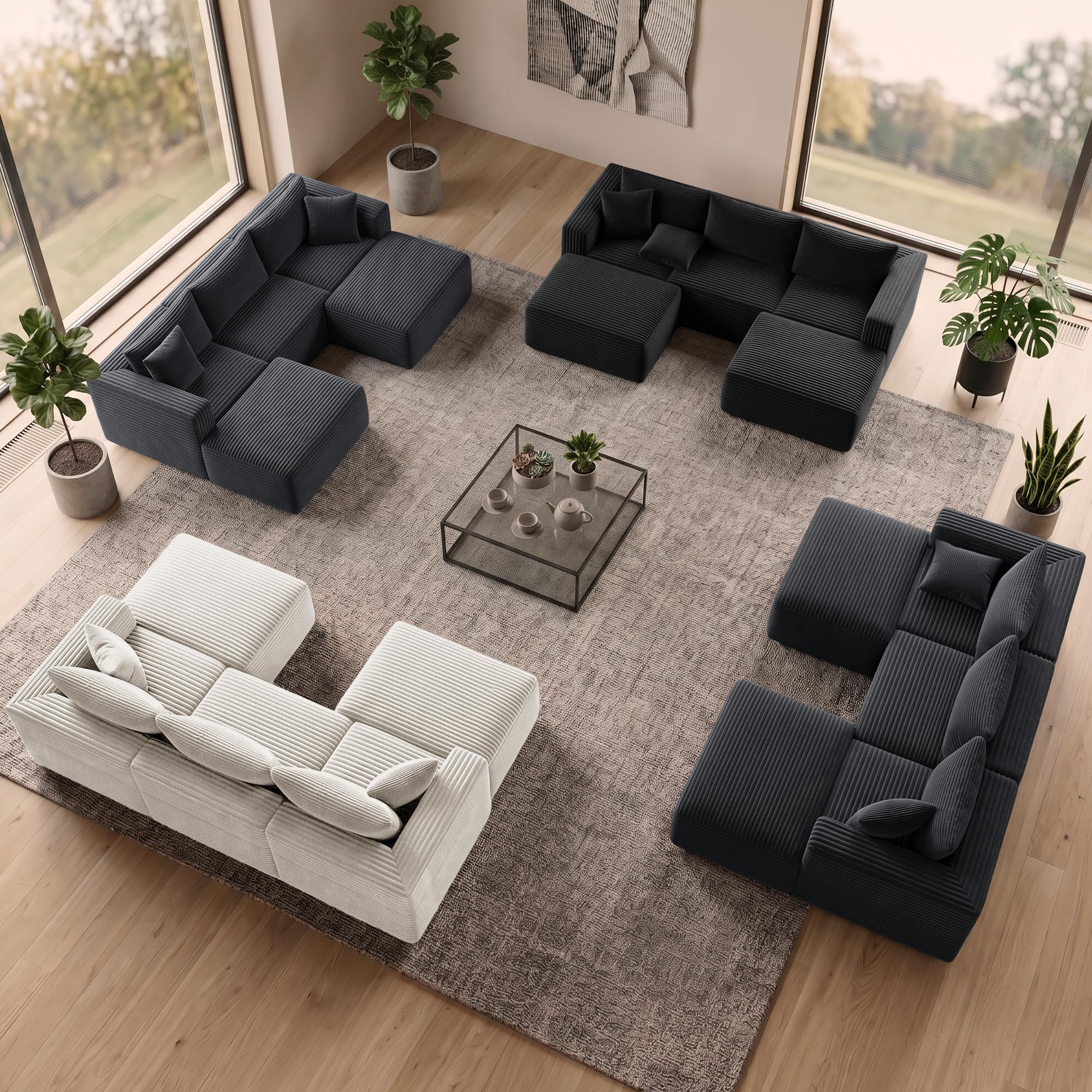
All three picks below are modular sectionals that ship in sections, so the delivery-path math gets easier no matter how tight your doorway. I ranked them by footprint: start with the 85-inch L-shape if you’re working a 12-to-14-foot wall, size up to the 110-inch U-shape for a large or deep-seat room, and go to the 108-inch seven-seater only if you’ve got true open-plan space. Match the number to your wall first, the features second.

Pros
- Ships in three boxes and requires zero assembly
- Extra-deep seats accommodate lounging and tall individuals
- Modular pieces can be reconfigured to fit different room layouts
- High-quality corduroy fabric is soft and family-friendly
- Memory foam cushions provide supportive, plush comfort
Cons
- No customer reviews yet to verify long-term durability
- Requires 24 hours for foam to fully expand after unboxing
- Large footprint may overwhelm smaller living rooms under 300 square feet
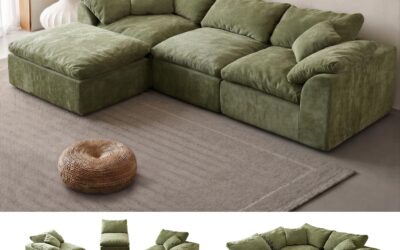
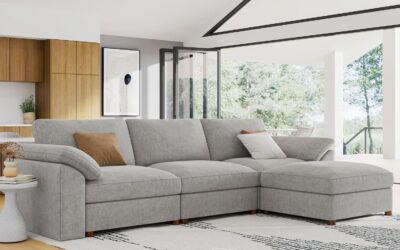
This sectional solves the biggest headache of furniture shopping: assembly. You unbox it, unfold it, and it's ready to sit on in minutes. The 29.5-inch seat depth is what makes it special for anyone who actually wants to relax on their couch, not perch on the edge. You can stretch out, curl up, or sink in without your knees hanging off the front.
The modular design means you're not stuck with one layout forever. Rearrange the pieces for movie night, game day, or when you're hosting a crowd. The corduroy fabric feels luxurious without being fussy, and the memory foam cushions give you that "cloud couch" experience without the designer price tag.
If you want a spacious, comfortable sectional that adapts to your life without requiring an engineering degree to assemble, this one delivers.
Styles it works with: Modern Farmhouse, Scandinavian, Cozy Minimalist, Transitional
Best placed in: Open-concept living rooms, basement family rooms, large master bedrooms as a sitting area
May not suit: Apartments or living rooms under 300 square feet, homes with formal traditional decor, households with pets that shed heavily on fabric furniture
Buy it if:
- You need seating for 6+ people but hate furniture assembly
- You want deep seats where you can actually stretch out and get comfortable
- You like rearranging your furniture or might move to a different space soon
Consider waiting if:
- You need the sofa immediately and can't wait 24 hours for the foam to fully expand
Skip it if:
- Your living room is smaller than 12 feet by 12 feet
- You prefer leather or performance fabric over corduroy
Check the latest price and availability on Amazon before it sells out.
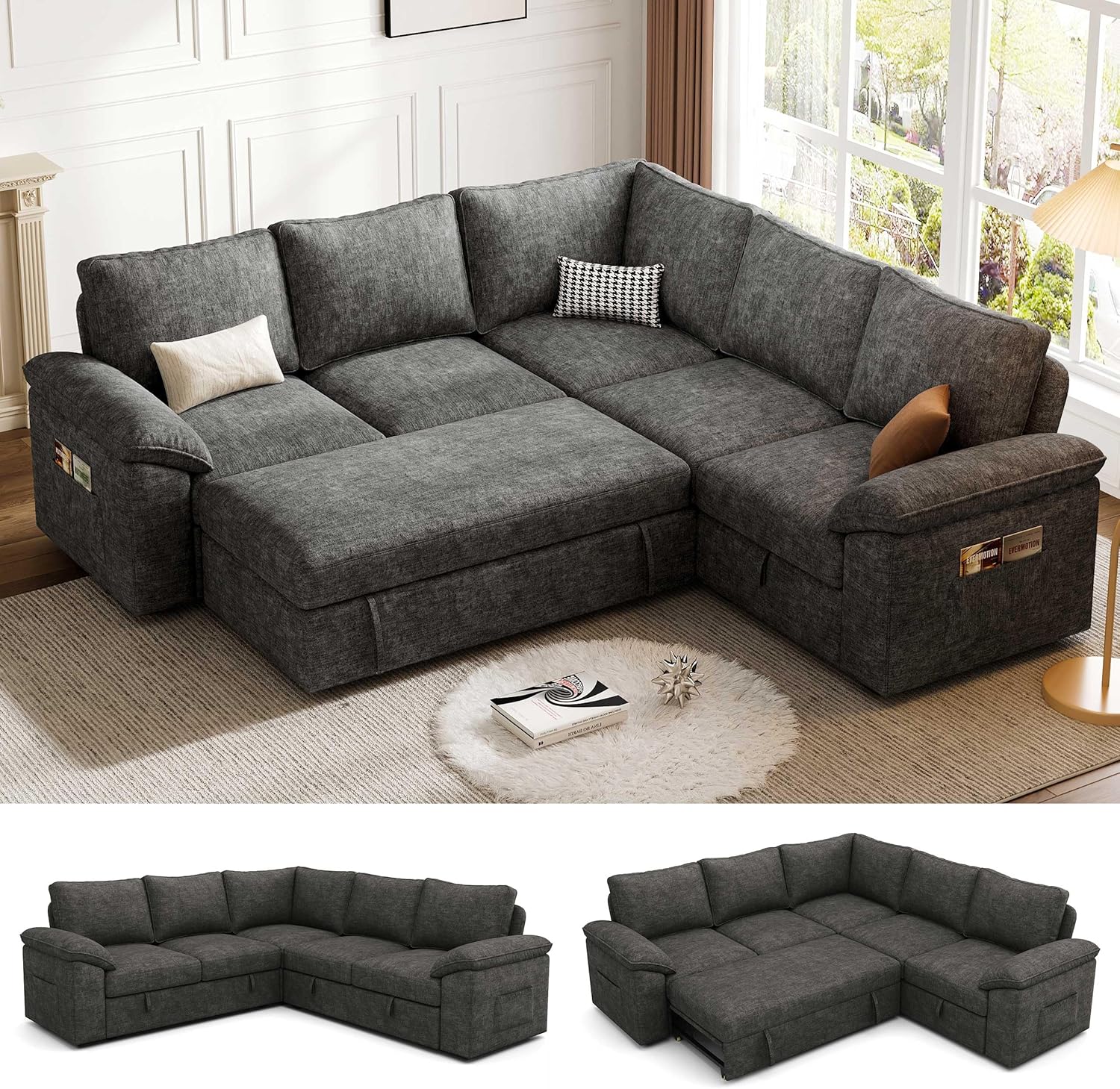
SUAWY 85" Modular Sectional Sleeper Sofa with Pull Out Bed - 5 Seat L-Shaped Couch with Storage, Chenille Fabric, Dark Gray
Pros
- Dual-purpose sleeper sofa eliminates need for separate guest bed
- Pet-friendly chenille fabric with removable, washable covers
- Includes storage compartment for bedding or living room essentials
- Modular configuration adapts to different room layouts
- Accommodates 5 people comfortably in seating mode
Cons
- Cushions take up to one week to fully expand after unboxing
- No customer reviews yet to verify comfort and durability claims
- Multiple packages may arrive on different days, delaying assembly
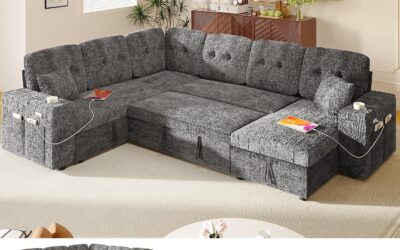
This sectional solves the guest bed problem without sacrificing your living room. The pull-out mechanism is straightforward - no wrestling with heavy mattresses or complicated frames - and the storage compartment keeps guest bedding tucked away until you need it. The chenille fabric strikes a nice balance between looking upscale and being practical enough for everyday use with pets or kids.
At 85 inches, the L-shape configuration makes smart use of corner space while still seating a full family or friend group. The modular design means you can rearrange it if you move or redecorate, which adds long-term value. The dark gray is one of those rare neutrals that genuinely works with warm woods, cool metals, and everything in between.
If you want a living room sofa that can handle overnight guests without turning your space into a permanent bedroom setup, this one delivers.
Styles it works with: Modern Farmhouse, Contemporary, Transitional, Minimalist
Best placed in: Living room corner configuration, open-concept family room, finished basement or bonus room
May not suit: Small apartments under 300 sq ft where an 85-inch sectional overwhelms the space, homes with very low doorways that complicate delivery, formal living rooms where sleeper sofas feel too casual
Buy it if:
- You host overnight guests regularly but do not have a spare bedroom
- You need a sofa that pulls double duty in a studio, one-bedroom, or basement space
- You have pets or kids and need washable, durable upholstery
- You want built-in storage for throw blankets and pillows
Consider waiting if:
- You need the sofa immediately and cannot wait up to a week for cushions to fully expand
- You prefer to read verified customer reviews before purchasing furniture at this price point
Skip it if:
- Your living room is under 200 square feet and cannot accommodate an 85-inch sectional
- You need a sleeper sofa with a traditional innerspring mattress rather than a pull-out platform
Check the latest price and availability on Amazon before it sells out.

Pros
- Dual-function design maximizes small spaces by combining seating and sleeping
- Chenille fabric is soft, breathable, and easier to maintain than velvet or linen
- Modular configuration adapts to different room layouts
- Rolled arm style elevates the look beyond basic budget sectionals
Cons
- Cushions take up to a week to fully expand after unboxing
- No customer reviews yet to verify comfort or durability claims
- Multiple packages may arrive on different days, delaying setup
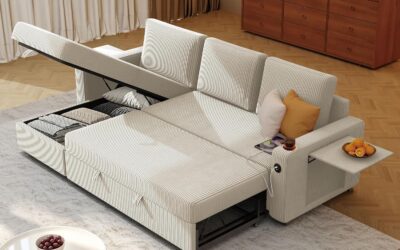
This sectional solves the eternal dilemma of where guests sleep without turning a home office into a permanent bedroom. The pull-out bed mechanism is straightforward, and the chenille fabric feels substantial enough to handle regular use without looking worn after a few months.
What sets it apart is the rolled arm design. Most sleeper sectionals in this price range lean heavily into that overstuffed, big-box look, but the SUAWY brings a bit of refinement. It is the kind of piece that works in a formal living room but does not feel out of place in a basement rec space either.
If you want flexible guest sleeping without sacrificing everyday style, this one delivers.
Styles it works with: Transitional, Modern Farmhouse, Classic Contemporary, Casual Elegant
Best placed in: Open-concept living rooms with at least 120 inches of wall space, finished basements that double as entertainment areas, large family rooms where overnight guests are common
May not suit: Apartments under 800 square feet where a 106-inch footprint overwhelms the room, homes with narrow doorways or tight stairwells that complicate delivery, minimalist spaces where a large sectional disrupts visual flow
Buy it if:
- You host overnight guests several times a year but lack a dedicated guest room
- You want a sectional that handles both daily lounging and occasional sleeping duty
- You have pets and need fabric that resists odors and stands up to claws
Consider waiting if:
- You need the sofa immediately and cannot wait up to a week for cushions to fully expand
Skip it if:
- Your room is smaller than 12x14 feet and a 106-inch sectional will dominate the space
- You prefer a sectional with verified customer reviews before committing to this price point
Check the latest price and availability on Amazon before it sells out.
SUAWY 85-Inch L-Shaped Sleeper Sectional (Best for Medium Rooms)
This is the pick for the most common living room: a 12-to-14-foot wall with a standard 90-degree corner. The 85-inch main body and five-seat L layout fit that footprint without swallowing the walkway, and it earns a solid 4-star owner rating. Because the chaise runs shorter than a full U-shape, you can tuck it against an adjacent wall and still clear 30 inches of traffic lane.
It ships modular, so the sections pass through a 30-inch interior door one at a time. The pull-out bed and under-seat storage let it double as a guest room, useful in an apartment where every square foot works two jobs. Confirm your chaise orientation, left or right, before ordering.
Nurrizus 110-Inch U-Shaped Modular Sectional (Best for Large or Deep-Seat Rooms)
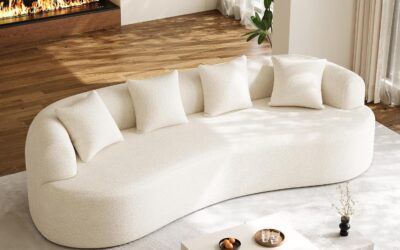
Size up to this one for a large room, 14 feet of wall or more, or when you want a deep lounge seat. The 110-inch U-shape seats a crowd and carries the highest owner rating of the three at a full 5 stars. Its memory-foam cloud cushions push seat depth into the 40-inch-plus range, so pair it with 20-inch pillows if anyone in the house is under 5-foot-6.
Two ottomans come included, which lets you reconfigure the U into an L or a straight run as your room changes. Plan for a clear zone around 10 by 8 feet once you add a walkway. Float it off the wall in an open plan, or back it against the longest wall in a dedicated living room.
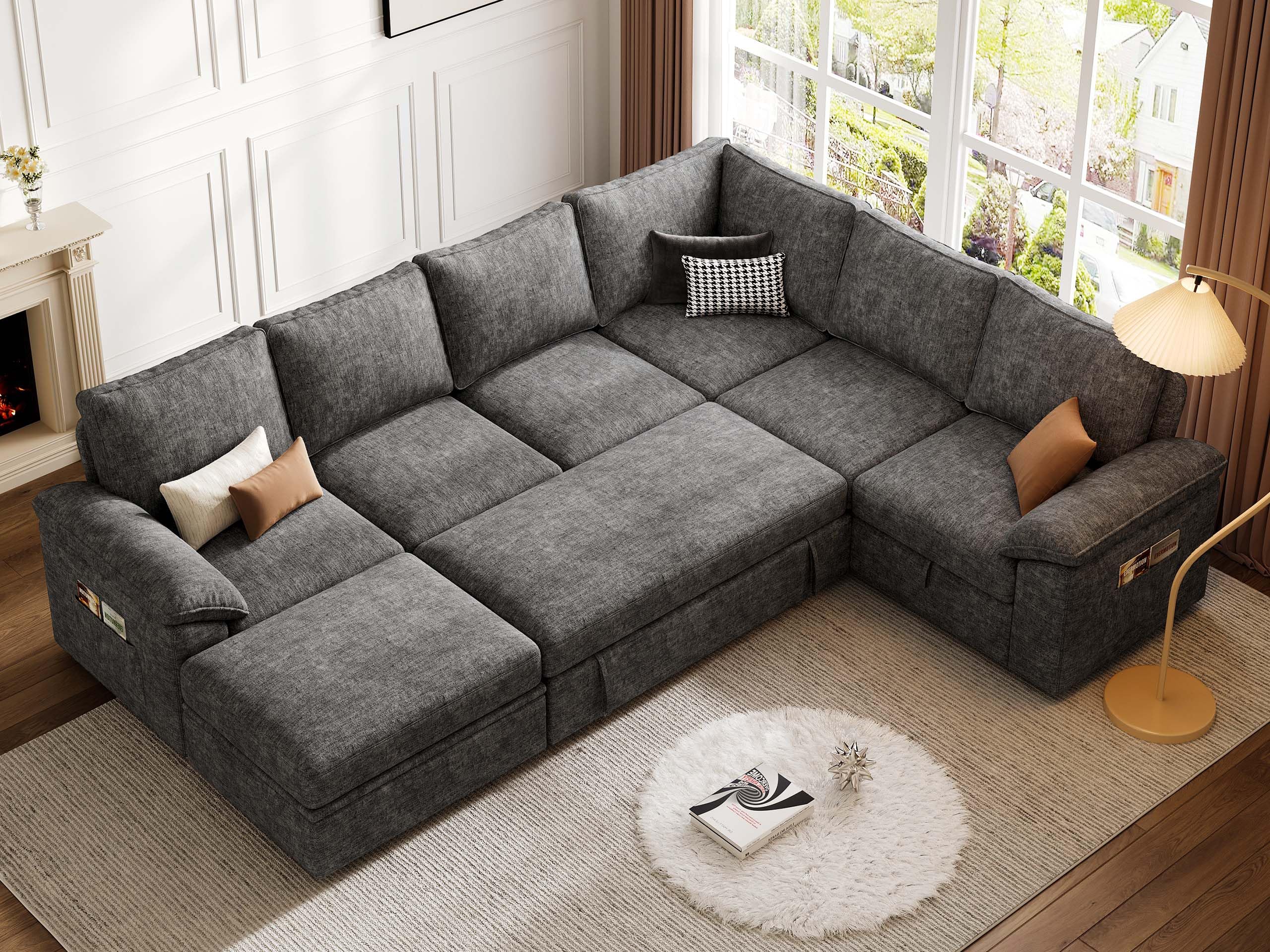
SUAWY 108-Inch U-Shaped 7-Seat Sectional (Best for Open-Plan Spaces)
Go to the seven-seater only if you’ve measured true open-plan space. Its 108-inch U-shape spreads across two sides, so it needs depth on both, roughly a 10-by-8-foot clear area before the traffic lane. Like its 85-inch sibling it holds a 4-star rating and ships modular, but this one seats seven and adds more storage under the seats.
The pull-out bed turns a great room into overflow sleeping for holidays. Skip it in a standard 12-foot-wall living room; it’ll dominate the space and choke your walkways. This is the pick for a finished basement or a loft where the sofa defines the room instead of lining it.
Frequently Asked Questions
How much space should I leave around a sofa?
At least 18 inches between the sofa and the coffee table, and 30 inches for any walkway you use daily. Those two numbers keep knees clear and traffic flowing. In a snug room you can shrink the coffee-table gap to 15 inches, but don’t go below 24 inches on a main walkway.
What size sofa fits a 12-foot wall?
A sofa between 90 and 96 inches, following the two-thirds rule that keeps the piece at roughly two-thirds of the wall length. A 144-inch wall minus that leaves about 24 inches of breathing space split to either side. Go shorter, near 78 inches, if a doorway or window eats into the usable wall.
Can a sectional fit through a 30-inch door?
It depends on the sofa’s height and whether it ships modular. A standard interior door is 30 to 32 inches, and most sectionals clear it on their side or in separate sections. Measure the door’s diagonal and compare it to the frame’s diagonal depth; if the door’s is larger, it goes through.
How deep should a sofa seat be?
Between 21 and 24 inches of seat depth for upright sitting, and 24 inches or more if you like to lounge. Overall sofa depth, frame included, usually runs 35 to 40 inches. Deep-seat “cloud” models hit 40 to 45 inches and need 20-inch pillows for back support.
Is a bigger sofa always better in a big room?
No. A sofa should span about two-thirds of its wall, so an oversized piece throws the proportions off just as badly as a tiny one. In an 18-foot open plan a 100-to-130-inch sectional works, but pair it with an area rug that catches the front legs so the seating still reads as one grouped zone.
Bottom Line
Measure the delivery path before you measure the wall; a 30-inch doorway kills more sofa orders than any showroom mistake. For most living rooms, an 85-inch sofa on a 12-to-14-foot wall, set two-thirds of the way across with 18 inches to the coffee table, is the safe call. Size up to a 110-inch U-shape only after you’ve confirmed 10 by 8 feet of clear floor. If the path is the bottleneck, buy modular so the sofa arrives in pieces that fit. Numbers first, style second.

Write Your Review
No reviews yet. Be the first to share your experience!