

> Editorial Note: I’m Hannah Lin, an Interior Living Researcher who’s spent 9+ years analyzing the home furniture market. This guide draws on BIFMA, GREENGUARD, and FSC certifications, plus owner reviews aggregated from Wirecutter, Apartment Therapy, and the major home design subreddits.
You smooth the corner down in the morning. By dinner it’s flipped up again, catching your sock every time you cross the room. A rug that won’t stay flat isn’t just annoying — it’s a trip hazard, and it makes a nice rug read as cheap. The fix is usually simpler than people expect, and it almost never means returning the rug. Before you shop for a replacement, pair it with the best area rug pad, or rework the layout with the best area rug for living room, your best fabric sofa, a best sectional sofa, or a best tv stand for 65 inch tv, work through the six fixes below in order. Most curling and rippling traces back to one of three causes, and each one has a specific answer.
Reason 1: The Corners That Curl Up Like a Chip (Rolled-Up Memory)
Brand-new rugs arrive rolled tight around a cardboard tube, sometimes for weeks in a warehouse. The backing (usually latex, jute, or a synthetic weave) sets into that curved shape and holds it. Classic curl. You unroll the rug, the field lies down, but all four corners lift like the edges of a stale chip.
The fix is to reverse the memory: roll the rug backward, pile-side in, and leave it for 30 minutes to an hour. Then lay it flat and weight the corners with stacked books, a couple of 15-lb dumbbells, or a full storage bin on each. Give it 24 to 48 hours. Most polypropylene and wool rugs relax completely in that window.
For stubborn latex backing, add gentle heat. Run a warm iron over a damp towel laid on the curled corner (never directly on the pile), or aim a hair dryer at the underside for a minute or two. Heat softens the backing so it can reset flat. A rug that spent three weeks in a tube won’t undo that in five minutes, so give the weights time to do their job.
A rug pressed flat against damp concrete has nowhere to dry. Keeping an outdoor rug from moulding covers lifting and airing it on a schedule.
Getting a rug flat and keeping it flat under furniture are two jobs. Why a rug bunches under furniture covers the second one, where weight and leg placement do the damage.
Reason 2: The Ripple Down the Middle You Keep Tripping On (No Pad + Foot Traffic)
This one shows up a few weeks after the rug looked perfect. A wave forms across the middle, usually in the walking path between the sofa and the hallway. You step on it, it shifts, and the pile bunches into a ridge. The culprit isn’t the rug — it’s friction, or the lack of it.
On hardwood, tile, or laminate, a rug with no pad slides a fraction of an inch every time someone walks across it. Over days, those tiny shifts push the pile into ripples because the edges are anchored by furniture and the center has nowhere to go. Add a gripping rug pad and the movement stops. The pad grabs both the floor and the rug backing, so the field can’t creep.
Wirecutter and Apartment Therapy both rank a quality pad as the single highest-impact upgrade for any area rug, and owner reviews back that up. Pick a pad cut to roughly 1 inch smaller than the rug on all sides so no gripper peeks past the edge. Once the sliding stops, existing ripples usually settle within a week as foot traffic presses them back down.
Reason 3: The Wave That Shows Up Every Summer (Humidity and Fiber Swell)
If your rug lies flat in January and buckles in July, humidity is doing it. Natural fibers like wool, cotton, jute, and viscose absorb moisture from the air. When indoor humidity climbs above 60%, the fibers swell, the rug expands, and because the perimeter is pinned by furniture, the extra material has to go somewhere. It rises into a soft wave.
This isn’t a defect, and you can’t fix it by pulling the rug tighter. Manage the room instead. A dehumidifier or running the AC to hold indoor humidity between 40% and 50% keeps fibers stable. Rugs certified to OEKO-TEX and woven from tight, high-density wool move far less than loose jute or viscose, which is useful to know before you buy.
When the wave appears, lift the furniture off the edges for a day so the rug can lie fully flat, then reset the pieces. In dry winter months the same rug may shrink slightly and lie perfectly again. That seasonal shift is normal for any natural-fiber floor covering, and it’s not a reason to return an otherwise good rug.
How to Fix It Fast: The 20-Minute Reset
Short on time? Here’s the quick sequence that handles most cases. Reverse-roll the rug for 20 minutes, then lay it flat and weight all four corners with something 10 to 15 lbs each. Slide a gripping pad underneath if you own one.
For a corner that still won’t behave, double-sided rug tape is the honest last resort: a 2-inch strip on each corner holds it to the floor, and a removable variety won’t damage hardwood. Steam works too. A garment steamer held 6 inches from the backing relaxes fibers in seconds, then you press the corner down and let it cool flat. That’s the whole trick. Break the memory, add weight or grip, control the moisture.
The Products That Actually Help
A rug pad is the real solve for four of the six problems above, because it kills the sliding that causes ripples and adds enough grip to hold curled corners down. The picks below all clear a 4.4 owner rating and hold both the floor and the rug backing. Choose by your floor type: BAGAIL BASICS for hardwood where you want extra cushion underfoot, Veken for a thinner profile under low-clearance furniture, and GORILLA GRIP if your rug sits on tile or stone.
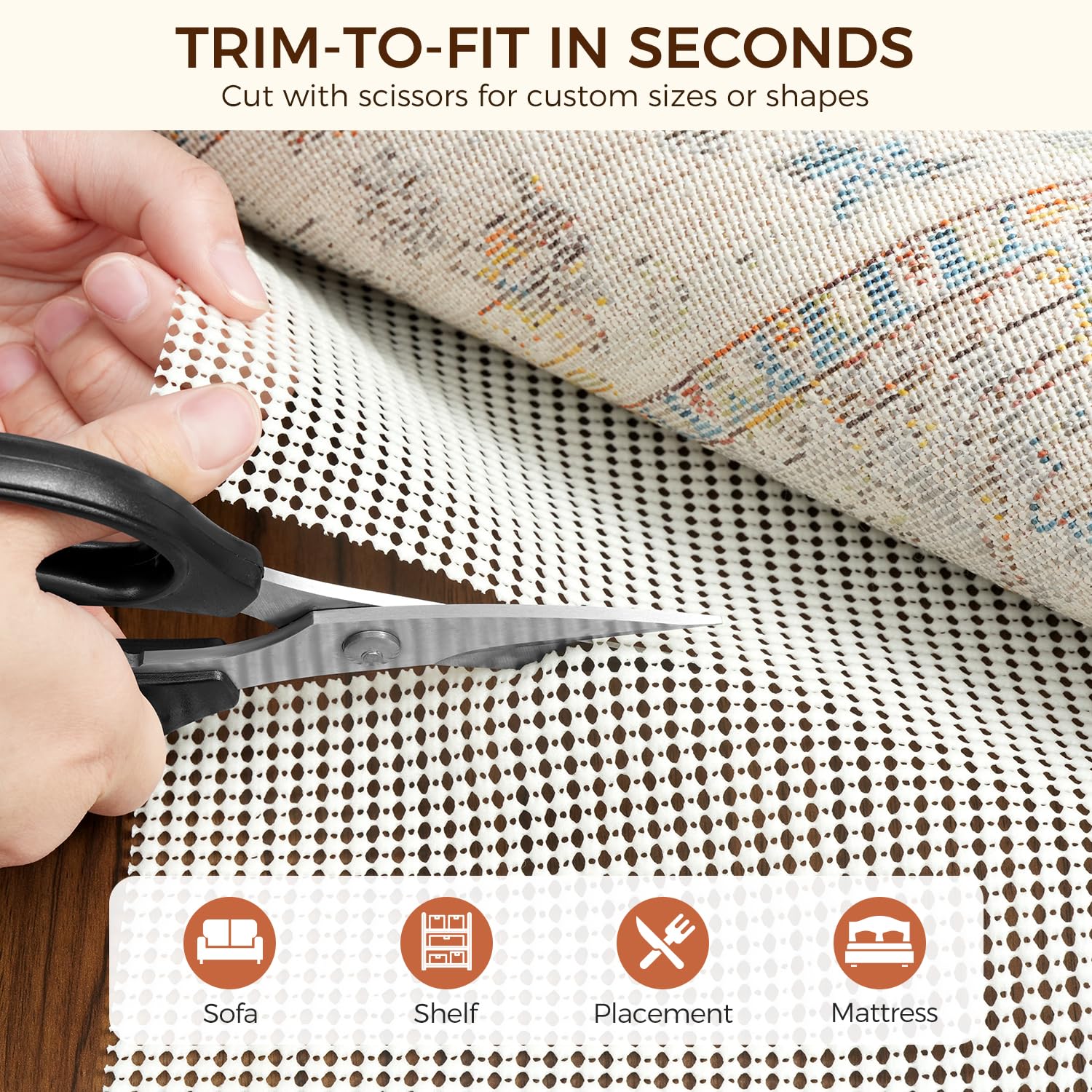
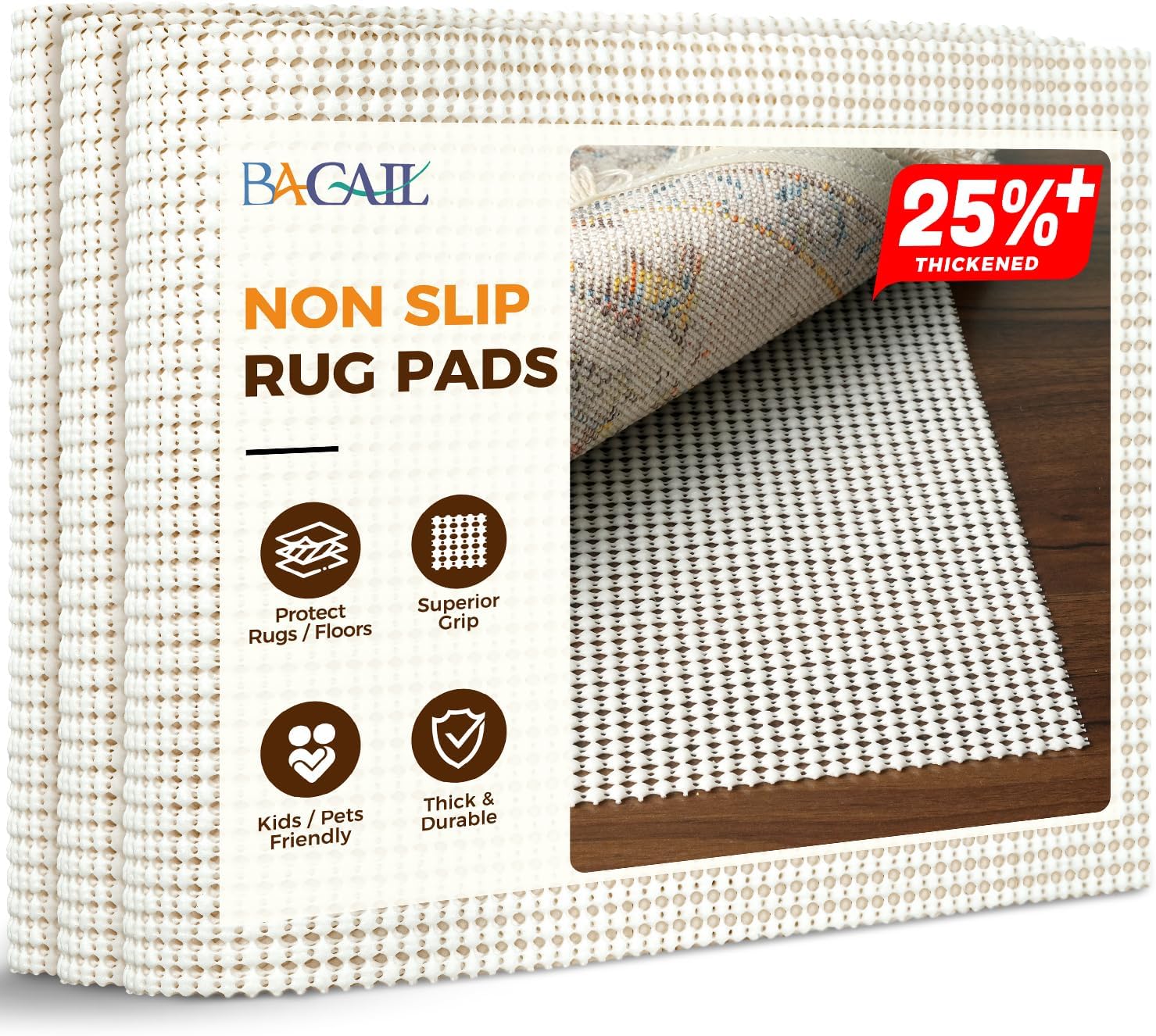
BAGAIL 8x10 Rug Pad Gripper for Hardwood Floors - Extra Thick Non-Slip Padding for Area Rugs
Pros
- Strong grip keeps rugs firmly in place without adhesives
- Protects both floors and rugs from damage and wear
- Easy to trim and install in seconds
- Industrial-grade materials resist tearing and compression
- Works on multiple floor types including hardwood and tile
Cons
- Only 0 reviews available, so long-term durability is unproven
- May need occasional repositioning in very high-traffic areas
- Grid pattern may show through very thin rugs
This rug pad solves one of the most annoying home problems: rugs that slide, bunch, and create trip hazards. The BAGAIL pad uses a powerful grip system that holds area rugs flat without any sticky residue or tape, which means safer floors for everyone in your home, especially if you have kids running around or pets zooming through rooms.
What sets this apart is the extra thickness that adds real cushioning underfoot. Walk across your living room rug and you'll notice the difference, especially on hard surfaces. The breathable grid design is smart too, it lets your vacuum work effectively while reducing friction that wears down rug fibers over time.
If you want rugs that stay perfectly flat and floors that stay scratch-free without spending a fortune on premium pads, this one delivers.
Styles it works with: Modern Farmhouse, Scandinavian, Transitional, Coastal
Best placed in: Living room under coffee table area rugs, bedroom beside the bed, entryway runner zones, dining room under table rugs
May not suit: Homes needing custom odd-shaped pads (though you can trim this), extremely low-profile modern setups where any thickness shows
Buy it if:
- You have kids or pets and need safer, slip-free rugs in high-traffic areas
- Your area rugs bunch up or slide on hardwood or tile floors
- You want to protect expensive floors from scratches without complicated installation
- You need extra cushioning under thin rugs for comfort
Consider waiting if:
- You want to see more verified customer reviews before purchasing
- You need a different size and want to wait for more options to become available
Skip it if:
- You have wall-to-wall carpeting (this is designed for hard floors)
- Your rugs are extremely heavy and already stay in place perfectly
Check the latest price and availability on Amazon before it sells out.

Veken Non-Slip Rug Pad Gripper 2x3 ft - Keeps Area Rugs in Place on Hardwood, Tile & Carpet - Trimmable & Floor-Safe
Pros
- Strong grip keeps rugs securely in place without adhesives or tape
- Protects floors while allowing airflow to prevent moisture and dust accumulation
- Easy to customize by trimming to exact rug dimensions
- Versatile enough to use under rugs, futons, or cushions throughout the home
- Budget-friendly price point makes it accessible for multiple rooms
Cons
- Not compatible with vinyl, lacquered, natural stone, or heated floors
- May require occasional repositioning on very smooth tile surfaces
- Limited to 2x3 ft size, requiring multiple pads for larger area rugs
This rug pad solves one of the most annoying problems in home decor: rugs that constantly slide around and bunch up under your feet. The Veken pad grips firmly to both your floor and rug backing, creating a stable foundation that stays put through daily foot traffic, vacuuming, and even enthusiastic kids or pets running across it. No more stopping mid-walk to kick your rug back into place.
What sets this apart is the open grid design that actually protects your floors while keeping things breathable underneath. Air circulates freely so dust and moisture don't get trapped, and the cushioned surface prevents scratches from rug backing or grit. It's particularly helpful in entryways and kitchens where rugs take a beating. Plus, you can trim it with regular scissors to fit unusual shapes or smaller rugs perfectly.
If you want rugs that stay exactly where you put them without damaging your floors or breaking your budget, this one delivers.
Styles it works with: Modern Farmhouse, Scandinavian, Transitional, Minimalist
Best placed in: Kitchen sink area, entryway under small rugs, bathroom in front of vanity, bedside runner placement, hallway accent rugs
May not suit: Homes with vinyl plank or heated floors (not compatible), very large area rugs over 3x5 ft (would need multiple pads), renters with no-modification lease restrictions on certain floor types
Buy it if:
- Your rugs constantly slide around on hardwood or tile and create tripping hazards
- You want to protect expensive floors from scratches without using adhesive products
- You need a budget-friendly solution for securing multiple small rugs throughout your home
Consider waiting if:
- You need a larger size and want to check if bigger dimensions become available
Skip it if:
- You have vinyl, lacquered, natural stone, or heated floors (not compatible with this pad)
- You need coverage for a large area rug over 4x6 ft (would require multiple pads and seams)
Check the latest price and availability on Amazon before it sells out.
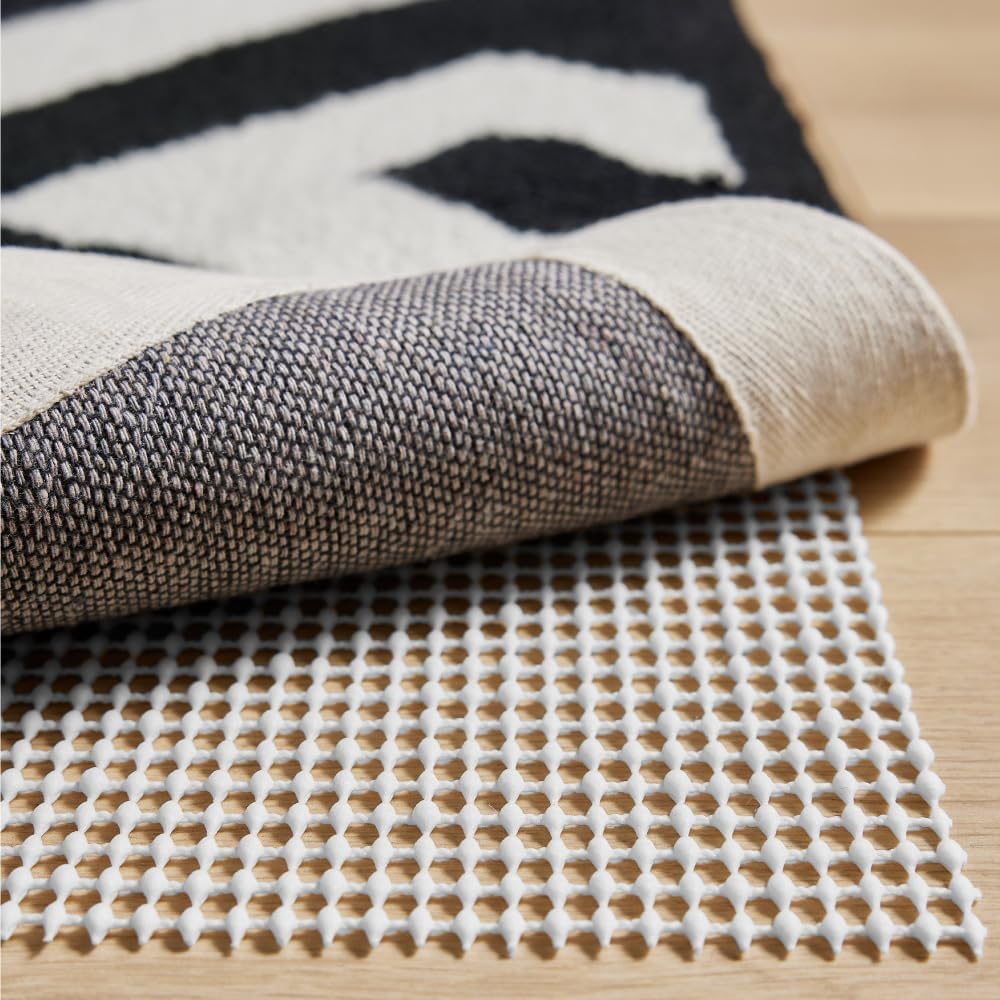
Gorilla Grip Rug Pad 2x3 for Hardwood Floors - Non Slip Gripper, Extra Strong Hold, Trim to Fit
Pros
- Strong dual-sided grip works on both rug and floor without adhesive residue
- Thick cushioning makes rugs feel more luxurious underfoot
- Open grid design allows floors to breathe and prevents moisture buildup
- Easy to trim to custom sizes with regular scissors
- Affordable solution for securing multiple rugs throughout the home
Cons
- Rating is based on zero verified customer reviews, so real-world performance is unproven
- May require repositioning over time in extremely high-traffic zones
- Works best on smooth hardwood; effectiveness may vary on textured or uneven flooring
If you've ever had a rug slide out from under you on hardwood, you know how frustrating (and dangerous) it can be. This Gorilla Grip pad solves that problem with a clever dual-sided grip that holds tight to both your floor and your rug without any sticky adhesives. It's especially smart for homes with kids or pets where rugs see constant action.
The open grid design is a thoughtful touch. It lets your floors breathe so you don't trap moisture or heat, and it adds a nice cushion layer that makes your rugs feel more plush. Plus, you can trim it to fit any shape, which means you're not stuck with standard sizes if your rug is an odd dimension.
If you want to stop chasing runaway rugs without damaging your hardwood floors, this one delivers.
Styles it works with: Modern Farmhouse, Scandinavian, Transitional, Minimalist
Best placed in: Entryway under runner rugs, living room beneath coffee table area rugs, kitchen in front of sink
May not suit: Homes with deeply textured hardwood or hand-scraped floors where the grip may not fully contact the surface; very lightweight rugs that may not press down enough to activate the grip
Buy it if:
- You have hardwood or laminate floors and rugs that constantly slide or bunch up
- You need a non-adhesive solution that won't leave residue or damage your floors
- You want extra cushioning underfoot to make your rugs feel more comfortable
Consider waiting if:
- You need verified customer reviews before committing, since this product currently has no ratings
Skip it if:
- Your floors are carpeted (this is designed specifically for hard surfaces)
- You need a larger size and don't want to buy multiple pads to cover the area
Check the latest price and availability on Amazon before it sells out.
Frequently Asked Questions
How long does it take a new rug to lay flat?
It depends on the backing, but most rugs flatten in 24 to 48 hours once you weight the corners. Polypropylene and thin wool relax fastest. A thick latex-backed rug that shipped rolled for weeks can take up to a week, and gentle heat speeds it along.
Will a rug pad really stop the corners from curling?
Yes, for most rugs. A gripping pad adds weight and friction that hold the edges down, and it stops the sliding that pushes the field into ripples. It won’t undo a deep curl on its own — pair it with a day or two of weighted corners first, then the pad maintains the flat.
Can I iron or steam a rug to flatten it?
Yes, carefully. Use a garment steamer or a warm iron over a damp towel, never direct heat on the pile. Heat relaxes the latex or synthetic backing so it can reset flat. Wool and cotton handle steam well; check viscose first, since it can water-mark.
Why does my rug ripple in the middle but not the edges?
Almost never a rug defect. The edges are pinned by furniture and the center isn’t, so every footstep slides the rug a hair and that movement collects in the middle as a ridge. A rug pad stops the slide, and the ripple flattens within a week.
Do I need a rug pad on carpet?
It depends on the pile. On low-pile carpet, a rug-on-carpet pad stops the top rug from creeping and wrinkling. On thick plush carpet the rug shifts no matter what, so a pad plus low furniture on the corners is the better bet. Skip the standard hardwood pad, since it needs a hard surface to grip.
Bottom Line
Eight times out of ten, a rug that won’t lie flat is either holding its rolled-up shape or sliding for lack of a pad. The fix for most people? Weight the corners for 48 hours and add a gripping pad sized an inch under the rug. Reverse-roll the stubborn corners, steam if they resist. Humid-month buckling is different: that’s fiber swell, not a defect, so control the room’s moisture instead. Call a pro only when the backing is cracking or delaminating. Replacement territory, not a flatten job.


Write Your Review
No reviews yet. Be the first to share your experience!