

> Editorial Note: I’m Hannah Lin, an Interior Living Researcher who’s spent 9+ years analyzing the home furniture market. This guide draws on BIFMA, GREENGUARD, and FSC certifications, plus owner reviews aggregated from Wirecutter, Apartment Therapy, and the major home design subreddits.
The rug bunches because the furniture pins one part of it while foot traffic pushes the free edge forward. That wrinkle isn’t random; it’s a friction problem, a furniture-weight problem, and sometimes a rug-size problem. Start with best living room rugs, what size rug for living room, best rug pads for hardwood floors, how to arrange living room furniture, and best coffee tables for small spaces if you’re rebuilding the whole layout.
Reason 1: The Wave That Starts at the Sofa Leg
A rug that bunches under furniture usually has one anchor point and one moving zone. The sofa leg traps the rug in place. Your feet, vacuum, chair legs, and pets push the exposed section. The result is a wave that creeps toward the pinned leg.
This is common with thin area rugs under coffee tables and sofas. A 5×7 rug in an 11×13 living room often leaves too much loose edge in the walkway. The rug should either sit fully under the front legs or clear the traffic path by several inches.
BIFMA’s furniture-stability work focuses on how load and movement interact. Rugs aren’t furniture, but the same principle applies: uneven pressure creates movement. One hard stop plus one sliding edge equals bunching.
The fix starts with placement. Lift the furniture, pull the rug flat, and reset the front legs 6 to 10 inches onto the rug. If only one leg touches the rug, the fabric twists around that point. Classic wrinkle machine.
Reason 2: The Curl That Comes Back After Vacuuming
If the rug looks flat until you vacuum, the backing probably lacks grip. Suction pulls the rug upward, the beater bar pushes it forward, and the furniture keeps one section trapped. A thin rug without a pad has almost no resistance.
Hardwood, tile, and laminate make this worse because the floor surface is smooth. The rug slides a fraction of an inch each day. After 2 weeks, that tiny movement becomes a visible ridge.
Wirecutter’s rug-pad guidance often separates cushioning pads from grip pads because they solve different problems. Cushioning feels nicer underfoot. Grip keeps the rug from traveling. For bunching, grip comes first.
Use a low-profile gripper pad if doors, chair legs, or coffee-table clearance matter. A thick felt pad can feel luxurious, but it may lift a rug high enough for furniture legs to catch the edge.
Reason 3: The Lump Under One Chair Foot
Furniture can bunch a rug when the legs don’t share weight evenly. A recliner, desk chair, or heavy accent chair can dig into one spot. When the chair moves, the rug fibers pull with it.
Check the underside of the furniture. Narrow metal legs and small glides create high pressure. A 180-lb person sitting in a chair with four tiny feet can turn each foot into a pressure point. That pressure makes the rug creep and buckle.
The fix is to spread the load. Use wider furniture glides, a proper rug pad, or reposition the chair so all legs sit fully on the rug. Half-on, half-off placement is the worst setup.
Small detail. Big annoyance.
Reason 4: The Rug That’s Fighting the Room Size
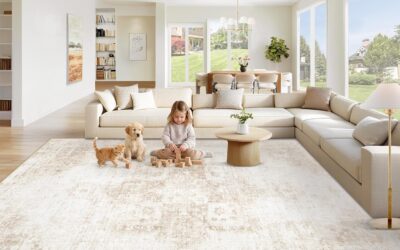
A rug that’s too small bunches because furniture has to sit on its edges. In a seating area, the rug should be large enough for at least the front legs of the sofa and chairs to sit on the surface. For many living rooms, that means 8×10 instead of 5×7.
Apartment Therapy’s layout advice often uses the front-legs-on rule because it creates a stable visual zone. It also stabilizes the rug physically. More furniture weight sits on the rug evenly, so one edge doesn’t get all the drag.
If you can’t size up, pull the rug away from the furniture and treat it as an accent, not an anchor. A small rug floating under a coffee table works only when all furniture legs stay off it.
Don’t force the layout. The rug will tell you.
Fix 5: The Grip Layer That Stops the Creep
A rug pad or tape works when it matches the failure point. Pads handle full-rug movement. Tape handles corners, curled edges, and small ripples near furniture legs.
These three options clear a 4.3 owner rating and address different versions of the same bunching problem. Start with BAGAILBASICS if you need an 8×10 pad under a large area rug; use the GORILLA GRIP listing if you want a strong gripper pad for tile or hardwood; choose X-Protector tape for corners and short edges that curl under furniture.
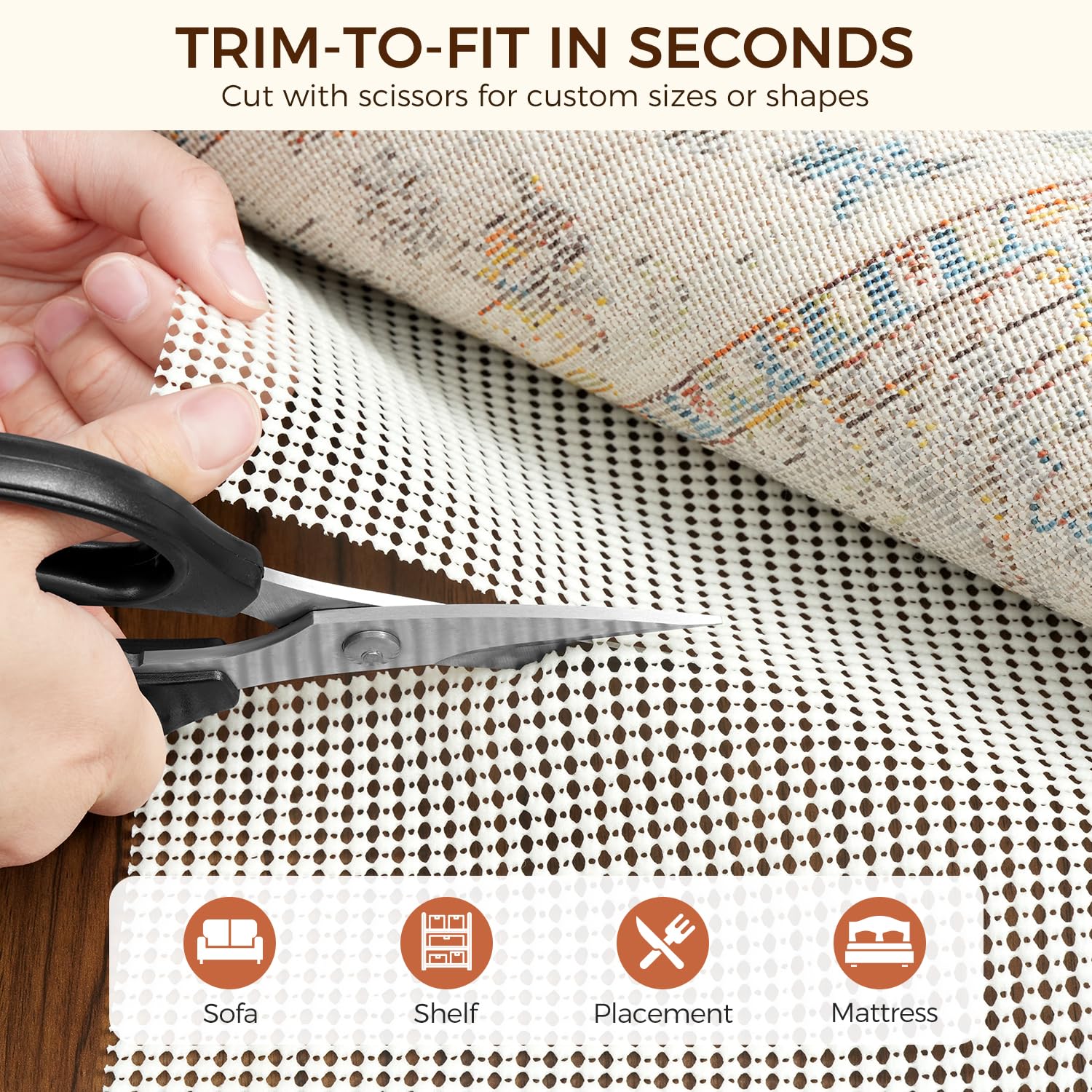
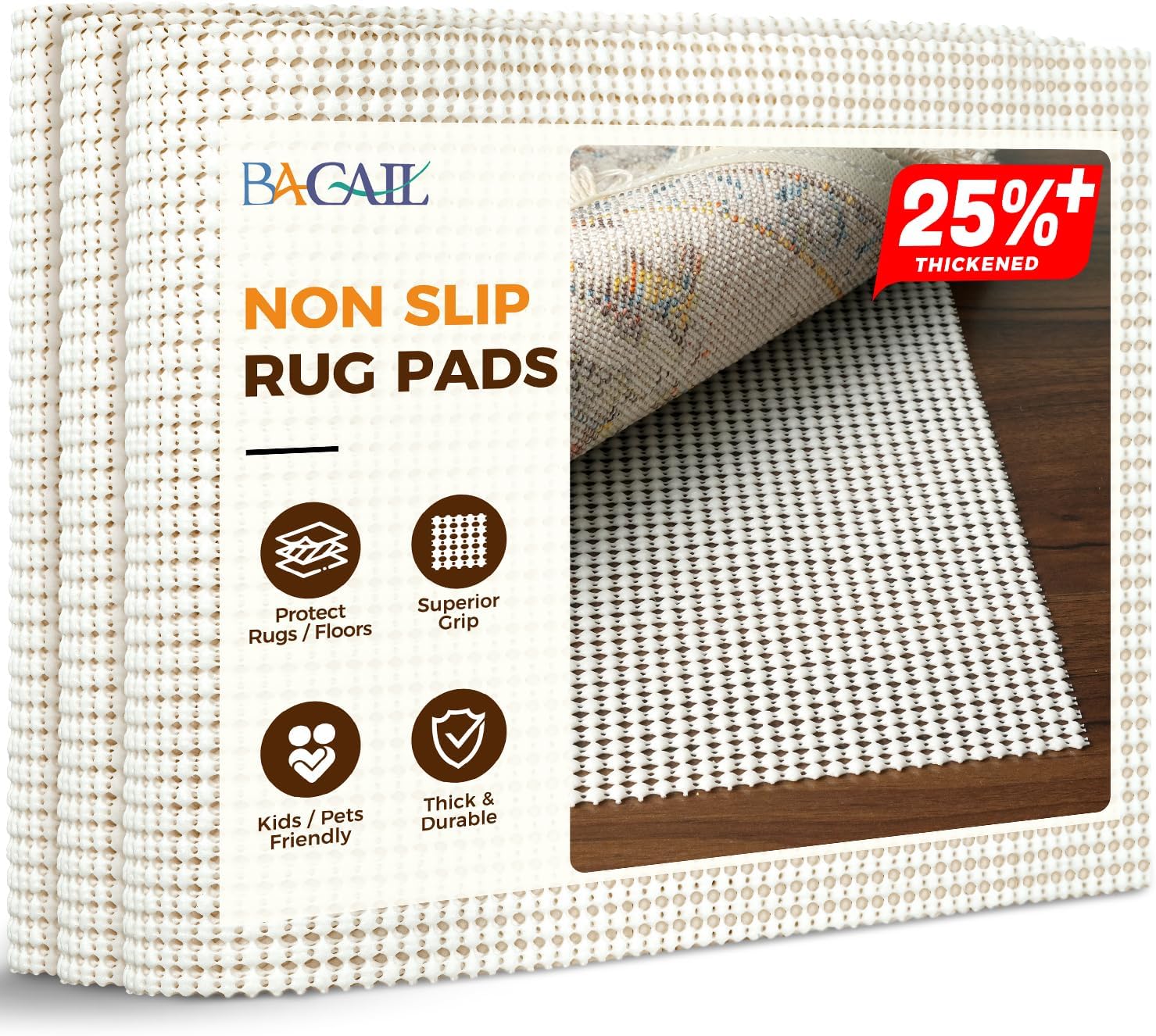
BAGAIL 8x10 Rug Pad Gripper for Hardwood Floors - Extra Thick Non-Slip Padding for Area Rugs
Pros
- Strong grip keeps rugs firmly in place without adhesives
- Protects both floors and rugs from damage and wear
- Easy to trim and install in seconds
- Industrial-grade materials resist tearing and compression
- Works on multiple floor types including hardwood and tile
Cons
- Only 0 reviews available, so long-term durability is unproven
- May need occasional repositioning in very high-traffic areas
- Grid pattern may show through very thin rugs
This rug pad solves one of the most annoying home problems: rugs that slide, bunch, and create trip hazards. The BAGAIL pad uses a powerful grip system that holds area rugs flat without any sticky residue or tape, which means safer floors for everyone in your home, especially if you have kids running around or pets zooming through rooms.
What sets this apart is the extra thickness that adds real cushioning underfoot. Walk across your living room rug and you'll notice the difference, especially on hard surfaces. The breathable grid design is smart too, it lets your vacuum work effectively while reducing friction that wears down rug fibers over time.
If you want rugs that stay perfectly flat and floors that stay scratch-free without spending a fortune on premium pads, this one delivers.
Styles it works with: Modern Farmhouse, Scandinavian, Transitional, Coastal
Best placed in: Living room under coffee table area rugs, bedroom beside the bed, entryway runner zones, dining room under table rugs
May not suit: Homes needing custom odd-shaped pads (though you can trim this), extremely low-profile modern setups where any thickness shows
Buy it if:
- You have kids or pets and need safer, slip-free rugs in high-traffic areas
- Your area rugs bunch up or slide on hardwood or tile floors
- You want to protect expensive floors from scratches without complicated installation
- You need extra cushioning under thin rugs for comfort
Consider waiting if:
- You want to see more verified customer reviews before purchasing
- You need a different size and want to wait for more options to become available
Skip it if:
- You have wall-to-wall carpeting (this is designed for hard floors)
- Your rugs are extremely heavy and already stay in place perfectly
Check the latest price and availability on Amazon before it sells out.
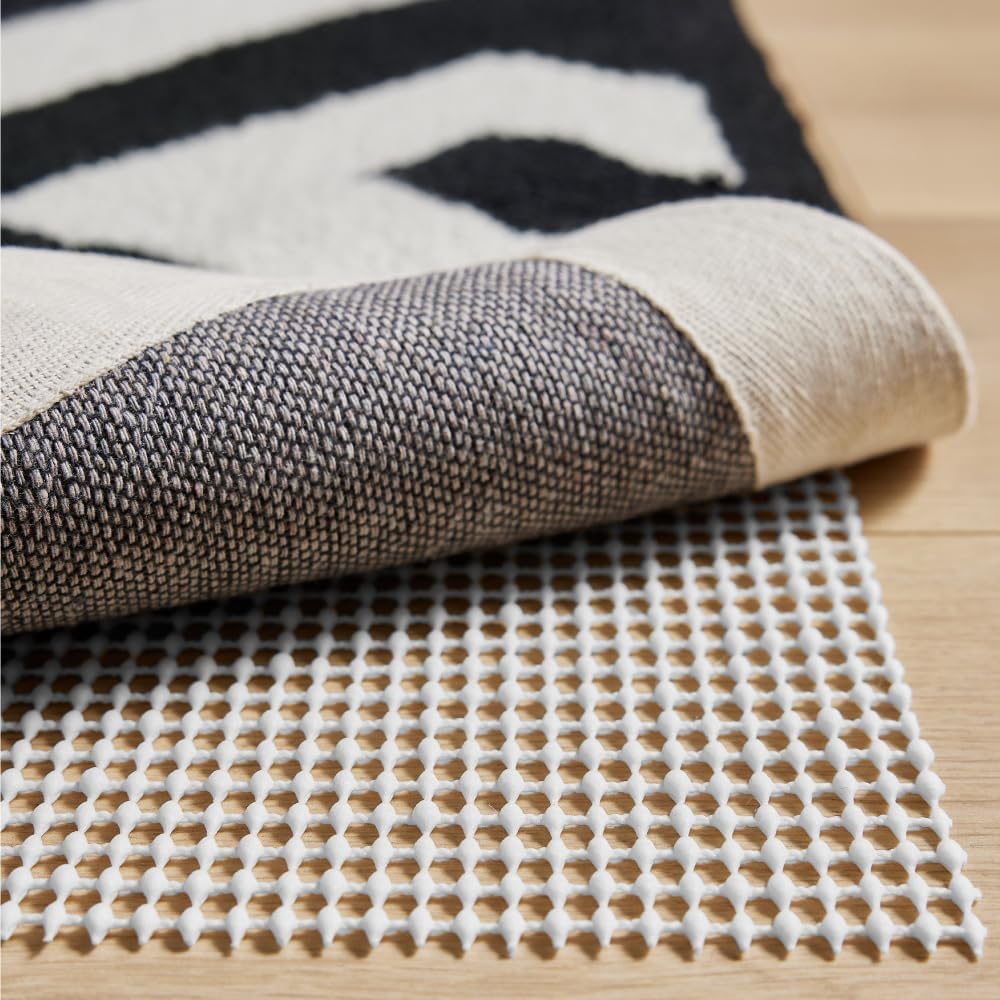
Gorilla Grip Rug Pad 2x3 for Hardwood Floors - Non Slip Gripper, Extra Strong Hold, Trim to Fit
Pros
- Strong dual-sided grip works on both rug and floor without adhesive residue
- Thick cushioning makes rugs feel more luxurious underfoot
- Open grid design allows floors to breathe and prevents moisture buildup
- Easy to trim to custom sizes with regular scissors
- Affordable solution for securing multiple rugs throughout the home
Cons
- Rating is based on zero verified customer reviews, so real-world performance is unproven
- May require repositioning over time in extremely high-traffic zones
- Works best on smooth hardwood; effectiveness may vary on textured or uneven flooring
If you've ever had a rug slide out from under you on hardwood, you know how frustrating (and dangerous) it can be. This Gorilla Grip pad solves that problem with a clever dual-sided grip that holds tight to both your floor and your rug without any sticky adhesives. It's especially smart for homes with kids or pets where rugs see constant action.
The open grid design is a thoughtful touch. It lets your floors breathe so you don't trap moisture or heat, and it adds a nice cushion layer that makes your rugs feel more plush. Plus, you can trim it to fit any shape, which means you're not stuck with standard sizes if your rug is an odd dimension.
If you want to stop chasing runaway rugs without damaging your hardwood floors, this one delivers.
Styles it works with: Modern Farmhouse, Scandinavian, Transitional, Minimalist
Best placed in: Entryway under runner rugs, living room beneath coffee table area rugs, kitchen in front of sink
May not suit: Homes with deeply textured hardwood or hand-scraped floors where the grip may not fully contact the surface; very lightweight rugs that may not press down enough to activate the grip
Buy it if:
- You have hardwood or laminate floors and rugs that constantly slide or bunch up
- You need a non-adhesive solution that won't leave residue or damage your floors
- You want extra cushioning underfoot to make your rugs feel more comfortable
Consider waiting if:
- You need verified customer reviews before committing, since this product currently has no ratings
Skip it if:
- Your floors are carpeted (this is designed specifically for hard surfaces)
- You need a larger size and don't want to buy multiple pads to cover the area
Check the latest price and availability on Amazon before it sells out.

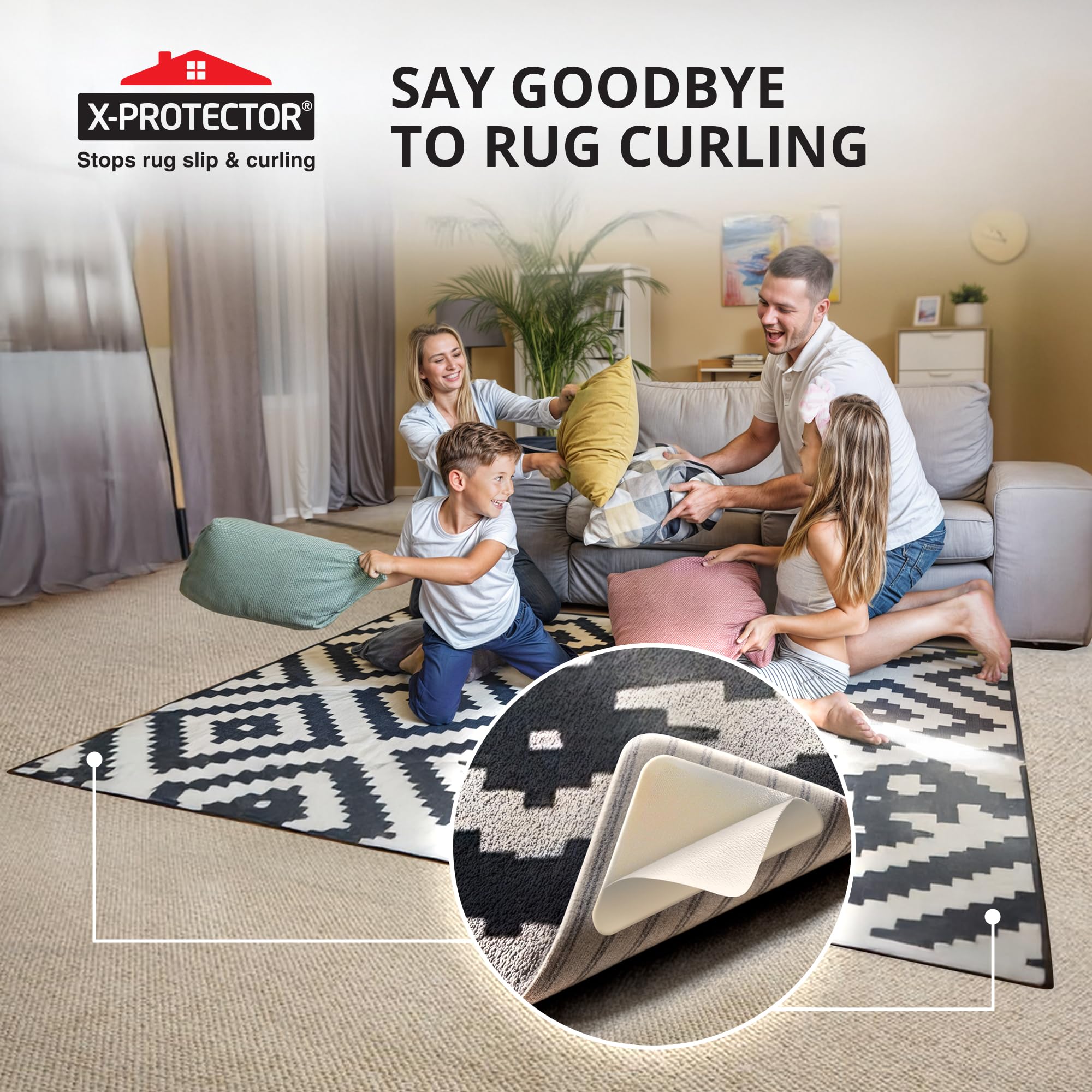
X-Protector Rug Tape for Carpet 8-Piece Set | Anti-Slip Corner Grippers for Area Rugs on Carpet
Pros
- Carpet-to-carpet grip works where standard rubber pads completely fail
- Very thin design stays invisible under rugs without raising edges
- Covers both anti-slip and anti-curling needs in a single affordable set
- Suitable for indoor and outdoor use, adding real versatility
- Strong satisfaction guarantee lowers the risk of a bad purchase
Cons
- Designed for low-pile carpet surfaces only, so it may not grip well on high-pile or shag carpet
- Only 8 pieces per set, which may not be enough coverage for very large area rugs without buying multiple packs
Most rug grippers are built for hard floors, which leaves anyone with wall-to-wall carpet in a frustrating blind spot. X-Protector actually designed these specifically for carpet-on-carpet layering, which is what makes this set stand out in a crowded category. The adhesive is engineered to bond two textile surfaces together, not just create friction against tile or hardwood.
In practice, the pads are thin enough that you genuinely forget they are there. There is no ridge under the rug, no visible lump at the corners, and no awkward repositioning every time someone walks through the room. The white color also stays out of sight even with lighter rug materials. For anyone who has fought with a runner that keeps folding in the entryway or an accent rug that migrates across the living room carpet, the difference is immediate.
If you want flat, secure rugs layered over carpet without ripping up your existing flooring or buying an entirely new pad, this one delivers.
Styles it works with: Modern Farmhouse, Transitional, Bohemian, Scandinavian
Best placed in: Living room seating areas layered over carpet, bedroom beside the bed where a smaller accent rug sits on top of carpet, carpeted hallways where runners tend to shift underfoot
May not suit: Rooms with high-pile or shag wall-to-wall carpet where the adhesive cannot grip the surface effectively; very large statement rugs that need full-perimeter coverage rather than corner-only anchoring
Buy it if:
- You are layering an area rug on top of existing wall-to-wall carpet and standard rubber pads keep sliding
- Your rug corners curl up and become a tripping hazard no matter how many times you press them flat
- You want a low-cost, low-effort fix that does not require removing furniture or replacing your flooring
Consider waiting if:
- You are still deciding on the final rug size or placement and do not want to commit the adhesive to a fixed position yet
Skip it if:
- Your floors are hardwood, tile, or vinyl since this product is built for carpet surfaces only
- You have deep-pile or shag carpet where the adhesive backing cannot make proper contact with the fibers
Check the latest price and availability on Amazon before it sells out.
Reset the Rug Before You Add Anything
Flatten the rug before installing a pad or tape. Roll it backward for 24 hours if the edge still curls from shipping. For stubborn waves, lay books along the ridge for a full day.
Clean the floor before applying any grip product. Dust breaks contact. Tape needs a dry surface, and most pads grip better when the floor isn’t coated with polish residue.
Then walk the room like you normally do. If the rug moves toward a doorway, the traffic path is the culprit. If it moves toward the sofa, the furniture placement is doing it.
The 10-Minute Furniture Reset
Move the coffee table and chairs off the rug first, then pull the rug from the center instead of yanking one corner. That keeps the weave square. If the rug has a border, use the border as your visual guide; it should run parallel to the sofa front within about 1 inch across the full width.
Set the heaviest piece last. Put the sofa front legs on the rug, step back 6 feet, and check whether the rug still lies flat before adding the coffee table. If the coffee table creates a ridge, its feet are dragging the pile. Add small felt glides or shift the table so all four feet sit on the same thickness.
For dining chairs, pull every chair out 24 inches and push it back in. If the chair catches the rug edge, the rug is too close to the chair path or the pad is too thick. Fix that now. Dinner guests won’t be gentle with it.
Floor Type Changes the Fix
Hardwood and laminate usually need a gripper pad with an open-weave or rubberized underside labeled for finished floors. Tile can handle many grip pads, but grout lines can telegraph through thin rugs. Carpet-on-rug setups need tape or a pad made for carpet, not a hardwood pad.
If the rug sits on wall-to-wall carpet, bunching comes from pile movement under pile. The bottom carpet flexes, and the area rug rides the wave. A standard non-slip pad may do almost nothing there; corner tape or a stiffer rug layer works better.
Check the floor finish before using adhesive. Old polyurethane, waxed wood, and sun-warmed floors can react differently. If you’re unsure, use a pad first and keep tape for hidden corners under furniture.
Frequently Asked Questions
Will a rug pad stop bunching under furniture?
Yes. A gripper pad stops most bunching by adding friction between the rug and floor. It works best when the rug is already the right size and the furniture legs sit evenly on it.
Should furniture legs sit on or off the rug?
It depends. In a seating area, front legs should usually sit 6 to 10 inches onto the rug. For a small accent rug, keep all furniture legs off it so the edge doesn’t get pinned and twisted.
Is rug tape safe for hardwood floors?
It depends. Use tape labeled for finished floors, and avoid leaving adhesive down for months in direct sun. A pad is safer for large rugs. Tape is better for corners and short-term edge control.
Why does my rug bunch after vacuuming?
The vacuum is pulling the rug while furniture holds part of it still. Lower the suction, turn off the beater bar if possible, and add a gripper pad. Thin rugs need the most help.
Can a rug be too thin for furniture?
Yes. Thin rugs can work, but they need full contact with a grippy pad. Without that layer, chair legs and sofa feet grab the weave and push it into ridges.
Bottom Line
Most rug bunching under furniture comes from uneven anchoring: one leg pins the rug while traffic pushes the loose edge. BAGAILBASICS is the first fix for most living rooms because an 8×10 gripper pad stabilizes the whole rug. If only the corners curl, X-Protector tape is the cleaner fix. If the rug is too small for the furniture plan, no pad will make the layout behave like a larger rug.


Write Your Review
No reviews yet. Be the first to share your experience!