

> Editorial Note: I’m Hannah Lin, an Interior Living Researcher who’s spent 9+ years analyzing the home furniture market. This guide draws on BIFMA, GREENGUARD, and FSC certifications, plus owner reviews aggregated from Wirecutter, Apartment Therapy, and the major home design subreddits.
A sagging cushion has a cause, and the cause decides the fix. Sometimes it’s flat foam. Sometimes it’s a stretched deck under the cushion. Sometimes the fill has just shifted to one end. Figure out which layer failed and you’ll fix it for $20 to $60 instead of buying a whole new couch. Here’s how to diagnose and repair each one. For related living-room help, see best couch cushion support, why is my couch sagging, how to clean a couch, best sectional sofa, and best coffee table for small spaces.
Fix 1: The Cushion That Feels Empty in the Middle (Flat Foam)
You sit in your usual spot and hit bottom fast. The center has less rebound than the edges. That’s the foam core breaking down where you sit most.
Do the floor check first. Set the cushion on a hard floor, press the center for 30 seconds, then release. If it stays dented or springs back slowly, the polyurethane core is spent. Most residential foam sits in the 1.5 to 2.5 lb density range, and the low end collapses first under a favorite seat.
Replace the fill, not the whole cushion. A firmer high-density foam insert cut to size restores support that the old core lost. Wirecutter’s sofa coverage flags foam density because it predicts sag better than showroom softness ever does. Look for 1.8 lb per cubic foot or higher for a seat that holds.
Cut the foam about 0.5 inch larger than the cover on each side so it fills the corners and holds the cushion’s shape rather than leaving soft, empty edges. A serrated bread knife or an electric carving knife gives the cleanest cut on a 4- to 6-inch foam block. Wrap the new core in a thin layer of polyester batting before you rezip, and the cushion regains both the loft and the crisp edge it had when it was new.
Fix 2: The Cushion That Sinks Onto a Hard Line (Stretched Deck)
Sometimes the cushion isn’t the problem at all. Pull it off and press across the deck, the webbing or springs under the cushion, from front rail to back. If it dips more than an inch or you feel a bar, the support layer stretched out.
That’s why a fresh cushion can still feel like it’s sinking. The deck below has nothing left to push back with, so any cushion bottoms out onto the frame.
Level it with a rigid support board laid across the deck, under the cushions. It spreads your weight over a flat plane so the cushion stops collapsing into the weak spot. Measure the inner seat; most sofas need a board around 21 to 24 inches deep and 66 to 72 inches wide. BIFMA durability standards exist because repeated load is exactly what wears a deck out.
Fix 3: The Cushion That’s Lumpy at One End (Shifted Fill)
If the cushion looks bunched or uneven, and it’s a wrapped or fiber-fill cushion rather than solid foam, the fill migrated. This is common on chenille and velvet couches where a soft poly-fiber wrap surrounds the core.
Unzip the cover if it has a zipper. Pull the fill out, shake it flat, and redistribute it evenly toward the corners before you slide it back. Do this every couple of months on a heavy-use seat and the lumps mostly stay away.
For a longer fix, add a thin layer of fresh polyester batting around the core before rezipping. It fills the hollow the old wrap left and evens out the surface. Apartment Therapy notes that fiber-wrapped cushions need this refluffing far more often than solid-foam ones, so it’s upkeep, not a defect.
Fix 4: The Cushion That Slides and Gaps (Loose Cover or Slippery Deck)
The cushion sags forward or gaps at the back because it won’t stay put. A cover that’s stretched loose or a slick deck surface lets the cushion creep every time you sit.
Check the cover fit first. A baggy cover lets the fill shift and the whole cushion droop. Washing and drying a cotton-blend cover on low heat can shrink it back to a snug fit, but confirm the care tag allows it so you don’t over-shrink.
Stop the slide with non-slip liner. A sheet of rubberized shelf liner or a couple of hook-and-loop strips between the cushion and the deck keeps it anchored so it holds its shape instead of sliding into a sag. GREENGUARD-certified foams and low-emission materials are worth choosing if you’re adding new padding to a room you use daily.
Fix 5: When the Couch Is Too Far Gone to Patch
If the foam is flat, the deck sags, and the frame flexes at the joints all at once, patching one layer just moves the sag somewhere else. A couch past 8 to 10 years of daily use often lands here.
Run the numbers. New foam runs $80 to $200 per seat, a support board adds $40, and non-slip liner another $15. Stacking all three on a loose frame costs more than it’s worth.
When it’s time to replace, a well-built sectional or 3-seater with a firm deck solves sag at the source. All three below lead with deep, supportive seats and clear owner reviews for structure over showroom softness. Start with the Welzona sectional if you want the highest structural rating with an ottoman; choose the TROMIRY U-shaped chenille for the largest 112-inch double-chaise layout; go with the KORSER 89-inch 3-seater if you want a simpler mid-century frame with deep seats.

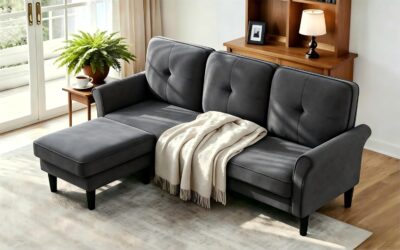
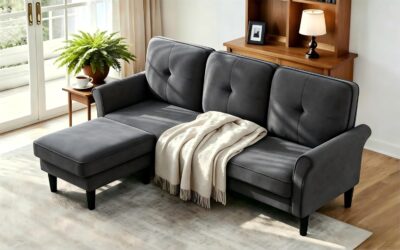
Welzona 83-Inch Grey Velvet L-Shaped Sectional Couch with Ottoman | 3-Seater Small Space Sofa for Living Room
Pros
- Exceptional price-to-value ratio for a full velvet sectional complete with a moveable ottoman
- Velvet upholstery looks and feels more premium than the price point suggests
- Tool-free setup is beginner-friendly and takes only a few minutes
- Moveable ottoman adds genuine layout flexibility for different room configurations
- Solid wood frame and 800lb weight capacity provide confidence in long-term structural durability
Cons
- No customer reviews yet, so real-world comfort and durability cannot be independently verified
- Velvet fabric attracts pet hair and lint and requires regular upkeep to maintain a clean appearance
- At 83 inches, the L-shape may still feel oversized in very compact studio apartments under 300 square feet
The Welzona sectional punches well above its price tag. For under $200, you get a full L-shaped sofa with a moveable ottoman, wrapped in soft velvet that reads as far more expensive than it actually is. The 6.3-inch cushions and 20-inch seat depth give you genuine sink-in comfort that makes staying in feel like the better plan every time.
In a real room, this sofa looks polished and intentional. The clean minimalist lines work with a range of decor styles, and the grey velvet adds warmth and texture without competing with your existing palette. It is compact enough for an apartment living room but substantial enough to feel like a complete, grown-up seating arrangement.
If you want a stylish sectional that actually fits a small space without sacrificing comfort or requiring a serious budget, this one delivers.
Styles it works with: Minimalist, Modern, Scandinavian, Contemporary
Best placed in: Small living room corner, studio apartment open-plan area, home office lounge zone
May not suit: Rooms under 200 square feet where the L-shape footprint could feel overwhelming, or traditional and maximalist interiors where cool grey velvet may conflict with warm wood tones and ornate decorative details
Buy it if:
- You are furnishing a first apartment or small home on a tight budget and want a complete sectional setup in one purchase
- You want a velvet sofa that looks high-end without paying high-end prices
- You need quick, tool-free assembly and want to avoid complicated setup or professional help
Consider waiting if:
- You prefer to buy products backed by a solid track record of verified customer reviews before committing
Skip it if:
- You have heavy-shedding pets, as velvet requires consistent groming to stay looking clean and presentable
- You regularly need seating for five or more people, as 83 inches works best for three to four at a time
Check the latest price and availability on Amazon before it sells out.

TROMIRY 112-Inch U-Shaped Sectional Sofa with Double Chaise - Warm White Chenille Couch for Living Room & Apartment
Pros
- Generous 112-inch size fits families and frequent entertainers without feeling cramped
- Soft, durable chenille fabric resists everyday wear and cleans up spills easily
- Double chaise configuration offers versatile lounging options for multiple people
- High-quality foam and spring filling provides comfortable support for long sitting sessions
- Straightforward assembly process with clear instructions and included tools
Cons
- At this price point, long-term durability may not match higher-end sectionals
- Warm white color shows dirt more easily than darker upholstery options
- Large footprint requires spacious living rooms and may overwhelm smaller apartments
This TROMIRY sectional solves the perennial problem of finding affordable seating that actually fits the whole family. At 112 inches, the U-shape wraps around your space to create a cozy conversation zone, while the double chaise means everyone gets to put their feet up. The chenille fabric has that soft, inviting texture that makes you want to curl up with a book, and it holds up well to the daily chaos of real life, from spilled coffee to pet hair.
What really stands out is how this sofa balances comfort with practicality. The foam and spring construction gives you real support without that stiff, formal feeling, and the warm white color brightens up a room without committing to stark white. Assembly is genuinely simple, with everything numbered and ready to go in about 30 minutes.
If you want spacious, family-friendly seating that looks put-together without the luxury price tag, this one delivers.
Styles it works with: Modern Farmhouse, Transitional, Coastal, Contemporary Casual
Best placed in: Open-concept living rooms with 12+ foot walls, family rooms with TV viewing area, finished basement rec rooms
May not suit: Studio apartments or living rooms under 200 square feet where the 112-inch footprint will dominate the space; homes with very young children where the light color may require frequent cleaning; formal living rooms that call for a more tailored, structured aesthetic
Buy it if:
- You need to seat 5 or more people comfortably for family movie nights and gatherings
- You value soft, cozy fabric and the ability to lounge with your feet up over ultra-modern minimalist design
- You're furnishing a spacious living room or finished basement and need maximum seating on a realistic budget
- You want something that arrives in manageable boxes and assembles quickly without hiring help
Consider waiting if:
- You're hoping for a darker, stain-hiding color since this warm white shows dirt more readily
- You prefer to see and test sectionals in person before committing to a large furniture purchase
Skip it if:
- Your living space is under 200 square feet, as this 112-inch sectional will overwhelm smaller rooms
- You need commercial-grade durability or plan to keep this sofa for 10+ years of heavy daily use
Check the latest price and availability on Amazon before it sells out.
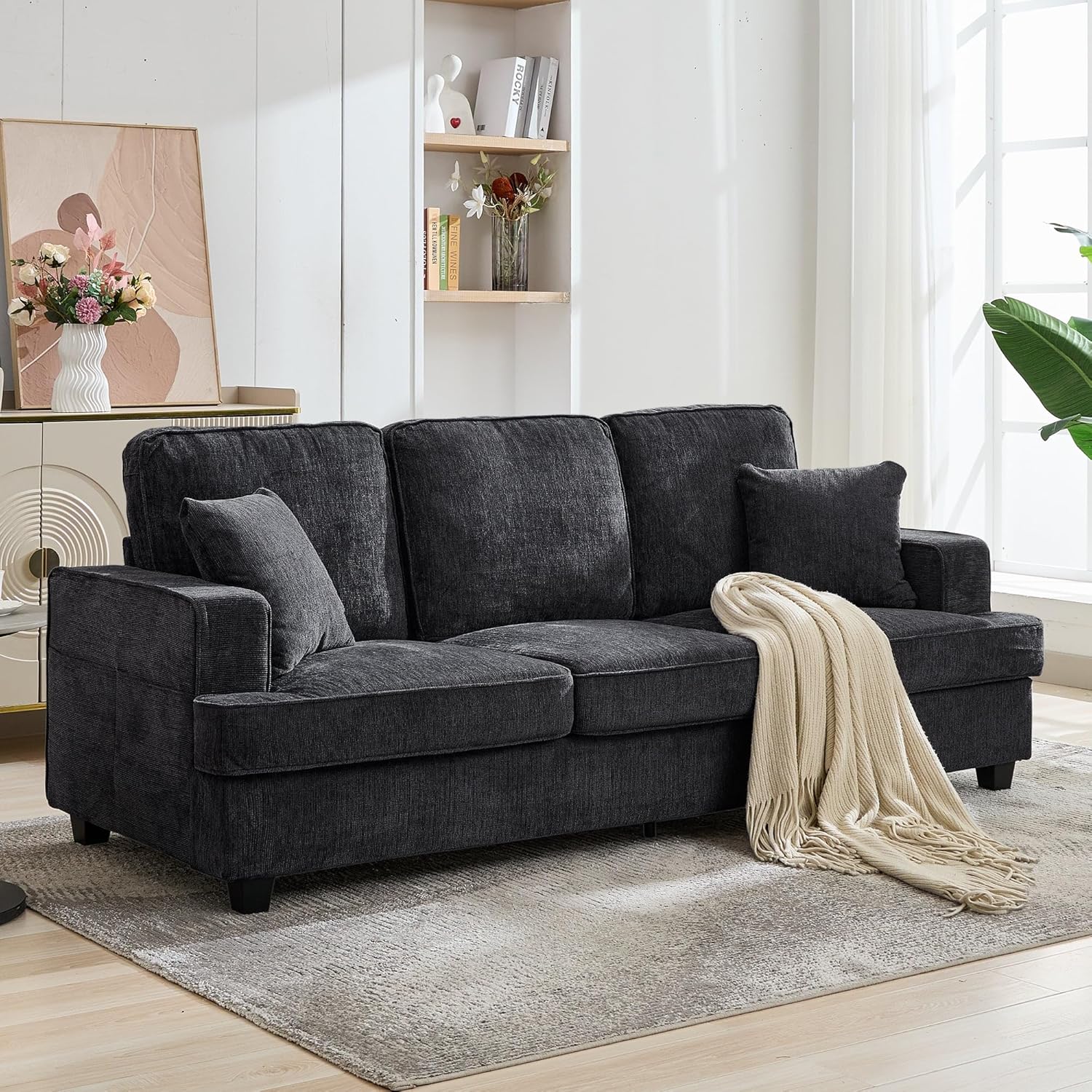
Korser 89-Inch 3-Seater Chenille Sofa with 24-Inch Deep Seats, Mid Century Modern Couch for Living Room (Grey)
Pros
- Extra-deep 24-inch seats are a genuine standout at this price tier
- Non-pilling chenille fabric resists wear and stays looking neat with regular use
- Compact dimensions fit easily into apartments, offices, and smaller rooms
- Side pockets and removable, washable pillow covers add real everyday convenience
Cons
- 3.7-star rating from over 100 buyers suggests inconsistent quality or durability concerns
- Cushions require 48 to 72 hours to fully expand after unboxing, delaying immediate use
- Assembly involves multiple steps and a separate video guide, which some buyers find time-consuming
At under $200, the Korser sofa delivers something rare at this price: genuinely deep seating. The 24-inch seat depth feels different the moment you sit down. You get enough room to tuck your legs up or shift into a full lounge without hanging off the edge, which is the default experience on most budget three-seaters.
The chenille upholstery is a smart material choice for a living room centerpiece. It has a soft, slightly textured finish that photographs well and feels warm to the touch. It holds its appearance better than microfiber alternatives at the same price, and the non-pilling construction means it stays looking tidy after regular use. The clean mid-century lines and structured armrests translate well in apartments and studios where the sofa is the main visual anchor.
If you want deep, comfortable everyday seating without spending over $500, this one delivers.
Styles it works with: Mid-Century Modern, Minimalist, Scandinavian, Transitional
Best placed in: Living room as the primary sofa, studio apartment as a combined seating and lounge area, home office or spare bedroom as secondary seating
May not suit: Homes with young children or pets given the below-average reliability rating, rooms under 12 feet wide where the 89-inch frame may feel cramped
Buy it if:
- You need a full-size sofa under $200 and can accept that budget furniture involves trade-offs
- You are furnishing a temporary space like a rental, first apartment, or guest room
- Deep seating is a priority and comparable depth is not available at this price elsewhere
Consider waiting if:
- A wider color selection would better match your existing decor, as availability may expand over time
Skip it if:
- You need a sofa with a 4-star-or-higher rating, as the 3.7-star score reflects real buyer dissatisfaction
- You want a long-term investment piece that will hold up for five or more years of daily use
Check the latest price and availability on Amazon before it sells out.
What Not to Do First
Don’t stack throw pillows on top of a sagging seat to hide it. They compress in minutes and the sag comes right back.
Don’t buy replacement foam before you check the deck. New foam over a stretched deck still bottoms out, so you’ll have spent $150 and fixed nothing.
Don’t over-shrink a cover to force a fit. One low-heat cycle is fine; repeated hot drying warps the cover and it never sits right again.
Don’t ignore the frame while you chase the cushion. If the sofa creaks or shifts when you sit, tighten the frame bolts before spending on foam. A rigid frame is what a $40 support board needs to work against; a loose one lets the sag return within weeks no matter how firm the new fill is.
Frequently Asked Questions
Can you fix a sagging couch cushion without replacing it?
Yes, most of the time. Refluff shifted fiber fill, add a support board under a stretched deck, or swap in a high-density foam insert for a flat core. Only a couch with a failing frame and flat foam everywhere needs full replacement.
Why does my couch cushion sag in the middle?
The foam core broke down where you sit most, or the deck under the cushion stretched. Do the floor check on the cushion first. If the cushion rebounds fine but still sinks on the couch, the problem is the deck, not the cushion.
Do foam inserts really firm up a saggy cushion?
Yes, when the sag is in the cushion itself. A high-density insert at 1.8 lb per cubic foot or higher restores the support a worn core lost. It won’t help if the deck below has stretched, so diagnose the layer first.
How long should a couch cushion last before it sags?
It depends on foam density and use. A high-density core in a lightly used room can hold 7 to 10 years. Low-density foam under daily use often softens in 2 to 3. Rotating cushions every 2 weeks spreads the wear and buys you time.
Is it cheaper to fix or replace a sagging couch?
It depends on the frame. If only the cushion or deck failed, a $20 to $60 repair wins easily. If the frame flexes and foam is flat throughout, replacement is the better spend since three separate repairs rarely add up to a sound couch.
Bottom Line
A sagging cushion traces to one of three layers: flat foam, a stretched deck, or shifted fill, and each has a fix under $60. Start by pulling the cushion and checking the deck, since a support board fixes the most-missed cause. Refluff or reinsert foam only after you’ve ruled the deck out. If the frame flexes and the foam is flat everywhere, a sturdy replacement like the Welzona sectional ends the cycle for good. Diagnose the layer first, then spend.





Write Your Review
No reviews yet. Be the first to share your experience!