

> Editorial Note: I’m Maya Chen, a bedroom and sleep editor covering mattresses, bed frames, and bedding. The picks here are evaluated against CertiPUR-US foam standards, Sleep Foundation evaluation protocols, and owner durability reports from r/Mattress.
A mattress that smells isn’t dirty so much as saturated. Months of sweat, skin, and humidity soak into the foam, and no amount of airing out fully clears it once it’s set in. The good part: you can pull most odors out with baking soda and a vacuum, and then keep them from coming back with a washable protector. This guide covers both, the reset and the prevention. If you’re refreshing a sleep setup, these guides help: best waterproof mattress protector, best mattress topper under 100, best cooling mattress protector, best mattress for hot sleepers, and best bed frame for small spaces.
Why Does a Mattress Start to Smell?
Two sources. First, your body: an adult loses roughly a cup of sweat a night, and that moisture, plus skin oils and dead cells, feeds odor-causing bacteria deep in the top few inches of foam. Second, humidity: a mattress in a damp room absorbs moisture from the air and holds it.
The smell lives where the moisture is, usually the top 2 to 3 inches. That’s why surface sprays fade fast; they never reach it. Anything that actually deodorizes has to draw moisture and odor up and out of the foam, not just mask it at the surface. Understanding that shapes every step below.
The Baking Soda Reset: How It Works
Baking soda is the workhorse because it absorbs both moisture and odor rather than covering them. Strip the bed, then sift a generous, even layer over the entire surface, about 1 cup for a twin, up to 2 cups for a queen or king.
Let it sit at least 1 hour; 8 to 24 hours pulls out set-in smells far better. The longer it sits, the more moisture it draws from the foam. For a stubborn odor, sift a few tablespoons of baking soda mixed with 2 to 3 drops of essential oil so it lingers lightly clean rather than perfumed over funk.
Vacuum It Out, Don’t Just Brush It
After the baking soda has sat, vacuum the entire surface with an upholstery attachment. This is the step people rush, and it’s the one that matters. You’re removing the baking soda that’s now loaded with the moisture and odor it absorbed.
Go slowly, overlapping passes, and hit the seams and any tufted buttons where powder settles. Plan on 5 to 10 minutes for a queen. A quick brush-off leaves half the odor-loaded powder behind. If the smell persists after one round, repeat, deeply set odors sometimes need two or three cycles a day apart.
Use a clean upholstery attachment, not the floor head you run over carpet, or you’ll press grit back into the surface. If your vacuum has a HEPA filter, better still; it traps the fine baking-soda dust instead of blowing it back into the room. Empty the canister or bag afterward, since a full bag loses suction fast and leaves powder behind on the second pass.
Air, Sunlight, and Spot-Cleaning Stains
Fresh air and UV both cut odor. If you can, strip the mattress and open the windows for a few hours; direct sun on the surface for 2 to 3 hours helps break down bacteria and dries residual moisture. Even standing a mattress against a wall by an open window moves air through it.
For odor tied to a stain, spot-clean before deodorizing. Blot, don’t rub, a fresh stain with a cloth, then treat with an enzyme cleaner made for biological stains and let it work per the label. Never soak a foam mattress; excess liquid takes days to dry and breeds the exact smell you’re fighting. Blot the area nearly dry, then baking-soda the whole surface.
Enzyme cleaners matter for a specific reason: sweat, urine, and other body-fluid odors are protein-based, and enzymes break those proteins down rather than masking them. A general-purpose cleaner leaves the proteins behind to smell again once they dry. Give the enzyme 10 to 15 minutes of dwell time on the spot before you blot, since the reaction isn’t instant. Reapply once if the odor lingers after the area dries, since deep or old stains often need a second treatment to fully clear.
How Do I Keep the Smell From Coming Back?
Block the moisture at the source. A waterproof mattress protector is the single most effective prevention because it stops sweat, spills, and humidity from ever reaching the foam. Wash it every 2 to 4 weeks and the odor never gets a foothold.
Beyond the protector: let the bed breathe each morning by folding the covers back for 20 to 30 minutes before making it, so trapped overnight moisture escapes instead of soaking in. Keep bedroom humidity moderate. The Sleep Foundation notes that a cooler, drier sleep environment cuts overnight sweating, which is the root of most mattress odor.
Frequently Asked Questions
How do I get a smell out of my mattress fast?
Sift a cup or two of baking soda over the surface, let it sit at least an hour, then vacuum thoroughly with an upholstery attachment. For set-in odors, leave it 8 to 24 hours before vacuuming.
Does baking soda actually deodorize a mattress?
Yes. It absorbs both moisture and odor rather than masking them, which is why it works where sprays fail. The key is vacuuming it up completely afterward so the odor-loaded powder leaves with it.

Can I use vinegar on a mattress?
Yes, lightly, for stains. Blot a diluted vinegar solution on a stain, then blot nearly dry, never soak foam. Follow with baking soda over the whole surface. Vinegar’s own smell fades as it dries.
How often should I deodorize my mattress?
Every 3 to 6 months for maintenance, or whenever a smell returns. With a washable waterproof protector you’ll need it far less, since the protector keeps moisture out of the foam entirely.
Will sunlight remove mattress odor?
It helps. Two to three hours of direct sun breaks down odor-causing bacteria and dries residual moisture. Pair it with a baking soda treatment for the best result; sun alone won’t reach set-in smells.
Why does my mattress smell even after I clean it?
Because the odor lives 2 to 3 inches deep in the foam, past where surface cleaning reaches. Repeat the baking soda and vacuum cycle two or three times a day apart, and block new moisture with a protector.
Is a new-mattress chemical smell the same thing?
No. That’s off-gassing from CertiPUR-US-certified foam and is temporary. Air the mattress in a ventilated room for 24 to 72 hours and it dissipates on its own; baking soda can speed it slightly.
Helpful Products
All three picks below are washable, waterproof mattress protectors, the single best defense against odor returning, since they stop sweat and humidity from reaching the foam. They’re rated 4.6 stars by owners. Start with the PlushDeluxe bamboo protector if you want a soft, breathable feel; the SafeRest is the pick for a proven cotton-blend surface.


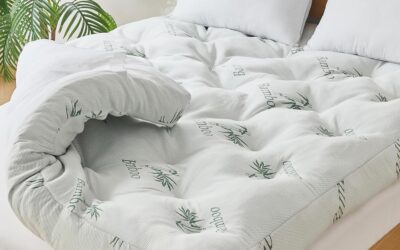
PlushDeluxe Bamboo Waterproof Mattress Protector Queen - Ultra Soft, Breathable, Fits 18" Deep Mattresses
Pros
- Bamboo surface feels soft and breathable unlike vinyl protectors
- Truly waterproof against spills and accidents based on feature claims
- Fits thicker mattresses up to 18 inches including pillow tops
- Operates silently without plastic crinkle noise
- Suitable for memory foam, latex, and spring mattresses
Cons
- No customer reviews yet to verify waterproof performance claims
- Price point higher than basic polyester protectors
- Bamboo blend may require more careful washing than synthetic options
Most waterproof mattress protectors force you to choose between protection and comfort, but this bamboo option delivers both. The natural bamboo surface breathes better than vinyl or polyester, so you stay cooler through the night while still getting full waterproof coverage underneath. No more waking up sweaty or hearing that telltale plastic crinkle every time you shift position.
What sets this apart for real homes is how it handles everyday life without feeling clinical. Families with young kids learning to use the potty, households with pets on the bed, or anyone dealing with night sweats gets reliable protection that actually feels like part of your bedding setup, not a medical supply. The deep 18-inch pocket fit means it works with those plush pillow top mattresses that cheaper protectors can't accommodate.
If you want mattress protection that keeps your bed cool and quiet without sacrificing the waterproof barrier you actually need, this one delivers.
Styles it works with: Modern Farmhouse, Scandinavian, Minimalist, Coastal
Best placed in: Master bedroom with memory foam or pillow top mattress, guest room that occasionally hosts children, bedroom shared with pets
May not suit: Homes wanting the absolute cheapest protection option, mattresses deeper than 18 inches, buyers who prefer 100% cotton surface feel over bamboo blend
Buy it if:
- You have a memory foam or pillow top mattress that needs silent, breathable protection
- Hot sleepers in your home find typical waterproof protectors too warm
- You're dealing with bedwetting, pet accidents, or spills and need reliable waterproof coverage
- Your current protector makes noise or bunches up during the night
Consider waiting if:
- You want to see verified customer reviews before committing at this price point
Skip it if:
- Your mattress is deeper than 18 inches
- You need the absolute lowest price option and don't care about breathability
Check the latest price and availability on Amazon before it sells out.
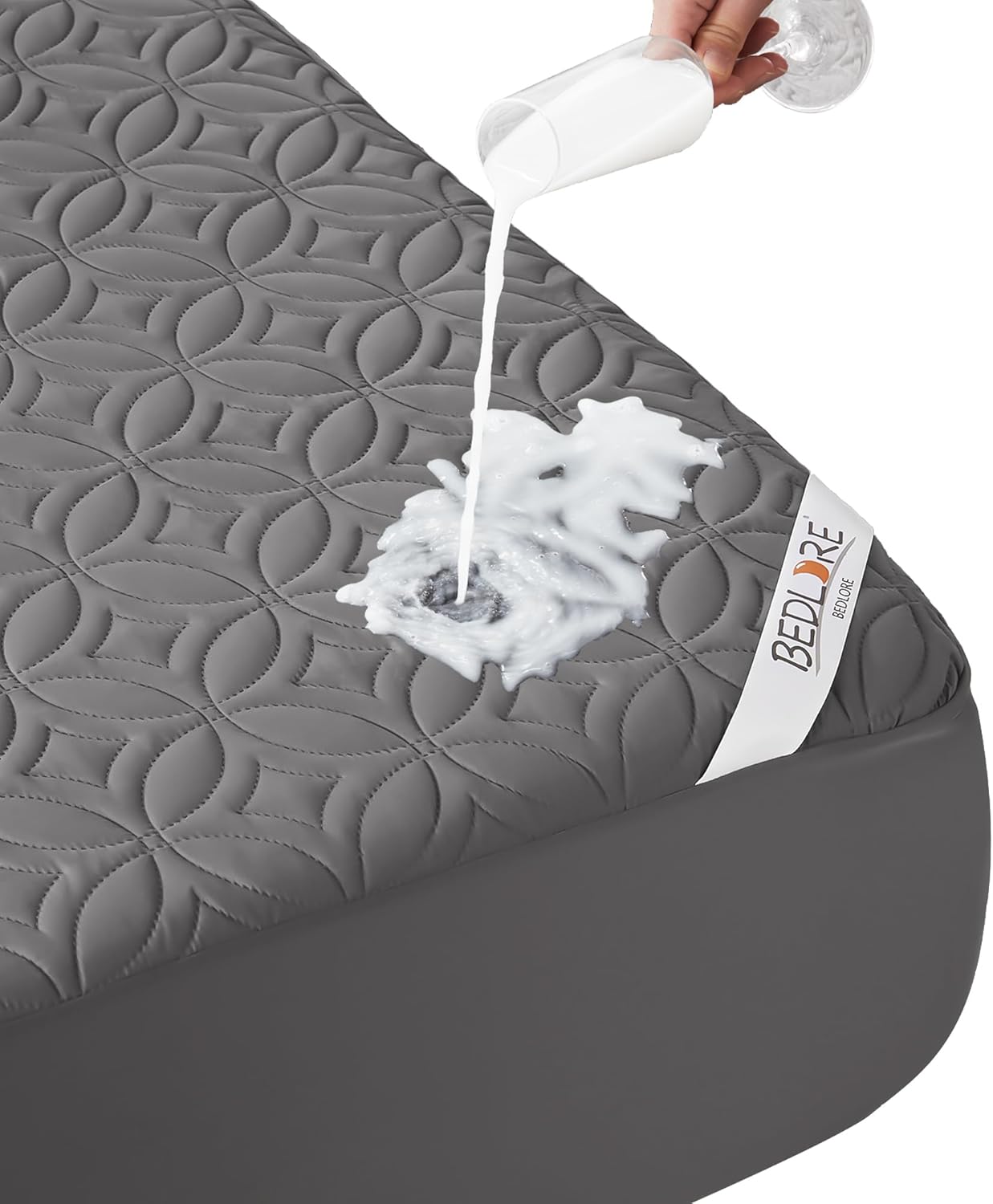
BEDLORE Waterproof Mattress Protector Queen - Noiseless Quilted Pad with Deep Pocket Fit & TPU Layer Protection
Pros
- Silent TPU waterproof layer eliminates the plastic crinkle sound common in cheaper protectors
- Deep 18-inch pocket with 360-degree elastic keeps it anchored even on thick pillow-top mattresses
- Quilted design distributes padding evenly and adds a subtle comfort upgrade
- Machine washable with low-heat tumble dry makes routine cleaning simple
Cons
- No customer reviews yet to verify long-term durability or washing performance
- Quilted design may add slight bulk compared to ultra-thin fitted sheet style protectors
- TPU waterproof layer effectiveness after multiple wash cycles is unproven without review data
This is the kind of mattress protector you forget is even there, which is exactly the point. The quilted surface feels like a regular mattress pad, soft and breathable, while the upgraded TPU layer does the hard work of blocking liquids without announcing itself with that telltale plastic crinkle every time you shift at night.
The deep pocket fit solves a common frustration with thick mattresses. That 360-degree elastic skirt grips mattresses up to 18 inches deep, so it stays put through restless sleep, pet movement, or energetic kids jumping on the bed. The quilted stitching keeps the fill evenly distributed and adds a temperature-regulating layer that prevents the trapped heat some waterproof covers cause.
If you want reliable spill and stain protection without sacrificing comfort or dealing with noisy plastic feel, this one delivers.
Styles it works with: Minimalist, Modern Farmhouse, Scandinavian, Transitional
Best placed in: Master bedroom, guest bedroom, kids' rooms, any bedroom with a mattress up to 18 inches deep
May not suit: Mattresses deeper than 18 inches, households wanting an ultra-thin protector that does not alter bed height at all, buyers specifically seeking organic or natural fiber options
Buy it if:
- You need waterproof protection but hate the crinkly plastic sound of cheaper mattress covers
- You have a pillow-top or thick mattress and struggle with protectors that pop off the corners
- You want a quilted pad that protects and adds a comfort layer in one product
Consider waiting if:
- You prefer to see verified customer reviews before purchasing bedding products
- You want to compare with other BEDLORE models that may have more review history
Skip it if:
- Your mattress is deeper than 18 inches and you need an extra-deep pocket fit
- You specifically need an organic cotton or natural fiber protector for allergy or preference reasons
Check the latest price and availability on Amazon before it sells out.

Pros
- Waterproof barrier works without the plastic feel or noise
- Breathable design prevents heat buildup during sleep
- Fits securely on queen mattresses up to 18 inches deep
- Machine washable and dryer safe for convenient maintenance
- Protects against allergens and dust mites
Cons
- No customer reviews yet to confirm long-term durability
- May require careful washing to maintain waterproof seal over time
- White color shows stains more easily than darker options
This is the kind of practical bedroom essential that you forget is even there, which is exactly the point. The SafeRest protector does its job quietly and invisibly, giving you real protection without turning your bed into a crinkly, sweaty mess. The breathable membrane is the key: it blocks every drop of liquid while still letting air circulate, so you sleep cool and comfortable.
It fits like a deep-pocket fitted sheet, hugging mattresses up to 18 inches thick without sliding around or bunching up at the corners. Toss it in the washing machine when needed, tumble dry on low, and it's ready to go back on the bed. No special care, no hand washing, no drama.
If you want mattress protection that actually works without making you feel like you're sleeping on a raincoat, this one delivers.
Styles it works with: Modern, Minimalist, Scandinavian, Farmhouse (works invisibly under any bedding style)
Best placed in: Master bedrooms, kids' rooms, guest beds, Airbnb rentals
May not suit: Mattresses thicker than 18 inches, split king beds (would need two twin XL protectors instead)
Buy it if:
- You just bought a new mattress and want to protect your investment from day one
- You have kids or pets who occasionally have accidents
- You sleep hot and need waterproof protection that doesn't trap heat
- You're setting up a guest room or Airbnb and need reliable, washable protection
Consider waiting if:
- You need to see more verified customer reviews before committing
Skip it if:
- Your mattress is thicker than 18 inches and this won't fit properly
- You need a different bed size (this is queen only)
Check the latest price and availability on Amazon before it sells out.



Write Your Review
No reviews yet. Be the first to share your experience!