

> Editorial Note: I’m Liam Wright, an outdoor and garden editor. I grew up in my family’s landscaping business and now cover what actually survives a season of UV, rain, and freeze-thaw cycles. The picks here are evaluated against ASTM weatherability standards and manufacturer durability ratings.
The most common mistake people make is reaching for a pressure washer first. That high-PSI blast strips joint sand, etches concrete pavers, and turns a 30-minute chore into a weekend of re-sanding. Start gentle and escalate only if you need to. If you’re setting up the rest of the patio too, it’s worth reading up on a best gas fire pit table, a best wood burning fire pit, a best outdoor sofa, a best patio umbrella, and a best raised garden bed before you seal anything down.
What’s Actually Staining Your Pavers?
Before you clean anything, figure out what you’re fighting. The fix for algae is different from the fix for grease, and using the wrong product wastes time.
The green or black film that spreads across shaded, damp pavers is almost always algae, mold, or mildew. It shows up on the north side of the house and under trees where sun can’t dry the surface. It’s slippery when wet and it’s the top cause of patio slip-and-falls, so it’s the one stain worth staying ahead of.
White chalky patches are efflorescence — mineral salts pushed to the surface as water evaporates through concrete. It’s normal on newer pavers and usually fades within a year. Don’t scrub it with acid unless it’s stubborn, because acid can eat the paver surface faster than it clears the salt.
Then there’s the everyday stuff. Grease and oil near the grill, rust from metal furniture feet, leaf tannin stains, and general grime from foot traffic. Each has its own approach. Grease needs a degreaser, rust needs an oxalic-acid remover, and organic staining responds to an outdoor cleaner with a mold-and-mildew formula. Match the product to the stain and you’ll clean in one pass instead of three.
What Tools and Cleaners Do You Actually Need?
You need less gear than most guides suggest. A stiff-bristle deck brush, a garden hose, a bucket, and the right cleaner handle 90% of paver jobs.
For routine grime, warm water with a squirt of dish soap and a stiff brush does more than people expect. Work in 4×4-foot sections so the solution doesn’t dry before you scrub. Rinse toward a drain, not toward your lawn, since some cleaners aren’t plant-safe.
For algae, mold, and mildew, a ready-to-use outdoor cleaner saves the mixing step. Sodium-hypochlorite-based formulas kill the organic growth at the root, which is why the stain doesn’t come straight back the way it does after a plain-water rinse. Look for products that state a dwell time on the label — usually 10 to 15 minutes — and don’t let them dry fully before rinsing.
Skip the wire brush. Steel bristles scratch concrete and leave metal fragments that rust into new orange spots. A polypropylene or palmyra brush is stiff enough for the job without the damage. And if you own a pressure washer, cap it at 1,500 PSI with a 25-degree tip held at least a foot off the surface. Anything harder pits the paver face and blasts out the joint sand you’ll then have to replace.
How Do You Clean Pavers Step by Step?
Here’s the sequence that works on concrete, brick, and natural-stone pavers alike. Follow it in order and you won’t have to redo sections.
First, clear the surface. Sweep off leaves and debris, then pull any weeds growing between joints — a flat-head screwdriver or a joint knife gets the roots. Move furniture and planters out of the work zone so you’re not cleaning around obstacles.
Second, pre-wet the pavers with a hose. Damp stone absorbs less cleaner, so your product stays on the surface where the stain lives instead of soaking in. Then apply your chosen cleaner across a manageable section.
Third, let it dwell. This is the step most people rush. Give an outdoor cleaner the full label time — often 10 to 15 minutes — so the active ingredient breaks down the algae or grime. Scrub with the stiff brush, working in overlapping strokes.
Fourth, rinse thoroughly and let the surface dry completely, which can take a full day in humid weather. Only then should you consider re-sanding the joints and applying a sealer. Sealing traps moisture if the pavers are still damp, so patience here saves you a cloudy, hazy finish.
Should You Seal Pavers After Cleaning?
It depends on your climate and how much maintenance you’re willing to do. Sealing isn’t mandatory, but it earns its keep in the right conditions.
A quality penetrating sealer repels oil, slows algae regrowth, and locks joint sand in place so ants and rain don’t wash it out. In freeze-thaw regions, that water resistance matters — trapped moisture that freezes inside a paver is what causes surface flaking and spalling over several winters. The ASTM C1272 standard covers paving-brick durability under exactly these cycles, and sealing supports that resistance rather than replacing it.
The trade-off is upkeep. Film-forming sealers give a wet-look shine but need reapplication every 2 to 3 years and can turn slippery when wet. Penetrating sealers last longer, around 3 to 5 years, and keep the natural matte finish. For a high-traffic patio near a pool or grill, penetrating is the safer call.
Wait at least 24 hours after cleaning, confirm the surface is bone-dry, and apply on a mild day between 50 and 90 degrees. Skip sealing if rain is in the forecast within 24 hours.
Helpful Picks
These three cleaners all clear a 4.0-plus owner rating and target the algae, mold, and mildew that cause most paver staining. Start with the first for spot jobs; jump to the sprayer models if you’re covering a full patio.
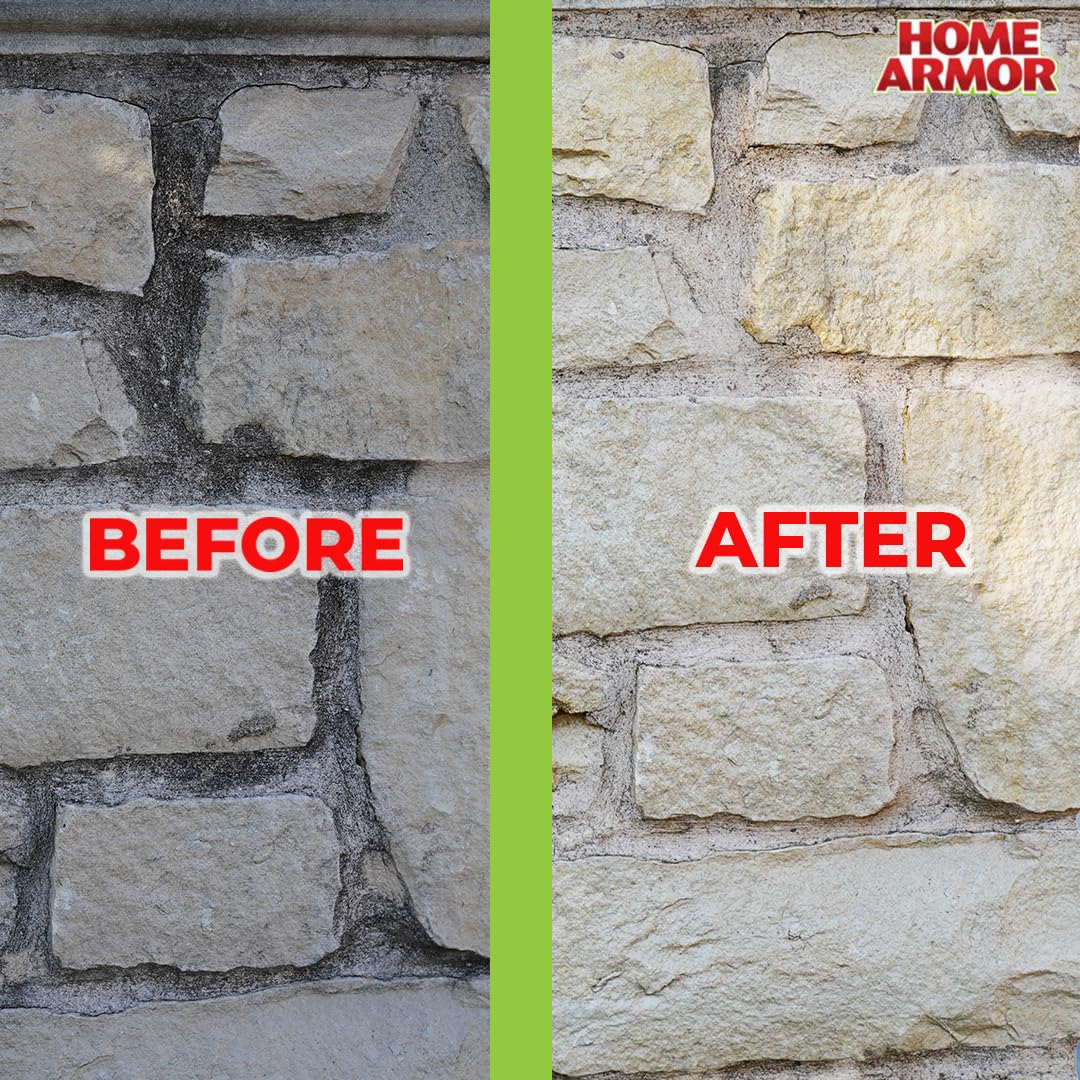

Home Armor Outdoor Cleaner+ 64 oz - No-Scrub Mold Mildew Algae Stain Remover for Brick Wood Concrete
Pros
- No scrubbing required saves significant time and physical effort
- Hose-end attachment covers large areas efficiently
- Visible results in seconds on mostold and mildew stains
- Budget-friendly at under $13 for 64 oz
- Versatile across brick, wood, concrete, and vinyl surfaces
Cons
- Outdoor use only, so it cannot help with interior mold or mildew issues
- Not safe for cedar or redwood under 2 years old or metal surfaces
- Will not remove pigmented wood stains, sealers, or sun-caused permanent discoloration
There is something deeply satisfying about watching years of grime vanish in seconds. Home Armor Outdoor Cleaner+ does exactly that for patios, siding, and walkways that have slowly turned green or black from mold and mildew buildup. You simply attach your hose, spray, wait ten minutes, and rinse to reveal the clean surface hiding underneath.
What makes this stand out for homeowners focused on their home's appearance is how little effort it takes to make a dramatic visual difference. A stained driveway or mosy patio can drag down your entire exterior aesthetic, and this product addresses that without hiring a pressure washing service or spending a weekend on your knees with a brush.
If you want a refreshed, clean-looking exterior without the labor of manual scrubbing or the cost of professional cleaning, this one delivers.
Styles it works with: Traditional, Modern Farmhouse, Colonial, Craftsman (any home style with exposed brick, concrete, wood siding, or vinyl)
Best placed in: Frontorch and entryway surfaces, backyard patio and deck, concrete walkways and driveway edges
May not suit: Homes with newer cedar or redwood installations under two years old, properties with extensive metal railings or trim near treatment areas, or indoor-only mold concerns
Buy it if:
- Your patio, siding, or walkway has visible green or black mold and mildew stains
- You want to boost curb appeal before selling your home or hosting guests
- You prefer a spray-and-rinse solution over renting a pressure washer or scrubbing by hand
Consider waiting if:
- You have brand new cedar or redwood that has not yet aged two full years
- You only need to clean a small indoor area where this product cannot be used
Skip it if:
- Your stains are from pigmented wood stain, sealers, or permanent sun damage rather than biological growth
- You need a product safe for use on metal surfaces, fabrics, or indoor spaces
Check the latest price and availability on Amazon before it sells out.

30 SECONDS Mold & Mildew Stain Remover 1.3 Gallon | Battery Powered Spray Wand | Ready to Use
Pros
- Battery-powered wand provides consistent, even spray coverage without manual pumping
- Large 1.3-gallon tank reduces refill interruptions on bigger cleaning jobs
- Ready-to-use formula saves time and removes guesswork from the cleaning process
- Effective on a wide range of outdoor surfaces including decks, driveways, and siding
Cons
- At $38.99, it costs more upfront than basic spray bottles, which may deter occasional users
- Battery-powered mechanism adds a dependency on charged batteries, which can be inconvenient mid-job
- Not designed for indoor use, limiting its versatility for interior mold problems
Keeping your home's exterior looking clean and cared-for is one of those ongoing battles that most homeowners quietly dread. Black mold streaks on the deck, green mildew creeping up the siding -- these stains make even a well-decorated home look neglected. The 30 SECONDS Mold and Mildew Stain Remover tackles that problem head-on with a formula that does the heavy lifting for you.
What sets this apart from a standard spray bottle is the battery-powered wand. You're not straining your hand or repeatedly pumping to keep pressure up. You just point, press, and move. The 1.3-gallon tank is generous enough to handle a full deck or stretch of fence without stopping to refill, which makes a real difference when you're in the middle of a cleaning session and just want to get it done.
The ready-to-use formula is another quiet win -- no measuring, no mixing, no wondering if you got the ratio right. If you want a visibly cleaner home exterior without spending a weekend on your knees with a scrub brush, this one delivers.
Styles it works with: Farmhouse, Traditional, Craftsman, and any home exterior where clean, well-maintained surfaces are part of the aesthetic.
Best placed in: Outdoor decks and patios, home siding and facades, driveways and walkways, garden fences and retaining walls.
May not suit: Apartment dwellers or renters without outdoor surfaces to treat; homeowners dealing with indoor mold problems who need an interior-safe solution.
Buy it if:
- You have a deck, patio, or siding with visible mold or mildew stains that standard cleaners have not fully removed
- You want a no-prep, ready-to-use solution that saves time and effort on large outdoor areas
- You prefer a battery-powered applicator over manual scrubbing or pump sprayers for comfort and coverage
Consider waiting if:
- You only have a very small surface area to treat and a single-use spray bottle would be more cost-effective
Skip it if:
- Your mold problem is indoors and you need a formula rated safe for interior use
- You do not have outdoor surfaces that require regular maintenance and cannot justify the upfront cost
Check the latest price and availability on Amazon before it sells out.

30 SECONDS Outdoor Cleaner 2-Pack with Hose End Sprayer – Removes Algae, Mold & Mildew from Siding, Decks & Patios
Pros
- Ready-to-use formula with a built-in hose-end sprayer cuts setup time to under a minute
- Effective on a wide range of outdoor surfaces, reducing the need to buy separate cleaners for different materials
- Plant-safe formulation lets you spray near garden beds and landscaping without covering everything first
- Two bottles in one purchase deliver strong value for full-home exterior cleaning projects
Cons
- Contains bleach-based active ingredients, so it requires rinsing runoff away from painted surfaces and sealed stone to avoid discoloration
- Not formulated for heavy moss buildup or prevention -- the brand's separate Spray and Walk Away product handles those use cases better
- Coverage per bottle can fall short on large two-story homes, meaning a single 2-pack may not complete a full exterior treatment
There is something deeply satisfying about watching years of green and black staining rinse off a fence or deck in a matter of minutes. The 30 SECONDS Outdoor Cleaner makes that possible without hauling out a pressure washer or spending a Saturday on your knees scrubbing. You attach the sprayer to a garden hose, coat the surface, wait a few minutes, and rinse. The transformation is immediate and genuinely noticeable.
What sets this product apart from generic big-box cleaners is how broadly it works. Vinyl siding, wood decks, brick walkways, plastic patio chairs, canvas awnings -- it handles all of them with the same bottle and the same process. For homeowners juggling multiple outdoor surfaces in different states of neglect, that versatility eliminates the need for a cabinet full of specialty cleaners.
The two-pack format is also a practical win. One bottle rarely covers a full exterior, and having a second on hand means you finish the job rather than stopping halfway. If you want a cleaner exterior without renting equipment or blocking out a full day, this one delivers.
Styles it works with: Traditional suburban homes, Modern Farmhouse exteriors, Craftsman bungalows, and Classic Colonial siding where organic staining dulls the original color palette.
Best used on: Vinyl or wood siding on the shaded north-facing side of the house, weathered deck boards in high-humidity climates, algae-stained brick or concrete around pool areas, and plastic or resin patio furniture that has greened over winter storage.
May not suit: Homes with natural or sealed stone features that are sensitive to chlorine-based products, or renters who cannot make decisions about exterior cleaning products without landlord approval. Also less ideal for those dealing primarily with heavy moss rather than surface mold and mildew staining.
Buy it if:
- Your deck, siding, or driveway has visible green, black, or brown organic staining and you want to restore it before a gathering or a home listing
- You want a no-equipment solution that works without a pressure washer or a trip to the hardware store for additional tools
- You have multiple outdoor surfaces to clean and need one product that handles all of them without separate formulas
Consider waiting if:
- You are heading into peak winter and the outdoor surfaces will stay frozen for months, making a spring purchase more practical
Skip it if:
- Your primary problem is thick moss coverage rather than surface mold and mildew stains, as the brand offers a dedicated moss product that performs better for that use case
- You have polished or sealed natural stone surfaces where chlorine-based cleaners could cause permanent discoloration
Check the latest price and availability on Amazon before it sells out.
Frequently Asked Questions
Can I pressure wash concrete pavers?
Yes, but carefully. Keep pressure under 1,500 PSI, use a 25-degree tip, and hold the wand at least 12 inches off the surface. Too much force strips the joint sand and etches the concrete face, leaving a rough, uneven finish you’ll have to re-sand and reseal.
Does bleach damage patio pavers?
It depends on the paver material and dilution. Diluted sodium hypochlorite works well on concrete and brick for killing algae and mildew, but it can discolor natural stone like bluestone or travertine. Rinse plants nearby with water first and avoid full-strength bleach, which can lighten colored pavers.

How do I get rid of weeds between pavers permanently?
Almost never permanently, but you can slow them dramatically. Pull existing weeds, refill joints with polymeric sand, and seal the surface. Polymeric sand hardens when wetted and blocks most seeds from taking root, cutting regrowth by most of what you’d otherwise see.
Will vinegar clean patio pavers?
It depends on the stain. Diluted white vinegar handles light efflorescence and mild grime, but it’s acidic enough to etch concrete and natural stone if left too long or used at full strength. For algae and mold, a dedicated outdoor cleaner works faster and won’t harm the paver surface.
How often should I clean my pavers?
It depends on sun exposure and traffic. Shaded, damp patios need a cleaning every 3 to 4 months to stay ahead of algae, while a sunny, well-drained patio may only need one deep clean each spring. A quick sweep and hose-down every couple of weeks keeps buildup from setting in.
Can I use a wire brush on pavers?
No. Steel bristles scratch concrete and shed metal fragments that rust into new orange stains. Use a stiff polypropylene or palmyra deck brush instead — it’s tough enough to lift grime without scoring the surface or leaving rust behind.
What removes rust stains from pavers?
Yes, an oxalic-acid rust remover does the job. Apply it directly to the stain, let it dwell per the label, then scrub and rinse. Avoid muriatic acid on colored pavers, since it can strip pigment and leave a lighter patch that stands out more than the rust did.





Write Your Review
No reviews yet. Be the first to share your experience!